

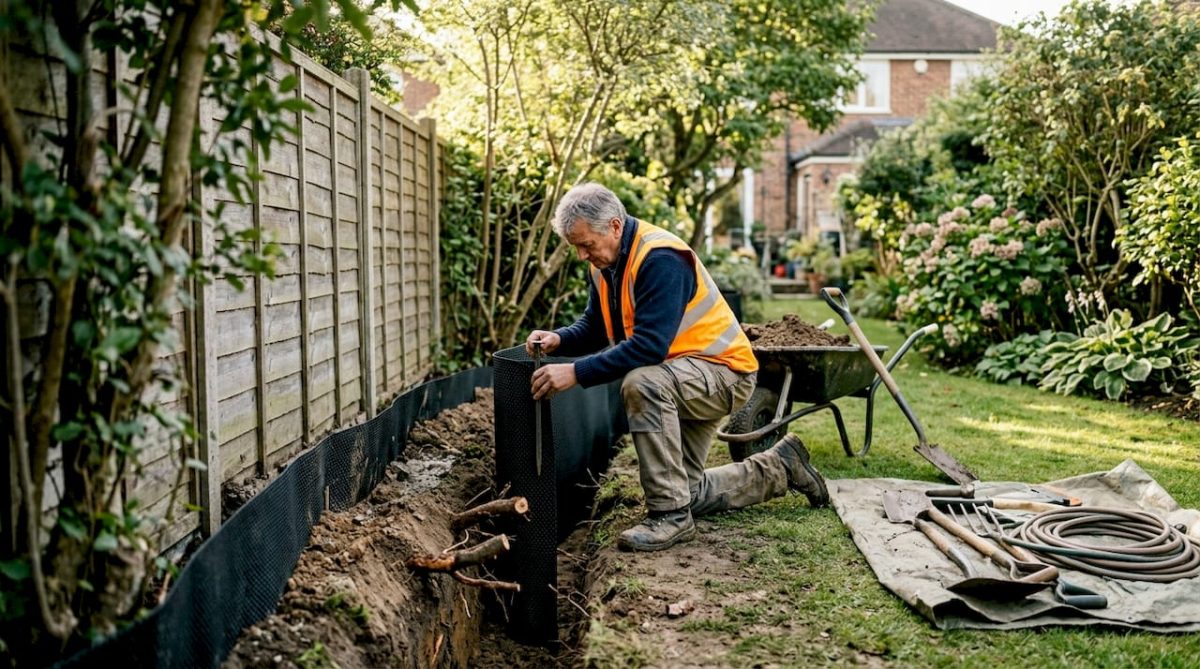
Selecting the right root barrier is critical when protecting your property from invasive plants like Japanese Knotweed. These underground membranes create physical barriers that prevent aggressive root systems from spreading into unwanted areas, offering a chemical-free solution that safeguards foundations, driveways, and neighbouring properties. With multiple barrier types available, each varying in material strength, permeability, and installation complexity, homeowners across England, Wales, and Ireland need clear guidance to make informed choices. This guide examines essential selection criteria, compares common barrier types, and provides practical recommendations to help you choose the most effective solution for your specific property conditions and invasive plant challenges.
Table of Contents
- Criteria For Selecting Root Barriers For Invasive Plant Control
- Common Types Of Root Barriers Used In The UK
- Comparison Of Root Barrier Types For Japanese Knotweed Control
- Choosing The Right Root Barrier For Your Property
- Discover Expert Solutions For Chemical-Free Knotweed Control
- Frequently Asked Questions
Key takeaways
| Point | Details |
|---|---|
| Material durability | High-density polyethylene and polypropylene sheets offer superior resistance to aggressive root penetration over decades |
| Site-specific selection | Soil type, moisture levels, and invasive species severity determine which barrier type performs best |
| Professional installation | Expert placement ensures proper depth, overlap, and sealing that DIY efforts often miss |
| Long-term protection | Quality barriers provide 15-20 years of chemical-free control when correctly installed and monitored |
Criteria for selecting root barriers for invasive plant control
Choosing an effective root barrier requires evaluating several technical and environmental factors that directly impact long-term performance. Material durability stands as the primary consideration, as barriers must withstand constant pressure from aggressive rhizome systems that can exert forces exceeding 7 tonnes per square metre. Successful root barrier use depends on evaluating material type, permeability, durability, and installation method against site conditions, making upfront assessment crucial for preventing future failures.
Permeability affects both water drainage and soil health around your property. Impermeable barriers like HDPE completely block root penetration but may require drainage provisions to prevent waterlogging, whilst semi-permeable options allow moisture flow but offer reduced protection against determined invasive species. Installation depth must extend at least 2 metres below ground level for Japanese Knotweed, with overlaps sealed meticulously to eliminate potential penetration points where rhizomes exploit even millimetre-wide gaps.
Site conditions significantly influence barrier effectiveness. Clay soils compress barriers differently than sandy substrates, whilst high water tables demand materials resistant to degradation in saturated conditions. The specific invasive species matters tremendously, as Japanese Knotweed requires more robust solutions than lesser threats like bamboo or bindweed.
Key selection criteria include:
- Tensile strength exceeding 20 N/mm for resisting root pressure
- UV resistance if any portion remains exposed to sunlight
- Chemical stability in varying soil pH conditions
- Warranty coverage reflecting manufacturer confidence in longevity
- Compatibility with local planning regulations and building codes
Pro Tip: Always request material certifications and third-party testing results before purchasing root barriers, as substandard products often fail within five years despite manufacturer claims of decades-long performance.
Maintenance requirements vary considerably between barrier types. Some demand annual inspections to identify emerging damage, whilst premium options require minimal oversight beyond initial installation verification. Understanding these ongoing commitments helps you budget realistically for total lifecycle costs rather than focusing solely on initial purchase prices.
Common types of root barriers used in the UK
The UK market offers several distinct root barrier categories, each engineered for specific applications and invasive plant challenges. High-density polyethylene (HDPE) and polypropylene sheets are widely used due to durability and impermeability, representing the gold standard for Japanese Knotweed control in residential and commercial settings.
HDPE root barriers deliver exceptional strength through molecular composition that resists puncture and tearing. These sheets typically measure 2-4mm thick, creating impenetrable walls that redirect even the most aggressive rhizome systems. Their complete impermeability prevents root penetration but necessitates careful drainage planning to avoid water accumulation against foundations. HDPE maintains structural integrity for 20-25 years in typical soil conditions, making it the preferred choice for permanent installations near buildings.
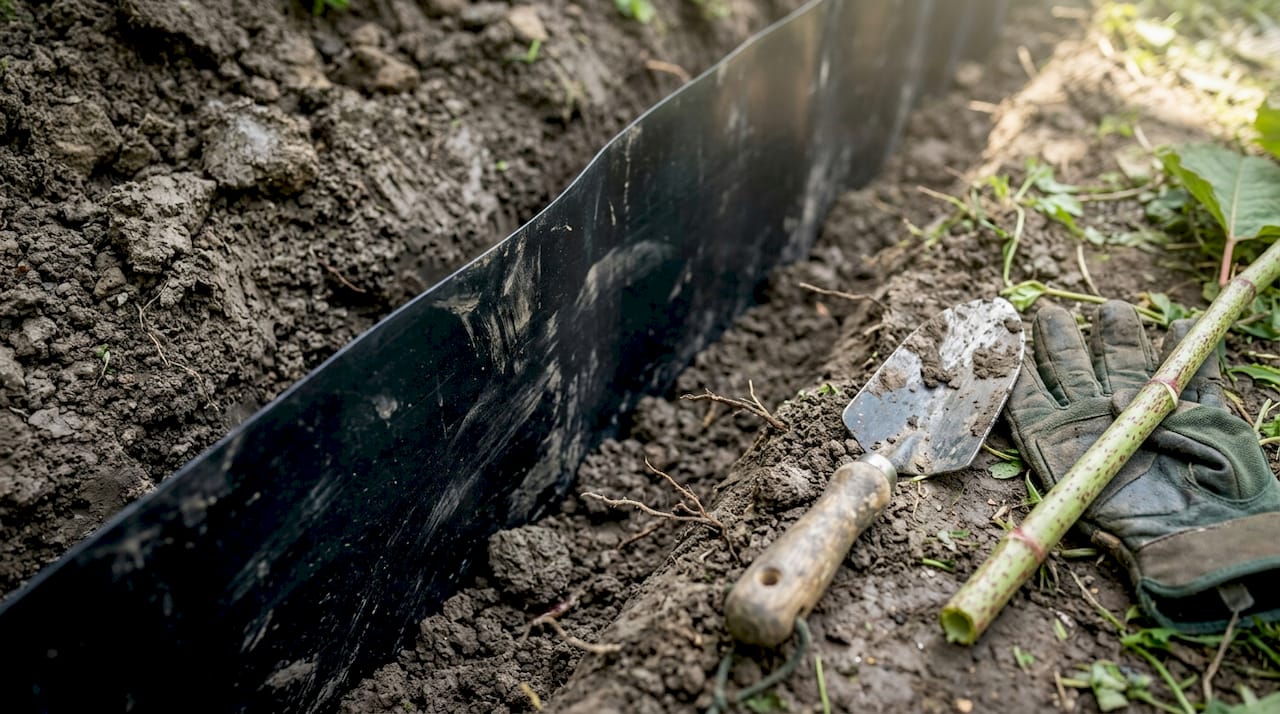
Polypropylene sheets offer similar protection with slightly enhanced flexibility that simplifies installation around curves and corners. These barriers resist chemical degradation from soil compounds and maintain effectiveness across temperature extremes common in British climates. Whilst marginally more permeable than HDPE, quality polypropylene products still block Japanese Knotweed effectively when properly installed with sealed joints.
Geotextile fabrics represent a more permeable option that allows water and nutrient flow whilst impeding root growth. However, their effectiveness against Japanese Knotweed remains questionable, as determined rhizomes can sometimes penetrate woven structures over time. These fabrics suit less aggressive species or serve as supplementary layers in multi-barrier systems.
Metal barriers, typically fabricated from galvanised steel or aluminium, provide unmatched physical strength but introduce corrosion concerns in acidic soils. Their high cost and installation complexity limit use to specialised applications where extreme root pressure demands maximum resistance. Most homeowners find polymer alternatives more practical and cost-effective.
Concrete barriers deliver permanent protection through sheer mass and impermeability. Poured or precast concrete walls completely stop root penetration but require substantial excavation, skilled labour, and significant investment. These suit commercial developments or extreme infestations where long-term certainty justifies upfront expense.
Comparison of root barrier types for Japanese Knotweed control
Understanding the practical differences between barrier types helps you match solutions to your property’s specific requirements and budget constraints. Comparison tables assist homeowners in visualising trade-offs between root barrier options to make informed decisions, clarifying which materials deliver optimal value for different scenarios.
| Barrier Type | Initial Cost | Lifespan | Installation Complexity | Knotweed Effectiveness | Environmental Impact |
|---|---|---|---|---|---|
| HDPE Sheets | Moderate | 20-25 years | Moderate | Excellent | Low (inert, recyclable) |
| Polypropylene | Moderate-High | 15-20 years | Moderate | Excellent | Low (inert, recyclable) |
| Geotextile Fabric | Low | 5-10 years | Easy | Poor-Fair | Moderate (synthetic fibres) |
| Metal Barriers | High | 15-30 years | Difficult | Excellent | Moderate (mining, corrosion) |
| Concrete | Very High | 50+ years | Very Difficult | Excellent | High (cement production) |
Urban properties with limited access benefit most from flexible polymer sheets that installers can manoeuvre through narrow passages and around existing structures. These materials arrive in rolls that unwind easily, conforming to irregular boundaries without requiring heavy machinery. Rural sites with open access might justify concrete barriers where excavators operate freely and permanent solutions suit long-term land use plans.
The chemical-free nature of physical barriers aligns perfectly with environmental protection standards increasingly emphasised across UK property regulations. Unlike herbicide treatments that introduce persistent chemicals into soil and groundwater, barriers contain invasions mechanically whilst preserving ecosystem health. This approach particularly suits properties near waterways or designated conservation areas where chemical use faces strict limitations.
Pro Tip: Calculate total cost of ownership over 20 years rather than comparing initial prices alone, as cheaper barriers often require replacement or supplementary treatments that exceed the lifetime cost of premium options.
Compliance with building regulations varies by barrier type and installation context. Simple garden barriers typically require no approval, whilst installations near energy efficiency barriers in London property boundaries or affecting drainage patterns may need planning consent. Professional installers navigate these requirements routinely, ensuring your barrier meets all legal obligations whilst delivering effective protection.
Choosing the right root barrier for your property
Personalising your barrier selection to match specific site conditions maximises effectiveness whilst optimising your investment. Site assessment and expert consultation improve success chances of root barrier installation against Japanese Knotweed, transforming generic solutions into targeted interventions that address your property’s unique challenges.
Begin by evaluating soil composition through simple tests or professional analysis. Clay-heavy soils retain moisture and compress barriers differently than sandy substrates, affecting both installation techniques and material selection. Root depth measurements reveal how far invasive systems have already penetrated, informing minimum barrier depth requirements that prevent rhizomes from diving beneath protective membranes.
Property boundaries present both physical and legal considerations. Barriers installed along boundary lines must not encroach on neighbouring land without permission, whilst ensuring complete coverage that prevents roots from circumventing protected zones. Accessibility determines whether installation requires hand excavation or permits machinery access that reduces labour costs substantially.
Infestation severity guides material choice directly. Early-stage invasions with limited rhizome spread might succeed with mid-range polypropylene barriers, whilst established colonies demand premium HDPE or even concrete solutions that guarantee containment. Professional surveys identify the full extent of underground growth, revealing hidden rhizome networks that visual inspections miss entirely.
Budget considerations should balance immediate affordability against long-term value:
- Initial material and installation costs
- Expected lifespan before replacement becomes necessary
- Maintenance requirements and inspection frequency
- Potential property damage if barrier fails prematurely
- Impact on property value and mortgage ability
Seeking professional surveys proves especially valuable for severe infestations where misdiagnosis leads to inadequate protection. Specialists employ thermal imaging, soil sampling, and historical growth pattern analysis to map rhizome networks accurately, ensuring barrier placement addresses actual rather than assumed threat zones.
Regular monitoring post-installation provides early warning of potential breaches before roots reach protected structures. Annual visual inspections check for surface growth near barrier perimeters, whilst periodic professional assessments verify underground integrity. This proactive approach catches problems when simple repairs suffice, avoiding costly remediation of established re-infestations.
Discover expert solutions for chemical-free knotweed control
Transforming theoretical knowledge into effective action requires professional expertise that ensures proper implementation of root barrier strategies. Japanese Knotweed Agency specialises in chemical-free invasive plant control, combining advanced root barrier installation with innovative electrical treatment that depletes rhizome energy reserves without introducing herbicides into your soil.
Our chemical-free knotweed eradication workflow guides you through each stage of protection, from initial property surveys across England, Wales, and Ireland to barrier installation and ongoing monitoring. We deliver direct energy up to 5000 volts onsite, causing internal cell damage that complements physical barriers for comprehensive control. Explore our chemical free invasive plant solutions to understand how integrated approaches outperform single-method treatments, or visit our Japanese Knotweed FAQ for answers to common questions about protecting your property naturally and effectively.
Frequently asked questions
What is a root barrier and how does it work?
Root barriers are physical underground membranes installed vertically to block or redirect invasive plant roots away from protected areas. They create impenetrable walls that force rhizome systems to grow laterally rather than penetrating foundations, utilities, or neighbouring properties. High-quality barriers maintain effectiveness for decades when properly installed with sealed joints.
Which root barrier type is best for Japanese Knotweed control?
High-density polyethylene (HDPE) sheets represent the optimal choice for Japanese Knotweed due to superior tensile strength and complete impermeability. Polypropylene sheets offer comparable protection with slightly enhanced flexibility for curved installations. Both materials resist the extreme root pressure that knotweed generates, maintaining structural integrity for 15-25 years in typical soil conditions.
Can I install a root barrier myself, or should I hire a professional?
DIY installation is technically possible but requires precise excavation to proper depths, meticulous joint sealing, and thorough backfilling that amateur efforts often compromise. Professional installation ensures correct barrier placement, eliminates penetration points at seams, and provides warranty coverage against premature failure. Consult root barrier installation tips to understand the complexity involved before deciding whether professional services justify their cost through guaranteed effectiveness.
How long do root barriers last before needing replacement?
High-quality polyethylene and polypropylene barriers maintain effectiveness for 15-25 years when correctly installed in appropriate soil conditions. Premium HDPE products sometimes exceed 25 years, whilst concrete barriers can last 50 years or longer. Regular inspection every 2-3 years helps identify damage early, allowing targeted repairs that extend overall lifespan and prevent costly failures.