Homeowners across England, Wales and Ireland now face tighter restrictions on herbicide use, making chemical free treatment for Japanese Knotweed more relevant than ever. With glyphosate regulations evolving and growing concerns about synthetic chemicals near families and pets, alternative methods have moved from niche to mainstream. This article explores proven chemical free solutions, formal eradication plans, and practical advice to help you tackle this invasive plant safely and effectively.
Table of Contents
- Key takeaways
- What does chemical free treatment mean for Japanese Knotweed?
- Key chemical free methods to tackle Japanese Knotweed
- Formal eradication plans and legal considerations for chemical free treatment
- Challenges, nuances and best practices for chemical free Japanese Knotweed treatment
- Find trusted chemical free Japanese Knotweed solutions
- Frequently asked questions
Key Takeaways
| Point | Details |
|---|---|
| Chemical free methods | Chemical free methods encompass energy based, mechanical, biological and barrier approaches to control Knotweed without herbicides. |
| High success rates | Evidence from field trials shows success rates of around 80 to 95 percent when treatments are planned and monitored. |
| Formal eradication plans | Formal eradication plans include surveys, bespoke schedules, monitoring and guarantees. |
| Professional oversight essential | Professional treatment is essential to avoid spreading and to ensure compliance with regulations. |
What does chemical free treatment mean for Japanese Knotweed?
Chemical free treatment means tackling Japanese Knotweed without synthetic herbicides like glyphosate, relying instead on physical, mechanical, energy based or biological approaches. This shift has gained momentum as UK and Ireland regulations tighten around pesticide use, particularly near waterways and residential areas. Homeowners increasingly seek alternatives that protect their families, pets and local ecosystems whilst still delivering effective control.
The core methods include manual or mechanical removal, thermo electric treatment using high voltage currents, biological innovations that target the plant’s energy reserves, and physical barriers that contain rhizome spread. Each approach has distinct advantages depending on site conditions, infestation size and proximity to sensitive receptors. Contrary to common misconceptions, non chemical methods can achieve comparable or superior results to herbicide treatment when applied correctly and monitored over time.
Many homeowners mistakenly believe chemical free means ineffective or impractical. Evidence from field trials and professional programmes demonstrates success rates between 80 and 95 percent when treatments follow structured plans with ongoing monitoring. The key difference lies in the mechanism: rather than poisoning the plant systemically, these methods physically disrupt cell structures, exhaust energy reserves, or prevent spread through containment.
Pro Tip: Chemical free treatment often suits mortgage and insurance requirements better than herbicide based plans, especially on properties near schools, care homes or protected habitats where chemical use faces additional scrutiny.
Choosing chemical free treatment aligns with evolving environmental standards and provides peace of mind for families concerned about residual toxins in soil or groundwater. It also avoids the compliance burden of herbicide application records and buffer zone restrictions that can complicate development or sale timelines.
Key chemical free methods to tackle Japanese Knotweed
The landscape of chemical free knotweed control includes several proven methodologies, each with specific applications, timelines and cost profiles. Understanding these options helps homeowners select the approach that best fits their property constraints and treatment goals.
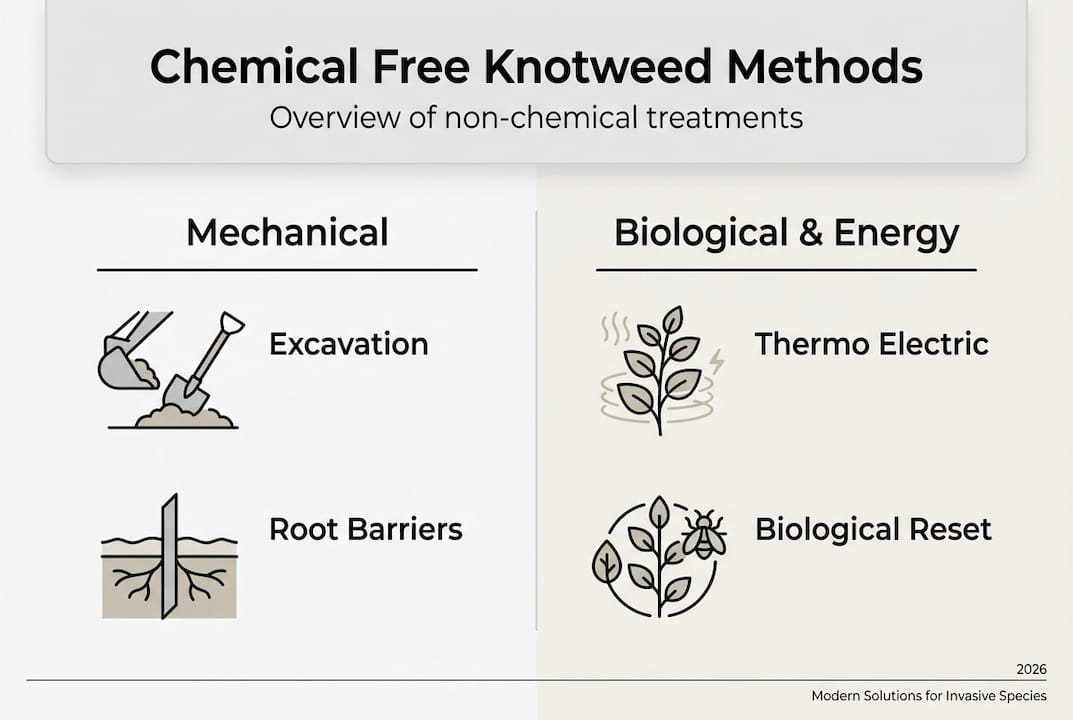
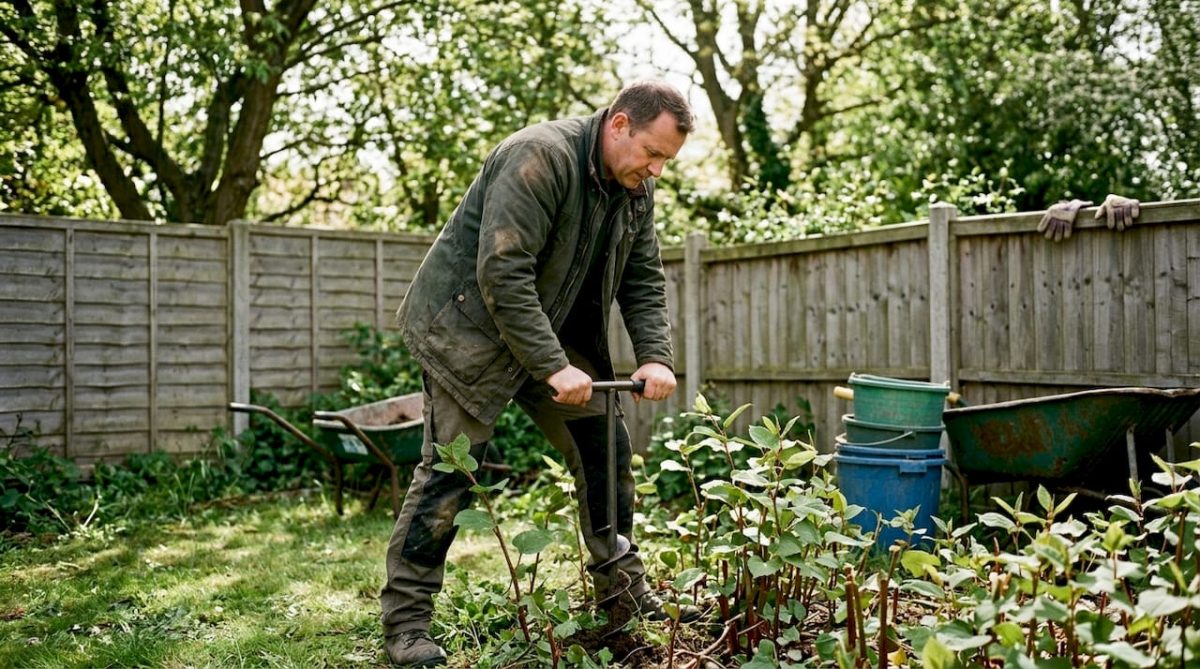
Thermo electric treatment delivers energy based eradication by applying electrical currents up to 5000 volts directly to the plant and rhizome network. This method causes internal cell damage and depletes energy reserves without introducing chemicals. Treatment typically spans one to two years with multiple sessions, achieving success rates above 80 percent. It works exceptionally well in gardens, near water features, and on sites where excavation is impractical or prohibited.
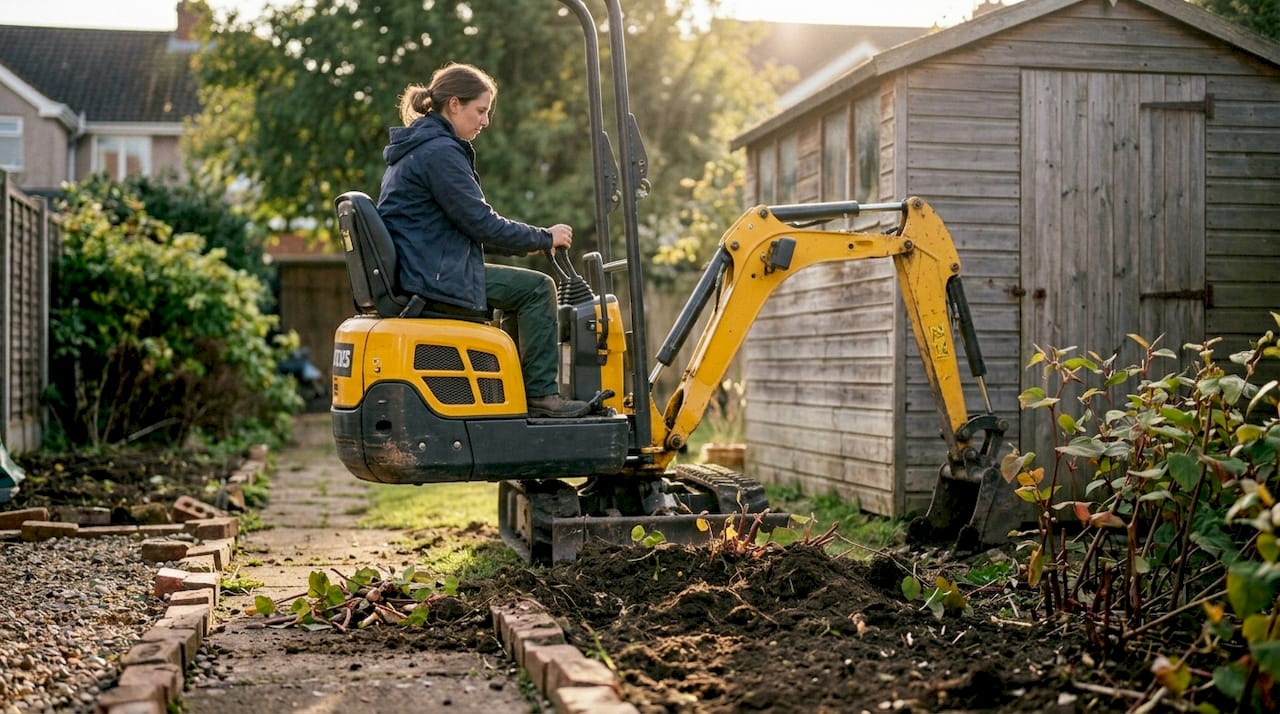
Mechanical excavation involves removing all visible plant material and rhizomes to depths of two to three metres, often extending several metres beyond the visible infestation. This method delivers rapid results, clearing sites within weeks, but requires specialist disposal of contaminated soil at licensed facilities. Costs can be substantial, particularly for large infestations or sites with limited access for machinery. Excavation suits development projects where immediate clearance is necessary and budget allows for comprehensive removal.
Root barriers provide long term containment by installing knotweed root barriers made from high density polyethylene or similar materials around the infestation perimeter. Barriers prevent rhizome spread into adjacent properties or sensitive areas, often combined with other treatment methods to control the existing stand. This approach offers a permanent physical solution that requires minimal ongoing maintenance once installed correctly.
Biological innovations like Roots Reset introduce beneficial fungi or bacteria that target the plant’s energy metabolism, achieving success rates up to 95 percent within one year in controlled trials. These methods remain relatively new but show promise for homeowners seeking the most environmentally benign option. They work best on smaller infestations where soil conditions support the biological agents.
Traditional cutting or smothering involves repeated manual removal of above ground growth combined with thick barriers to block light. This method is slow, often requiring three to five years of consistent effort, and less reliable than modern alternatives. However, it remains chemical free and low cost, suitable for homeowners willing to invest time rather than money.
| Method | Timeline | Success rate | Best application |
|---|---|---|---|
| Thermo electric | 1 to 2 years | 80 to 90 percent | Gardens, water adjacent sites |
| Mechanical excavation | Weeks to months | 95+ percent | Development sites, small infestations |
| Root barriers | Immediate containment | 100 percent containment | Boundary protection, combined treatments |
| Biological | 1 to 2 years | 85 to 95 percent | Ecologically sensitive areas |
| Cutting and smothering | 3 to 5 years | 60 to 75 percent | Low budget, patient homeowners |
Pro Tip: Combining methods often delivers the best outcomes. For example, installing a root barrier alongside thermo electric treatment provides immediate containment whilst the energy based approach gradually exhausts the rhizome network.
Formal eradication plans and legal considerations for chemical free treatment
Professional chemical free treatment begins with a mandatory site survey that maps the infestation extent, identifies rhizome depth and spread, and assesses site specific risks like proximity to structures, drains or protected habitats. This survey forms the foundation of a bespoke treatment schedule tailored to the chosen method and property conditions. Surveys typically cost between £150 and £300 but provide essential documentation for mortgage lenders and insurers.
Treatment schedules vary by method but generally involve multiple sessions over one to two years. Thermo electric programmes might include four to six treatment visits spaced across growing seasons to target regrowth and deplete underground energy reserves. Mechanical excavation requires fewer visits but demands careful planning for soil removal and disposal. Each session is documented with photographic evidence, GPS mapping and treatment records that satisfy regulatory and financial compliance requirements.
Monitoring extends for at least 12 months after the final treatment session to detect any resurgence and confirm eradication success. Professional providers conduct regular site inspections, often quarterly, to track progress and adjust treatment if necessary. This monitoring phase is critical for securing long term guarantees and demonstrating compliance with invasive species regulations.
Documentation supports property transactions by providing evidence of professional treatment and ongoing control. Mortgage lenders increasingly require formal excavation vs treatment plans before approving loans on affected properties. Insurance backed guarantees, typically valid for five to ten years, protect homeowners and lenders against treatment failure or resurgence.
“Formal plans include site survey, customised treatment scheduling with multiple visits, monitoring for 12+ months, and documentation to satisfy lenders and insurers.”
Compliance with UK and Ireland invasive species regulations is mandatory. The Wildlife and Countryside Act 1981 and equivalent Irish legislation make it an offence to cause Japanese Knotweed to spread in the wild. Chemical free methods must follow best practice guidelines to prevent fragment dispersal during treatment. Professional providers carry appropriate insurance and training certifications to ensure legal compliance.
Key steps in a formal eradication plan:
- Initial site survey with detailed mapping and photographic record
- Bespoke treatment schedule based on infestation size, site conditions and chosen method
- Multiple treatment sessions over one to two years with documented progress
- Quarterly monitoring visits to track regrowth and adjust approach
- Final clearance inspection and certification of eradication success
- Insurance backed guarantee protecting against resurgence for five to ten years
- Comprehensive documentation package for mortgage lenders and future buyers
Homeowners should verify that providers follow property survey processes accredited by industry bodies like the Property Care Association. Accreditation ensures adherence to professional standards and provides recourse if treatment fails. It also supports invasive weed management that meets regulatory expectations and protects property values.
Challenges, nuances and best practices for chemical free Japanese Knotweed treatment
Selecting the optimal chemical free method depends on several site specific factors that influence treatment success and cost effectiveness. Small infestations under ten square metres often suit mechanical excavation, which can remove the entire rhizome network in a single operation. This approach minimises long term monitoring costs and delivers immediate clearance for development or landscaping projects.
Water adjacent gardens and ecologically sensitive locations favour energy based methods that avoid soil disturbance and chemical runoff. Thermo electric treatment works effectively near ponds, streams or wetlands where excavation might damage habitats or violate environmental protections. These sites also benefit from the precision of electrical delivery, which targets knotweed without harming surrounding vegetation.
Some knotweed strains show resistance to traditional herbicides, making chemical free approaches particularly valuable. Electrical treatment overcomes this resistance by physically disrupting cell structures rather than relying on metabolic pathways that resistant plants can bypass. Field data shows herbicide resistant knotweed responds well to sustained thermo electric programmes with success rates matching or exceeding chemical alternatives.
DIY removal carries significant risks that often outweigh potential cost savings. Improper handling can spread rhizome fragments, creating new infestations that are harder and more expensive to control. Legal liability for causing spread onto neighbouring properties or public land can result in prosecution and substantial fines. Professional treatment ensures removal best practices that prevent dispersal and maintain compliance with invasive species regulations.
Budget considerations influence method selection, with mechanical excavation typically costing £3000 to £8000 for small to medium infestations, whilst thermo electric programmes range from £1500 to £4000 depending on site access and treatment frequency. Root barriers add £500 to £2000 to overall costs but provide permanent containment that protects property boundaries and reduces long term management expenses.
Pro Tip: Properties with suspected structural damage should prioritise rapid excavation over gradual treatment methods. Whilst knotweed rarely causes property damage directly, removing the infestation quickly allows for proper structural assessment and repair without ongoing plant pressure.
| Site condition | Recommended method | Key advantage |
|---|---|---|
| Small infestation under 10m² | Mechanical excavation | Rapid clearance, immediate results |
| Water adjacent or wetland | Thermo electric | No chemical runoff, minimal disturbance |
| Homes with children or pets | Energy based or biological | Zero toxic exposure |
| Herbicide resistant strains | Thermo electric | Bypasses chemical resistance |
| Boundary protection needed | Root barriers plus treatment | Permanent containment |
| Limited budget | Cutting and smothering | Low cost, high effort |
Successful chemical free treatment requires realistic expectations about timelines and the importance of professional expertise. Homeowners should budget for one to two years of active treatment and monitoring, recognising that gradual approaches like thermo electric or biological methods achieve lasting results through sustained pressure rather than immediate eradication. Patience and adherence to the treatment schedule deliver better outcomes than rushed or incomplete programmes.
Find trusted chemical free Japanese Knotweed solutions
When herbicide restrictions and environmental concerns make chemical free treatment the smart choice, professional expertise ensures effective, compliant eradication. Japanese Knotweed Agency specialises in chemical free treatment processes that combine energy based technology, mechanical solutions and root barrier installations tailored to your property’s unique conditions.
Our comprehensive plans include detailed site surveys, bespoke treatment schedules with ongoing monitoring, and insurance backed guarantees up to ten years. We serve homeowners across England, Wales and Ireland with chemical free invasive plant solutions designed to protect families, pets and local ecosystems whilst satisfying mortgage lenders and insurers. Explore our knotweed FAQs for answers to common questions or contact us for a professional assessment of your property.
Frequently asked questions
What are the best chemical free options for knotweed removal in my garden?
The best option depends on your infestation size, site sensitivity and budget. Thermo electric treatment suits most residential gardens, especially near water or play areas, delivering 80 to 90 percent success over one to two years. Mechanical excavation works well for small infestations under ten square metres where rapid clearance is needed. Root barriers combined with energy based treatment provide comprehensive control and boundary protection. Professional invasive weed management ensures the chosen method fits your specific circumstances and compliance requirements.
How long does chemical free Japanese Knotweed treatment usually take?
Chemical free treatments generally require one to two years depending on the method and site conditions. Thermo electric programmes involve four to six treatment sessions spaced across growing seasons to exhaust rhizome energy reserves. Mechanical excavation delivers immediate clearance within weeks but requires careful planning for soil disposal. Biological methods can achieve 95 percent success within one year under optimal conditions. All approaches need at least 12 months of monitoring after final treatment to confirm eradication and secure long term guarantees.
Are chemical free methods safer for families and pets?
Chemical free treatments avoid synthetic herbicides, eliminating toxic exposure risks for children, pets and wildlife. Energy based and mechanical methods introduce no chemicals to soil or groundwater, making them ideal for homes with play areas, vegetable gardens or water features. Biological approaches use naturally occurring organisms that pose no health risks to mammals. These methods also prevent the buffer zone restrictions and application records required for herbicide use, simplifying compliance and reducing long term liability.
How can I ensure chemical free treatment success and compliance?
Use accredited professionals who provide comprehensive site surveys and bespoke treatment plans backed by insurance guarantees. Verify that your provider follows property survey processes recognised by mortgage lenders and industry bodies. Ensure the treatment schedule includes ongoing monitoring for at least 12 months and documentation that satisfies legal and financial requirements. Look for guarantees of five to ten years that protect against resurgence and demonstrate compliance with UK and Ireland invasive species regulations. Professional treatment prevents the legal risks and costly mistakes associated with DIY removal attempts.