
Japanese Knotweed Threat: Complete Guide for UK Homes

Japanese knotweed can reduce property values by up to 20 percent, yet many homeowners remain unaware of the growing threat it poses. This invasive plant spreads with astonishing speed, using its resilient roots to invade gardens, foundations, and even roads. Understanding how Japanese knotweed multiplies and why it is so difficult to control helps property owners protect both their investments and local environments from long-term damage.

Table of Contents

Key Takeaways

Point Details
Invasive Nature Japanese knotweed is a highly aggressive species capable of causing significant ecological and structural damage, spreading rapidly through small rhizome fragments.
Legal Obligations Property owners must prevent the spread of knotweed, manage it properly, and disclose its presence in transactions to avoid severe legal and financial consequences.
Impact on Property Value Properties with confirmed knotweed infestations face reduced values and may struggle with mortgage approvals and resale challenges.
Innovative Management Solutions Traditional chemical treatments are under scrutiny; non-chemical methods and professional intervention are increasingly recommended for effective eradication.

What Is Japanese Knotweed and Why It Spreads

Japanese knotweed is an extraordinarily aggressive invasive plant species that poses significant risks to property and native ecosystems. Originally introduced from East Asia, this perennial plant has earned a notorious reputation for its rapid spread and destructive capabilities. According to gov.uk, Japanese knotweed thrives in diverse soil conditions, particularly in man-made environments like roadsides, waste grounds, and railway embankments.

What makes this plant truly remarkable is its extraordinary ability to propagate. Rhizome fragments as tiny as 1 centimeter can generate entirely new plant colonies, making it incredibly challenging to control. Natural Resources Wales highlights that these small fragments can rapidly form dense vegetation stands that effectively outcompete native plant species.

The plant’s spread mechanism is both sophisticated and problematic. Japanese knotweed reproduces through:

  • Underground rhizome networks
  • Stem fragment transportation
  • Incredibly resilient root systems
  • Minimal soil disturbance requirements

Homeowners and property managers must understand that this plant is not just another weed.

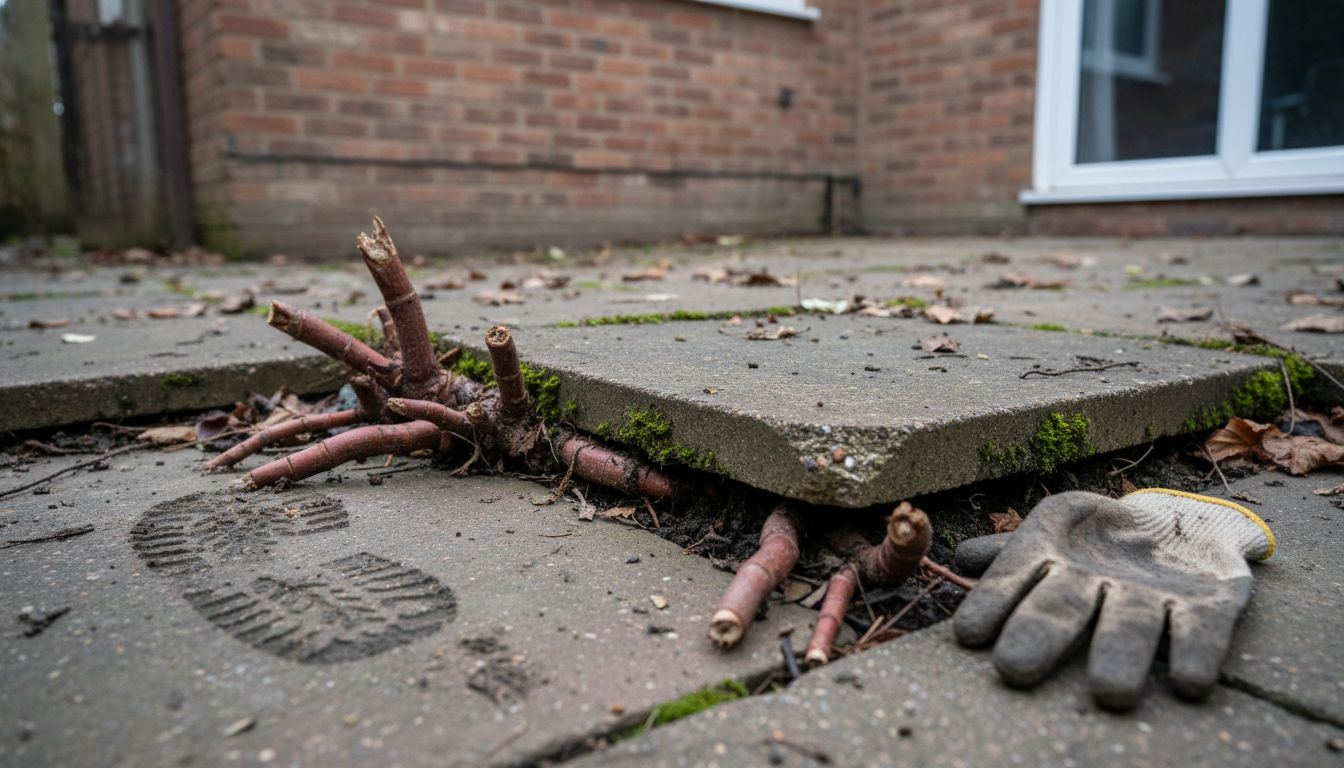
knotweed roots damage It can cause significant structural damage, compromise building foundations, and dramatically reduce property values. Its ability to grow through concrete, tarmac, and building foundations makes it a formidable ecological challenge that requires professional intervention.

Understanding the origins of Japanese knotweed and its unique spread characteristics is the first step in developing an effective management strategy. Each year, thousands of properties are impacted by this invasive species, making early detection and professional treatment critical for property preservation.

How Knotweed Damages Properties and Land

Japanese knotweed represents an extraordinary threat to property infrastructure and land value, capable of causing extensive and costly damage. According to Hull City Council, this invasive plant can forcefully penetrate concrete and brick structures, creating substantial structural risks for buildings and roads. Structural compromise is not just a potential concern but a serious reality for property owners.

The plant’s aggressive root system, known as rhizomes, enables it to grow through the smallest cracks and foundation weaknesses. These underground networks can expand rapidly, destabilizing building foundations, driveways, patios, and underground utilities. Bristol City Council confirms that knotweed grows in dense clusters, systematically preventing native plant growth and causing significant ecological disruption.

Specific property damage risks include:

  • Compromising building foundations
  • Cracking concrete and brick structures
  • Damaging underground pipes and drainage systems
  • Reducing property market value
  • Creating expensive remediation requirements

The economic impact of Japanese knotweed can be devastating.

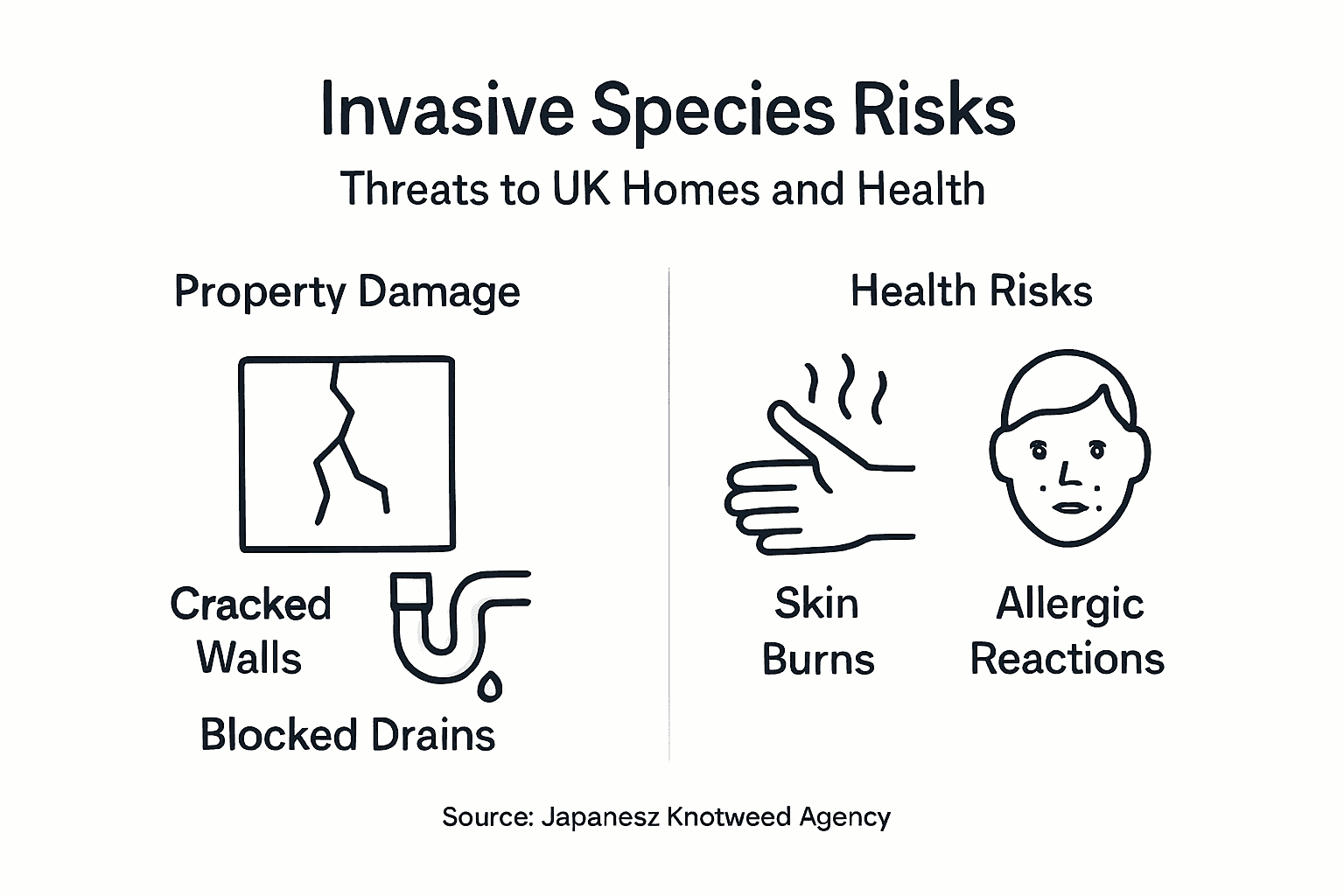
Infographic comparing knotweed features and property risks. Mortgage lenders often refuse properties with confirmed infestations, and removal costs can range from thousands to tens of thousands of pounds. Exploring the consequences of letting Japanese Knotweed spread reveals that early detection and professional intervention are crucial to mitigating potential financial losses.

Beyond physical infrastructure, Japanese knotweed also poses significant environmental challenges. Its rapid growth suppresses biodiversity by outcompeting native plant species, creating monocultural landscapes that disrupt local ecosystems. Homeowners and land managers must treat this invasive species as a serious threat requiring immediate, professional intervention.

Navigating the legal landscape of Japanese knotweed can be complex for property owners, with specific responsibilities that carry significant consequences. According to Gov.uk, landowners have a critical legal duty to prevent Japanese knotweed from spreading off their property. Ecological contamination is not just an environmental concern but a potential legal liability that can result in substantial penalties.

Natural Resources Wales clarifies an important legal nuance: while it is not an offense to have Japanese knotweed on your land, it is strictly prohibited to plant or allow it to grow in the wild. This distinction is crucial for property owners to understand, as controlled waste regulations apply stringently to knotweed management.

Key legal obligations for property owners include:

  • Preventing knotweed spread beyond property boundaries
  • Properly disposing of knotweed waste at licensed facilities
  • Documenting and reporting knotweed infestations
  • Implementing professional eradication strategies
  • Disclosing knotweed presence during property transactions

The financial and legal implications of mismanaging Japanese knotweed can be severe. Mortgage lenders, insurance companies, and potential buyers may impose significant restrictions or penalties for improper knotweed management. For a comprehensive understanding of your specific legal responsibilities, consult our guide on Japanese Knotweed legal obligations.

Professional intervention is not just recommended but often legally necessary.

Failure to control Japanese knotweed can lead to civil claims, potential prosecution, and substantial financial penalties. Property owners must treat knotweed management as a critical legal and environmental responsibility, requiring expert assessment and systematic eradication to mitigate potential legal risks.

Risks for Homebuyers and Mortgage Seekers

Purchasing a property with Japanese knotweed can transform what seems like a dream investment into a financial nightmare. Knowsley Council emphasizes that this invasive plant spreads rapidly and can cause significant property damage, making it a critical consideration for potential homebuyers. Mortgage risk extends far beyond simple landscaping concerns, potentially threatening the entire property transaction.

Mortgage lenders have become increasingly stringent about Japanese knotweed, often requiring comprehensive surveys and treatment plans before approving financing. Properties with confirmed knotweed infestations can experience dramatic value reductions, with some lenders refusing to provide loans altogether. The presence of Japanese knotweed can create a cascading series of financial complications that impact not just the current property owner, but potential future sellers as well.

Key risks for homebuyers include:

  • Potential mortgage application rejection
  • Significant property value depreciation
  • Expensive eradication and remediation costs
  • Potential legal disputes with previous property owners
  • Challenges in future property resale

Navigating these risks requires thorough due diligence. Professional property surveys become essential, with specialized invasive plant assessments providing crucial insights before completing a purchase. Understanding the laws regarding Japanese Knotweed can help potential buyers protect themselves from unexpected financial burdens.

For mortgage seekers, Japanese knotweed represents more than an environmental nuisance. It’s a potential deal-breaker that can derail property transactions, impact insurance options, and create long-term financial liabilities. Proactive assessment, professional consultation, and comprehensive treatment plans are not just recommended—they’re becoming an absolute necessity in today’s property market.

Chemical-Free Eradication and Best Solutions

Traditional chemical treatments for Japanese knotweed are becoming increasingly scrutinized, pushing innovative property owners towards more environmentally conscious eradication methods. Natural Resources Wales strongly cautions against common misconceptions, specifically warning that conventional approaches like strimming, flailing, or mowing can dramatically increase the plant’s spread and potentially constitute a legal offense.

Chemical treatments, while historically prevalent, present significant environmental and health risks. Gov.uk acknowledges that herbicide spraying or stem injection can be effective, but often requires multiple treatments and carries potential ecological side effects. Non-chemical solutions are emerging as more sustainable and comprehensive approaches to long-term knotweed management.

Effective chemical-free eradication strategies include:

  • Targeted electrical treatment
  • Systematic root zone disruption
  • Precise excavation techniques
  • Comprehensive root barrier installations
  • Biological control methods

Advanced non-chemical techniques leverage innovative technologies that directly target the plant’s internal cellular structure. By delivering precise energy treatments, these methods can systematically deplete the knotweed’s extensive underground rhizome network without introducing harmful chemicals into the environment. Explore our blog for deeper insights into Japanese knotweed management to understand the latest breakthrough technologies.

Successful knotweed eradication requires a holistic, scientifically informed approach. Professional assessment, precise intervention, and ongoing monitoring are crucial to ensuring complete plant elimination. Property owners must move beyond traditional chemical treatments and embrace innovative, environmentally responsible solutions that offer long-term protection against this persistent invasive species.

Protect Your Home from Japanese Knotweed Damage Today

Japanese Knotweed is more than just a plant problem. It threatens your property with foundation damage, legal risks, and financial loss. The article shows how this invasive species spreads rapidly through tiny rhizome fragments and underground networks. It is frustrating to face costly repairs or mortgage denials because of this aggressive weed. You need a solution that stops Japanese Knotweed at the source without harmful chemicals that risk spreading the plant further.

https://japaneseknotweedagency.co.uk

Take control with professional chemical-free treatments from Japanese Knotweed Agency. Our pioneering technology delivers targeted energy up to 5000 volts onsite causing internal cell damage deep in the rhizome network. We also specialize in root barrier installations and excavation works to provide a long-term defense. Avoid escalating costs and protect your property value. Get a thorough property survey for invasive weeds across England, Wales, and Ireland. Act now before your Japanese Knotweed problem worsens by visiting Japanese Knotweed Agency and securing your home with expert help.

Frequently Asked Questions

What is Japanese knotweed and why is it a concern?

Japanese knotweed is an aggressive invasive plant that can cause significant structural damage to properties and reduce property values. Its rapid spread and ability to penetrate building foundations make it a major ecological and economic threat.

How does Japanese knotweed damage properties?

Japanese knotweed’s extensive rhizome network can compromise building foundations, crack concrete, damage underground utilities, and create expensive remediation requirements. Its invasive nature prevents native plant growth and disrupts local ecosystems.

Property owners must prevent the spread of Japanese knotweed beyond their property, dispose of it properly, document infestations, and report them. Failing to manage knotweed can result in legal liabilities and financial penalties.

What are some effective chemical-free methods for eradicating Japanese knotweed?

Effective chemical-free methods include targeted electrical treatment, root zone disruption, precise excavation, root barrier installations, and biological control methods. These strategies focus on eliminating the plant without introducing harmful chemicals into the environment.

7 Essential Japanese Knotweed Removal Best Practices

Few garden threats are as costly or persistent as Japanese knotweed, a plant capable of spreading up to 7 meters beneath the ground. Its rapid growth and destructive roots can cause major property damage while also bringing legal headaches for homeowners. Understanding how to spot and manage this invasive species matters for anyone looking to protect their property investment and avoid expensive mistakes. This guide walks you through proven steps for effective Japanese knotweed control and long-term prevention.

Table of Contents

Quick Summary

Takeaway Explanation
1. Identify Japanese knotweed early. Recognizing its unique characteristics can prevent costly damage and legal issues later on.
2. Schedule a professional property survey. Experts can assess the extent of infestation and provide necessary documentation for treatment.
3. Use chemical-free treatment methods. Eco-friendly approaches like excavation and plant competition reduce environmental harm while managing knotweed.
4. Install root barriers to stop spread. Properly installed barriers prevent rhizomes from spreading to adjacent properties, providing long-term protection.
5. Monitor treated areas regularly. Continuous observation and documentation help spot regrowth early and maintain effective control over time.

1. Understand Japanese Knotweed Identification

Identifying Japanese knotweed early can save you thousands in potential property damage and legal complications. According to the Royal Horticultural Society, this invasive plant has distinctive characteristics that set it apart from other garden plants.

Japanese knotweed presents several unique visual markers that homeowners and property managers should recognize. Key identification features include:

  • Bamboo-like hollow stems with distinctive green and red speckled appearance
  • Large, alternate green leaves shaped like shovel points
  • Creamy white flower clusters appearing in late summer
  • Rapid growth pattern that can extend up to 10 centimeters per day during peak season

The plant’s aggressive growth makes it particularly dangerous. Its extensive underground rhizome network can spread up to 7 meters horizontally and 3 metres deep, causing significant structural damage to foundations, driveways, and building infrastructure.

To help property owners, the UK Government provides comprehensive guidance with detailed photographs for precise identification. Professional assessment remains the most reliable method, especially when dealing with potential property impacts.

A quick visual inspection is not enough. If you suspect Japanese knotweed on your property, consult a professional who can provide a free identification service to confirm and recommend appropriate removal strategies.

2. Schedule a Professional Property Survey

A professional property survey represents your first critical defense against potential Japanese knotweed damage. Natural Resources Wales strongly recommends engaging qualified professionals to accurately assess the extent and impact of an infestation.

Why Professional Surveys Matter:

  • Provides comprehensive risk assessment for property damage
  • Identifies hidden underground rhizome networks
  • Produces legally recognized documentation
  • Enables precise treatment strategy development

The Property Care Association emphasizes that expert surveyors can detect subtle signs of infestation that untrained eyes might miss. These professionals use specialized techniques to map out the complete spread of Japanese knotweed across your property.

During a professional survey, experts will examine both visible above ground indicators and conduct underground assessments. They will document precise locations, measure potential spread, and recommend targeted removal strategies tailored to your specific property conditions.

Ready to protect your property? You can book a survey with specialized professionals who understand the unique challenges of Japanese knotweed management.

3. Prioritise Chemical-Free Treatment Methods

Chemical-free Japanese knotweed removal offers a safer, more environmentally responsible approach to managing this invasive plant. The Royal Horticultural Society highlights several non chemical control methods that can effectively combat knotweed spread.

Key Chemical-Free Treatment Strategies:

  • Physical excavation and root system removal
  • On site burial with specialized containment protocols
  • Encouraging competitive plant growth to suppress knotweed
  • Repeated manual cutting and root disruption

The UK Government recommends comprehensive approaches that focus on complete rhizome elimination. Chemical free methods require patience and systematic intervention to prevent regrowth.

Physical removal involves carefully extracting the entire underground root network. This process demands precision to ensure no fragments remain that could potentially regenerate. Professional teams use specialized equipment to dig deep and remove root systems without spreading contaminated soil.

For property owners seeking sustainable solutions, understanding these chemical free techniques can prevent long term environmental damage while effectively managing Japanese knotweed infestations. Want to explore more eco friendly removal strategies? Check out our informative blog articles for additional insights.

4. Consider Direct Energy Cell Disruption Techniques

Direct energy cell disruption represents a groundbreaking approach to Japanese knotweed elimination that goes beyond traditional removal methods. The Royal Horticultural Society acknowledges experimental techniques like soil heating as potential innovative control strategies.

Key Benefits of Direct Energy Treatment:

  • Targets plant cells at the molecular level
  • Eliminates underground rhizome networks
  • Minimizes soil disturbance
  • Provides a non chemical alternative to traditional treatments

The UK Government recognizes that innovative techniques are emerging as promising solutions for invasive plant management. Direct energy methods work by delivering targeted electrical impulses that disrupt the internal cellular structure of Japanese knotweed.

This technique involves precise energy application that penetrates deep into the plant network. By delivering controlled electrical charges directly to the rhizome system, the treatment effectively depletes the plant energy resources and prevents future regrowth. The process ensures complete destruction of the plant at its core without extensive excavation or chemical intervention.

Understanding the complexity of Japanese knotweed requires advanced approaches that can address its resilient nature. Professional application of direct energy techniques offers a scientific solution that goes beyond surface level treatments.

5. Install Root Barriers to Prevent Regrowth

Root barriers represent a critical defensive strategy against the aggressive spread of Japanese knotweed. The Royal Horticultural Society recommends these specialized containment systems as an essential method to prevent rhizome migration.

Root Barrier Installation Essentials:

  • Creates underground protective perimeter
  • Prevents lateral rhizome expansion
  • Protects adjacent properties and structures
  • Provides long term containment solution

The UK Government emphasizes the importance of comprehensive containment strategies. Root barriers work by creating an impenetrable underground membrane that blocks knotweed rhizomes from spreading into surrounding areas.

Professional installation is crucial. The barrier must extend deep enough to intercept the extensive underground root network typical of Japanese knotweed. Typically, this means creating a continuous vertical shield that reaches at least 3 meters deep and is constructed from specialized materials resistant to root penetration.

Property owners can significantly reduce future spread and potential damage by implementing these protective measures. For a comprehensive root barrier solution, professional assessment and precise installation are key to long term management.

6. Safely Remove and Dispose of Knotweed Waste

Disposing of Japanese knotweed waste requires meticulous care to prevent unintentional spread and potential legal complications. Natural Resources Wales emphasizes strict protocols for handling this invasive plant material.

Knotweed Waste Disposal Guidelines:

  • Treat all plant material as controlled waste
  • Use licensed waste carriers only
  • Transport waste in sealed containers
  • Dispose at authorized specialized disposal sites
  • Avoid composting or standard green waste disposal

The UK Government classifies Japanese knotweed as controlled waste due to its extraordinary regenerative capabilities. A single fragment smaller than a fingernail can potentially regrow into a complete plant system.

Professional removal teams understand the complexity of knotweed disposal. They employ specialized techniques to prevent cross contamination and ensure complete containment during transportation and disposal. This includes using sealed vehicles, protective sheeting, and documenting waste transfer to meet legal requirements.

Understanding the legal implications is crucial. By understanding the laws regarding Japanese knotweed, property owners can avoid significant fines and potential environmental penalties associated with improper disposal.

7. Monitor and Maintain Treated Areas Long-Term

Successful Japanese knotweed removal is not a one time event but an ongoing commitment to preventing potential regrowth. The Royal Horticultural Society strongly emphasizes the critical nature of continuous monitoring and maintenance.

Long Term Monitoring Strategies:

  • Conduct regular visual inspections
  • Track potential regrowth zones
  • Maintain detailed treatment documentation
  • Schedule professional follow up assessments
  • Remain vigilant for emerging shoots

The UK Government underscores that complete eradication requires persistent attention. Japanese knotweed can remain dormant underground for extended periods and suddenly reappear when conditions become favorable.

Professional monitoring involves systematic site assessments at prescribed intervals. These evaluations help identify any potential resurgence early before the plant can establish a significant foothold. Experts recommend annual inspections for at least two years following initial treatment to ensure comprehensive control.

Property owners should maintain comprehensive records of all treatment activities. Want to stay informed about your ongoing management strategy? Learn more about your Japanese knotweed legal obligations to understand the importance of thorough documentation.

This table summarizes the key strategies, steps, and considerations for managing and eliminating Japanese knotweed as discussed in the article.

Main Topic Key Points & Actions Benefits/Outcomes
Identification Recognize bamboo-like stems, large alternate leaves, creamy flowers, rapid growth; consult professionals for confirmation. Early detection prevents extensive property damage.
Professional Survey Conduct surveys for comprehensive risk assessment and hidden rhizome detection. Document findings for legal purposes. Accurate infestation mapping and legal documentation.
Chemical-Free Methods Use physical excavation, burial, competitive planting, manual cutting. Environmentally friendly management without chemicals.
Direct Energy Techniques Apply energy cell disruption to target and disable rhizomes at the molecular level. Minimizes regrowth and soil disturbance, offering a non-chemical solution.
Root Barriers Install barriers to prevent rhizome spread using deep, resistant materials. Long-term containment and protection of properties.
Waste Disposal Dispose of knotweed as controlled waste using licensed carriers and sealed containers. Prevents illegal spread and meets legal disposal requirements.
Long-Term Monitoring Schedule regular inspections, track regrowth zones, maintain documentation. Early regrowth detection ensures comprehensive control.

Take Control of Japanese Knotweed with Proven Chemical-Free Solutions

Dealing with Japanese knotweed requires more than just quick fixes. The article highlights key challenges like identifying the plant, managing its aggressive underground rhizomes, and the importance of long-term monitoring. You deserve a solution that targets these issues directly while protecting your property and the environment.

At Japanese Knotweed Agency, we specialize in chemical-free treatments using powerful direct energy technology that disrupts knotweed cells at their core. Our experts also provide thorough property surveys to assess infestation levels and offer tailored excavation and root barrier installations to stop regrowth and spread.

https://japaneseknotweedagency.co.uk

Don’t let Japanese knotweed damage your property or cause legal headaches. Act now to secure your space with trusted, environmentally responsible methods. Discover how our comprehensive approach aligns with the 7 best practices you just learned by visiting Japanese Knotweed Agency. Book a professional survey today and take the first step toward total eradication.

Frequently Asked Questions

How can I identify Japanese knotweed on my property?

Identifying Japanese knotweed involves looking for bamboo-like hollow stems, large shovel-pointed leaves, and creamy white flower clusters in late summer. Conduct a thorough visual inspection and compare your findings against reliable identification guides.

What should I expect from a professional property survey for Japanese knotweed?

A professional property survey will provide a comprehensive assessment of any knotweed infestation, including visible signs and underground rhizome networks. Schedule this survey to document the extent of the problem and receive tailored removal strategies.

What are the most effective chemical-free treatment methods for Japanese knotweed?

Effective chemical-free methods include physical excavation, on-site burial of the root system, and encouraging competitive plant growth. Prioritize ongoing manual cutting and root disruption to manage and prevent regrowth over time.

How do I install root barriers to prevent Japanese knotweed regrowth?

To install root barriers, create an underground protective perimeter that reaches at least 3 meters deep to block lateral rhizome expansion. Engage professionals to ensure the barrier is correctly placed and constructed from resistant materials.

Japanese knotweed waste must be treated as controlled waste, requiring proper handling and disposal at authorized sites. Follow strict protocols such as using licensed carriers and sealed containers to prevent any accidental spread.

How can I ensure long-term management after treating Japanese knotweed?

Long-term management includes regular visual inspections and ongoing documentation of treatment activities. Schedule professional follow-up assessments at least annually for up to two years to catch any potential regrowth early.

7 Key Steps for a Japanese Knotweed Survey Checklist

Many homeowners are surprised to learn that Japanese Knotweed can grow up to 10 centimeters per day, silently threatening gardens and property structures alike. Identifying invasive plants early is not just about curb appeal, it plays a vital role in protecting your investment and local wildlife. By learning what to look for and how to document potential hazards, you can take smart steps to control these unwelcome invaders before they cause lasting damage.

Table of Contents

Quick Summary

Takeaway Explanation
1. Identify invasive species early Familiarize yourself with key traits to spot invasive plants quickly to prevent harm.
2. Inspect for Japanese Knotweed signs Look for distinctive features like bamboo-like stems and heart-shaped leaves during inspections.
3. Assess spread risk in surroundings Evaluate neighboring areas for Japanese Knotweed presence and potential expansion into your property.
4. Document growth stages meticulously Keep detailed records of the plant’s growth to assist in management and treatment plans.
5. Utilize chemical-free treatment options Explore non-chemical strategies such as cutting or root barriers for effective management of knotweed.

1. Identify Invasive Plant Species on Property

Identifying invasive plant species on your property is the crucial first step in preventing potential ecological and structural damage. Japanese Knotweed and other invasive plants can spread rapidly, causing significant issues for property owners and local ecosystems.

Research from the University of Reading highlights the critical role homeowners play in early detection of potentially invasive plants. Property owners must become familiar with key characteristics that distinguish invasive species from ordinary garden plants.

What to Look For:

  • Unusual growth patterns
  • Rapid spreading beyond designated garden areas
  • Distinctive leaf shapes or stem structures
  • Dense clusters that crowd out other native vegetation

When conducting your survey, pay special attention to plants with aggressive root systems and quick reproductive capabilities. Japanese Knotweed, for instance, has distinctive bamboo-like stems and heart-shaped leaves that can quickly overtake an entire landscape. According to UK Government Guidelines, understanding the scientific names and characteristics of these species is essential for proper identification and management.

Consider photographing suspicious plants and consulting local botanical experts or specialized invasive species databases for confirmation. Many property surveyors recommend creating a comprehensive photographic record to track potential invasive plant growth over time.

Pro Tip: Familiarize yourself with local invasive species lists and learn their specific growth patterns and identification markers before beginning your property survey. Early detection can save significant time and resources in preventing widespread ecological disruption.

2. Check for Visible Signs of Japanese Knotweed

Identifying Japanese Knotweed requires a keen eye and understanding of its unique characteristics. This invasive plant can cause significant damage to properties if left undetected, making visual inspection a critical step in your survey process.

According to Natural Resources Wales, Japanese Knotweed displays distinctive seasonal changes that can help you spot it more easily. In spring, look for red or purple shoots emerging from the ground, which quickly develop into tall bamboo-like stems.

Key Visual Indicators:

  • Bamboo-like hollow stems with distinctive nodes
  • Heart-shaped green leaves
  • Clusters of small white flowers in late summer
  • Rapid growth patterns (up to 10 cm per day)

The Royal Horticultural Society highlights its incredibly distinctive growth pattern. These plants can push through concrete, tarmac, and building foundations, making them particularly destructive. During summer, the plant produces small white flowers in clusters, which can help confirm its identity.

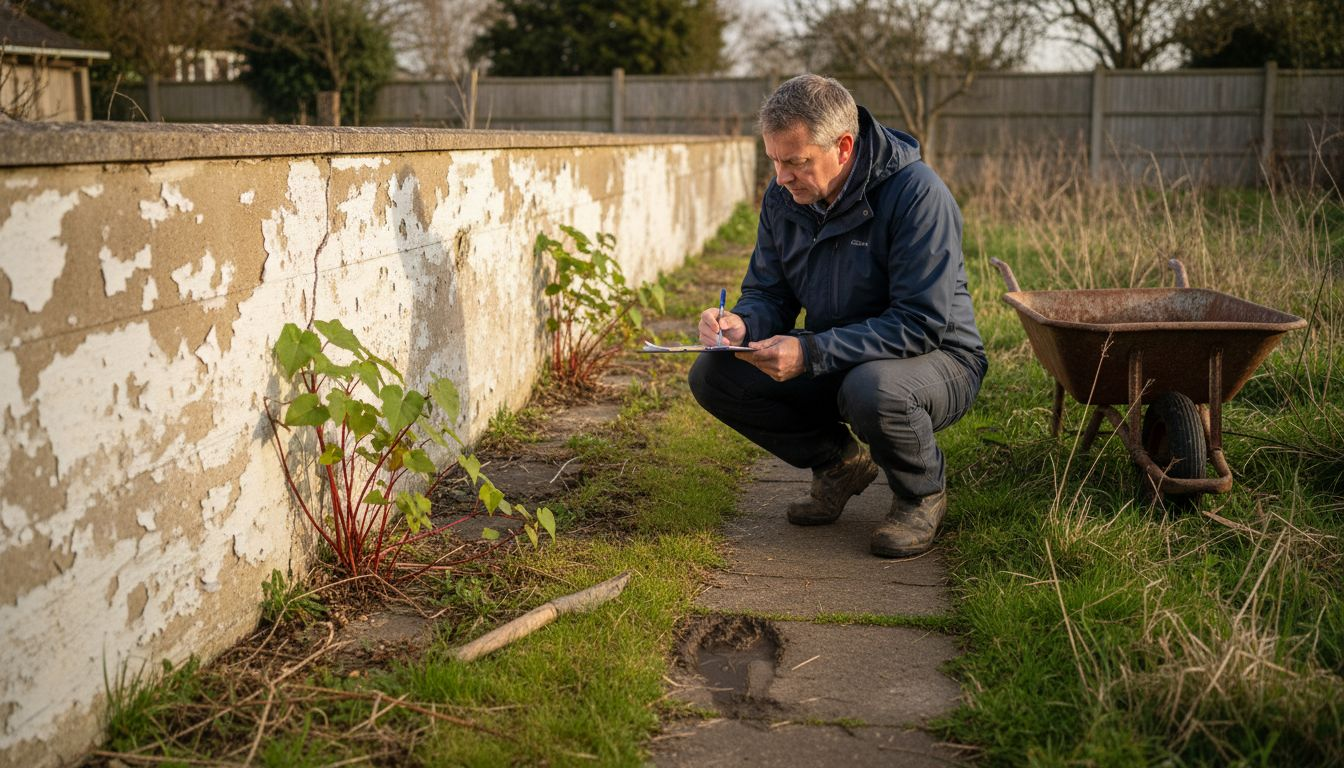
When conducting your survey, pay special attention to areas near building foundations, garden borders, and drainage systems. Japanese Knotweed tends to grow in dense clusters and can quickly dominate an area. Take detailed photographs of any suspicious plants, noting their location and growth pattern for potential expert consultation.

Pro Tip: Remember that visual identification is just the first step. If you suspect Japanese Knotweed, consider getting a professional survey to confirm and assess potential property damage.

3. Assess Surrounding Environment and Spread Risk

Understanding the potential spread of Japanese Knotweed requires a comprehensive analysis of the surrounding environment. This invasive plant is not just a garden problem it can rapidly colonize entire landscapes and cause significant ecological disruption.

UK Government Guidelines reveal that Japanese Knotweed thrives in multiple environments including roadsides, riverbanks, and disturbed ground areas. The plant spreads through an extensive underground rhizome network that can extend several meters from the original growth point.

High Risk Areas to Investigate:

  • Adjacent properties and shared boundaries
  • Nearby water sources like rivers or streams
  • Construction or development sites
  • Areas with previous ground disturbance
  • Locations with existing vegetation changes

According to the Royal Horticultural Society, understanding habitat colonization is crucial. The plant can quickly spread through tiny stem fragments or root pieces, meaning even minimal contact can trigger new growth. A single fragment as small as 0.7 grams can regenerate into a full plant.

When assessing spread risk, examine not just your immediate property but the broader landscape. Look for signs of knotweed in neighboring areas, recent ground works, or landscape alterations that might have inadvertently transported plant material.

Pro Tip: Document your findings with detailed photographs and notes about potential spread vectors. This information can be invaluable for professional surveyors and potential remediation strategies.

4. Record Growth Stage and Condition of Knotweed

Tracking the growth stage and condition of Japanese Knotweed is crucial for understanding its potential impact and planning effective management strategies. Each stage of growth provides critical insights into the plant’s health and potential spread.

Natural Resources Wales recommends specific timing for treatment interventions, highlighting the importance of meticulous documentation throughout the plant’s lifecycle.

Growth Stage Tracking Elements:

  • Spring emergence of red or purple shoots
  • Summer stem development and leaf expansion
  • Late summer flowering period
  • Autumn dieback and winter dormancy

According to the Royal Horticultural Society, the plant undergoes dramatic seasonal transformations. In spring, red or purple shoots emerge rapidly. By summer, these develop into tall hollow stems with distinctive heart-shaped leaves. Late summer brings small white flower clusters, followed by autumn dieback.

When recording the knotweed condition, document specific details such as stem height, density of growth, leaf color, and signs of potential damage to surrounding structures. Take high resolution photographs from multiple angles to create a comprehensive visual record.

Pro Tip: Create a detailed timeline of the knotweed growth, noting exact dates of emergence, peak growth, and any changes in its appearance. This documentation can be invaluable for future treatment and legal considerations.

5. Evaluate Impact on Buildings and Boundaries

Japanese Knotweed represents a significant threat to property structures and boundary lines. Its aggressive root system can penetrate concrete foundations, damage drainage systems, and compromise building integrity with remarkable efficiency.

Royal Horticultural Society research reveals the plant’s potential to create dense thickets that can rapidly undermine structural foundations and landscape boundaries. The plant’s underground rhizome network can extend several meters from the visible growth point, creating hidden damage potential.

Critical Structural Vulnerability Areas:

  • Building foundations
  • Underground pipe systems
  • Retaining walls
  • Property boundary lines
  • Driveways and pathways

When evaluating potential impact, look for signs of structural stress such as emerging cracks in concrete, uneven ground surfaces, or disrupted boundary markers. The root system can exert significant pressure equivalent to several tons per square meter, capable of forcing its way through seemingly impenetrable surfaces.

Careful measurement and documentation of any existing structural damage is crucial. Take precise photographs documenting current conditions, including measuring and mapping any visible cracks or ground deformations. These records can be essential for potential insurance claims or legal documentation regarding property damage.

Pro Tip: Consider engaging a professional surveyor who specializes in invasive plant impact assessment to get a comprehensive evaluation of potential structural risks.

6. Outline Chemical-Free Treatment Options

Chemical-free approaches to Japanese Knotweed management require strategic planning and persistent intervention. Understanding alternative treatment methods can help property owners tackle this invasive plant without relying on traditional chemical herbicides.

Royal Horticultural Society suggests non-chemical control techniques that demand careful and consistent implementation. These methods focus on disrupting the plant’s growth cycle and preventing its regenerative capabilities.

Chemical-Free Treatment Strategies:

  • Repeated cutting and mowing
  • Root excavation and removal
  • Root barrier installation
  • Thermal treatment techniques
  • Mechanical disruption of root systems

Natural Resources Wales emphasizes the critical importance of professional intervention, particularly warning against improper disposal methods like composting. The plant’s extraordinary resilience means that even small root fragments can regenerate into entirely new plants.

Successful non-chemical treatment requires a multiphased approach. Consistent cutting prevents the plant from photosynthesizing and gradually weakens its energy reserves. Professional root barriers can prevent lateral spread, while thermal techniques like direct energy application can cause internal cell damage.

Pro Tip: Document your treatment process meticulously. Photograph each intervention stage and maintain a comprehensive log of your non-chemical management strategy to track progress and effectiveness.

Documenting Japanese Knotweed findings is a critical step that can significantly impact property transactions, legal compliance, and potential future remediation efforts. Precise and comprehensive documentation protects your interests and provides transparency for potential buyers or lenders.

Royal Horticultural Society highlights the substantial impact Japanese Knotweed can have on property transactions, making meticulous record keeping essential for homeowners and potential sellers.

Documentation Essentials:

  • High resolution photographs
  • Detailed location mapping
  • Comprehensive growth stage records
  • Treatment history documentation
  • Professional survey reports
  • Measurement of affected areas

UK Government Guidelines emphasize legal responsibilities surrounding invasive plant species. Your documentation should create a clear narrative of the plant’s presence, potential impact, and management strategies.

When compiling your documentation, create a chronological file that includes dates of discovery, photographic evidence, growth progression, and any professional assessments. Include precise measurements of affected areas and detailed descriptions of the knotweed’s condition and potential structural interactions.

Pro Tip: Consider having a professional survey report prepared, as this can provide authoritative documentation that mortgage lenders and potential buyers will find credible and comprehensive.

Below is a comprehensive table summarizing the essential strategies and steps for identifying and managing invasive plant species, with a focus on Japanese Knotweed.

Main Step Key Points & Actions Benefits/Outcomes
Identify Invasive Species Look for unusual growth, rapid spread, distinctive features; consult experts for verification Early detection helps prevent damage and saves resources
Check for Knotweed Recognize bamboo-like stems, heart-shaped leaves, seasonal changes Enables timely intervention to prevent structural damage
Assess Spread Risk Investigate adjacent areas, water sources, construction sites Prevents ecological disruption by understanding risk zones
Record Growth Stage Document seasonal changes and plant appearance Aids in planning effective treatment strategies
Evaluate Structural Impact Inspect foundations, pipes, and boundaries for signs of damage Helps assess potential property risks and legal implications
Chemical-Free Treatment Use cutting, excavation, barriers, thermal methods Offers eco-friendly alternatives for effective control
Document Findings Maintain photos, maps, and reports for legal clarity Ensures transparency for property transactions and compliance

Protect Your Property with Expert Japanese Knotweed Survey and Treatment

Facing the challenge of identifying and managing invasive plant species like Japanese Knotweed can feel overwhelming. This article outlines the vital steps to spot growth stages, assess spread risks, and evaluate damage to buildings and boundaries. If you are concerned about potential hidden threats on your land, you are not alone. Early detection combined with effective, chemical-free treatment is key to saving your property from costly and long-term damage.

Japanese Knotweed Agency specializes in safe and innovative solutions that align perfectly with the detailed survey steps you learned. We offer advanced direct energy treatments using up to 5000 volts to disable the rhizome networks responsible for the aggressive spread. Our services also include root barrier installations and excavation works that prevent reinfestation and protect your foundations.

https://japaneseknotweedagency.co.uk

Take control of invasive plant issues today. Visit Japanese Knotweed Agency to schedule a comprehensive property survey and explore our chemical-free eradication methods. Don’t wait until the knotweed causes irreversible damage—act now to safeguard your home and investment with trusted professionals ready to help across England, Wales, and Ireland. Learn more about how we can support your survey and treatment needs at Japanese Knotweed Property Survey and Chemical-Free Treatment Solutions.

Frequently Asked Questions

What are the first steps in conducting a Japanese Knotweed survey?

To start a Japanese Knotweed survey, first identify invasive plant species on your property by looking for key characteristics like unusual growth patterns and distinctive leaf shapes. Document your findings with photographs and notes to track any potential growth over time.

How can I visually identify Japanese Knotweed during my survey?

You can spot Japanese Knotweed by looking for hollow bamboo-like stems, heart-shaped leaves, and clusters of small white flowers in late summer. Pay close attention to areas near building foundations and drainage systems, as these are common growth locations.

What surrounding areas should I assess for the spread of Japanese Knotweed?

When evaluating potential spread, inspect adjacent properties, nearby water sources, and areas with previous ground disturbance. Look for signs of knotweed in these locations, as a single stem fragment can lead to new growth if left unchecked.

How do I document the growth stage and condition of Japanese Knotweed?

Track the growth stage of Japanese Knotweed by noting specific details such as the emergence of shoots in spring and flowering in late summer. Take high-resolution photos from different angles and create a timeline to help assess its impact over time.

What impact can Japanese Knotweed have on my property?

Japanese Knotweed can severely damage property structures by penetrating foundations, disrupting drainage systems, and causing landscaping issues. Evaluate vulnerable areas like building foundations and pathways, and document any signs of structural stress.

What are effective chemical-free treatment options for Japanese Knotweed?

Chemical-free treatment options include repeated cutting, root excavation, and thermal treatment techniques. Implement these methods consistently to disrupt the plant’s growth cycle, reducing its spread by up to 80% over time.

Article generated by BabyLoveGrowth

Knotweed Growth Explained: Impacts, Risks, Solutions

Japanese knotweed can lower property values by as much as 20 percent, making it one of the most feared plants in the UK. This invasive species does not just spread above ground—its underground rhizome network can lie dormant for years, ready to take over gardens, building foundations, and open land without warning. Learning how knotweed grows, how to spot its different types, and what control methods work matters for anyone looking to protect their property and avoid costly legal issues.

Table of Contents

Key Takeaways

Point Details
Invasive Growth Characteristics Japanese knotweed exhibits remarkable regenerative capabilities, spreading from tiny rhizome fragments and adapting to various environments, making management difficult.
Legal Obligations for Property Owners Landowners must prevent knotweed from spreading and disclose its presence during property sales to avoid penalties and devaluation.
Effective Control Strategies Managing knotweed requires innovative, chemical-free approaches, including mechanical methods like cutting and precise excavation to prevent regrowth.
Understanding Major Variants Key knotweed types in the UK include Japanese, Giant, Bohemian, and Dwarf knotweed, each with distinct characteristics impacting control strategies.

Defining Knotweed Growth and Spread Patterns

Japanese knotweed represents an exceptionally aggressive invasive plant species with remarkable regenerative capabilities that challenge traditional plant management approaches. According to Gov.uk, this plant spreads through incredibly resilient mechanisms, with rhizome fragments as small as 1 centimeter capable of generating entirely new plant colonies.

The growth patterns of Japanese knotweed are distinguished by their extraordinary adaptability. Rhizome networks form an underground system that can remain dormant for years before suddenly emerging and colonizing new territories. As RHS highlights, these underground structures can persist in soil for extended periods, making complete eradication extremely challenging.

Key characteristics of knotweed growth include:

  • Ability to regenerate from microscopic root fragments

  • Rapid horizontal and vertical spread through rhizome networks

  • Tolerance to diverse soil conditions

  • Potential to penetrate concrete and building foundations

Understanding these complex spread patterns is crucial for property owners and land managers. Knotweed can emerge in seemingly inhospitable environments like roadsides, waste grounds, and near water systems, demonstrating its remarkable survival instincts. Learn more about the consequences of letting Japanese Knotweed spread to fully appreciate the potential long-term risks associated with this persistent plant species.

Major Knotweed Types Found in the UK

The United Kingdom hosts several distinctive knotweed species that pose significant ecological and property management challenges. According to Gov.uk, these invasive plant varieties include Japanese knotweed, Dwarf knotweed, Giant knotweed, and Bohemian (hybrid) knotweed, each presenting unique characteristics and potential risks.

Among these varieties, Japanese knotweed (Fallopia japonica) remains the most notorious. As RHS highlights, this species often emerges alongside two other significant variants: Giant knotweed (Fallopia sachalinensis) and a hybrid known as Bohemian knotweed (Fallopia x bohemica), which results from crossbreeding between Japanese and Giant knotweed species.

Key characteristics of major UK knotweed types include:

Here’s a comparison of major knotweed types found in the UK:

Knotweed Type Distinguishing Features Spread Rate
Japanese Knotweed Most prevalent
Extremely aggressive growth
Very rapid
Giant Knotweed Large leaves
Taller stems
Slower than others
Bohemian Knotweed Hybrid variety
Mixed resilience
Moderate
Dwarf Knotweed Smaller stature
Very persistent
Moderate
  • Japanese Knotweed: Most prevalent, extremely aggressive growth pattern

  • Giant Knotweed: Larger leaf structures, slower spread rate

  • Bohemian Knotweed: Hybrid variant with mixed genetic resilience

  • Dwarf Knotweed: Smaller growth habit, but equally persistent

Understanding these different knotweed varieties is crucial for effective management and prevention.

Explore our varieties of knotweed in the UK to gain deeper insights into their unique characteristics and potential impact on property landscapes.

Lifecycle and Rhizome Expansion Mechanisms

The lifecycle of Japanese knotweed represents an extraordinary testament to botanical resilience, characterized by complex regenerative capabilities that challenge traditional plant management strategies. According to Eprints, this invasive species can regenerate from extraordinarily small rhizome and stem fragments, with even microscopic 1-centimeter sections capable of developing into entirely new plant colonies.

Rhizome networks form the critical infrastructure of knotweed’s survival mechanism. These underground root systems possess an remarkable ability to remain dormant for extended periods, suddenly emerging to colonize new territories. As RHS highlights, rhizome sections can persist in soil for many years, making complete eradication an extremely challenging process.

Key aspects of knotweeds lifecycle include:

  • Extraordinary regenerative potential from tiny root fragments

  • Ability to remain dormant underground for extended periods

  • Rapid horizontal and vertical expansion capabilities

  • Resistance to traditional removal techniques

The complex expansion mechanisms of knotweed make it a formidable ecological challenge.

VIDEO:video_content] Its capacity to spread through seemingly impossible conditions demonstrates a level of adaptive resilience that sets it apart from most plant species. [Learn more about the consequences of letting Japanese Knotweed spread to understand the full potential risks associated with this persistent botanical invader.

Japanese knotweed presents significant legal and property management challenges that can dramatically impact real estate values and ownership responsibilities. According to Gov.uk, landowners bear a critical legal obligation to prevent this invasive species from spreading beyond their property boundaries, with potential consequences ranging from civil penalties to potential prosecution for environmental contamination.

The legal framework surrounding Japanese knotweed is complex and stringent. As RHS highlights, the plant is officially listed on Schedule 9 of the UK Wildlife & Countryside Act as an invasive non-native species. This classification means that deliberately planting or causing knotweed to grow in the wild constitutes a legal offense across England, Wales, Northern Ireland, and the Republic of Ireland.

Key legal and property risks include:

  • Potential property devaluation of 10-20% if knotweed is present

  • Legal liability for spreading knotweed to neighboring properties

  • Mandatory disclosure requirements during property sales

  • Potential costs for professional eradication and remediation

  • Risk of prosecution for improper waste disposal

Property owners must approach knotweed management with extreme caution and professional guidance. Explore our free Japanese Knotweed Survey to understand the specific risks and legal obligations associated with this invasive plant species on your property.

Chemical-Free Control and Treatment Options

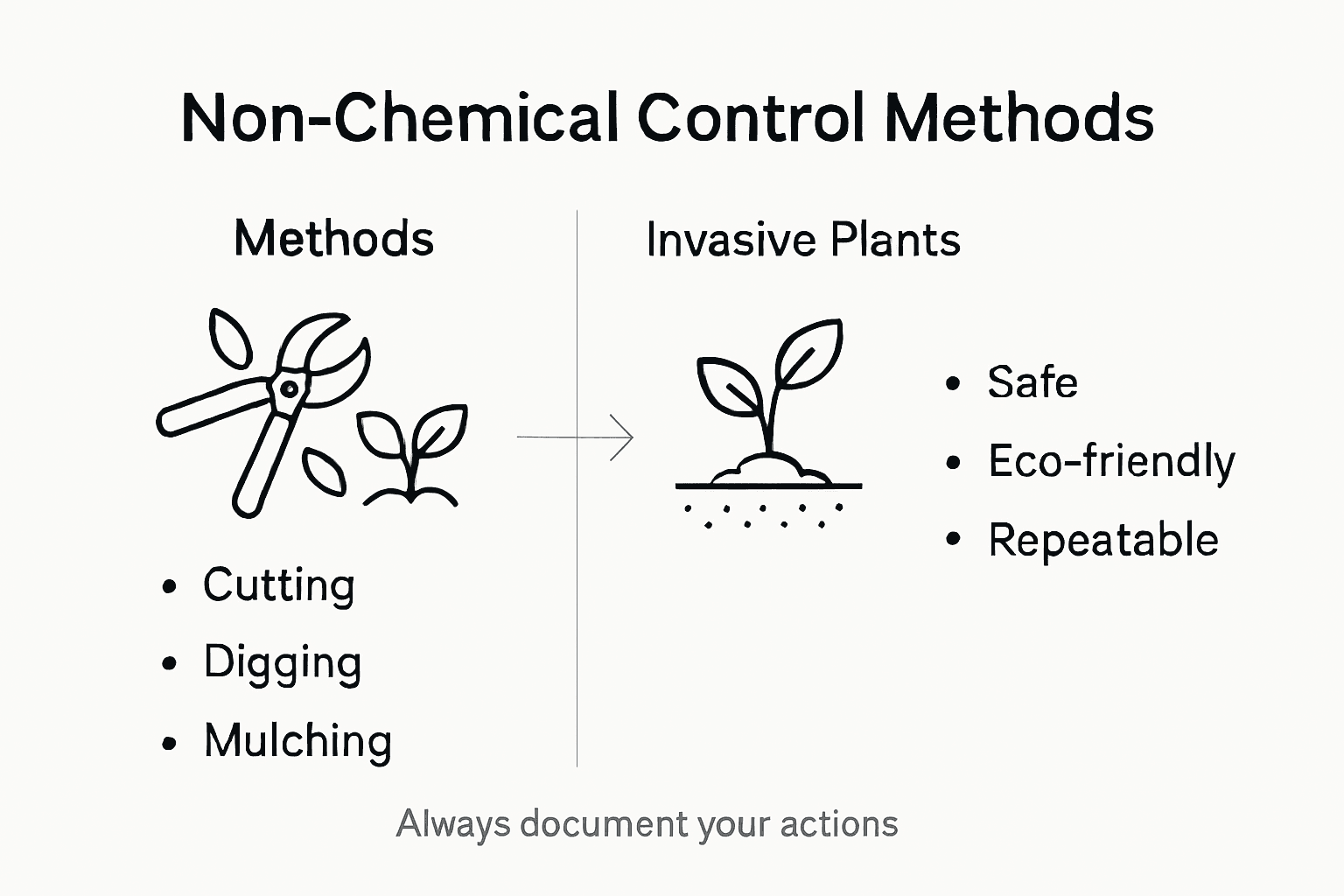
Japanese knotweed management demands innovative and environmentally conscious approaches that go beyond traditional chemical interventions. According to Gov.uk, non-chemical methods offer multiple strategies for controlling this invasive species, including carefully executed techniques such as pulling, digging, cutting, burning, and strategic disposal that prioritize environmental safety and human health.

The mechanical control of Japanese knotweed requires precision and consistent effort. As RHS highlights, cutting techniques must be meticulously implemented every 2-4 weeks during the growing season to prevent regrowth. However, cutting alone proves insufficient for complete eradication and should be integrated with complementary treatment methods.

Effective chemical-free control strategies include:

knotweed root removal

  • Repeated cutting to exhaust underground rhizome networks

  • Systematic removal of plant material to prevent regeneration

  • Precise root zone excavation and containment

  • Targeted thermal treatment techniques

  • Comprehensive site monitoring and management

Successful knotweed management demands a holistic, multi-faceted approach that adapts to the specific environmental conditions of each infestation. Explore our blog for more insights into knotweed management to understand the nuanced strategies professionals employ in combating this resilient invasive species.

Take Control of Japanese Knotweed Growth Before It Spreads Further

The article highlights the relentless growth and spread of Japanese knotweed through its resilient rhizome networks and underground expansion. If you are worried about property damage, legal risks, or the challenges of eradicating this invasive species, you need a solution that targets the root of the problem. Traditional removal methods often fail because knotweed can regenerate from tiny fragments. Don’t let this aggressive plant reduce your property value or cause costly legal issues.

Recommended Image

At Japanese Knotweed Agency, we specialize in chemical-free treatments that deliver high-voltage energy directly to the rhizomes, damaging the plant internally to stop regrowth. Our expert team also provides root barrier installations and comprehensive excavation services to prevent further spread. Discover how our proven methods protect your land and comply with legal requirements. Act now to safeguard your property and learn more about our services by visiting our main site or requesting a free invasive weed survey. Take the first step in effective knotweed control today.

Frequently Asked Questions

What are the growth patterns of Japanese knotweed?

Japanese knotweed exhibits aggressive growth patterns characterized by rapid horizontal and vertical spread through extensive rhizome networks. These networks can regenerate even from small root fragments, making management very challenging.

How does Japanese knotweed spread?

Japanese knotweed spreads primarily through resilient rhizome fragments. Even tiny sections of 1 centimeter can develop into new colonies, allowing the plant to invade a variety of environments, including roadsides and disturbed areas.

What risks does Japanese knotweed pose to properties?

The presence of Japanese knotweed can lead to significant property devaluation (10-20%), legal liabilities for spreading it to neighboring properties, and mandatory disclosure requirements during property sales. Additionally, property owners may face costs for professional eradication efforts.

What are effective non-chemical methods to control Japanese knotweed?

Non-chemical control methods for Japanese knotweed include repeated cutting to exhaust rhizome networks, systematic removal of plant materials, precise root zone excavation, and targeted thermal treatments. A comprehensive monitoring plan is essential for successful management.