TL;DR:
- Legal duties require landowners and councils to actively manage Japanese Knotweed to avoid penalties.
- Proactive, sustainable eradication methods like thermo-electric treatment and root barriers are effective alternatives to chemicals.
- Early action and documented management plans help maintain compliance and protect ecological and property interests.
Many homeowners and councils assume that invasive plants like Japanese Knotweed are simply a nuisance to manage at their own pace. That assumption carries serious legal risk. Across England, Wales, and Ireland, specific legislation places binding duties on both private landowners and local authorities, with penalties for non-compliance that can affect property transactions, public liability, and even criminal records. This guide clarifies exactly what the law requires, what councils must do in practice, which chemical-free eradication methods are most effective, and how to weigh sustainable options against conventional chemical approaches. Understanding your obligations now is far less costly than responding to enforcement action later.
Table of Contents
- Understanding legal obligations for invasive plants
- What councils must do: enforcement and public land duties
- Chemical-free eradication: viable options for councils and homeowners
- Chemical-free versus chemical control: risks, benefits and compliance
- Why proactive, sustainable council action matters more now than ever
- Get expert help with council or homeowner invasive plant obligations
- Frequently asked questions
Key Takeaways
| Point | Details |
|---|---|
| Legal duties apply | Homeowners and councils have binding legal obligations to control and prevent the spread of invasive plants like Japanese Knotweed. |
| Councils focus on public land | Councils prioritise monitoring and eradicating invasives on their own property and notify private owners if action is needed. |
| Chemical-free solutions available | Mechanical, organic, and integrated methods offer effective, eco-friendly control for most scenarios—especially in sensitive areas. |
| Compliance prevents penalties | Proactive action avoids legal fines, enforcement, and reputational risks for both individuals and authorities. |
| Sustainability is the future | Adopting chemical-free and integrated approaches now prepares for likely restrictions and builds public trust. |
Understanding legal obligations for invasive plants
The legal framework surrounding invasive plants in Britain and Ireland is more prescriptive than most people realise. Japanese Knotweed, in particular, sits at the centre of several overlapping pieces of legislation that affect what you can and cannot do with it on your property.
Under the Wildlife and Countryside Act 1981, it is a criminal offence to plant Japanese Knotweed or cause it to grow in the wild in England and Wales. The phrase ‘cause to grow’ is significant: it extends liability beyond deliberate planting to negligent spread, meaning if Knotweed migrates from your land onto neighbouring property or a public space, you may be held responsible. The knotweed legal obligations that apply to you will depend on your location and the extent of any infestation.
The Environmental Protection Act 1990 classifies Japanese Knotweed as controlled waste. This means any soil or plant material contaminated with Knotweed must be disposed of by a licensed waste carrier, and fly-tipping such material is a prosecutable offence. ‘Controlled waste’ is a legal term meaning the material requires formal management throughout its disposal chain, from removal to final destination.
In Ireland, laws on invasive plants are equally firm. Regulation 49(2) of S.I. No. 477/2011 makes it an offence to plant, disperse, or allow the spread of invasive species, including Japanese Knotweed. ‘Dispersal’ here covers physical movement of plant fragments, contaminated soil, or water carrying rhizome material. A rhizome is the underground stem network through which Knotweed regenerates; even a fragment as small as 0.7 grams can establish a new colony.
As the RHS invasive plant guidance confirms, homeowners are legally obligated to prevent Japanese Knotweed from spreading across England, Wales, and Ireland.
Key legal definitions you need to know:
- Cause to grow: Liability extends to negligent or accidental spread, not just deliberate planting
- Controlled waste: Knotweed-contaminated material requiring licensed disposal
- Dispersal: Movement of plant fragments, soil, or water containing rhizome material
- Enforcement notice: A formal instruction from a council or authority requiring remediation within a set timeframe
Failing to act on a confirmed Japanese Knotweed infestation is not a passive position. It is an active legal risk that compounds over time as the plant continues to spread.
Penalties for non-compliance include fines of up to £5,000 in magistrates’ courts, potential civil liability for damage to neighbouring properties, and complications with mortgage lenders who view untreated infestations as a material risk.
What councils must do: enforcement and public land duties
Once legal obligations are understood at a personal level, it becomes equally important to know what your local council is required to do and how they are likely to respond if Knotweed is identified near your property.

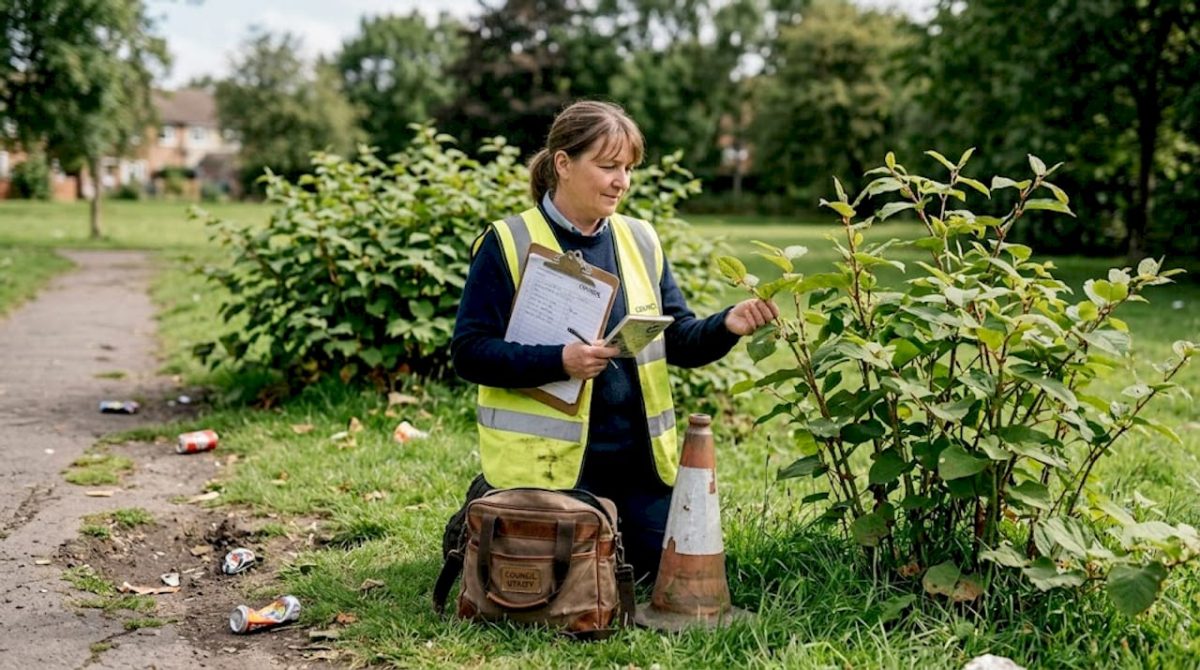
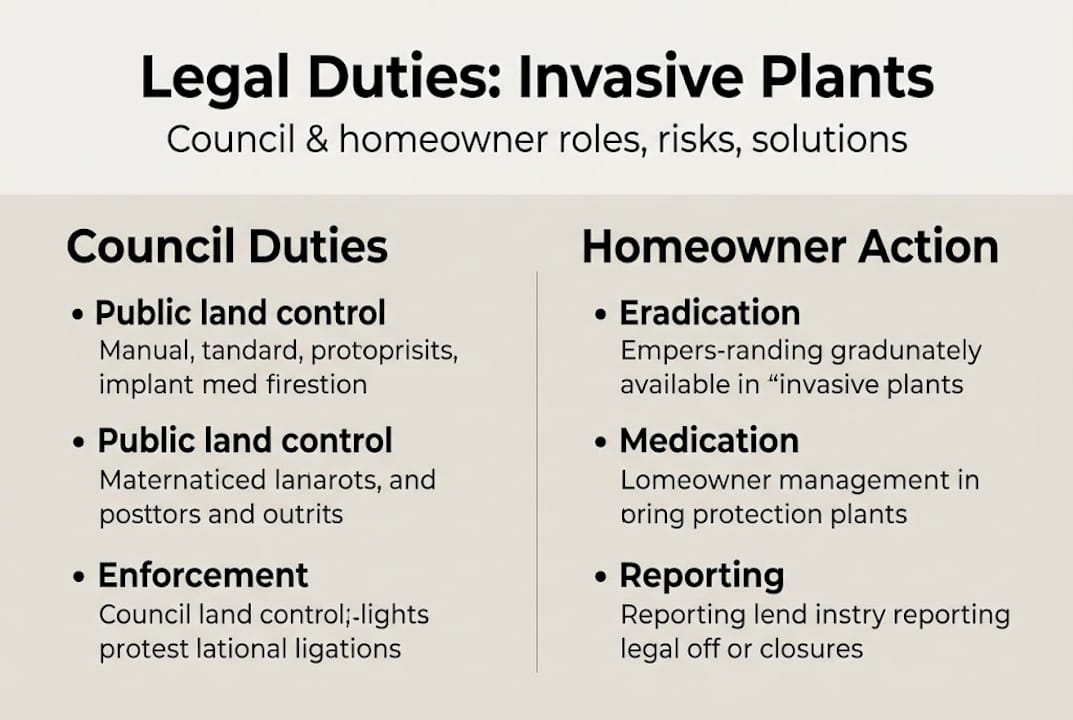
Councils across England, Wales, and Ireland have a direct duty to manage invasive plants on public land. This includes highways, parks, riverbanks, and other council-owned or managed spaces. Where infestations are identified, councils are expected to undertake annual treatment programmes where site conditions allow. Offaly County Council in Ireland, for example, has managed Knotweed on public land since 2014, treating sites annually where practical and notifying private owners when spread onto adjacent land is identified.
Council responsibilities typically follow a structured process:
- Site identification and monitoring: Regular surveys of public land to detect invasive plant colonies
- Direct eradication treatment: Application of approved control methods on council-managed land
- Private owner notification: Written notification if Knotweed on public land is spreading towards private property, or vice versa
- Enforcement escalation: Formal notices issued if private landowners fail to act on confirmed spread
- Public awareness: Guidance issued to local communities on identification and reporting
Below is an overview of typical council escalation steps following invasive plant discovery:
| Stage | Council action | Typical timeframe |
|---|---|---|
| Discovery | Site survey and identification | Within 4 weeks |
| Notification | Letter to affected private owners | Within 8 weeks |
| Monitoring | Follow-up site visits | Every 3 to 6 months |
| Enforcement | Formal notice issued if no action | 3 to 12 months |
| Legal proceedings | Court referral for persistent non-compliance | Variable |
If you receive a council notification about Knotweed, the way you respond matters enormously. Understanding how to manage knotweed in public spaces can inform your dialogue with the council and demonstrate good faith.
Pro Tip: If a council contacts you about Japanese Knotweed on your property, respond in writing within 14 days. Acknowledge receipt, request a site meeting, and ask for the council’s own treatment plan if the plant originated on their land. Documented, proactive engagement significantly reduces the likelihood of enforcement escalation.
You can also report knotweed issues to your local authority directly, which establishes a record and may prompt council action on adjacent public land.
Chemical-free eradication: viable options for councils and homeowners
With legal obligations and council procedures understood, the practical question becomes: what are the most effective eradication methods, particularly for those seeking to avoid chemical herbicides?
Sustainable eradication methods have advanced considerably in recent years, giving both councils and homeowners a credible set of alternatives to glyphosate-based treatments. The key chemical-free eradication options include:
- Mechanical excavation: Physical removal of the rhizome network to a depth of up to 3 metres. Effective for discrete infestations where ground conditions allow deep digging. All excavated material must be disposed of as controlled waste.
- Root barrier installation: Heavy-duty geomembrane barriers installed vertically in the ground to prevent rhizome spread. Particularly effective for protecting buildings and infrastructure from encroachment.
- Thermo-electric treatment: Direct delivery of electrical energy up to 5,000 volts into the plant material onsite, causing internal cell damage and depleting the energy reserves held within the rhizome network. Effective across multiple treatment cycles without chemical residues.
- Soil sifting: Screening of contaminated soil to physically separate and remove rhizome fragments before reuse or disposal.
- Organic compost smothering: The KNOT project in Ireland demonstrated success using bespoke organic compost applied to suppress Knotweed regrowth, offering a low-impact option for larger, lower-risk sites.
The chemical-free eradication workflow you choose should reflect the specific site conditions, proximity to watercourses, and the scale of infestation. Thermo-electric treatment is particularly well suited to sites where chemical application is restricted or where repeat access is feasible.
Pro Tip: Before committing to excavation, commission a full site survey to map the rhizome extent. Excavating without knowing the spread can mobilise rhizome fragments and worsen the infestation. Understanding why non-chemical methods are increasingly preferred also helps you make the case to planning authorities or mortgage lenders.
Chemical-free versus chemical control: risks, benefits and compliance
A balanced assessment of control methods requires an honest look at what glyphosate offers versus what it costs, ecologically and legally.
| Factor | Glyphosate treatment | Chemical-free methods |
|---|---|---|
| Effectiveness | Proven over multiple seasons | Equally effective with correct method choice |
| Environmental impact | Soil and water contamination risk | Minimal residual impact |
| Watercourse use | Restricted; specialist licence required | Suitable in most riparian settings |
| Labour intensity | Lower per season | Higher initially |
| Regulatory trend | Increasing restrictions | Growing acceptance and preference |
| Compliance risk | Rising as bans expand | Low and improving |
Glyphosate remains a legally available tool in 2026, but its use near watercourses already requires a specialist licence from the Environment Agency in England. Many councils have voluntarily restricted or eliminated its use on public land in response to public health concerns and growing evidence of ecological impact. The organic compost treatment case from Ireland illustrates that chemical-free approaches can match herbicide results in the right conditions, particularly where spread is moderate and site access is reliable.
Key considerations when choosing between approaches:
- Proximity to water: Chemical application near rivers, streams, or drainage ditches requires additional licences and carries pollution risk
- Ecological sensitivity: Sites with protected species or habitats require chemical-free solutions to satisfy planning and environmental conditions
- Property transactions: Many mortgage lenders now require a management plan; chemical-free programmes with documented progress are increasingly accepted
- Long-term cost: Chemical treatment often requires five or more annual cycles; mechanical or thermo-electric approaches may resolve infestations faster with fewer repeat visits
The chemical-free control benefits extend beyond immediate compliance. Sustainable methods protect biodiversity, preserve soil structure, and position both councils and homeowners favourably as regulatory pressure on herbicide use continues to increase. Reviewing removal best practices before any programme begins ensures you select the most appropriate method from the outset.
Why proactive, sustainable council action matters more now than ever
There is a temptation, particularly in cash-constrained public bodies, to do the legal minimum: treat what you must, notify where required, and respond to enforcement triggers rather than prevent them. In our experience, this approach consistently costs more and achieves less than early, integrated action.
Waiting for a formal enforcement trigger means the infestation has already expanded, neighbouring landowners may have grounds for civil action, and the remediation bill has grown significantly. Beyond cost, there is reputational risk. Councils that manage invasive species proactively build community trust; those that respond only under legal pressure tend to face greater scrutiny in public planning and environmental consultations.
The shift towards chemical restrictions is not a distant possibility. It is already reshaping procurement decisions across local government. Councils and homeowners who invest now in long-term sustainability through thermo-electric treatment programmes, root barrier strategies, and documented management plans are building compliance resilience. Genuine environmental leadership means moving beyond box-ticking. It means adopting methods that will remain legally viable, ecologically sound, and publicly defensible for years to come.
Get expert help with council or homeowner invasive plant obligations
Whether you are a homeowner who has just discovered Japanese Knotweed on your property or a council officer managing a complex public land programme, acting quickly and with the right guidance is essential.

Japanese Knotweed Agency offers chemical-free solutions with a 95% success rate, including thermo-electric treatment, root barrier installation, and full excavation works. We survey properties across England, Wales, and Ireland and provide management plans that satisfy mortgage lenders and planning authorities alike. For councils managing invasive plants on council land, we provide scalable treatment programmes tailored to public land requirements. If you have questions before taking action, our frequently asked questions resource is a practical starting point.
Frequently asked questions
Are councils required to remove Japanese Knotweed from private land?
Councils are obligated to control Knotweed on public land but typically notify or enforce action for private landowners rather than remove it themselves, as confirmed by council Knotweed duties across Ireland and the UK.
What penalties can homeowners face for ignoring invasive plants?
Homeowners may face fines or formal enforcement if they allow Japanese Knotweed or other invasive species to spread beyond their property or dispose of them illegally, as UK and Irish law makes spreading an offence.
Which chemical-free options control invasive plants most effectively?
Mechanical excavation, root barriers, and thermo-electric treatment are the most effective chemical-free approaches, as detailed in sustainable eradication guidance, particularly for sensitive or watercourse-adjacent sites.
Is using glyphosate for Knotweed control likely to be banned soon?
Many councils already restrict glyphosate use due to health and environmental concerns, and organic compost research from Ireland shows chemical-free methods are increasingly viable and preferred for sensitive locations.