TL;DR:
- Japanese Knotweed’s rhizome network can extend up to 7 meters horizontally and 3 meters deep underground.
- Effective chemical-free removal involves excavation, smothering, or repeated cutting, with long-term monitoring.
- Accurate identification and professional help are crucial for successful and safe eradication efforts.
Invasive plants with extensive underground root systems are one of the most pressing challenges facing homeowners across England, Wales, and Ireland. Japanese Knotweed, the primary invasive rhizome network plant in these regions, can push through tarmac, crack foundations, and regenerate from the smallest fragment left in soil. Many homeowners attempt removal without fully understanding what lies beneath the surface, and that is precisely where problems begin. This guide walks you through identification, the biology of rhizome networks, and the most effective chemical-free treatment options available today.
Table of Contents
- What is a rhizome network and why does it matter?
- Common rhizome network plants in England, Wales, and Ireland
- Safe and effective chemical-free treatment methods
- Situational strategies and expert advice for eradication
- The reality most guides miss: chemical-free treatment requires patience and precision
- Ready for expert help? Explore guaranteed chemical-free solutions
- Frequently asked questions
Key Takeaways
| Point | Details |
|---|---|
| Rhizome networks spread fast | Japanese Knotweed rhizomes can cover several metres underground and regrow from tiny fragments. |
| Professional treatment preferred | Experts recommend excavation or smothering for chemical-free control, not risky DIY digging. |
| Misidentification is common | Russian Vine and Bindweed are often confused with Knotweed but require different management. |
| Monitoring is essential | You need to check your property for at least 3–5 years to prevent regrowth from dormant rhizomes. |
| Tailor control to location | Certain scenarios, such as watercourse proximity, demand special strategies for effective eradication. |
What is a rhizome network and why does it matter?
A rhizome is an underground stem that grows horizontally and vertically through soil, storing energy and sending up new shoots at multiple points. Unlike a standard root system, a rhizome network does not simply anchor a plant. It acts as a self-sustaining energy reserve, capable of surviving long after the visible plant above ground has been cut back or removed.
Japanese Knotweed’s rhizome system is particularly aggressive. The rhizomes extend 7m horizontally and reach 3m deep, meaning the plant occupies far more space underground than its visible canopy suggests. This is why cutting back the canes each season gives the impression of control without actually addressing the problem.
What makes this species especially difficult is its regenerative capacity. Even a 1cm fragment of rhizome left in the soil can produce a new plant. This single fact changes everything about how removal must be approached.
Key characteristics of Japanese Knotweed’s rhizome network:
- Lateral spread: Up to 7 metres from the visible plant
- Vertical depth: Up to 3 metres below the surface
- Regeneration threshold: As little as 1cm of rhizome material
- Energy storage: The network sustains regrowth even after repeated cutting
- Dormancy: Rhizomes can remain viable in soil for decades
Conventional digging often makes matters worse. Each time a spade breaks through the rhizome network without controlled removal, fragments are redistributed through the soil. Exploring non-chemical removal methods before starting any work is strongly advisable, and understanding safe manual removal steps is equally important.
Pro Tip: Before touching any suspected invasive plant, assess the full extent of the rhizome network. What you see above ground is rarely an accurate guide to what lies beneath.
Common rhizome network plants in England, Wales, and Ireland
Accurate identification is the foundation of effective management. Treating the wrong plant wastes time, money, and effort. Several species are commonly mistaken for Japanese Knotweed, particularly Russian Vine and Bindweed, and this misidentification is far more frequent than most homeowners realise.
Japanese Knotweed (Reynoutria japonica)
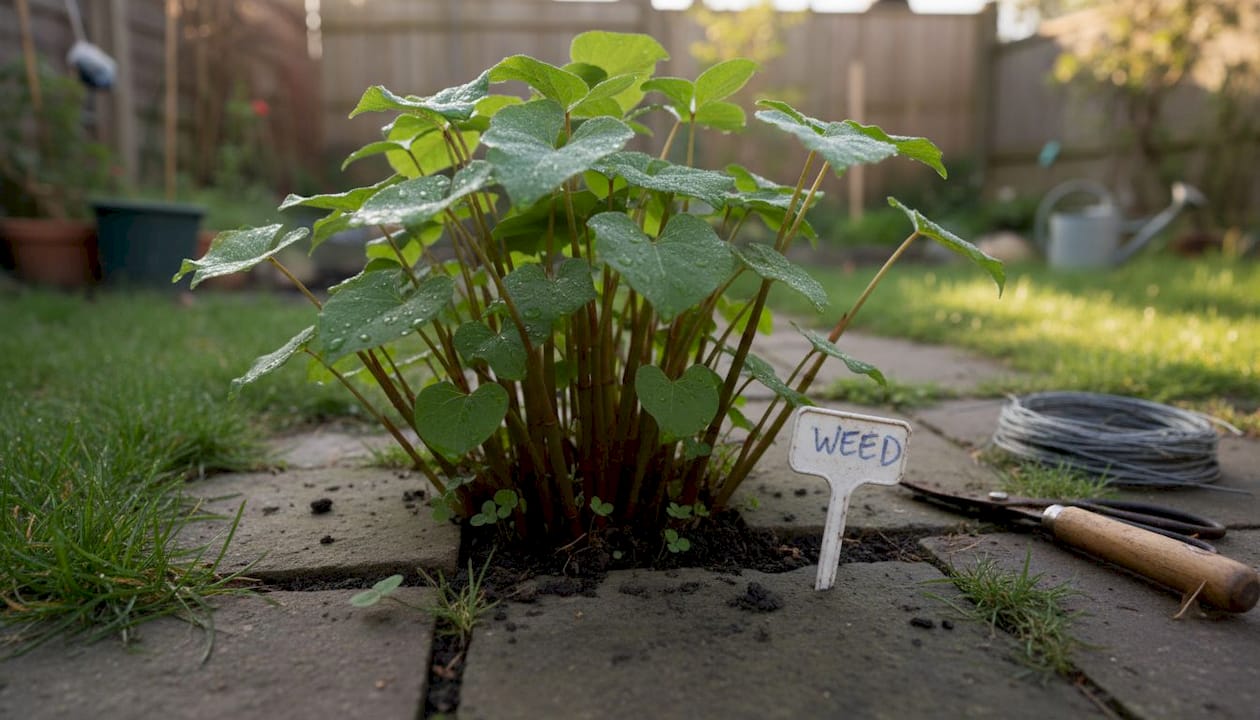
This is the species of greatest concern. It forms dense thickets reaching 2 to 3 metres in height, with hollow, bamboo-like canes, heart-shaped leaves with a flat base, and small creamy-white flowers in late summer. The rhizome network is orange-brown internally when cut.
Russian Vine (Fallopia baldschuanica)
Often called Mile-a-Minute, Russian Vine is a vigorous climber frequently confused with Knotweed due to its similar leaf shape and rapid growth. However, it is primarily a surface climber with far less aggressive underground behaviour.
Bindweed (Convolvulus arvensis)
Bindweed spreads through both rhizomes and seeds, but its rhizome system is far shallower and less extensive than Japanese Knotweed. Its distinctive trumpet-shaped flowers are a reliable distinguishing feature.
| Plant | Rhizome depth | Spread rate | Leaf shape | Stem type |
|---|---|---|---|---|
| Japanese Knotweed | Up to 3m | Very high | Heart-shaped, flat base | Hollow, bamboo-like |
| Russian Vine | Shallow | Moderate | Oval, pointed | Climbing, twining |
| Bindweed | Up to 1m | Moderate | Arrow-shaped | Twining, thin |
Symptoms to look for with each species:
- Japanese Knotweed: Bamboo-like canes, zigzag growth pattern, orange rhizome interior
- Russian Vine: Rapid surface climbing, white flower clusters, minimal underground spread
- Bindweed: White or pink trumpet flowers, twining stems, shallower root system
For detailed guidance on safe identification and handling, reviewing Knotweed removal safety tips before proceeding is strongly recommended. If you are uncertain about what you have found on your property, reporting Knotweed to the appropriate authority is a responsible first step.
Pro Tip: Examine the cut stem. Japanese Knotweed rhizomes are distinctively orange-brown inside. This single check can prevent costly misidentification.
Safe and effective chemical-free treatment methods
Once identification is confirmed, the focus shifts to removal. The core chemical-free methods are excavation, smothering, and repeated cutting, each with specific advantages and limitations depending on your situation.
-
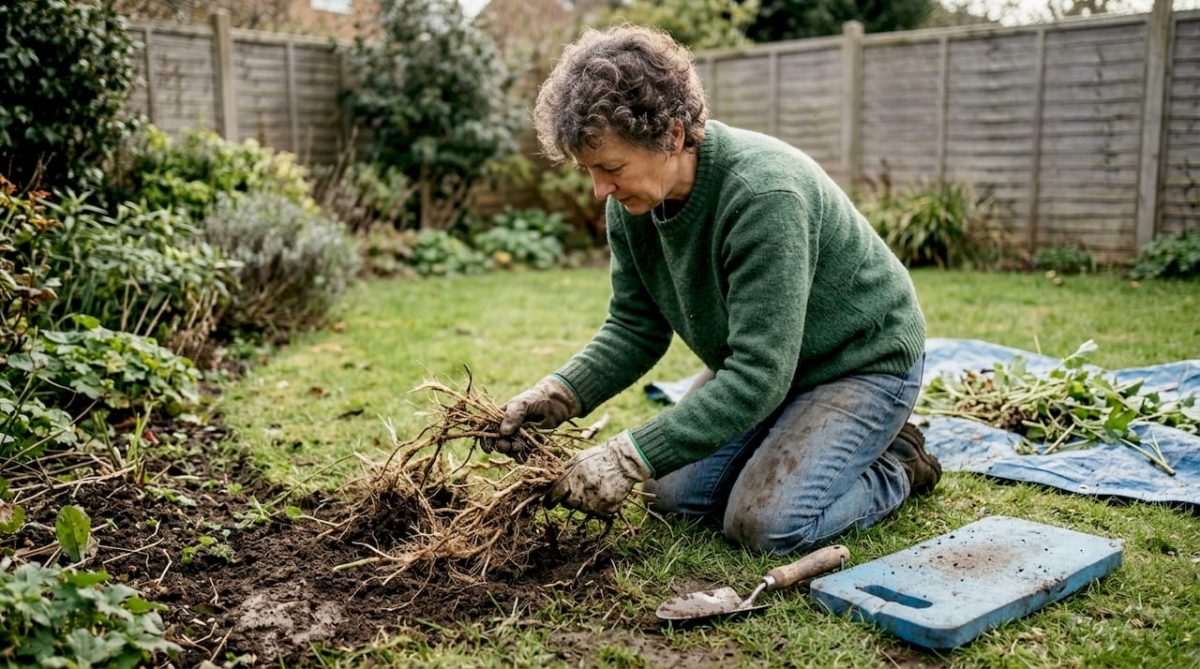
Professional excavation: The fastest method. All rhizome material is physically removed from the ground. This requires specialist equipment, careful soil screening, and controlled disposal at a licensed facility, since Knotweed-contaminated soil is classified as controlled waste under UK legislation.
-
Smothering and covering: Suitable for smaller infestations. A heavy-duty root barrier membrane is laid over the area, extending at least 3 metres beyond the visible growth in all directions. This must remain in place for a minimum of one full growing season, often longer.
-
Repeated cutting: A long-term strategy that gradually depletes the rhizome’s energy reserves by preventing photosynthesis. It is slow, requiring consistent effort over several years, but can be effective when combined with other approaches.
| Method | Speed | Effectiveness | Disposal required |
|---|---|---|---|
| Professional excavation | Fast | Very high | Yes, licensed facility |
| Smothering/covering | Slow | Moderate to high | No |
| Repeated cutting | Very slow | Moderate | No |
‘Regrowth can occur from 1cm fragments; professional help significantly reduces the risk of accidental spread and long-term reinfestation.’
DIY attempts carry real risk. Disturbing the rhizome network without controlled removal can spread fragments across a wider area, potentially making the infestation significantly worse. Reviewing safe Knotweed excavation guidance and removal best practices before beginning any work is essential. Preparation is equally critical, and understanding Knotweed excavation preparation will save considerable time and cost.
Pro Tip: Monitoring must continue for at least 3 to 5 years after treatment. Dormant rhizomes can survive in soil for decades and re-emerge when conditions change.
Situational strategies and expert advice for eradication
Not all infestations are equal, and the right approach depends heavily on your specific circumstances. Several situational factors significantly affect which method is most appropriate and how it should be carried out.
Properties near rivers, streams, or drainage channels require particular care. Excavation is strongly preferred in these situations because cutting or disturbing the plant risks rhizome fragments entering the watercourse, where they can establish new colonies downstream. This is not merely an inconvenience. Introducing Japanese Knotweed to a watercourse can carry legal consequences under the Wildlife and Countryside Act 1981.
The RHS expert eradication resources confirm that dormant rhizomes and watercourse proximity require specific, tailored approaches, and that a survey before treatment is the most reliable starting point.
Homeowner checklist before, during, and after treatment:
Before treatment:
- Commission a professional survey to map rhizome extent and depth
- Confirm species identification with a qualified surveyor
- Check proximity to watercourses, boundaries, and structures
- Review sustainable eradication advice relevant to your site
During treatment:
- Avoid unnecessary soil disturbance outside the treatment zone
- Bag and dispose of all cuttings as controlled waste
- Follow the eradication workflow steps provided by your specialist
- Do not compost any plant material
After treatment:
- Inspect the treated area at the start of each growing season
- Document any regrowth with photographs and dates
- Maintain barrier membranes where installed
- Continue monitoring for a minimum of 3 to 5 years
Pro Tip: Always work with a PCA-accredited professional. Accreditation means your treatment plan comes with an independently backed guarantee, which is essential if you are selling your property or dealing with a mortgage lender’s requirements.
The reality most guides miss: chemical-free treatment requires patience and precision
Many homeowners approach Japanese Knotweed removal expecting a single intervention to resolve the problem. The reality, drawn from years of professional experience across England, Wales, and Ireland, is considerably more demanding.
Commercial claims around rapid eradication should be viewed with measured scepticism. The RHS confirms excavation and smothering as the most reliably effective chemical-free approaches, and independent benchmarks for newer methods remain limited. That does not mean innovation is without merit, but it does mean homeowners should ask hard questions before committing to any treatment programme.
Misidentification remains one of the most common and costly errors we encounter. Homeowners invest significant effort treating Russian Vine or Bindweed with the same urgency as Japanese Knotweed, or conversely, underestimate a genuine Knotweed infestation because the visible growth appears modest.
Dormant rhizomes are the other factor most guides underplay. A site can appear completely clear for two or even three years before regrowth emerges. This is not treatment failure. It is the biology of the plant asserting itself, and it is why the eradication safety tips we follow always include long-term monitoring as a non-negotiable element.
‘Patience, professional advice, and persistent monitoring are your best tools when managing invasive rhizome network plants.’
Pro Tip: Set a calendar reminder at the start of each growing season to inspect previously treated areas. Early detection of regrowth is always easier and less costly to address than a re-established infestation.
Ready for expert help? Explore guaranteed chemical-free solutions
If you have identified an invasive rhizome network plant on your property, taking the right next step matters enormously. Japanese Knotweed Agency provides professional, chemical-free treatment and eradication services across England, Wales, and Ireland, backed by expertise and a commitment to environmentally responsible outcomes.

From understanding the chemical-free treatment process to browsing our detailed Knotweed FAQs, you will find the guidance and reassurance you need to move forward with confidence. Our invasive plant solutions are designed specifically for homeowners facing persistent rhizome network challenges, offering property surveys, excavation, root barrier installation, and thermo-electric treatment delivered by qualified specialists.
Frequently asked questions
How deep and wide can Japanese Knotweed rhizomes spread?
Rhizome networks can extend 7m horizontally and 3 metres deep, making removal far more complex than the visible plant suggests.
Can a tiny fragment of rhizome cause regrowth?
Yes. Even a 1cm rhizome fragment is sufficient to trigger regrowth, which is why professional control and careful disposal are essential at every stage.
What chemical-free method works fastest for Japanese Knotweed?
Professional excavation is the fastest option, though it requires specialist waste disposal at a licensed facility. Smothering is effective but takes at least one full growing season.
How long should monitoring continue after treatment?
Monitoring should continue for a minimum of 3 to 5 years, since dormant rhizomes can survive in soil for decades before re-emerging.
Are Russian Vine and Bindweed as invasive as Japanese Knotweed?
Neither species carries the same aggressive rhizome behaviour, but misidentification is common and can lead to unnecessary treatment costs or, worse, underestimating a genuine Knotweed infestation.