

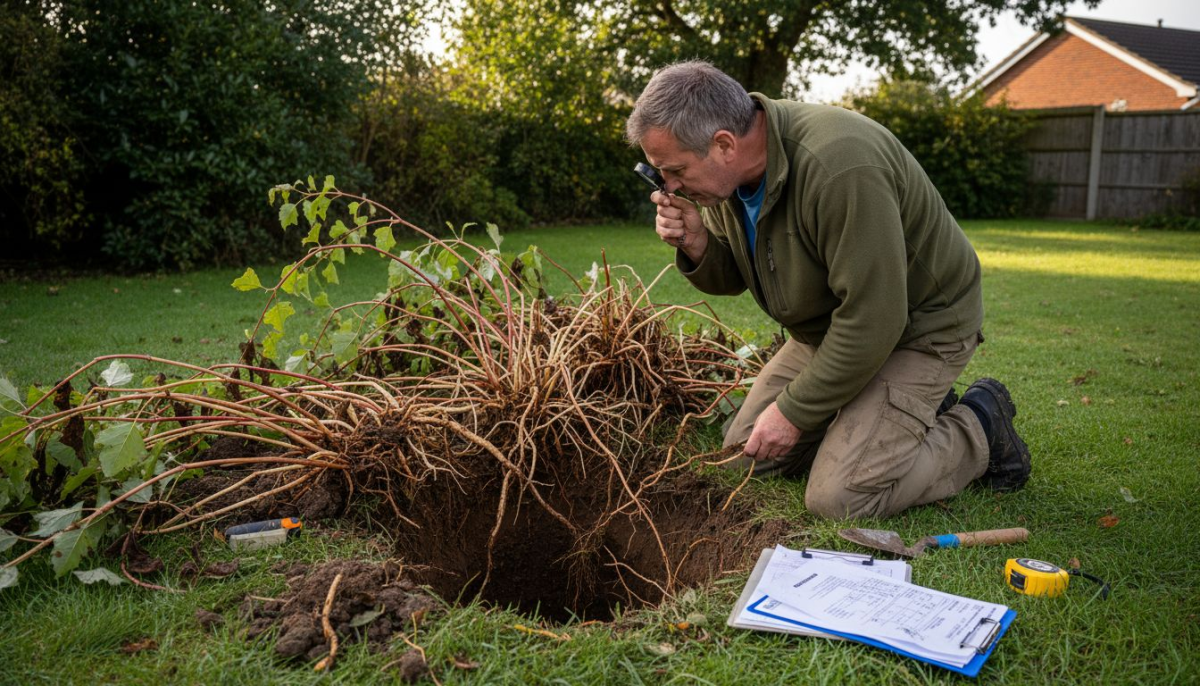
Japanese Knotweed can regenerate from fragments weighing just 0.7 grams, spreading its underground rhizome network up to seven metres horizontally from the visible plant. This extraordinary regenerative power makes eradication a technical challenge that demands deep knowledge of root biology, precise detection methods, and innovative chemical-free treatments to protect your property effectively.
Table of Contents
- Introduction To Root Systems And Invasive Species
- Challenges Posed By Japanese Knotweed Root Systems
- Chemical-Free Methods For Eradicating Invasive Root Systems
- Property Survey Techniques For Detecting And Mapping Japanese Knotweed
- Role And Installation Of Root Barriers In Invasive Species Management
- Common Misconceptions And Pitfalls In Root System Eradication
- Bringing Understanding Into Action: Choosing And Implementing Solutions
- Protect Your Property With Expert Chemical-Free Knotweed Solutions
- Frequently Asked Questions
Key Takeaways
| Point | Details |
|---|---|
| Rhizome regeneration | Japanese Knotweed rhizomes regrow from tiny fragments, making partial removal attempts counterproductive. |
| Chemical-free energy treatments | Direct voltage disrupts root cell energy, achieving eradication within 18 months without environmental harm. |
| Detection accuracy | Combining ground-penetrating radar with visual surveys delivers 95% accuracy in mapping underground spread. |
| Root barrier containment | Physical barriers installed correctly contain rhizome spread with 90% efficacy post-treatment. |
| Cutting worsens infestations | Mowing or cutting stimulates root growth rather than controlling the plant. |
Introduction to Root Systems and Invasive Species
Root systems are underground plant structures responsible for water absorption, nutrient uptake, and anchoring plants into soil. For most plants, roots support healthy growth. Japanese Knotweed operates differently.
Unlike typical roots, Japanese Knotweed develops thick underground stems called rhizomes that store massive amounts of energy and nutrients. These rhizomes function as survival engines, allowing the plant to weather harsh winters, survive cutting, and regenerate aggressively when conditions improve. This storage capacity makes eradication attempts based on cutting or removing visible stems largely ineffective.
Japanese Knotweed roots can grow horizontally up to 7 meters and regenerate from tiny fragments weighing just 0.7 grams. A single broken piece left in soil can sprout an entirely new plant within weeks. This fragment regeneration means digging without complete removal often spreads the infestation across a wider area.
Several factors contribute to the invasive success of Japanese Knotweed root systems:
- Extensive horizontal spread creating hidden underground networks
- Rapid spring growth fuelled by stored rhizome energy
- Ability to penetrate cracks in concrete, tarmac, and building foundations
- Survival through freezing temperatures and prolonged drought
- Resistance to most conventional herbicide treatments without repeated applications
The concealed rhizome network operates as the true threat. Above ground, you see stems and leaves. Below ground, an expanding web of energy reserves waits to regenerate the moment conditions allow. Understanding this hidden system is essential to choosing effective eradication methods.
Challenges Posed by Japanese Knotweed Root Systems
Japanese Knotweed rhizomes can regenerate from fragments as small as 0.7 grams, which complicates every removal attempt. Digging risks breaking rhizomes into dozens of viable fragments. Each fragment left behind becomes a new infestation point within weeks.
The root pressure exerted by expanding rhizomes damages property structures in multiple ways:
- Penetrating foundation cracks and widening them over time
- Disrupting drainage systems and underground utilities
- Lifting paving slabs and damaging hard landscaping
- Compromising retaining walls through persistent root growth
- Reducing property values due to infestation presence
Seasonal growth patterns affect treatment effectiveness significantly. Spring brings explosive above-ground growth as rhizomes mobilise stored energy. Late summer and autumn see energy flow reverse as the plant prepares for winter dormancy. Treatments timed to intercept energy transfer back into rhizomes achieve better results than random application schedules.
Cutting or mowing Japanese Knotweed triggers a survival response. The plant interprets cutting as damage and responds by stimulating more vigorous root growth and spreading to compensate. Homeowners who mow repeatedly often discover wider infestations the following season, not smaller ones.
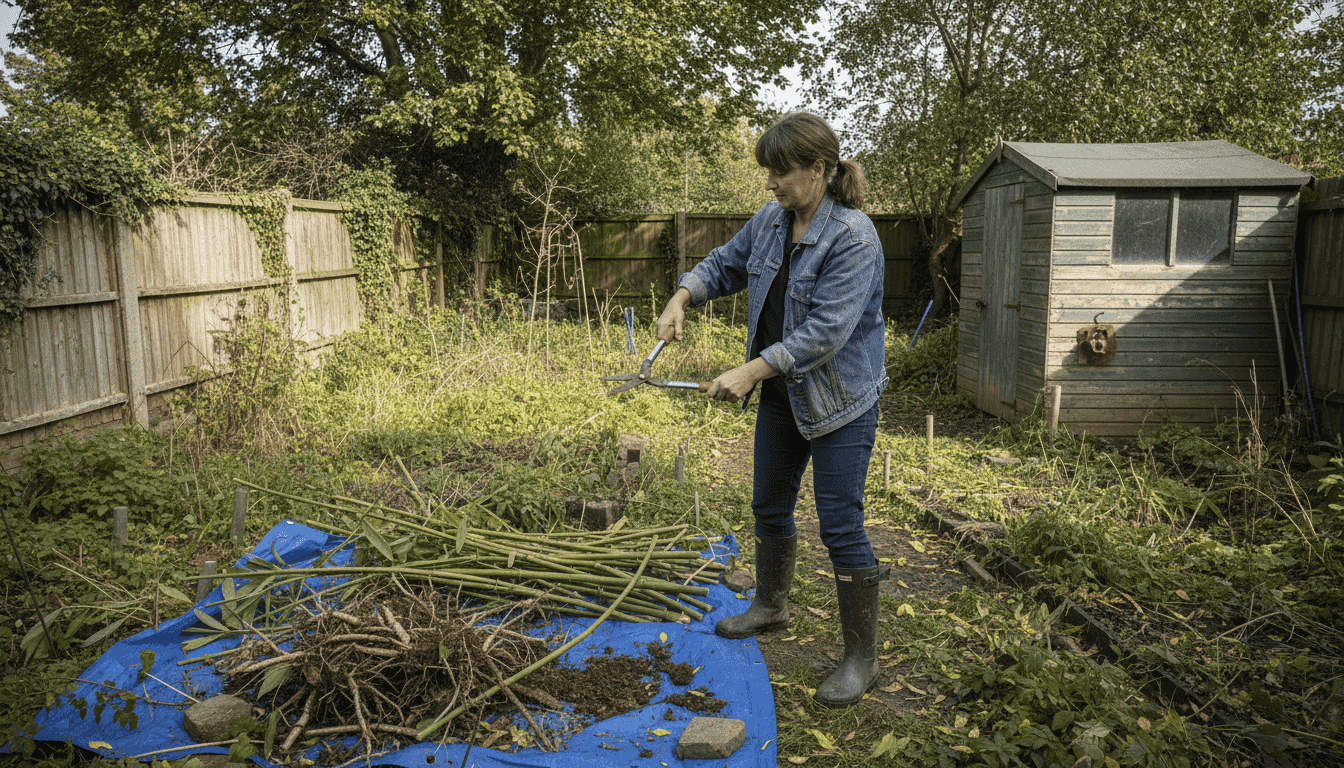
Pro Tip: Schedule surveys and treatments between late summer and early autumn when the plant translocates energy back into rhizomes. Treatments during this window target stored energy reserves directly, maximising eradication effectiveness.
Timing and method selection determine success or failure. Chemical herbicides require multiple applications over three to five years with no guarantee of complete removal. Excavation risks spreading fragments. Choosing methods that address the hidden rhizome network directly, without breaking it into regenerative pieces, offers the clearest path to lasting control.
Chemical-Free Methods for Eradicating Invasive Root Systems
Direct energy treatments represent a breakthrough in invasive plant eradication technology. This method delivers voltage up to 5000 volts directly to the plant, causing internal cell damage throughout the rhizome network. The electrical energy disrupts cell membranes and depletes energy reserves stored in underground stems. Repeated treatments over 12 to 18 months exhaust the plant’s ability to regenerate.
Chemical-free energy treatments offer distinct advantages over traditional herbicides:
- No toxic residues left in soil or groundwater
- Faster results with visible decline within months
- Safe for surrounding plants and wildlife
- Effective in areas where chemical use is restricted
- Lower long-term cost due to shorter treatment duration
Direct energy treatments provide faster eradication under 18 months and avoid environmental harm common with chemical herbicides. Herbicide programs typically require three to five years of repeated applications, with success rates varying widely based on application timing, weather conditions, and rhizome depth.
A typical chemical-free eradication workflow follows these steps:
- Conduct a comprehensive property survey using ground-penetrating radar and visual inspection to map rhizome extent.
- Mark all infestation boundaries and access points for treatment equipment.
- Apply direct energy treatments at scheduled intervals during the growing season, targeting energy transfer periods.
- Monitor regrowth between treatments and adjust treatment intensity based on plant response.
- Install root barriers after eradication to prevent future rhizome spread from adjacent properties.
- Perform final verification surveys to confirm no viable rhizome material remains.
| Factor | Chemical Herbicides | Direct Energy Treatment |
|---|---|---|
| Eradication Duration | 3 to 5 years | 12 to 18 months |
| Environmental Impact | Soil and water contamination risk | Zero toxic residues |
| Success Rate | 60% to 75% after full program | 85% to 95% with complete protocol |
| Treatment Frequency | Multiple applications annually | Scheduled sessions per growth cycle |
| Nearby Plant Safety | Risk of drift damage | No impact on surrounding vegetation |
Pro Tip: Coordinate energy treatments with the plant’s natural energy cycles. Late summer treatments intercept energy flowing back into rhizomes for winter storage, maximising depletion of reserves and accelerating eradication timelines.
Property Survey Techniques for Detecting and Mapping Japanese Knotweed
Ground-penetrating radar technology uses electromagnetic pulses to create images of underground structures. GPR equipment detects rhizome networks by identifying density differences between soil and plant material. Trained operators interpret radar returns to map rhizome depth, spread direction, and infestation boundaries with precision.
Visual inspection complements GPR by identifying above-ground indicators homeowners and surveyors recognise:
- Distinctive shield-shaped leaves and hollow bamboo-like stems
- Purple-speckled young shoots emerging in spring
- Dense stands forming thickets that crowd out native plants
- Dead brown stems persisting through winter months
Combining ground-penetrating radar with visual inspection achieves approximately 95% accuracy in detecting Japanese Knotweed rhizomes. GPR reveals hidden rhizome spread beyond visible plant boundaries, while visual surveys confirm species identification and assess infestation maturity.
| Survey Method | Detection Accuracy | Cost Range | Best Use Case |
|---|---|---|---|
| Visual Only | 50% to 60% | Low | Initial screening, small gardens |
| GPR Only | 75% to 85% | Medium | Mapping extent pre-treatment |
| Combined GPR and Visual | 90% to 95% | Higher | Comprehensive property assessment |
| Soil Sampling | 65% to 75% | Low to Medium | Confirming fragment presence |
Early detection saves significant money by enabling treatment before rhizomes spread to foundations, utilities, or neighbouring properties. Professional surveys using combined methods provide documentation essential for property transactions, mortgage applications, and planning treatment strategies that address the full infestation extent.
Homeowners purchasing property should insist on invasive weed surveys before completing transactions. Discovering Japanese Knotweed after purchase leads to unexpected treatment costs, property devaluation, and potential legal complications if the seller failed to disclose known infestations.
Role and Installation of Root Barriers in Invasive Species Management
Root barriers are physical containment systems made from high-density polyethylene or reinforced membranes installed vertically in soil to block lateral rhizome growth. Properly installed barriers create an underground wall that redirects root expansion away from protected areas like foundations, driveways, and neighbouring properties.
Root barriers physically block rhizome spread and can contain Japanese Knotweed spread with up to 90% efficacy when properly installed. Efficacy depends on installation depth, material quality, and regular inspection for potential breach points.
Installation best practices include:
- Excavating trenches to at least 2 metres depth to intercept deep rhizomes
- Selecting puncture-resistant barrier materials rated for root pressure
- Overlapping barrier sections and sealing joints to prevent gaps
- Installing barriers in a complete perimeter around the infestation zone
- Inspecting barrier integrity annually for damage or root penetration attempts
Pro Tip: Install root barriers after eradication treatments substantially reduce rhizome viability. Installing barriers around active, untreated infestations contains spread but does not eliminate the existing rhizome network. Combining eradication with barrier installation delivers the most reliable long-term protection.
Common installation mistakes include insufficient depth, leaving gaps at barrier joints, and failing to account for sloped terrain that allows rhizomes to grow beneath barrier bottom edges. Professional installation ensures barriers integrate effectively into a multi-step eradication and containment plan.
Barriers serve as insurance against reinfestation from adjacent properties where Japanese Knotweed remains untreated. Even after successful eradication on your land, rhizomes from neighbouring infestations can cross property boundaries. Root barriers provide long-term protection by blocking this cross-boundary spread, preserving your investment in eradication.
Common Misconceptions and Pitfalls in Root System Eradication
Homeowners frequently believe cutting or mowing controls Japanese Knotweed. This approach fails because cutting stimulates rather than controls root growth. The plant interprets cutting as damage and mobilises stored rhizome energy to produce more vigorous regrowth. Repeated mowing spreads the problem by creating more stems and denser stands.
Another widespread myth suggests chemical herbicides provide quick, complete removal. Reality shows herbicide programs take three to five years with repeated applications and still fail to eradicate deep rhizomes in many cases. Herbicide effectiveness varies with application timing, weather, and how thoroughly the chemical translocates to underground stems. Many homeowners abandon herbicide programs midway due to slow results and persistent regrowth.
The belief that root fragments cannot regrow contradicts biological evidence. Japanese Knotweed regenerates from fragments as small as 0.7 grams. A piece of rhizome the size of a fingernail left in soil after excavation produces a new plant. DIY excavation attempts often fragment rhizomes extensively, transforming one infestation into multiple scattered growth points.
Professional surveys prevent costly mistakes by:
- Mapping the full rhizome network extent before treatment begins
- Identifying optimal treatment methods for site-specific conditions
- Providing documentation required for property transactions and insurance
- Establishing baseline infestation data for monitoring treatment progress
Common DIY errors include partial excavation that spreads fragments, applying treatments at ineffective times of year, and underestimating rhizome depth and spread. These mistakes extend eradication timelines, increase costs, and sometimes worsen infestations. Choosing appropriate chemical-free treatments based on professional assessment avoids these pitfalls and accelerates successful control.
Homeowners who attempt eradication without expert guidance frequently restart treatment programs after initial failures, doubling their total investment while the infestation continues spreading and causing property damage.
Bringing Understanding into Action: Choosing and Implementing Solutions
Assessing your situation accurately determines which eradication methods suit your needs. Consider infestation extent first. Small, newly established patches respond faster to treatment than mature stands with extensive rhizome networks. Property size affects access for treatment equipment and influences whether complete excavation remains feasible. Environmental priorities matter if your property includes sensitive habitats, watercourses, or organic gardens where chemical use is unacceptable.
Timeline expectations for chemical-free treatments range from 12 to 18 months for most residential infestations. Larger or more mature stands may require extended monitoring and additional treatment sessions. A comprehensive approach of survey, energy treatment, and root barrier leads to successful control of Japanese Knotweed with elimination of new growth within 18 months.
Follow this practical implementation sequence:
- Commission a professional property survey combining GPR and visual inspection to map rhizome extent and depth.
- Review survey findings with a treatment specialist to select energy-based or other chemical-free methods appropriate for your site.
- Schedule initial energy treatments during the growing season, targeting periods when the plant translocates energy to rhizomes.
- Monitor regrowth between treatment sessions and document plant decline.
- Install root barriers after rhizome viability drops significantly to contain any residual growth and prevent reinfestation from adjacent properties.
- Conduct final verification surveys to confirm eradication and document site clearance for property records.
Hiring professional surveyors and treatment experts locally ensures compliance with regional regulations and access to specialists familiar with soil conditions, climate patterns, and infestation characteristics common in England, Wales, and Ireland. Local experts provide faster response times and ongoing support throughout the eradication process.
Integrating knowledge into a practical strategy means recognising eradication as a multi-step process, not a single event. Effective management combines accurate detection, targeted treatment, physical containment, and verification to protect your property investment long term.
Protect Your Property with Expert Chemical-Free Knotweed Solutions
Professional chemical-free Japanese Knotweed eradication services deliver results homeowners need to safeguard property values and structural integrity. Tailored treatment plans for UK and Ireland properties address site-specific infestation characteristics using direct energy technology that eliminates rhizomes without environmental harm.
Expert property surveys using advanced ground-penetrating radar technology accurately map underground rhizome networks, providing the foundation for effective treatment strategies. Root barrier installation services ensure lasting containment post-treatment, preventing reinfestation from adjacent properties and protecting foundations from future damage.
Consult specialists who understand the biology driving Japanese Knotweed persistence. Personalised plans ensure environmental safety, regulatory compliance, and property protection. Chemical-free invasive plant solutions offer peace of mind backed by proven eradication technology and comprehensive management protocols designed for homeowner success.
Frequently Asked Questions
How early can I detect Japanese Knotweed roots on my property?
Professional surveys using ground-penetrating radar can detect rhizomes before visible above-ground growth appears in spring. Early detection allows treatment to begin when rhizome networks are smaller and less established, reducing eradication time and cost. Schedule surveys if you notice unusual plant growth near boundaries or after purchasing property in areas with known infestations.
What is the typical timeline for chemical-free eradication of Japanese Knotweed?
Most residential infestations require 12 to 18 months of scheduled energy treatments to achieve complete eradication. Larger or more mature stands may extend to 24 months. Treatment frequency depends on plant response and seasonal energy cycles, with monitoring between sessions to assess rhizome viability decline.
Why is a professional property survey important before treatment?
Surveys map the full extent of underground rhizome networks, preventing partial treatments that leave viable fragments. Accurate mapping identifies all infestation boundaries, ensuring treatment coverage reaches deep and lateral rhizome growth. Survey documentation also supports property transactions and provides baseline data for monitoring treatment effectiveness.
Can root barriers completely prevent knotweed regrowth?
Root barriers installed correctly contain rhizome spread with up to 90% efficacy. Complete prevention requires combining barriers with prior eradication treatments to eliminate existing rhizome viability. Barriers function as long-term insurance against reinfestation from neighbouring properties where Japanese Knotweed remains untreated. Annual inspections ensure barrier integrity and catch any attempted breaches early.
What should I avoid doing to not worsen knotweed infestations?
Never cut, mow, or dig Japanese Knotweed without professional guidance. Cutting stimulates root growth and denser regrowth. Digging breaks rhizomes into fragments that each regenerate into new plants, spreading the infestation. Check common mistakes homeowners make and avoid partial removal attempts that multiply rather than solve the problem.