

TL;DR:
- Weeds impair drainage through root intrusion, debris buildup, and soil erosion, risking structural and flood damage. Invasive species like Japanese knotweed significantly reduce flow capacity and can fracture drainage infrastructure if unmanaged. Regular inspection and early professional surveys help prevent costly repairs and property damage.
Weeds affect drainage by physically blocking water flow, penetrating pipe joints with their roots, and destabilising the soil that supports your drainage infrastructure. These are not minor inconveniences. Left unmanaged, weed growth reduces drainage efficiency, raises flood risk, and causes structural damage that is expensive to repair. Understanding the mechanisms behind these effects gives you the knowledge to act before problems become serious. This guide covers the physical, biological, and hidden ways that weeds obstruct drainage, with practical advice on what to look for and when to seek professional help.
Why weeds affect drainage: the core mechanisms
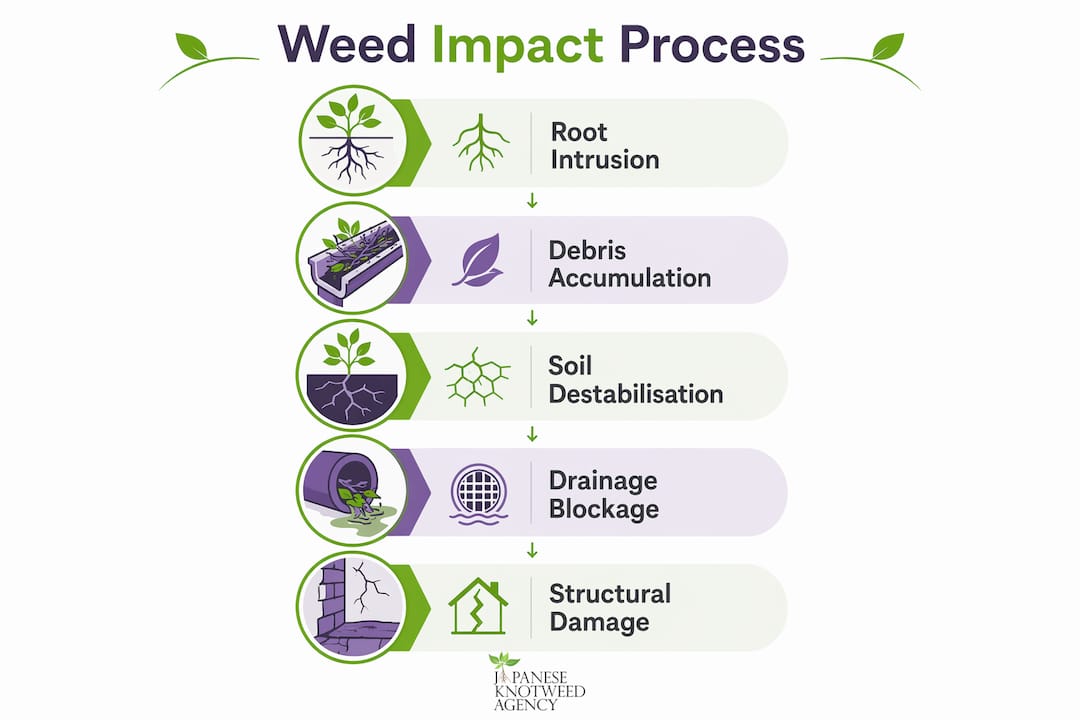
Weeds obstruct drainage through three distinct physical processes: root intrusion, organic debris accumulation, and soil destabilisation. Each process operates independently, but they frequently occur together, compounding the damage.
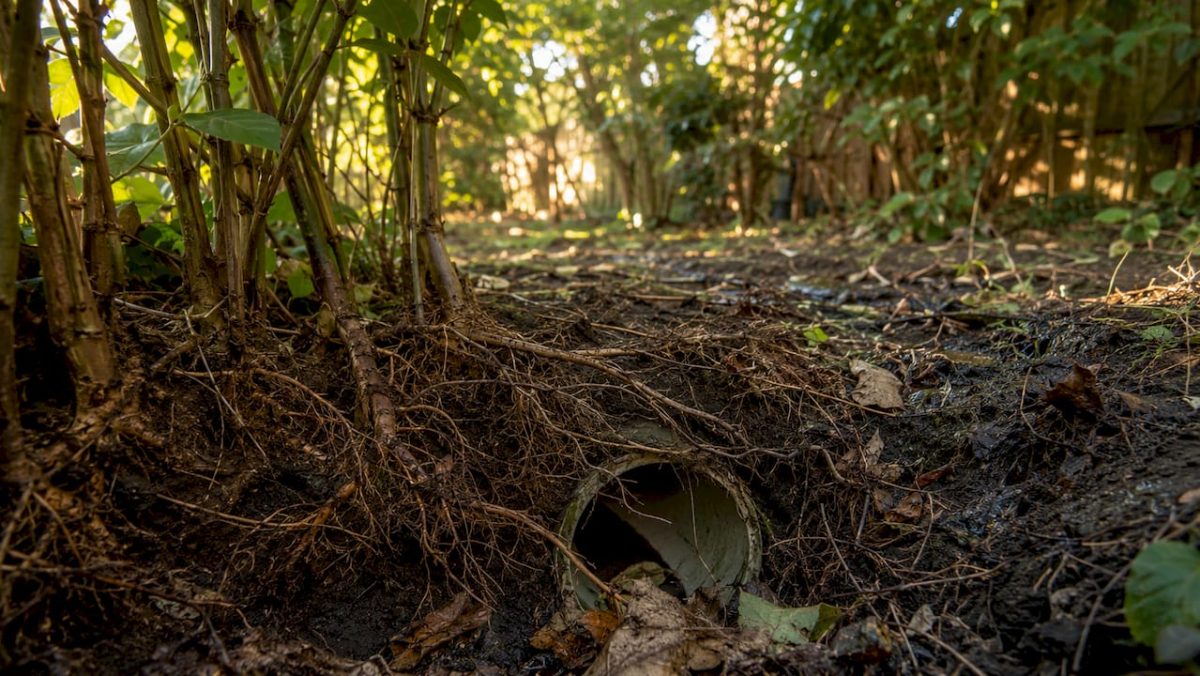
Root intrusion into pipe joints is the most structurally damaging mechanism. Roots follow the path of least resistance, and the moisture inside drainage pipes makes them a natural target. Once inside, roots expand and reduce the internal diameter of the pipe, cutting flow capacity significantly.
Organic debris is the second mechanism. Weeds shed leaves, stems, and seed heads throughout the growing season. This material collects around gully surrounds and channel drains, forming a natural dam. Debris accumulation restricts water flow into drainage systems even when the pipes beneath remain completely clear.
Soil destabilisation is the third and least visible process. Weed root systems loosen and erode soil banks along watercourses. This eroded material enters drainage channels as silt, raising the bed level and reducing the volume of water the channel can carry. Spring is the peak period for weed-related blockages, as rapid new growth accelerates all three mechanisms simultaneously.
Pro Tip: Inspect all external gullies, channel drains, and inspection chamber surrounds at the start of spring, before weed growth reaches full height. Early clearance prevents the debris dam effect before it takes hold.
What physical effects do weeds have on drainage systems?
The physical effects of weeds on drainage systems are direct and measurable. Root systems do not simply grow around pipes. They penetrate micro-cracks and poorly sealed joints, then expand as the plant matures.
- Root intrusion: Roots enter pipe joints and cracks, narrowing internal flow capacity. Over time, the root mass can cause the pipe to fracture entirely.
- Debris obstruction: Weed foliage, stems, and seed material collect around surface drains and gullies, forming organic blockages that redirect surface water away from the drainage inlet.
- Siltation: Destabilised soil from weed root activity enters watercourses as suspended sediment. This settles and raises the bed level, reducing the channel’s hydraulic capacity.
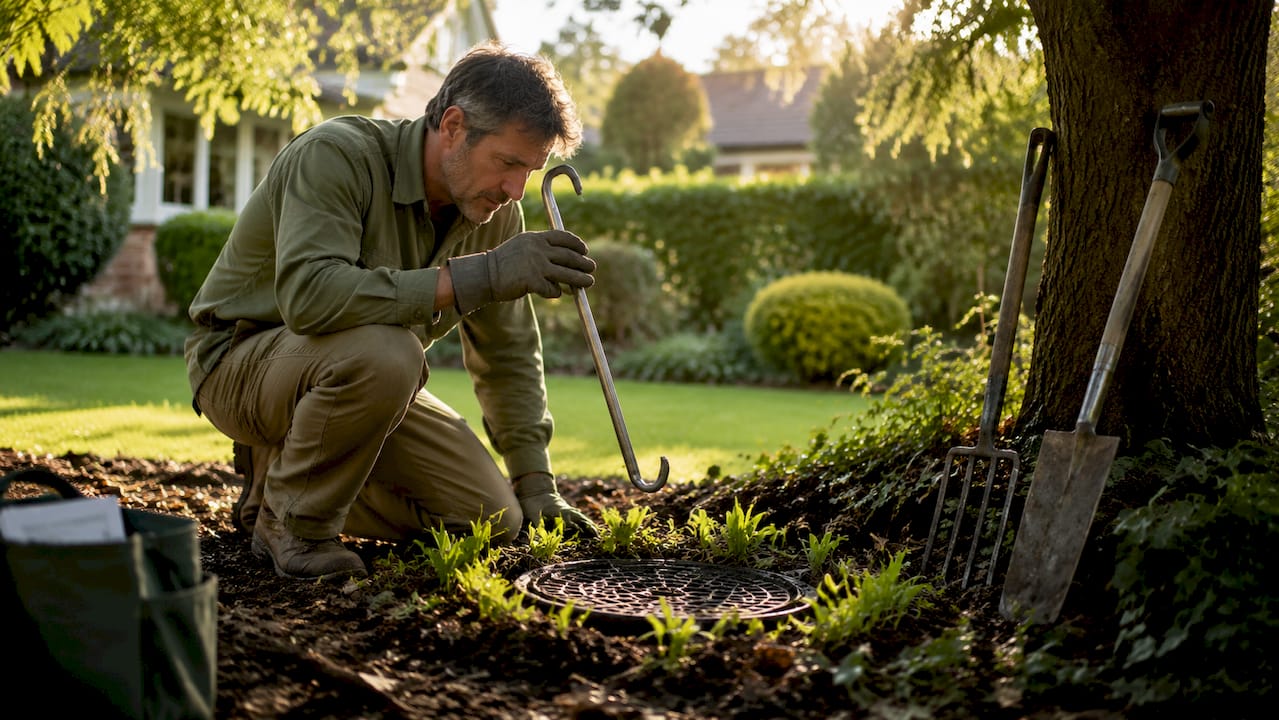
- Inspection chamber damage: Distorted inspection chamber lids that are difficult to lift are an early surface sign of root pressure building beneath ground. Do not ignore this signal.
Most homeowners notice pooling water on the surface and assume the drainage pipe is blocked. The actual cause is often a debris dam at the gully surround, not a pipe failure. Clearing the surface obstruction resolves the pooling without any excavation. Checking this first saves time and money.
How do invasive weeds like Japanese knotweed affect drainage?
Japanese knotweed (Reynoutria japonica) causes drainage problems that go well beyond physical blockage. Its impact on river flow is measurable at the watershed scale. Research shows Japanese knotweed reduces river flow by an average of 8% during summer months due to its exceptionally high transpiration rates. Individual stands can cause daily water loss of up to 8.5 litres per square metre. That is a significant volume removed from the local water system during the months when drought stress is already highest.
The rhizome network of Japanese knotweed extends up to 3 metres deep and 7 metres laterally. This network can push through tarmac, concrete, and drainage pipe walls. The consequences of unchecked spread include fractured drainage infrastructure that requires full excavation to repair.
Dense aquatic and semi-aquatic invasive plants present a parallel problem. Dense plant growth can reduce drainage infrastructure capacity by up to 50%, greatly increasing flood risk during storms. That figure illustrates how severely vegetation can compromise a system that was designed to cope with heavy rainfall.
| Invasive species | Primary drainage impact | Estimated capacity reduction |
|---|---|---|
| Japanese knotweed | River flow reduction via transpiration | 8% average summer flow loss |
| Dense aquatic plants | Hydraulic capacity restriction | Up to 50% in affected channels |
| General weed growth | Root intrusion and debris obstruction | Variable, site-dependent |
The property risk from Japanese knotweed extends beyond drainage. Mortgage lenders increasingly require a professional survey before approving finance on affected properties. The detrimental effect on property value is well documented, and drainage damage is a contributing factor.
Why weeds worsen drainage beyond physical blockages
Weeds alter the moisture dynamics of a site in ways that are not immediately visible. Weeds increase evapotranspiration load, forcing irrigation systems to work harder and creating uneven soil moisture patterns. These uneven patterns mask deeper drainage issues by making some areas appear adequately drained while others become waterlogged.
The hidden damage to irrigation and drainage infrastructure follows a predictable sequence:
- Weed roots penetrate drip emitter lines and irrigation supply pipes, causing blockages that go unnoticed until visible lawn or garden damage appears.
- Root intrusion causes irreversible damage to drip emitters, requiring full section replacement rather than simple cleaning.
- Organic debris accumulates around gully surrounds, creating a damming effect that causes surface water to pool and bypass the drainage inlet entirely.
- Distorted or immovable inspection chamber lids signal that root pressure has built up beneath the surface, indicating subsurface infrastructure is already under stress.
Weeds also function as bio-indicators of drainage health. Certain weed species signal poorly draining or waterlogged soil conditions. If you see persistent stands of rushes, sedges, or dock in a garden area, the soil beneath is likely compacted or poorly drained. The weeds are a symptom, not the cause. Removing them without addressing the underlying drainage problem means they return.
Pro Tip: If an inspection chamber lid is stiff or visibly warped, arrange a CCTV drain survey before the growing season peaks. Root intrusion identified early can be cleared without pipe replacement.
How can homeowners manage weed-related drainage problems?
Effective management of drainage issues caused by weeds combines regular inspection with targeted physical intervention. The timing of these actions matters as much as the actions themselves.
- Spring inspection: Check all external gullies, channel drains, and watercourse edges at the start of the growing season. This is when weed growth accelerates fastest and debris accumulation begins.
- Debris clearance: Regular clearing of leaves, weeds, and moss around external drains prevents the majority of surface blockages. Most blockages are avoidable with this basic maintenance.
- Irrigation emitter checks: Inspect drip emitters and supply lines for root intrusion blockages during the growing season. Reduced output from individual emitters is the first sign of root penetration.
- Root barrier installation: Physical root barriers for invasive plants prevent rhizome networks from reaching drainage infrastructure. They are most effective when installed before the plant establishes close to a drain or pipe.
- Chemical-free treatment: Where invasive species like Japanese knotweed are present, chemical-free treatment options avoid the environmental risks associated with herbicide use near watercourses, where regulations restrict chemical application.
- Professional survey: A property survey for invasive weeds identifies drainage risks that are not visible from the surface. This is particularly relevant for property buyers, where undisclosed drainage damage can affect mortgage approval and property value.
Key takeaways
Weeds damage drainage systems through root intrusion, debris obstruction, and soil destabilisation, with invasive species like Japanese knotweed adding measurable water loss and structural risk.
| Point | Details |
|---|---|
| Root intrusion is structural | Roots penetrate pipe joints and fracture drainage infrastructure, requiring excavation to repair. |
| Debris dams cause surface pooling | Organic matter around gullies blocks water entry even when pipes below remain clear. |
| Japanese knotweed reduces river flow | Research shows an average 8% summer flow reduction due to high transpiration rates. |
| Dense vegetation cuts hydraulic capacity | Invasive plant growth can reduce drainage system capacity by up to 50% in affected channels. |
| Early inspection prevents costly repairs | Checking drains and inspection chambers each spring stops minor blockages becoming major failures. |
What I have learned about weeds and drainage after years in the field
Most homeowners focus on the visible weed. They pull it, cut it, or spray it, and consider the job done. The drainage problem persists because the root system remains active underground, and the debris that accumulated over the growing season is still sitting around the gully surround.
The insight that changes how you approach this is simple: weeds are often a symptom of a drainage problem, not just a cause of one. Rushes and sedges growing in a corner of your garden tell you the soil there is waterlogged. Removing the plants without improving the drainage means they return within a season.
Japanese knotweed is the species I see most frequently causing serious drainage damage on residential properties. Its rhizome network is relentless. By the time a homeowner notices distorted inspection chamber lids or persistent surface pooling near the plant, the root system has often already reached the drainage infrastructure. The structural risks to property are real, and they compound over time.
The practical lesson is to treat drainage inspection as a seasonal task, not a reactive one. Spring clearance of debris around gullies takes twenty minutes and prevents hours of remedial work. A professional survey before purchasing a property with visible weed growth is money well spent. The drainage damage that is not visible from the surface is always the most expensive to fix.
Chemical-free management is not just an environmental preference. Near watercourses, it is a legal and regulatory necessity. Thermo-electric treatment and physical root barriers offer effective control without the risks that herbicide application carries in sensitive drainage environments.
— Alan
Japaneseknotweedagency: expert support for drainage and invasive weed problems
Weed-related drainage problems are rarely straightforward, and the most damaging issues are often the ones you cannot see from the surface. Japaneseknotweedagency carries out professional property surveys for invasive weeds across England, Wales, and Ireland, identifying drainage risks before they escalate into structural damage.

Japaneseknotweedagency’s thermo-electric treatment delivers up to 5,000 volts directly to the rhizome network, causing internal cell damage and depleting energy reserves without the use of chemicals. Root barrier installation and excavation works are also available where physical containment or full removal is required. For homeowners and property buyers with questions about Japanese knotweed and drainage risk, the Japaneseknotweedagency FAQ resource provides clear, practical guidance from specialists with direct field experience.
FAQ
Why do weeds affect drainage so significantly?
Weeds block drainage through root intrusion into pipes, organic debris accumulation around gullies, and soil destabilisation that causes siltation. These three mechanisms often operate together, compounding the overall reduction in drainage capacity.
How does Japanese knotweed damage drainage systems?
Japanese knotweed’s rhizome network penetrates pipe joints and can fracture drainage infrastructure. Its high transpiration rate also reduces local river flow by an average of 8% during summer months, affecting water availability across the wider catchment.
What are the early signs of weed-related drainage problems?
Distorted or stiff inspection chamber lids, persistent surface water pooling near plant growth, and reduced output from irrigation emitters are all early indicators. Addressing these signs promptly prevents more serious structural damage.
Can removing weeds improve drainage immediately?
Clearing organic debris from gully surrounds resolves surface pooling quickly in most cases. Root intrusion damage to pipes requires a CCTV survey and professional repair, which takes longer to address.
Should I get a survey before buying a property with visible weed growth?
A professional invasive weed survey is strongly advisable before purchasing any property where Japanese knotweed or other invasive species are present. Undisclosed drainage damage can affect mortgage approval and significantly reduce property value.