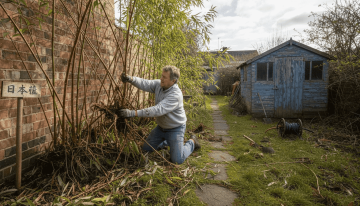
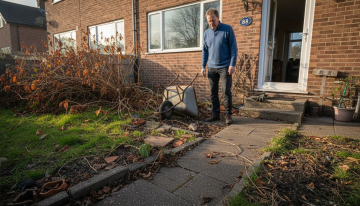
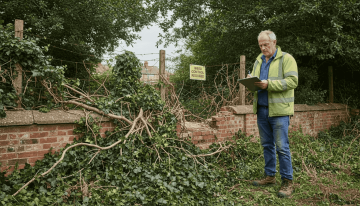
Living with Japanese Knotweed on your property in England or Wales can quickly turn from a gardening headache into a complex legal and financial concern. Invasive species such as this not only endanger our native biodiversity but also carry strict responsibilities for every homeowner. Understanding the rules surrounding control and chemical-free eradication helps you protect both your land and your peace of mind, while staying compliant with tough regulations designed to safeguard local ecosystems.
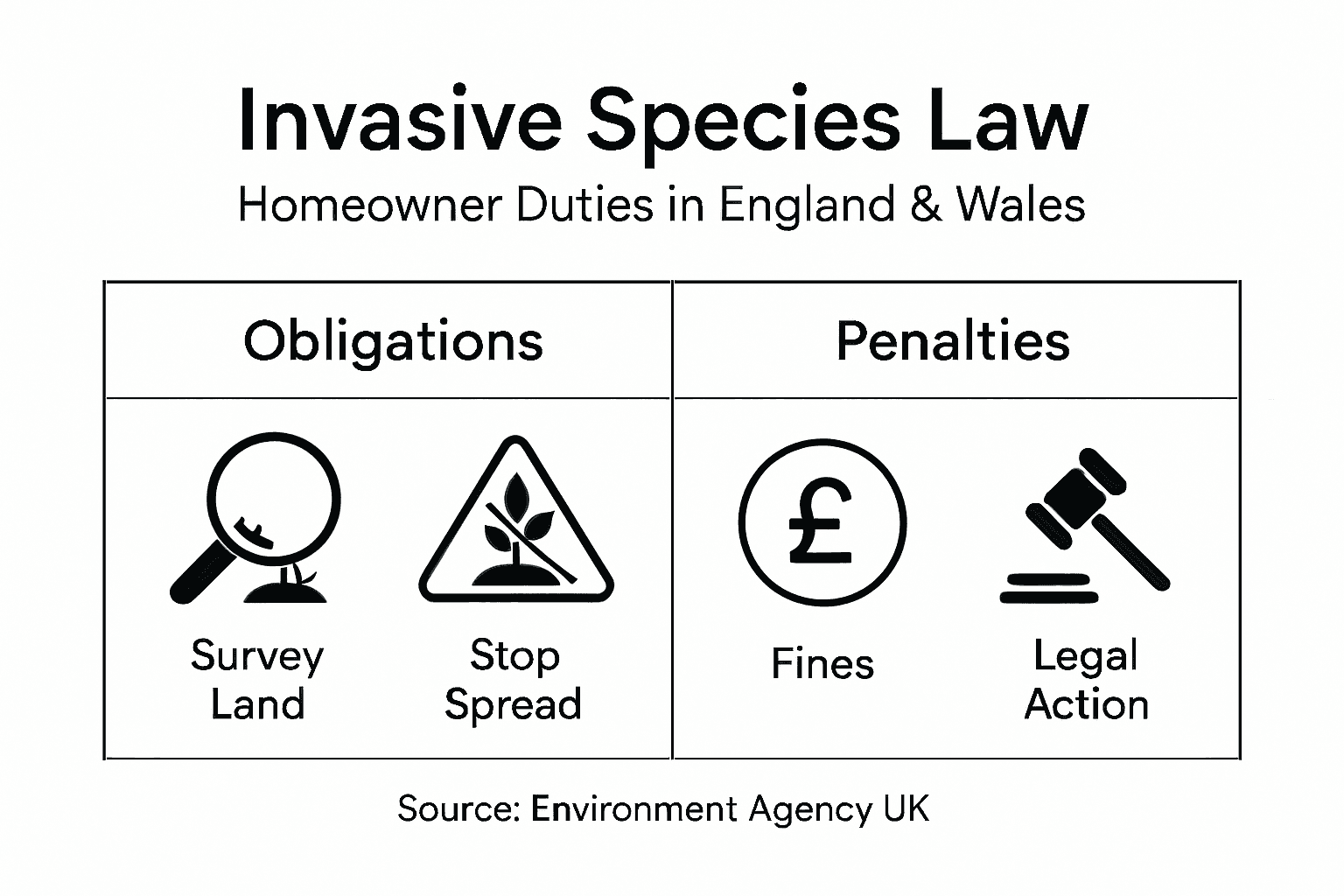
Invasive species, such as Japanese Knotweed, threaten native biodiversity and can have significant legal and financial implications for homeowners.
Legal Responsibilities
Property owners must actively manage invasive species on their land and are liable for any spread to neighbouring properties.
Control and Management Strategies
Early detection and proactive control are essential; homeowners should engage professionals for treatment and document all management efforts.
Economic Consequences
Failing to disclose invasive species during property transactions can lead to substantial financial losses and legal claims from buyers.
Definition of Invasive Species and Control
An invasive species is a non-native plant, animal, or organism that has been introduced outside its normal geographical range, typically through human activity, and causes significant harm to native ecosystems, biodiversity, or the economy. Not every non-native species becomes invasive—only those that establish rapidly, spread aggressively, and damage their new environment earn that classification. In Great Britain, invasive non-native species are recognised as major drivers of biodiversity loss and pose serious threats to both natural habitats and economic interests.
What makes a species invasive rather than simply “foreign” comes down to impact. A non-native plant or creature might arrive in a new country without causing problems. Japanese Knotweed, however, exemplifies true invasiveness. It outcompetes native vegetation, destabilises soil structures, spreads through rhizomes that can extend metres underground, and can penetrate concrete and tarmac. The species thrives in conditions where native plants cannot, fundamentally altering habitats and making control exceptionally difficult without intervention.
Invasive species harm ecosystems in several measurable ways:
Outcompeting native species for light, water, nutrients, and space, reducing biodiversity
Spreading disease to native plants and animals
Altering physical habitats through changes to soil chemistry, water availability, or structural composition
Disrupting ecological balances by introducing predators or parasites with no natural controls in place
Causing economic damage through crop loss, property damage, and costly management efforts
For homeowners in England and Wales, the legal and practical implications are substantial. Selling a property where Japanese Knotweed is present triggers mandatory disclosure obligations, and most mortgage lenders will refuse to lend without evidence of treatment and management plans. This transforms what might seem like a garden problem into a serious property matter with real financial consequences.
Invasive species are among the most significant threats to biodiversity globally, and controlling them is essential to protecting native ecosystems and achieving environmental targets.
Why Control Matters Now
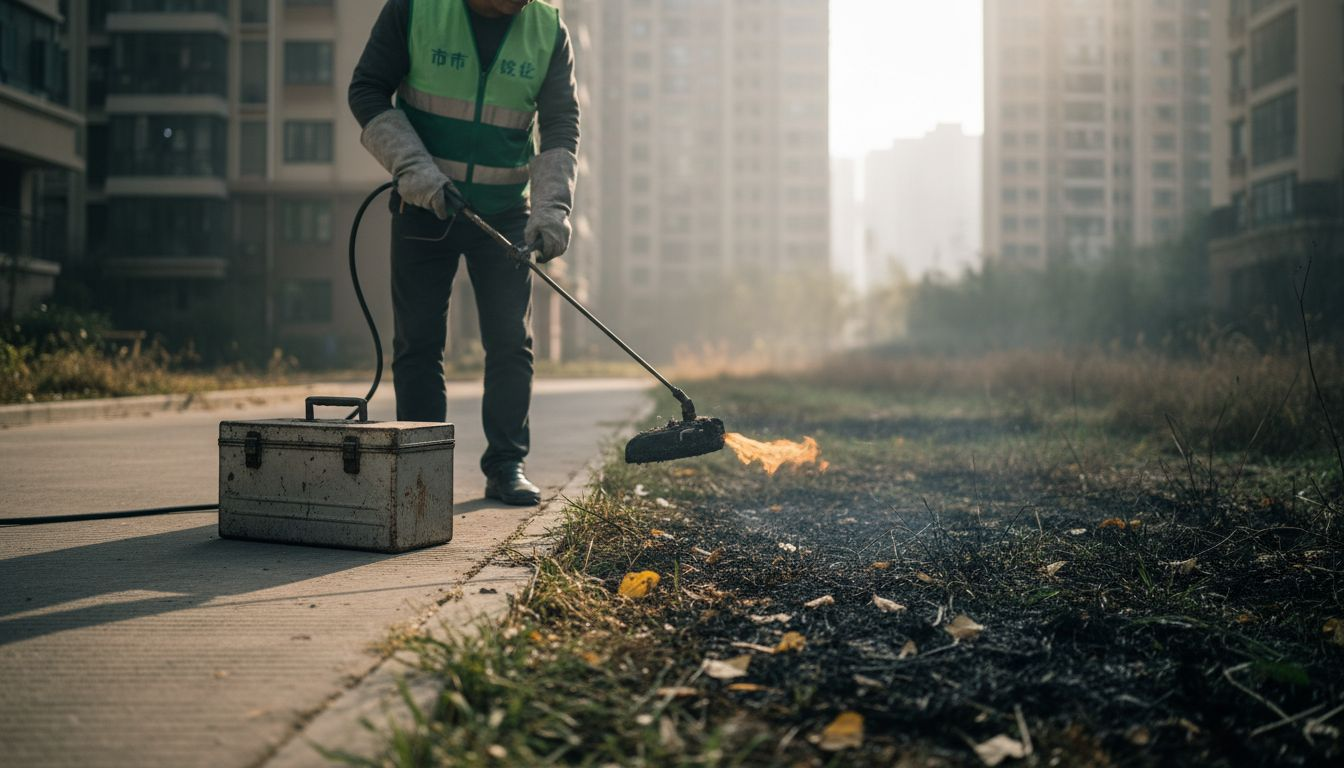
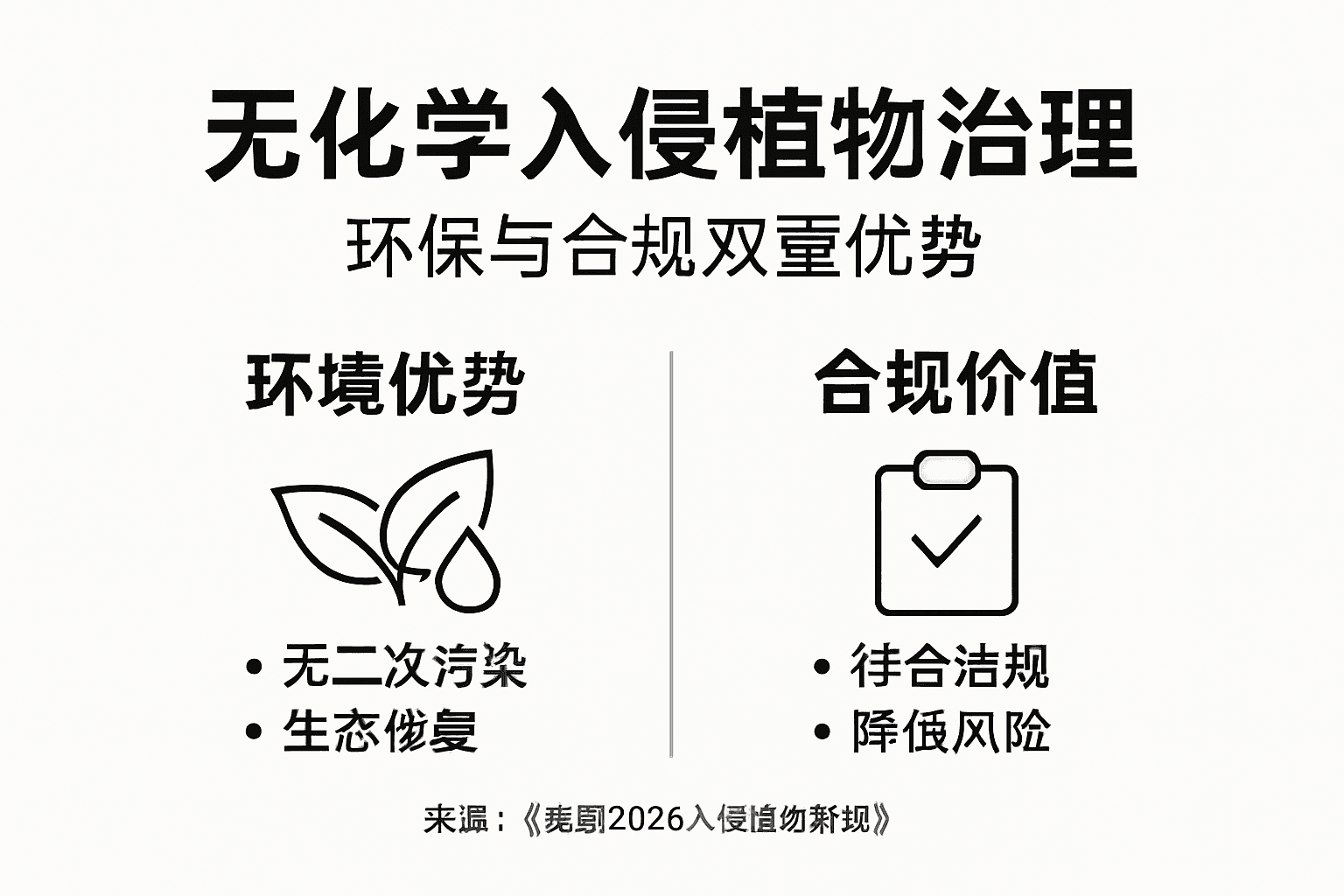
Control of invasive species has shifted from optional to mandatory in many circumstances. Early detection and rapid response prevent infestation from becoming entrenched, which makes treatment exponentially more expensive and time-consuming. Once invasive species establish themselves across multiple properties or large areas, eradication becomes nearly impossible. Chemical-free control methods, such as thermo-electric treatment that delivers direct energy to destroy plant cells and deplete rhizome energy reserves, offer homeowners effective alternatives that avoid soil contamination and protect groundwater.
The strategy for managing invasive species involves six key stages:
Prevention – stopping introduction of new invasive species through biosecurity measures
Early detection – identifying invasive species as soon as they appear
Monitoring – tracking established populations to assess spread and treatment effectiveness
Rapid response – acting quickly when new invasions are detected
Long-term management – controlling established invasive populations over years or decades
Eradication – complete removal where feasible, particularly on smaller infestations
For a homeowner discovering Japanese Knotweed or other invasive species on their property, understanding these stages helps set realistic expectations. A small, newly discovered infestation may be eradicated within a few seasons through consistent treatment. A mature, extensive infestation requires long-term management and may never be fully eradicated without excavation.
To help clarify the stages of invasive species management, the following table summarises each phase and its main purpose:
Stage
Description
Typical Outcome
Prevention
Biosecurity and avoidance
Stops new introductions
Early Detection
Identifying invaders quickly
Enables prompt response
Monitoring
Tracking populations and progress
Assesses spread and treatment success
Rapid Response
Immediate action upon detection
Prevents establishment and escalation
Long-term Management
Ongoing control over time
Reduces densities and minimises impact
Eradication
Complete removal where feasible
Restores natural habitats
Pro tip:If you suspect invasive species on your property, arrange a professional survey immediately rather than waiting—early intervention is significantly cheaper and more effective than managing a mature infestation, and surveys are often required by mortgage lenders before you can sell.
Legal Framework in England and Wales
The legal framework governing invasive species control in England and Wales is a structured system designed to prevent, manage, and eradicate invasive species before they cause irreversible ecological damage. At its foundation lies The Invasive Alien Species (Enforcement and Permitting) Order 2019, which enforces the Retained EU Regulation (1143/2014) domestically. This legislation represents the UK’s commitment to international obligations and creates enforceable rules that homeowners, businesses, and local authorities must follow. Understanding this framework is essential because non-compliance can result in significant penalties and liability issues.
The legislation prohibits specific actions regarding species designated as particularly concerning. You cannot lawfully import, keep, breed, transport, sell, or release any species listed on the UK government’s official invasive species register without explicit permission. Japanese Knotweed sits at the forefront of these regulated species, which means that if you discover it on your property, you have a legal obligation to manage and control it. Failure to do so can result in enforcement action by the Environment Agency or local authorities, who possess powers to serve control orders requiring you to eradicate the species at your own cost.
The framework includes several critical mechanisms that directly affect homeowners:
Species control agreements – negotiated arrangements between property owners and authorities to manage invasive species through specified methods and timescales
Species control orders – mandatory enforcement tools issued when voluntary control fails, requiring property owners to implement removal or containment measures
Prohibition on sale or trade – preventing the commercial movement of regulated species, which stops their spread across regions
Import restrictions – preventing new invasive species from entering the UK through biosecurity measures
Legal liability – making property owners responsible for invasive species on their land, even if they didn’t introduce it
For property sales, the legal implications become especially significant. When selling a property where Japanese Knotweed or other invasive species are present, you must legally disclose this information to potential buyers. Mortgage lenders typically require evidence of treatment, a management plan, or a Japanese Knotweed warranty guarantee before approving lending. This creates a practical chain of legal consequences: failing to disclose can result in breach of contract claims from buyers after completion, whilst mortgage refusal means your property simply will not sell.
The legal framework makes property owners legally responsible for invasive species on their land and grants authorities enforcement powers to require eradication at the owner’s expense.
Local Authority Powers and Enforcement
Local authorities in England and Wales possess significant powers under this framework to compel invasive species control. If an invasive species is spreading from your property onto neighbouring land or public areas, the local council can serve you with a formal notice requiring removal within a specified timeframe. If you fail to comply, the authority can carry out the work and charge all costs to you, including administrative expenses and contractor fees. These costs can reach thousands of pounds, making early voluntary control far more economical.
The Environment Agency and local authorities conduct routine monitoring and receive reports from concerned citizens. If your property is identified as harbouring invasive species, you will typically receive formal notification before enforcement action, giving you the opportunity to arrange private control measures. Professional treatment through chemical-free methods such as thermo-electric treatment can demonstrate your commitment to proper management and often satisfies enforcement requirements more efficiently than traditional approaches.
Pro tip:Document all invasive species control efforts with photographs, treatment dates, and contractor reports—this evidence protects you legally if authorities inspect your property and demonstrates good faith compliance with regulations.
Prohibited Actions and Restricted Species
Legislation in England and Wales creates a strict prohibition list governing what you can and cannot do with invasive species. The scope is remarkably broad—it covers not just the living organisms themselves, but their reproductive parts and any action that might allow them to spread. There are currently 36 invasive alien plant species listed as species of special concern, alongside 30 invasive non-native animal species that fall under legal restriction. Understanding what is prohibited is critical because the consequences for breaching these rules are severe and extend far beyond simple fines.
The prohibited actions under invasive plant species rules are unambiguous. You cannot import these species into England or Wales, nor can you keep them on your property, breed them, transport them, sell them, or grow them intentionally. The legislation goes further still—you cannot allow them to proliferate or spread, which means if you discover an invasive plant on your land and do nothing about it, you are technically in breach. This has profound implications for homeowners who inherit invasive species infestations with their properties. Passive acceptance is not a legal option.
The restrictions apply to every part of regulated species, not just the main plant body. Seeds, fragments of rhizomes, tubers, and any reproductive material are equally prohibited. This is why Japanese Knotweed control requires such meticulous attention to detail. A single rhizome fragment discarded carelessly can regenerate into a new infestation. If you excavate Japanese Knotweed and dispose of soil containing rhizome pieces at an unregistered waste site, you are committing a breach. Professional disposal to licensed facilities is not merely advisable—it is legally required.
Animals present an equally strict framework. Invasive non-native animal species cannot legally be kept, bred, transported, sold, released, or allowed to escape. These prohibitions exist because invasive animals like American mink, raccoons, and muntjac deer cause significant ecological damage once established. Unlike plants that spread through localised mechanisms, invasive animals can disperse rapidly across regions, making prevention far more cost-effective than control after establishment.
Prohibited actions on invasive species include:
Importing regulated species into the UK
Keeping them in captivity or on your property
Breeding them intentionally or allowing natural reproduction
Transporting them across regions or to different properties
Selling them commercially or privately
Growing them as ornamental plants or for any purpose
Allowing them to spread without implementing control measures
Disposing of them improperly at unauthorised waste sites
Releasing them into the environment, either intentionally or through negligence
The legislation makes you liable for invasive species on your property regardless of how they arrived there, and passive inaction constitutes a breach of the law.
Exemptions and Permitted Circumstances
Whilst the prohibitions are broad, specific exemptions exist for legitimate purposes. Scientific research conducted under proper licensing may involve restricted species if the research serves conservation objectives or public health. Similarly, authorised destruction programmes—where professional contractors are explicitly permitted to handle and eliminate invasive species—fall outside the prohibition. The critical word is “authorised.” If you hire an unqualified contractor who lacks proper licensing to handle restricted species, both you and the contractor may face liability.
For homeowners, the practical exemption involves engaging licensed professionals to control invasive species on their property. When you arrange professional treatment through chemical-free methods such as thermo-electric treatment, the contractor operates under specific licensing arrangements that allow them to handle the species legally. The responsibility shifts to the contractor to comply with transport, handling, and disposal regulations. This is why using established, accredited specialists is essential—they carry the expertise and regulatory compliance needed to manage the process legally.
One crucial misunderstanding concerns storage and temporary holding. You cannot simply remove Japanese Knotweed and store it in a corner of your property whilst deciding what to do with it. Once excavated, it must be transported to a licensed waste facility within strict timeframes. Some homeowners have faced enforcement action for storing excavated Japanese Knotweed material on-site, believing temporary storage was acceptable. It is not.
Pro tip:Before engaging any contractor to handle invasive species, verify their licensing and ask specifically about their waste disposal methods—request confirmation that all excavated material will be transported to a licensed facility, and keep documentation of this arrangement for your legal protection.
For homeowners, understanding both prohibited actions and exemptions improves compliance. Here is a quick reference for legal responsibilities and permitted exceptions:
Legal Requirement
Description
Permitted Exception
Prohibit possession
No invasive species allowed on property
Licensed research or professional control
Ban transport/disposal
Cannot move or dispose of material informally
Accredited contractor handles legal disposal
Mandate disclosure
Must inform buyers of infestations
None; disclosure always required
Compulsory eradication
Must actively control and prevent spread
Only waived if managed by authorities
Permitted Eradication Methods Without Chemicals
Chemical herbicides are not the only—or even the best—option for controlling invasive species in England and Wales. In fact, legislation actively encourages non-chemical approaches where feasible, and regulators increasingly favour methods that avoid soil contamination and groundwater risk. The government’s guidance on invasive plant control emphasises physical removal techniques including hand-pulling, cutting, digging out root systems, and systematic mowing to prevent seed dispersal. For homeowners dealing with Japanese Knotweed or other invasive species, understanding these permitted methods is essential because they offer effective alternatives that comply fully with environmental regulations.
Physical removal remains the foundation of non-chemical control, though its effectiveness depends heavily on timing, technique, and follow-up management. Hand-pulling works only for small, young plants with shallow root systems—attempting to hand-pull an established Japanese Knotweed infestation is futile and potentially counterproductive, as broken rhizome fragments will simply regenerate. Cutting and mowing prevent seed production and reduce above-ground biomass, but they do not eliminate root systems. Digging out root systems is more effective but requires excavation to depths often exceeding one metre, and any rhizome fragments left in the soil will regrow. This is why physical removal alone rarely achieves complete eradication without being combined with other methods.
Modern non-chemical eradication has evolved significantly beyond basic physical removal. Thermo-electric treatment represents a breakthrough approach that delivers direct electrical energy to plant tissue, causing internal cellular damage and depleting energy resources throughout extensive rhizome networks. This method works by penetrating deep into soil without requiring excavation, destroying the plant’s ability to regenerate. Unlike physical removal, which only affects visible parts, thermo-electric treatment targets the hidden rhizome system where invasive plants store their reserves. Treatment must be repeated at intervals to ensure all rhizome reserves are depleted, typically over one to two growing seasons, but this approach avoids the soil disturbance and contamination risks associated with chemical herbicides.
Effective non-chemical control methods include:
Hand-pulling – suitable only for small, young plants with shallow roots
Cutting and mowing – reduces above-ground growth and prevents seed dispersal
Digging and excavation – removes root systems but requires careful disposal and follow-up monitoring
Thermo-electric treatment – destroys plant cells and depletes rhizome reserves without chemicals
Root barriers – prevents rhizome spread to adjacent areas by installing physical containment
Habitat restoration – planting native vegetation to outcompete invasive species and prevent reinvasion
Biosecurity practices – cleaning equipment and clothing to prevent spread during removal activities
Disposal of invasive plant material is as important as removal itself. Effective disposal methods include burning or burying material off-site at licensed waste facilities, never in your garden or local green waste collection. Japanese Knotweed material especially must never be composted or left where it could regenerate. Professional contractors use licensed facilities specifically equipped to handle invasive species waste, destroying material through high-temperature processing that kills all viable rhizome fragments. Improper disposal can spread infestations to new locations and violates environmental legislation.
Successful non-chemical eradication combines immediate control methods with habitat restoration, preventing reinvasion by establishing native vegetation that naturally suppresses invasive species.
Post-Removal Habitat Restoration
The final critical step in non-chemical eradication is habitat restoration. After removing invasive species, bare ground becomes vulnerable to reinvasion because invasive plants specialise in colonising disturbed areas. Native vegetation, by contrast, competes strongly with invasive species and gradually restores ecological function. Planting native shrubs, perennials, and ground covers appropriate to your local environment creates conditions where invasive species struggle to re-establish. This step often determines long-term success—properties that remove invasive species but leave bare ground frequently experience reinfestation within two to three years.
Consistent monitoring after removal is essential. Invasive species can regrow from rhizome fragments missed during initial removal, so regular inspection during the growing season allows you to spot and treat any regrowth before it becomes established again. This monitoring phase typically lasts two to three years after major removal efforts. Many homeowners underestimate this phase, assuming eradication is complete once the main infestation is gone. Early vigilance prevents regrowth from becoming a full reinfestation requiring expensive repeat treatment.
Pro tip:After professional removal or treatment, maintain detailed records of all work completed with dates and photographs—this documentation demonstrates to future buyers and mortgage lenders that the invasive species has been actively managed and controlled, significantly improving your property’s marketability.
Homeowner Obligations and Potential Penalties
Homeownership brings legal responsibilities that many people don’t fully appreciate until they discover invasive species on their property. Unlike some areas of property law where ignorance provides a defence, invasive species management operates on strict liability principles. This means you can be held legally responsible for invasive species on your land regardless of whether you introduced them, planted them, or inherited them from a previous owner. Understanding your obligations now protects you from enforcement action, financial penalties, and property complications later.
Your primary legal obligation is straightforward: you must not plant, allow to grow, or cause invasive species to spread on your property. Homeowner responsibilities for invasive plants extend beyond simply not planting them—passive inaction when invasive species are present constitutes a breach. If Japanese Knotweed exists on your land and spreads to neighbouring properties or public areas, you can be held liable for the costs of removal and any ecological damage caused. Local authorities can serve enforcement notices requiring you to eradicate invasive species within specified timeframes, and failure to comply results in the council carrying out the work and charging all costs to you, often with substantial administrative fees added.
The financial consequences of non-compliance are severe. Fines under invasive species legislation can reach thousands of pounds, and in serious cases involving deliberate or reckless spread, criminal penalties including imprisonment are possible. More commonly, homeowners face financial exposure through property devaluation, mortgage complications, and enforcement costs. A property with unmanaged Japanese Knotweed typically loses 5–15% of market value, and many buyers walk away entirely once infestation is disclosed. Mortgage lenders refuse to lend on properties with known invasive species unless treatment plans and warranties are in place, making such properties effectively unsellable.
Key homeowner obligations include:
Prevention – ensuring invasive species are not introduced or spread through your actions
Detection – monitoring your property for invasive species and reporting them if discovered
Management – taking active steps to control and eradicate invasive species present on your land
Disclosure – revealing invasive species to potential buyers during property transactions
Compliance – responding promptly to enforcement notices from local authorities
Proper disposal – ensuring all invasive plant material is disposed of at licensed facilities
Documentation – maintaining records of management efforts and professional treatments
Property transactions deserve special attention. When selling your home, you are legally required to disclose invasive species to potential buyers. Estate agents and conveyancers typically ask specific questions about Japanese Knotweed and other invasive species. Failing to disclose known infestations can result in breach of contract claims after completion, allowing buyers to pursue damages. These claims can be substantial—covering the cost of treatment, property devaluation, and legal fees. Some buyers have successfully recovered £20,000–£50,000 from sellers who failed to disclose invasive species.
Homeowners can be held legally liable for invasive species spreading from their property even if they didn’t introduce it, and liability extends to enforcement costs, property devaluation, and buyer claims.
Liability for Spread Beyond Your Property
A critical aspect of homeowner obligations concerns liability when invasive species spread beyond your land. Whilst you are not legally required to control invasive species on your property in isolation, you become legally liable the moment they spread to neighbouring land or public areas. Landowners can be held liable under the Wildlife and Countryside Act and related environmental legislation if invasive species from their property cause damage. This means a neighbour could sue you for the cost of removing Japanese Knotweed that spreads from your garden to theirs. Local authorities can also pursue cost recovery if they have to remove invasive species that originated from your property.
This liability creates a powerful incentive to manage invasive species proactively rather than waiting for enforcement action. Demonstrating good faith efforts to control invasive species—through professional surveys, documented treatment, and habitat restoration—significantly reduces your legal exposure. If you can show that you took reasonable steps to manage invasive species, courts and authorities view your position far more favourably than if you ignored the problem entirely. Conversely, if you were aware of invasive species and took no action, you face maximum liability for enforcement costs, damages, and potentially criminal penalties.
The practical pathway to protecting yourself involves several essential steps. First, arrange a professional survey if you suspect invasive species on your property—early detection is infinitely cheaper than managing a mature infestation. Second, engage qualified professionals to implement control measures, preferably non-chemical methods that avoid environmental damage. Third, maintain meticulous documentation of all work completed. Fourth, respond promptly to any enforcement notices from local authorities. Fifth, disclose everything honestly during property transactions.
Pro tip:Obtain a professional Japanese Knotweed survey before buying a property and request a management plan or ten-year warranty guarantee as a condition of purchase—this shifts liability to the seller and protects your investment from hidden invasive species costs.
Protect Your Property from Legal Risks with Expert Invasive Species Control
The legislation surrounding invasive species places heavy responsibilities on homeowners to detect, control, and disclose infestations like Japanese Knotweed. Ignoring these duties can result in costly enforcement actions and reduced property value. At Japanese Knotweed Agency, we understand the urgent need to manage invasive species legally and effectively. Our pioneering chemical-free treatments deliver up to 5000 volts of direct energy on site, destroying rhizomes deeply without soil contamination. We also offer professional root barrier installation and excavation to ensure thorough control.
Act now to safeguard your home and investment. Arrange a professional invasive species survey across England, Wales, or Ireland to identify risks early. Discover how our advanced thermo-electric treatment methods comply fully with UK regulations, protect your neighbours, and provide documented proof of control for conveyancing and mortgage requirements. Visit Japanese Knotweed Agency today to take the first step towards peace of mind and compliance.
Frequently Asked Questions
What are the legal obligations of homeowners regarding invasive species?
Homeowners are legally obligated to manage, control, and prevent the spread of invasive species on their property, even if they did not introduce them. Failing to act can result in significant financial penalties and liability issues.
What actions are prohibited under invasive species legislation?
The legislation prohibits homeowners from importing, keeping, breeding, transporting, selling, or allowing invasive species to spread on their property. Passive inaction when invasive species are present is also considered a breach of the law.
What should I do if I discover invasive species on my property?
If you discover invasive species, it is essential to arrange a professional survey immediately. Early detection and intervention are crucial to prevent further infestation and legal complications.
What are the potential penalties for non-compliance with invasive species laws?
Penalties for non-compliance can include fines reaching thousands of pounds, liability for eradication costs, and even criminal penalties in serious cases. Homeowners may also face property devaluation and complications in property sales due to untreated infestations.
Spotting invasive weeds early can make all the difference when it comes to protecting your garden or property. These aggressive plants grow quickly, form dense clusters, and often outcompete native species before you realise what is happening. Some, like Japanese Knotweed, can even spread from the tiniest root fragment and cause serious damage to walls, paths, and local ecosystems.
Understanding the most telling signs of invasive weeds helps you act before problems spiral out of control. This guide reveals the key features to watch for so you can confidently identify and manage these troublesome invaders. Get ready to discover the warning signs that every homeowner should know.
Regularly check your landscape for surprising and aggressive growth patterns that could indicate invasive weeds.
2. Identify unique leaf and stem features
Learn the specific shapes and textures of invasive weeds to help quickly identify potential threats in your garden.
3. Document dense clusters immediately
Take photographs of any dense weed clusters and seek professional advice to mitigate ecological damage effectively.
4. Inspect for structural damage
Regularly check for weeds that penetrate hard surfaces and foundations, which can create significant repair costs.
5. Use multiple removal techniques
Combine various methods, including non-chemical strategies, to effectively combat herbicide-resistant invasive weeds in your garden.
1. Unusual Rapid Growth Patterns
Invasive weeds possess an extraordinary capacity for rapid and aggressive expansion that can catch unsuspecting homeowners completely off guard. These botanical bullies can transform landscapes with startling speed, creating dense populations that overwhelm native plant ecosystems.
Understanding the growth dynamics of invasive species is crucial for effective management. Some invasive plants like Japanese knotweed can generate dense growth from minuscule root fragments, demonstrating remarkable regenerative capabilities.
Key characteristics of rapid invasive weed growth include:
Ability to spread from tiny plant fragments
Accelerated growth rates compared to native species
Exceptional resilience in diverse environmental conditions
Capacity to penetrate infrastructure like concrete and tarmac
Rapid growth isn’t just about speed – it’s about ecological domination.
These plants exploit multiple reproduction strategies including underground rhizome networks and seed dispersal mechanisms. The Encyclopaedia of Arable Weeds highlights that tracking growth across different stages helps homeowners identify potential invasive threats early.
Homeowners must remain vigilant and monitor landscape changes systematically. Early detection can prevent extensive ecological and structural damage caused by these aggressive plant species.
Expert Tip:Monitor your property quarterly and photograph any unusual plant growth to track potential invasive weed developments.
2. Distinct Leaf and Stem Shapes
Invasive weeds reveal their true nature through distinctive leaf and stem characteristics that set them apart from ordinary garden plants. Understanding these unique botanical signatures can help homeowners identify potential threats before they spread uncontrollably.
Identification of broad-leaved weeds requires careful observation of specific morphological features that distinguish invasive species from native plants.
Key distinguishing characteristics include:
Unusual leaf shape and arrangement
Distinctive stem texture and colour
Irregular growth patterns
Unique leaf edge or surface markings
Not all plants are created equal – some are ecological invaders waiting to be recognised.
For instance, Japanese knotweed displays heart-shaped leaves arranged alternately on distinctive zig-zag stems. Giant hogweed presents large spotted leaf stalks with hollow spiny stems.
Homeowners should pay close attention to:
Leaf shape and symmetry
Stem colour and texture
Growth pattern and node arrangement
Leaf edge characteristics
Documenting these features through photographs can help gardening experts accurately diagnose potential invasive weed species.
Expert Tip:Take clear, well-lit photographs of suspicious plant growth from multiple angles to assist professional identification.
3. Dense Clusters or Thickets
Invasive weeds possess a remarkable ability to form dense, impenetrable clusters that can rapidly overwhelm entire landscapes and ecosystems. These botanical colonisers create thick stands that choke out native plant life and disrupt local biodiversity.
Invasive weeds in the UK frequently produce dense population structures that require targeted management strategies. These clusters are more than just a visual nuisance they represent a serious ecological threat.
Characteristics of invasive weed clusters include:
Rapid horizontal and vertical growth
Ability to dominate large areas quickly
Suppression of surrounding plant species
Complex root systems that support dense growth
A single invasive weed cluster can transform an entire ecosystem.
Some species like Japanese knotweed form thick bamboo-like stands, while Himalayan balsam creates extensive colonies along riverbanks. These dense thickets can:
Reduce local plant diversity
Destabilise soil structures
Block sunlight for native vegetation
Impede water flow in riparian environments
Homeowners and land managers must develop proactive identification and removal strategies to prevent these invasive clusters from establishing permanent footholds.
Expert Tip:Photograph and document dense weed clusters immediately and consult professional ecological management services for targeted removal techniques.
4. Damage to Walls and Paths
Invasive weeds are not merely unsightly garden inhabitants they can become destructive forces capable of undermining entire structural foundations. Structural damage potential represents one of the most concerning aspects of aggressive plant species.
Weeds growing on hard surfaces can create significant problems for homeowners by penetrating cracks and displacing paving materials. These botanical invaders transform seemingly stable surfaces into uneven and potentially dangerous terrains.
Key structural damage mechanisms include:
Penetration of underground infrastructure
Expansion through tiny surface cracks
Displacement of paving materials
Destabilisation of foundational structures
Some weeds can transform solid surfaces into botanical battlegrounds.
Japanese knotweed represents a particularly dangerous invasive species capable of causing extensive structural damage. Its underground rhizomes can:
Grow through concrete foundations
Disrupt wall structures
Create significant repair expenses
Compromise property integrity
Homeowners should remain vigilant and address potential weed intrusions quickly to prevent costly structural repairs.
Expert Tip:Conduct regular property inspections and seal small surface cracks immediately to prevent invasive weed penetration.
5. Roots Extending Underground
Beneath the surface lurks an often unseen yet remarkably aggressive network of invasive weed roots that can transform your garden into a botanical battleground. Underground root systems represent the hidden warfare of persistent plant invaders.
Invasive weeds like Japanese knotweed spread extensively through robust underground rhizomes that make complete eradication extraordinarily challenging.
Underground root characteristics include:
Ability to regenerate from tiny root fragments
Extensive horizontal and vertical spread
Capacity to penetrate deep soil layers
Remarkable resilience against traditional removal methods
One small root fragment can become an entire invasive ecosystem.
Homeowners must understand that superficial removal offers only temporary relief. Comprehensive root management requires strategic and persistent intervention.
Expert Tip:Consult professional invasive species management experts who can deploy specialised techniques for complete underground root system elimination.
6. Seasonal Flowering and Seeding
Invasive weeds are master strategists of reproduction using sophisticated seasonal cycles to spread and dominate landscapes. Seasonal flowering patterns represent a critical window of vulnerability for plant management strategies.
The Encyclopaedia of Arable Weeds highlights the importance of understanding precise flowering and seeding times for effective weed control.
Homeowners must remain vigilant during peak flowering seasons to interrupt these reproductive cycles and prevent widespread propagation.
Expert Tip:Photograph and document weed flowering periods in your garden to track and anticipate future growth patterns.
7. Resistance to Common Removal Methods
Invasive weeds are not passive botanical passengers they are sophisticated survival experts that have evolved remarkable resistance mechanisms against traditional eradication techniques. Herbicide resistance strategies represent a significant challenge for gardeners and land managers.
Herbicide resistance in broad-leaved weeds has become an increasingly complex problem requiring sophisticated management approaches.
Key resistance characteristics include:
Genetic adaptations to chemical treatments
Rapid mutation of herbicide-vulnerable traits
Multiple reproduction and survival mechanisms
Capacity to regenerate from minimal plant fragments
Nature’s most resilient plants laugh in the face of conventional removal methods.
Non-chemical control methods are increasingly recommended to combat resistant species. These methods typically involve:
Mechanical disruption of root systems
Physical removal techniques
Smothering and light exclusion strategies
Repeated intervention approaches
Homeowners must adopt multi-faceted strategies that combine different removal techniques to effectively combat these persistent botanical invaders.
Expert Tip:Document and photograph your weed removal attempts to track the effectiveness of different intervention strategies.
Below is a comprehensive table summarising the main strategies and guidance discussed regarding identifying and managing invasive weed species.
Aspect
Key Features
Recommended Actions
Rapid Growth
Fast propagation, utilisation of rhizomes for spread, and ecological dominance
Regular monitoring and early intervention
Distinctive Morphology
Unique leaf shapes and stem textures aiding in visual identification
Closely observe and document unusual botanical features
Formation of Dense Clusters
Creates thick structures that overwhelm native flora
Remove identified clusters with professional assistance if necessary
Structural Damage Risks
Capable of penetrating and destabilising foundations and paths
Address small surface cracks and eliminate newly spawned growth
Extensive Underground Root Systems
Regrowth from minimal fragments; roots spread horizontally and vertically
Prolific flowering and seeding providing future propagation opportunities
Monitor during flowering seasons and prevent seed dispersal
Resistance to Common Eradication
Adaptation to conventional herbicides and traditional removal methods
Employ combined eradication approaches and track method efficacy
Take Control of Invasive Weeds with Expert Help
Recognising the 7 Signs of Invasive Weeds can be overwhelming for any homeowner. Rapid growth, underground roots spreading silently, and damage to property foundations are serious challenges that require more than just traditional removal methods. If you have spotted dense clusters or noticed structural damage to walls and paths it is crucial to act quickly before the problem worsens. Japanese Knotweed Agency specialises in chemical free treatment and eradication of Japanese Knotweed and other invasive species using innovative direct energy technology that disrupts root networks deep underground.
Protect your home and garden from ecological invasion by choosing professional support. With comprehensive property surveys across England Wales and Ireland and expert root barrier installations your investment is safe from future damage. Explore the complete range of services at Japanese Knotweed Agency and discover how our effective techniques overcome resistance to common removal methods and prevent relentless regrowth. Don’t wait until the weeds take over contact us today to secure your property for years to come with chemical free knotweed treatment and tailored eradication plans.
Frequently Asked Questions
What are the signs of invasive weeds I should look for?
Invasive weeds often display unusual rapid growth patterns, distinctive leaf and stem shapes, and form dense clusters. Pay attention to changes in your garden, such as unexpected growth or thickets, to catch these plants early.
How can I identify invasive weeds on my property?
Look for unique characteristics such as irregular leaf shape, distinctive stem textures, and dense growth patterns. Document these features with photographs to assist in identification and management strategies.
What damage can invasive weeds cause to my property?
Invasive weeds can penetrate structural foundations, displace paving materials, and destabilise soil. Regularly inspect for signs of damage, and address any invasive growth immediately to avoid costly repairs.
How can I effectively remove invasive weeds from my garden?
Combine physical removal methods with regular monitoring and strategic interventions to effectively eradicate invasive weeds. Start by uprooting the plants entirely and follow up with quarterly inspections to prevent regrowth.
What should I do if I notice invasive weeds spreading seasonally?
Act quickly by documenting the flowering and seeding periods of any invasive weeds. Interrupt their reproduction cycle by removing them during peak flowering times to decrease future infestations.
How can I manage resistant invasive weeds that won’t respond to traditional methods?
Adopt a multi-faceted approach that includes mechanical disruption and physical removal techniques. Successfully manage these resilient plants by varying your methods, and seek to perform interventions routinely to keep them at bay.
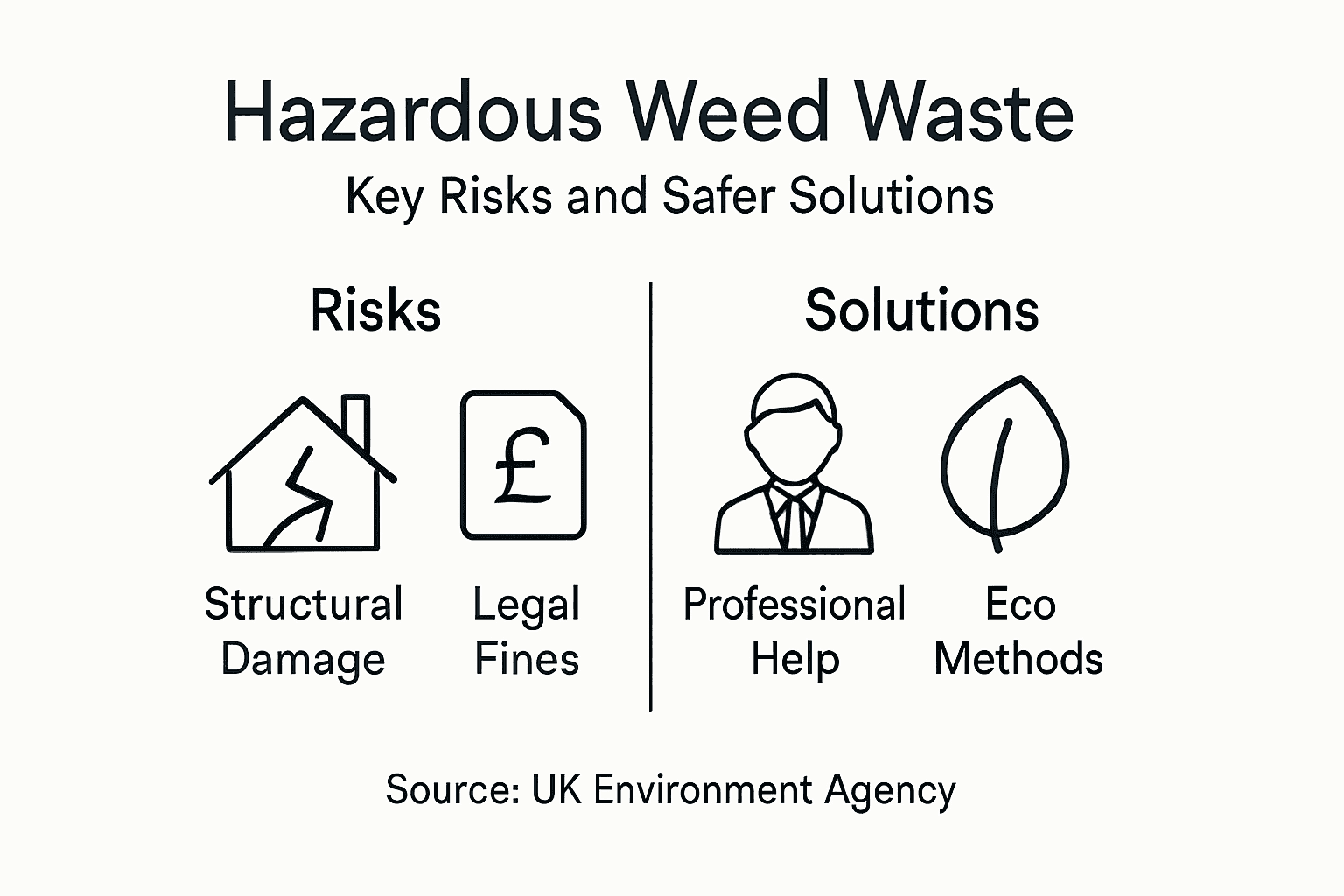
Property sales in England, Wales, and Ireland often reveal surprises hiding beneath the soil. Facing threats like Japanese Knotweed, homeowners encounter invasive weeds that can dramatically impact value and resale prospects. The legal definition of hazardous waste covers these stubborn plants, demanding careful handling and safe disposal to avoid lasting environmental and financial troubles. This guide explains chemical-free solutions and highlights professional survey options for tackling weed issues confidently during property transactions.
Businesses must comply with strict regulations for hazardous waste, including proper classification, storage, and disposal to prevent environmental harm.
Invasive Weeds Impact
Invasive plants like Japanese Knotweed and Giant Hogweed pose significant risks to properties and biodiversity, requiring professional management.
Homeowner Responsibilities
Homeowners are liable for hazardous waste management on their properties and must maintain comprehensive documentation for compliance.
Chemical-Free Disposal Alternatives
Employing non-chemical methods for invasive weed control can effectively minimise ecological impact and ensure sustainable management strategies.
Hazardous weed waste defined in UK law
Hazardous waste represents a complex legal classification with significant implications for property management and environmental protection in the United Kingdom. Under current UK regulations, hazardous waste is specifically defined as materials that pose potential risks to human health or ecological systems.
The legal framework for hazardous waste management is comprehensively outlined in the Hazardous Waste Regulations for England and Wales. These regulations establish strict protocols for identifying, handling, and disposing of substances that could cause environmental damage or human health risks.
Key categories of hazardous waste in the UK include:
Chemical waste
Asbestos materials
Contaminated soil
Electronic equipment
Batteries and industrial solvents
Pesticide residues
Ozone-depleting substances
Businesses and property owners must adhere to specific legal requirements when managing these materials. The duty of care principle mandates that all hazardous waste must be:
Correctly classified
Safely stored
Professionally transported
Appropriately disposed of
Failure to comply with hazardous waste regulations can result in significant legal penalties and potential environmental contamination.
Property owners and managers should consult professional waste management services to ensure proper handling and legal compliance when dealing with potentially hazardous materials.
Pro tip:Always document the entire lifecycle of hazardous waste materials to maintain comprehensive legal traceability and demonstrate responsible environmental management.
Types of invasive weed waste and key risks
Invasive weeds represent a significant environmental and property management challenge across the United Kingdom. These non-native plant species can cause extensive damage to landscapes, infrastructure, and ecosystems through their aggressive growth patterns and resilient characteristics. Invasive plant threats pose complex risks that extend far beyond simple botanical nuisance.
The most prevalent invasive weed species in the UK include:
Japanese Knotweed: Notorious for structural damage
Giant Hogweed: Produces toxic sap causing severe skin burns
Horsetail: Develops extensive, difficult-to-control root systems
Rhododendron Ponticum: Suppresses biodiversity in woodland areas
Each of these invasive species presents unique environmental and structural challenges. Japanese Knotweed, for instance, can penetrate concrete foundations, compromise building structures, and dramatically reduce property values. Its underground rhizome network spreads rapidly, making complete eradication extremely challenging and expensive.
The ecological and health risks associated with these invasive weeds are substantial. Giant hogweed’s toxic sap can cause painful skin burns and potential long-term photosensitivity, while Himalayan balsam’s aggressive spread can completely overwhelm native plant ecosystems, leading to significant biodiversity loss.
This comparison highlights key differences between major invasive weed species found across the UK:
Invasive Species
Primary Environmental Impact
Main Health Risk
Typical Management Challenge
Japanese Knotweed
Structural damage to properties
None directly
Rapid rhizome spread, difficult eradication
Giant Hogweed
Biodiversity loss, displacement
Severe skin burns, photosensitivity
Toxic sap, safe handling needed
Himalayan Balsam
Monoculture formation, ecosystem disruption
None directly
Fast growth, requires ongoing monitoring
Horsetail
Soil alteration, infrastructure damage
None directly
Deep roots, resistant to removal
Rhododendron Ponticum
Woodland biodiversity suppression
None directly
Dense thickets, slows native regrowth
Invasive weeds are not merely a gardening problem, but a serious environmental and property management issue requiring professional intervention.
Property owners must understand that managing these invasive species involves more than simple removal. Professional assessment, specialised treatment strategies, and ongoing monitoring are crucial to preventing long-term ecological and structural damage.
Pro tip:Always consult professional invasive plant specialists before attempting to remove hazardous weed species, as improper handling can potentially increase environmental spread and legal complications.
Legal requirements for waste disposal
Hazardous waste disposal in the United Kingdom is governed by stringent legal frameworks designed to protect public health and environmental safety. Hazardous waste regulations establish comprehensive guidelines that mandate responsible management and disposal of potentially harmful materials.
Key legal obligations for waste producers include:
Correct waste classification
Secure storage methods
Use of licensed waste carriers
Proper documentation and traceability
Comprehensive risk assessment
Environmental protection protocols
The Hazardous Waste Regulations 2005 impose specific responsibilities on individuals and organisations generating hazardous waste. These regulations require waste producers to take all reasonable precautions to prevent environmental contamination and potential health risks. Failure to comply can result in significant financial penalties and potential legal prosecution.
Waste management involves several critical legal requirements. Every movement of hazardous waste must be accompanied by detailed consignment notes, ensuring a transparent audit trail from production to final disposal. Waste must be categorised using specific waste codes, stored in appropriate containment systems, and transferred only to authorised waste management facilities.
Compliance is not optional – it is a legal requirement with serious consequences for non-adherence.
Professional waste management companies play a crucial role in navigating these complex legal requirements, providing expertise in classification, transportation, and environmentally responsible disposal strategies.
Pro tip:Maintain comprehensive documentation for all hazardous waste movements and retain records for a minimum of three years to demonstrate legal compliance and environmental responsibility.
Homeowner responsibilities and liabilities
Homeowners in the United Kingdom bear significant legal responsibilities when managing hazardous waste on their properties. Hazardous waste disposal regulations establish clear guidelines that define the precise obligations and potential liabilities for property owners handling potentially harmful materials.
Key homeowner responsibilities include:
Identifying hazardous waste materials
Implementing secure storage protocols
Using only licensed waste carriers
Maintaining comprehensive documentation
Preventing environmental contamination
Ensuring proper waste classification
The duty of care principle imposes strict legal requirements on homeowners. This means property owners must take active steps to prevent any potential harm arising from waste materials, including invasive plant species, chemical residues, or construction debris. Negligence can result in substantial financial penalties and potential legal prosecution.
Legal liabilities extend beyond simple disposal. Homeowners remain legally responsible for waste until it is completely and safely processed by authorised facilities. This includes maintaining detailed records of waste movements, completing necessary consignment notes, and ensuring that all disposal activities comply with environmental protection standards.
Ignorance of waste disposal regulations is not a legal defence – homeowners are expected to understand and comply with their responsibilities.
Professional waste management services can provide crucial guidance in navigating these complex legal requirements, helping homeowners avoid potential legal complications and environmental risks.
Pro tip:Retain all waste disposal documentation for a minimum of three years and consult professional waste management experts when dealing with potentially hazardous materials to ensure full legal compliance.
Safe, chemical-free disposal alternatives
Addressing hazardous weed waste requires innovative and environmentally responsible approaches that minimise ecological impact. Non-chemical weed control methods offer sustainable alternatives to traditional chemical treatments, providing homeowners with effective strategies for managing invasive plant species.
Key chemical-free disposal alternatives include:
Manual plant removal techniques
Mechanical excavation methods
Thermal treatment processes
Root barrier installations
Biological control strategies
Preventative landscape management
The mechanical removal approach involves carefully extracting invasive plant systems, including their extensive underground root networks. This method requires precision and comprehensive understanding of plant root structures to ensure complete eradication without causing additional environmental disturbance. Professional specialists can employ targeted techniques that prevent potential regrowth and minimise soil disruption.
Thermal treatment represents another innovative chemical-free solution for managing invasive plant waste. By applying controlled heat directly to plant systems, technicians can effectively destroy cellular structures and prevent regeneration. This method offers a precise, environmentally neutral approach that eliminates the need for harmful chemical interventions.
Sustainable weed management requires a holistic approach that prioritises ecological balance and long-term prevention.
Implementing multiple complementary techniques often provides the most comprehensive and effective strategy for managing hazardous plant waste without relying on chemical treatments.
The following table compares common disposal methods for hazardous weed waste in terms of sustainability and effectiveness:
Method
Environmental Impact
Long-Term Effectiveness
Best Use Case
Manual removal
Low, minimal disturbance
Moderate, may need repeats
Small infestations
Mechanical excavation
Moderate soil disruption
High, removes roots
Extensive outbreaks
Thermal treatment
Low, no chemicals used
High, prevents regrowth
Areas inaccessible to machinery
Biological control
Low, promotes natural balance
Varies, depends on species
Ecologically sensitive zones
Pro tip:Consult professional ecological specialists who can design a tailored, chemical-free management plan specific to your property’s unique environmental conditions and invasive plant challenges.
Take Control of Hazardous Weed Waste with Expert Solutions
The dangers of invasive weeds such as Japanese Knotweed are clear. They cause structural damage, reduce property value, and pose serious environmental risks. The article highlights the complex challenge of managing hazardous weed waste safely and legally, emphasising the need for professional expertise in classification, removal, and disposal. If you are facing persistent invasive weed issues or require chemical-free eradication, expert help is essential to prevent costly damage and legal liabilities.
At Japanese Knotweed Agency, we specialise in chemical-free treatment that targets the extensive rhizome networks with direct energy technology. Our comprehensive services include root barrier installations and excavation works tailored to permanently remove hazardous weeds like Japanese Knotweed. We also provide thorough property surveys across England, Wales and Ireland to identify invasive plant threats early and secure your property against long-term damage.
Act now to protect your property and comply with UK hazardous waste regulations. Discover more about our advanced eradication methods by visiting Japanese Knotweed treatment solutions and ensure you are taking responsible action against invasive weed waste today.
Frequently Asked Questions
What is hazardous weed waste?
Hazardous weed waste refers to non-native plant species that pose health risks and environmental threats, such as Japanese Knotweed and Giant Hogweed. These plants can cause structural damage and displacement of native flora.
How do invasive weeds affect property management?
Invasive weeds can severely impact property values and structural integrity. For instance, Japanese Knotweed can penetrate concrete foundations, while Giant Hogweed’s toxic sap poses health hazards, necessitating professional management.
What legal responsibilities do homeowners have regarding hazardous weed waste?
Homeowners must identify hazardous materials, store them securely, use licensed waste carriers, and maintain comprehensive documentation. They are liable until the waste is safely disposed of, making compliance essential to avoid penalties.
What are the alternatives to chemical treatments for managing invasive weed waste?
Chemical-free methods include mechanical excavation, manual removal, thermal treatments, and biological control strategies. These approaches aim to manage invasive species sustainably while minimising environmental impact.
Japanese Knotweed Agency专注于创新无化学处理技术,通过高压电能深度破坏入侵植物根系,彻底根除日本结缕草及其他有害物种。我们还提供根系隔离和土壤挖掘服务,以及覆盖英格兰、威尔士及爱尔兰的专业入侵植物物业调查。立即访问Japanese Knotweed Agency官网,了解详情和预约专业评估,助您提前制定合规计划,避免未来法律纠纷,保障地产投资安全。更多信息请浏览我们的无化学日本结缕草治理解决方案和专业物业调查服务页面,抓住机会尽早行动,守护您的土地与资产!
Facing the prospect of buying a property plagued by Japanese Knotweed can feel daunting for any UK homeowner. This persistent plant’s underground network often stretches metres beneath the surface, making quick fixes or half-measures unreliable and ineffective. With myths about control methods common and costly mistakes easy to make, understanding the power of root barriers and professional, chemical-free containment solutions will help you protect your investment and restore peace of mind.
Effective root barriers prevent the lateral spread of Japanese Knotweed’s invasive rhizomes, requiring professional installation for optimal results.
Common Myths Mislead Owners
Misconceptions about Knotweed management often lead to inadequate solutions; understanding the real spread distance and the ineffectiveness of cutting is crucial.
Legal Obligations Exist
Property owners in the UK must comply with legal requirements regarding Knotweed management to avoid severe penalties and potential legal actions.
Timeliness Is Key
Prompt intervention dramatically reduces environmental impact and financial risk, while delaying management increases costs and property devaluation.
Root Barriers Explained and Common Myths
Japanese Knotweed poses significant challenges for property owners due to its extraordinarily invasive underground root system. Root barriers are specialised physical containment solutions designed to prevent the lateral spread of knotweed rhizomes beneath the ground surface.
Understanding the mechanics of these barriers requires recognising how Japanese Knotweed propagates. Research from Swansea University highlights that the plant’s extensive belowground network can spread several metres in diameter and depth, making physical containment critical.
Key characteristics of effective root barriers include:
Manufactured from high-density polyethylene materials
Installed to a minimum depth of 2-3 metres
Engineered to withstand significant root pressure
Designed with smooth surfaces to prevent root penetration
Common myths about Japanese Knotweed root management often mislead property owners. Leeds University research debunks several widespread misconceptions, particularly around rhizome spread distances:
Myth 1: Knotweed rhizomes extend 7 metres in all directions
Reality: Rhizomes rarely spread more than 4 metres from visible growth
Myth 2: Cutting or mowing eliminates the plant
Reality: Mowing frequently stimulates more aggressive regrowth
Professional installation remains crucial, as improvised barriers can fail. Proper root barriers must create a continuous, unbroken underground membrane that completely blocks rhizome movement.
Pro tip:Always consult a professional knotweed specialist to assess your specific site conditions before installing root barriers, as each property presents unique challenges.
How Root Barriers Contain Japanese Knotweed
Root barriers serve as a critical defence mechanism against the invasive spread of Japanese Knotweed, providing a strategic solution for property owners facing this persistent botanical challenge. Precise containment techniques involve creating an impenetrable underground membrane that prevents rhizome migration across property boundaries.
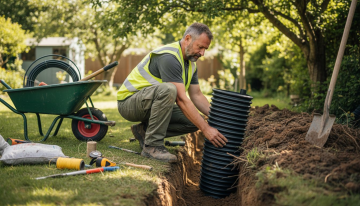
The fundamental principle of root barrier installation involves strategic excavation and barrier placement. Professional installation requires careful consideration of several key factors:
Excavation depth must exceed typical rhizome penetration (2-3 metres)
Materials must be tough and impermeable
Barrier must create a continuous, unbroken underground membrane
Joints must be carefully sealed to prevent potential gaps
Containment mechanisms work through multiple protective strategies. Government guidance on Japanese Knotweed prevention emphasises that root barriers are particularly crucial in scenarios where complete rhizome removal proves impractical, especially near construction sites or sensitive structural environments.
Key installation considerations include:
Assessing soil composition and drainage characteristics
Determining precise barrier depth requirements
Selecting appropriate barrier material
Ensuring complete perimeter coverage
Implementing professional monitoring protocols
Effective root barriers transform Japanese Knotweed from an uncontrollable threat into a manageable environmental challenge.
Professional installation is paramount, as improper implementation can inadvertently spread the plant or compromise structural integrity. Specialised contractors understand the nuanced techniques required to create an effective underground barrier system.
Pro tip:Always engage a certified Japanese Knotweed specialist who can conduct comprehensive site assessments and design a root barrier strategy tailored to your specific property conditions.
Types of Root Barriers and Their Effectiveness
Managing Japanese Knotweed requires sophisticated underground defence strategies, with root barriers emerging as a critical technological solution. Advanced barrier technologies demonstrate remarkable potential in preventing rhizome migration and protecting property infrastructure.
Multiple root barrier types offer distinct advantages for property owners:
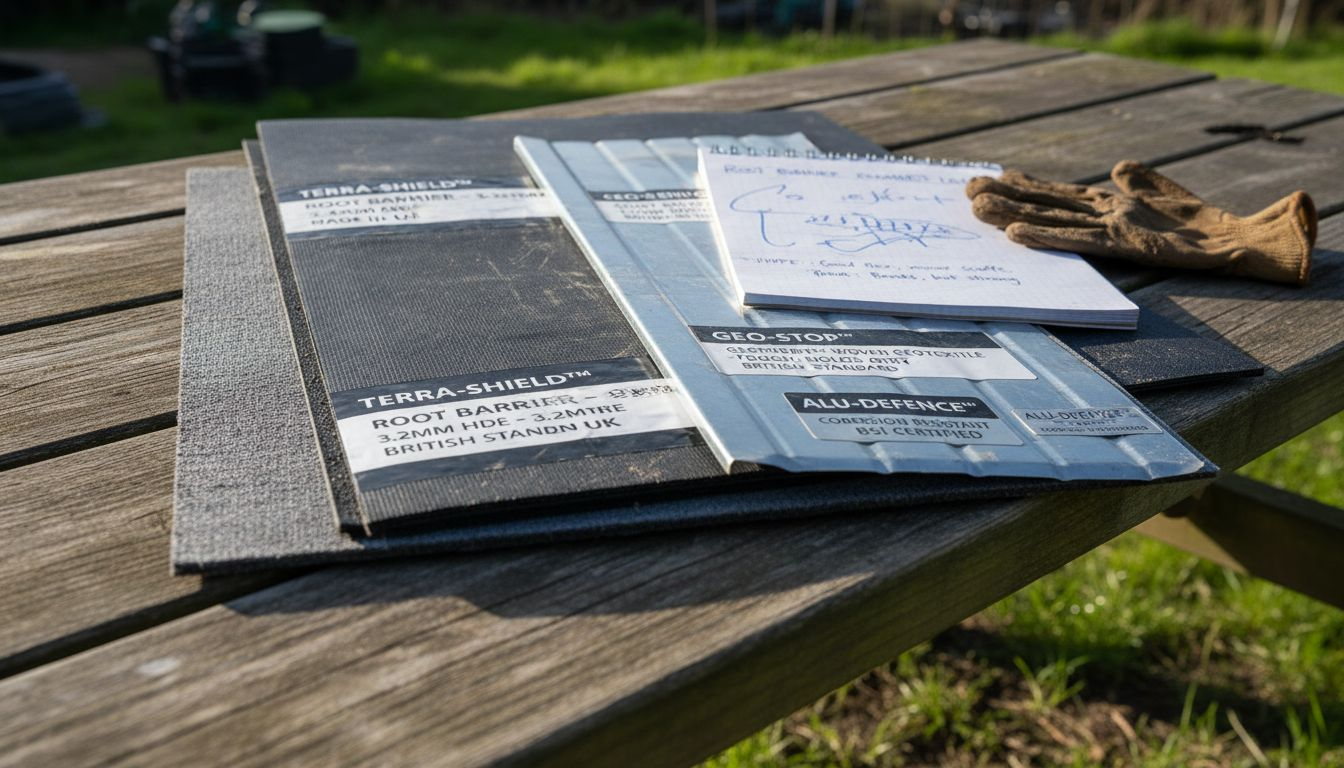
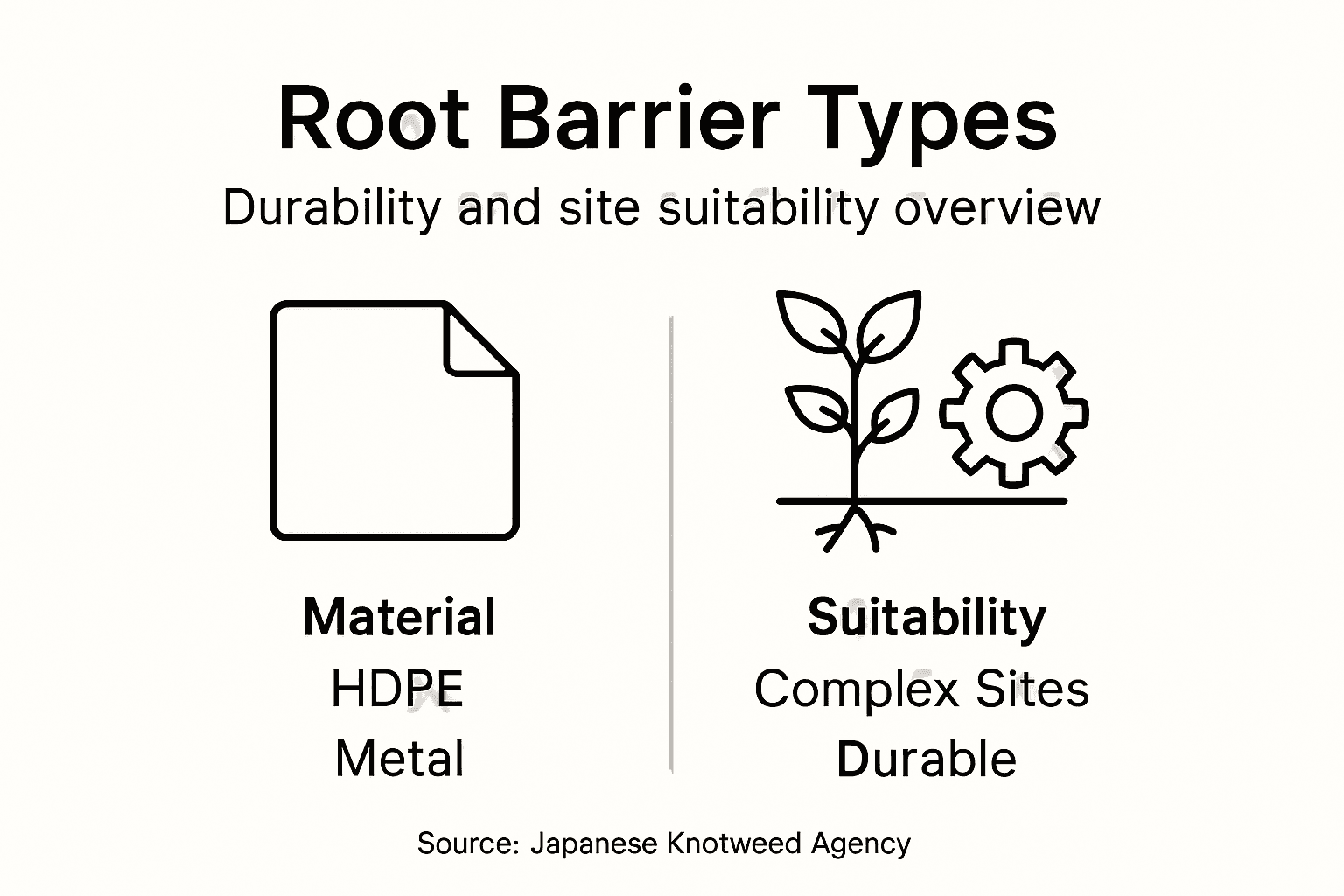
High-Density Polyethylene (HDPE) Sheets: Most commonly used
Geomembranes: Flexible synthetic materials
Metal Barriers: Durable but expensive option
Composite Barriers: Combining multiple material technologies
The effectiveness of root barriers depends on several crucial installation parameters. Comparative barrier studies reveal that successful containment requires precise implementation across multiple dimensions:
Minimum installation depth of 2-3 metres
Complete perimeter coverage
Zero structural gaps or penetration points
Compatibility with specific soil conditions
Resistance to environmental degradation
Root barriers transform an uncontrollable ecological threat into a manageable environmental challenge.
Barrier Material Considerations include assessing long-term durability, chemical resistance, and structural integrity. Professional evaluation determines the most appropriate barrier type for specific site conditions, considering factors like soil composition, moisture levels, and proximity to existing structures.
Pro tip:Always commission a professional site survey to determine the most suitable root barrier type for your specific property characteristics and Japanese Knotweed infestation.
Here is a comparison of primary root barrier types and their performance considerations:
Barrier Type
Durability
Relative Cost
Suitability for Complex Sites
HDPE Sheets
Excellent, decades-long
Moderate
Suitable for most residential areas
Geomembranes
Flexible, long-lasting
Moderate to high
Adapts to irregular excavation zones
Metal Barriers
Extremely robust
High
Ideal for structural protection sites
Composite Barriers
Highly engineered, varied
Moderate to high
Useful in mixed soil conditions
Legal Obligations for Property Owners in the UK
Japanese Knotweed presents unique legal challenges for property owners across the United Kingdom. Legal frameworks governing invasive species establish clear responsibilities for managing this aggressive botanical threat, with significant potential consequences for non-compliance.
Key legal obligations for property owners include:
Preventing knotweed from spreading to neighbouring properties
Ensuring proper containment and management
Disposing of contaminated soil as controlled waste
Maintaining accurate documentation of management efforts
Disclosing knotweed presence during property transactions
The Wildlife and Countryside Act 1981 forms the legislative cornerstone of Japanese Knotweed management. Statutory requirements for invasive species control make it an offence to cause the plant to spread, even unintentionally.
Potential legal consequences of non-compliance are severe:
Prosecution under environmental protection legislation
Substantial financial penalties
Civil litigation from affected neighbouring properties
Potential reduction in property value
Mandatory remediation costs
Ignorance of the law is not a defence when it comes to Japanese Knotweed management.
Property owners must take proactive steps to understand and mitigate their legal risks. This includes conducting professional surveys, implementing appropriate control measures, and maintaining comprehensive records of all management activities.
Pro tip:Consult a legal professional specialising in environmental law to fully understand your specific obligations regarding Japanese Knotweed management on your property.
Risks of Delayed Action and Alternative Solutions
Delaying management of Japanese Knotweed can transform a manageable problem into a catastrophic environmental and financial challenge. Research from Swansea University highlights the exponential risks associated with procrastination in addressing this invasive species.
Potential consequences of delayed intervention include:
Extensive underground rhizome network expansion
Increased management and removal costs
Greater structural damage potential
Higher legal and insurance risks
Reduced property market value
Increased environmental degradation
Alternative management strategies offer property owners multiple approaches:
Targeted herbicide treatments
Integrated pest management techniques
Physical removal strategies
Ecological restoration methods
Biological control agent investigations
Sustainability-focused research emphasises that no single solution provides instant eradication. Comprehensive, multi-year strategies combining different approaches remain the most effective management technique.
Proactive intervention is significantly more cost-effective than reactive management.
Effective Japanese Knotweed management requires a sophisticated, long-term approach that balances environmental considerations, legal obligations, and practical containment strategies.
Pro tip:Consult multiple specialist experts to develop a tailored, comprehensive management plan that addresses your specific Japanese Knotweed infestation characteristics.
This summary highlights potential outcomes of prompt versus delayed knotweed management:
Action Timing
Environmental Impact
Financial Risk
Property Value Effect
Early Intervention
Limits spread, protects soil
Minimises total costs
Maintains or increases value
Delayed Response
Severe spread, ecosystem loss
High remediation costs
Substantial value reduction
Secure Your Property with Expert Root Barrier Installation Today
Japanese Knotweed’s underground rhizomes can cause devastating damage if left unchecked. The article emphasises the critical importance of professionally installed root barriers made from high-density polyethylene to create an unbroken underground membrane. If your property faces challenges containing Japanese Knotweed’s spread, do not risk ineffective DIY attempts or costly delays.
At Japanese Knotweed Agency, we pioneer chemical-free eradication combined with precision root barrier installation and excavation works tailored to your property’s unique conditions. Our expertise ensures rhizomes are physically blocked with materials engineered to withstand extensive root pressure. Act now to protect your investment and comply with legal obligations associated with invasive species management. Contact us for a thorough property survey and bespoke treatment plan that puts you in control of this invasive threat.
Frequently Asked Questions
What are root barriers for Japanese Knotweed?
Root barriers are specialised physical containment solutions designed to prevent the lateral spread of Japanese Knotweed’s invasive underground rhizomes. They create an underground membrane that stops knotweed from migrating across property boundaries.
How deep should root barriers be installed to contain Japanese Knotweed?
Root barriers should be installed to a minimum depth of 2-3 metres to effectively contain the rhizomes and prevent them from penetrating the barrier.
What materials are commonly used for root barriers against Japanese Knotweed?
Common materials for root barriers include high-density polyethylene (HDPE) sheets, geomembranes, metal barriers, and composite barriers. Each has unique advantages depending on the specific site conditions and requirements.
Why is professional installation important for root barriers?
Professional installation is crucial because it ensures the correct implementation of the barriers, creating a continuous, unbroken membrane that effectively blocks rhizome movement. Improvised barriers can fail and inadvertently spread the plant or compromise structural integrity.