Urban weed management: safeguard your property investment


TL;DR:

  • Japanese Knotweed can significantly hinder property sales, reduce values, and increase legal liabilities if unmanaged.
  • Proper professional surveys, documented management plans, and ongoing treatment are essential to protect legal and financial interests in property transactions.
  • Proactive, accredited weed management safeguards homeowners, buyers, and lenders, ensuring smooth sales and long-term property value.

Japanese Knotweed has a well-earned reputation for disrupting property transactions across England, Wales, and Ireland. Many homeowners assume that urban weed management is simply about keeping outdoor spaces presentable, but the reality is far more consequential. A single, overlooked Japanese Knotweed infestation can stall a sale, trigger a mortgage rejection, and expose sellers to serious legal liability. Understanding how to manage invasive weeds properly is not optional for property owners; it is an essential part of protecting your financial interests.

Table of Contents

Key Takeaways

Point Details
Disclose and document early Failing to declare weeds like Japanese Knotweed can cost property owners time, money, and legal trouble.
Require accredited surveys Mortgage lenders and buyers rely on official, expert surveys and management plans to approve property sales.
Prioritise robust solutions Superficial or DIY removal methods rarely satisfy legal or lender standards and may backfire.
Early action protects value Prompt weed management prevents deals from collapsing and preserves both your investment and peace of mind.

Why urban weed management matters for homeowners

Japanese Knotweed is not merely an unsightly garden nuisance. It is a legally significant invasive species capable of pushing through tarmac, penetrating building foundations, and spreading rapidly from even a small fragment of root material. For homeowners engaged in buying, selling, or remortgaging, its presence on or near a property carries very real financial and legal weight.

The impact on property values can be severe, with some lenders refusing to provide mortgage finance altogether if Japanese Knotweed is identified without an accredited management plan in place. Buyers understandably become cautious, and valuers are obliged to take infestations into account during formal assessments. In some cases, properties have sold at a significant discount or failed to sell entirely because the issue was not addressed early enough.

“Failure to disclose or manage invasive weeds can result in misrepresentation claims and significant financial loss, leaving sellers exposed to legal action from buyers.”

The home sale risks associated with invasive weeds extend beyond individual transactions. Neighbours, local authorities, and even future purchasers may all become involved if a problem is inadequately managed. The key issues that make urban weed management essential for every property owner include:

  • Mortgage eligibility: Most high-street lenders require professional surveys and management plans before they will lend on properties with known infestations.
  • Legal liability: Sellers who fail to disclose known weed issues face claims under misrepresentation law, which can result in substantial damages.
  • Property value: An unmanaged infestation can reduce a property’s market value and make it extremely difficult to sell at full price.
  • Neighbour relations and legal obligations: Allowing Japanese Knotweed to spread onto adjoining land is a civil matter and can lead to further legal complications.
  • Peace of mind: Knowing your property is clear of invasive species removes a significant source of stress during any property transaction.

Effective urban weed management is therefore not cosmetic. It is a fundamental aspect of responsible property ownership that directly influences your ability to sell, remortgage, and maintain the full value of your home.

How weed management impacts property sales and mortgages

The legal and financial framework surrounding Japanese Knotweed in property transactions is clear and well-established. Sellers in England and Wales are required to answer questions about invasive weeds on the TA6 property information form, which is a legally binding document. If you fail to disclose the presence of Japanese Knotweed on this form, you risk claims of misrepresentation after completion, and the financial consequences can be severe.

Mortgage lenders, meanwhile, typically require a PCA-accredited survey before they will consider lending on an affected property. The Property Care Association sets the industry standards for invasive weed surveys, and most lenders will only accept documentation from surveyors who meet those standards. This means that an informal inspection or a verbal assurance is simply not sufficient.

The contrast between properties with and without professional weed management in place is striking:

Factor Without professional management With professional management
Mortgage availability Often refused or restricted Generally accepted with plan
Property value Reduced, sometimes significantly Maintained or restored
Legal risk High misrepresentation exposure Greatly reduced
Sale timeline Delayed or collapsed Smoother and more predictable
Buyer confidence Low, often leading to withdrawal Higher, with documented evidence

The process for sellers and buyers to navigate weed management correctly involves several clear steps:

  1. Commission a professional survey from a PCA-accredited specialist at the earliest opportunity, ideally before listing a property.
  2. Disclose accurately on the TA6 form, ensuring all known information about invasive weeds is recorded honestly.
  3. Obtain a formal management plan, prepared by an accredited specialist, that satisfies lender requirements.
  4. Provide full documentation to buyers, solicitors, and lenders, including survey reports and any treatment records.
  5. Maintain the management programme throughout the sale process and beyond, as lenders and buyers will want assurance that treatment is ongoing.

Reviewing survey industry standards before instructing anyone to carry out an assessment is strongly advisable, as the credentials of your surveyor directly influence whether a lender will accept the resulting documentation.

Pro Tip: Even if you believe your property is free of Japanese Knotweed, a professional survey provides documented assurance that you can present to buyers and lenders with confidence. This single step can prevent significant delays later in the transaction.

What does effective urban weed management look like?

Understanding the process helps you make informed decisions and ask the right questions of any specialist you appoint. Effective urban weed management is structured, documented, and ongoing. It is not a single visit and a brief spray of herbicide.

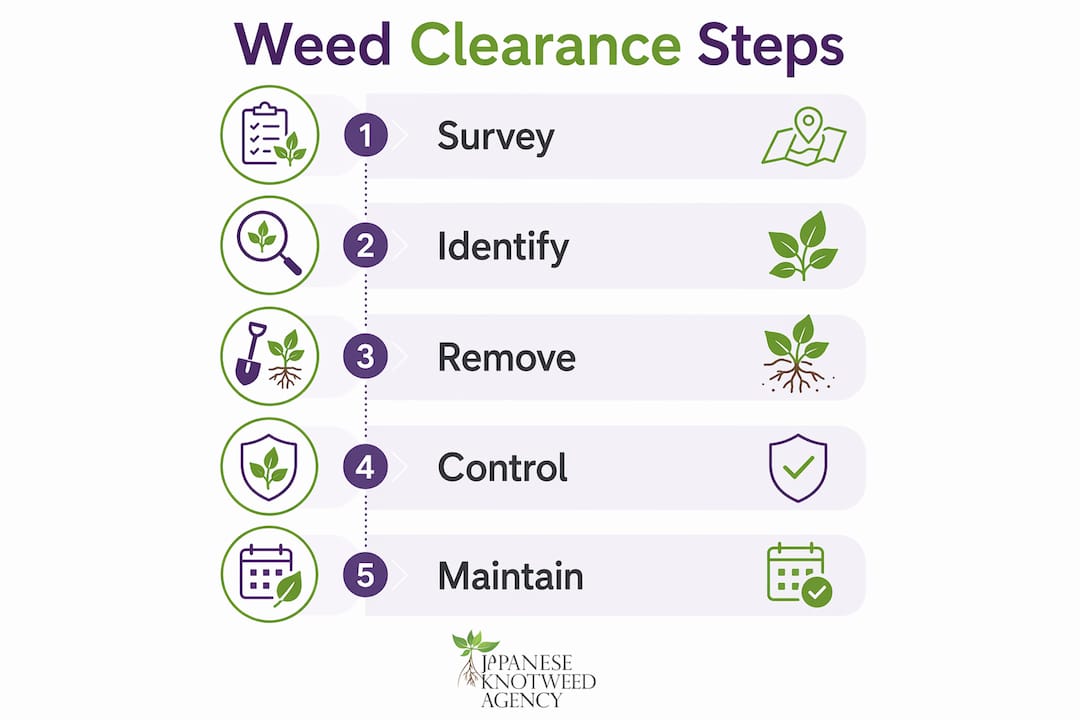
The following table outlines the principal stages of a professionally managed programme:

Stage What it involves Why it matters
Initial inspection Visual survey of property boundaries and structures Identifies extent and risk category
Professional identification Confirmation of species by an accredited surveyor Ensures correct treatment is applied
Survey report Formal written report with photographs and mapping Required by lenders and solicitors
Management plan Tailored treatment schedule agreed with the client Sets out the full programme of works
Treatment delivery Chemical-free or conventional intervention Addresses the rhizome network directly
Monitoring Scheduled revisits to confirm treatment efficacy Provides ongoing assurance and documentation

The key elements of a best-practice approach to invasive weed eradication include:

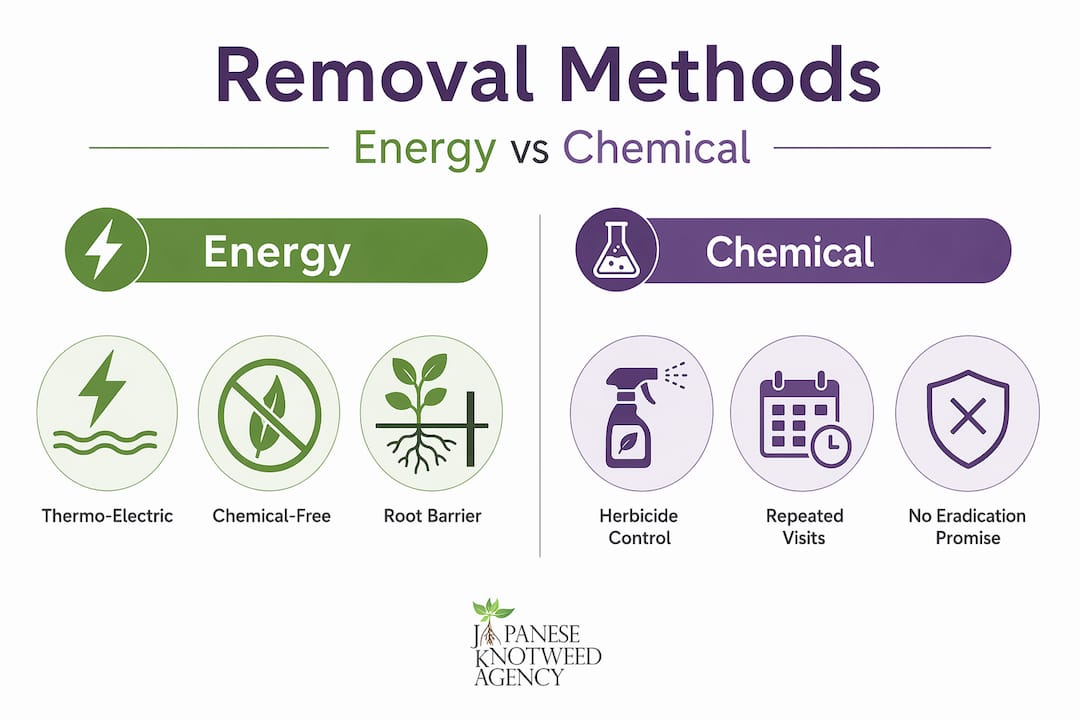
  • Thermo-electric treatment: An innovative, chemical-free method that delivers direct electrical energy to the plant’s root network, disrupting cellular function without the use of herbicides.
  • Root barrier installation: Physical barriers installed underground to prevent rhizome spread into adjacent areas or structures.
  • Excavation works: In certain situations, physical removal of contaminated soil and root material is the most appropriate solution.
  • Chemical-based treatment: Where appropriate and permitted, herbicide programmes may form part of a wider plan, though chemical-free methods are increasingly preferred by both clients and lenders.

Following weed eradication best practices is critical because the Japanese Knotweed rhizome network can extend up to three metres deep and seven metres laterally from the visible plant. Surface removal alone will not resolve an infestation. Any treatment that does not address the underground root system will result in rapid regrowth.

The step-by-step invasive weed management process must also take into account the broader ecology of the site. Responsible weed management protects biodiversity and supports habitat restoration strategies, particularly where native plant species have been displaced by Japanese Knotweed colonisation. Restoring ecological balance after treatment contributes to the long-term value and amenity of the property.

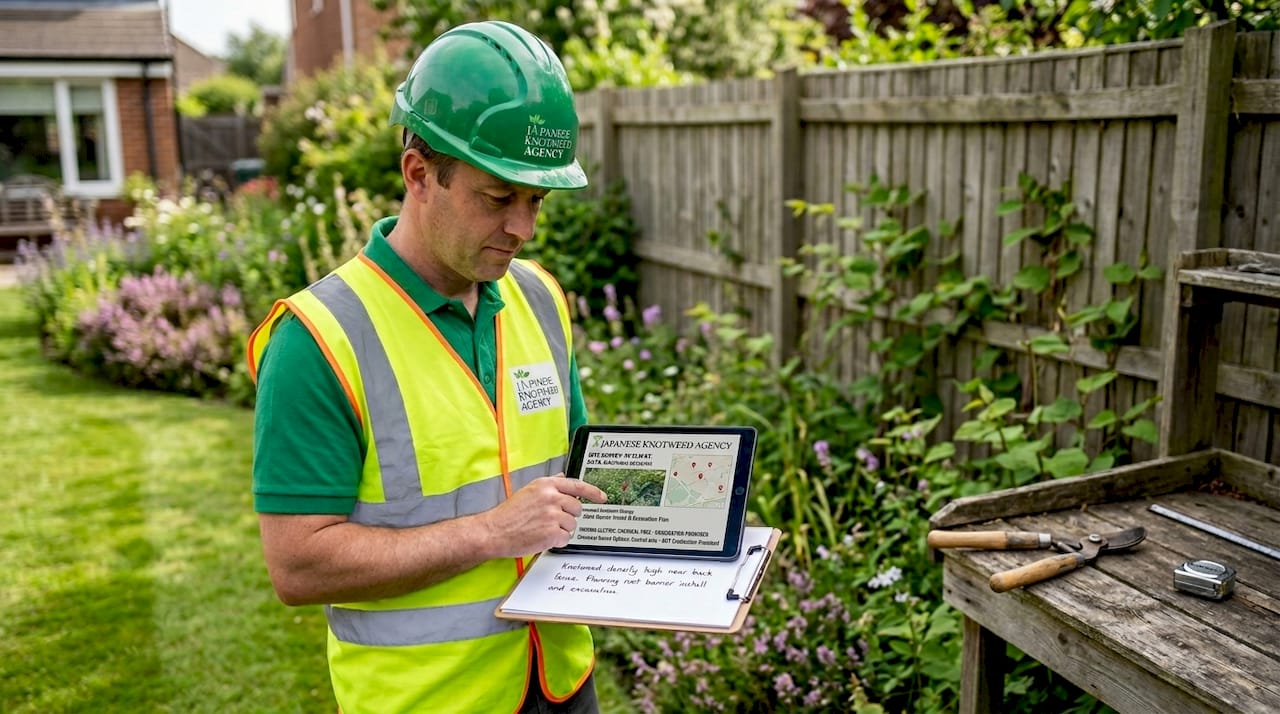
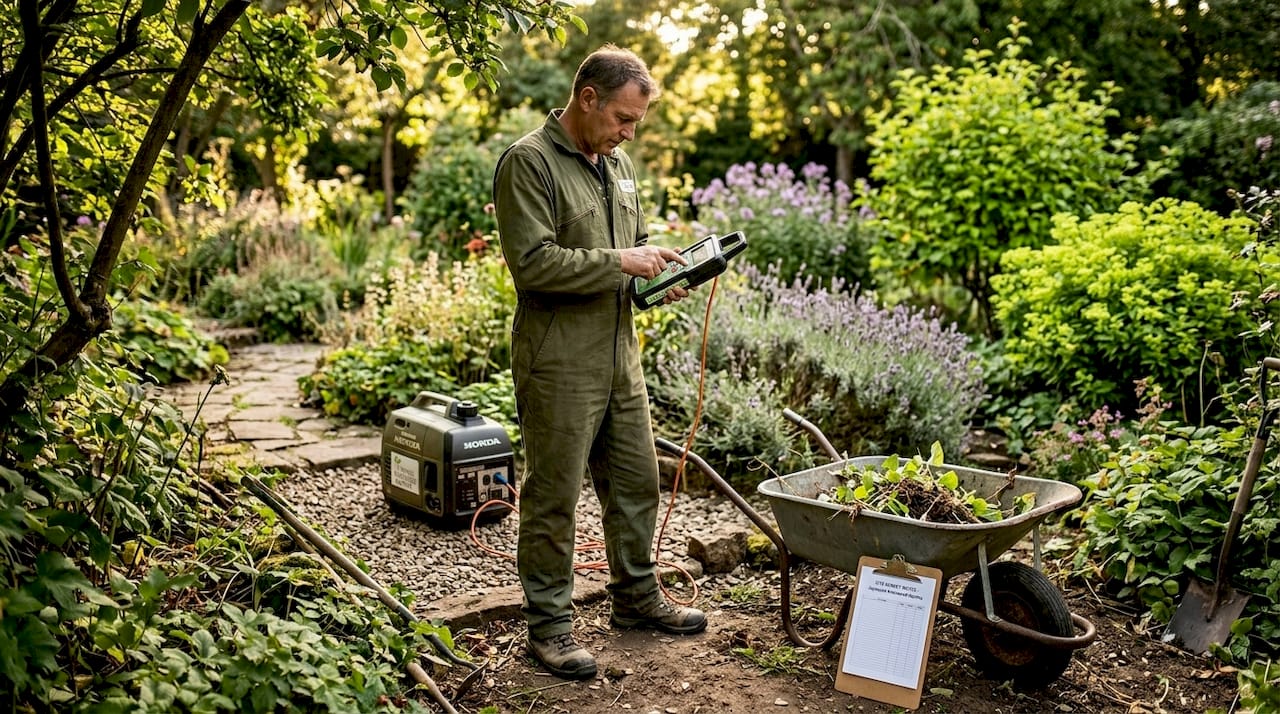
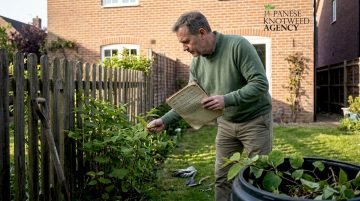
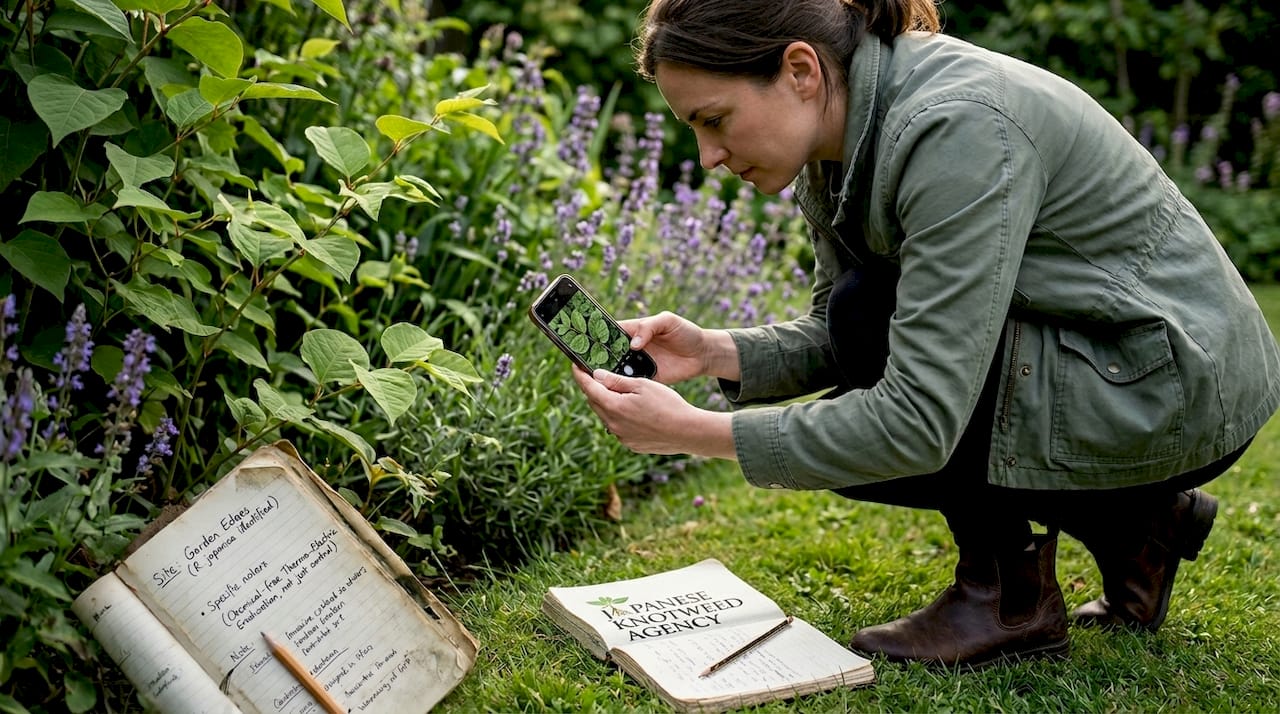
Surveyor assessing invasive weed site outdoors

Lenders require PCA-accredited surveys and plans as an accepted standard of evidence, and this requirement is non-negotiable for most mortgage applications involving affected properties. Always confirm that your specialist holds current PCA accreditation before commissioning any work.

Pro Tip: Always insist on full written documentation at every stage of the management process. Your survey report, management plan, and treatment records are vital evidence for your mortgage application, your solicitor, and any future sale of the property.

Practical tips for homeowners facing invasive urban weeds

Whether you are buying, selling, or simply maintaining your property, there are concrete actions you can take right now to reduce your exposure to the risks associated with invasive weeds.

Overlooking weed management can lead to costly damages and legal action, so proactive vigilance is far preferable to reactive crisis management. The following practical guidance applies to homeowners at every stage of the property journey:

  • Inspect your boundaries regularly. Japanese Knotweed is most visible in spring and summer when it produces distinctive bamboo-like stems and broad, shield-shaped green leaves. Early identification allows for earlier intervention, which is both more effective and more cost-efficient.
  • Consult a PCA-accredited specialist at the first sign of concern. Do not wait until a problem is advanced before seeking professional advice. Early-stage infestations are significantly easier and less expensive to address.
  • Scrutinise the TA6 form carefully when buying. If you are a purchaser, ensure the seller’s property information form accurately reflects the condition of the property. If you have concerns, commission an independent survey before proceeding.
  • Retain all documentation related to surveys and treatments. This includes original survey reports, photographic evidence, management plans, treatment records, and any insurance-backed guarantees. These documents are essential for lenders and future buyers.
  • Understand the boundary rules. Japanese Knotweed on neighbouring land poses a genuine risk to your property. If you identify an infestation originating from an adjacent property, you have legal grounds to request remediation.
  • Never attempt to dispose of Japanese Knotweed in standard garden waste. It is classified as controlled waste under UK legislation, and improper disposal can lead to further spread and potential fines.

Following chemical-free eradication guidance is particularly valuable for homeowners who wish to avoid the use of herbicides near water features, children’s play areas, or areas of ecological sensitivity. Chemical-free methods have advanced considerably in recent years, and accredited specialists can now deliver highly effective treatment without relying on traditional herbicide programmes.

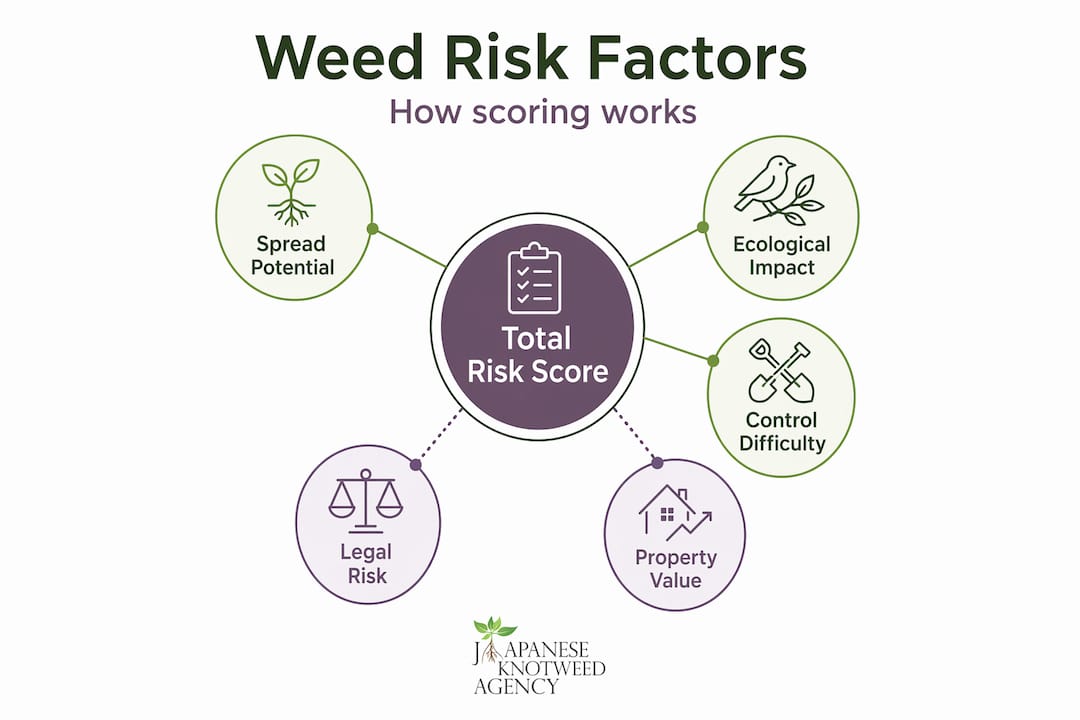
Infographic of urban weed management process steps

Being informed about local weed policy strategies is also useful, as local authority approaches to invasive species management vary across England, Wales, and Ireland. Some councils have active programmes in place, while others rely on landowners to manage issues independently.

Pro Tip: Early professional intervention typically costs a fraction of what homeowners spend managing the legal and financial consequences of an undisclosed or unmanaged infestation. Investing in a proper survey and management plan at the outset is one of the most financially sound decisions a property owner can make.

Our perspective: why thorough weed management is non-negotiable

From our experience working with property owners, buyers, and developers across England, Wales, and Ireland, one pattern stands out consistently. The homeowners who encounter the most serious difficulties are not those who discovered Japanese Knotweed; they are those who chose to deal with it inadequately.

Shortcuts are remarkably common. A contractor is hired to cut the visible growth back. A partial herbicide application is carried out without a formal plan. A seller decides not to mention the issue on the TA6, hoping the buyer will not notice. In every one of these scenarios, the consequences arrive later and they arrive harder. Lenders reject applications. Buyers withdraw. Legal claims follow. The financial and emotional cost of attempting to conceal or minimise an invasive weed problem consistently exceeds the cost of addressing it properly from the outset.

The industry impacts of Knotweed on property transactions are well-documented, and lenders, solicitors, and surveyors are now well-versed in identifying inadequate management. A management plan prepared by an unaccredited contractor, or a treatment history with no formal documentation, will not satisfy modern lender requirements. The property market has matured in its understanding of this issue.

Robust, accredited weed management is not merely an additional expense. It is an investment in the transactability of your property. The difference between a sale that completes smoothly and one that collapses at the eleventh hour is, very often, the quality of the weed management documentation. We believe strongly that investing in proper accredited surveys, comprehensive treatment programmes, and ongoing monitoring is the only approach that genuinely protects both your property value and your legal position.

Get expert help with urban weed management solutions

If Japanese Knotweed or any other invasive species has been identified on or near your property, professional guidance is available from a team with the expertise and credentials to help you at every stage.

https://japaneseknotweedagency.co.uk

Japanese Knotweed Agency are pioneers in chemical-free treatment and eradication, using innovative thermo-electric technology to deliver direct energy up to 5,000 volts into the rhizome network, causing internal cell damage and systematically depleting the plant’s energy resources without the use of herbicides. We also offer root barrier installations and excavation works, providing a genuinely comprehensive solution. For homeowners who need clarity on next steps, our Japanese Knotweed FAQs are an excellent starting point. Explore our chemical-free Knotweed solutions to understand what modern treatment looks like, or read our plant eradication survey guide to learn exactly what to expect from a professional property survey.

Frequently asked questions

Why do mortgage lenders care about invasive weeds like Japanese Knotweed?

Lenders are concerned about structural risks and the potential for future sale complications, so they require PCA-accredited surveys and formal management plans as evidence that any infestation is being properly addressed before they will consider providing finance.

What happens if a seller hides Japanese Knotweed on the TA6 form?

If sellers fail to disclose the presence of invasive weeds on the TA6, they face claims of misrepresentation from buyers after completion, which can result in substantial financial damages and prolonged legal proceedings.

How can homeowners tell if Japanese Knotweed is present?

Look for bamboo-like hollow stems with distinctive purple speckles, large shield-shaped green leaves, and rapid growth during spring and summer; however, a professional survey remains the most reliable method of confirmed identification.

Are chemical-free weed management solutions accepted by lenders?

Yes, provided the treatment is delivered and documented by accredited professionals as part of a formal management plan, chemical-free approaches fully satisfy standard lender requirements.

What should buyers do if a survey finds invasive weeds?

Buyers should immediately request a comprehensive management plan from an accredited specialist and negotiate appropriate remedies with the seller before completing the purchase, in order to avoid inheriting unresolved legal or financial liabilities.

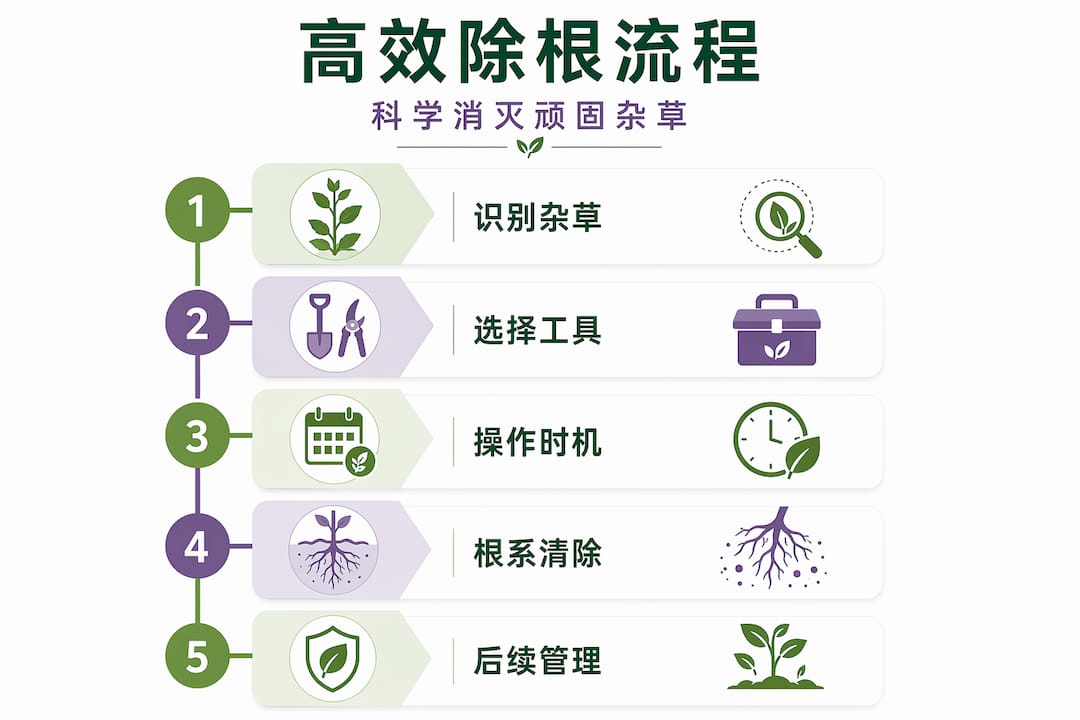
步步教你根除入侵植物:有效解决日本锦带草等难题的实用全攻略


TL;DR:

  • 入侵植物的地下根系严重威胁房屋基础和土地安全,需实行持续、系统的综合根除策略。合理使用工具,结合物理、化学和热电处理方法,可实现高效控制,预防再度入侵。专业机构提供的支持与监测是确保根除效果和房产安全的关键保障。

准备购置或翻新房产时,眼前突然出现一片蔓延失控的入侵植物,不仅可能拖累贷款审批,更会让物业价值大幅缩水。日本锦带草(Japanese Knotweed)等入侵植物的地下根系网络极为庞大,一旦扎根便持续侵蚀建筑基础、地下管道和相邻土地,处置成本往往超出预期。本文将带你从识别到根除,从操作准备到长期监测,系统梳理全套专业解决路径,帮你将潜在的房产风险转化为可控的管理任务。

目录

关键要点

要点 详情
科学识别风险 准确区分入侵植物,并理解其对房产和生态环境的影响,有利于早期控制。
合理选择根除方法 针对不同情境,可配合使用人工、物理覆盖、化学和自然方法以提高效率。
工具与安全并重 根除前须备齐适用工具,并采取必要防护,确保人员健康与环境安全。
重视长期管理 定期巡查、生态修复和反复处理,是持久清除和预防再次入侵的关键。
寻求专业支持 必要时咨询专业机构或查阅权威指南,有助于提升治理成功率和房产安全性。

了解入侵植物的危害与初步识别

面对入侵植物,最大的错误是低估其蔓延速度和破坏力。入侵植物通常以惊人的速度占据空间,其根系或种子随土壤流动、园艺工具乃至鞋底迁移扩散,一旦站稳脚跟,根除工作便会成倍复杂。

常见入侵植物及主要危害

英格兰、威尔士及爱尔兰境内,以下几种入侵植物最为普遍,且危害程度各有侧重:

植物名称 主要危害 扩散方式
日本锦带草 破坏建筑基础、地下管道 根茎碎片、地下蔓延
金钱草(Moneywort) 覆盖本地植被,影响排水 种子及匍匐茎
蒲公英 快速占领草坪和花园 风力传播种子
忍冬(Honeysuckle) 缠绕并遮蔽本土植物 浆果种子、茎部扦插

日本锦带草的危害尤为突出。其地下根茎(rhizome)网络可延伸至地表以下3米,横向扩展超过7米,能穿透混凝土裂缝和砖墙缝隙,直接威胁房屋结构安全。对于正在购房或申请抵押贷款的业主而言,物业上存在日本锦带草往往会触发银行的风险评估机制。

早期识别是防治关键

“入侵植物的根系和种子可在土壤中潜伏多年,等待适宜条件便迅速爆发,因此定期巡查比被动应对要有效得多。”

入侵植物蔓延的路径极为多样,通过种子或根系碎片的快速传播意味着,哪怕只移除了地上部分,残留的根茎仍可在数周内重新萌发。因此,建议每年至少两次系统性巡查庭院边界、排水渠和围栏附近,做到识别入侵植物时不遗漏任何死角。

识别要点:

  • 日本锦带草:竹节状茎干、心形叶片、夏季白色花序
  • 金钱草:圆形叶片、匍匐茎、喜潮湿低洼地带
  • 忍冬灌木:深绿色对生叶、红色浆果、冬季仍保留叶片

入侵植物根除前的准备:工具与安全事项

知道了危害和种类,下一步就是科学准备,确保操作安全、高效,同时将对周边环境的干扰降至最低。

必备工具清单

工具类型 适用场景 注意事项
根挖铲(Dandelion digger) 单株小型杂草 深根需配合窄头铲
园艺手套(厚款) 全程防护 避免接触植物汁液
厚黑色塑料膜 覆盖闷杀大面积区域 需压边固定,防止移位
草耙 清理地表碎片 碎根需装袋处理,勿堆肥
园艺剪刀或割灌机 先行削减地上部分 剪刀需消毒,防止传播

安全防护是首要原则。部分入侵植物的汁液含有刺激性成分,接触皮肤可能引发过敏或灼伤。手工拔除适合幼株,但操作时土壤应保持湿润,以便完整拔出根系,防止碎根残留造成再度萌发。

安全操作核查列表:

  • 穿戴长袖上衣、全封闭鞋子和厚款园艺手套
  • 操作后立即清洗双手和工具
  • 将清除的植物碎片装入密封垃圾袋,切勿放入家庭堆肥
  • 查阅当地法规,日本锦带草在英国属于受控废弃物,需依法处置
  • 参考植物处理安全指南了解无化学处理的安全要点

专业提示: 在潮湿天气后操作(而非极度干旱时)效果更佳,因为湿润土壤能让根系整体脱出,大幅减少根茎断裂残留的风险,尤其对蒲公英和忍冬等宿根型植物效果显著。

工具的选择应根据场地实际情况调整。小型花园庭院以手工工具为主,边界地带和大面积草坪则可引入电动割灌机配合人工复查。

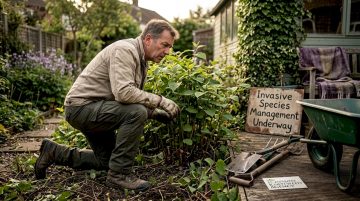
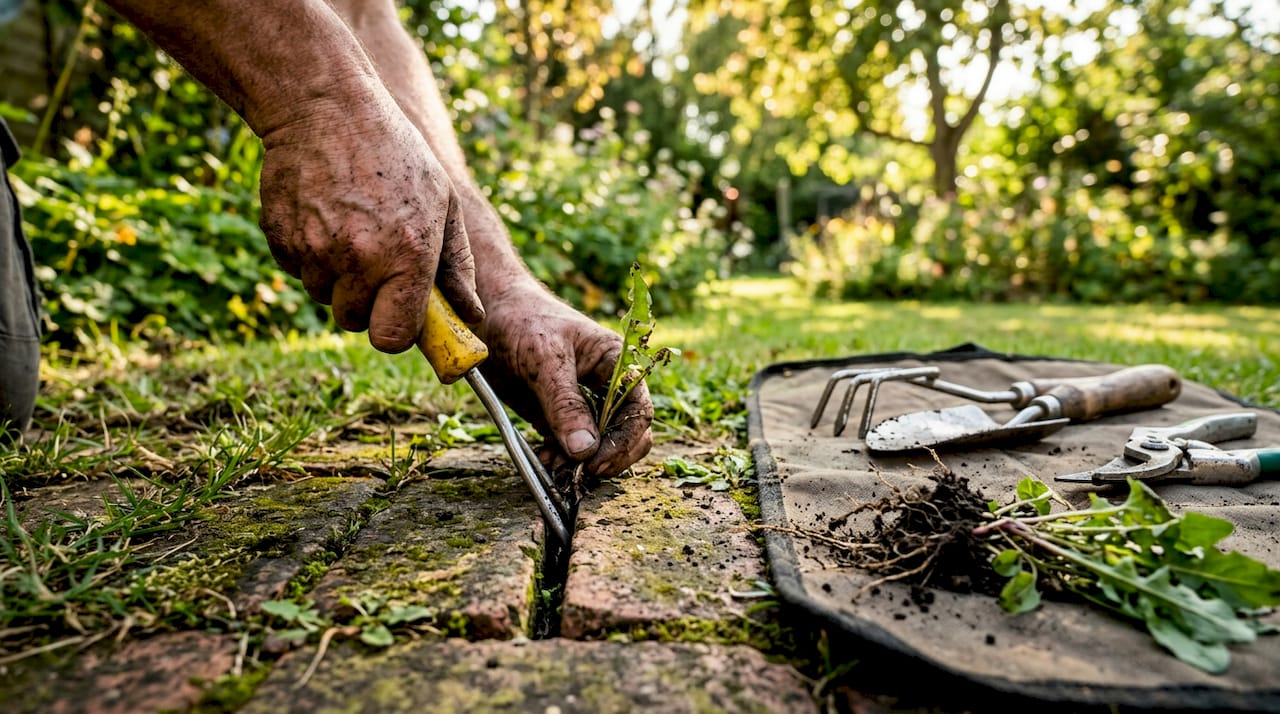
长椅上摆放着用来清除入侵植物的园艺工具。

步步操作:根除入侵植物的有效方法详解

工具备齐、安全措施到位后,进入最关键的实操阶段。不同植物类型、不同扩散程度,需要选择相应的根除策略。

主流根除方法步骤详解

  1. 人工拔除法:适用于小面积新入侵的幼株。选择雨后土壤湿润时,用根挖铲垂直插入植株根部,将整株连根拔起,确保根系完整无断裂。
  2. 切根处理法:将地上茎干贴近地面切断,立即涂抹药剂(如20%至50%浓度的草甘膦或三氯吡)至新鲜切口处,秋末植物向根部输送养分时效果最佳。
  3. 覆盖闷杀法黑色塑料膜覆盖或30厘米厚木屑层铺设,隔绝光线和空气,持续闷压1至2年,适合大面积受侵地块。
  4. 物理阻断法:安装专业根障(root barrier)膜,将地下根茎扩散路径物理截断,常用于保护建筑基础和地下管道区域。
  5. 热电处理法:Japanese Knotweed Agency采用的无化学热电技术,向地下根茎网络直接传导高达5000伏特的电能,造成细胞内部损伤并耗尽根茎储存的能量,是真正实现无化学根除的先进方案。

各方法效果对比

一张图带你了解物理去除与化学去除方法的对比

方法 适用规模 见效速度 对环境影响
人工拔除 小型单株 即时 极低
切根药剂法 中型灌木 数周至数月 中等
覆盖闷杀 大面积地块 1至2年
热电处理 各类规模 多次处理后持续累积 极低,无化学残留
专业挖掘 深根系 一次性清除后监测 短期土壤扰动

专业提示: 秋末至初冬是切根药剂处理的黄金窗口期。此时植物正将地上部分的养分向根系转移,药剂随养分流向深层根茎,根除效率比春夏季作业高出30%至50%。

重要提醒: 单次处理很少能一劳永逸。大多数入侵植物,尤其是日本锦带草,需要经过多个生长季节的持续跟进处理才能真正控制住根茎活性。

更多防治方法清单物业处理建议可参考我们的专项资源页面,帮助不同房产类型的业主找到最合适的处理路径。

大面积及特殊场景的综合根除策略

家庭庭院以外,社区绿地、水域边缘和物业公共空间的入侵植物问题规模更大、情况更复杂,需要多种手段协同配合,才能实现有效控制。

大规模清除的协同方案

场景类型 推荐方案组合 注意要点
社区草坪 机械割草 + 人工复查 割草碎片需清理,防止再生
水域边缘 人工拔除 + 重型设备 禁止使用化学药剂污染水体
物业公共空间 覆盖闷杀 + 根障安装 需协调多方管理权限
坡地灌木丛 山羊放牧 + 人工跟进 仅适用于灌木,不适用于草本

“大型场域适用机械割草与人工结合方式,配合重型设备后仍需多次监测,确保清除彻底性。”

机械割草可以快速压制地上部分的蔓延,但单靠割草无法消灭地下根茎。因此,机械作业完成后必须安排人工跟进,针对根茎暴露区域补充热电处理或物理阻断措施。

大面积管理要点:

  • 制定分区清除计划,从核心区向外围逐步推进,防止施工过程中扰动导致碎根散播
  • 水域边缘严禁使用草甘膦等化学药剂,优先选择机械和物理手段
  • 山羊放牧适用于灌木丛清理,但对草本型入侵植物效果有限
  • 每次大规模清除后,至少安排6至12个月的定期监测,发现复萌立即处置

对于涉及多方权属的物业公共空间,建议引入专业机构开展系统机械与根障搭配流程设计,最大化资源利用效率,同时降低合规风险。

根除后监测与生态修复,构建长期防线

彻底清除入侵植物只是起点,真正的挑战在于如何守住已清除的区域,防止再度入侵。生态修复与持续监测是这一阶段的核心任务。

监测与修复的标准流程

  1. 清除后第一个月,每周巡查一次,重点检查根茎暴露区域和地块边界
  2. 第二至六个月,每两周巡查一次,记录任何新萌芽的迹象
  3. 第六个月至第二年,每月巡查一次,同步推进土壤改良和植被恢复工作
  4. 第二至五年,每季度巡查一次,评估本地植被覆盖状况和入侵植物复发风险
  5. 发现复萌立即启动快速响应,不等待下次计划巡查

专业提示: 在清除区域补种本地竞争性植物(如禾本科草类、野花混合种),能有效压缩入侵植物重新建立种群所需的空间和光照资源,是最经济实惠的长效防控手段之一。

生态修复的关键措施:

  • 恢复土壤健康:改善排水、增施有机质,提升本地植物的竞争优势
  • 种植本地优势植物:选择适应当地气候的快速覆盖型植物,减少裸露土壤面积
  • 定期覆盖护根(mulch):3至5厘米厚的护根层可抑制残留种子萌发,同时保持土壤水分
  • 建立社区联防机制:与邻近业主协同巡查,防止入侵植物从边界地带重新入侵
  • 记录处理档案:保留每次处理的时间、方法和范围记录,为贷款机构和保险公司提供合规证明

参考长期管理技巧,系统建立适合自家物业特点的防控体系,是确保根除成果持久有效的最佳路径。

专家观点:根除入侵植物没有"神技",预防管理为王

在数百个物业治理案例中,我们观察到一个反复出现的规律:最终成功根除入侵植物的房主和地方管理者,无一例外都依赖的是组合策略和持续管理,而非某一种"一锤定音"的特效手段。

化学除草剂的确效率较高,草甘膦在理想条件下可实现90%以上的短期控制成效,但单一方法并不能保证彻底根除或持久无忧,尤其面对日本锦带草这类根茎深达3米的物种,药剂渗透深度本身就是一个结构性障碍。

相比之下,纯粹依赖物理清除同样存在局限。人工挖掘若无精确定位,很容易遗漏深层根茎,反而因扰动土壤加速碎根散播。这也是为什么我们始终强调:任何单一手段都应被视为综合方案中的一个环节,而非独立的解决方案。

我们的一线经验告诉我们,预防阶段投入1分的资源,往往能在根除阶段节省10分的成本。一个刚刚站稳脚跟的小型锦带草幼株,通过及时的热电处理或人工清除,可以在数次操作内控制住。一旦拖延至根茎扩展超过5米,处理工作量将呈指数级增长,不仅涉及更大面积的挖掘,还需要额外的结构损伤评估和合规报告。

对于正在购房或申请再融资的业主,我们的建议是:在交易完成前委托专业机构完成物业入侵植物调查,明确范围和风险等级,再制定处置计划。这不仅保护你的投资,更能为贷款机构提供清晰、可信的风险管控证明。

根除入侵植物的下一步:获取专业支持,保障房产安全

面对入侵植物的复杂性,专业支持往往是最高效的投资。

https://japaneseknotweedagency.co.uk

Japanese Knotweed Agency 在 England、Wales 和 Ireland 提供全面的物业入侵植物调查服务,采用业界领先的无化学热电处理技术,直接向地下根茎网络传导高达5000伏特的电能,实现真正意义上的根除而不依赖任何化学药剂。无论是家庭庭院的小规模清除,还是社区绿地的大面积综合治理,我们的团队都能制定针对性方案,覆盖根障安装和专业挖掘服务。你可以查阅我们的入侵物种根除方案,或浏览常见问题解答了解更多细节,也可直接咨询我们的无化学解决方案,为你的房产提供持续安全保障。

常见问题解答

为什么入侵植物总是反复生长、难以彻底根除?

许多入侵植物拥有强大的地下根系和多元繁殖能力,种子或碎根可在土壤中潜伏数年,因此需要坚持多次处理并长时间监测,通常持续1至5年方能真正控制。

在庭院或靠近房屋根除入侵植物时,哪些安全事项最重要?

务必穿戴长袖衣物和厚款园艺手套,避免皮肤直接接触植株和任何药剂,同时参考人工拔除技巧正确使用根挖铲,防止误伤周围有价值的景观植物。

自然环保方法与化学药剂相比,哪个更适合家庭使用?

自然方法对健康与环境更安全,但对深根系植物效率有限,沸水或醋酸溶液仅适合处理小面积浅根型入侵植物,大型深根问题则需评估是否引入专业热电处理。

多久可以看到根除成效?最快和最慢分别是什么情况?

小规模新入侵的幼株可在数周内见效,而大型深根入侵通常需要覆盖闷杀1至2年甚至更久的反复处理和监测,才能确认彻底清除。

根除入侵植物有哪些常见误区?

最常见的误区是只割除地上部分而忽视根系清理,以及忽视边界死角的持续巡查,导致残株反复萌发,正如权威机构强调的那样,没有任何单一方法能保证彻底根除,必须坚持综合和持续的管理策略。

推荐

Physical weed removal: safe, chemical-free solutions explained


TL;DR:

  • Physical weed removal involves manual and mechanical methods suited for common garden weeds but is risky and less effective against invasive species like Japanese Knotweed. Invasive plants require professional assessment, legal compliance, and specialized techniques such as certified excavation and non-chemical treatments, as improper DIY removal can worsen infestations and lead to legal penalties. Engaging certified specialists ensures environmentally responsible, safe, and legally compliant management, protecting property value and ecological health.

Not all weeds are created equal, and not all removal methods carry the same risk. Many UK homeowners assume that because a method is chemical-free, it is inherently safe, straightforward, and appropriate for any plant they encounter in the garden. In reality, physical weed removal refers to non-chemical methods involving hand-pulling, digging, hoeing, cutting, or smothering to prevent growth. For ordinary garden weeds, these techniques are well-suited and widely endorsed. For invasive species like Japanese Knotweed, the situation is far more complex, with serious legal, ecological, and property implications attached to every decision you make.

Table of Contents

Key Takeaways

Point Details
Defined physical weed removal Physical weed removal means using non-chemical methods such as digging, hand-pulling, and mulching to tackle weeds.
Common garden weed strategies Hoeing, hand-pulling, and mulching are practical for most garden weeds if done regularly and correctly.
Invasives require expert care Invasive species like Japanese Knotweed can’t be safely or legally removed with DIY methods—professional support is essential.
Surveys protect property value Getting a professional survey before weed removal can protect your property value and ensure legal compliance.

Understanding physical weed removal

Physical weed removal is the practice of controlling unwanted plants without the use of herbicides or other chemical agents. It encompasses a broad range of techniques, from the simple act of pulling a dandelion by hand to the installation of engineered root barriers designed to contain aggressive rhizome networks underground. The critical distinction between physical and chemical control is not just one of method. It reflects a fundamentally different approach to land management, environmental responsibility, and long-term ecological impact.

Chemical weed control typically involves applying herbicides that are absorbed by plant tissue and transported to the roots, disrupting growth processes systemically. Physical methods, by contrast, act mechanically: removing, blocking, or depleting a plant’s ability to access light, water, or nutrients. Each approach carries advantages and limitations, and the right choice depends heavily on the species you are dealing with.

“Physical weed removal refers to non-chemical methods that involve manually or mechanically removing weeds by hand-pulling, digging out roots, hoeing, cutting, or smothering to prevent growth.” — Royal Horticultural Society

RHS-endorsed methods are particularly relevant for UK homeowners because they reflect guidance shaped by the specific weed species, soil conditions, and climate that characterise British gardens. However, it is essential to understand that physical removal is not automatically the easier or safer option. For invasive species, physical intervention can fragment root systems and actively accelerate spread if handled incorrectly.

Key scenarios where physical removal is appropriate include:

  • Annual weeds such as chickweed or groundsel, which complete their life cycle in one season and respond well to hoeing and hand-pulling
  • Biennial weeds that can be removed before flowering and setting seed
  • Small perennial infestations in borders and beds where hand-digging and forking out rootballs is practical
  • Established beds where mulching and light-blocking barriers prevent new weed establishment

For anything beyond these scenarios, particularly where knotweed removal best practices apply, professional assessment is not optional. It is essential.

The variety of physical techniques available to UK gardeners is broader than many people realise, and choosing the right method for the right weed at the right time makes a significant difference to outcomes. Timing, in particular, is a factor that most amateur guides undervalue. Hoeing annual weeds on a dry, sunny day causes immediate desiccation of the severed plant material, making it far more effective than hoeing in wet conditions where disturbed weeds can re-root within hours.

Effective physical mechanics for garden weeds include hoeing seedlings on dry days, hand-pulling annuals, forking out perennials’ rootballs, repeated cutting to deplete energy reserves, and mulching or covering with barriers to block light. Each method has a specific application depending on whether you are dealing with annuals, perennials, or seedlings.

Technique Best suited for Key advantage Key limitation
Hand-pulling Annuals, seedlings Precise, no tools needed Labour-intensive; may miss roots
Hoeing Annuals, surface seedlings Fast over large areas Ineffective in wet conditions
Forking out Perennial rootballs Removes entire root system Time-consuming; disturbs soil
Cutting/strimming Perennials with reserves Depletes energy over time Requires repeated treatment
Mulching Seedlings, new growth Long-lasting suppression Requires thick, maintained layer
Root barrier installation Deep, spreading rhizomes Prevents lateral spread Requires professional installation

Understanding which category your weed falls into is the first step toward choosing an effective approach. Annual weeds, which germinate, flower, and set seed within a single growing season, are the most straightforward to manage physically. Perennials are considerably more challenging because their energy reserves are stored in root systems that can extend well beyond what is visible at the surface. Cutting top growth repeatedly does weaken these plants over time, but it rarely eliminates them entirely without complementary action.

Pro Tip: When removing perennial weeds, always aim to extract as much root material as possible in a single session. Leaving fragments behind, particularly with vigorous species, creates multiple new growing points rather than one.

The manual knotweed removal steps required for invasive species are categorically different from the above. Knotweed rhizomes can extend to depths of three metres and spread laterally up to seven metres from the parent plant. Even a fragment as small as a thumbnail can regenerate into a new plant. This is not a weed that responds to a garden fork and a mulch sheet.

Limitations and risks: dealing with invasive species

Physical removal is an effective and responsible strategy for managing ordinary garden weeds. However, when invasive species enter the picture, the limitations of even the most diligent DIY approach become apparent very quickly. Japanese Knotweed is the most widely documented example in the UK, but other species including Himalayan Balsam, Giant Hogweed, and Rhododendron ponticum present their own significant challenges.

The risks associated with attempting DIY physical removal of Knotweed fall into three broad categories:

  1. Ecological risk: Fragmenting Knotweed rhizomes during digging spreads viable material across the site and, potentially, beyond it. Even well-intentioned removal can worsen an infestation significantly.
  2. Legal risk: Under the Wildlife and Countryside Act 1981 and the Environmental Protection Act 1990, knotweed legal requirements are strict. Knotweed is classified as controlled waste. Moving, transporting, or depositing it without proper licensing constitutes a criminal offence.
  3. Property risk: Mortgage lenders and property surveyors actively assess Knotweed presence. Poorly managed or undisclosed infestations have delayed and collapsed property sales across the UK.

“Invasives like Knotweed require professional intervention due to legal and disposal complexities. Chemical-free solutions are viable via excavation and barriers, but these are not DIY undertakings.” — Royal Horticultural Society

The disposal of hazardous weed waste is a particular area where homeowners frequently underestimate the legal obligations involved. Knotweed material excavated from a property must be transported by a registered waste carrier to a licensed landfill site that accepts controlled invasive material. Placing it in domestic green waste, composting it, or burning it on-site are all non-compliant actions that carry the potential for significant financial penalties.

Pro Tip: Never place suspected Knotweed or other invasive plant material into your household compost, garden waste bin, or skip. Treat any suspect material as controlled waste and seek professional guidance on proper disposal before taking any action.

It is also worth noting that the scale of effort required for compliant physical removal of Knotweed is substantial. Excavation to the required depth, containment and bagging of all material, use of appropriate personal protective equipment, and coordination with licensed waste carriers is not a weekend garden project. It is a regulated professional undertaking.

Physical weed removal and your property: safety and survey strategies

For UK homeowners, the question of weed management rarely exists in isolation from broader concerns about property condition, valuation, and compliance. Physical weed removal intersects directly with all three of these areas, and understanding how is critical before you begin any removal work.

Surveyor noting invasive weeds at property boundary

A professional survey does considerably more than confirm whether a plant is present. Trained surveyors identify the extent of root spread, the proximity of rhizomes to foundations and drainage infrastructure, and the likely impact on adjoining properties. Visual inspection at ground level gives only a partial picture. Underground spread, which is where invasives require professional intervention to identify accurately, often reveals a far greater problem than what is visible above ground.

Survey element Why it matters for property owners
Species identification Confirms whether legal obligations apply
Rhizome mapping Establishes the true extent of underground spread
Structural proximity assessment Identifies risk to foundations, drains, and walls
Boundary assessment Determines whether neighbouring properties are affected
Management plan recommendation Guides compliant, proportionate removal strategy

For homeowners considering selling or remortgaging, a documented management plan backed by a professional property survey for invasive weeds provides the evidence that mortgage lenders and solicitors require. Many sales have been delayed or derailed not by the presence of Knotweed itself, but by the absence of professional documentation and a credible treatment record.

Practical considerations vary depending on whether you rent or own the property. Renters have limited authority to authorise physical intervention beyond ordinary garden maintenance. Significant removal or barrier installation on a rented property requires landlord consent and, where invasive species are involved, professional oversight. Homeowners have greater latitude but bear full legal responsibility for correct management and disposal.

Surveyors serve as the first and most important line of defence in long-term weed management. Identifying an infestation early, understanding its boundaries, and establishing a compliant treatment plan before any physical work begins is the approach that protects both your property and your legal standing.

A closer look: what most guides miss about physical weed removal

Most guides on physical weed removal treat the subject as broadly accessible, implying that chemical-free means complication-free. This assumption, while understandable, is incorrect where invasive species are concerned, and it is one that experienced practitioners encounter the consequences of regularly.

The appeal of physical removal is genuine. It avoids chemical residues in soil and waterways, it aligns with ecological best practice, and it gives homeowners a sense of direct agency over their land. For common garden weeds, this approach is sound and effective. The problem arises when the same confidence is applied to species that operate by entirely different biological rules.

Vertical flow infographic showing physical weed removal process

Knotweed does not behave like bindweed or couch grass. Its rhizome system is not simply deep. It is structurally integrated into the soil environment in a way that means physical disturbance without expert planning actively worsens the situation. The role of knotweed specialists is not to perform a service that homeowners could perform themselves with more effort. It is to apply knowledge, equipment, and legal authority that genuinely cannot be replicated without professional training and certification.

There is also a widely held misconception that chemical-free solutions are inherently slower or less effective than herbicide-based treatments. Innovative approaches such as thermo-electric treatment, which delivers targeted electrical energy directly into the rhizome network causing internal cell damage and progressive depletion of energy reserves, demonstrate that chemical-free does not mean ineffective. On the contrary, such methods address the root cause directly and without introducing any chemical agents into the surrounding environment.

The uncomfortable truth is that the homeowners most committed to responsible, chemical-free management sometimes place themselves at greatest legal and financial risk by attempting unsupported DIY removal of invasive species. True environmental responsibility in this context means recognising the limits of what physical intervention you can safely and legally undertake, and engaging certified professionals for the work that falls beyond those limits.

Expert support for weed removal and property safety

Deciding how to manage weeds on your property is a meaningful responsibility, and the guidance in this article is designed to help you approach that decision with clarity and confidence. For ordinary garden weeds, well-timed physical techniques are effective, environmentally sound, and entirely within reach for most homeowners. For invasive species, the legal and ecological stakes demand a different level of support.

https://japaneseknotweedagency.co.uk

Japanese Knotweed Agency provides professional property surveys for invasive weeds across England, Wales, and Ireland, alongside specialist removal services that are entirely chemical-free. Our thermo-electric treatment method delivers up to 5,000 volts directly into the rhizome network, causing progressive internal cell damage without chemical agents or environmental contamination. We also carry out root barrier installations and excavation works, all managed in full compliance with UK legal requirements. For detailed guidance on responsible management without herbicides, the chemical-free weed control guide covers the full range of approaches available. You can also find answers to the most common homeowner questions through our Japanese Knotweed FAQs.

Frequently asked questions

Can I remove Japanese Knotweed physically on my own?

DIY physical removal of Japanese Knotweed is not advisable in the UK due to strict legal, safety, and disposal requirements under the Environmental Protection Act 1990. Professional intervention is strongly recommended to ensure compliance and effective treatment.

What is the safest method to physically remove ordinary garden weeds?

Hand-pulling, hoeing on dry days, and mulching are considered safe and effective for most common garden weeds when applied at the right growth stage. Forking out perennial rootballs is also appropriate for established plants in accessible borders.

Is physical weed removal completely chemical-free?

Physical weed removal does not involve chemicals, but chemical-free does not mean risk-free. Invasive species in particular present legal, ecological, and structural risks that require professional management even when chemical treatments are not used.

Improper disposal of invasive species like Japanese Knotweed is a criminal offence under the Environmental Protection Act 1990. Fines and property complications can result from transporting or depositing controlled waste without proper licensing.

Why should I get a professional survey before removing weeds?

A professional survey provides accurate species identification, rhizome mapping, and a compliant management plan that satisfies mortgage lenders and legal requirements. Without it, physical removal may address only what is visible above ground while leaving the full extent of the problem untreated.

日式虎杖识别技巧详解:购房家庭必备清单与对比指南


TL;DR:

  • 日本虎杖被列入法律管控植物,影响贷款和交易安全。
  • 四季识别法结合专业评估确保准确判断植物身份。
  • 分季节拍摄证据、联系专业机构是保障房产交易的关键措施。

购买房产或办理再融资时,日本虎杖的存在往往是最容易被忽视却影响最大的隐患之一。这种被英国皇家园艺学会列为法律管控植物的入侵性多年生草本,学名 Reynoutria japonica,一旦在目标房产内或附近发现,不仅可能导致贷款申请失败,更可能使整个交易陷入僵局。然而识别它并非易事,许多家庭在不同季节面对花园时,根本无法确认眼前的植物究竟是否就是日本虎杖。本文通过分季识别清单、对比表格和专业操作建议,帮助每一个正在购房或再融资的家庭建立可靠的判断基础。


目录

关键要点

要点 详情
多季节识别 全年留心芽、茎、叶、花与 crown bud,识别更准不漏误。
防止误判 切勿仅凭竹状外观断定,结合叶形、节位和专业检测。
证据链管理 分阶段拍照并保存检测报告,有效支持贷款和房产交易合规。
利用权威资源 主动借助专家服务和平台解决识别与清除难题,资产更安全。

识别日式虎杖的关键标准与潜在风险

对于购房家庭而言,首先需要理解的是:日本虎杖不只是一种花园杂草,它在英国法律层面具有特殊地位。根据 RHS 的权威资料,Reynoutria japonica 被列入受法律管控的植物名单,房产涉及日本虎杖时,业主有特定的法律责任,必须高度警惕。这意味着即便买家在签约前没有主动披露,日后出现纠纷时,相关责任同样不可回避。

日本虎杖对房产交易的影响是多维度的。研究数据表明,日本虎杖的存在可对房产贷款批准、产权转让及保险核保产生显著影响,严重情况下可导致交易直接中断或资产价值大幅贬损。部分抵押贷款机构会在评估报告中明确标注日本虎杖风险,从而拒绝或推迟放款决定。

为什么识别流程需要照片证据与专业背书?

  • 贷款机构往往要求提交具有资质的专业人员出具的评估报告,而非业主自行提供的描述
  • 保险公司处理涉及日本虎杖的理赔时,会核查侵扰记录的连续性与真实性
  • 再融资审核中,若发现前期遗漏,可能引发追溯性法律纠纷
  • 识别准确性直接影响房产价值评估与后续的处置方案选择

专业提示: 若您发现疑似日本虎杖的植物,切勿立即清除,这可能破坏证据链,并在法律层面引发新的合规问题。第一步始终是拍照留档,第二步才是联系专业机构进行鉴定。

需要特别指出的是,购房的法律风险不仅限于已经购置的房产,在报价、签约乃至尽职调查阶段,若遗漏了日本虎杖的识别,将直接影响买家的谈判地位和后续法律保障。


四季识别日式虎杖的实用清单

掌握背景风险之后,真正解决问题的关键在于:您能在不同季节、不同生长阶段准确识别日本虎杖吗?识别要点随季节显著变化,这正是许多家庭容易犯错的根源。以下分季节清单将帮助您系统性地完成现场查验。

分季节识别步骤

  1. 春季(3月至5月):最早出现的红紫色信号
    在早春时节,日本虎杖以鲜红或紫红色的芦笋状幼芽破土而出,节间明显,茎部空心。新生茎节颜色鲜艳,生长速度极快,在温暖天气下每天可生长数厘米。此阶段是识别的最佳窗口期,因为特征鲜明且不易与其他植物混淆。

  2. 夏季(6月至8月):竹状茎与盾形叶是核心特征
    进入夏季,植株可迅速长至2至3米高,茎秆呈竹节状,节间空心,外表带有紫红色斑纹。叶片宽大呈盾形或心形,叶基部呈截形,顶端突尖,整体排列整齐。地下根茎系统全年活跃,即使地上部分被清除,根茎仍会持续萌发,这是其危害性的核心所在。

  3. 秋季(9月至11月):白色花序是重要佐证
    秋季日本虎杖会产生大量乳白色或奶油色的小花,形成密集的花序,悬垂生长。叶色开始从深绿转为黄绿,最终枯黄。这一阶段的花序特征是区分它与其他竹状植物的关键依据之一,建议此时拍摄花序特写照片以备档案之用。

  4. 冬季(12月至2月):枯茎与 crown buds 是证据核心
    地上部分枯萎后,直立的空心枯茎束依然保持挺立,茎秆为橙棕色,节间清晰可见。更重要的是,土表 crown buds(冠芽)是冬季识别虎杖分布范围的关键点,这些小型红棕色芽点分布在茎基部周围,即便植株地上部分完全枯死,这些芽点仍然标志着根茎活跃区域。

专业提示: 建议在同一地点拍摄春、夏、秋、冬四个季节的对比照片,构成完整的季节证据链。单一季节的照片在专业评估和贷款机构审核中往往说服力有限。

季节 主要特征 拍摄重点
春季 红紫色芦笋状幼芽,节间明显 幼芽特写及其周围分布
夏季 竹节状空心茎,盾形宽叶 茎节结构与叶型对比
秋季 乳白色密集花序,叶色变化 花序全景与叶片特写
冬季 橙棕色枯茎束,crown buds 茎基及芽点分布位置

日本虎杖的三种季节形态

四季识别的详细要点说明可帮助您进一步对照每个阶段的精确判断标准,建议在实地查验前仔细参阅。


易混淆植物及特征对比表

建立了分季识别框架后,下一个关键挑战是:如何确保您看到的不是其他形态相似的植物?仅凭"竹状外观"就断定某植物为日本虎杖,是购房家庭最常见也最危险的误判方式。常见混淆植物包括 Himalayan balsam(喜马拉雅凤仙花)、giant hogweed(巨型猪草)以及各类园艺竹种,它们在某些生长阶段确实与日本虎杖高度相似。

主要混淆植物对比

植物名称 茎部特征 叶型 花序 根茎
日本虎杖 空心竹节状,紫红斑纹 盾形,叶基截形 乳白色穗状 橙黄色活跃根茎
Himalayan balsam 空心但更柔软,节少 椭圆形,边缘锯齿 粉紫色兜形花 浅层须根
Giant hogweed 实心粗壮,有白毛 深裂大型羽状叶 大型白色伞形 直根系
园艺竹类 空心节茎,韧性强 细长披针形 极少开花 蔓延性横向根茎

“筒状空心茎、节位明显与叶型为准确区分基准,而’竹子样外观’易误导,需特别防范。”

从上表可以清晰看出,日本虎杖与其他植物的核心差异集中在三个维度:叶形(宽大盾形vs椭圆形或披针形)、根茎颜色与活跃程度(橙黄色蔓延根茎vs浅须根或直根)、以及花序形态(乳白色穗状vs粉紫兜形或白色伞形)。仅凭茎部是否空心或节间结构来判断,误判率极高。

了解常见混淆植物与危害辨析的详细对比,可以帮助您在遇到任何疑似情况时,系统性地排除错误选项。

实地对比检查要点:

  • 检查叶片基部形状:日本虎杖叶基呈截形(笔直切断状),其他植物通常为渐尖或圆弧过渡
  • 折断一段茎节观察横截面:日本虎杖截面完全空心且壁厚,园艺竹截面节处有横隔
  • 观察茎表面斑纹:日本虎杖成熟茎秆带有规律性紫红色斑块,Himalayan balsam 茎部通常均匀红色或绿色,无斑纹
  • 必要时请具有英格兰、威尔士或爱尔兰执业资质的专业人员进行第三方测绘核查

现场识别与留档实用建议

完成理论学习和植物对比之后,真正保障房产交易安全的是严谨的现场操作流程和完整的资料留存。许多购房家庭在识别环节做得不错,却在留档环节出现疏漏,最终在与贷款机构或保险公司沟通时陷入被动。

现场留档操作步骤

  1. 分季节、多角度系统拍摄照片,记录植物全景、茎部细节、叶型特写及根茎(如可见)
  2. 记录发现位置的精确坐标,包括距建筑外墙、边界围栏的实际距离,因为距离数据直接影响贷款机构的风险评定
  3. 保存每次查验的日期记录,形成时间轴,证明侵扰问题的持续性或新发性
  4. 联系具资质的专业机构进行现场勘测,并获取多季节的专家报告,因为具有资质人员出具的盖章报告是贷款和保险最重要的书面依据
  5. 整理完整文件包,包括照片记录、专家报告、处置方案说明,随时备用于交易各环节的沟通
留档材料类型 用途 重要程度
分季节现场照片 贷款机构、保险审核 极高
专业机构评估报告 产权转让、法律合规 极高
处置方案合同 保险核保、贷款担保
位置距离记录 风险评定参考
处置进度记录 后续交易跟进 中高

专业提示: 与房产经纪人沟通时,主动出示专业机构的评估报告和处置方案合同,远比等待对方提问更能建立信任,也更有利于保护买家自身的法律权益。

了解识别结果如何影响保险与交易沟通,以及如何衔接后续无化学治理方案,是确保整个处置流程合规、高效的关键环节。


深度视角:为什么绝不能只凭"外观"来判断日本虎杖

在 Japanese Knotweed Agency 多年的实地勘测和处置经验中,我们一再看到同一种错误:购房家庭看到竹节状的茎、宽大的叶片,就急于下结论,或者反过来,看到"不像竹子"的植物就完全放心。这两种直觉判断都存在极高风险。

RHS 与 Confused.com 均强调,仅凭竹状外观判断的误判比率相当高,真正可靠的识别体系需要建立在多季节观察、多角度特征核查与专家现场鉴定三重证据之上。单一时间点的目视检查,哪怕由经验丰富的园艺爱好者完成,在专业评估标准下依然不具备充分的法律效力。

我们的团队处理过大量案例,其中相当一部分是因为购房者或其委托的非专业人员在尽职调查阶段遗漏了日本虎杖,或将其他植物误判为虎杖,导致交易后出现追溯性纠纷,最终影响资产安全和财务规划。虎杖误判带来的财产后果往往比预期更为复杂,因为法律责任、修复成本与交易损失可能叠加累积。

真正负责任的识别方式,是将目视初判作为触发专业调查的信号,而非最终结论。每一个"疑似"案例都值得认真对待,每一份完整的证据链都是保护家庭资产安全的重要资本。我们坚信,建立正确的识别观念,远比单纯记住植物特征更具有实际保护价值。


智能识别与安全处置的下一步行动

掌握全年识别框架和留档方法后,下一步是确保您的发现得到专业、合规的处置支持。作为英格兰、威尔士及爱尔兰地区入侵性杂草管理的权威机构,Japanese Knotweed Agency 提供全面覆盖从现场调查到根治处置的专业服务,且全部方案以无化学介入为核心原则。

https://japaneseknotweedagency.co.uk

我们采用最高可达5000伏特的直接电能导入技术,对根茎网络造成内部细胞损伤并持续耗尽其能量储备,实现永久性根治而不伤害周围生态环境。查阅常见问题大全可快速获取购房家庭最关心的识别与处置问题解答。如需系统了解专业调查的完整流程,请参阅房产杂草调查完整流程。对于已确认存在日本虎杖的房产,无化学治理实效方案提供了高达95%成功率的绿色根治路径,为您的房产交易安全提供可量化的专业保障。


常见问题解答

日本虎杖最明显的识别特征是什么?

最显著特征是分季节出现的红紫色芦笋状幼芽、空心竹节状茎秆、节间清晰的竹节结构,以及宽大的盾形叶片,叶基截形,叶尖突出。这些特征组合出现时,识别准确率最高。

如果冬天地上部分枯萎还能识别日本虎杖吗?

能,冬季可通过橙棕色空心枯茎束和土表 crown buds 的分布位置判断虎杖存在,根茎在土层以下依然保持活跃,冠芽是冬季定位根茎范围的关键标志。

误判日本虎杖会有什么风险?

误判可能导致贷款被拒、交易受阻或保险理赔受到限制,漏判风险同样严重,购房后发现虎杖可引发追溯性法律纠纷,强烈建议保存现场证据并及时咨询具资质的专业机构。

日式虎杖与普通"野竹"有何不同?

虽然外表都具竹状节茎结构,但日本虎杖的盾形叶、截形叶基、乳白色穗状花序和橙黄色活跃根茎,与园艺竹类的细长披针形叶、横隔节茎及蔓延性横向根茎存在明显差异,单凭竹状外观判断极易出错。

如何保存识别现场证据以备日后交易?

建议分季节系统拍摄涵盖幼芽、茎节、花序及冬季 crown buds 的全套照片,配合具资质专业机构出具的盖章评估报告,按时间顺序整理留存,便于在贷款审批、保险核保及产权转让各环节提供充分的书面支持。

推荐