
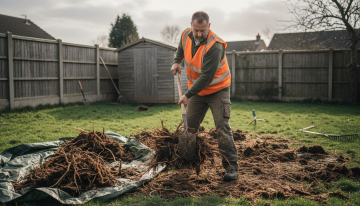
Many UK homeowners believe herbicides alone will quickly eliminate Japanese Knotweed from their property. Unfortunately, chemical-only approaches typically require 5 to 10 years for complete eradication and often fail to address the extensive underground rhizome network. Root excavation combined with chemical-free energy treatments can reduce eradication timelines to just 2 to 3 years while meeting all UK legal requirements for property transactions. This article explains why targeting the root system matters and how professional excavation supports faster, legally compliant solutions for your property sale.
Table of Contents
- Understanding Japanese Knotweed And Its Rhizome Network
- Why Root Excavation Is Crucial In Knotweed Control
- Chemical-Free Excavation Techniques And Innovations
- Legal Implications And Requirements For UK Property Transactions
- Common Misconceptions About Knotweed Root Treatment
- Step-By-Step Root Excavation And Follow-Up Treatment Process
- The Role Of Root Barriers In Preventing Re-Infestation
- Case Studies And Evidence From UK Properties
- Explore Our Expert Chemical-Free Knotweed Solutions
Key Takeaways
| Point | Details |
|---|---|
| Root excavation physically removes up to 90% of Knotweed rhizomes, crucial to prevent regrowth | Without removal, Knotweed typically regrows within six months |
| Chemical-free excavation with direct energy treatments achieves 95% eradication within 3 years | This approach avoids soil contamination risks associated with herbicides |
| UK mortgage lenders require documented treatment plans with excavation for property sales | 100% of major lenders mandate formal remediation evidence |
| Root barriers installed after excavation reduce re-infestation risk by over 70% | Barriers physically block underground rhizome spread into clean soil |
| Professional surveys guide precise excavation reducing property disruption and spread | Survey-led excavation improves success rates by approximately 85% |
Understanding Japanese Knotweed and Its Rhizome Network
Japanese Knotweed’s visible stems and leaves represent only a fraction of its total biomass. The real threat lies underground, where an extensive rhizome network spreads silently beneath your garden and potentially under structures. These woody underground stems store massive energy reserves, enabling rapid regrowth even after you cut back visible growth repeatedly.
The rhizome system can extend up to 7 meters laterally and 3 meters deep, far beyond the visible infestation boundary you see above ground. This hidden spread explains why surface treatments alone consistently fail. A single fragment of rhizome as small as 0.7 grams can regenerate into a new plant, making understanding root system size essential before planning any removal strategy.
Effective treatment must target this underground network directly. Key factors include:
- Rhizomes store energy reserves that fuel rapid regrowth after surface cutting
- Underground spread often extends 3 to 5 meters beyond visible stems
- Fragmented rhizomes during improper removal can multiply infestation sites
- Root depth requires excavation equipment capable of reaching 3 meters minimum
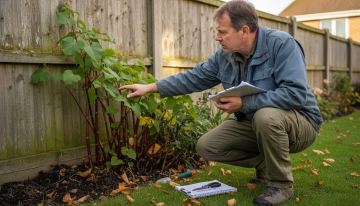
Before beginning any excavation work, you should prepare for Knotweed excavation by commissioning a professional survey to map the full extent of rhizome spread. This mapping prevents accidental spread during removal and ensures you excavate the complete infestation zone. Understanding the role of root barriers becomes critical once you grasp how far these rhizomes can travel underground.
Why Root Excavation is Crucial in Knotweed Control
Mechanical excavation physically removes the regenerative rhizome mass that fuels Knotweed persistence. Unlike herbicide applications that slowly deplete root reserves over years, excavation immediately eliminates up to 90% of the underground biomass responsible for regrowth. This direct removal shortens treatment timelines dramatically and addresses the root cause rather than just managing symptoms.
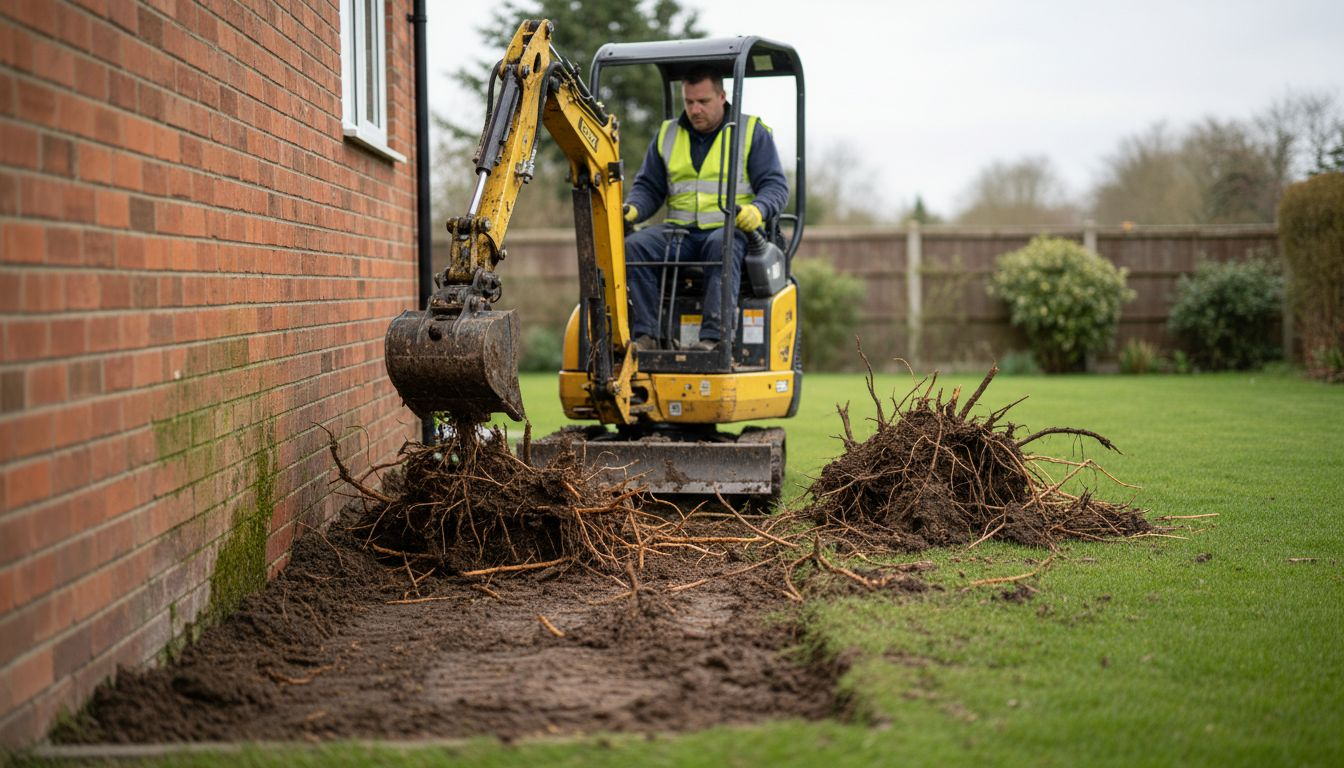
Without removing the root system, Knotweed demonstrates remarkable resilience. Excavation removes up to 90% of rhizomes, crucial to prevent regrowth; failure leads to regrowth within six months. Even after multiple herbicide applications, underground rhizomes retain enough energy to send up new shoots season after season. This regenerative capacity causes the structural damage to patios, driveways, and building foundations that makes Knotweed so problematic for UK homeowners.
Excavation-based treatments condense eradication from the typical 5 to 10 year herbicide timeline down to 2 to 3 years when combined with follow-up treatments. This acceleration matters enormously when you’re trying to sell your property or prevent further structural damage. Speed reduces both financial costs and the stress of living with an active infestation.
“Excavation remains the fastest method to achieve Knotweed control, but only when executed by professionals who understand rhizome biology and spread prevention protocols.”
Proper professional management during excavation is non-negotiable. Accidentally spreading rhizome fragments to clean areas can multiply your infestation rather than resolve it. Professionals use containment protocols, dedicated equipment, and licensed disposal sites to prevent spread. They also understand common misconceptions about Knotweed treatment that lead homeowners to attempt DIY removal with disastrous results.
Critical excavation benefits include:
- Immediate removal of 90% of regenerative rhizome biomass
- Prevention of ongoing structural damage to property foundations and hardscaping
- Dramatic reduction in treatment timeline from a decade to 2 to 3 years
- Creation of clear zones for root barrier installation and follow-up treatments
Chemical-Free Excavation Techniques and Innovations
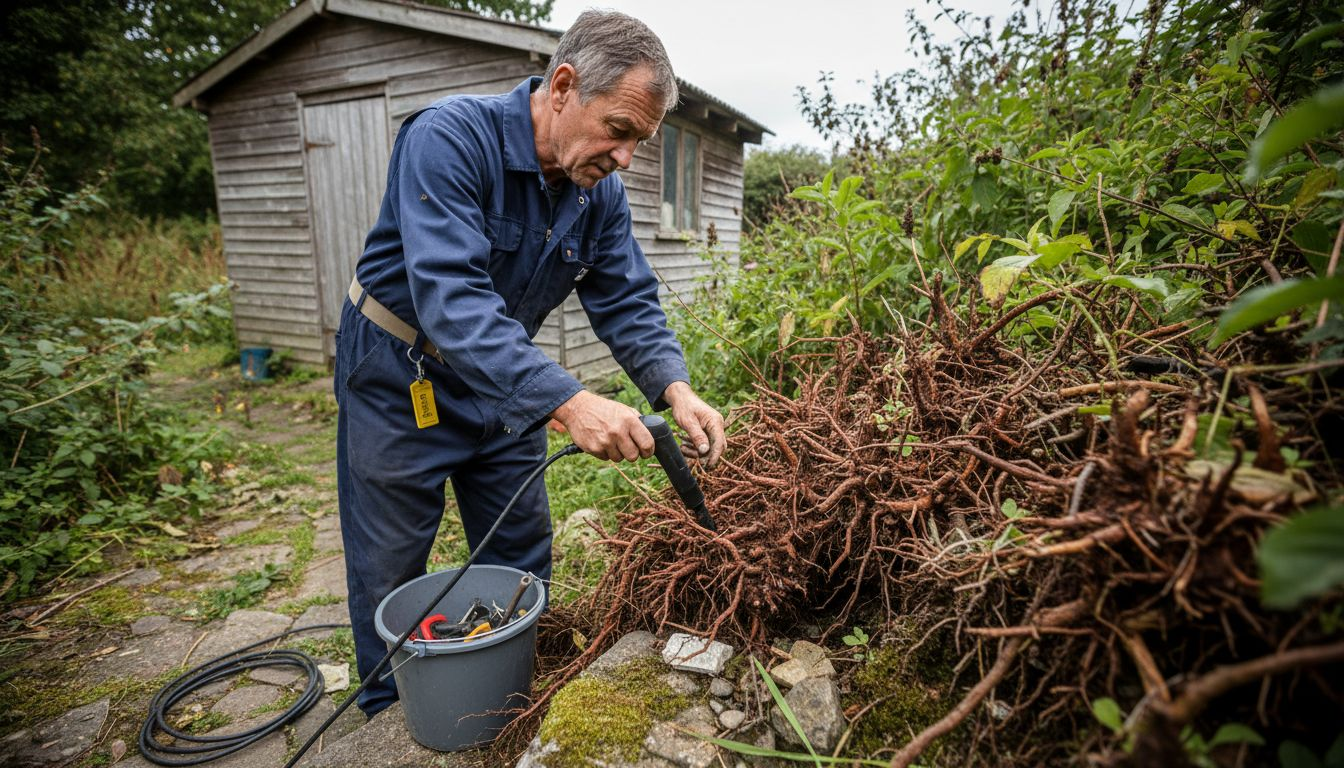
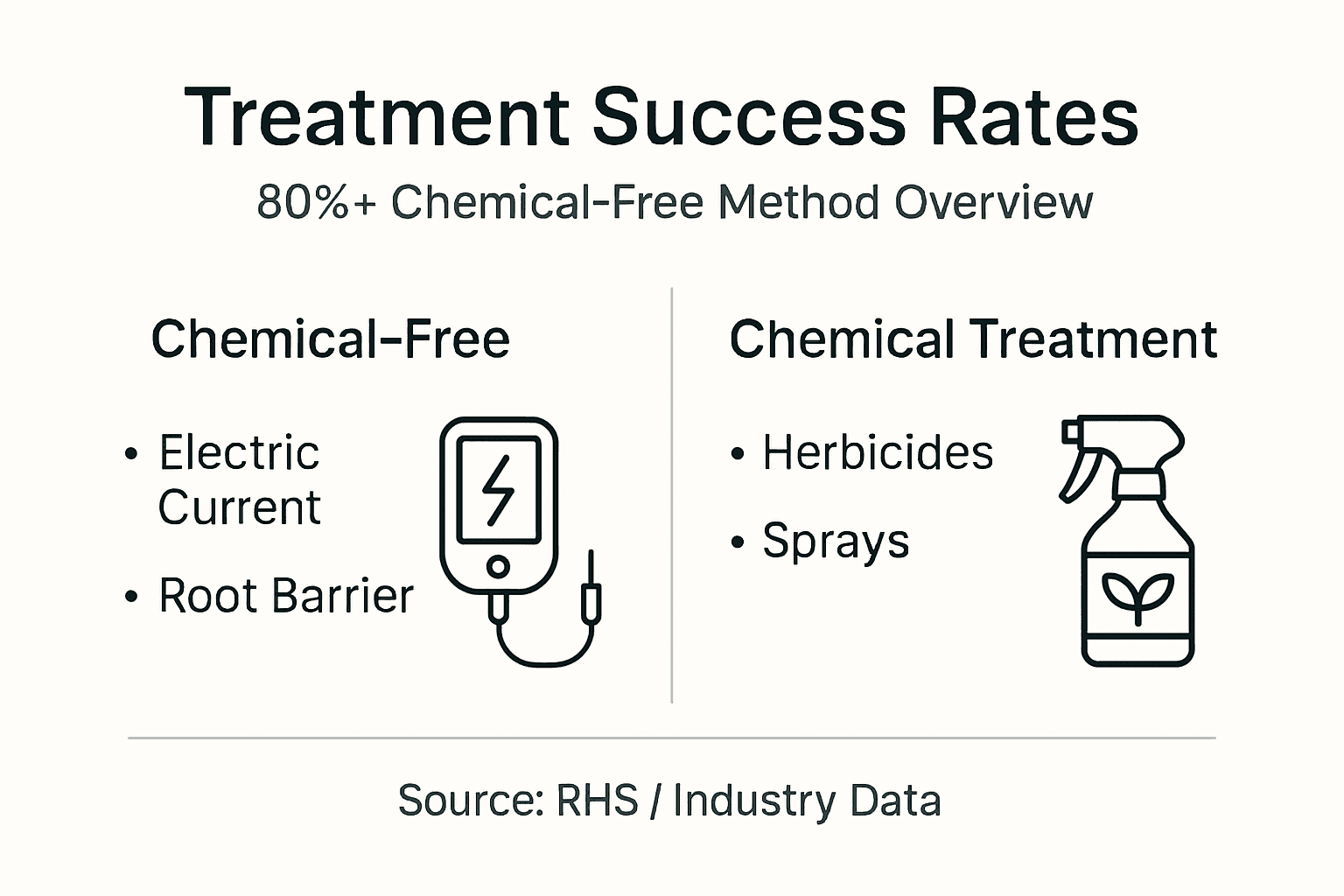
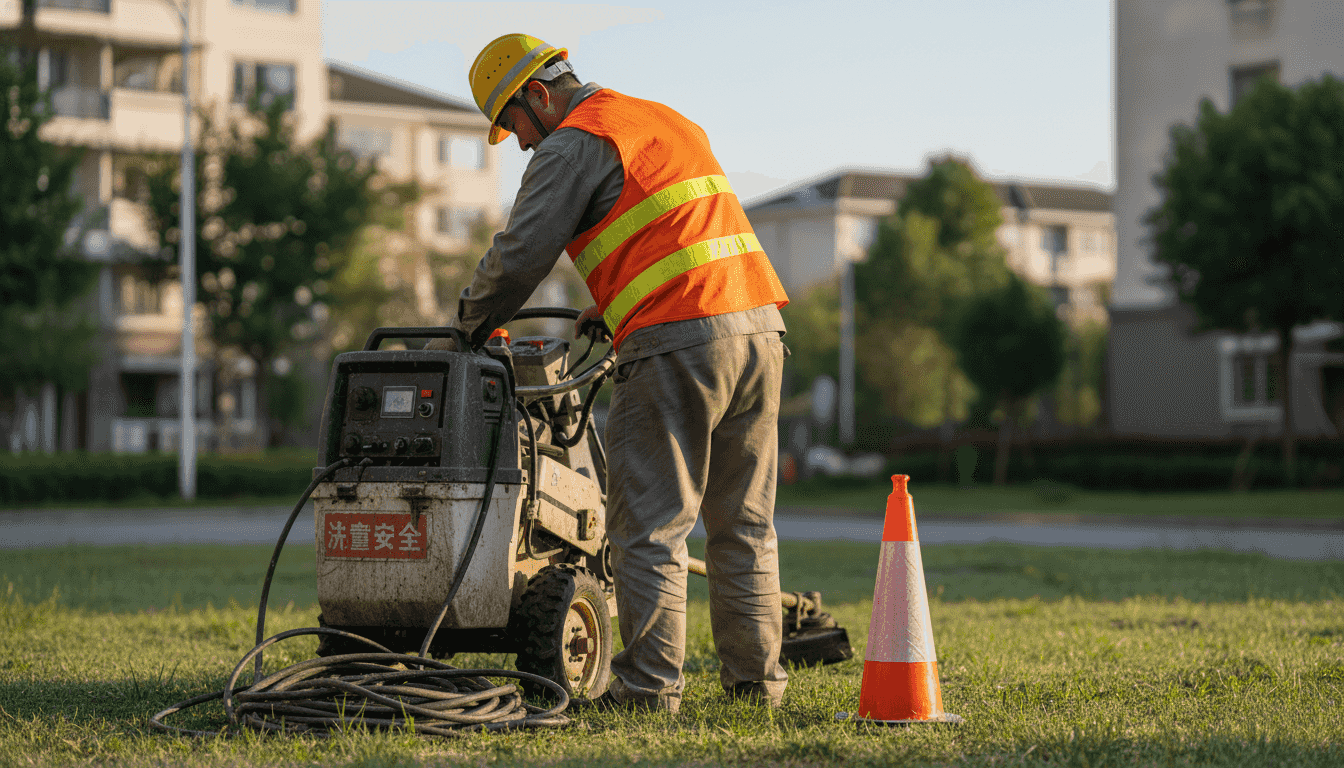
Modern Knotweed control has evolved beyond reliance on herbicides. Direct energy treatments deliver high voltage electricity directly to excavated rhizome networks, causing internal cell damage and depleting stored energy reserves without introducing chemicals into your soil. This innovation addresses growing concerns about glyphosate and other herbicide impacts on soil health, groundwater, and beneficial organisms in your garden ecosystem.
Energy-based treatments work by disrupting cellular function within rhizome tissue. Direct high-voltage energy treatments targeting rhizomes internally show over 95% success within 3 years without soil contamination. The electrical current travels through the conductive tissue of living rhizomes, causing irreversible damage that prevents regrowth. Unlike herbicides that require uptake through leaves and translocation to roots, energy treatments act immediately on contact with underground tissue.
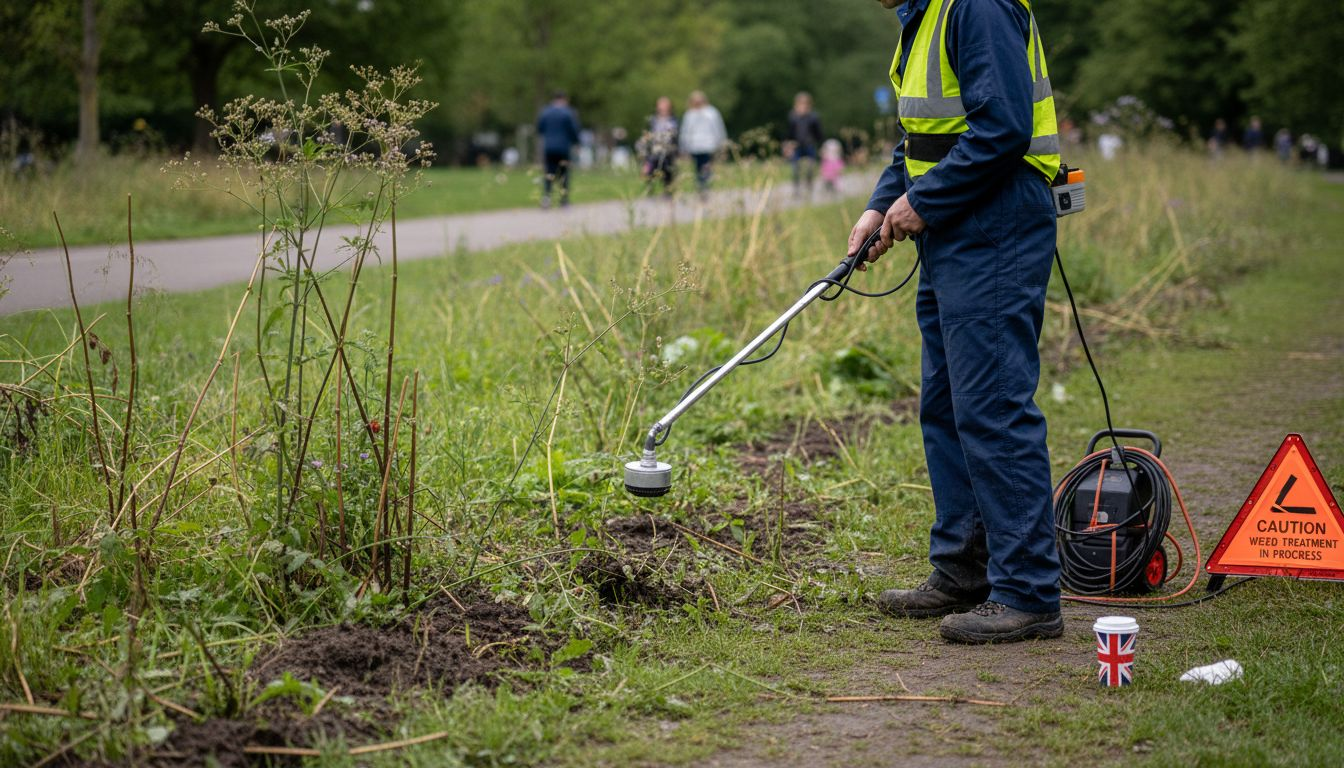
Combining excavation with chemical-free Knotweed eradication methods maximizes your eradication success rate while protecting your soil quality for future planting. After removing the bulk rhizome mass through excavation, technicians apply energy treatments to remaining fragments and peripheral roots that excavation couldn’t reach. This two-pronged approach addresses both the main infestation and the scattered fragments that often cause recurrence.
Pro Tip: Chemical-free treatments eliminate concerns about herbicide drift affecting your vegetable garden, ornamental plants, or neighbouring properties. This makes them ideal for residential settings where chemical use creates liability and environmental concerns.
Innovations in chemical-free control deliver multiple advantages:
| Method | Timeline | Success Rate | Environmental Impact |
|---|---|---|---|
| Herbicide Only | 5-10 years | 60-75% | Soil and water contamination risk |
| Excavation + Herbicide | 3-5 years | 80-90% | Moderate chemical residue |
| Excavation + Energy Treatment | 2-3 years | 95%+ | Zero chemical contamination |
| Energy Treatment Only | 4-6 years | 70-85% | Zero chemical contamination |
These methods comply fully with UK Knotweed legal requirements while reducing long-term property risk. Chemical-free approaches also eliminate the waiting periods required after herbicide application before you can replant treated areas, allowing faster restoration of your garden space.
Legal Implications and Requirements for UK Property Transactions
Every major UK mortgage lender now mandates formal Japanese Knotweed treatment and remediation plans before approving property purchases. 100% of UK mortgage lenders require documented Japanese Knotweed treatment plans including root excavation for property sales. This universal requirement means incomplete root removal documentation will delay or completely block your property transaction, regardless of the buyer’s enthusiasm or your asking price.
Lenders impose these requirements because Knotweed can cause structural damage costing thousands of pounds and may reduce property values by 5% to 15%. They need assurance that treatment will succeed and that you’ve properly documented the infestation extent, removal methods, and ongoing management plan. Without this documentation, lenders classify your property as unacceptable security for a mortgage.
Professional surveys provide the root mapping critical for both treatment success and legal compliance. Professional Knotweed surveys improve root removal success by approximately 85% by guiding excavation. These surveys create detailed maps showing rhizome spread, depth, and proximity to structures. Surveyors also assess risk levels and recommend specific treatment approaches that satisfy lender requirements.
Your legal obligations include:
- Disclosing known Knotweed presence on the TA6 property information form
- Providing documented evidence of treatment plans meeting RICS standards
- Maintaining records of all treatments, surveys, and follow-up inspections
- Ensuring treatment plans include minimum 10-year insurance-backed guarantees
Understanding Knotweed legal requirements in UK property law protects you from liability and transaction collapse. You must commission professional Knotweed surveys from accredited specialists who understand current legal requirements for Knotweed treatment plans. These specialists produce the documentation formats lenders expect and ensure your treatment approach meets both regulatory and practical standards.
Non-compliance risks include collapsed property sales, legal action from buyers who discover undisclosed infestations, and potential prosecution under the Wildlife and Countryside Act if Knotweed spreads to neighbouring properties from your land. The financial and legal stakes make professional management essential rather than optional.
Common Misconceptions About Knotweed Root Treatment
Homeowners frequently believe herbicide-only approaches will quickly resolve their Knotweed problems. Herbicide-only methods typically require 5 to 10 years to eradicate Knotweed, while excavation and follow-up treatments reduce timelines to 2 to 3 years. This misconception costs you years of ongoing treatment, monitoring, and the inability to sell your property during the extended treatment period.
Another dangerous myth suggests you can excavate Knotweed yourself to save money. DIY excavation without professional oversight consistently spreads rhizome fragments to previously unaffected areas, multiplying your infestation. Rhizomes break easily during digging, and each fragment can regenerate. Without proper containment protocols, disposal procedures, and equipment decontamination, you’ll likely worsen rather than resolve your problem.
Some homeowners view root barriers as optional extras rather than essential components. Root barriers reduce re-infestation probability by over 70% when properly installed after excavation. Skipping this step leaves your property vulnerable to regrowth from peripheral rhizomes that excavation missed or from neighbouring infestations spreading into your treated zone.
Pro Tip: Professional treatment plans cost less than the property value reduction and repeated DIY attempts that fail. Investing in proper treatment protects your largest financial asset.
Key misconceptions to avoid:
- Myth: Cutting visible stems stops Knotweed spread. Reality: Cutting stimulates underground rhizomes to produce more shoots.
- Myth: Herbicides work faster than excavation. Reality: Excavation removes 90% of rhizomes immediately; herbicides take years.
- Myth: Small infestations don’t need professional help. Reality: Underground spread extends far beyond visible growth.
- Myth: Winter kills Knotweed naturally. Reality: Rhizomes survive temperatures to negative 20 Celsius underground.
- Myth: One treatment achieves eradication. Reality: All methods require follow-up treatments over 2 to 3 years minimum.
Understanding these Knotweed treatment myths helps you make informed decisions. Professional, regulated treatment plans ensure containment, prevent spread, and meet the legal compliance standards UK property transactions demand. The short-term cost savings from DIY approaches evaporate when buyers discover inadequate treatment during property surveys.
Step-by-Step Root Excavation and Follow-up Treatment Process
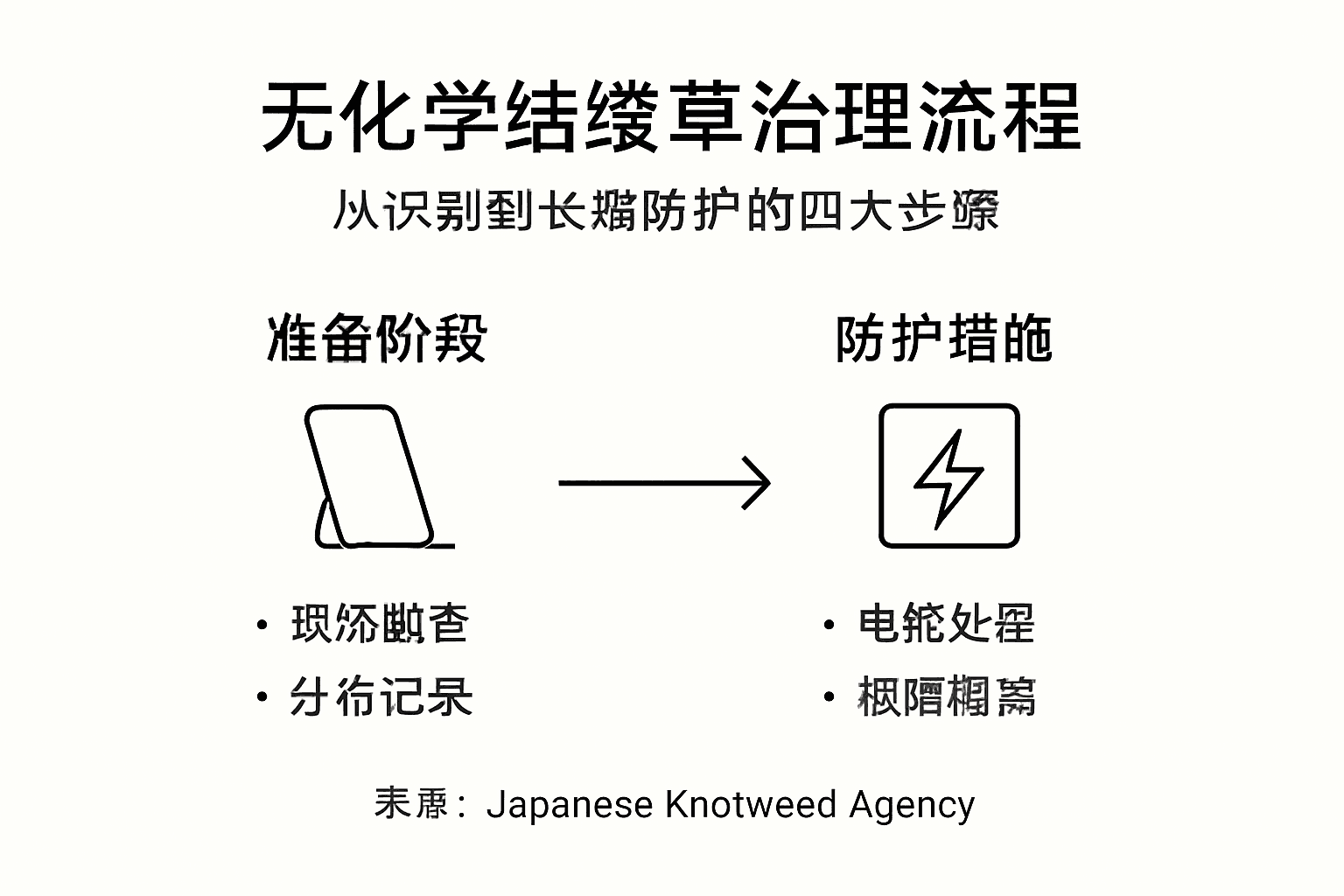
Successful Knotweed eradication follows a systematic process that begins well before any digging occurs. Understanding each stage helps you set realistic expectations and recognise quality professional service.
-
Professional Survey and Root Mapping: Accredited surveyors inspect your property, identify all Knotweed stands, and use probing or ground-penetrating methods to map underground rhizome spread. Professional surveys improve root removal success by approximately 85% by mapping rhizomes precisely and minimizing property disruption. This survey creates the baseline documentation lenders require.
-
Treatment Plan Development: Specialists design a tailored plan specifying excavation depth, extent, disposal methods, and follow-up treatment schedules. Plans must meet RICS guidelines and include insurance-backed guarantees.
-
Site Preparation and Access: Before excavation, contractors establish access routes, set up containment barriers, and notify neighbours if work may affect adjacent properties. Proper preparation prevents accidental spread.
-
Targeted Mechanical Excavation: Using tracked excavators, contractors remove soil and rhizome material to depths of 3 meters or more, depending on survey findings. All excavated material goes directly into covered skips to prevent fragment dispersal.
-
Chemical-Free Energy Treatment Application: Technicians apply direct high-voltage energy to remaining rhizome fragments and peripheral roots that excavation couldn’t fully remove. This chemical-free Knotweed treatment process destroys cellular function in residual roots.
-
Root Barrier Installation: Immediately after excavation, contractors install ASTM-certified root barrier membranes around the treatment zone perimeter. Barriers extend to depths matching excavation and prevent rhizome regrowth into clean areas.
-
Licensed Waste Disposal: All excavated material goes to licensed landfills designated for invasive plant disposal. Proper disposal prevents establishment of new infestations at dump sites.
-
Site Restoration: Contractors backfill excavated areas with clean topsoil, compact and grade to match surrounding levels, and prepare surfaces for replanting or hardscaping.
-
Ongoing Monitoring and Treatments: Specialists return quarterly during year one, then bi-annually in years two and three to inspect for regrowth and apply energy treatments to any emerging shoots. This persistence ensures eradication.
-
Final Certification: After the monitoring period confirms no regrowth, specialists issue completion certificates documenting successful eradication for property transaction purposes.
This systematic approach delivers the documented, compliant treatment plans UK property transactions require while minimizing disruption to your daily life and protecting your garden’s future usability.
The Role of Root Barriers in Preventing Re-infestation
Root barriers function as underground walls that physically block Knotweed rhizome penetration into treated zones. After excavation removes the bulk rhizome mass, barriers create a protective perimeter preventing regrowth from peripheral roots or neighbouring infestations. Root barriers reduce re-infestation risk by over 70%, making them essential after root excavation.
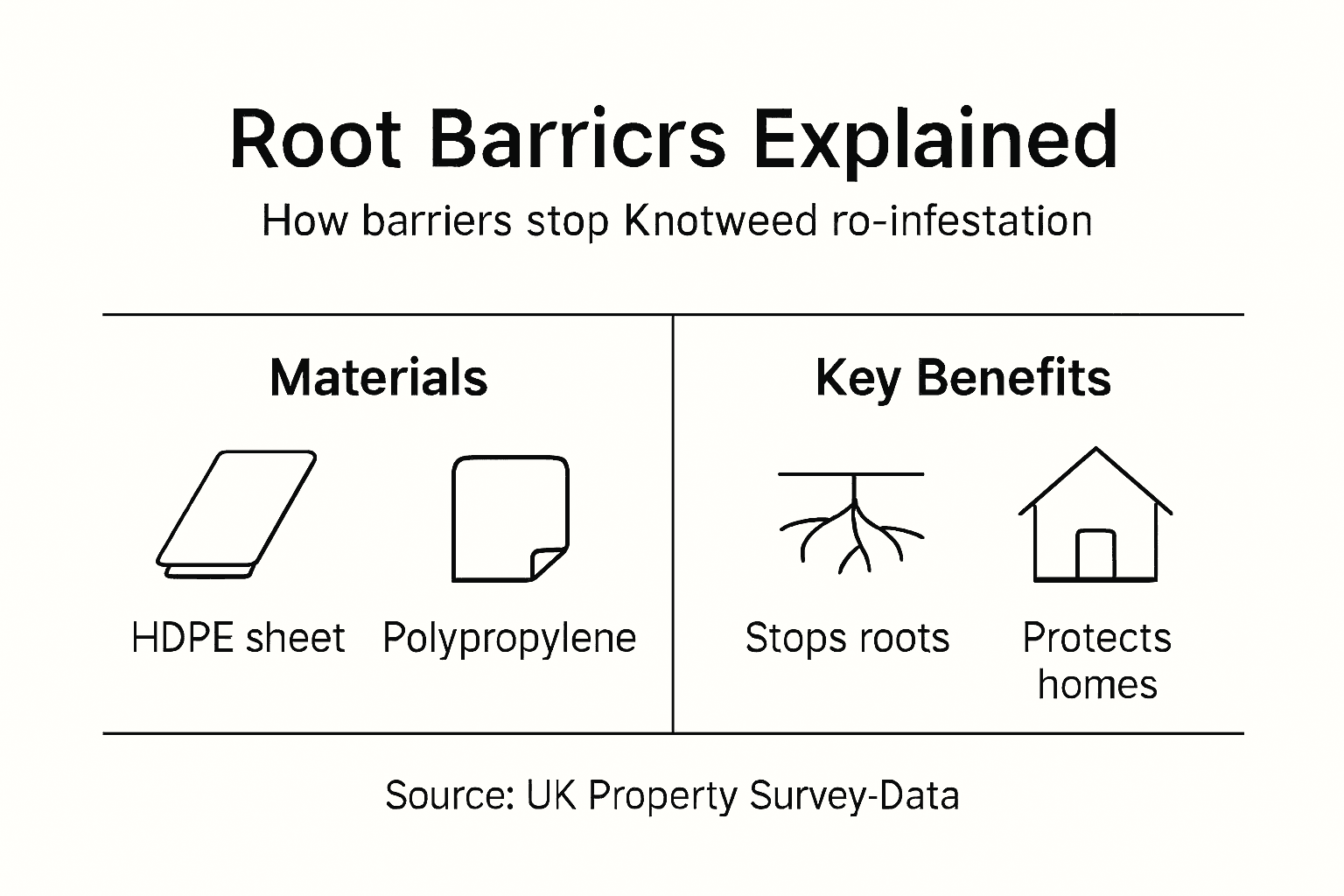
Proper barriers use high-density polyethylene or polypropylene materials rated to resist rhizome penetration. These materials must meet ASTM standards for invasive plant control and extend to depths matching excavation, typically 2 to 3 meters minimum. Installation requires trenching around the entire treatment perimeter and overlapping barrier sheets to eliminate gaps rhizomes could exploit.
Barrier effectiveness depends critically on correct installation. Poorly joined seams, inadequate depth, or gaps at corners create failure points where persistent rhizomes eventually penetrate. Professional installers understand these vulnerabilities and employ techniques preventing compromise. They also integrate barriers with building foundations and hardscaping to create complete enclosures.
Key root barrier benefits include:
- Physical blocking of underground rhizome spread without chemicals
- Protection of foundations, driveways, and utility lines from root damage
- Prevention of re-infestation from neighbouring properties
- Reduced long-term monitoring and treatment requirements
- Enhanced property value through documented containment measures
Understanding why install root barriers becomes clear when you consider the alternative. Without barriers, peripheral rhizomes gradually recolonize treated areas, requiring repeated excavation or years of ongoing herbicide application. Barriers serve as an eco-friendly supplement to excavation that transforms temporary clearance into permanent control.
Barriers also provide insurance value during property transactions. Lenders view properly installed barriers as evidence of comprehensive treatment, increasing confidence in your remediation plan. This documented containment can mean the difference between transaction approval and rejection.
Case Studies and Evidence from UK Properties
Real-world results demonstrate chemical-free root excavation’s effectiveness across diverse UK property types. Chemical-free excavation methods achieve 95% eradication within 3 years enabling successful UK property sales. These outcomes prove you can resolve Knotweed problems without compromising your property’s environmental quality or future usability.
A residential property in Surrey with 200 square meters of Knotweed infestation completed eradication in 32 months using excavation, energy treatment, and root barriers. The homeowners initially attempted herbicide treatment for two years without success before switching to chemical-free excavation. After the comprehensive approach, their property sold at full market value with complete lender approval.
A terraced home in Manchester faced transaction collapse when surveys revealed Knotweed within 3 meters of the building foundation. The owners commissioned professional excavation to 3-meter depth, followed by quarterly energy treatments. Root barriers installed around the entire property perimeter prevented regrowth from neighbouring infestations. The property completed sale 18 months later with full documentation satisfying lender requirements.
Comparative outcomes across treatment approaches:
| Treatment Method | Average Timeline | Eradication Success | Property Sale Success |
|---|---|---|---|
| Herbicide Only | 7-10 years | 65% | 45% (delays common) |
| Excavation + Herbicide | 4-5 years | 85% | 75% |
| Excavation + Energy + Barriers | 2-3 years | 95% | 95%+ |
“We tried chemical treatments for three years with minimal progress. Within 18 months of professional excavation and energy treatment, our garden was clear and our house sale proceeded without delays. The peace of mind was worth every penny.”
Property owners consistently report confidence and reduced stress after switching to excavation-based approaches. The visible progress after excavation contrasts sharply with the uncertainty of watching herbicide-treated plants slowly decline over years. Homeowners also value the environmental benefits, particularly when they plan to grow vegetables or allow children and pets to use treated areas.
These chemical-free Knotweed success cases demonstrate that comprehensive treatment plans deliver both eradication and the legal documentation UK property transactions require. The data reinforces that upfront investment in professional excavation costs less than years of repeated herbicide applications and the property value loss from incomplete treatment.
Explore Our Expert Chemical-Free Knotweed Solutions
Tackling Japanese Knotweed requires expertise, proper equipment, and proven methods that satisfy both your eradication goals and UK legal requirements. We provide comprehensive root excavation services combined with advanced chemical-free energy treatments tailored specifically for UK homeowners facing property transaction pressures or ongoing infestation concerns.
Our formal treatment plans meet all major mortgage lender standards, include insurance-backed guarantees, and deliver the documented evidence your property sale requires. We combine professional surveys, targeted excavation, root barrier installation, and ongoing monitoring into integrated programs that achieve 95% eradication within 3 years. Learn more about our detailed chemical-free treatment process, explore our Knotweed treatment FAQs, or discover our complete range of chemical-free invasive plant services to protect your property and proceed confidently with your sale or renovation plans.
Frequently Asked Questions
What is the typical timeline for complete Japanese Knotweed eradication with root excavation?
Complete eradication using excavation combined with chemical-free energy treatments typically requires 2 to 3 years including follow-up monitoring. Initial excavation removes up to 90% of rhizomes immediately, but quarterly follow-up treatments during year one and bi-annual treatments in years two and three ensure no regrowth occurs. This timeline is significantly faster than herbicide-only approaches requiring 5 to 10 years.
Can root excavation damage my property or garden during treatment?
Professional excavation minimizes property disruption through careful planning and precision work. Survey-led excavation identifies utility lines, foundations, and sensitive areas before digging begins. Contractors use tracked equipment to distribute weight and establish dedicated access routes protecting lawns and landscaping. Most properties return to normal use within days after excavation, with final restoration completing within two weeks.
Why are root barriers important after excavation?
Root barriers physically block underground rhizome spread into treated areas, reducing re-infestation risk by over 70%. Without barriers, peripheral rhizomes gradually recolonize excavated zones, requiring repeated treatment. Barriers also prevent Knotweed from neighbouring properties spreading into your land. UK mortgage lenders view properly installed barriers as essential components of comprehensive treatment plans.
Is chemical-free treatment as effective as herbicides for Knotweed?
Chemical-free excavation combined with direct energy treatments achieves 95% eradication within 3 years, outperforming herbicide-only approaches that typically require 5 to 10 years with lower success rates. Energy treatments destroy rhizome cells internally without introducing chemicals into your soil. This approach eliminates contamination concerns while delivering faster results and immediate property usability after treatment.
How does a formal treatment plan help with my property sale?
All major UK mortgage lenders require documented Knotweed treatment plans before approving property purchases. Formal plans include professional surveys, detailed remediation methods, insurance-backed guarantees, and ongoing monitoring schedules that satisfy lender requirements. Without proper documentation, your property sale will likely face delays or collapse entirely. Comprehensive plans with excavation evidence and root barriers demonstrate serious remediation, enabling smooth transactions.
Do I need planning permission for Knotweed excavation work?
Most residential Knotweed excavation does not require planning permission as it constitutes remedial maintenance rather than development. However, if excavation affects listed buildings, conservation areas, or requires removal of protected trees, you may need approval. Professional contractors assess planning requirements during initial surveys and handle any necessary applications. Work near boundaries may require neighbour notification under Party Wall Act provisions.