
7 Clear Signs of Japanese Knotweed Every Homeowner Should Know

Most American homeowners underestimate how quickly Japanese knotweed can take over a yard. This invasive plant is capable of growing up to 10 centimeters per day, making it one of the fastest-growing threats to properties across the United States. Early detection is the key to preventing costly damage, and knowing the clearest signs can help protect everything from garden landscapes to home foundations.

Table of Contents

Quick Summary

Takeaway Explanation
1. Identify Rapid Growth Japanese knotweed can grow up to 10 centimeters daily, making it crucial to spot early signs for timely intervention.
2. Recognize Distinctive Leaves Look for large, heart-shaped leaves that are 10-15 centimeters long with a glossy surface and zigzag arrangement along stems.
3. Observe Flower Clusters Late summer brings cream to white flower clusters, indicating established growth and a potential increase in spread.
4. Check for Underground Rhizomes Japanese knotweed has extensive underground rhizomes that can regenerate from small fragments, complicating removal efforts.
5. Don’t Ignore Dieback Dead canes during winter may seem inactive but indicate a robust underground network that can regrow in spring.

1. Recognizing Rapid Growth and Tall Stems

Japanese knotweed is a plant that can transform your property landscape faster than you might imagine. Rapid growth rates make this invasive species a serious threat to homeowners.

This plant is an extraordinary botanical sprinter. Research shows Japanese knotweed can grow up to 10 centimeters daily and reach impressive heights of 3 to 4 meters within just 10 weeks. That means in less than three months, this plant can tower over most garden fences and create a dense green barrier across your property.

What to Look For:

  • Bamboo-like stems with distinctive green and purple coloration
  • Stems growing straight up in dense clusters
  • Potential height reaching 3 to 4 meters within a short timeframe
  • Rapid emergence during spring and early summer months

Homeowners should pay special attention during spring when Japanese knotweed emerges. Its growth pattern is so aggressive that you might notice significant changes in your landscape within weeks. The plant’s ability to spread quickly means early identification is crucial to preventing extensive property damage.

Pro Tip: If you notice stems growing more than 10 centimeters per day, immediately contact a Japanese knotweed specialist for professional assessment.

Understanding these growth characteristics can help you spot Japanese knotweed before it becomes an expensive, hard to manage problem. Quick recognition could save you thousands in potential property restoration costs.

2. Identifying Heart-Shaped Leaves

The distinctive leaf shape of Japanese knotweed is one of its most recognizable features. Distinctive leaves serve as a critical identifying marker for this invasive plant.

Japanese knotweed leaves are unique in their appearance and structure. Research indicates these leaves are typically large shovel or heart-shaped, measuring 10 to 15 centimeters long with a smooth and glossy surface that catches the eye.

Key Leaf Characteristics:

  • Large green heart-shaped or oval structure
  • Smooth and glossy leaf surface
  • Zigzag arrangement along the plant stem
  • Typically 10-15 centimeters in length
  • Bright green coloration

What sets Japanese knotweed leaves apart is their distinctive zigzag pattern along the stem. This unique arrangement means the leaves alternate in a somewhat staggered configuration, creating a visual pattern that differs from most other garden plants.

Pro Tip: Compare leaf shape and arrangement carefully. Mistaking Japanese knotweed for another plant could delay critical intervention.

Careful observation of leaf characteristics can help you identify this invasive species before it spreads extensively across your property. Understanding these visual markers is your first line of defense against potential landscape damage.

3. Spotting Dense Bamboo-Like Canes

Japanese knotweed’s distinctive stems are one of its most recognizable features. Dense thickets of bamboo-like stems can quickly transform your landscape into an impenetrable green barrier.

Research reveals that Japanese knotweed produces hollow stems remarkably similar to bamboo, forming dense clusters that can spread several metres deep. These canes are not just visually striking but also incredibly resilient.

Stem Characteristics to Watch:

  • Hollow stems resembling bamboo
  • Purple speckled coloration
  • Distinct zigzag growth pattern
  • Stems growing in dense, interconnected clusters
  • Bright green to reddish brown color transitions

The stems have a unique growth pattern that sets them apart from other plants. They emerge in a distinctive zigzag arrangement, creating a dense network that can quickly overwhelm gardens, driveways, and building foundations. Each stem can grow straight and tall, creating an almost architectural appearance.

Pro Tip: The hollow nature of these stems means they can easily break and regrow, making manual removal extremely challenging.

Recognizing these bamboo-like canes early can help you take swift action before the Japanese knotweed establishes a deep root system. Understanding their growth pattern is your first step in preventing potential property damage.

4. Observing Red or Purple Shoots in Spring

Spring brings a critical moment for Japanese knotweed detection. Reddish-purple shoots emerge as a distinctive warning sign for homeowners and property managers.

Ground-level emergence reveals the plant’s unique reproductive strategy. These crimson-pink buds quickly transform into fleshy reddish-purple shoots that signal the beginning of the plant’s aggressive growth cycle.

Springtime Identification Markers:

  • Crimson-pink buds at ground level
  • Fleshy reddish-purple shoots
  • Rapid emergence from dormant root system
  • Distinctive coloration unlike native plants
  • Quick transformation from small shoots to large stems

The vibrant purple and red coloration serves as a natural alarm system. These shoots stand out dramatically against typical spring vegetation, making them easier to spot in gardens, lawns, and landscaped areas. The color intensity is particularly striking during the early weeks of spring.

Pro Tip: Take photos of suspected shoots and consult a professional. Early identification can prevent extensive property damage.

Understanding these springtime characteristics provides homeowners with a crucial window to identify and address Japanese knotweed before it establishes a complex root network. Vigilance during these early growth stages can save significant time and expense in future remediation efforts.

5. Noting Creamy White Flower Clusters in Summer

Late summer brings a distinctive visual marker for Japanese knotweed identification. White flower sprays emerge as a critical signal of the plant’s reproductive cycle.

Cream colored flower clusters typically appear between August and October, creating a deceptively delicate appearance that masks the plant’s invasive nature. These flowers might look innocent, but they represent a significant stage in the knotweed’s aggressive spread.

Flower Identification Features:

  • Cream to white color
  • Small clustered flower arrangement
  • Typically appearing in late summer
  • Hanging in loose spray formations
  • Approximately 10 centimeters long

The flower clusters might seem attractive at first glance, but they are actually a warning sign of potential landscape invasion. These delicate blooms can produce numerous seeds, contributing to the plant’s remarkable ability to propagate and spread across different terrains.

Pro Tip: Do not be fooled by the flowers’ beauty. These blooms indicate an established and potentially destructive plant system.

Understanding the flowering stage provides homeowners with another crucial identification window. Recognizing these white clusters can help you take proactive steps before the plant establishes an even more extensive root network.

6. Checking for Extensive Underground Rhizomes

The true threat of Japanese knotweed lies beneath the surface. Underground root systems can spread far beyond what is visible to the naked eye.

Extensive rhizome networks make Japanese knotweed a particularly challenging invasive species. These underground structures can extend up to three metres in depth and span seven metres in all directions, with individual rhizomes reaching up to 10 centimeters in diameter.

Underground Rhizome Characteristics:

  • Potential spread of seven metres from parent plant
  • Depth reaching two metres or more underground
  • Rhizomes up to 10 centimeters in diameter
  • Ability to regenerate from tiny root fragments
  • Interconnected network of underground stems

What makes these rhizomes particularly dangerous is their remarkable regenerative capacity. A single tiny fragment left in the ground can potentially sprout an entirely new plant. This means that traditional removal methods like cutting or pulling are often ineffective and can actually encourage further spread.

Pro Tip: Professional assessment is critical. Even seemingly complete removal can fail if a single rhizome fragment remains underground.

Homeowners should understand that what appears to be a small surface problem could represent a massive underground network. Professional evaluation and specialized treatment are often the most effective approaches to managing Japanese knotweed’s complex root system.

7. Understanding Seasonal Dieback and Dead Canes

Don’t be fooled by Japanese knotweed’s winter appearance. Seasonal dieback does not mean the plant has disappeared.

Brown dried stems mark the plant’s seasonal cycle, typically occurring between September and November. These dead canes remain standing as a deceptive reminder of the plant’s persistent underground root system.

Winter Identification Features:

  • Plant dies back to ground level
  • Dry brown canes remain visible
  • Canes can persist for several months
  • Underground rhizomes remain alive and active
  • Stems turn from green to brown

The presence of these dead canes is actually an important identification marker. While the above ground growth appears dormant, the extensive underground rhizome network remains fully alive and capable of regenerating in spring. Homeowners often mistakenly believe the plant has died when they see these brown stems.

Pro Tip: Never assume Japanese knotweed is gone just because the visible stems look dead. The root system remains viable and ready to regrow.

These seemingly lifeless stems are a critical warning sign. They represent the plant’s remarkable survival strategy a testament to its ability to persist through harsh conditions and quickly reestablish growth when temperatures warm.

This table summarizes the main characteristics and identification strategies for Japanese knotweed as discussed in the article.

Feature Description Key Identification Points
Rapid Growth Japanese knotweed grows up to 10 cm daily, reaching heights of 3-4 meters. Bamboo-like stems with green and purple coloration; dense clusters; rapid emergence in spring.
Leaf Shape Leaves are large, shovel or heart-shaped. Smooth, glossy surface; zigzag arrangement; 10-15 cm in length; bright green color.
Stems Hollow, bamboo-resembling stems in dense clusters. Purple speckled coloration; zigzag growth pattern; bright green to reddish brown transitions.
Spring Shoots Reddish-purple shoots emerge in spring. Crimson-pink buds; rapid growth from dormant roots; distinctive coloration.
Summer Flowers Cream to white flowers appear in late summer. Small clusters hanging in loose sprays; approximately 10 cm long.
Rhizomes Extensive underground network of roots. Rhizomes spread up to 7 meters; regenerate from fragments; up to 10 cm diameter.
Winter Dieback Plant appears dead but roots remain active. Brown dried stems remain visible; underground rhizomes alive.

Take Control of Japanese Knotweed Before It Takes Over Your Property

Japanese Knotweed’s rapid growth, dense bamboo-like stems, and extensive underground rhizomes create a serious challenge for homeowners. If you have noticed the heart-shaped leaves, red or purple shoots in spring, or creamy white flower clusters in summer, time is critical. Ignoring these clear signs can lead to costly damage and frustrating removal attempts. That is why expert intervention using proven methods is essential to stop this invasive plant in its tracks.

https://japaneseknotweedagency.co.uk

At Japanese Knotweed Agency, we specialize in chemical free treatment that targets the invasive root system with direct energy technology. This innovative process delivers up to 5000 volts onsite damaging the internal cell structure and conquering even deep rhizome networks. We also offer property surveys, root barrier installations, and excavation services designed to fully protect your land from future harm. Don’t let Japanese Knotweed control your landscape. Act now and reclaim your property’s safety and value by visiting our website today at Japanese Knotweed Agency to schedule your professional survey and treatment.

Frequently Asked Questions

How can I identify Japanese Knotweed in my garden?

You can identify Japanese Knotweed by looking for its bamboo-like stems, large heart-shaped leaves, and its rapid growth, especially in the spring. Check for stems growing straight up in dense clusters, which can reach heights of 3 to 4 meters within weeks.

When is the best time to spot Japanese Knotweed?

The best time to spot Japanese Knotweed is during spring and early summer when it emerges from dormancy. Look for reddish-purple shoots at ground level, as these are strong indicators of its presence.

What should I do if I find Japanese Knotweed on my property?

If you find Japanese Knotweed, contact a specialist for professional assessment and management. Early intervention is crucial to prevent extensive root system establishment and potential property damage.

Are the flowers of Japanese Knotweed harmful?

While the creamy white flower clusters may seem harmless, they indicate that the plant is actively reproducing and can spread even further. It’s important to address the plant before it flowers in late summer, typically between August and October.

What happens to Japanese Knotweed in the winter?

In winter, Japanese Knotweed dies back to the ground level, leaving behind dry brown canes. However, the underground rhizomes remain viable, making it essential to remain vigilant even when the visible parts appear dormant.

How deep do Japanese Knotweed rhizomes grow?

Japanese Knotweed rhizomes can grow up to two meters deep and spread seven meters in all directions. Understanding this extensive underground network is key; even tiny fragments can regrow, so comprehensive management is necessary.

7 Key Warning Signs of Knotweed Every Homeowner Should Know

Most American homeowners never expect their landscaping woes to involve a plant that can shoot up an astonishing 20 centimeters per day. Japanese Knotweed is not just another garden weed, but a relentless invader capable of overwhelming entire properties and causing damage to paving, walls, and even drains. Understanding the rapid growth and unique warning signs of Japanese Knotweed is critical if you want to protect your home and avoid costly repairs down the line.

Table of Contents

Quick Summary

Key Message Explanation
1. Rapid Growth Signals Urgency Japanese Knotweed can grow 20 centimeters per day, making early detection and action crucial to prevent major landscape disruption.
2. Recognize Heart-Shaped Leaves Look for distinctive heart-shaped leaves with a zig-zag pattern. Early identification helps prevent a small issue from escalating.
3. Beware of Speckled Stems The cane-like green stems with red or purple speckles are key visual indicators for identifying Japanese Knotweed early.
4. Understand Root Systems Japanese Knotweed’s extensive roots allow rapid regeneration. Simple removal methods often exacerbate the problem; professional help is essential.
5. Monitor for Structural Damage The plant can damage foundations, paving, and drainage. Early intervention is critical to avoid costly property repairs.

1. Rapid Plant Growth in Spring

Japanese Knotweed emerges as a botanical sprinter, capable of explosive growth that can catch homeowners completely off guard. This invasive plant does not just grow. It rockets through landscapes with astonishing speed.

According to Brighton and Hove City Council, Japanese Knotweed can surge an incredible 20 centimeters per day during spring months. By May, it can reach heights of 1.5 meters, and by June, it can tower at a staggering 3 meters. This means a tiny sprout in early spring can transform into a massive plant invasion within mere weeks.

The root system is equally aggressive. As documented by Fenland Council, these roots can extend three meters deep and spread seven meters in all directions. This underground network allows the plant to regenerate quickly and makes complete eradication challenging.

For homeowners, this rapid growth signals a critical warning. What appears as a small shoot in April can become a massive problem by summer. The speed of Japanese Knotweed growth means early detection and immediate action are crucial to preventing significant property damage and landscape disruption.

2. Distinctive Heart-Shaped Leaves

Japanese Knotweed announces its presence with a unique botanical signature: distinctive heart-shaped leaves that can quickly catch an observant homeowner’s eye. These leaves are not just a visual trait but a critical identification marker for this aggressive invasive plant.

According to Runnymede Council, the plant’s leaves create a distinctive zig-zag pattern along the stem, creating a unique visual arrangement that sets it apart from other greenery. Brighton and Hove City Council adds another key detail: when first emerging, these leaves sprout from fleshy red-tinged shoots, providing an additional visual cue for identification.

The heart or spade-shaped green leaves are more than just a pretty feature. They are a powerful photosynthetic engine that allows Japanese Knotweed to rapidly absorb sunlight and nutrients, fueling its explosive growth. For homeowners, recognizing these leaves early can mean the difference between a minor plant issue and a major landscape invasion.

Practical identification tips include looking for large green leaves with a distinctive heart shape, arranged in a clear zig-zag pattern along the plant’s stem. The reddish shoots in early spring serve as an additional warning sign that this resilient plant is about to make its seasonal comeback.

3. Red or Purple Speckled Stems

Japanese Knotweed is a master of disguise with its distinctive cane-like stems that resemble bamboo and feature a unique coloration. These stems are not just visually interesting but serve as a critical identification marker for this aggressive invasive plant.

Runnymede Council describes the stems as green with striking reddish or purple speckles that make them stand out from typical plant growth. Argyll and Bute Council provides additional detail, noting that these stems are hollow with distinct nodes similar to bamboo and can grow impressively to 2-3 meters in height.

The speckled coloration is more than just a visual trait. It serves as a biological adaptation that helps the plant absorb sunlight and withstand varying environmental conditions. For homeowners, these distinctive stems are a key early warning sign of potential Japanese Knotweed invasion.

When scanning your property, look for tall green stems with notable red or purple speckles arranged in a bamboo-like pattern. These stems emerge in early spring and can quickly transform from small shoots to towering plant structures within weeks. Recognizing these unique stems can help you catch and address a potential Japanese Knotweed problem before it becomes a significant landscape challenge.

4. Dense Thickets Forming Quickly

Japanese Knotweed transforms landscapes with alarming speed, creating dense impenetrable thickets that can overwhelm gardens and properties in remarkably short periods. These plant clusters are not just visually striking but pose significant ecological and structural challenges.

Brighton and Hove City Council reports that Japanese Knotweed can form dense clumps several metres deep, effectively creating a green barrier that can quickly consume outdoor spaces. The plant’s aggressive growth pattern allows it to colonize areas with shocking efficiency.

What makes these thickets particularly dangerous is their ability to grow in almost any environment. They can emerge through concrete, penetrate building foundations, and crowd out native vegetation. Homeowners might find a small patch in spring rapidly expanding into a massive green wall by summer.

Practical defense strategies include early detection, immediate professional intervention, and understanding that these thickets are not just a cosmetic issue. They represent a serious threat to property structures, landscape integrity, and surrounding plant ecosystems. Treating Japanese Knotweed is not about managing growth but preventing complete landscape takeover.

5. White or Cream Flowers in Late Summer

As summer transitions toward autumn, Japanese Knotweed reveals another distinctive characteristic: delicate white or cream flower clusters that might initially seem harmless but signal a deeper ecological threat. These seemingly innocent blooms are actually a strategic reproductive mechanism for this invasive plant.

Runnymede Council highlights that these flower sprays typically emerge between August and October, accompanied by small winged fruits that further enable the plant’s aggressive spread. Fenland Council confirms the cream colored flower clusters that appear in late summer.

Homeowners should view these flowers not as a decorative feature but as a critical warning sign. While the white or cream blossoms might look delicate, they represent the plant’s reproductive stage where it can most effectively disperse and establish new growth zones. The flowers produce tiny winged seeds that can travel significant distances, allowing Japanese Knotweed to colonize new territories with remarkable efficiency.

Practical advice for property owners is to remain vigilant during late summer. These flower clusters are not just beautiful botanical features but potential harbingers of extensive landscape invasion. Immediate professional consultation is recommended when these distinctive blossoms appear, as they signal the plant’s advanced reproductive cycle.

6. Visible Rhizome or Root Networks

Japanese Knotweed is a master of underground warfare, with a root system that operates like a hidden invasion network. These extensive rhizome networks represent far more than simple plant roots they are sophisticated survival mechanisms capable of extraordinary regeneration.

Fenland Council reveals the shocking scale of this underground network: roots can extend three metres deep and seven metres in all directions. Basingstoke Council confirms these dimensions, highlighting the plant’s remarkable subterranean spread.

What makes these root networks particularly dangerous is their ability to regenerate from tiny fragments. A piece of root smaller than a fingernail can potentially generate an entirely new plant. This means traditional removal methods like cutting or pulling are often ineffective and can actually accelerate the plant’s spread.

For homeowners, understanding these root networks is crucial. Visible surface growth represents only a fraction of the plant’s true presence. Professional excavation and specialized treatment are essential to truly eradicate Japanese Knotweed. Standard landscaping techniques will not stop these persistent underground networks from regrowing and potentially causing significant property damage.

7. Damage to Paving, Walls, or Drains

Japanese Knotweed is not just a plant. It is a biological bulldozer capable of destroying property infrastructure with remarkable precision and persistence. This invasive species can transform a minor landscaping concern into a major structural nightmare.

Runnymede Council warns that Japanese Knotweed can grow through brickwork, tarmac, and concrete with astonishing ease. Brighton and Hove City Council emphasizes its ability to destabilize buildings and structures through its rapid annual growth and relentless spread.

The plant’s underground root system acts like a network of organic jackhammers. Its rhizomes can exploit tiny cracks in foundations, expand within concrete surfaces, and penetrate drainage systems. Homeowners might first notice small fractures or bulges in paving stones or walls which quickly escalate into significant structural compromises.

Practical implications are severe. Structural damage from Japanese Knotweed can potentially reduce property values, invalidate mortgage agreements, and require expensive professional remediation. Early detection and immediate professional intervention are not just recommended they are essential to preventing catastrophic property damage.

Below is a comprehensive table summarizing the characteristics and impacts of Japanese Knotweed as discussed in the article.

Aspect Description Implications for Homeowners
Rapid Growth Grows up to 20 cm per day in spring; can reach 3 meters by June. Early detection and immediate action are crucial to prevent damage.
Distinctive Leaves Heart-shaped, zig-zag pattern, emerge from red-tinged shoots. Recognize early to avert major landscape invasion.
Red or Purple Stems Cane-like with speckles like bamboo; hollow with nodes. Key identification marker to spot invasions early.
Dense Thickets Forms impenetrable clusters; colonizes areas quickly. Potentially damages property and outcompetes native vegetation.
White/Cream Flowers Appear late summer; reproductive stage with winged seeds. Signals the spread of the plant; requires prompt control measures.
Extensive Root Network Rhizomes spread deep and wide; regenerate from small fragments. Makes eradication challenging; professional help needed.
Infrastructure Damage Roots can penetrate and damage structures, including paving and walls. Can lead to significant repair costs and reduced property values.

Protect Your Home from Japanese Knotweed Today

Every homeowner who notices rapid plant growth, distinctive heart-shaped leaves, or dense thickets forming quickly knows the serious threat Japanese Knotweed poses. This invasive species not only damages your property infrastructure but also hides underground networks that make it nearly impossible to remove without expert help. You need a solution that targets the root cause and stops this relentless invader fast.

https://japaneseknotweedagency.co.uk

At Japanese Knotweed Agency, we specialize in chemical free treatment that delivers up to 5000 volts directly to the plant, destroying the extensive rhizome network safely and effectively. We also offer professional root barrier installations and excavation works to protect foundations, paving, and drains from irreversible damage. Don’t wait until you spot damage to your walls or drains. Act now to secure a thorough property survey for invasive weeds and start your tailored eradication plan. Visit our website to learn how we can help you reclaim your garden and prevent costly repairs today.

Frequently Asked Questions

What are the signs of rapid plant growth in Japanese Knotweed?

Japanese Knotweed can grow up to 20 centimeters per day in spring, reaching heights of 1.5 meters by May and up to 3 meters by June. To prevent an invasion, regularly check for small shoots in early spring and take immediate action if you notice rapid growth.

How can I identify the heart-shaped leaves of Japanese Knotweed?

The leaves of Japanese Knotweed are distinctive with a heart shape and a zig-zag pattern along the stem. Look for large green leaves sprouting from fleshy red-tinged shoots in early spring to confirm its presence.

What makes the stems of Japanese Knotweed recognizable?

Japanese Knotweed features hollow stem structures that resemble bamboo, with green coloration and reddish or purple speckles. Inspect your property for these cane-like stems emerging in early spring as a warning sign of potential infestation.

How quickly can Japanese Knotweed form dense thickets?

Japanese Knotweed can create dense clusters that are several meters deep within weeks. To combat this, regularly inspect your garden for signs of expansion and consult with a professional if you notice thick growth areas.

When do Japanese Knotweed flowers appear, and why are they a concern?

Japanese Knotweed produces white or cream flowers between August and October, signaling its reproductive stage. Stay alert during late summer and seek professional help as these flowers indicate the plant is preparing to spread further.

How does the root system of Japanese Knotweed affect surrounding structures?

The root network of Japanese Knotweed can extend three meters deep and seven meters wide, capable of damaging pavements, walls, and drainage systems. Conduct routine inspections for cracks or bulges in your property’s structures, and act immediately to mitigate potential damage.

Japanese Knotweed in Manchester

Japanese Knotweed in Manchester: What Homeowners Need to Know About Identification, Surveys & the National Register

Japanese knotweed is a name that strikes fear into the hearts of homeowners, surveyors, and mortgage lenders alike. If you’re based in Manchester or the surrounding areas and have even the slightest concern that this invasive plant is on or near your property, acting fast is vital.

At the Japanese Knotweed Agency, we specialise in the identification, control, and removal of Japanese knotweed across the UK — and we’re proud to be recognised as one of the leading authorities in the industry. In fact, we currently hold the #1 ranking for “Japanese Knotweed National Register”, and we’re a top result for “Japanese Knotweed Manchester” and “Japanese Knotweed Survey Manchester” — and for good reason.

What Is Japanese Knotweed?

Japanese knotweed (Fallopia japonica) is a fast-growing, highly invasive plant species that was originally introduced to the UK in the 19th century as an ornamental garden plant. Unfortunately, it soon escaped cultivation and began to spread aggressively through both rural and urban environments.

Japanese Knotweed is the UK’s No.1 invasive plant species. There are 58, but Japanese Knotweed is the one that can cost your pocket thousands or even tens of thousands of pounds. It is not to be ignored!

This plant is incredibly resilient, with a deep rhizome (root) system that can grow through concrete, tarmac, drains, and the foundations of buildings. Left untreated, Japanese knotweed can cause serious structural damage, reduce property values, and even block or delay property sales.

Rhizomes can go 3 metres deep and up to 7 metres wide, where a new shoot will form and then spread again and again and again!

Why Is Japanese Knotweed a Problem in Manchester?

Manchester, with its mix of historic buildings, new developments, and industrial brownfield land, is a prime hotspot for knotweed outbreaks. The city’s dense infrastructure and high rainfall provide perfect conditions for the plant to thrive — especially where the land has been disturbed during construction or landscaping.

If you’re a homeowner, landlord, developer, or buyer in Greater Manchester, knotweed isn’t just a potential nuisance — it’s a legal, financial, and structural risk.

Common issues include:

  • Mortgage lenders refusing to lend on affected properties.
  • Neighbour disputes triggered by unchecked growth over boundaries.
  • Structural damage from rhizome intrusion.
  • Difficulties in selling or insuring affected properties.

What Does a Japanese Knotweed Survey Involve?

If you suspect knotweed on or near your property, the first step is to book a professional Japanese Knotweed Survey in Manchester. This survey forms the foundation for any responsible treatment or legal action and ensures you’re operating with accurate, expert information.

At the Japanese Knotweed Agency, our surveyors follow a nationally recognised methodology that includes:

  • On-site inspectionto confirm the presence of Japanese knotweed on the property.
  • Photographic evidenceand detailed notes on the extent of infestation.
  • Analysis of potential spread, both above and below ground.
  • Visual survey of neighbouring properties and grounds.
  • Risk assessmentfor structural damage or legal liability.
  • Recommendationsfor treatment, removal, or monitoring.
  • Formal reportsuitable for use with mortgage providers, solicitors, and insurers.

Whether you’re trying to sell your home, secure a mortgage, or simply understand the risk, our Japanese Knotweed Survey is the first — and most important — step.

The Japanese Knotweed National Register: A Vital Tool for Property Owners

We’re proud to operate and maintain the Japanese Knotweed National Register — the UK’s most comprehensive, independently managed public database of reported Japanese knotweed sightings and survey results that anyone can check on our website.

While it isn’t the be-all and end-all, it relies on our surveyors, members of the public, walkers and caring people to report to us, it will give you an idea if and what number of reports we have had in a certain postcode, just type the first part of the postcode into the search bar and press search.

Why the National Register matters and why we are working towards it being THE JAPANESE KNOTWEED NATIONAL REGISTER, with a hope it will offer:

  • Transparency: Buyers, sellers, and developers can access impartial information about historic or existing knotweed cases on or near a site.
  • Accountability: If a previous infestation was treated, we can verify whether it was professionally managed and monitor for regrowth.
  • Legal protection: Registering your case can help prove due diligence in legal disputes or neighbour claims.
  • Peace of mind: Our database helps homeowners and buyers make better-informed decisions about property risk.

If you’ve had knotweed on your land, or if you’re buying property in a known hotspot like Manchester, registering with the Japanese Knotweed National Register is a wise step.

Learn more about the National Register here →

How to Identify Japanese Knotweed

It’s important to note that not all plants that look like knotweed are knotweed — and misidentifying the plant can lead to unnecessary panic or wasted effort.

Here are some key identification features:

Season Appearance
Spring Red/purple shoots emerge from the ground, resembling asparagus tips.
Summer Large, green, heart-shaped leaves with flat bases; hollow bamboo-like stems. White flowers appear late in the season.
Autumn Leaves turn yellow; stems become brittle and woody.
Winter Dead canes persist; the underground rhizome system remains active.


Still unsure? Have a look at our Japanese Knotweed Gallery here

Book a Japanese Knotweed Survey in Manchester and let the professionals confirm it for you.

Legal Responsibilities for Homeowners

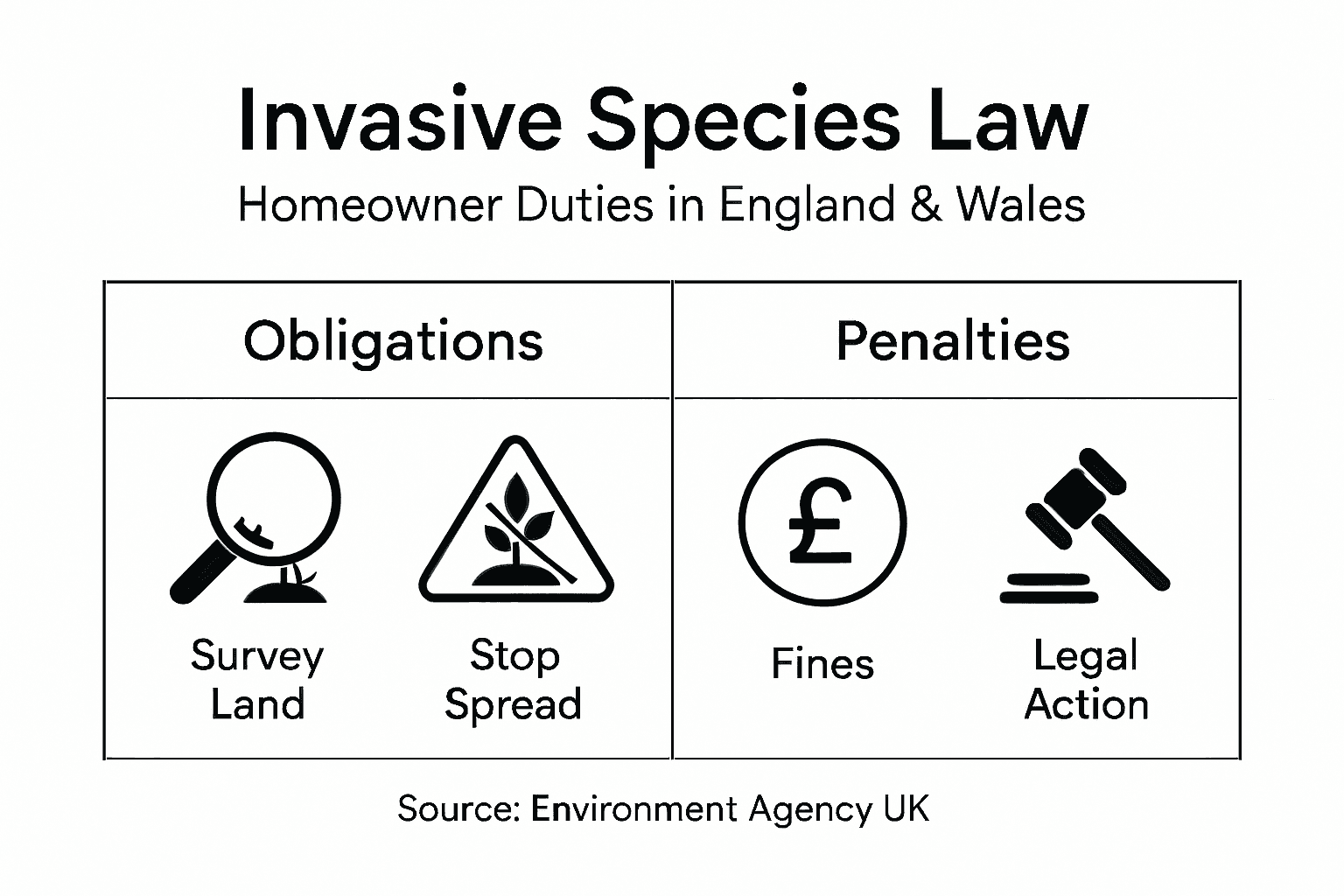
If Japanese knotweed is growing on your land, you aren’t legally required to remove it — but you are responsible for making sure it doesn’t spread onto neighbouring land. Failing to control knotweed can result in:

  • Legal claimsfrom affected neighbours.
  • Community Protection Notices (CPNs)under the Anti-social Behaviour, Crime and Policing Act 2014.
  • Lender restrictionswhen trying to sell or refinance your property.

It’s not worth the risk. Booking a survey and registering your case is the best way to protect yourself and your property.

Our Treatment and Removal Services

At the Japanese Knotweed Agency, we don’t just diagnose the problem — we solve it.

Our network of certified contractors and remediation partners across Manchester and the UK provide:

  • Thermo-electric treatment plans, non-chemical and 100% environmentally friendly
  • Excavation and Off-Site Disposal / Excavation and sift
  • Root Barrier Installations
  • Pre-construction site clearance
  • Monitoring and regrowth guarantee

Every treatment plan is tailored to the needs of your property — whether you’re a homeowner preparing to sell, a developer managing a construction site, or a landlord looking to preserve property value.

Why Choose the Japanese Knotweed Agency?

✅ Industry Leading Expertise

We’ve helped thousands of property owners and professionals across the UK with knotweed identification, surveying, and remediation.

✅ National Register Authority

We maintain the #1 Japanese Knotweed National Register, an independent, publicly accessible database used by surveyors, solicitors, and insurers.

✅ Manchester Specialists

Our local knowledge and high visibility for Japanese Knotweed Manchester searches mean you’re working with the most relevant experts. We cover the whole of England and Wales and now we are also in Ireland, but Manchester is where our HQ is.

✅ Accredited & Insured

Our professionals work to British standards and are fully insured for survey and remediation services.

✅ Homeowner Friendly

We speak your language — no jargon, no upselling, just honest advice and reliable service.


Act Now — Book a Japanese Knotweed Survey in Manchester

Whether you’ve just spotted something suspicious in your garden, you’re trying to sell a property, or you want to ensure your home is protected, acting early is key.

Japanese Knotweed doesn’t go away on its own — and the longer it’s left untreated, the more expensive the problem becomes.

📞 Call us today

📝 Book your survey online

🗂️ Register your property with the National Register

Visit the Japanese Knotweed Agency Website →

EMAIL US: CONTACT@JAPANESEKNOTWEEDAGENCY.CO.UK

FREECALL: 03335 777 888

Testing Thermo-Electric Eradication on Laurel and Rhododendron with the RSPB

Introduction

The use of thermo-electric eradication technology has shown significant promise in the management of invasive plant species such as Japanese Knotweed. In 2025, the Japanese Knotweed Agency, in collaboration with the Royal Society for the Protection of Birds (RSPB), has embarked on a groundbreaking study to test the effectiveness of this innovative treatment on two other persistent invasive species—Laurel (Prunus laurocerasus) and Rhododendron (Rhododendron ponticum). These species pose a considerable threat to native biodiversity, particularly in woodland and conservation areas, where they outcompete native flora and disrupt ecosystems.

The Impact of Laurel and Rhododendron

Both Laurel and Rhododendron are well-known for their rapid spread and ability to dominate landscapes. Their thick, evergreen foliage suppresses the growth of native plants by blocking sunlight, while their chemical compounds inhibit seed germination in the surrounding soil. These characteristics make traditional control methods, such as mechanical removal and herbicide application, challenging and often ineffective in the long term.

The Role of Thermo-Electric Eradication

Thermo-electric eradication is a pioneering approach that utilises controlled electrical currents to target and destroy plant root systems. This method offers several advantages over conventional treatments:

  • Eco-Friendly – Unlike chemical herbicides, thermo-electric eradication does not introduce toxins into the environment, making it a preferable option for conservation areas.
  • Highly Effective – The electrical currents penetrate deep into the root structures, ensuring that plants do not regrow after treatment.
  • Minimal Soil Disturbance – Unlike excavation, this approach preserves soil integrity and prevents erosion.

The RSPB Collaboration

The RSPB is committed to preserving and restoring natural habitats across the UK. Given the detrimental impact of Laurel and Rhododendron on woodland ecosystems, the organisation has partnered with the Japanese Knotweed Agency to explore sustainable and effective control measures. The study involves:

  • Field Trials in Conservation Sites – Selected test sites within RSPB reserves have been identified where Laurel and Rhododendron have become problematic.
  • Application of Thermo-Electric Treatment – Specialists apply the technology to targeted plant populations, assessing its impact on plant health and regrowth rates.
  • Monitoring and Data Collection – The effectiveness of the treatment is monitored over multiple seasons to evaluate its long-term success in preventing regrowth.

Early Findings and Future Potential

Preliminary results from the trials indicate promising outcomes. Early signs of root system degradation and plant dieback have been observed within weeks of treatment. If successful, this method could revolutionise how invasive woody species are managed, particularly in environmentally sensitive areas where chemical herbicides are not a viable option.

The next phase of the study will focus on optimising treatment protocols, assessing potential impacts on non-target species, and scaling the approach for broader conservation use.

Conclusion

The partnership between the Japanese Knotweed Agency and the RSPB represents a significant step forward in sustainable invasive species management. If thermo-electric eradication proves to be as effective on Laurel and Rhododendron as it has been on Japanese Knotweed, it could become a game-changer for conservationists and land managers across the UK.

For more information on this project or to explore how thermo-electric technology could help control invasive species on your land, keep an eye on our Case Studies on our website where we will be uploading an initial file and ongoing updates through 2025.