

TL;DR:
- Property weed clearance involves managing vegetation to meet safety, legal, and structural standards, especially concerning invasive species. Proper assessment, specialist treatment, and documentation are essential to protect property value, meet lender requirements, and ensure legal compliance. Early professional intervention reduces costs, mitigates risks, and facilitates smoother property transactions.
Property weed clearance is something most homeowners think of as tidying up an overgrown garden. The reality is considerably more significant. What is property weed clearance in practical terms? It is the process of removing, managing, and controlling vegetation on a property to meet safety standards, protect structural integrity, and comply with legal obligations. For buyers and owners, the stakes go well beyond appearances. Unchecked vegetation, particularly invasive species like Japanese Knotweed, can affect mortgage eligibility, depress property value, and trigger enforcement action. This guide explains what clearance actually involves and why getting it right matters.
Key takeaways
| Point | Details |
|---|---|
| Clearance is a safety issue | Weed management reduces fire risk and structural damage, not just aesthetic problems. |
| Invasive species need specialist treatment | Japanese Knotweed requires professional surveys and targeted management, not general garden clearance. |
| Mortgage lenders take this seriously | Unmanaged invasive weeds can delay or prevent mortgage approval on affected properties. |
| Early action reduces costs | Proactive weed management avoids escalating enforcement penalties and remediation bills. |
| Chemical-free solutions exist | Sustainable, eco-friendly treatment methods offer effective results without harming surrounding biodiversity. |
What property weed clearance really involves
The industry term for this activity is weed abatement, a structured process of identifying, removing, and controlling hazardous or invasive vegetation to meet defined safety and regulatory standards. Property weed clearance describes the same activity from a homeowner’s perspective, and both terms are used throughout professional practice.
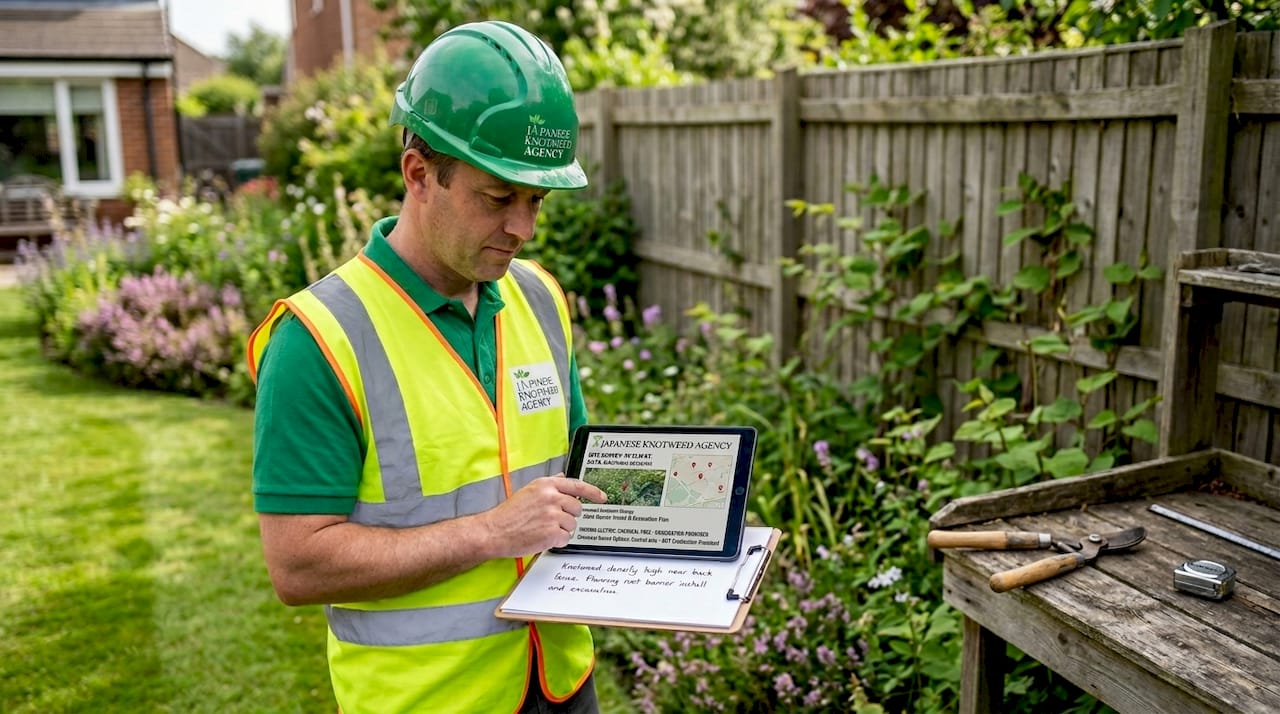
The process covers far more than pulling up weeds. It includes assessing vegetation across the entire plot, identifying species of concern, and applying appropriate removal or containment methods. Fire hazard reduction is one of the primary drivers behind formal clearance programmes, with regulatory bodies across many jurisdictions requiring all parcel owners to meet minimum standards. Dry, dense weed growth creates significant fuel loads adjacent to buildings and boundaries.
In the UK, weed management for properties also intersects with wildlife legislation, planning conditions, and neighbour obligations. Local authorities can issue notices requiring clearance of overgrown land, and non-compliance carries financial consequences.
Invasive species require a separate category of consideration. Standard clearance methods that work for common weeds are wholly inadequate for plants like Japanese Knotweed, Giant Hogweed, or Himalayan Balsam. These species have specific legal implications under the Wildlife and Countryside Act 1981, and their removal demands specialist knowledge and documented management plans.
The components of property weed clearance typically include:
- Vegetation survey and species identification across the plot
- Removal or treatment of common weeds and overgrown growth
- Specialist assessment and management planning for invasive species
- Installation of root barriers where underground spread is a concern
- Documentation of clearance works for legal or mortgage purposes
- Ongoing monitoring to prevent regrowth and re-establishment
Pro Tip: Book a professional survey before purchasing any property with visible vegetation coverage. What appears to be common bramble may conceal an established Japanese Knotweed colony beneath, which will not be visible out of season.
Invasive species and their property implications
Not all plants that require clearance are equally problematic. Common garden weeds respond to standard property weed removal methods. Invasive species are categorically different, and Japanese Knotweed sits at the extreme end of that spectrum.
Japanese Knotweed can push through tarmac, compromise drainage systems, and penetrate building foundations over time. Its rhizome network extends up to three metres below ground and seven metres laterally from any visible cane. Professional surveys and management plans are required to contain it effectively and meet statutory compliance obligations.
| Species | Typical clearance method | Specialist survey required? | Mortgage risk? |
|---|---|---|---|
| Japanese Knotweed | Thermo-electric treatment, root barrier, excavation | Yes | High |
| Giant Hogweed | Physical removal with protective equipment | Yes | Moderate |
| Himalayan Balsam | Manual removal, cut and burn | No | Low |
| Common bramble | Mechanical clearance | No | None |
| Buddleia | Cutting and stump treatment | No | None |
The presence of Japanese Knotweed on or near a property requires disclosure to mortgage lenders. Most major UK lenders will not release funds without a professional survey and, in many cases, a binding management plan backed by a treatment guarantee. This means that failing to address knotweed before marketing a property can stall or derail a sale entirely.
The benefits of weed clearance in cases involving invasive species extend significantly beyond tidiness. Documented clearance works and professional management plans restore buyer confidence, satisfy lender requirements, and protect the long-term equity of the property. Proactive management consistently delivers stronger sale outcomes than reactive treatment initiated under transaction pressure.
How to clear property weeds: practical steps
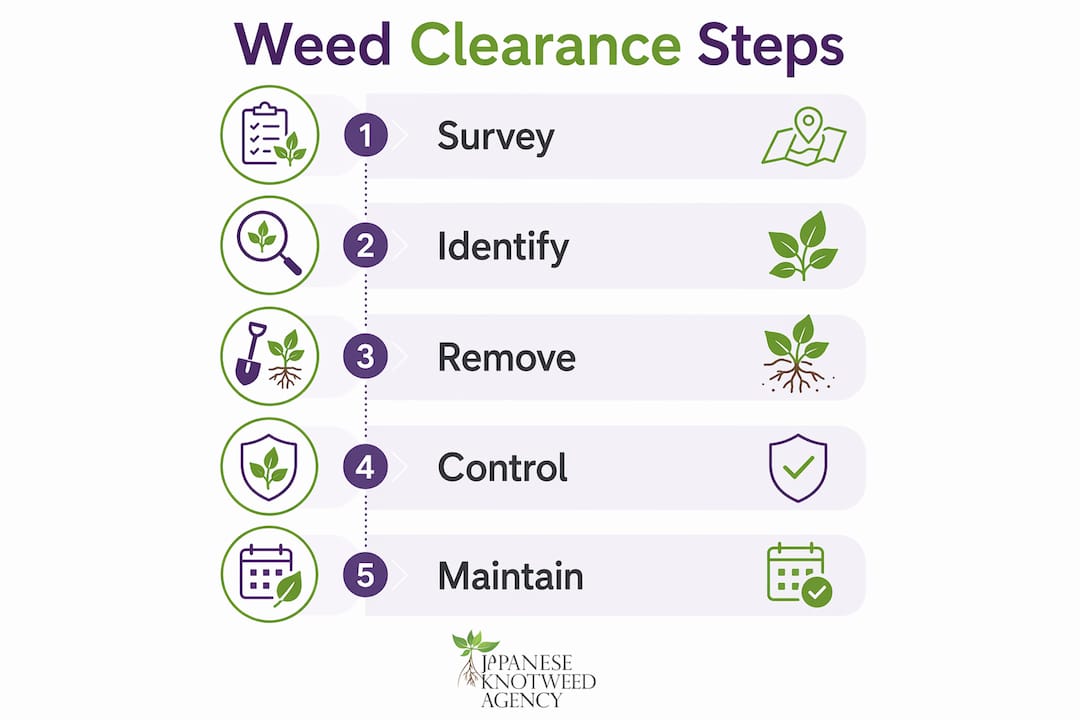
Understanding how to clear property weeds begins with getting the sequence right. Many homeowners attempt clearance without first identifying what they are dealing with, which wastes time and can worsen matters. Here is a practical framework:
- Conduct an initial walk-around survey. Before touching anything, inspect the full boundary and any areas of dense or unusual growth. Look for hollow, bamboo-like canes, shovel-shaped leaves, or dense underground root structures. Photograph anything unfamiliar.
- Identify all species present. Common weeds can be addressed with standard property maintenance weed control. Any plant you cannot confidently identify should be assessed by a professional before clearance begins.
- Schedule clearance at the right time of year. Many invasive species are best treated during active growth phases. Japanese Knotweed is most effectively treated in late spring and summer when the plant is drawing energy down through the rhizome system. Early action is generally better than late-season clearance.
- Match the method to the species. Mechanical cutting alone will not eradicate deep-rooted invasive plants. Chemical-free removal protocols such as thermo-electric treatment target the root system directly, causing internal cell damage without herbicide use.
- Document everything. Keep photographic records before, during, and after clearance. Retain any professional survey reports, treatment certificates, or management plans. These documents are requested by conveyancers and mortgage surveyors routinely.
- Schedule follow-up monitoring. Single-treatment clearance is rarely sufficient for established infestations. Regular inspections reduce the risk of regrowth and allow early intervention before plants re-establish fully.
Pro Tip: If you receive a formal weed abatement notice from a local authority, respond promptly and in writing. Authorities that issue three or more violations within a defined period can escalate to contractor-led abatement with costs charged directly to your property, adding to your tax bill.
Where invasive species are confirmed, expert involvement in weed removal is not optional. Professional management ensures that treatment meets lender and legal requirements, and that the species is not inadvertently spread through incorrect handling. Japanese Knotweed fragments as small as a few centimetres of rhizome can establish a new colony if they reach soil.
Impact on property value and mortgage approval
Unmanaged weed growth has a measurable effect on property value, even when invasive species are not present. Overgrown boundaries and neglected land reduce kerb appeal and signal deferred maintenance to buyers. That said, the financial risks associated with invasive species are in a different category altogether.
Homes with cleared invasive species market more competitively and satisfy lender requirements far more easily than those where clearance has been deferred. The key consequences of unmanaged invasive weeds include:
- Mortgage refusal or conditional lending pending a professional management plan
- Reduced valuations, sometimes significantly below market rate
- Delayed exchange of contracts while clearance evidence is sought
- Potential liability for spread of notifiable invasive species to neighbouring land
- Legal obligation to disclose known knotweed presence in property information forms
Conversely, the benefits of weed clearance for sellers and buyers are well established. Properties with documented management plans and treatment guarantees in place present a significantly lower risk profile to lenders. Buyers are more likely to proceed, and valuers are better able to defend a full market valuation where clearance has been professionally managed and evidenced.
My perspective on responsible clearance
I have seen many property transactions complicated, or collapsed, because clearance was treated as an afterthought. In my experience, the pattern is almost always the same. An owner notices some unusual growth, delays action, and the problem is only identified during a mortgage survey. By that point, the pressure to act quickly leads to corner-cutting, inadequate treatment, and documentation that does not satisfy lenders.
What I find most valuable about the chemical-free approach is that it forces a more rigorous, methodical programme. You cannot spray your way to a quick result and move on. Each treatment cycle is documented, the response of the plant is assessed, and the programme continues until the evidence supports closure. That discipline protects the homeowner far more than a one-off application ever could.
The other thing I consistently observe is that owners who invest in a professional survey before problems arise spend considerably less than those who commission one under transaction pressure. An early invasive weed survey gives you time, options, and control. A late survey, triggered by a buyer’s solicitor, gives you none of those things.
Responsible weed clearance is not about achieving a particular aesthetic. It is about protecting a significant financial asset, meeting your legal obligations, and leaving a property in a condition that serves its next occupants well.
— Alan
How Japaneseknotweedagency can help
If you are concerned about weed clearance, invasive species, or the implications for your property’s value, Japaneseknotweedagency provides specialist support across England, Wales, and Ireland.

Japaneseknotweedagency delivers chemical-free knotweed treatment using thermo-electric technology that targets the rhizome network directly, without herbicides. The service includes professional property surveys, root barrier installation, and excavation where required. Every management plan is documented to satisfy mortgage lender requirements. For homeowners who want clear answers and a structured path forward, book a survey to receive a tailored assessment of your property. You can also explore the invasive species eradication guide for further guidance on planning your clearance programme.
FAQ
What is property weed clearance and why does it matter?
Property weed clearance is the process of removing and managing vegetation on a property to reduce fire risk, prevent structural damage, meet legal obligations, and protect property value. It extends well beyond cosmetic tidying, particularly where invasive species are present.
Does Japanese Knotweed prevent mortgage approval?
Most UK mortgage lenders require a professional survey and a documented management plan before releasing funds on properties where Japanese Knotweed is present or suspected. Without this, lending is typically withheld or heavily conditioned.
Can I clear Japanese Knotweed myself?
You can remove visible growth manually, but this will not address the rhizome system underground. Fragments of rhizome left in soil can re-establish the plant. Professional treatment with documented results is required to satisfy lenders and meet legal standards.
How often should property weed clearance be carried out?
For general vegetation, an annual clearance programme is sufficient for most properties. Invasive species management requires multiple treatment cycles over one to several seasons, with regular monitoring between visits to assess regrowth.
What are the legal obligations around invasive weeds in the UK?
Under the Wildlife and Countryside Act 1981, it is an offence to allow invasive non-native plants such as Japanese Knotweed to spread into the wild. Property owners have a responsibility to manage these species on their land and to prevent spread to neighbouring plots or public land.