Where is Glyphosate Banned?

Where is Glyphosate Banned?

Numerous cities, counties, states and countries throughout the world have taken steps to either restrict or ban glyphosate, the active ingredient in Monsanto’s Roundup weed killer.

The following countries have issued outright bans on glyphosate, imposed restrictions or have issued statements of intention to ban or restrict glyphosate-based herbicides, including Roundup, over health concerns and the evidence uncovered in the Roundup cancer litigation proving the weed killer’s link to cancer:

Argentina: In 2015, more than 30,000 health care professionals advocated for a glyphosate ban following the International Agency for Research on Cancer’s (IARC) report on glyphosate, which concluded the chemical is probably carcinogenic to humans. More than 400 towns and cities in Argentina have passed measures restricting glyphosate use.

Australia: Numerous municipalities and school districts throughout the country are currently testing alternative herbicides in an effort to curtail or eliminate glyphosate use. Many use steam technology for weed control on streets and in other public areas.

Following a series of massive jury verdicts in Roundup cancer lawsuits in the United States, the Australian state of Victoria launched its own review of glyphosate. Two councils in Sydney have either banned or are in the process of banning glyphosate use, and eight other councils are reviewing the chemical.

Austria: In June of 2019, Austria announced that it planned to ban glyphosate within the year. Leader of the Social Democrats, Pamela Rendi-Wagner, said she is “pleased” that her party’s long-standing effort to ban glyphosate in Austria would “finally pay off” now that her party’s motion had a majority in the Austrian parliament. The measure to ban glyphosate passed in July of 2019. While the Austria glyphosate ban was scheduled to take effect on Jan. 1, 2020, the country’s caretaker leader announced she would not sign the ban into law, citing a technicality. For now,, the ban is tabled

Bahrain: According to Oman’s Ministry of Agriculture, Bahrain and five other countries in the Gulf Cooperation Council (GCC) have banned glyphosate.

Barbados: The government announced that people will need a license to purchase glyphosate. The new rule was designed to help manage the use of pesticides considered harmful to human health.

Belgium: Banned the individual use of glyphosate. In 2017, Belgium voted against relicensing glyphosate in the EU. The country was also one of six EU member states to sign a letter to the EU Commission calling for “an exit plan for glyphosate…” The city of Brussels banned the use of glyphosate within its territory as part of its “zero pesticides” policy.

Bermuda: Outlawed private and commercial sale of all glyphosate-based herbicides. In 2017, the government relaxed its ban on glyphosate, allowing the Department of Environment and Natural Resources to import restricted concentrations of glyphosate for managing roadside weed overgrowth.

Brazil: In August of 2018, a federal judge in Brasilia ruled that new products containing glyphosate could not be registered in the country. Existing regulations concerning glyphosate were also suspended, pending a revaluation of toxicological data by Anvisa, the country’s health agency.

In September of 2018, a Brazilian court overturned the federal judge’s ruling. September marks Brazil’s first month of soybean planting. The country is the largest exporter of soybeans in the world, and as such, has become heavily reliant on agrochemicals. Anvisa issued a statement following the court’s decision to overturn the ruling, saying it will take necessary legal and technical steps in response.

Further, Brazil’s Solicitor General’s office has said it is preparing an appeal to the court decision with support from the Agriculture Ministry. Brazil’s health agency concluded a re-evaluation of glyphosate in February of 2019. Based on the agency’s findings, a blanket ban of glyphosate in Brazil is unlikely.

Canada: Eight out of the 10 provinces in Canada have some form of restriction on the use of non-essential cosmetic pesticides, including glyphosate. Vancouver has banned private and public use of glyphosate, aside from the treatment of invasive weeds. In June of 2019, New Brunswick officials announced that the province would reduce glyphosate spraying in certain areas with the promise that more regulation will follow. In February of 2022, Canada’s Federal Court of Appeals issued a ruling that Health Canada did not follow its own protocols for regulating herbicides like Roundup (glyphosate). The ruling could impact glyphosate’s status in the country.

Colombia: In 2015, Colombia outlawed the use of glyphosate to destroy illegal plantations of coca, the raw ingredient for cocaine, out of concern that glyphosate causes cancer. In March of 2019, President Ivan Duque asked for the judicial ban on aerial glyphosate spraying to be lifted. However, in July of 2019, the court maintained the judicial ban on glyphosate, ruling that the government has to prove that glyphosate is not harmful to human health and the environment in order for the ban to be lifted.

Costa Rica: In December of 2019, the country’s National System of Conservation Areas issued a guideline prohibiting the use of glyphosate in Costa Rica’s 11 Protected Wild Areas. The glyphosate restriction also applies to the National System of Conservation Areas’ institutions.

Czech Republic: Agriculture Minister Miroslav Toman said the country will limit glyphosate use starting in 2019. Specifically, the Czech Republic will ban glyphosate as a weedkiller and drying agent.

Denmark: The Danish Working Environment Authority declared glyphosate to be carcinogenic and has recommended a change to less toxic chemicals. Aalborg, one of the largest cities in Denmark, issued private-use glyphosate ban in September of 2017. In July of 2018, the Danish government implemented new rules banning the use of glyphosate on all post-emergent crops to avoid residues on foods.

El Salvador: In 2013, the country adapted a law banning glyphosate over links to deadly kidney disease. However, by 2016, the legislation appeared to stall.

Fiji: The government announced in March of 2020 that glyphosate will be banned in the country effective January 2021.

France: French authorities banned the sale, distribution and use of Roundup 360 in early 2019. In May of 2019, French Agriculture Minister Didier Guillaume announced that France would eliminate the use of glyphosate by 2021 with limited exceptions.

Some 20 mayors throughout the country have banned glyphosate in their municipalities.

President Macron announced in December of 2020 that the government would offer financial aid to farmers who agree to stop using glyphosate. The French president said in an interview with the media that while he still supports banning glyphosate, he recognizes that he will not be able to initiate the ban by 2021.

In December of 2019, France’s ANCES agency decided that 36 glyphosate-based products will be withdrawn from the market and no longer be permitted for use by the end of 2020.

Germany: Germany’s cabinet passed legislation in February of 2021 to ban glyphosate by 2024. German farmers will need to reduce the use of glyphosate until the ban takes effect in 2024. Certain retail stores in Germany have already pulled glyphosate-based herbicides like Roundup from shelves.

Greece: Greece was one of nine EU countries to vote against relicensing glyphosate in November of 2017. The country was also one of six EU member states to sign a 2018 letter to the European Commission calling for “an exit plan for glyphosate…” According to Greek Minister of Agricultural Development Evangelos Apostolou, “[i]t is our duty to push in the direction of risk management, in the interests of consumers, producers and the environment.” In March of 2018, the Greek government approved a five-year license for Monsanto’s Roundup against the wishes of Greek environmentalists.

India: In October of 2018, the government of Punjab banned the sale of glyphosate in the state. “All pesticide manufacturers, marketers and dealers in the State shall not sell glyphosate formulations-concentrations with immediate effect. The licensing authorities have been asked to take necessary steps for removal of entries for glyphosate from the licenses issued by them,” said State Agriculture Secretary K.S. Pannu. In February of 2019, the Indian state of Kerala issued a ban on the sale, distribution and use of glyphosate.

Italy: Italy’s Ministry of Health placed a number of restrictions on glyphosate use. Italian legislators have also raised concerns about glyphosate safety, and have come out against relicensing the herbicide in the European Union. In 2016, the Italian government banned the use of glyphosate as a pre-harvest treatment and placed restrictions on glyphosate use in areas frequented by the public. In November of 2017, Italy was one of seven EU nations to vote against relicensing glyphosate.

Kuwait: According to Oman’s Ministry of Agriculture, Kuwait and five other countries in the Gulf Cooperation Council (GCC) issued glyphosate bans.

Luxembourg: The country will become the first in the EU to completely ban all products containing glyphosate. The Luxembourg glyphosate ban will take effect in three phases. On Feb. 1, 2020, market authorization was withdrawn. Stocks of glyphosate may be used until June 30, 2020. On Dec. 31, 2020, the total ban on glyphosate will take effect.

Malawi: In April 2019, Malawi’s Principal Secretary of the Ministry of Agriculture, Irrigation and Water Development told the country’s National newspaper that import licenses for glyphosate-based herbicides like Monsanto’s Roundup would be suspended immediately.

Malta: In July of 2019, Malta banned the use of glyphosate in public spaces. The spraying of glyphosate will not be allowed on roadsides or near schools, among other places.

Mexico: In June of 2020, Mexico’s Environment Ministry announced that the country will phase out glyphosate by 2024, citing human health and environmental concerns. In April of 2021, a judge ruled in Bayer’s favor in a court challenge of the government’s glyphosate ban proposal. Bayer’s win was temporary because in October of 2021, Mexico’s Supreme Court denied four appeals of the proposed ban from major agrichemical corporations. The ruling affirmed the country’s glyphosate ban.

Netherlands: Banned all non-commercial use of glyphosate.

New Zealand: The cities of Auckland and Christchurch passed resolutions to reduce the usage of chemicals for weed and pest control in public places. The Physicians and Scientists for Global Responsibility, a New Zealand charitable trust, called for a glyphosate ban in 2015.

Oman: Eng Saleh al Abri, director general of agricultural development in Oman’s Ministry of Agriculture and Fisheries (MoAF), told a reporter that glyphosate “hasn’t been available in Oman since 2016.” Eng Abri added, “This active ingredient has been banned throughout the GCC (Gulf Cooperation Council) since last year.” In addition to Oman, the GCC includes Saudi Arabia, Qatar, Kuwait, Bahrain, and the United Arab Emirates (UAE).

Portugal: Prohibits the use of glyphosate in all public spaces. The president of the Portuguese Medical Association has also called for a worldwide ban of glyphosate.

Qatar: According to Oman’s Ministry of Agriculture, Qatar and five other countries in the Gulf Cooperation Council (GCC) have banned glyphosate.

St. Vincent and the Grenadines: Acting on advice from their Pesticides Board, the Caribbean country placed an immediate suspension on the import of glyphosate-based herbicides.

Saudi Arabia: Issued a glyphosate ban along with five other countries in the Gulf Cooperation Council (GCC).

Scotland: Aberdeen cut back its use of herbicides and Edinburgh’s City Council voted to phase out glyphosate. In November of 2017, five of Scotland’s six EU parliamentarians voted in favor of a motion that would phase out glyphosate by 2022.

Slovenia: Slovenia was one of six EU member states to sign a 2018 letter to the European Commission citing “concerns” about the risks associated with glyphosate. The letter called upon the Commission to introduce “an exit plan for glyphosate…”

Spain: According to Kistiñe Garcia of the Spanish NGO, Ecologistas en Acción, Barcelona, Madrid, Zaragoza and the region of Extremuda have decided to ban glyphosate. The regions of La Rioja (major Spanish wine region) and Aragon have also approved motions against endocrine-disrupting chemicals, which includes glyphosate.

Sri Lanka: Sri Lanka was the first country to issue a nationwide ban on glyphosate. In 2018, the government decided to lift the ban due to crop losses and overgrowing weeds. However, in November of 2021, the country’s government reinstalled the Roundup ban.

Sweden: Raised concerns about glyphosate safety and has pushed against relicensing the herbicide in the EU. In 2017, the Swedish Chemicals Agency (SCA) announced it was planning to tighten rules on private use of plant protection products. Under the plan, private users would only be allowed to use products containing “low-risk substances.” According to the SCA, glyphosate is an example of an active substance not expected to be included among low-risk substances, meaning in due time, private consumers may not be permitted to use herbicides containing glyphosate.

Switzerland: Concerned about public well-being, the Swiss supermarket chains Migros and Coop removed glyphosate-based products from their shelves due to health risks. In 2017, the Green party put forth a plan to ban glyphosate in Switzerland. The proposed plan was rejected by the Federal Council, Switzerland’s executive.

Thailand: In August 2019, Deputy Agriculture Minister Mananya Thaiseth ceased licensing extensions for three hazardous farm chemicals, including glyphosate. Following the announcement, U.S. government officials pressured Thailand to exempt the three chemicals citing a potential threat to the grain trade. But Thailand’s public health minister Anutin Charvinrakul said during a press conference that “our job is to take care of the people’s health.”

The Thailand glyphosate ban was scheduled to take effect in December of 2019. However, after pressure from industry, the ban was reduced to a restriction.

United Arab Emirates: Issued a glyphosate ban along with five other countries in the Gulf Cooperation Council.

United Kingdom: Following the landmark $289 million Monsanto Roundup verdict on Aug. 10, 2018, Homebase, one of the UK’s largest DIY retailers, announced that it would review the sale of Roundup and Ranger Pro. However, according to the Sun, Homebase and other major retailers still stock the weed killers for sale. The United Kingdom banned Paraquat, another widely-used herbicide, in 2007.

The following boroughs and townships have issued bans or restrictions on pesticides and herbicides, including glyphosate:

  • Balerno (Scotland)
  • Bath
  • Brighton
  • Bristol
  • Bury (ban in children’s play areas)
  • Cambridge
  • Chichester
  • Colchester
  • Cowes (Isle of Wight)
  • Croydon
  • Derry City (Northern Ireland)
  • Faversham
  • Folkestone & Hythe
  • Frensham
  • Frome
  • Glastonbury
  • Guildford
  • Hackney
  • Hadleigh
  • Hammersmith & Fulham
  • Hexham
  • Highland (Scotland)
  • Lambeth
  • Lewes
  • London – Greater London Authority
  • Lyme Regis
  • Manningtree
  • Midlothian (Scotland)
  • North Lanarkshire (Scotland)
  • North Somerset
  • Peterlee
  • Petersfield
  • Reading
  • Renfrewshire (Scotland)
  • Shaftesbury
  • Shetland (Scotland)
  • Sunderland
  • Trafford
  • Wadebridge
  • Warminster
  • Waverley
  • Wirral

Vietnam: Following the jury verdict in Hardeman v. Monsanto Co., Vietnam announced that it would ban glyphosate imports. According to Hoang Trung, Director of the Plant Protection Department under the Ministry of Agriculture and Rural Development, “the removal of this substance from the list of pesticides allowed to be used in Vietnam will be done in the near future.”


Is Glyphosate Banned in Europe?

As you can see above, some individual countries have introduced legislation to ban or restrict private sales of glyphosate, or restrictions on spraying glyphosate in public spaces. As for the whole of the European Union (EU), glyphosate is not currently banned.

However, EU public opinion is leaning in favour of a glyphosate ban. In a 2016 poll of the five largest EU countries, over 66 percent of respondents said they favoured a glyphosate ban. Over 1.3 million people signed a petition in 2017 calling for a European ban of glyphosate. That public pressure caught the attention numerous Members of European Parliament, who have cited the petition as the foundation for instituting an EU ban.

In November of 2017, EU member states narrowly voted to relicense glyphosate for a period of five years. The vote was not without controversy; German Agriculture Minister Christian Schmidt (CSU) entered a ‘yes’ vote for his country without consulting with German Chancellor Angela Merkel (CDU) on the matter. His unilateral vote disregarded Germany’s Environment Minister, who had instructed Schmidt to abstain from voting. With Germany’s vote, the measure narrowly passed and glyphosate received a new license.

Following the scandal, six EU countries sent a letter to the European Commission, calling for an exit plan for glyphosate. France and Italy have stated they will carry out glyphosate bans by 2020, and Germany announced in 2018 that it will also issue a glyphosate ban.

In January of 2019, a European Parliament report found that EU regulators based their decision to relicense glyphosate on an assessment that was plagiarized from a coalition of pesticide companies, including Monsanto.

The EU Parliament report investigated claims that Germany’s Federal Institute for Risk Assessment (BfR) copied and pasted large sections of a pesticide industry assessment of glyphosate literature in its own assessment. The BfR report concluded that classifying glyphosate as a carcinogen is not warranted. The European Food Safety Authority (EFSA), which relied upon the BfR report, also found that glyphosate is safe for humans and the environment.

Following the release of the EU Parliament report, an EU court ruled that EFSA should publicize glyphosate studies used for its assessments.

NON-CHEMICAL TREATMENT OF JAPANESE KNOTWEED IS AVAILABLE ACROSS ENGLAND & WALES FROM THE JAPANESE KNOTWEED AGENCY.

CLICK HERE TO SEND US A MESSAGE

Is Japanese Knotweed Dangerous?

IS JAPANESE KNOTWEED DANGEROUS?

You’ve probably heard by now some of the horror stories of Japanese knotweed, (Fallopia japonica).

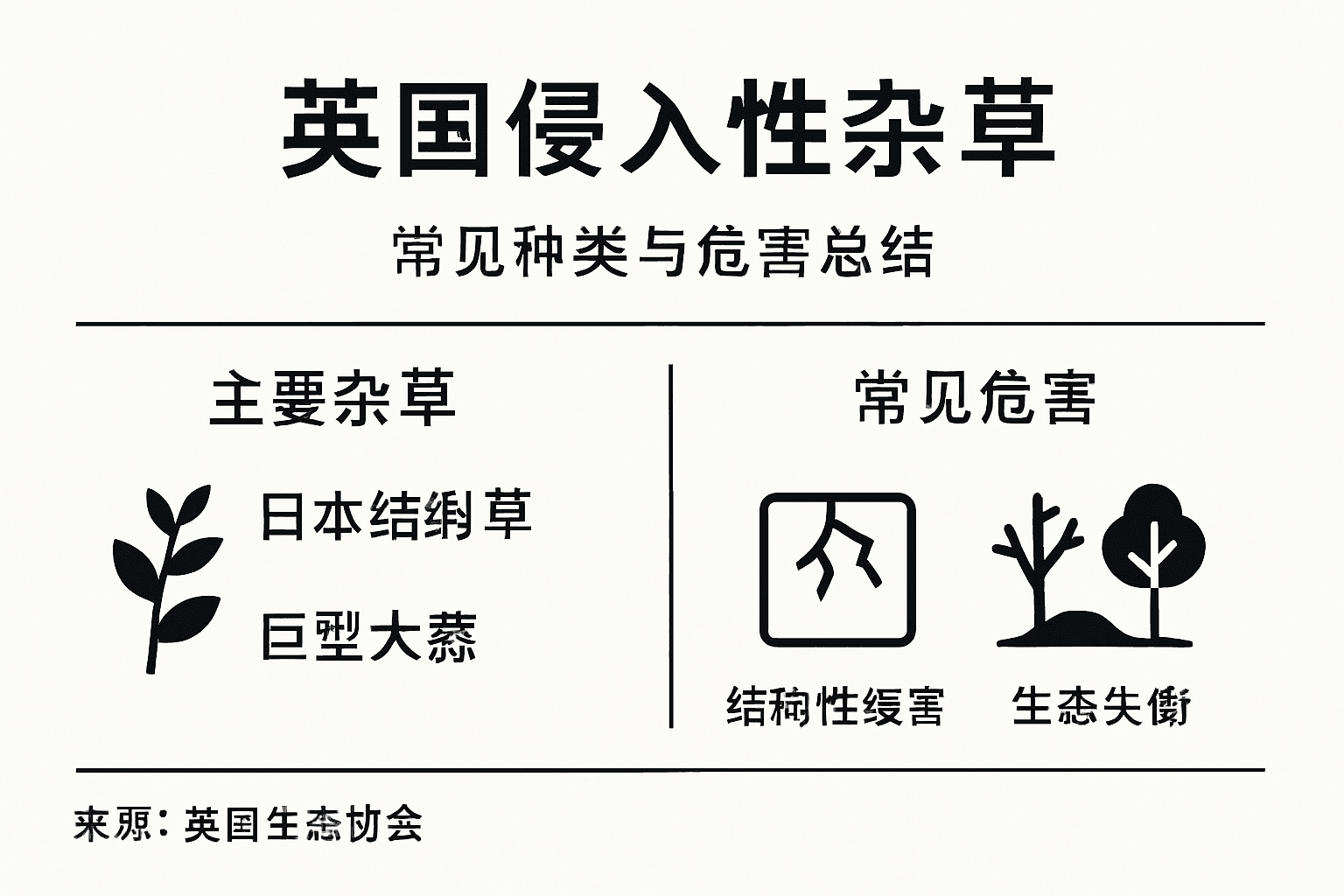
Structural damage, decimated property values and mortgage providers refusing to lend. These are all possible consequences of an untreated knotweed infestation.

Maybe you’ve heard about how the ongoing invasion of Japanese knotweed damages biodiversity by supressing native species.

Perhaps you’ve read about people being injured by other invasive species like giant hogweed (Heracleum mantegazzianum).

Nobody wants to see knotweed on their property for a number of very good reasons, but is Japanese knotweed dangerous? Could contact with it harm people or pets?

Well, the good news is that Japanese knotweed is non-toxic and perfectly safe to handle. Despite its fearsome reputation, it is completely harmless to humans and animals.

In fact, Japanese knotweed is edible! The young shoots can be eaten raw or made into pies, crumbles, pickles and chutneys, or any recipe which calls for rhubarb. The older stems which are too tough to eat can be made into syrup for flavouring soft drinks or cocktails. Flower buds can be used for fermentation, to make wine and beer.

Japanese knotweed has been used for centuries in traditional medicine. Known in China as Hu Zhang, the dried root is used to treat many ailments including jaundice, coughs, congestion, inflammation and snake bites. It is also gaining popularity in the world of alternative therapy, as it contains an anti-oxidant called resveratrol.

While the claims of snake oil manufacturers should be treated with caution, resveratrol is also of interest to the scientific community as an anti-inflammatory, cardioprotective and anti-carcinogen. Clinical trials are yet to be completed, however.

You can visit the Japanese Knotweed Agency Gallery here and see what Japanese Knotweed looks like through the 4 seasons to help you easily identify the dreaded weed at the earliest opportunity. And there’s a whole load of real-life photos taken by the Agency Surveyors across the UK, to give you a feel of how rampant this weed is and how it can literally grow anywhere.

If you are unsure whether the suspect plant or weed is indeed Japanese Knotweed of a kind, you can submit a photograph to us here at the Japanese Knotweed Agency and one of our surveyors will assess and confirm whether it is or isn’t Knotweed, typically within just a few hours. Use our free identification service here.

Capital Punishment for Japanese Knotweed

Electro-Thermal Treatment for Japanese Knotweed

CAPITAL PUNISHMENT FOR JAPANESE KNOTWEED HAS FINALLY ARRIVED

Manchester based Japanese Knotweed Agency launched in 2018 to support businesses, Local Authorities and Housing Associations, but ultimately to support Home Owners who are affected by Japanese Knotweed to understand the legal and financial implications of having a Japanese Knotweed issue.

The surprising fact is that very few have heard of Japanese Knotweed, and even fewer are aware that it is present in their garden or on their land as they could not identify the UK’s No.1 Invasive Weed, even though in 2022 we seen a massive rise in infestations growing well over 10 and 12 feet tall.

Herbicidal treatments still do have a lot of use in trying to bring this invasive weed under control, but what are the problems and longer-term effects of using chemicals to treat Japanese Knotweed, and how do they compare to the new Electro-Thermal treatment now available in the UK?


Killing Japanese knotweed

When it comes to ‘killing’ Japanese knotweed, treatment and eradication can be a tough task and take several years to get the weed under control and eradicate – but it is possible with commitment.

Herbicide spraying was the only available treatment for killing Japanese knotweed. However, it’s important to know that herbicide will kill most of the plant, but it doesn’t totally eradicate the plant’s rhizomes (extensive root system) in the ground. This means that future re-growth is technically possible if not managed.

Continued multiple yearly applications of herbicide can prevent the spread and growth of Japanese knotweed, but if you want the knotweed’s rhizomes (roots) completely removed from the soil – excavation was required. This was the way to ensure complete Japanese knotweed removal.


Herbicides that Kill Japanese Knotweed


Does Roundup kill Japanese knotweed?

Roundup, Gallup, Landmaster, Pondmaster, Ranger, Rodeo, and Touchdown are all herbicides recommended to kill Japanese Knotweed. They are all glyphosate-based herbicides and will somewhat prove effective in treating the troublesome knotweed, safe to say what the eyes can see!

The best time to spray the leaves of Japanese Knotweed with herbicide is late summer or early autumn. This is the period in which the plant is flowering and so the foliage conducts more nutrients to the rhizome to build food reserves.

About glyphosate-based herbicides

Glyphosate-based herbicides will kill Japanese knotweed, but be careful, since these are non-selective herbicides, they will kill whatever plants they come into contact with, whether that’s Japanese knotweed or your prize geraniums. For this reason, many gardeners don’t like using herbicides, but in the case of Japanese knotweed, it is one of the few really efficacious solutions.

Glyphosate is a translocated herbicide as opposed to a contact herbicide. While contact herbicides may appear to be effective against Japanese knotweed, they are in fact only killing its leaves and shoots. This is why it is best to use a glyphosate. As a translocated herbicide, glyphosate is taken partially down into the plant’s roots where it does affect the root system to some extent.


How long do glyphosate herbicides take to work?

Glyphosate-based weed killers available from garden centres will all have a harmful effect on Japanese knotweed. This is normally a slow process requiring at least three to four growing seasons to be effective, and hinder the growth of Japanese knotweed. Professional Japanese knotweed removal companies have access to more powerful herbicides which can reduce the removal process typically by half.

Are there any other chemicals that kill Japanese knotweed?

Japanese knotweed is also susceptible to other chemicals like triclopyr and picloram. However, glyphosate is often the preferred choice for domestic use due to its suitability for use near water.

A word of warning with herbicides

While herbicides are an effective means of killing Japanese knotweed, their use should be limited to areas destined to become lawns or flower beds, do not use herbicides on areas that will one day become your vegetable garden.


You should also be extremely careful of areas that have had herbicidal treatment and as a big safety rule, do not let children or animals anywhere near the treated area.

Varieties of Knotweed in the UK

JAPANESE KNOTWEED OR NOT?
A GUIDE TO IDENTIFICATION

You may well be aware of the infamous Japanese Knotweed (reynoutria japonica or fallopian japonica) which has been causing headaches for homeowners up and down the U.K. If not, you should visit the Japanese Knotweed Agency Gallery here and see what Japanese Knotweed looks like through the 4 seasons to help you easily identify the dreaded weed at the earliest opportunity. And there’s a whole load of real-life photos taken by the Agency Surveyors across the UK, to give you a feel of how rampant this weed is and how it can literally grow anywhere.

Japanese Knotweed is believed to account for 98% of the Knotweed in the U.K. There are, however several other varieties at large in the British Isles.


Lesser Knotweed:

Known, confusingly, by several different names (Persicaria campanulata, Polygonum campanulatum, Polygonum campanulata, Reynoutria campanulatum), lesser Knotweed is not as invasive as other varieties, but is still a vigorous plant. Rarer in the U.K. than other species, it is more likely to be found in Scotland and Northern Ireland.

Plants grow to a height of 2-3ft (60-90cm). The stems do not exhibit the familiar “zig-zag” pattern of its cousins.

Leaves are elongated, rather than heart-shaped, and vary considerably in size, displaying a “herringbone” pattern of grooves and sometimes reddish veins. The underside is paler, with fine white hairs.

Around mid-summer, tiny white or pale pink, bell shaped flowers appear in loose clusters.


Dwarf Japanese Knotweed:

Dwarf Japanese Knotweed, (Reynoutria japonica Houtt, Polygonum pictum, Polygonum compactum, or Polygonum reynoutria), as the name suggests, is a smaller form of Japanese Knotweed, rarely growing to more than 3ft (1m). Although less invasive than standard Japanese Knotweed, this dwarf variety is present as both male and female plants so may set viable seed and lead to further hybridisation.

Usually appearing in late spring, its leaves are darker and more variable in form than japonica. Lacking the distinctive “heart” shape, they are more oval, with wavey edges and a leathery texture.

Stems display the distinctive “zig-zag” pattern and reddish colouration of its larger relative.

White or pale pink flowers appear in late summer, forming upright spikes which can darken towards red as they mature.


Himalayan Knotweed:

One of Britain’s rarer Knotweeds, Himalayan Knotweed, (Persicaria wallichii, also known as Aconogonum polystachyum, Reynoutria polystachia, Persicaria polystachya, Polygonum wallichii, or Polygonum polystachium) is most likely to be found in southwestern England. Although sometimes mistaken for lesser Knotweed, Himalayan Knotweed is much taller, rapidly growing to 6ft (1.8m). It is a hermaphrodite and can self-fertilise, leading to greater invasive potential.

Leaves are darker and more elongated than those of Japanese Knotweed, typically 4-8in(10-20cm) in length and tapering to a sharp point. Leaf shapes vary, some tapering to the base and others forming a more heart-shaped lobe.

The zig-zagging stems are hairy, and although some stems show a familiar pinkness, they are more likely to be green. A distinctive feature is the brown sheaf which is retained at the base of the leaf stem.

Himalayan Knotweed flowers between mid-summer and late autumn, producing white or pale pink blossom in open clusters around 8-14in (20-35cm) in length.


Giant Knotweed:

Closely related to Japanese Knotweed and broadly similar in appearance, Giant Knotweed (Reynoutria sachalinensis), is, as one might surmise, a much larger variety than its more common relative, growing 13-16ft (4-5m) high. It has a shorter growing season than japonica, appearing later in the spring and dropping its leaves earlier in the autumn. Male and female plant are present in the U.K. and Europe, meaning that this variety can spread by seed dispersal as well as via the rhizome.

Leaves are much larger than japonica, reaching 16in (40cm) long and 11in (27cm) wide, but retain an elongated “heart-shaped” form. They are wrinkled around the edges and have white hairs on the underside.

Dense clusters of creamy flowers appear in late summer and early autumn.


Bohemian Knotweed:

Bohemian Knotweed, (Reynoutria x Bohemica) is a hybrid of Japanese Knotweed and giant Knotweed which has only been classified as a separate species in recent decades. Bohemica grows to an average 8-10ft (2.5-3m), but sometimes reaches 13ft (4m). Both male and female plants have been seen in Britain and Europe. This means that bohemica can fertilise and set seed, potentially making it more invasive than the infamous japonica.

Leaves are larger than Japanese Knotweed, reaching 10in (25cm) long and 7in (18cm) wide. They retain the familiar heart shape, but are a darker shade of green and more crinkled in appearance.

Flowers appear in late summer and early autumn, and are pale green or creamy white.

If you are unsure whether the suspect plant or weed is indeed Japanese Knotweed of a kind, you can submit a photograph to us here at the Japanese Knotweed Agency and one of our surveyors will assess and confirm whether it is or isn’t Knotweed, typically within just a few hours. Use our free identification service here.