Many homeowners believe that simply digging out Japanese Knotweed will solve the problem, but excavation without a proper survey can actually worsen the infestation. Even fragments smaller than a fingernail can regenerate into new plants, turning a contained problem into a widespread nightmare. A thorough survey before any excavation work maps the full extent of underground rhizomes, preventing fragmentation and protecting your property investment. This article explains why surveying beforehand is crucial for effective eradication and how it can save you thousands in the long run.
Table of Contents
Key Takeaways
| Point |
Details |
| Survey led excavation |
Professional surveys improve excavation success by eighty five per cent by mapping rhizomes before digging. |
| Prevent fragmentation |
A thorough survey maps the full extent of underground rhizomes and prevents fragmentation during digging. |
| Reinfestation reduction |
Combining surveys with root barriers reduces reinfestation by over seventy per cent. |
| Lenders require surveys |
Mortgage lenders increasingly require invasive weed surveys before approving property purchases. |
Understanding why surveying is essential before excavation
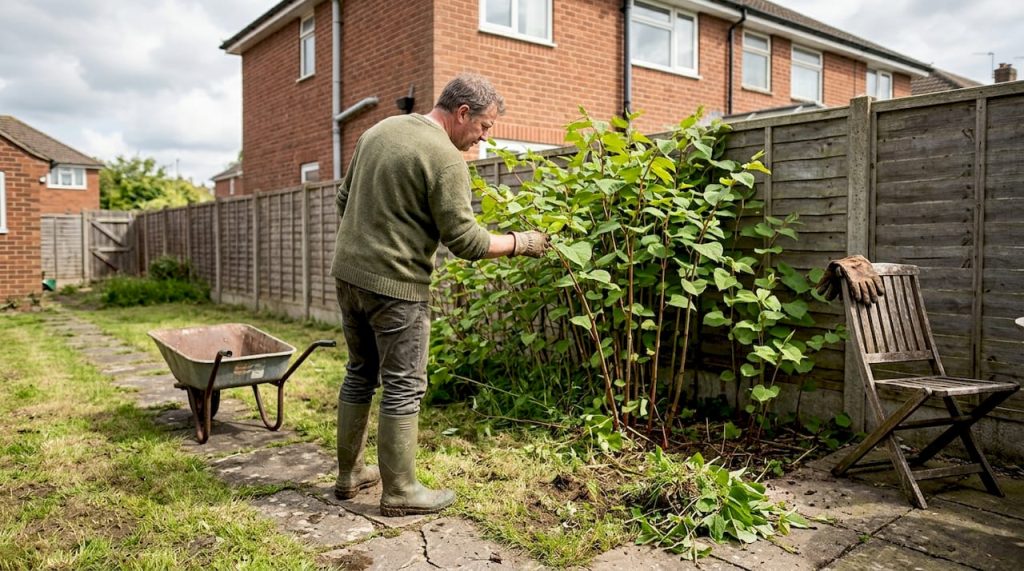
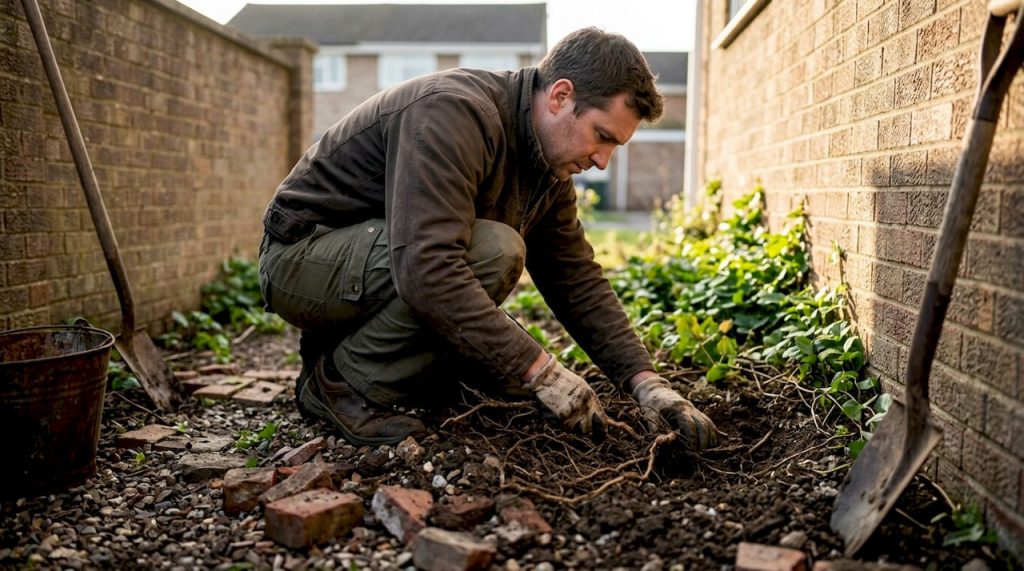
Japanese Knotweed spreads underground through extensive rhizomes that can extend up to seven metres horizontally and three metres deep. These root systems are invisible from the surface, making it impossible to gauge the true extent of an infestation without professional assessment. When you excavate blindly, you risk cutting through rhizomes and leaving fragments behind that will regenerate into new plants within weeks.
Professional surveys improve excavation success by 85% because they provide precise mapping data that guides every stage of the removal process. Without this information, excavation teams work in the dark, potentially spreading the problem rather than solving it. The biological reality of Japanese Knotweed makes surveying non-negotiable if you want lasting results.
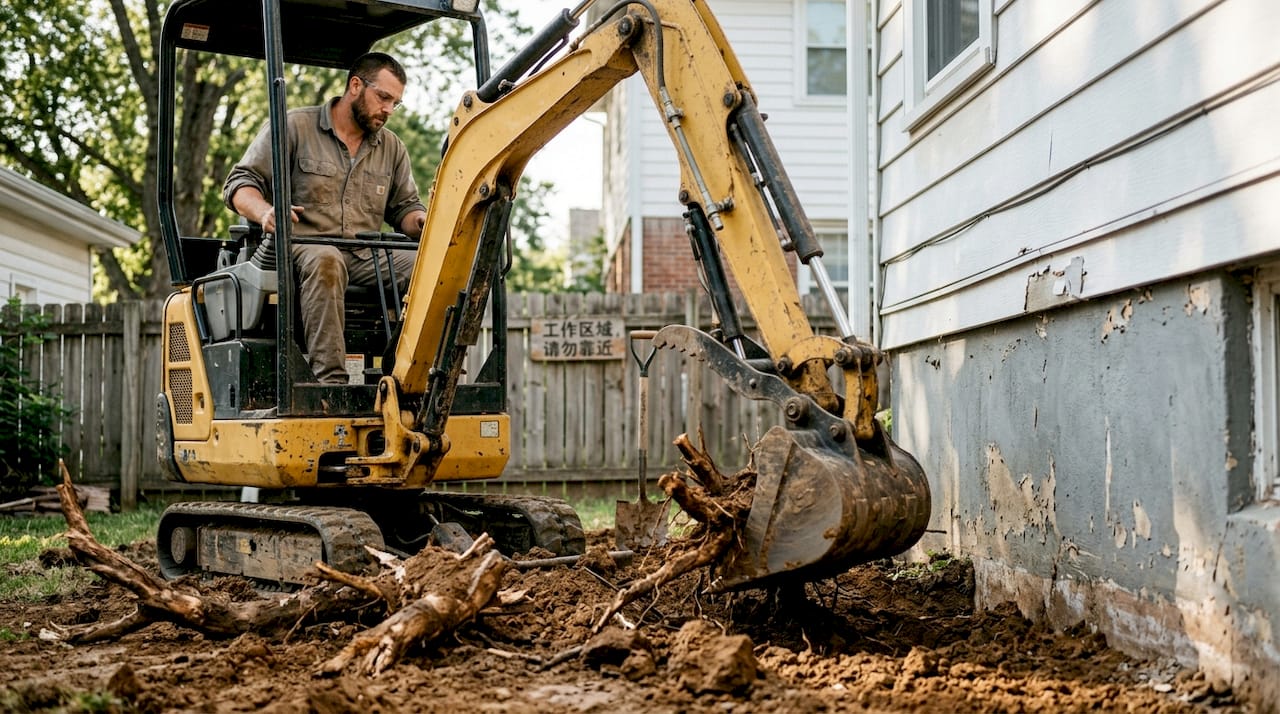
Consider what happens during unplanned excavation:
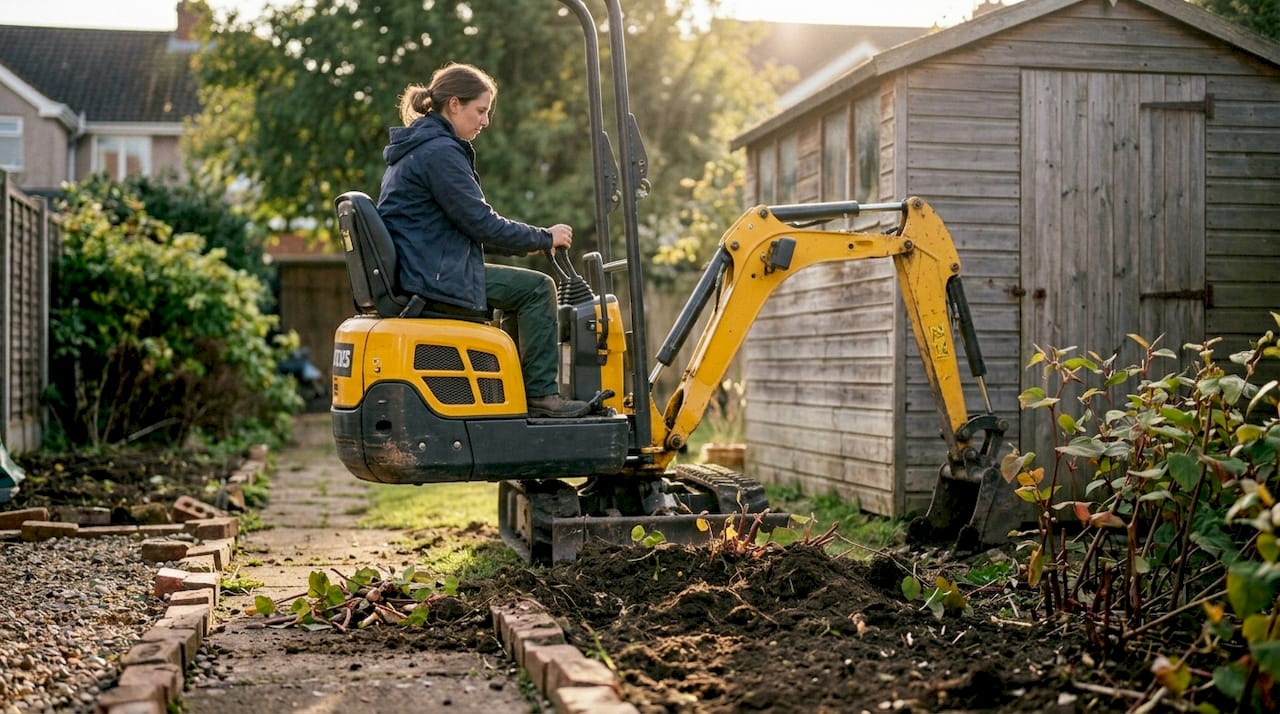
- Machinery breaks rhizomes into dozens of fragments
- Each fragment contains viable nodes that can regenerate
- Soil movement distributes these pieces across a wider area
- New infestations emerge in multiple locations within months
- Property damage escalates as roots penetrate foundations and drainage systems
Surveys before excavation prevent spreading Japanese Knotweed by mapping the full extent of underground rhizomes, avoiding fragmentation during digging which can regenerate from tiny pieces. This detailed knowledge allows contractors to plan excavation zones, disposal methods, and protective measures that contain the infestation rather than dispersing it.
“The difference between surveyed and unsurveyed excavation is the difference between surgical precision and blind destruction. One removes the problem, the other multiplies it.”
Property owners who skip the survey step often face reinfestation within a single growing season, requiring additional treatments that cost far more than the initial survey would have. The knotweed removal best practices emphasise survey-led approaches because they deliver measurably better outcomes. Even experienced contractors cannot visually assess underground rhizome networks accurately.
The financial implications extend beyond immediate treatment costs. Mortgage lenders increasingly require invasive weed surveys before approving property purchases, and surveyor missed knotweed scenarios can derail transactions entirely. A proper survey protects your investment by providing documentation that satisfies legal and financial requirements whilst ensuring the excavation actually works.
Comparing excavation methods: survey-led vs. non-survey approaches
The methodology you choose for excavation determines whether you solve the Japanese Knotweed problem or simply relocate it. Survey-led excavation uses detailed mapping to identify every section of rhizome network before machinery touches the ground. Non-survey approaches rely on visual inspection of above-ground growth, which reveals only a fraction of the actual infestation.
| Approach |
Success rate |
Reinfestation risk |
Long-term cost |
| Survey-led excavation |
85-90% |
Low |
£8,000-£15,000 |
| Non-survey excavation |
40-50% |
High |
£15,000-£30,000+ |
| Survey plus root barriers |
95%+ |
Very low |
£12,000-£20,000 |
| Visual inspection only |
20-30% |
Very high |
£25,000-£50,000+ |
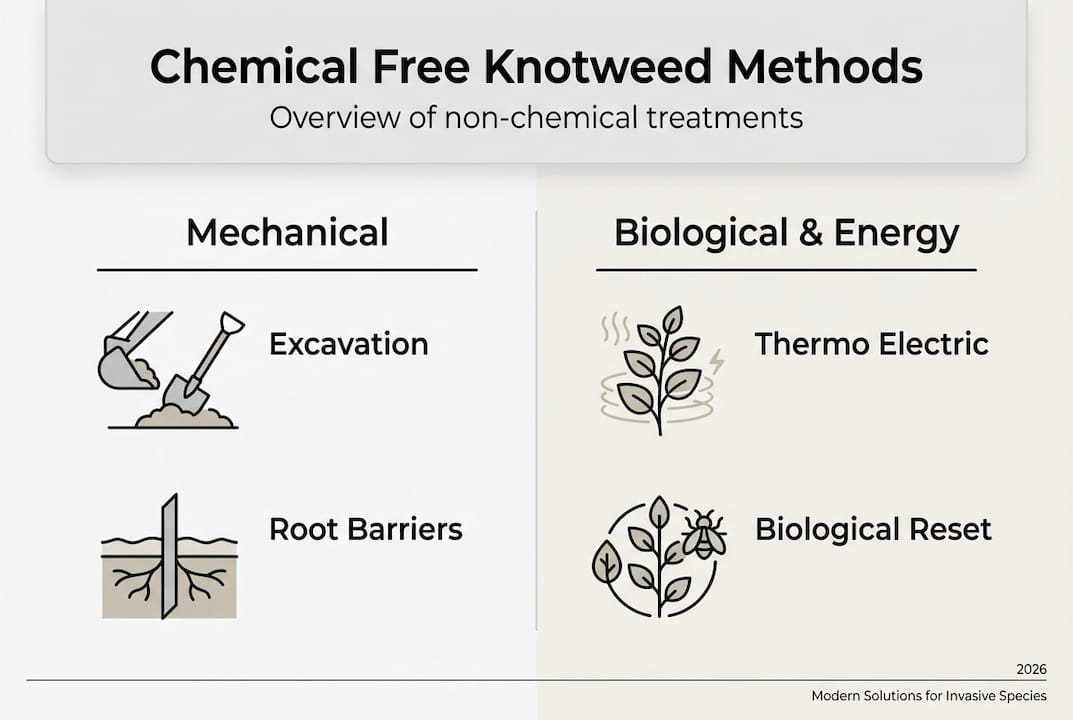
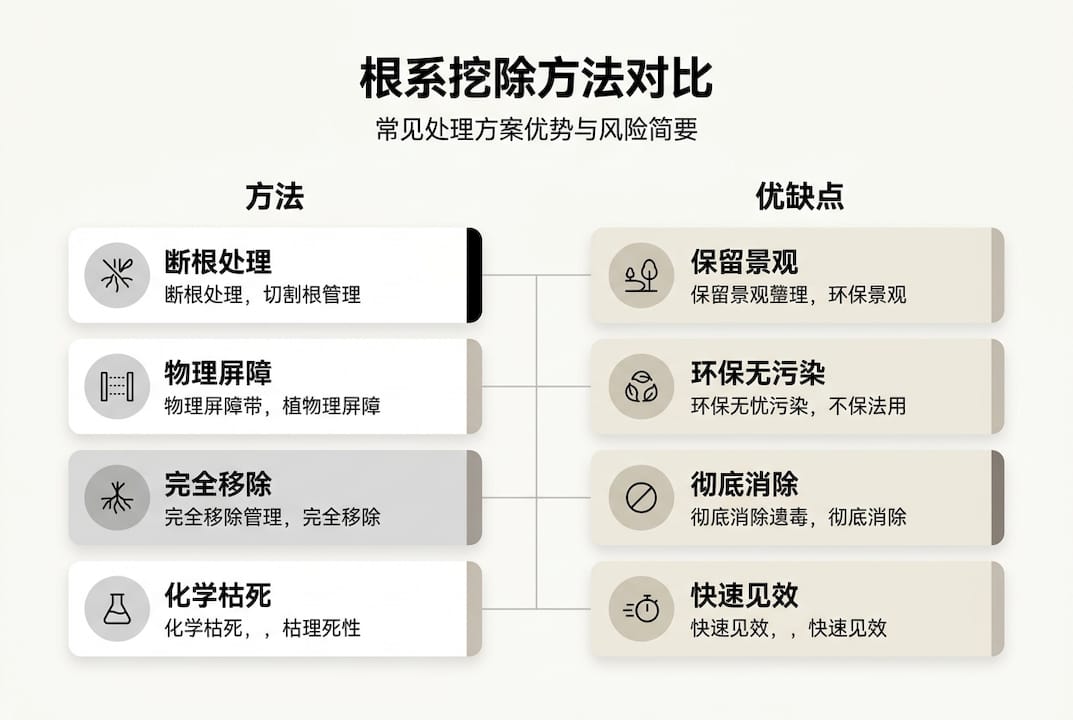
These figures reflect real-world outcomes across thousands of UK properties. Excavation offers fastest eradication but demands precise survey-led methodology; combine with root barriers for 70%+ reduced reinfestation. The upfront investment in surveying pays for itself by eliminating the need for repeated treatments.
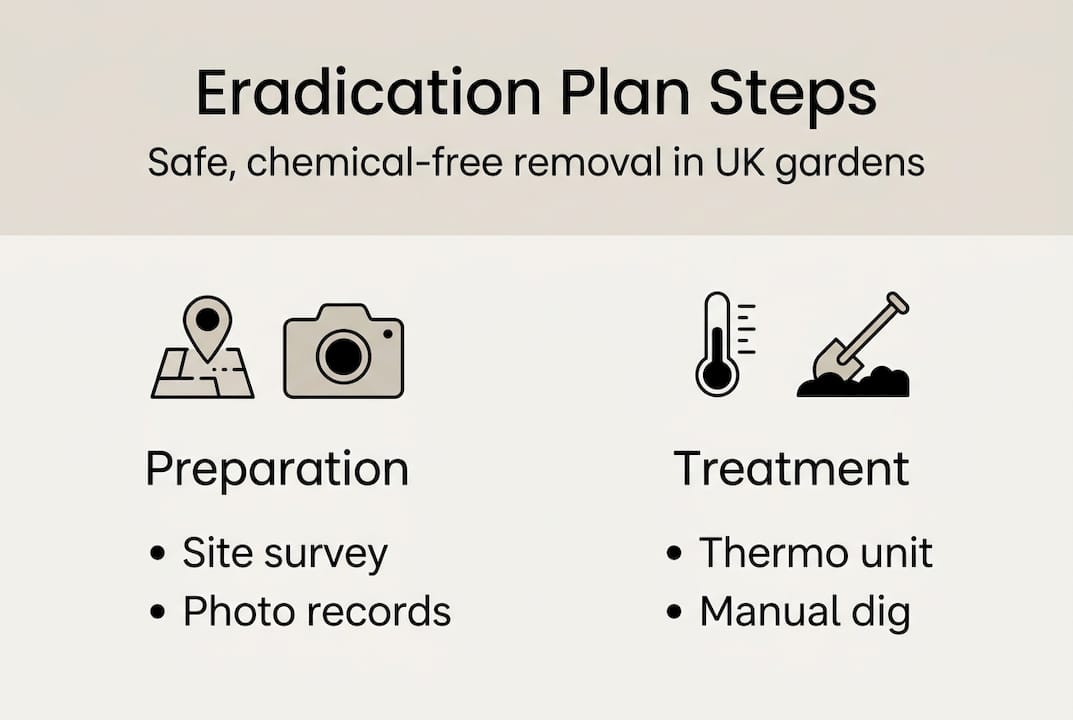
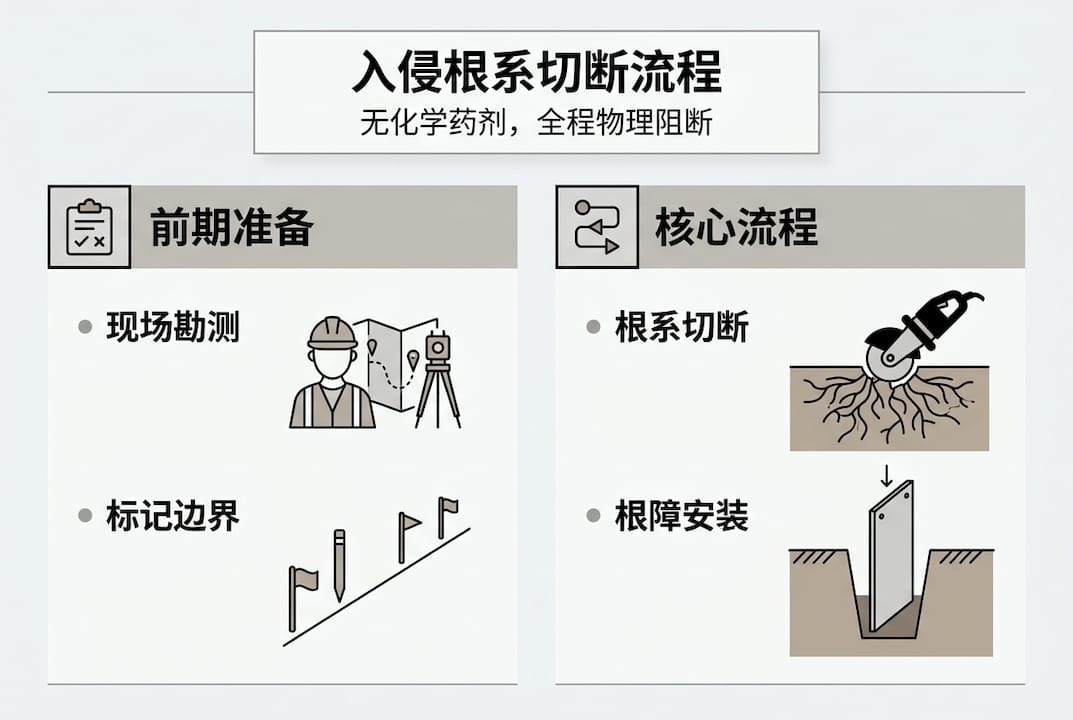
Survey-led excavation follows a systematic process:
- Ground-penetrating radar maps rhizome depth and spread
- Excavation zones are marked with precise boundaries
- Contaminated soil is removed to specified depths
- Root barriers are installed at strategic points
- Follow-up monitoring confirms complete removal
Non-survey approaches typically involve digging out visible growth plus a safety margin, but this margin is guesswork. Rhizomes often extend far beyond what surface growth suggests, and fragments left in surrounding soil regenerate rapidly. The preparing for knotweed excavation guide emphasises that preparation begins with comprehensive surveying, not machinery hire.
Pro tip: Always confirm survey accuracy before dig to avoid costly errors. Request a detailed site plan showing rhizome locations, depths, and recommended excavation boundaries. This documentation protects you if disputes arise and ensures contractors follow the survey specifications exactly.
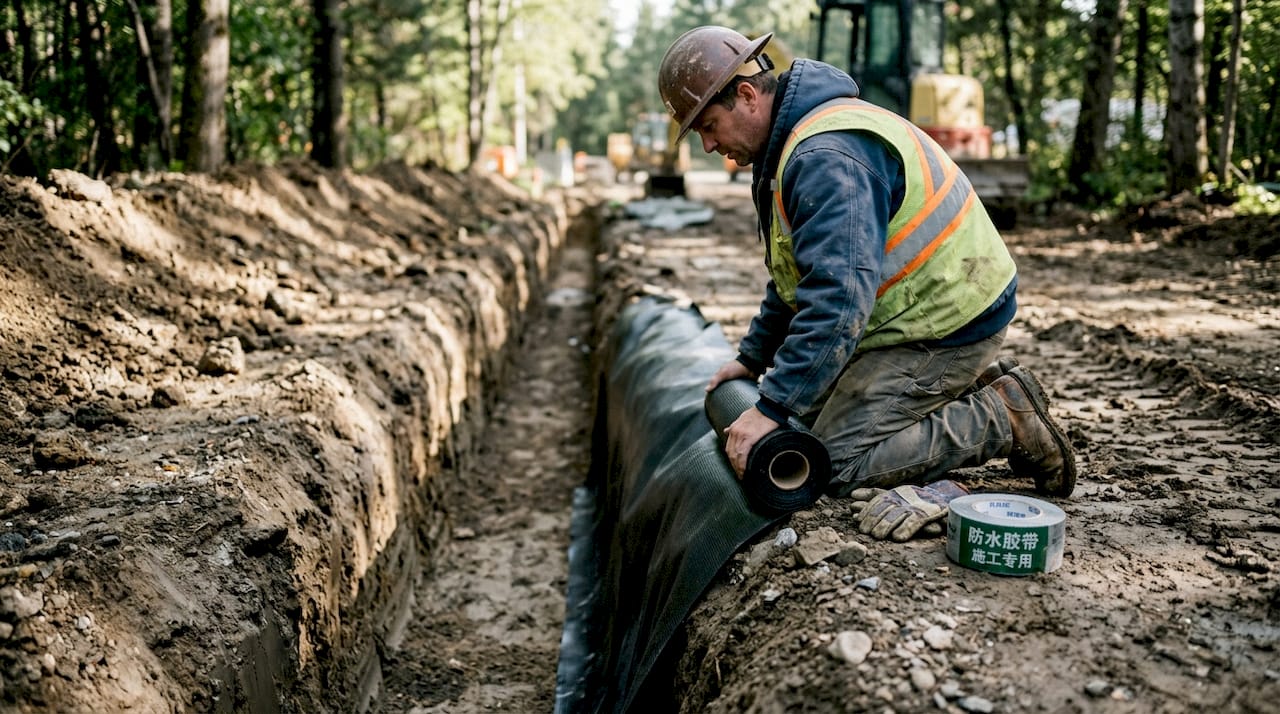
Combining excavation with root barrier tips creates a defensive perimeter that prevents reinfestation from missed fragments or neighbouring properties. Root barriers made from high-density polyethylene block rhizome growth whilst allowing water drainage, providing long-term protection that justifies the additional cost. Survey data determines optimal barrier placement for maximum effectiveness.
The cost difference between approaches narrows significantly when you factor in reinfestation treatments. A £3,000 survey that prevents a £15,000 reinfestation problem represents exceptional value. Property owners who choose non-survey excavation to save money upfront often spend triple that amount addressing the consequences.
How pre-excavation surveys protect your property investment
Japanese Knotweed infestations can reduce property values by 5-15% depending on severity and location. Buyers increasingly demand invasive weed surveys as part of due diligence, and mortgage lenders may refuse financing for affected properties without a professional management plan. A comprehensive survey provides the documentation needed to satisfy these requirements and demonstrates responsible property stewardship.

Surveys prevent fragmentation during digging which can regenerate from tiny pieces, protecting property value from invasive spread. This protection extends beyond the immediate treatment to include legal compliance, insurance considerations, and future sale prospects. Without survey documentation, you cannot prove the infestation has been properly addressed.
The protective value of surveys manifests in several ways:
- Early identification allows intervention before structural damage occurs
- Detailed reports support insurance claims for knotweed-related damage
- Survey data satisfies mortgage lender requirements for property purchases
- Legal disclosure obligations are met with professional documentation
- Treatment plans based on survey findings achieve higher success rates
- Property value is preserved through demonstrable infestation control
UK law requires property sellers to disclose known Japanese Knotweed presence on the TA6 form. Failing to disclose can result in legal action from buyers who discover the problem after purchase. A professional survey provides defensible documentation of the infestation status, protecting you from future liability claims. The knotweed legal obligations guide explains these requirements in detail.
Mortgage lenders increasingly require invasive weed surveys before approving loans for properties with suspected infestations. The knotweed survey workflow shows how these assessments integrate into the property purchase process. Without a clean survey or documented management plan, financing may be refused entirely, effectively making the property unsaleable.
Insurance implications also favour surveyed properties. Some insurers exclude knotweed damage from standard policies, whilst others require proof of professional management. Survey reports demonstrate proactive risk management, potentially reducing premiums or securing coverage that would otherwise be denied. This protection becomes increasingly valuable as awareness of Japanese Knotweed grows among insurers.
Pro tip: Always obtain a detailed invasive weed report when purchasing property. Request surveys from the past three years and verify that any treatment plans were completed according to specifications. This due diligence prevents inheriting someone else’s knotweed problem and provides leverage for price negotiations if infestations are discovered.
The financial protection extends to preventing costly emergency interventions. Properties with unmanaged Japanese Knotweed may face foundation damage, drainage blockages, and tarmac lifting that require urgent repairs. Early survey identification allows planned, cost-effective treatment before these expensive problems develop.
Step-by-step overview of the survey process before excavation
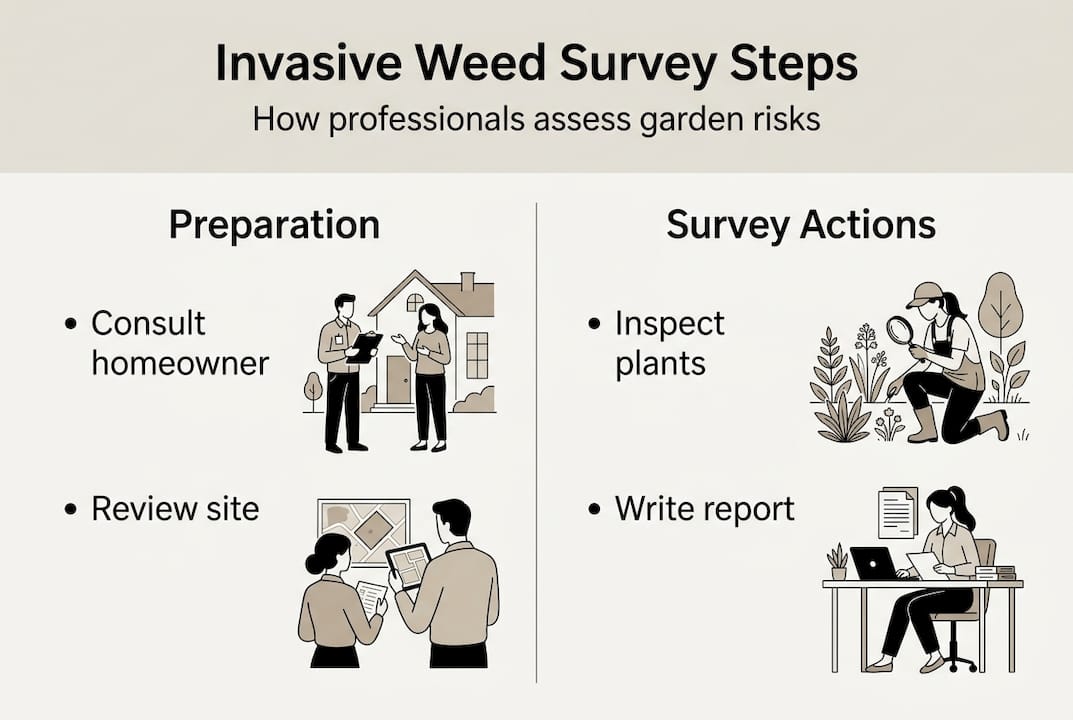
Understanding what happens during a Japanese Knotweed survey helps you prepare effectively and interpret the results accurately. The process follows a structured methodology designed to capture complete information about the infestation whilst identifying optimal treatment strategies.
- Initial consultation establishes the survey scope and property access arrangements
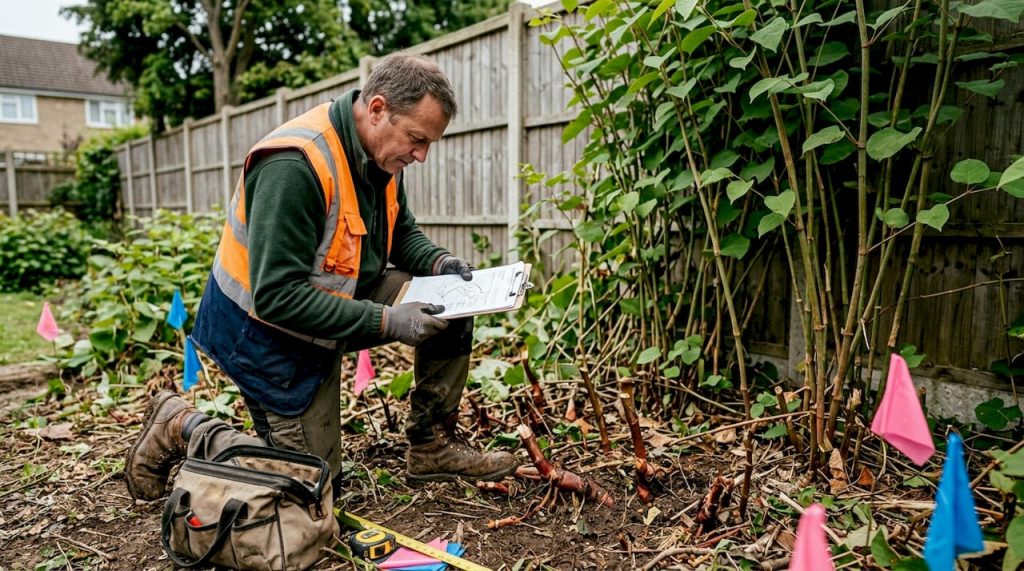
- Site visit includes visual inspection of all accessible areas above and below ground
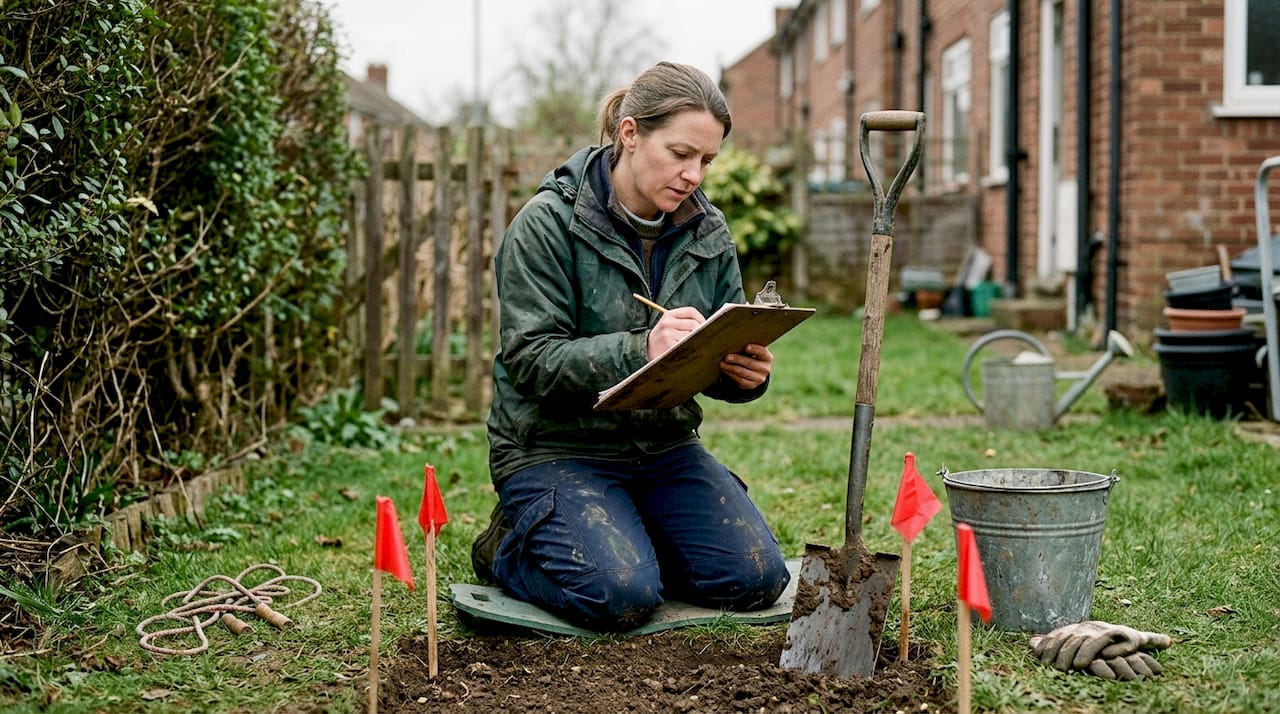
- Rhizome mapping uses ground-penetrating radar or trial pits to locate underground growth
- Photographic documentation records infestation extent and proximity to structures
- Soil sampling may be conducted to detect dormant rhizome fragments
- Detailed report production includes site plans, treatment recommendations, and cost estimates
- Follow-up consultation explains findings and answers property owner questions
Professional surveys improve excavation success by 85% by thoroughly mapping rhizomes before works begin. This comprehensive approach ensures nothing is missed and excavation can proceed with confidence. The survey timeline typically spans one to three days depending on property size and infestation complexity.
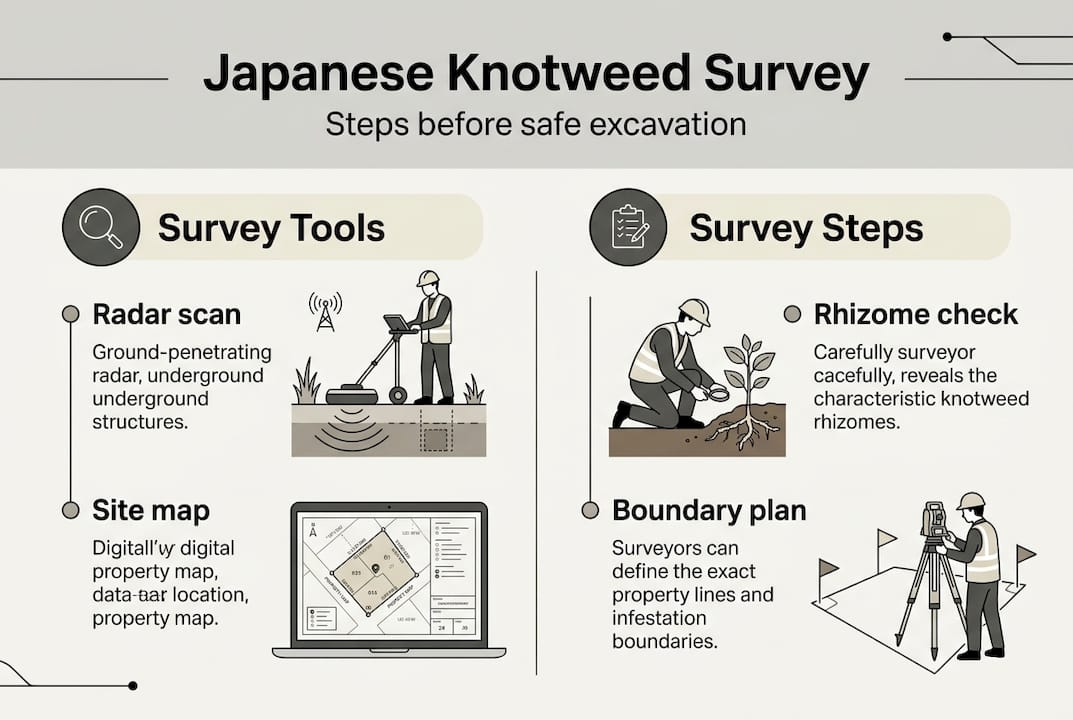
Specialised equipment enhances survey accuracy beyond what visual inspection alone can achieve. Ground-penetrating radar detects rhizomes up to three metres deep, revealing the true extent of underground networks. Trial pits provide direct visual confirmation of rhizome presence and depth, whilst soil sampling identifies fragments that might otherwise go undetected.
| Survey component |
Information provided |
Typical duration |
| Visual inspection |
Above-ground growth extent |
1-2 hours |
| Rhizome mapping |
Underground network location |
2-4 hours |
| Photographic documentation |
Evidence of infestation severity |
30-60 minutes |
| Report preparation |
Treatment recommendations |
1-2 days |
The knotweed survey checklist outlines what surveyors examine during each phase. This includes checking for knotweed growth near boundaries, assessing structural risk to buildings, and identifying potential spread vectors like watercourses or shared access areas. Comprehensive surveys also consider neighbouring properties that might harbour infestations.
Legal and environmental compliance forms a crucial survey component. Surveyors verify that any proposed treatment complies with Environmental Protection Act requirements for waste disposal and contractor licensing. The survey report should specify licensed waste facilities for contaminated soil and outline the reporting Japanese Knotweed obligations that apply to your situation.
Continuous monitoring follows excavation to confirm complete removal. Post-treatment surveys conducted at six-month intervals for two years provide assurance that no regrowth occurs. This monitoring period is often required by mortgage lenders and provides valuable documentation if you sell the property. The initial survey establishes baseline conditions against which post-treatment results are measured.
Survey reports should include detailed site plans showing rhizome locations, excavation boundaries, and recommended root barrier placements. These plans guide contractors during excavation and provide a permanent record of the infestation extent. Quality surveys also include cost estimates for various treatment options, allowing informed decision-making about the most appropriate approach for your circumstances.
Learn more and get expert help with Japanese Knotweed
Navigating Japanese Knotweed challenges becomes simpler when you have access to reliable information and experienced professionals. Whether you’re dealing with an existing infestation or conducting due diligence on a property purchase, expert guidance ensures you make informed decisions that protect your investment.
Our comprehensive knotweed FAQ listing answers common questions about identification, treatment options, and legal obligations. You’ll find detailed explanations of survey processes, excavation methods, and long-term management strategies tailored to UK property owners. The invasive weeds survey guide walks you through what to expect during professional assessments and how to interpret survey reports.
For lasting protection against reinfestation, explore our root barrier installation tips that explain how these defensive systems work alongside excavation treatments. Root barriers provide peace of mind by blocking rhizome spread from neighbouring properties and containing any fragments that might have been missed during removal.
What happens if you excavate without a survey?
Excavating without a survey almost guarantees fragmentation that spreads Japanese Knotweed rather than removing it. Machinery breaks rhizomes into dozens of viable fragments, each capable of regenerating into a new plant. These fragments get distributed across a wider area through soil movement, creating multiple infestations where previously only one existed.
The cost implications are severe. Property owners typically spend two to three times more addressing reinfestation than they would have spent on proper survey-led excavation initially. Structural damage escalates as new growth penetrates foundations, drainage systems, and tarmac surfaces. Legal complications arise if knotweed spreads to neighbouring properties, potentially resulting in civil claims for remediation costs.
Mortgage and insurance problems compound the financial burden. Lenders may refuse refinancing or sale financing for properties with documented knotweed mismanagement. Insurance claims for damage may be denied if you cannot prove professional treatment was attempted. The knotweed FAQ listing provides detailed information about these legal and financial risks.
Reinfestation typically becomes apparent within one growing season, requiring immediate intervention to prevent further spread. By this point, the infestation area has often doubled or tripled, and contaminated soil volumes have increased proportionally. The cleanup costs reflect this expanded scope, making the initial survey investment seem trivial by comparison.
How long does a survey take and what does it include?
Most Japanese Knotweed surveys take between two and four hours for typical residential properties, though larger sites or complex infestations may require additional time. The survey includes comprehensive visual inspection of all accessible areas, underground rhizome mapping using specialised equipment, photographic documentation, and detailed report preparation.
Surveyors examine not just obvious growth but also potential spread vectors like boundary walls, drainage systems, and shared access areas. Ground-penetrating radar or trial pits reveal underground rhizome networks that visual inspection alone would miss. The final report includes site plans, treatment recommendations, cost estimates, and compliance guidance.
Can a survey guarantee complete knotweed removal?
A survey significantly improves excavation precision but represents one component of a comprehensive treatment strategy rather than a standalone guarantee. Survey data guides excavation boundaries and depths, reducing fragmentation risk and improving removal completeness. However, biological factors like dormant rhizome fragments and neighbouring property spread mean no single intervention offers absolute certainty.
Combining survey-led excavation with root barriers and follow-up monitoring achieves success rates exceeding 95%. This layered approach addresses both immediate removal and long-term reinfestation prevention. The survey provides the foundation for this strategy by identifying exactly what needs removing and where protective measures should be installed.
Are surveys required by UK law when buying property?
Whilst UK law does not explicitly mandate Japanese Knotweed surveys for property purchases, they form a critical part of legal and financial due diligence. Mortgage lenders increasingly require invasive weed assessments before approving loans, effectively making surveys mandatory for financed purchases. Sellers must disclose known knotweed presence on TA6 forms, and buyers who discover undisclosed infestations can pursue legal action.
Professional surveys protect both buyers and sellers by providing defensible documentation of property condition. The knotweed legal obligations guide explains disclosure requirements and the consequences of non-compliance. Solicitors routinely recommend surveys when knotweed is suspected or when properties are located in high-risk areas, making them a practical necessity even without explicit legal requirements.
Recommended