Glyphosate Ban UK

Glyphosate Ban UK?

Read more

PFAS risk reduction tips for homeowners: 2026 guide


TL;DR:

  • PFAS are persistent synthetic chemicals found in many consumer products, posing health risks such as cancer and immune response issues. Reducing exposure involves testing and filtering water with certified reverse osmosis systems, avoiding PFAS-containing items, and improving indoor dust management through regular HEPA vacuuming and wet cleaning. Staying informed about local contamination and verifying product certifications are essential steps for effective long-term protection.

PFAS, or per- and polyfluoroalkyl substances, are a group of over 10,000 synthetic chemicals found in hundreds of everyday products, from non-stick cookware to waterproof clothing. They are called “forever chemicals” because they do not break down in the environment or in the human body. For homeowners and renters across the UK and beyond, the most effective PFAS risk reduction tips centre on three practical areas: testing and filtering your water supply, replacing PFAS-containing products, and controlling indoor dust. High PFAS exposure links to elevated cholesterol, reduced immune response, fertility issues, and certain cancers. That makes consistent, informed action the most responsible approach you can take.

1. What are the best PFAS risk reduction tips for water safety?

Water is the primary exposure route for most households. EPA guidance advises prioritising water testing and using filters certified under NSF/ANSI 53 or 58 to reduce contamination. Public water systems in the UK and US must meet new PFAS reduction targets by 2029, but that deadline is years away. Individual filtration is effective right now.

Start by contacting your local water utility and requesting their most recent PFAS testing results. Most utilities publish annual water quality reports. If you rely on a private well, commission independent laboratory testing, as private supplies fall outside public monitoring programmes. Laboratories accredited by UKAS in the UK can provide reliable results.

Choosing the right filter

Not all filters remove PFAS. Standard carbon pitcher filters, such as those sold under the Brita brand, are not certified for PFAS removal. Reverse osmosis systems are the gold standard for near-complete PFAS removal, outperforming activated carbon filters used in pitchers. A reverse osmosis unit installed under the kitchen sink will treat your drinking and cooking water at the point of use.

Hands comparing water filter cartridges on table

If a full reverse osmosis system is beyond your budget, look for pitcher or tap-mounted filters that carry NSF/ANSI 58 certification. Consumers often confuse standard carbon filters with PFAS-removal-grade filters. Certification under NSF/ANSI 53 or 58 is the only reliable indicator of effective PFAS reduction at home.

Pro Tip: Check the NSF International website directly to verify a filter’s certification status. Manufacturer claims on packaging are not always accurate, and an uncertified filter gives false reassurance.

Filter type NSF/ANSI certification PFAS removal effectiveness
Standard carbon pitcher Not certified for PFAS Low
Activated carbon block NSF/ANSI 53 Moderate
Reverse osmosis NSF/ANSI 58 High (near-complete)

2. Which consumer products contain PFAS, and how do you avoid them?

PFAS are present in a far wider range of consumer goods than most people realise. The categories with the highest prevalence include waterproof and stain-resistant clothing, non-stick cookware, food packaging, and cosmetics. Over 1,700 cosmetics in the US contain PFAS, particularly products marketed as “waterproof” or “long-lasting.” The UK market carries similar risks, as many products are manufactured to the same global supply chains.

Reading ingredient labels is your first line of defence. Look for the following terms, which indicate the presence of PFAS compounds:

  • PTFE (polytetrafluoroethylene): found in non-stick coatings on pans and bakeware
  • Perfluoro or fluoro prefixes: common in cosmetics, including foundations, mascaras, and lip products
  • PFC or C8: older PFAS compounds still present in some outdoor gear and fabrics
  • Teflon: a branded name for PTFE-based coatings

The regrettable substitution problem

Replacing one PFAS compound with another is a well-documented industry practice. Environmental experts at EDF highlight this risk, noting that “PFAS-free” labelling does not always mean a product is free from all fluorinated chemicals. A pan labelled “PFOA-free” may still contain PFAS from a different sub-group. Third-party verification through organisations such as the PFAS-Free Coalition or the Bluesign standard for textiles provides a more reliable assurance than manufacturer claims alone.

Practical replacements are straightforward. Swap non-stick pans for cast iron, stainless steel, or ceramic-coated cookware. Replace waterproof cosmetics with products certified by third-party schemes. Choose untreated cotton or wool clothing where performance fabrics are not strictly necessary. For outdoor gear, brands including Páramo and Nikwax have committed to PFAS-free waterproofing technologies.

Pro Tip: When replacing PFAS-containing products, prioritise items that contact food or your skin directly. A PFAS-treated outdoor jacket poses far less risk than a non-stick pan used daily for cooking.

3. How does indoor dust spread PFAS, and what cleaning practices help?

Indoor dust is a significant and underappreciated PFAS exposure pathway, particularly for young children and pets who spend more time at floor level. PFAS binds to dust particles, and regular vacuuming with HEPA filter vacuums and wet-dusting reduce exposure meaningfully. Standard vacuum cleaners without HEPA filtration can redistribute fine particles back into the air rather than capturing them.

Follow these steps to reduce PFAS exposure through dust management:

  1. Vacuum with a HEPA-certified vacuum at least once a week, paying particular attention to carpets, soft furnishings, and areas where children play.
  2. Wet-dust hard surfaces using a damp cloth rather than a dry duster. Dry dusting lifts particles into the air; wet-dusting captures them.
  3. Ventilate your home by opening windows regularly to dilute indoor air pollutants. This is especially relevant when cooking with older non-stick cookware, which can off-gas PFAS compounds at high temperatures.
  4. Wash hands thoroughly before eating and after handling products that may contain PFAS. Regular hand washing and avoiding contact with PFAS-containing products lower skin exposure risk significantly.
  5. Remove shoes at the door to prevent tracking in PFAS-contaminated soil or dust from outside, particularly if you live near industrial sites, airports, or military bases where PFAS use has been historically high.

These steps are low-cost and immediately effective. Consistent application over time produces a measurable reduction in household PFAS load.

4. How do food choices and outdoor habits affect PFAS exposure?

Diet is a significant PFAS exposure route that sits alongside water and product contact. Certain foods carry higher PFAS burdens than others, and your outdoor habits can add to that load in ways that are easy to overlook.

  • Avoid fish and game from contaminated areas. MDHHS and public health advisories recommend following local consumption advisories for fish and deer to reduce PFAS intake. In the UK, the Environment Agency and local authorities publish advisories for specific rivers and reservoirs. Check these before eating fish caught locally.
  • Minimise greaseproof food packaging. Microwave popcorn bags, fast-food wrappers, and pizza boxes are common sources of PFAS migration into food. Cooking from fresh ingredients and storing food in glass or stainless steel containers removes this exposure pathway entirely.
  • Avoid contact with surface water foam. Foam accumulating on rivers, lakes, or coastal areas can indicate elevated PFAS concentrations. This is particularly relevant near industrial sites or airports. Keep children and pets away from such areas.
  • Choose a varied, plant-based diet where possible. Fresh vegetables, pulses, and whole grains carry lower PFAS burdens than processed foods or animal products from PFAS-contaminated areas. This does not require a complete dietary overhaul. Reducing reliance on heavily packaged and processed foods is a practical starting point.
  • Wear gloves when handling chemicals at home. Using PPE such as gloves limits PFAS skin exposure when working with cleaning products, garden treatments, or waterproofing sprays. Change clothes outside living areas after working with such products to prevent household contamination.

The cumulative effect of these dietary and behavioural adjustments is significant. No single change eliminates PFAS exposure, but each one reduces the total burden your body carries.

5. How do you stay informed about PFAS contamination near your home?

Staying informed is itself a PFAS safety practice. Contamination sources shift as industries change, and new research regularly updates guidance on which products and areas carry the highest risk.

Register with your local water authority for PFAS monitoring updates. In England, the Drinking Water Inspectorate publishes annual reports on water quality. The Environment Agency maintains a public register of contaminated land, which can indicate whether your area has elevated PFAS risk from historical industrial activity. The knotweed impact on water sources is one example of how environmental factors compound contamination risks on private land, and understanding your local environment fully is always worthwhile.

Transparency in product supply chains and verified third-party testing are the most reliable tools for avoiding hidden PFAS in consumer goods. Organisations including the Environmental Working Group (EWG) and the Environmental Defence Fund (EDF) publish regularly updated databases of PFAS-containing products. Bookmarking these resources and checking them before significant purchases takes minutes and can meaningfully reduce your exposure over time.

Sign up for alerts from the UK Health Security Agency and follow updates from the Food Standards Agency, which monitors PFAS in the food supply. Proactive monitoring and supplier engagement help organisations manage PFAS risk effectively. As a homeowner or renter, the equivalent is staying engaged with the sources that track contamination in your area and in the products you buy.

Key takeaways

Reducing PFAS exposure requires consistent action across water, products, cleaning habits, and diet, with certified filtration and informed product choices delivering the greatest immediate impact.

Point Details
Test and filter your water Use NSF/ANSI 58-certified reverse osmosis filters for the most effective PFAS removal at home.
Read product labels carefully Look for PTFE, perfluoro, and fluoro terms; seek third-party certification beyond manufacturer claims.
Control indoor dust Vacuum with a HEPA-certified machine weekly and wet-dust hard surfaces to capture bound PFAS particles.
Adjust diet and outdoor habits Follow local fish consumption advisories and avoid greaseproof food packaging to reduce dietary PFAS intake.
Stay informed Monitor updates from the Drinking Water Inspectorate, EWG, and EDF to track contamination in your area and products.

Why I think most PFAS advice misses the point for UK homeowners

Most PFAS guidance I encounter is written for a US audience, references US regulatory thresholds, and assumes readers have access to US-specific testing services. That leaves UK homeowners and renters in a frustrating position: the science is clear, but the practical steps are not always translated into the UK context.

The single most important thing I have learned from working in environmental risk management is that eliminating all PFAS exposure is not a realistic goal. These chemicals are genuinely pervasive. What is realistic, and what actually protects your health, is reducing your total exposure burden through consistent, layered actions. A certified water filter, a cast iron pan, a HEPA vacuum, and a habit of reading ingredient labels will collectively make a meaningful difference over months and years.

I also think the “regrettable substitution” issue deserves far more attention than it receives. Many homeowners invest in replacing PFAS-containing products, only to buy alternatives that contain different PFAS compounds under different names. The lesson here is to trust certification schemes over marketing language. A product certified by Bluesign, the PFAS-Free Coalition, or carrying NSF/ANSI 58 certification has been independently verified. A product simply labelled “eco-friendly” or “PFOA-free” has not.

Finally, I would encourage you to connect PFAS awareness with broader environmental mindfulness at your property. Understanding what is in your water, your soil, and your immediate environment is not an exercise in anxiety. It is the foundation of responsible property stewardship. That mindset applies equally to invasive species, soil contamination, and water quality. The more you know about your property’s environmental profile, the better placed you are to protect it.

— Alan

How Japaneseknotweedagency supports your property’s environmental health

https://japaneseknotweedagency.co.uk

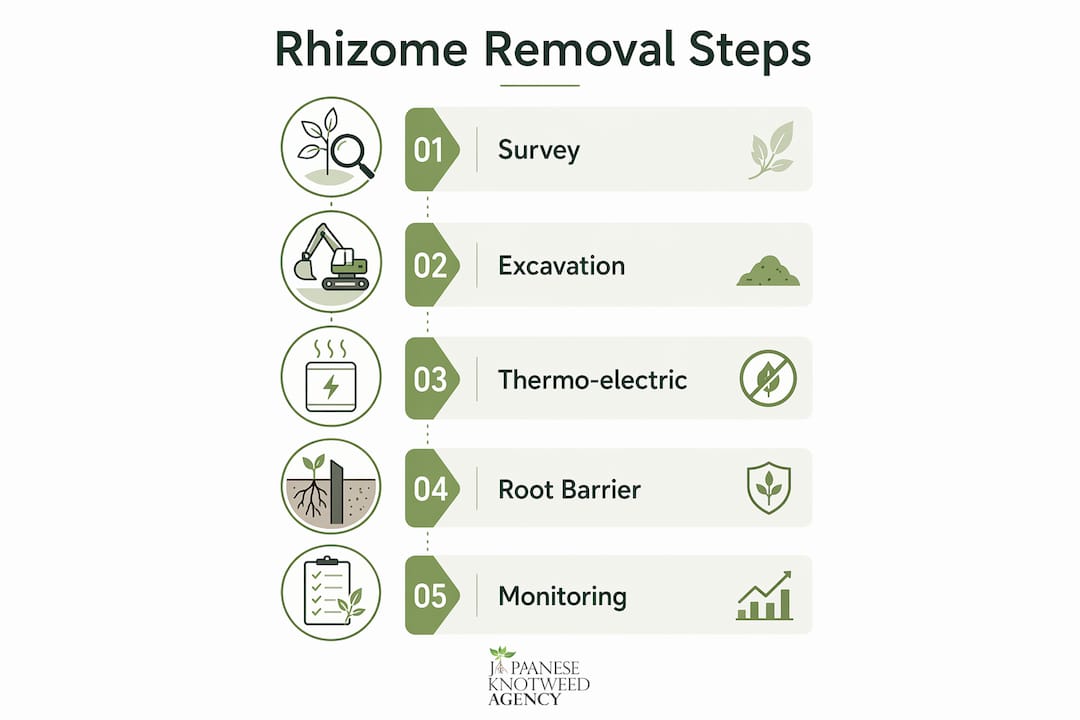
Environmental risk at your property extends beyond PFAS. Invasive plant species, soil disturbance, and contaminated water sources all interact with the broader health of your land and home. Japaneseknotweedagency specialises in chemical-free treatment and eradication of Japanese Knotweed and other invasive species across England, Wales, and Ireland, using thermo-electric treatment that delivers up to 5,000 volts directly to the plant’s rhizome network without the use of herbicides. If you are concerned about environmental risks at your property, including contamination sources and invasive species, the first step is a professional assessment. Book a property survey with Japaneseknotweedagency to get a clear picture of your land’s environmental profile and the options available to you. For a broader overview of sustainable property protection, the invasive species eradication guide for UK homeowners is a practical starting point.

FAQ

What does PFAS stand for, and why does it matter?

PFAS stands for per- and polyfluoroalkyl substances, a group of over 10,000 synthetic chemicals used in products ranging from cookware to cosmetics. They persist in the environment and the human body, linking to serious health effects including immune disruption and certain cancers.

Which water filter removes PFAS most effectively?

Reverse osmosis systems certified under NSF/ANSI 58 remove PFAS most effectively, outperforming standard carbon pitcher filters. Look for the NSF certification mark on the filter itself, not just on the packaging.

How do I know if my tap water contains PFAS?

Request your water utility’s most recent quality report, which should include PFAS testing results. Private well owners should commission independent laboratory testing through a UKAS-accredited laboratory.

Are PFAS-free product labels reliable?

Not always. “PFAS-free” labelling is unregulated in most markets, and regrettable substitution means one PFAS compound may simply be replaced by another. Third-party certification from bodies such as NSF International or the Bluesign standard provides more reliable assurance.

Can I completely eliminate PFAS exposure at home?

Complete elimination is not achievable given how widespread these chemicals are. Consistent, layered actions including certified water filtration, product substitution, and regular HEPA vacuuming significantly reduce your total exposure burden over time.

Read more

How to comply with DWI orders 2025: a practical guide


TL;DR:

  • Compliance with DWI orders 2025 involves strict adherence to statutory PFAS detection, monitoring, and reporting requirements issued by the Drinking Water Inspectorate. Water utilities must conduct comprehensive source assessments, perform accredited laboratory analysis, install appropriate treatment technologies when thresholds are exceeded, and submit structured reports on time to avoid legal penalties. Maintaining detailed, proactive documentation and establishing continuous monitoring practices are essential for ongoing compliance and effective risk management.

Compliance with DWI orders 2025 is defined as the full and documented adherence to statutory requirements issued by the Drinking Water Inspectorate (DWI) concerning the detection, monitoring, and management of per- and polyfluoroalkyl substances (PFAS) in public water supplies. The DWI issued formal enforcement orders in 2025 requiring water undertakers and local authorities across England and Wales to meet specific PFAS concentration thresholds, submit structured compliance reports, and maintain verifiable monitoring records. Failure to meet these obligations carries legal consequences under the Water Industry Act 1991, including enforcement notices and potential prosecution. This guide explains the 2025 DWI legal requirements in precise, procedural terms for water industry professionals and local government officials responsible for delivering compliance.


How to comply with DWI orders 2025: core requirements

Complying with DWI orders 2025 begins with understanding exactly what the Inspectorate mandates. The DWI’s 2025 orders set enforceable PFAS parametric values aligned with the revised Drinking Water Directive (EU 2020/2184), which the UK transposed into domestic regulation through the Water Supply (Water Quality) Regulations 2016 (as amended). The sum of PFAS is subject to a parametric value of 0.10 micrograms per litre, with individual PFAS compounds capped at 0.10 µg/l each.

What the 2025 orders require from water undertakers

Water undertakers subject to a DWI order must meet the following mandatory conditions:

  • Baseline PFAS assessment: A full audit of all water sources, treatment works, and distribution zones potentially affected by PFAS contamination, completed within the timeframe specified in the individual order.
  • Analytical monitoring programme: Regular sampling using accredited laboratory methods, specifically EN ISO 21675 or equivalent, capable of detecting PFAS at or below the parametric value.
  • Treatment installation or upgrade: Where PFAS concentrations exceed parametric values, installation of granular activated carbon (GAC) filtration, high-pressure membrane systems, or ion exchange resin treatment is required.
  • Compliance reporting: Structured written reports submitted to the DWI at intervals defined in the order, typically quarterly or following each monitoring event.
  • Public notification obligations: Where a supply zone is affected, undertakers must notify consumers in accordance with Regulation 27 of the Water Supply (Water Quality) Regulations 2016.

Pro Tip: Review your individual DWI order document line by line before drafting any compliance plan. Orders vary in their specific thresholds, timelines, and reporting formats. A generic compliance template will not satisfy an order with bespoke conditions.

The table below summarises the principal documentation and thresholds relevant to most 2025 DWI orders.

Infographic listing key steps for DWI compliance

Document or Threshold Requirement
PFAS sum parametric value 0.10 µg/l across all PFAS compounds
Individual PFAS parametric value 0.10 µg/l per compound
Monitoring method standard EN ISO 21675 or equivalent accredited method
Compliance report frequency As specified in order; typically quarterly
Consumer notification trigger Exceedance of parametric value in supply zone
Treatment review deadline As stated in individual order; often 6–12 months

Understanding these thresholds is the foundation of all subsequent compliance activity. Treating them as approximate rather than absolute is the single most common cause of enforcement action.


How to prepare and submit compliance documentation to the DWI

Procedural precision in documentation is not optional. The DWI assesses compliance partly on the quality and completeness of submitted records, not only on whether parametric values are met. A well-structured compliance packet consolidating all required reports and proofs, presented proactively even when not explicitly requested, demonstrates ongoing responsibility and reduces friction with the Inspectorate.

Follow these steps when preparing and submitting compliance documentation:

  1. Confirm the submission format. Contact your DWI regional officer to confirm whether submissions are required via the DWI’s online portal, by secure email, or in hard copy. Format requirements differ between orders.
  2. Compile sampling data. Gather all laboratory certificates of analysis, chain-of-custody records, and sampling location maps. Each sample record must include the date, time, sampling point reference, analyst name, and accreditation number.
  3. Prepare the compliance narrative. Write a concise technical summary explaining what was sampled, what was found, what treatment or remedial action was taken, and what the current status of each supply zone is.
  4. Cross-reference against order conditions. Check every condition in your DWI order against your submission. Missing a single condition, even a minor procedural one, can trigger a request for further information and delay compliance sign-off.
  5. Submit within the stated deadline. Strict adherence to deadlines is non-negotiable. Missing a submission window can result in automatic escalation, regardless of whether your monitoring data shows satisfactory results.
  6. Retain a complete copy. Store a full copy of every submission, including any covering correspondence, for a minimum of five years.

Pro Tip: Assign a named compliance lead within your organisation for each DWI order. Diffuse responsibility across teams is the primary reason submissions arrive incomplete or late.

Effective communication with DWI officials matters as much as the documentation itself. Prompt communication about compliance difficulties reduces the risk of formal violations. If you anticipate a delay or identify a data gap, contact your DWI case officer before the deadline, not after.

Team discussing DWI compliance documentation


What are the practical steps for ongoing monitoring and record keeping?

Initial compliance with a DWI order is only the starting point. The Inspectorate expects water undertakers to maintain continuous compliance through structured monitoring programmes and audit-ready records throughout the life of the order.

Practical steps for ongoing compliance include:

  • Establish a monitoring schedule. Map all sampling points against the order’s required frequency. Use a shared digital calendar or compliance management software such as Ideagen Qualtrax or Intelex to schedule and track sampling events.
  • Maintain a live compliance register. Record every monitoring result, treatment performance reading, and corrective action in a single, searchable document. The register should be updated within 48 hours of each sampling event.
  • Conduct internal compliance audits. Schedule quarterly internal reviews comparing actual monitoring data against order thresholds. Identify any upward trends in PFAS concentrations before they reach reportable levels.
  • Prepare for DWI inspections. The DWI may conduct unannounced or scheduled inspections. Keep all compliance records accessible and ensure staff responsible for water quality can explain the monitoring programme clearly and accurately.
  • Document corrective actions. Where a parametric value is exceeded or a procedural requirement is missed, record the corrective action taken, the date it was completed, and the outcome. Proactively presenting compliance records reduces friction with supervisory authorities during inspections.

Compliance management in water regulation shares a structural parallel with other regulated sectors. Just as administrative and criminal tracks in legal proceedings operate independently and require separate attention, DWI orders often run alongside other regulatory obligations such as Environment Agency discharge consents or Ofwat performance commitments. Missing a deadline in one track does not pause obligations in another.


What common challenges arise when following DWI orders, and how do you resolve them?

Water industry professionals and local government officials encounter predictable obstacles when managing 2025 DWI legal requirements. Recognising these challenges in advance allows you to resolve them before they become enforcement issues.

  • Misunderstanding PFAS parametric values. Some organisations apply the 0.10 µg/l threshold to individual compounds only, overlooking the sum-of-PFAS requirement. Both apply simultaneously. Review your analytical reports against both criteria at every monitoring event.
  • Delays in laboratory turnaround. Accredited PFAS analysis using EN ISO 21675 can take 10–15 working days. Build this lead time into your submission schedule so that laboratory delays do not cause you to miss DWI reporting deadlines.
  • Incomplete chain-of-custody records. Laboratories occasionally return results without full chain-of-custody documentation. Establish a standard operating procedure requiring your sampling teams to confirm documentation completeness before samples leave site.
  • Unclear order conditions. Misunderstanding or treating mandated conditions as optional leads frequently to compliance failures. Where an order condition is ambiguous, seek written clarification from your DWI case officer immediately. Do not interpret ambiguity in your own favour.
  • Staff turnover disrupting compliance continuity. When a compliance lead leaves, institutional knowledge about order conditions and submission history often leaves with them. Maintain a written compliance manual that any qualified successor can follow without a handover period.

“Court orders are rigorously enforced and seen as evidence of responsibility; non-compliance negatively impacts outcomes.” This principle applies directly to DWI orders. The Inspectorate treats compliance history as a material factor when deciding whether to escalate enforcement or grant extensions.

Strategies for correcting compliance lapses include notifying your DWI case officer in writing as soon as a lapse is identified, submitting a corrective action plan within 10 working days, and providing evidence of remediation at the next scheduled reporting point. Voluntary disclosure consistently produces better outcomes than lapses discovered during inspection.


Key takeaways

Effective compliance with DWI orders 2025 requires documented monitoring, procedural precision in reporting, and proactive communication with the Drinking Water Inspectorate throughout the life of each order.

Point Details
Know your parametric values Apply the 0.10 µg/l threshold to both individual PFAS compounds and the sum of all PFAS.
Meet every submission deadline Missing a reporting window triggers automatic escalation regardless of monitoring results.
Build a compliance packet Consolidate all sampling data, treatment records, and corrective actions in one accessible register.
Communicate early with the DWI Notify your case officer of any anticipated delays or data gaps before deadlines pass.
Audit continuously, not annually Quarterly internal reviews catch upward PFAS trends before they become reportable exceedances.

Why proactive compliance culture defines success under DWI orders

Having worked alongside water quality teams navigating the 2025 DWI orders, the pattern I observe most consistently is this: organisations that treat compliance as a continuous operational discipline outperform those that treat it as a periodic reporting exercise. The difference is not technical capability. Most water undertakers have the analytical infrastructure to meet PFAS monitoring requirements. The gap is cultural.

Teams that maintain live compliance registers, assign named accountability for each order condition, and communicate openly with the DWI when problems arise rarely face enforcement escalation. Teams that consolidate documentation only when a submission deadline approaches frequently find gaps they cannot close in time.

The evolving PFAS regulatory picture reinforces this point. The DWI’s 2025 orders are not the final word on PFAS management. The World Health Organisation and the European Food Safety Authority continue to refine PFAS risk assessments, and UK parametric values are likely to tighten further as the evidence base develops. Organisations that build audit-ready compliance systems now will absorb future regulatory changes with far less disruption than those starting from scratch each time a new order arrives.

Reviewing invasive weed legislation 2025 offers a useful parallel: environmental compliance obligations across sectors share the same structural logic. Understand the requirement precisely, document your response thoroughly, and communicate proactively with the regulator.

— Alan


Environmental compliance and responsible land management with Japaneseknotweedagency

https://japaneseknotweedagency.co.uk

Japaneseknotweedagency brings the same commitment to procedural rigour and environmental responsibility that defines effective DWI compliance to its work in invasive species management across England, Wales, and Ireland. Whether you are a local authority managing land adjacent to water catchment areas or a water industry professional assessing site risk, Japaneseknotweedagency offers expert plant eradication surveys and chemical-free treatment programmes that meet the highest environmental standards. Japanese Knotweed on or near water infrastructure is a material risk to both biodiversity and regulatory standing. Book a survey with Japaneseknotweedagency to assess your site and protect your compliance position.


FAQ

What does a DWI order require water undertakers to do in 2025?

A 2025 DWI order requires water undertakers to monitor PFAS concentrations against a parametric value of 0.10 µg/l, submit structured compliance reports at defined intervals, and install treatment where values are exceeded.

What is the PFAS parametric value under 2025 DWI regulations?

The parametric value is 0.10 micrograms per litre, applied both to individual PFAS compounds and to the sum of all PFAS detected in a sample.

How do i avoid missing a DWI compliance submission deadline?

Assign a named compliance lead, build laboratory turnaround time into your schedule, and contact your DWI case officer in writing before any deadline you cannot meet.

What happens if a water undertaker fails to comply with a DWI order?

Non-compliance can result in enforcement notices, mandatory remedial directions, and potential prosecution under the Water Industry Act 1991. Voluntary disclosure of lapses consistently produces better regulatory outcomes than lapses identified during inspection.

How should compliance records be maintained for DWI inspections?

Maintain a live compliance register updated within 48 hours of each monitoring event, retain all laboratory certificates and chain-of-custody records, and keep a complete copy of every DWI submission for a minimum of five years.

Read more

Is glyphosate banned in the UK? 2026 status guide


TL;DR:

  • Glyphosate is currently authorized for use in Great Britain until December 2026, with the renewal process ongoing. Advocacy groups seek to ban specific applications like pre-harvest desiccation, but it remains legal within safety limits. Regulatory divergence exists between Great Britain and Northern Ireland, affecting usage and import-export standards.

Glyphosate is defined as a broad-spectrum herbicide currently authorised for use in Great Britain, with its licence extended to 15 december 2026 pending a formal renewal decision. The question of whether glyphosate is banned in the UK is one that generates considerable confusion, largely because media headlines oversimplify what are actually targeted restrictions on specific applications rather than a total prohibition. The Health and Safety Executive (HSE) regulates glyphosate use in Great Britain, while the Soil Association and other campaign groups are pushing for a ban on one particular use: pre-harvest desiccation. Understanding the distinction between overall authorisation and specific use restrictions is the clearest way to make sense of the current situation.

Is glyphosate banned in the UK right now?

Glyphosate is not banned in the UK as of june 2026. The HSE extended authorisation to december 2026 to allow a thorough regulatory review of new scientific evidence before any renewal decision is made. That extension reflects a deliberate, evidence-led process rather than a signal of imminent prohibition.

The renewal process works in defined stages. The HSE assesses toxicological, environmental, and safety data submitted by manufacturers and independent researchers. A two-month public consultation is planned for summer 2026, during which scientific, technical, and regulatory evidence will be considered. The outcome of that consultation will inform whether glyphosate’s authorisation is renewed, restricted, or refused beyond december 2026.

Regulatory decisions of this kind are not taken quickly. The HSE weighs agricultural necessity against consumer safety, biodiversity impact, and evolving scientific consensus. Glyphosate has been through multiple renewal cycles across the EU and UK, and each cycle has produced refinements to approved uses rather than outright bans.

  1. Licence extended: Authorisation runs to 15 december 2026.
  2. Consultation planned: A public review is scheduled for summer 2026.
  3. Evidence-based outcome: The HSE will decide based on scientific and safety data.
  4. No total ban proposed: Current regulatory debate centres on specific applications.

Pro Tip: Monitor the HSE’s pesticide registration pages directly for updates on the consultation outcome. The decision published after december 2026 will set the terms for glyphosate use well into the next decade.

Why are campaigners focused on pre-harvest use?

The strongest pressure in the UK targets one specific application: using glyphosate as a pre-harvest desiccant. Pre-harvest desiccation is the practice of spraying glyphosate onto crops such as wheat, oats, and oilseed rape shortly before harvest to dry them down uniformly and speed up the harvesting process. Campaigners argue this leaves residues in food at levels that raise concern, even if regulators maintain those levels remain within legal safety limits.

The EU acted on this concern in 2023. Pre-harvest glyphosate use was banned across EU member states, reflecting a precautionary approach to residue management. The UK has not followed suit, and the HSE’s current position is that residues remain within legal limits when the product is used correctly.

The Soil Association has led the campaign in the UK. Their petition calling for a ban on pre-harvest glyphosate use has neared 70,000 signatures, demonstrating significant public concern about biodiversity and food safety. That level of public engagement is likely to carry weight during the summer 2026 consultation.

“The UK should follow the EU’s lead and ban the use of glyphosate as a pre-harvest desiccant. Consumers deserve food free from unnecessary pesticide residues.” — Soil Association campaign position

Alternatives suggested for farmers include mechanical desiccation, adjusted harvest scheduling, and improved grain drying infrastructure. These options carry higher operational costs, which is why the farming sector has resisted a straightforward ban without transition support.

  • Pre-harvest desiccation applies glyphosate to crops days before harvest.
  • The EU banned this specific use in 2023.
  • The Soil Association’s petition has approached 70,000 signatures.
  • GB regulators maintain residues remain within legal safety limits.
  • Farmer alternatives exist but carry additional costs.

How do GB and northern ireland regulations differ?

Post-Brexit regulatory divergence has created a meaningful split in how glyphosate is governed across the UK. Great Britain follows the HSE’s independent authorisation process, while Northern Ireland remains aligned with EU pesticide regulations under post-Brexit arrangements.

Infographic comparing GB and Northern Ireland glyphosate regulations

Region Regulatory Body Glyphosate Status Renewal Timeline
England, Scotland, Wales HSE (GB) Authorised to dec 2026 Renewal decision pending
Northern Ireland EU framework Aligned with EU approval Authorised to 2033

This divergence has practical consequences. A farmer in County Down operates under different rules to one in Shropshire, even though they may be growing the same crops for the same markets. Northern Ireland’s alignment with the EU means its glyphosate authorisation runs to 2033, providing considerably more regulatory certainty than the GB position.

For import and export, the divergence matters too. Crops grown in GB under current HSE-approved conditions may face scrutiny if exported to EU markets where pre-harvest desiccation is prohibited. Retailers sourcing from both regions must manage residue compliance across different regulatory standards, adding complexity to supply chain management.

The regulatory divergence post-Brexit illustrates how governance differences now have tangible effects on growers, exporters, and consumers across the UK.

What does this mean for gardeners and property owners?

For UK residents and gardeners, glyphosate products such as Roundup remain legally available for purchase and use in 2026. The current glyphosate UK regulations do not restrict domestic garden use, and products sold through retailers like B&Q and Homebase continue to carry HSE approval. The regulatory debate is primarily an agricultural one, focused on large-scale pre-harvest applications rather than garden weed control.

Home gardener applying weed killer carefully in garden

That said, the outcome of the december 2026 renewal decision could affect product availability. If the HSE introduces new restrictions or conditions on authorisation, some formulations may be withdrawn or reformulated. Staying informed about the glyphosate ban news UK developments is worthwhile for anyone who relies on glyphosate-based products for amenity weed control.

For property professionals and homeowners managing invasive species such as Japanese Knotweed, the picture is more nuanced. Supermarkets are increasingly restricting pre-harvest residues in response to consumer pressure, which signals a broader cultural shift towards reduced chemical reliance. That shift is already influencing how land managers and property owners approach weed control.

  • Glyphosate garden products remain legally available in GB in 2026.
  • The december 2026 renewal decision may affect future product availability.
  • Domestic use is not the focus of current regulatory debate.
  • Property owners managing invasive weeds should consider chemical-free alternatives.
  • Local authorities in cities including Bristol and Bath have already introduced local glyphosate restrictions.

Pro Tip: If you are managing Japanese Knotweed or other invasive species on your property, commission a professional survey before december 2026. Regulatory changes may affect which treatment methods are available, and early documentation protects your position with mortgage lenders.

Key takeaways

Glyphosate remains legal in Great Britain until at least december 2026, but the renewal decision and growing pressure on pre-harvest use mean the regulatory position is unlikely to stay unchanged beyond that date.

Point Details
Not banned outright Glyphosate is authorised in GB until 15 december 2026, with renewal pending.
Pre-harvest use under pressure Campaigners and the Soil Association seek a ban on desiccation use, following the EU’s 2023 restriction.
GB and NI differ Northern Ireland follows EU rules, with authorisation running to 2033; GB follows HSE independently.
Garden use unaffected currently Domestic glyphosate products remain available, though the december 2026 decision may change this.
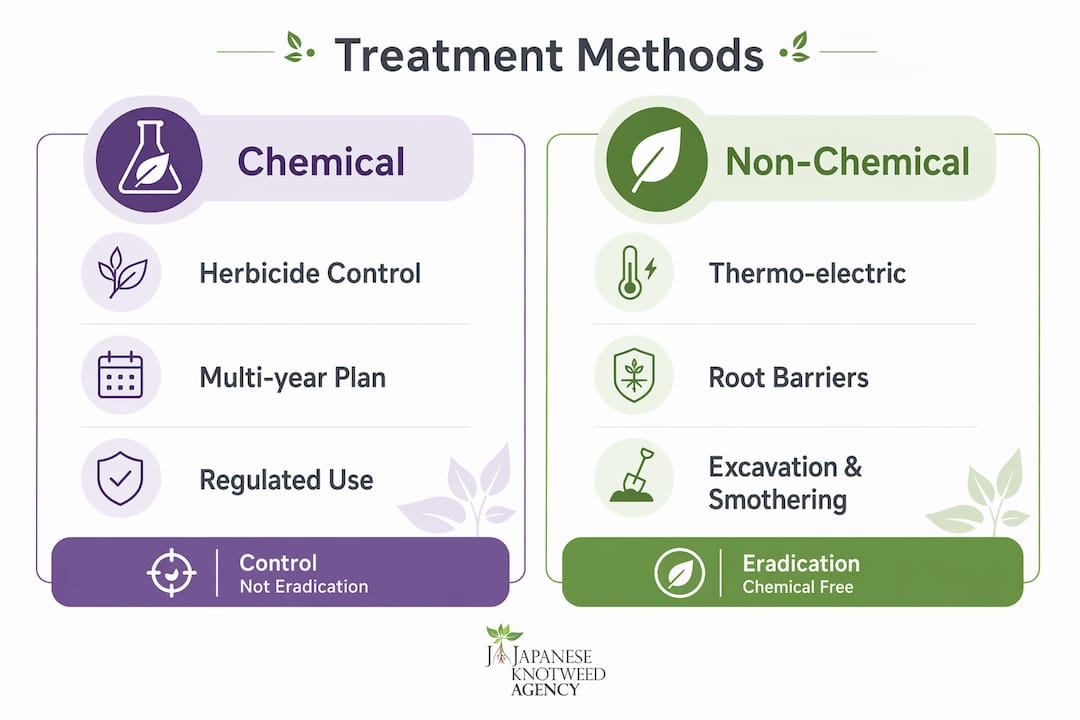
Chemical-free options exist For invasive species management, thermo-electric treatment and root barriers offer viable alternatives.

The nuance behind the headlines

The phrase “glyphosate banned UK” appears in search engines thousands of times each month, and the gap between that question and the actual regulatory reality is significant. Having worked in invasive species management for years, I have seen how that confusion directly affects property owners, farmers, and land managers making decisions under uncertainty.

The honest position is this: glyphosate is not banned, but it is under genuine scrutiny. The pre-harvest desiccation debate is not a fringe concern. The Soil Association’s near-70,000-signature petition, combined with the EU’s 2023 ban on that specific use, represents a credible policy direction that the UK may eventually follow. The summer 2026 consultation will be the clearest signal yet.

What concerns me more is the tendency to wait for regulatory certainty before acting. If you are a homeowner with Japanese Knotweed on your property, the question of whether glyphosate will remain available after december 2026 is secondary to the question of whether your current management plan is working. Chemical-free methods, including thermo-electric treatment, are already delivering results without the regulatory uncertainty that glyphosate now carries.

The glyphosate ban in Bath and similar local authority decisions show that community-level restrictions are already ahead of national policy. That is worth noting if you are planning a long-term land management strategy.

My advice: treat the december 2026 renewal as a prompt to review your approach, not a deadline to panic about.

— Alan

Manage invasive weeds without the regulatory uncertainty

The ongoing glyphosate debate underlines why chemical-free invasive plant management is gaining ground across the UK. Japaneseknotweedagency specialises in thermo-electric treatment, delivering up to 5,000 volts directly to the rhizome network of Japanese Knotweed and other invasive species, causing internal cell damage without any chemical application.

https://japaneseknotweedagency.co.uk

For homeowners and property professionals who want a treatment approach that sits entirely outside the glyphosate regulatory debate, Japaneseknotweedagency offers chemical-free invasive plant solutions alongside root barrier installation and excavation works. Surveys are carried out across England, Wales, and Ireland. Book a survey to understand your property’s position before regulatory changes alter the options available to you.

FAQ

Yes. Glyphosate products remain authorised for sale and use in Great Britain as of june 2026, with the HSE licence extended to 15 december 2026 pending a renewal decision.

What is pre-harvest desiccation and why is it controversial?

Pre-harvest desiccation involves spraying glyphosate on crops shortly before harvest to dry them uniformly. The EU banned this practice in 2023, and UK campaigners including the Soil Association are calling for the same restriction in Great Britain.

Will glyphosate be banned in the UK after december 2026?

No decision has been made. The HSE will conduct a public consultation in summer 2026 and review scientific evidence before determining whether to renew, restrict, or refuse authorisation beyond december 2026.

Does the glyphosate debate affect garden weed killers?

Current regulatory debate focuses on agricultural pre-harvest use rather than domestic garden products. However, the december 2026 renewal outcome could affect which formulations remain available to consumers.

Are there chemical-free alternatives for managing invasive plants?

Yes. Thermo-electric treatment, root barrier installation, and excavation are all effective methods for managing Japanese Knotweed and other invasive species without reliance on glyphosate or other herbicides.

Read more

Alternatives to glyphosate UK: 2026 practical guide


TL;DR:

  • Alternatives to glyphosate in the UK include organic, mechanical, and biotech methods that aim to reduce herbicide reliance. Natural options like horticultural vinegar and pelargonic acid require repeated applications and are more costly compared to glyphosate’s broad-spectrum effectiveness. Mechanical methods such as rolling, crimping, and boiling water are site-specific and require precise timing for optimal results.

Alternatives to glyphosate in the UK are defined as organic, mechanical, and biotech-based weed control methods that reduce or eliminate reliance on glyphosate herbicide. UK gardeners and farmers are actively seeking these options as regulatory pressure on glyphosate grows and environmental awareness deepens. No single alternative currently matches glyphosate’s broad-spectrum effectiveness and low cost for large arable systems. That reality makes choosing the right glyphosate substitute a matter of matching method to context, scale, and ecological objective.

1. what are the best natural herbicide alternatives to glyphosate in the UK?

Natural herbicides are the most accessible glyphosate substitutes for UK gardeners. The two leading options are horticultural vinegar and pelargonic acid-based products.

Natural herbicide products and gardening tools on bench

Horticultural Vinegar (20% Acetic Acid)

Horticultural vinegar is the strongest natural weed killer for hard surfaces in the UK, roughly four times more potent than kitchen vinegar. It kills most weeds within 24 hours and costs under £2 per treatment when mixed with washing-up liquid. That speed makes it practical for patios, paths, and driveways where quick results matter.

The limitation is contact action. Horticultural vinegar burns above-ground growth but does not travel to the root system. Perennial weeds like dock and bindweed will regrow from their roots, requiring repeated applications across the growing season.

Pelargonic Acid-Based Herbicides

Pelargonic acid products, sold under brands such as Natria and Weedol Natural, are approved for organic use in the UK. They work as contact killers, destroying cell membranes on contact. Like horticultural vinegar, pelargonic acid requires multiple applications to exhaust perennial weed root reserves, unlike glyphosate which is systemic and kills roots with a single treatment.

Cost Comparison

  • Organic herbicides typically cost £5–£12 per litre in the UK
  • Glyphosate-based products cost approximately £0.08–£0.15 per square metre
  • Organic products cover 5–12 m² per litre, making them significantly more expensive per area treated

That cost gap is the primary barrier for larger-scale users considering organic farming solutions in the UK.

Pro Tip: Combine horticultural vinegar with repeated applications every two to three weeks during summer to progressively weaken perennial weed root systems. Persistence matters more than product strength with contact herbicides.

2. how do mechanical methods compare as glyphosate alternatives in UK agriculture?

Mechanical weed control is the oldest herbicide alternative and remains highly relevant for UK farmers and gardeners seeking chemical-free management. Each method carries distinct advantages and timing requirements.

Rolling and Crimping Cover Crops

Rolling or crimping cover crops creates a weed-suppressing mulch layer without chemicals. Mechanical rolling must be precisely timed with no-tillage drilling within two hours to prevent cover crop recovery or planting failures. If delayed, the cover crop becomes a moisture-trapping mulch that harms subsequent crop establishment. This narrow timing window is the most commonly overlooked challenge in regenerative UK farming practice.

Boiling Water

Boiling water kills weed cells instantly, including some root tissue, and is a free, chemical-free method suited for small areas such as patios and garden cracks. The drawback is limited heat retention and contact area. Perennial root systems often survive and require follow-up treatment. Boiling water is practical for home gardeners but entirely unsuitable at agricultural scale.

Mechanical Weeding, Flailing, and Mowing

  • Inter-row mechanical weeding suits arable crops and market gardens
  • Flailing controls vegetation on roadsides, field margins, and amenity land
  • Regular mowing weakens perennial weeds by depleting root energy over time
  • Thermal weeding with propane flamers or hot water systems suits urban settings

Pro Tip: Timing mechanical methods to coincide with the weed seedling stage, when roots are shallow and plants are most vulnerable, dramatically improves results. Waiting until weeds are established makes mechanical control far less effective.

3. what emerging glyphosate substitutes are being developed in the UK?

Biotech innovation is producing a new generation of herbicide alternatives that could reshape UK weed management within the next decade.

UK start-up Bindbridge raised $3.8 million in 2026 to develop AI-designed agricultural molecular glues. These compounds target specific weed proteins for degradation, offering a mode of action entirely distinct from existing herbicides. The technology aims to be safer for human health and the wider environment than current synthetic options.

Molecular glue herbicides are still in early development. Commercial availability for UK farmers is likely several years away. The regulatory pathway through the Health and Safety Executive and the UK Pesticides Approval process adds further time to market entry.

The broader significance is the direction of travel. AI-driven herbicide design signals that the next generation of glyphosate replacements will be precision tools rather than broad-spectrum chemicals. That shift aligns with the UK government’s commitment to reducing pesticide use under the Environmental Land Management scheme and the Sustainable Farming Incentive.

4. how to choose the right glyphosate alternative for your garden or farm

Selecting the right herbicide alternative in the UK depends on four factors: weed species, scale of application, budget, and environmental objectives.

Assess Your Weed Types First

Annual weeds such as chickweed, groundsel, and annual meadow grass respond well to contact herbicides and mechanical disturbance. Perennial weeds including Japanese Knotweed, bindweed, and horsetail require systemic action or sustained mechanical depletion over multiple seasons.

Match Method to Scale

  • Home gardens: horticultural vinegar, boiling water, hand weeding, mulching
  • Allotments and market gardens: pelargonic acid, mechanical weeding, cover cropping
  • Commercial farms: rolling and crimping, inter-row cultivation, integrated weed management

Integrate Multiple Methods

The Innovate UK Hounslow trial demonstrated that glyphosate-free urban weed control requires integrated solutions, including improved monitoring and targeted mechanical tools adapted to specific ecological contexts. A single replacement product rarely delivers equivalent results. Combining methods consistently outperforms any one approach.

Garden Organic’s Emma O’Neill advocates tolerating some weeds for wildlife benefit, recommending hand weeding, cover crops as green manures, and mulching as the foundation of organic weed management. That perspective reflects a broader shift in UK gardening culture away from zero-tolerance weed control.

Pro Tip: Accepting a low level of weed cover in borders and field margins actively supports pollinators and beneficial insects. Ecological tolerance is not a compromise. It is a deliberate management choice with measurable biodiversity benefits.

For invasive species such as Japanese Knotweed, none of the above methods are sufficient without professional assessment. A property survey for invasive weeds is the correct first step before committing to any treatment programme.

5. glyphosate vs alternatives: UK comparison table

The table below compares glyphosate and its main alternatives across the criteria most relevant to UK users.

Method Effectiveness on Perennials Cost per m² Environmental Impact Labour Requirement UK Availability
Glyphosate 70–90% (systemic) £0.08–£0.15 Moderate concern Low Widely available
Horticultural vinegar Low (contact only) Under £0.20 Low Medium Widely available
Pelargonic acid Low to medium (contact) £0.50–£1.00 Very low Medium to high Garden centres, online
Mechanical rolling/crimping Medium (timing critical) Variable Very low High Farm machinery suppliers
Boiling water Very low Free None High Home use only
AI molecular glues (Bindbridge) Unknown (in development) Unknown Potentially very low Low Not yet available

Key takeaways

Effective glyphosate-free weed control in the UK requires combining natural herbicides, mechanical methods, and site-specific monitoring rather than relying on any single product.

Point Details
No single replacement exists Glyphosate’s broad-spectrum effectiveness and low cost remain unmatched for large-scale arable use.
Natural herbicides suit small areas Horticultural vinegar and pelargonic acid work well in gardens but need repeated application on perennials.
Mechanical timing is critical Rolling and crimping cover crops must be followed by drilling within two hours to succeed.
Integration outperforms single methods The Hounslow trial confirmed that tailored, multi-method approaches deliver the best glyphosate-free results.
Invasive species need professional input Japanese Knotweed and similar species require a professional survey before any treatment programme begins.

The honest reality of going glyphosate-free

I have worked alongside land managers, farmers, and homeowners across England and Wales who have made the decision to move away from glyphosate. The honest observation is this: the transition is rarely as straightforward as the product labels suggest.

Natural weed killers work. Mechanical methods work. But they demand more time, more repeat visits, and a willingness to accept that weed control is a process rather than a single event. The gardeners who succeed are those who shift their expectation from elimination to management.

What I find most encouraging in 2026 is the direction of innovation. Bindbridge’s molecular glue technology and the growing body of evidence from trials like Hounslow show that the industry is taking this seriously. The chemical-free knotweed eradication work Japaneseknotweedagency has pioneered with thermo-electric treatment is part of that same movement. Delivering up to 5,000 volts directly to the rhizome network is not a compromise on effectiveness. It is a different and, in many cases, superior approach.

My advice is to stop searching for a like-for-like glyphosate replacement and start building a weed management strategy. Assess your site, identify your weed species, and combine methods accordingly. For invasive species, always get a professional survey first. The sustainable weed control approach that works long-term is one built on knowledge, not just product substitution.

— Alan

Professional chemical-free weed control from Japaneseknotweedagency

Japaneseknotweedagency are pioneers of chemical-free treatment for Japanese Knotweed and other invasive plant species across England, Wales, and Ireland. If you are managing a property where invasive weeds are present, the first step is always a professional survey.

https://japaneseknotweedagency.co.uk

Japaneseknotweedagency delivers thermo-electric treatment at up to 5,000 volts directly to the rhizome network, causing internal cell damage without chemicals. The team also installs root barriers and carries out full excavation works. With a 95% success rate on chemical-free solutions, professional intervention removes the guesswork from invasive weed management. Book a survey to get a clear picture of what you are dealing with before committing to any treatment programme.

FAQ

Is horticultural vinegar safe to use in UK gardens?

Horticultural vinegar at 20% acetic acid is effective and chemical-free, but it requires careful handling as it can irritate skin and eyes. It is not approved for agricultural use in the UK but is widely used by home gardeners on hard surfaces.

Can mechanical methods fully replace glyphosate on UK farms?

Mechanical methods can replace glyphosate in many situations but require precise timing and higher labour input. The Innovate UK Hounslow trial confirmed that integrated, site-specific approaches deliver the most consistent glyphosate-free results at scale.

When will ai-designed herbicides like bindbridge be available in the UK?

Bindbridge raised $3.8 million in 2026 to develop molecular glue herbicides, but commercial availability for UK farmers is likely several years away pending regulatory approval through the Health and Safety Executive.

Do i need a professional survey before treating japanese knotweed?

A professional survey is strongly recommended before treating Japanese Knotweed, as incorrect treatment can spread the rhizome network and worsen the problem. Japaneseknotweedagency carries out property surveys across England, Wales, and Ireland.
Are organic herbicides approved for use in UK organic farming?

Pelargonic acid-based products are approved for organic use in the UK and are available from garden centres and online retailers. They are contact killers and require multiple applications to manage perennial weed species effectively.

Read more

Top 5 invasive plant survey cost providers 2026

Comparing invasive plant survey cost providers for Japanese knotweed removal is difficult when treatment types, guarantees, and legal documentation differ widely. Many providers publish no fixed pricing, offer limited scope clarity, or restrict insurance-backed guarantees to certain treatments or locations. This comparison explains survey costs, treatment coverage, and documentation for five leading UK firms so you can select a provider that matches your site’s compliance needs.

Table of contents

Japanese knotweed agency

https://japaneseknotweedagency.co.uk

At a glance

Japanese Knotweed Agency reports it delivers direct energy up to 5,000 volts onsite. That treatment targets the rhizome network to cause internal cell damage and deplete the plant’s energy stores. The service covers properties across England, Wales, and Ireland.

Core features

  • Identification and assessment: Professional surveys to confirm Japanese Knotweed and map extent.
  • Eradication services: Thermo electric treatment, root barrier installs, and excavation work tailored to site conditions.
  • Legal support: Assistance with claims and documentation for disputes and mortgage applications.
  • National register: A UK and Ireland register of infestations to aid tracking and reporting.
  • Insurance backed guarantees: Long term guarantees on agreed treatment and management plans.

Key differentiator

The vendor claims the service uses the UKs only eco friendly thermo electric treatment that boils the weed and its root system. That claim points to an electrical approach rather than chemical spraying. According to the company, the method can be combined with excavation or root barrier work and followed by a guarantee package.

Pros

  • Trusted authority with a documented service offering. The team supplies surveys, treatment plans, and legal support that lenders and solicitors recognise.

  • Uses a non chemical, thermo electric method. For owners seeking chemical free options, that method offers an alternative to herbicide based plans.

  • Legal and administrative support is built into the offering. The agency helps compile the documentation required for mortgage applications and dispute resolution.

  • National infestation mapping aids planning across larger sites. That register helps trace neighbouring encroachment and long term management.

  • Long term guarantees give homeowners a documented outcome. These guarantees often matter when buyers, surveyors, or insurers request proof of treatment.

Cons

  • Services are limited to the UK and Ireland, so the agency cannot assist properties outside those jurisdictions.

Who it’s for

Property owners and prospective buyers in England, Wales, and Ireland who need formal identification, a documented treatment route, and support for mortgage or legal processes. The service also fits solicitors and surveyors who require specialist reports and a management plan for client properties.

Unique value proposition

Insurance backed guarantees and a national register combine to turn a specialist treatment into a lender friendly package. That combination helps prove a property has been surveyed, treated, and recorded, which reduces friction during conveyancing and mortgage checks. Homeowners can book a professional survey to get a bespoke plan and written guarantees via the agency website.

Real world use case

A homeowner spots growth near a boundary and books a survey. The agency confirms Japanese Knotweed, proposes thermo electric treatment plus a root barrier, and issues an insurance backed guarantee after work. The documented outcome helps the owner progress a mortgage application with fewer queries.

Pricing

No fixed prices are published. Services are bespoke and priced after a professional survey and site assessment. Book a survey to get a firm estimate: book a survey.

Website: https://japaneseknotweedagency.co.uk

Japanese knotweed ltd

https://japaneseknotweed.co.uk

At a glance

Japanese Knotweed Ltd works on projects up to £2 million. The company has operated since 2010 and offers guaranteed treatment and removal solutions across the UK. It holds industry accreditations such as PCA, BASIS, and Trust Mark, which support its insurance certification for property transactions.

Core features

  • Rapid-response identification and surveys: Fast on-site visits to confirm infestations and produce a written survey report for conveyancing or planning.
  • Guaranteed knotweed removal solutions: Long term treatment plans that include scheduled herbicide visits and performance guarantees for eligible cases.
  • Herbicide treatments with scheduled visits: Repeat applications managed by certified technicians until control targets are reached.
  • On-site excavation options: Full excavation and waste removal where herbicide treatment is unsuitable or construction requires clearance.
  • Insurance certification for property transactions and construction: Documentation provided to support sales, mortgages, and compliance with contract requirements.

Key differentiator

The firm pairs guaranteed treatment commitments with formal insurance and industry memberships. That combination is aimed at clients who need documented assurance during property sales or development. The approach targets both small residential sites and larger development plots with the same contractual framework.

Pros

  • Helpful and knowledgeable staff. Clients frequently report professional, efficient site work from survey through treatment.
  • Free initial knotweed identification. A no-cost first check reduces uncertainty before commissioning a full survey.
  • Guarantees that support property sales and legal compliance. Written guarantees and insurance certificates ease conveyancing and lender checks.
  • Accredited to recognised industry standards. Memberships such as PCA and BASIS signal trained operatives and approved methods.
  • Capacity for large contracts. The company can handle projects that require coordination with developers and construction teams.

Cons

  • Communication can be inconsistent. Some customers report delays or slow replies during follow up.
  • Occasional reports of unhelpful or rude interactions. These appear to be isolated but affect customer experience.
  • Aftercare sometimes falls short of expectations. A few clients found follow up work or monitoring unsatisfactory.

When it may not fit

This service is not appropriate for DIY removal or tiny infestations where a simple local clearance would suffice. If you require immediate emergency action, response times may vary and could affect urgent schedules. For very small gardens a local gardener or a single treatment contractor may prove quicker and cheaper.

Who it’s for

Homeowners, landlords, and conveyancers who need formal surveys and insured guarantees for property sales. Developers and contractors requiring pre-construction surveys and documented removal plans will also find the offering relevant. Construction firms seeking compliance with invasive species rules will value the insurance and accreditation.

Real world use case

A land developer commissions Japanese Knotweed Ltd for site clearance before housing works. The company carries out a survey, schedules herbicide visits, and completes excavation where required. The developer receives written insurance certification that helps secure planning and lender approval.

Pricing

See the website for detailed quotes. Treatment plans typically start at around £1,500 depending on infestation size and required works. Written estimates follow a site survey and scope confirmation.

Website: https://japaneseknotweed.co.uk

Environet

https://environetuk.com

At a glance

Established in 1996, Environet offers long standing experience in invasive plant work across the UK. According to the company, its work is industry recognised and backed by insurance. The team advertises a blend of surveys, management plans, and removal services, plus free plant identification uploads. Homeowners will find a strong focus on customer support and educational resources.

Core features

  • Expert advice and tailored removal plans for residential and commercial properties. These plans detail inspection findings and recommended actions.
  • Use of eco friendly methods such as Xtract™ for targeted treatment and reduced chemical reliance. The method is presented as an alternative to conventional herbicides.
  • Detailed surveys and management strategies that include risk notes for property and mortgage concerns. Reports aim to support planning and insurance discussions.
  • Online heatmaps, guides, webinars and free plant identification by photo upload. These resources help with early detection and decision making.
  • Consultancy services for developers and land managers handling bamboo and Japanese knotweed. Work covers site assessment and long term management.

Key differentiator

Environet positions its main strength in combining recognised industry credentials with an emphasis on eco friendly treatment options. The vendor highlights Xtract™ alongside education and public resources to help clients understand options. That mix targets clients who value documented procedures and avoid routine herbicide rely.

Pros

  • Specialist knowledge in invasive plant removal. Teams provide clear inspection notes and scoped plans tailored to the property.

  • Use of eco friendly techniques such as Xtract™ that aim to limit chemical application. The company promotes this as a treatment alternative.

  • Industry recognition and insurance backed work as stated by the vendor. That claim may help with buyer and lender confidence when documented.

  • Helpful educational content and the free plant identification service. Uploading photos can speed initial triage for worried homeowners.

  • Strong customer service focus with reported high satisfaction ratings in vendor materials. The company emphasises client communication and aftercare.

Cons

  • Perceived high costs and occasional overruns compared with DIY guidance or lower cost contractors. Price sensitivity matters for private owners on a tight budget.

  • Some customers report generic quotes and sales approaches that feel overly aggressive. That can reduce trust early in the sales process.

  • Concerns about scope clarity and potential for scope creep on complex or large sites. Larger projects may require stricter contract controls.

  • Pricing transparency appears uneven for some clients. Detailed line item breakdowns are not always obvious in initial estimates.

When it may not fit

This provider may not suit budget conscious owners seeking the lowest tender. The focus on documented procedures and education increases upfront cost. Clients who want a strictly limited, lowest cost removal may find independents more affordable.

Who it’s for

Property owners, developers and land managers who prioritise documented, insurance backed work and prefer reduced chemical use will find Environet relevant. Those seeking educational support alongside practical removal will value the online resources. It matches buyers who accept higher upfront cost for perceived certainty.

Real world use case

A homeowner spots knotweed near a boundary and uploads photos for identification. Environet conducts a site survey, issues a tailored plan, and schedules eco friendly treatment with aftercare notes. The report supports discussions with a mortgage lender and clarifies responsibilities for neighbouring land.

Pricing

Pricing is bespoke and provided as individual quotes rather than fixed tiers. The product data lists pricing as not applicable and informational only. Expect site visits and scoped estimates for any formal proposal.

Website: https://environetuk.com

PBA solutions

https://pba-solutions.com

At a glance

According to the company, PBA Solutions provides 10 year insurance backed treatment plans that support mortgage compliance. The vendor reports over 15 years of experience and lists PCA accreditation and ISO 9001 among its credentials. PBA supplies surveys, treatment work, and root barrier supply and installation for homeowners, developers and public organisations.

Core features

  • Survey services for Japanese knotweed identification, including photo assessment and on site diagnostics.
  • Tailored treatment options covering herbicide programmes, excavation, and relocation where appropriate.
  • Legal and mortgage guidance for property owners and buyers to help with lender requirements.
  • Long term management plans supported by insurance backed guarantees for documented cover.
  • Supply and installation of specialised root barrier systems for containment and protection.

Key differentiator

PBA’s marketing highlights PCA accreditation combined with long term insurance backed guarantees that support mortgage compliance. That combination matters when lenders request certified treatment plans and proof of cover. The company also cites industry recognition such as PCA Contractor of the Year 2019 alongside its ISO 9001 standard.

Pros

  • Experience and accreditation. PBA lists PCA recognition and ISO 9001 which signal certified processes and documented quality control.
  • End to end service. The firm handles diagnosis, treatment, barrier supply, and management plans so clients avoid co coordinating multiple contractors.
  • Mortgage friendly guarantees. The vendor states a 10 year insurance backed guarantee that aligns with many lender requirements.
  • Suitable for larger projects. PBA routinely works with developers and public bodies as well as homeowners.
  • Range of root barrier options. Clients can choose permeable or impermeable barriers to match site needs.

Cons

  • Limited independent reviews. Public third party feedback specific to knotweed control appears scarce.
  • Brand confusion. The company name is shared by unrelated firms which can complicate online checks.
  • Cost profile. Professional, certified treatment with guarantees can be more expensive than DIY or uncertified contractors.

When it may not fit

PBA is not aimed at DIYers or owners wanting a low cost, informal fix. The service model suits clients who need certified work and documented guarantees rather than quick patch solutions. Limited independent customer testimonials mean you should request case studies and references for similar local work. For tight budgets, an uncertified route will be cheaper but offers less lender reassurance.

Who it’s for

Homeowners, landowners, property developers, and public organisations that require certified invasive weed management and documented mortgage compliance will find PBA relevant. The firm fits projects where an insurance backed guarantee and formal accreditation matter. Those who value a single contractor for survey, treatment and barrier installation will appreciate the service scope.

Real world use case

A homeowner uses PBA’s photo assessment to confirm knotweed, then books a formal survey. The survey leads to a bespoke treatment plan combining herbicide application and excavation where needed. The client has a root barrier installed and receives an insurance backed guarantee that the lender accepts for mortgage purposes.

Pricing

No fixed prices are published. The product data lists pricing as not applicable and indicates the company provides project specific quotes. Expect site surveys and scope to determine final cost and to request a written quote before work begins.

Website: https://pba-solutions.com

Japanese knotweed solutions limited

https://jksl.com

At a glance

The vendor advertises a 10 year insurance backed guarantee on treatments. Founded in 2002, Japanese Knotweed Solutions Limited positions itself as the UK’s longest established specialist for Japanese knotweed removal. The service pairs field treatment with a site management platform called JK Connect for real time reporting.

Core features

  • Invasive plant identification and management across affected sites. This covers initial survey and species confirmation.
  • Tailored treatment plans for Japanese knotweed and related invasive non native plants. Plans include inspection, treatment, and monitoring.
  • A 10 year insurance backed guarantee for eligible treatments, as stated in company materials.
  • Site inspection and ongoing monitoring with regular reporting and alerts to clients.
  • Proprietary management platform JK Connect that delivers site data, inspection reports, and alerts in real time.

Key differentiator

According to the company, JKSL claims 100% success for traditional methods. That claim stands alongside a distinct digital angle. JK Connect offers real time site records and alerts that few removal firms publish. The platform links field teams and clients for visible progress and audit trails.

Pros

  • Long standing experience since 2002. That history supports knowledge of site variability and regulatory requirements.
  • The 10 year guarantee above reduces long term risk for owners buying or developing infested land.
  • JK Connect gives clear site records and inspection reports. Those records simplify handovers for developers and local authorities.
  • Wide geographic coverage across the UK. Coverage helps larger contractors who need single supplier continuity.
  • Full aftercare and monitoring commitments. Ongoing checks help demonstrate compliance during development works.

Cons

  • No specific third party reviews for Japanese knotweed removal are publicly available. That scarcity makes independent satisfaction assessment difficult.
  • Brand confusion and mismatched reports have been noted in public listings. Such confusion can complicate vendor checks during procurement.
  • Limited publicly available feedback specific to knotweed services. Buyers must rely more on direct references and certificates.

When it may not fit

JKSL is primarily focused on Japanese knotweed. Clients with diverse invasive species problems may need a supplier with broader species specialisms. Projects that require a multi species remediation programme could find JKSL’s core offer a partial fit. Procurement teams should confirm species coverage before contract award.

Who it’s for

Property owners, developers, and local authorities dealing with Japanese knotweed who need an assured treatment pathway. The service is suited to sites where documented monitoring and audit trails matter. It fits buyers who value an insurer backed guarantee and digital site reporting.

Real world use case

A construction company hires JKSL to clear knotweed ahead of a housing development. Field teams treat the rhizome network and log each visit in JK Connect. The developer uses the platform reports to satisfy lenders and planning conditions.

Pricing

Pricing is not published and is listed as informational only. JKSL typically requires a site survey before issuing a quote. Contact the company for a survey and a written estimate.

Website: https://jksl.com

Comparison of alternatives

Comparing key providers of Japanese Knotweed removal services, we identify distinctions in treatment approaches, geographic reach, and specialised features tailored to different customer needs.

Eco-friendly treatment methods

Among the providers, Japanese Knotweed Agency excels in offering a non-chemical thermo-electric treatment method, a unique approach exclusive to their services in the UK. This capability suits eco-conscious homeowners and developers. In contrast, firms like Environet include the Xtract™ method as an alternative eco-friendly solution, which, though environmentally considerate, lacks broad adoption.

Large-scale project capabilities

For properties requiring extensive site work, Japanese Knotweed Ltd demonstrates strength in accommodating expansive projects, with resources for endeavours up to £2 million. Coupled with recognised accreditations such as PCA and BASIS, this firm is an excellent fit for large development projects. Meanwhile, PBA Solutions combines extensive experience with survey and treatment options for large-scale projects…

To aid in comparing Japanese knotweed removal services and determining the most suitable option, refer to the table below:

Service Provider Unique Features Best For Pricing Limitation
Japaneseknotweedagency Eco-friendly thermo electric treatment, insurance-backed guarantees Property owners in the UK and Ireland requiring documentation Not disclosed Limited to the UK and Ireland
Japanese Knotweed Ltd Extensive experience, large-scale projects, free initial identification Homeowners and developers needing legal assurance From £1,500 Communication and aftercare may require improvements
Environet Eco-focused methods, educational support Customers valuing reduced chemical use and public resources Not disclosed Higher cost upfront compared to simpler approaches
PBA Solutions ISO certified, comprehensive root barrier service Clients requiring certified treatment with guarantees Not disclosed Limited independent feedback available
Japanese Knotweed Solutions Limited JK Connect real-time reporting platform Larger developments requiring monitored intervention Not disclosed Primarily specialised in Japanese knotweed only

Managing invasive plant survey costs with expertise and precision

Understanding the true cost of invasive plant surveys can feel daunting, especially when accurate identification and effective treatment methods are crucial for property value and mortgage compliance. Common concerns include ensuring non-chemical control methods, reliable eradication, and securing insurance backed guarantees. Japaneseknotweedagency addresses these challenges with their pioneering thermo-electric treatment, which delivers up to 5,000 volts directly onsite to disrupt the rhizome network without herbicides. Their comprehensive service in England, Wales, and Ireland combines invasive species surveys, root barrier installations, and excavation works to offer a thorough, sustainable approach.

For property owners and professionals seeking transparent and legally recognised solutions, Japaneseknotweedagency provides tailored surveys and long-term guarantees that ease conveyancing and lender queries. Discover how to manage your invasive plant survey cost effectively with expert guidance at Japanese Knotweed Agency.

Take action today for assured, chemical-free invasive plant management and book your professional survey at https://japaneseknotweedagency.co.uk.

https://japaneseknotweedagency.co.uk

FAQ

How does japaneseknotweedagency’s treatment plan differ for japanese knotweed removal?

Japaneseknotweedagency offers tailored treatment plans that include a unique thermo-electric method designed to target the plant’s rhizome network. This is a distinctive feature that sets it apart from traditional chemical treatments. Homeowners can expect effective eradication of Japanese Knotweed without relying on harmful chemicals.

What is the difference between PBA solutions and Japaneseknotweedagency in terms of expertise and coverage?

PBA Solutions provides a full range of services with accreditation from bodies like the PCA, focusing on larger projects that require comprehensive management. In contrast, Japaneseknotweedagency specifically excels in eco-friendly methods for Japanese Knotweed removal, catering to homeowners needing chemical-free options. Clients looking for a more targeted approach for Japanese Knotweed might prefer Japaneseknotweedagency for its specialised services.

Can i expect detailed reports from Japaneseknotweedagency regarding my invasive plant survey?

Yes, Japaneseknotweedagency provides thorough documentation of their surveys and treatments, ensuring all findings and planned actions are clearly outlined. This includes any information required for mortgage compliance and future property transactions, making it easier for homeowners to prove treatment efficacy.

What long-term guarantees does Japaneseknotweedagency offer for its treatments?

Japaneseknotweedagency offers insurance-backed guarantees that cover their treatment plans for up to ten years. This provides homeowners with peace of mind, knowing that their property is protected from future infestations.

How does the pricing for Japaneseknotweedagency compare to other providers like environet?

Japaneseknotweedagency does not have fixed pricing available as it customises its quotes after a professional survey, similar to Environet’s bespoke pricing approach. Homeowners seeking clarity on costs should book a survey to receive a tailored estimate based on their specific situation.

Read more

Knotweed mortgage issues: what buyers need to know


TL;DR:

  • Most properties with Japanese knotweed can still obtain mortgages if professional surveys, management plans, and insurance-backed guarantees are in place. Lenders assess risk based on the RICS categories, with documentation from PCA-accredited contractors being essential for approval. Early detection, full disclosure, and verified treatment plans enable manageable mortgage processes despite knotweed presence.

Knotweed mortgage issues arise when Japanese knotweed is identified on or near a property, triggering lender concerns about structural risk, long-term devaluation, and legal liability. The plant, formally classified as Fallopia japonica, can push through tarmac, concrete, and foundations, which explains why mortgage lenders treat its presence with considerable caution. The good news is that most properties with knotweed can still secure mortgage approval, provided the right professional documentation and treatment plans are in place. The RICS risk-based assessment framework, insurance-backed guarantees, and PCA-accredited management plans have transformed what was once an automatic refusal into a manageable, well-understood process.


What are the RICS risk categories for Japanese knotweed?

The RICS 2022 guidance replaced the old 7-metre rule with a four-category risk framework, labelled A through D, which lenders now use as the foundation for underwriting decisions. This shift means proximity alone no longer determines mortgage eligibility. Severity, structural impact, and the presence of a management plan all carry equal weight.

RICS category Description Typical lender response
Category A Knotweed present on neighbouring land, no encroachment Mortgage usually proceeds without conditions
Category B Knotweed within 7 metres of the property but no structural damage Mortgage possible with management plan and IBG
Category C Knotweed within the property boundary, no structural damage Mortgage possible with active treatment and IBG
Category D Knotweed causing or at risk of causing structural damage Case-by-case underwriting; specialist report required

Category B and C cases represent the majority of knotweed-affected transactions in England and Wales. In both scenarios, lenders will typically proceed once a PCA-accredited specialist has produced a management plan and an insurance-backed guarantee (IBG) is in place. Category D cases require more detailed structural assessments and are handled individually by lenders’ underwriting teams.

The specialist survey is the starting point for any categorisation. Without a formal RICS-compliant survey, no lender can assign a risk category, and the mortgage application stalls immediately. A qualified surveyor will assess the extent of the rhizome network, the distance from the structure, and any evidence of physical damage before producing a written report.

Pro Tip: Commission a specialist invasive weed survey before making a formal mortgage offer on any property where knotweed is suspected. Identifying the RICS category early prevents delays and gives you negotiating leverage on price.

Infographic showing knotweed mortgage approval steps


How do management plans and guarantees enable mortgage approval?

A professional Japanese knotweed management plan is a documented programme of treatment, monitoring, and reporting produced by a PCA-accredited contractor. Management plans typically span three to five growing seasons, with treatment applied at key points in the plant’s annual growth cycle. The plan records each treatment visit, the methods used, and the observed response of the plant, creating an auditable trail that lenders can review.

Surveyor reviewing knotweed management plan documents

The insurance-backed guarantee (IBG) is the document that gives lenders the confidence to proceed. An IBG is issued by an accredited provider and remains valid for between five and ten years, covering the property against knotweed resurgence during the guarantee period. If the original contractor ceases trading, the IBG remains enforceable through the insurer, which removes a significant lender concern about long-term risk.

PCA certification matters because lenders will not accept management plans from unaccredited contractors. The Property Care Association sets the professional standard for knotweed treatment in the UK, and its members are required to follow defined protocols for survey, treatment, and documentation. Submitting a plan from a non-PCA contractor is one of the most common reasons mortgage applications are delayed or declined at the documentation stage.

One detail that catches many buyers off guard: some lenders require evidence that at least the first treatment round has been completed before releasing mortgage funds, not merely that a plan exists. This means the seller, or the buyer in negotiation, may need to arrange and fund the initial treatment before exchange. Understanding this requirement early prevents last-minute delays at completion.

Professional knotweed management costs typically range from £950 to £4,000 depending on the scale and complexity of the infestation. This figure should be factored into any purchase negotiation, as it represents a direct cost to whoever commissions the treatment.

Pro Tip: Ask the seller to provide written confirmation of the PCA contractor’s accreditation number before accepting any existing management plan. Lenders will verify this independently, and an unaccredited plan will not satisfy their requirements.


What impact does knotweed have on property values and lending criteria?

Japanese knotweed can reduce property value by between 5% and 15%, depending on the severity of the infestation and whether a treatment plan is already in place. That reduction is not arbitrary. It reflects the cost of remediation, the perceived risk to the structure, and the reduced pool of buyers willing to proceed.

Buyer sentiment is a significant factor in this equation. Research shows that 33% of British adults refuse to purchase a property affected by knotweed, while 30% would consider buying if a treatment plan and a corresponding price reduction are offered. This means roughly a third of the potential market is removed from the outset, which directly affects the lender’s assessment of marketability and resale risk.

Lenders adjust their loan-to-value ratios on knotweed-affected properties to reflect this reduced marketability. A property that might ordinarily support a 90% LTV mortgage may be capped at 75% or 80% until treatment is underway or complete. This affects the deposit a buyer needs to provide and can make the purchase unviable without renegotiation.

The knotweed impact on property values is also relevant for remortgages and equity release. If knotweed is identified during a remortgage survey, the lender may reduce the available equity or impose conditions on the existing mortgage. Homeowners who discover knotweed during a remortgage application should engage a PCA-accredited specialist immediately rather than waiting for the lender to request documentation.

Home insurance is a related concern. Some insurers will exclude structural damage caused by knotweed if the plant was present and undisclosed at the time of taking out the policy. Reviewing your policy terms and disclosing knotweed presence to your insurer is a prudent step that sits alongside the mortgage process. For a detailed overview of this issue, the knotweed insurance guide from Japaneseknotweedagency covers the key considerations.


How can buyers and owners navigate knotweed mortgage issues effectively?

Dealing with knotweed in mortgages requires a structured approach from the moment the plant is identified. The steps below reflect the sequence that consistently produces the best outcomes for buyers, sellers, and existing homeowners.

  1. Commission a specialist survey early. A RICS-compliant invasive weed survey establishes the risk category and gives all parties a factual basis for negotiation. Book a survey before making a formal offer where knotweed is visible or suspected.

  2. Engage a PCA-accredited contractor. Only PCA-accredited specialists produce management plans and IBGs that lenders will accept. Verify accreditation before commissioning any work.

  3. Work with a specialist mortgage broker. Lender flexibility on knotweed varies considerably. Some high-street lenders remain cautious, while specialist and challenger lenders apply more nuanced risk-based assessments. A broker with knotweed experience knows which lenders are most likely to approve a given category of case.

  4. Disclose fully and document everything. Sellers have a legal obligation to disclose known knotweed presence on property information forms. Buyers who discover undisclosed knotweed after completion may have grounds for a legal claim, but prevention through transparency is far preferable to litigation.

  5. Negotiate the purchase price to reflect remediation costs. If the seller has not commenced treatment, the buyer should seek a price reduction that covers the full cost of a management plan and IBG. This is standard practice and most sellers in this position expect it.

  6. Confirm treatment commencement before exchange. Given that some lenders hold funds until the first treatment phase is complete, agreeing with the seller to commence treatment before exchange removes a potential completion risk.

Pro Tip: If you are selling a property with knotweed, commissioning a management plan before listing reduces the buyer pool impact and demonstrates good faith to both buyers and their lenders. It often results in a faster sale at a better price.


Key takeaways

Knotweed mortgage issues are manageable in the majority of cases when RICS risk categorisation, PCA-accredited management plans, and insurance-backed guarantees are in place from the outset.

Point Details
RICS categories replace the 7-metre rule Categories A to D determine lender response; most cases in B and C can proceed with documentation.
IBGs are non-negotiable for lenders Insurance-backed guarantees lasting 5 to 10 years give lenders the long-term assurance they require.
Property value reductions are real but recoverable Knotweed can reduce value by 5% to 15%; active treatment plans reduce this impact significantly.
Treatment commencement matters as much as paperwork Some lenders require the first treatment round to be complete before releasing mortgage funds.
Early specialist surveys prevent costly delays A RICS-compliant survey before offer stage establishes the risk category and informs all negotiations.

The unmortgageable myth: what experience actually shows

The claim that a knotweed-affected property is automatically unmortgageable is outdated and, frankly, damaging to property owners who deserve accurate information. Headlines stating knotweed properties are unmortgageable have persisted long after the industry moved on, and they cause unnecessary panic at what is already a stressful point in a property transaction.

What I have seen consistently is that the problems arise not from knotweed itself, but from incomplete paperwork, unaccredited contractors, and buyers or sellers who attempt to manage the process without specialist guidance. A Category C property with a properly documented management plan from a PCA-accredited contractor and a valid IBG is a mortgageable property. The lender’s concern is risk, and professional documentation addresses that risk directly.

The area where I would urge particular caution is the assumption that a management plan alone is sufficient. Thousands of mortgage applications on knotweed-affected properties succeed each year, but the ones that stall at the final stage often do so because the buyer assumed the plan was enough without confirming whether the lender required evidence of treatment commencement. That single oversight can delay completion by weeks.

The broader point is that lenders have become more sophisticated in their approach to knotweed risk, and that is a positive development. The shift to risk-based underwriting, guided by RICS categorisation, means that the system now rewards transparency and professional engagement rather than penalising every property where the plant appears. Work with accredited specialists, disclose everything, and engage a broker who understands the nuances. The process is manageable.

— Alan


How Japaneseknotweedagency supports mortgage compliance

Japaneseknotweedagency carries out professional invasive weed surveys across England, Wales, and Ireland, producing RICS-compliant reports that establish the risk category lenders require. Where treatment is needed, the team delivers thermo-electric treatment at up to 5,000 volts directly to the rhizome network, causing internal cell damage without the use of chemical herbicides. This chemical-free treatment approach achieves a 95% success rate and supports the documented management plans that satisfy lender requirements.

https://japaneseknotweedagency.co.uk

Root barrier installation and excavation works are also available for cases requiring physical containment or removal. Every survey and treatment programme is documented to the standard required for mortgage applications and insurance-backed guarantees. If you have identified knotweed on a property you are buying, selling, or remortgaging, book a survey with Japaneseknotweedagency to establish your risk category and understand your options. For answers to common questions about treatment and mortgage compliance, the Japaneseknotweedagency FAQ is a practical starting point.


FAQ

Does Japanese knotweed always prevent a mortgage?

Japanese knotweed does not automatically prevent mortgage approval. Most lenders will proceed in Categories A, B, and C when a PCA-accredited management plan and insurance-backed guarantee are in place.

What is an insurance-backed guarantee for knotweed?

An insurance-backed guarantee is a policy issued alongside a professional management plan, covering the property against knotweed resurgence for between five and ten years. Lenders require it as evidence of long-term risk management.

How much does a knotweed management plan cost?

Professional knotweed management plans typically cost between £950 and £4,000, depending on the size and severity of the infestation. This cost should be factored into purchase price negotiations.

Can other invasive plants cause mortgage problems?

Yes. Surveyors flagging invasive species beyond Japanese knotweed, including certain tree roots and other problematic plants, can trigger lender concerns and delay mortgage approvals.

Do I need a survey before making an offer on a knotweed property?

A specialist invasive weed survey before making a formal offer is strongly advisable. It establishes the RICS risk category, informs your negotiating position, and prevents delays once the mortgage application is submitted.

Read more

步步教你杂草挖掘:园艺爱好者的科学除草指南


TL;DR:

  • 科学杂草挖掘需根据杂草类型、生长规律选择最佳时机和工具,彻底清除根系防止复发。雨后土壤松软是挖掘的黄金时期,正确操作和覆盖物应用是关键,有效长久管理则依赖持续巡查和调整策略。专业方法如无化学根除和特殊设备能应对入侵性杂草,确保花园持久清洁。

科学杂草挖掘是指根据杂草类型、生长规律和土壤状态,选择最佳时机与工具,逐步彻底清除根系并防止复发的系统性园艺技术。掌握步步教你杂草挖掘的核心方法,不仅能让你的花园保持整洁,更能从根本上切断杂草的再生来源。正确的挖掘时机、适合的工具选择,以及挖后的覆盖管理,三者缺一不可。本文将带你从识别杂草开始,逐步掌握每个关键操作环节。

如何辨识不同类型的杂草及其生长特性?

杂草的生物学特征决定了除草策略必须有针对性,盲目拔除往往适得其反。了解你面对的是哪类杂草,是制定有效杂草防治技巧的第一步。园艺专业人士通常将杂草分为三大类,每类对应不同的处理策略。

一年生杂草在单一生长季内完成发芽、生长、结籽的完整生命周期。马唐(Digitaria)和繁缕(Stellaria media)是典型代表,它们依靠大量种子传播,每株可产出数千粒种子。处理一年生杂草的关键在于在结籽前清除,切断其繁殖链。

多年生直根型杂草的根系深入土壤,蒲公英(Taraxacum officinale)的主根深达30至50厘米,车前草(Plantago major)的根系横展可达15至25厘米。这类杂草即使地上部分被清除,残留根段仍能重新萌发,因此挖掘深度和完整性至关重要。

多年生蔓性杂草通过地下茎或匍匐茎横向扩展,如田旋花(Convolvulus arvensis)和狗牙根(Cynodon dactylon)。这类杂草的根茎网络可延伸数米,单次挖掘难以根除,需要多个生长季的持续管理。

不同类型杂草的主要特征对比如下:

  • 一年生杂草:生命周期短,靠种子繁殖,需在结籽前清除
  • 多年生直根型杂草:根系深,断根即可再生,需完整拔除主根
  • 多年生蔓性杂草:横向扩展,根茎网络复杂,需多季持续处理
  • 常见误判:许多园丁将车前草误认为一年生杂草,实际上其根系可存活多年

最佳挖掘时间与准备工作:为何选择雨后操作?

雨后或灌溉后土壤松软时更容易完整拔除杂草根部,这是有效杂草去除方法中最被低估的环节。干硬土壤导致根系断裂的概率极高,留在土中的残根会在数周内重新萌发,让你的努力付诸东流。

雨后泥土松软湿润,正适合拿上园艺工具动手整理花园。

雨后24至48小时是挖掘操作的黄金窗口。此时土壤含水量适中,既不会因过于泥泞而难以操作,又足够松软让根系完整脱离。操作时机的把握直接影响挖掘深度是否能达到至少30厘米的标准,这对深根型杂草尤为关键。

挖掘前的准备工作同样不可省略。清理操作区域的落叶和碎石,确保视野清晰,能准确定位每株杂草的基部位置。将挖出的杂草和根系统一收集到密封袋中,避免种子或根段散落在花园中造成二次污染。

专业提示: 在开始挖掘前,用手指轻压土壤表面,若手指能轻松插入3至5厘米,说明土壤湿润度已达到理想挖掘状态。

工具的提前检查也是准备工作的一部分。叉形除草器(weeding fork)的齿尖应保持锋利,小铲子的手柄应牢固无松动。钝化的工具不仅费力,还会增加断根的风险,直接影响本次挖掘的成效。

科学手动挖掘杂草的步骤与技巧

正确的手动挖掘步骤是庭院杂草处理成功的核心,每个细节都关系到根系是否能被完整清除。以下是经过验证的操作流程:

  1. 定位根基:蹲下靠近杂草,用手指拨开周围土壤,找到茎与根的交接点。对于蒲公英等直根型杂草,主根通常垂直向下,位置明确。

  2. 插入工具:将叉形除草器或细长小铲沿主根侧边垂直插入土壤,插入深度应超过根系最深处约5厘米。蒲公英主根深达30至50厘米,因此工具插入深度需相应调整。

  3. 撬松土壤:以工具为支点,缓慢向外施力撬松根系周围的土壤。此步骤的目的是减少根系与土壤的摩擦力,而非直接拔出杂草。

  4. 慢速拔除:用另一只手抓住杂草基部,施加均匀向上的力,缓慢拔出。挖掘动作中力度不应过大,避免摇晃导致断根,而是要慢慢施力直上,确保根系完整拔出。

  5. 检查根系:拔出后立即检查根系是否完整。若发现断裂,用工具继续挖掘洞口,取出残留根段。根系残留的微小断段在潮湿环境可再生,必须彻底清理。

  6. 回填压实:挖掘后填回土壤并压实是防止杂草复发的重要工序。空洞会让新种子或残根更易重新生长,因此每个挖掘洞口都需用周围土壤填满并用手掌压实。

专业提示: 处理车前草时,其根系横向延伸可达15至25厘米,建议以植株为中心向外扩展挖掘半径,而非只针对中心主根操作,这样能显著提高完整清除率。

常见的错误操作包括:直接用手抓茎部用力拉扯、在土壤干硬时强行挖掘,以及挖后不回填洞口。这三种错误都会导致根系断裂或为新杂草创造生长空间,是如何挖掘杂草过程中最需要避免的失误。

科学除草流程一目了然——关键步骤分解图解

覆盖物的选择和应用:如何阻断光照防止杂草萌发?

覆盖物是挖掘后防止杂草复发的关键防线,其作用原理是通过物理遮光阻断种子萌发所需的光照条件。覆盖3至4厘米有机材料有效阻隔种子光照,发芽率下降95%,4厘米厚度可阻断98%的光照。这一数据说明覆盖厚度的精确控制直接决定防草效果。

不同覆盖材料的性能和适用场景存在明显差异:

覆盖材料 推荐厚度 主要优点 注意事项
木屑 5至8厘米 分解缓慢,遮光效果持久 避免堆积在植物茎基部
落叶 8至10厘米 来源丰富,改善土壤结构 需粉碎后使用,防止结块
纸板加旧报纸 单层叠加 遮光彻底,半年后自然分解 铺设前需润湿,防止飞散
稻草 5至8厘米 透气性好,适合蔬菜区 可能携带杂草种子

覆盖物不仅是物理遮光屏障,还影响土壤微环境,需科学控制厚度避免造成隐患。覆盖层过厚会堆积水分,引发蛞蝓聚集和真菌滋生,有机材料厚度应控制在5至10厘米之间。铺设时需在覆盖物与植物茎部之间保留约5厘米的空隙,防止茎部腐烂。

覆盖层的材料选择需考虑其分解速度和对土壤微生物的影响,避免带入化学残留。纸板加旧报纸的组合在园艺实践中被证明效果突出,半年后土壤变得干净,纸板逐渐分解并改善土壤结构,是兼顾环保与效果的优选方案。

长期管理与复查:如何持续降低杂草密度?

杂草管理是持续性工作,而非一次性清除任务。杂草治理需要分阶段进行,包括准备、挖掘、覆盖、复查和长期管理,完整周期多达2至3个生长季。这意味着园艺杂草管理的成功标准不是单次清除的彻底程度,而是持续降低杂草种群密度的能力。

有效的长期管理体系包含以下核心措施:

  • 每周巡查:检查覆盖层的完整性,及时补充因风吹或雨水冲刷而减薄的区域,保持覆盖厚度在有效范围内
  • 量化监测:记录每平方米的杂草株数,建立基准数据,通过对比判断管理措施的实际效果
  • 季节性强化:春季是杂草萌发的高峰期,需在3月至4月间加强巡查频率,提前清除新萌发的幼苗
  • 草坪强化:健康且覆盖度高的草坪自身能有效抑制杂草生长,合理施肥和浇水是长期防草最有效的辅助手段
  • 失败案例复盘:若某区域杂草反复出现,需检查是否存在挖掘深度不足、覆盖层破损或土壤扰动等问题

多次重复除草和定期管理比一次性大清除更有效,耐心和科学规划是关键。实践数据表明,坚持每周巡查并在连续2至3个生长季内执行系统管理的园丁,其花园杂草密度显著低于只进行季节性大规模清除的园丁。参考生态除草技术指南可以进一步了解无化学方法的长期管理策略,为你的花园建立可持续的防草体系。

关键要点

科学杂草挖掘的成效取决于杂草类型识别、雨后时机把握、工具正确使用和覆盖物持续管理四个环节的协同配合。

要点 详情
识别杂草类型 区分一年生、直根型和蔓性杂草,针对性制定挖掘策略
把握最佳时机 雨后24至48小时内操作,土壤湿润可完整拔除根系
正确挖掘步骤 沿主根侧边插入工具,缓慢施力直上,避免断根
覆盖防止复发 铺设3至8厘米有机覆盖物,阻断95%以上种子光照
持续长期管理 每周巡查覆盖完整性,连续2至3个生长季系统管理

我在实战中学到的:耐心才是最有效的除草工具

在多年处理入侵植物的工作中,我见过太多园丁因为急于求成而功亏一篑。他们在干燥的夏日午后拿起铲子,用力拉扯,结果断根留土,两周后杂草卷土重来,比之前长得更旺盛。

我自己也曾犯过同样的错误。早年处理一片蒲公英密集区域时,我选择了晴天操作,结果拔出的根系十有八九都在中途断裂。后来改在雨后第二天操作,同样的区域,完整拔除率提升了数倍,这个对比让我彻底改变了工作习惯。

真正让我信服的是量化管理的力量。当你开始记录每平方米的杂草株数,你会发现系统管理的效果在第二个生长季才真正显现。很多人在第一季看不到明显变化就放弃了,而坚持到第二季的人,往往会看到杂草密度大幅下降。

我的建议是:根据你花园的实际规模选择策略。小型庭院完全可以依靠手动挖掘加覆盖物管理,不需要复杂的设备。但对于日本虎杖(Japanese Knotweed)这类具有强侵入性的植物,手动挖掘远远不够,需要专业的无化学根除方案才能从根本上解决问题。了解自己面对的是什么,比任何工具都重要。

— Alan

Japaneseknotweedagency 专业杂草根除服务

https://japaneseknotweedagency.co.uk

对于普通花园杂草,本文的步骤足以帮助你建立有效的管理体系。但当你的花园或房产面临日本虎杖(Japanese Knotweed)等强侵入性植物时,情况完全不同。Japaneseknotweedagency 是无化学处理和根除入侵植物领域的先行者,通过直接输送高达5000伏特的电能,造成根茎网络内部细胞损伤,从根本上消耗其再生能量。这一方法的成功率高达95%,且不对周边生态系统造成任何化学污染。如需了解服务详情,请访问 Japaneseknotweedagency 的常见问题解答页面,获取针对你具体情况的专业建议。

常见问题解答

挖掘杂草的最佳时间是什么时候?

雨后24至48小时是挖掘杂草的黄金窗口。此时土壤湿润松软,根系更容易完整拔出,断根概率显著降低。

蒲公英挖掘后为何还会复发?

蒲公英主根深达30至50厘米,若挖掘深度不足或操作时断根,残留根段会在数周内重新萌发。需使用叉形除草器沿主根侧边深入操作,并在挖后检查根系完整性。

覆盖物需要铺多厚才能有效防草?

3至4厘米的有机覆盖物可阻断95%以上的种子萌发所需光照,4厘米厚度可阻断98%光照。木屑或纸板加落叶的组合是兼顾效果与环保的推荐选择。

如何判断杂草管理是否有效?

建议记录每平方米的杂草株数作为基准数据,每月对比一次。有效的管理体系在连续2至3个生长季后,杂草密度应呈现明显下降趋势。

日本虎杖能用手动挖掘方式根除吗?

日本虎杖(Japanese Knotweed)的根茎网络极为复杂,手动挖掘无法彻底根除,且操作不当可能导致根段扩散。建议联系 Japaneseknotweedagency 等专业机构,采用无化学专业处理方案。

推荐

Read more

Knotweed growing through concrete: what to do


TL;DR:

  • Japanese knotweed exploits existing cracks and weak points in concrete rather than penetrating intact slabs, making early detection crucial. Its rhizome network can extend up to 2.5 meters horizontally and 3 meters vertically, often far beyond visible canes, necessitating multi-season treatment plans and professional surveys. Proper management involves mapping, careful removal, physical barriers, and possibly thermo-electric treatment to prevent spread and property damage.

Japanese knotweed is defined as an invasive non-native plant (Fallopia japonica) whose rhizome network can penetrate concrete surfaces through existing cracks, joints, and structural weak points, not through intact slabs. This distinction matters enormously for property owners across England, Wales, and Ireland. Knotweed growing through concrete is one of the most misunderstood property risks in the UK, and acting on the wrong information can worsen an infestation considerably. This article explains how knotweed exploits concrete weaknesses, what damage it can realistically cause, and which knotweed control methods give you the best chance of long-term success.

How does Japanese knotweed grow through concrete surfaces?

The term “growing through concrete” is accurate in one specific sense. Knotweed penetrates concrete up to 8 cm thick mainly through cracks or weak points rather than drilling through sound material. Solid, well-laid concrete slabs present a genuine barrier. The problem is that very few concrete surfaces in a domestic setting remain perfectly intact over time.

Knotweed rhizomes grow both horizontally and vertically, seeking out the path of least resistance. Frost damage, poorly sealed expansion joints, ageing mortar between paving slabs, and gaps around drainage channels all create the entry points that rhizomes exploit. Once a rhizome tip finds a crack, the pressure exerted by continued growth can widen that crack progressively, accelerating deterioration that was already underway.

Common concrete vulnerabilities that knotweed exploits include:

  • Expansion joints in driveways and paths that have not been sealed or have degraded over time
  • Frost-heaved sections of paving where the substrate has shifted
  • Gaps around utility pipes, drainage covers, and inspection chambers
  • Poorly bonded concrete repairs or patches
  • Edges of concrete slabs where the material thins towards the perimeter

Pro Tip: If you notice knotweed canes emerging at the edge of a concrete driveway or path, the rhizome network beneath is almost certainly more extensive than the visible shoots suggest. Do not cut or disturb the canes before seeking professional advice.

The plant does not “drill” through concrete in the way popular media sometimes implies. What it does is exploit weaknesses that already exist, and it does so with considerable persistence across multiple growing seasons.

Close-up of knotweed rhizome under cracked concrete path

What damage can knotweed cause to concrete and property?

The effects of knotweed on foundations and concrete hardscapes are real but frequently overstated. Understanding the difference between confirmed risk and myth is important for making proportionate decisions.

When rhizomes grow through existing cracks, the physical pressure of continued growth can widen those cracks. This allows water ingress, which accelerates freeze-thaw damage in winter. Soil displacement beneath concrete slabs can cause uneven settlement, creating trip hazards on paths and driveways. In worst-case scenarios near building structures, rhizome activity close to shallow foundations can compromise drainage and increase subsidence risk over time.

“Many homeowners mistakenly believe knotweed punches through concrete, but the reality is it exploits existing weaknesses, making early detection and repair critical.” — Ontario’s Invasive Species Centre

The table below summarises realistic damage risks versus common misconceptions:

Risk category Realistic assessment
Crack widening in existing concrete Confirmed: rhizome growth pressure accelerates deterioration of pre-existing cracks
Water ingress through widened cracks Confirmed: increased risk of freeze-thaw damage and damp penetration
Damage to sound, intact concrete Not confirmed: solid concrete without cracks is not penetrated
Foundation damage from rhizomes Possible near shallow foundations; professional assessment required
Mortgage and property valuation impact Confirmed: lenders and surveyors treat knotweed presence as a material risk

Mortgage lenders across the UK routinely flag knotweed presence during conveyancing. If knotweed is identified within 7 metres of a habitable structure, many lenders require a professional management plan before proceeding. This makes a professional knotweed survey not just advisable but often a practical necessity for property transactions.

What are the most effective methods to stop knotweed in concrete?

Stopping invasive knotweed growth around concrete requires a structured, multi-season approach. Single interventions rarely succeed because rhizomes extend an average of 2.5 metres horizontally and up to 3 metres vertically, meaning the visible plant represents only a fraction of the problem.

The most effective integrated approach follows this sequence:

  1. Map the infestation. Before any treatment begins, establish the full extent of rhizome spread beyond visible canes. Near concrete, this is particularly important because rhizomes may be travelling beneath the surface for several metres in any direction.
  2. Remove top growth carefully. Cut canes close to ground level before covering, but do not strim or mow, as fragmented rhizomes discarded on soil can generate new infestations. All arisings must be treated as controlled waste.
  3. Apply smothering with a buffer zone. The University of Connecticut’s Connecticut Invasive Plant Working Group (UConn CIPWG) recommends securing cover material with at least a 3-foot buffer zone around the visible infestation and monitoring regularly to prevent rhizome escape beneath the edges.
  4. Install root barriers. For infestations adjacent to concrete driveways, paths, or building structures, root barrier installation creates a physical membrane that prevents rhizomes from re-entering treated zones or spreading further beneath hardscapes.
  5. Commit to multi-season treatment. Eradication typically requires at least two full growing seasons of consistent treatment. Stopping early is one of the most common reasons infestations return.
  6. Consider thermo-electric treatment. For situations where chemical herbicides are unsuitable, particularly near watercourses or in ecologically sensitive areas, thermo-electric treatment delivers direct energy into the rhizome network, causing internal cell damage without chemical residue.

Pro Tip: Avoid unplanned excavation near concrete without professional guidance. Disturbing rhizomes without controlled containment protocols risks spreading viable fragments to new areas of your property, which is both counterproductive and potentially a legal liability under the Wildlife and Countryside Act 1981.

Maine’s Department of Agriculture, Conservation and Forestry confirms that combined cutting, covering, and barriers are more effective than any single method alone, particularly where rhizomes have penetrated beneath hardscapes.

Infographic illustrating stepwise methods to stop knotweed growth

How do professional surveys help manage knotweed near concrete?

A professional Japanese knotweed survey does more than confirm presence. It maps rhizome extent, assesses structural risk to nearby concrete and foundations, and produces a management plan that satisfies mortgage lender requirements. For property buyers, this documentation is frequently the difference between a transaction proceeding and stalling.

Japaneseknotweedagency carries out property surveys for invasive weeds across England, Wales, and Ireland. A survey from a qualified specialist will typically include:

  • Visual identification and boundary mapping of the infestation
  • Assessment of proximity to structures, drainage, and concrete hardscapes
  • Rhizome extent estimation based on visible growth and site conditions
  • A written management plan with treatment recommendations and timescales
  • Documentation suitable for mortgage lenders and conveyancers

Treatment options available through professional services extend well beyond herbicide application. Japaneseknotweedagency’s thermo-electric treatment delivers up to 5,000 volts directly into the rhizome network, depleting energy reserves without chemical intervention. This is particularly relevant for infestations near concrete where herbicide drift or soil contamination is a concern. Excavation works and root barrier installation provide physical containment where rhizomes have already spread beneath paved or concreted areas.

For homeowners considering whether they can build on land with knotweed, professional assessment is a prerequisite. Planning authorities and building control bodies increasingly require evidence of knotweed management before granting permissions adjacent to affected land.

Key takeaways

Japanese knotweed exploits existing weaknesses in concrete rather than penetrating sound material, making early detection and professional assessment the most effective first response.

Point Details
Knotweed and concrete damage Knotweed widens existing cracks but cannot penetrate sound, intact concrete slabs.
Rhizome extent Rhizomes extend up to 2.5 m horizontally and 3 m vertically, far beyond visible canes.
Multi-season commitment Effective eradication requires at least two full growing seasons of consistent treatment.
DIY risks Cutting, strimming, or unplanned excavation can spread viable rhizomes to new areas.
Professional survey value A survey maps rhizome extent, satisfies lenders, and produces a compliant management plan.

What I have learned from knotweed at concrete boundaries

Having assessed knotweed infestations across England, Wales, and Ireland, the pattern I see most often is a homeowner who has spent two or three seasons cutting back visible canes, believing they are making progress, while the rhizome network beneath their driveway or path continues to expand unchecked. The canes are the symptom. The rhizomes are the problem.

The second most common mistake is panic-driven excavation. Digging out knotweed near concrete without a containment protocol is one of the fastest ways to spread an infestation. I have seen single properties develop multiple satellite colonies after unplanned excavation disturbed rhizome fragments across a garden.

What actually works is patience combined with the right sequence of interventions. Mapping first, then treatment, then physical barriers where needed. Chemical-free approaches such as thermo-electric treatment are not a compromise; in many settings near concrete or drainage infrastructure, they are the more appropriate choice. The knotweed assessment workflow for homeowners is a useful starting point if you are unsure where to begin.

My honest advice is this: if knotweed is visible at or through a concrete surface on your property, get a survey before you do anything else. The cost of a professional assessment is a fraction of the cost of managing an infestation that has been inadvertently spread by well-intentioned but poorly planned DIY intervention.

— Alan

How Japaneseknotweedagency can help

If you have identified knotweed growing near or through concrete on your property, Japaneseknotweedagency provides expert surveys and treatment across England, Wales, and Ireland.

https://japaneseknotweedagency.co.uk

A professional survey from Japaneseknotweedagency maps the full extent of the infestation, assesses risk to your concrete surfaces and foundations, and produces documentation that satisfies mortgage lenders. Treatment options include thermo-electric treatment, excavation, and root barrier installation, all delivered without reliance on chemical herbicides where site conditions allow. Book a survey to receive a tailored assessment and management plan for your property.

FAQ

Can knotweed really grow through solid concrete?

Japanese knotweed cannot penetrate intact, sound concrete. It grows through cracks and joints in concrete up to 8 cm thick, exploiting existing structural weaknesses rather than drilling through solid material.

How far can knotweed rhizomes spread beneath a driveway?

Rhizomes can extend up to 2.5 metres horizontally and 3 metres vertically from visible canes, meaning the underground network beneath a driveway may be far larger than surface growth suggests.

Will removing knotweed canes stop it growing through concrete?

Cutting canes alone will not stop knotweed. The rhizome network beneath the surface remains active and will produce new shoots. Multi-season treatment combining physical and chemical or thermo-electric methods is required for effective control.

Does knotweed affect property value and mortgage applications?

Knotweed presence within 7 metres of a habitable structure is treated as a material risk by most UK mortgage lenders. A professional management plan is typically required before a lender will proceed with a mortgage on an affected property.

Is DIY removal of knotweed near concrete safe?

Unplanned DIY removal near concrete carries significant risk. Disturbed rhizome fragments can generate new infestations, and improper excavation may spread the plant further. Professional guidance is strongly recommended before any physical intervention.

Read more

根茎网络是什么:自然爱好者与园艺师完整指南


TL;DR:

  • 根茎(菌根)网络由真菌菌丝和植物根系共生形成,覆盖超过70%的陆地植物,起源于约4.6亿年前。它在养分、水分传输、化学信号传递和植物协作中发挥关键作用,挑战了传统的植物孤立观念。理解菌根网络的结构与功能,有助于生态保护、植物管理和入侵控制,促进生态系统的稳定与可持续发展。

根茎网络是由菌根真菌菌丝与植物根系共生形成的地下生态连接系统,覆盖超过70%的陆地植物种类,起源约4.6亿年前。这一系统不仅在植物之间传输碳、氮、磷等养分和水分,还承担化学信号传递的功能,使植物能够协同应对害虫、干旱等环境胁迫。生态学家苏珊·西姆拉德(Suzanne Simard)的研究证明,树木通过这一网络主动协作,彻底挑战了传统"植物孤立竞争"的生态观念。对于园艺师、自然爱好者和环境科学学生而言,理解这一系统的运作方式,是科学管理植物和保护生态系统的基础。

根茎网络是什么:结构与形成机制

根茎网络的学术规范名称是菌根网络(Mycorrhizal Network),"根茎网络"是描述其地下连接特征的通俗表达。两种说法指向同一生物学现象,本文将两者并用。

菌根网络的形成始于真菌菌丝与植物根系的物理接触。真菌向植物根系渗透或包裹,形成共生结构,植物向真菌提供光合作用产生的碳水化合物,真菌则帮助植物吸收土壤中的矿质养分。每克森林土壤中菌丝总长度可超过100米,这意味着一片普通森林的地下菌丝网络规模远超人们的直觉认知。

科学家们在实验室里仔细观察了菌丝与植物根系之间的共生现象。

菌根真菌主要分为两大类型:丛枝菌根真菌(AMF)和外生菌根真菌(EMF)。丛枝菌根真菌的菌丝直接穿入植物根细胞内部,形成树枝状结构;外生菌根真菌则在根系外部形成菌套,不穿透细胞壁。两种类型的共生机制不同,生态功能也存在显著差异,这一点将在后文详细比较。

植物与丛枝菌根真菌及菌丝际细菌共同构成三方连续体,进一步提升养分吸收效率。菌丝际细菌能够矿化土壤有机物,弥补真菌腐生能力有限的不足,使整个系统的养分获取能力远超单一物种所能达到的水平。

菌根网络的拓扑结构被描述为"无尺度网络",即少数高连接度节点(母树)与大量低连接度节点(幼苗和小树)共存。这种结构赋予网络极高的容错性:即使部分节点受损,资源仍可经替代路径输送,整体功能不会崩溃。

特征 丛枝菌根(AMF) 外生菌根(EMF)
菌丝位置 穿入根细胞内部 包裹根系外部
主要宿主 草本植物、农作物 温带和寒带乔木
养分传输重点 磷、氮 氮、碳
生态分布 热带和温带广泛分布 针叶林和阔叶林为主

菌根类型与生态功能对比一览图

专业提示: 在园艺实践中,购买菌根接种剂时需确认产品类型与目标植物匹配。草本蔬菜和花卉通常需要丛枝菌根真菌,而松树、橡树等乔木则依赖外生菌根真菌。错误匹配会导致接种无效。

菌根网络的生态功能有哪些?

菌根网络的核心生态功能远不止养分传输。研究显示,母树可在48小时内通过网络向周边幼苗传递碳养分,这种速度表明网络具备主动调配资源的能力,而非被动的物理扩散。

网络的主要生态功能包括以下几个方面:

  • 跨植物养分传输: 碳、氮、磷通过菌丝在不同植物个体之间定向流动,光照充足的植物可向遮荫幼苗输送碳源,维持林下层植物的存活。
  • 防御信号传递: 遭受害虫攻击的树木可通过网络向邻近植物发出化学预警信号,接收信号的植物会提前合成防御性化合物,增强抗虫能力。
  • 母树对幼苗的优先支持: 母树通过分泌特殊化学物质吸引外生菌根真菌,构建广泛菌丝网络,并优先向亲缘幼苗输送养分。亲缘幼苗获得的碳养分是非亲缘幼苗的2.5倍,这一数据揭示了植物"亲缘识别"的生物学机制。
  • 促进物种共存: 网络将不同树种连接在一起,资源的跨物种流动降低了竞争强度,提升了群落整体的生态韧性。

“树木不是孤立的竞争者,而是通过地下网络相互支持的群落成员。菌根网络的存在,使森林成为一个具有集体记忆和协同响应能力的生命系统。” —— 生态学家苏珊·西姆拉德

碳流与矿质养分的流动方向相反,形成稳定的双向交换机制。植物与菌根真菌及细菌的三方连续体中,碳从植物自上而下流向真菌和细菌,矿质养分则自下而上从土壤经真菌传递给植物。这种精密的物质循环路径维持了共生关系的长期稳定性,也解释了为什么破坏土壤结构会对整个植物群落造成连锁影响。

根茎网络如何影响植物管理与生态保护?

菌根网络的研究成果对实际植物管理和生态保护工作产生了直接影响。以下是四个关键应用方向:

  1. 保护母树以维持森林健康。 研究数据显示,保留母树的土壤碳储量比清伐地高47%,幼苗生长量是清伐地的1.8倍。这意味着在森林采伐和生态修复项目中,优先保护大径级母树是提升恢复效率的最经济手段。

  2. 管理外来入侵植物时需考虑根系网络的影响。 日本虎杖(Japanese Knotweed)等入侵植物拥有极为发达的根茎系统,能够在土壤中形成密集的根茎网络,排挤本土植物的菌根共生空间。研究表明,根障阻断法可提升85%的治理成功率,通过物理切断根茎扩张路径,配合其他干预手段,能够有效遏制入侵植物的蔓延。

  3. 菌根网络调控技术的研究进展与局限。 目前科学界正在探索通过人工接种特定菌根真菌来加速生态修复的技术路径。然而,菌根群落调控技术面临重大挑战:土壤中已有的本土菌根群落往往会抑制外来接种菌株的定殖,过度干预反而可能破坏原有网络的稳定性。谨慎、渐进的干预策略比大规模人工接种更为可靠。

  4. 园艺实践中利用菌根网络优化植物生长。 减少土壤翻耕频率、避免过量施用化学磷肥(高磷浓度会抑制菌根真菌定殖)、保留土壤有机质层,是在家庭园艺中维护菌根网络功能的三项核心措施。了解如何避免除根误区同样重要,错误的除根操作可能在破坏目标植物的同时,损伤周边植物依赖的菌根网络。

专业提示: 在花园中种植新苗时,保留周边原有植物的根系和土壤,而非彻底清除后重新种植。原有土壤中的菌根真菌孢子和菌丝片段是新苗快速建立共生关系的最佳接种源,其效果通常优于商业接种剂。

丛枝菌根与外生菌根:生态意义有何不同?

两种主要菌根类型在生态系统中承担不同的功能角色,理解这一差异对于园艺管理和生态修复决策至关重要。

丛枝菌根和外生菌根分别主导不同的养分循环路径,对应不同的植物适应策略。丛枝菌根真菌在热带和温带生态系统中广泛分布,主要促进磷的吸收,适应磷素贫乏的土壤环境。外生菌根真菌则在温带和寒带针叶林、阔叶林中占主导地位,擅长分解有机氮,在氮素循环中发挥关键作用。

从养分内循环路径来看,外生菌根网络的氮循环效率更高,这解释了为什么寒带针叶林在低温、低分解速率的条件下仍能维持较高的生产力。丛枝菌根网络则在磷素限制的热带土壤中表现更为突出,帮助宿主植物突破磷素供应的瓶颈。

对于园艺师而言,这一区别具有直接的实践意义。在种植果树、蔬菜等农业作物时,优先考虑丛枝菌根真菌的接种和维护;在营造本土树木景观或参与森林修复项目时,则需关注外生菌根真菌群落的保护。两类网络对土壤扰动的敏感程度也不同:外生菌根网络对土壤压实和有机质减少更为敏感,一旦破坏,恢复周期可能长达数年。

关键要点

菌根网络是陆地生态系统中最重要的地下连接结构,保护其完整性是维持植物群落健康和生态系统稳定性的前提条件。

要点 详情
菌根网络的定义 由真菌菌丝与植物根系共生形成,覆盖超过70%的陆地植物种类。
母树的核心地位 母树是网络枢纽,亲缘幼苗获得的碳养分是非亲缘幼苗的2.5倍。
两种主要类型 丛枝菌根主导磷循环,外生菌根主导氮循环,适用于不同植物和生态系统。
入侵植物管理 根障阻断法可提升85%治理成功率,需结合根茎网络特征制定策略。
园艺实践建议 减少翻耕、避免高磷施肥、保留土壤有机质层,是维护菌根网络的三项核心措施。

从实地工作中看菌根网络的真正价值

在多年处理日本虎杖等入侵植物的工作中,我越来越清楚地认识到,地下根茎网络的复杂程度远超大多数人的预期。许多客户在发现地面植株后立即采取清除行动,却忽视了地下根茎系统已经延伸数米甚至更远的事实。入侵植物正是利用了类似菌根网络的高连接度根茎结构,在地下建立了极为稳固的能量储备系统。

我对菌根网络研究的最大感触是:生态系统的连通性是其韧性的来源,也是其脆弱性的所在。一旦核心母树或关键网络节点受损,整个群落的恢复能力会显著下降。这正是我们在处理入侵植物时强调精准干预而非大面积破坏土壤的原因。化学除草剂在消灭目标植物的同时,往往也破坏了周边本土植物赖以生存的菌根网络,造成难以逆转的生态代价。

对于未来的城市生态设计,我认为菌根网络的拓扑结构提供了极具价值的仿生学参考。分布式、高容错的网络架构,正是城市绿地系统应当追求的设计原则。但我也必须指出,目前市场上许多"菌根接种产品"的实际效果缺乏严格验证,园艺师在使用前应保持审慎态度,优先通过保护土壤结构来维护天然菌根群落,而非依赖外部接种。

— Alan

Japaneseknotweedagency 的专业入侵植物管理方案

https://japaneseknotweedagency.co.uk

了解根茎网络的运作机制,是科学管理入侵植物的第一步。Japaneseknotweedagency 是英格兰、威尔士和爱尔兰地区无化学除草治理的先驱,采用高达5000伏特的热电处理技术,直接破坏日本虎杖等入侵植物的根茎细胞,耗尽其地下能量储备,实现持久根除而不损害周边生态系统。除热电处理外,Japaneseknotweedagency 还提供根障安装、挖掘清除及专业物业调查服务。如需了解入侵植物识别与根系控制方案,或希望预约专业现场评估,请访问 Japaneseknotweedagency 官网获取详细信息和咨询途径。

常见问题

根茎网络与菌根网络是同一概念吗?

根茎网络是描述植物地下连接系统的通俗表达,菌根网络是其学术规范名称。两者均指由真菌菌丝与植物根系共生形成的地下生态连接结构。

菌根网络如何传递防御信号?

遭受害虫攻击的树木会通过菌丝向邻近植物释放化学信号,接收信号的植物随即合成防御性化合物,提前建立抗虫屏障,这一过程无需植物之间的直接接触。

日本虎杖的根茎系统与菌根网络有何关联?

日本虎杖拥有极为发达的根茎系统,能够在土壤中快速扩张并排挤本土植物的菌根共生空间。根障阻断法可提升85%的治理成功率,是目前最有效的物理干预手段之一。

园艺师如何在日常管理中保护菌根网络?

减少土壤翻耕频率、避免过量施用化学磷肥、保留土壤有机质层是三项核心措施。了解环保灭草的正确步骤同样有助于在清除杂草的同时保护周边植物的菌根共生关系。

保留母树对森林恢复有多大影响?

保留母树的土壤碳储量比清伐地高47%,幼苗生长量是清伐地的1.8倍。母树作为菌根网络的枢纽节点,对整个林分的养分循环和幼苗定殖具有不可替代的支撑作用。

推荐

Read more

Knotweed neighbour dispute: your 2026 legal guide


TL;DR:

  • Japanese knotweed disputes involve legal obligations for landowners to prevent and control invasive spread, with consequences under criminal and civil law. Effective resolution requires documented communication, professional surveys, and managed remediation plans backed by guarantees to safeguard property and legal rights. Mediation and coordinated efforts often produce better long-term outcomes than urgent litigation or neglect.

A knotweed neighbour dispute arises when Japanese knotweed encroaches from one property onto another, triggering legal obligations, potential compensation claims, and practical management responsibilities for both parties. Japanese knotweed (Fallopia japonica) is classified as a controlled invasive species under the Wildlife and Countryside Act 1981, and landowners who allow it to spread face serious civil and criminal consequences. Resolving a knotweed neighbour dispute requires understanding your legal rights, communicating effectively, and engaging professional expertise before the situation escalates into costly litigation. This guide provides UK homeowners with a clear, structured path through every stage of the process.

The legal framework governing disputes over knotweed is grounded in both criminal statute and civil law. Under the Wildlife and Countryside Act 1981, causing knotweed to spread in the wild is a criminal offence carrying unlimited fines and potential imprisonment. This means a neighbour who knowingly neglects an established infestation and allows it to cross a boundary is not simply being inconsiderate. They may be committing a criminal act.

Civil liability operates separately through the law of private nuisance. Court of Appeal rulings confirm that landowners can be held liable for treatment costs and property value losses even when knotweed has been present for many years. This is a significant point: the duration of the infestation does not diminish your right to claim. What matters is whether encroachment has occurred and whether the affected party has suffered measurable harm.

There is an important legal threshold that homeowners often misunderstand. You cannot compel a neighbour to remove knotweed simply because it exists on their land. As Stephensons Solicitors LLP clarifies, claims focus on actual spread and the prevention of further nuisance, not mere presence. The distinction between presence and encroachment is the foundation of any viable legal claim.

Key legal considerations in a neighbour knotweed dispute include:

  • Notification matters. Liability is strengthened considerably once a neighbour has been formally notified of the encroachment and fails to act.
  • Evidence of origin. You must be able to demonstrate that the knotweed originated from the neighbouring property, not your own land.
  • Documented negligence. Courts look for evidence that the responsible party was aware of the problem and took no reasonable steps to control it.
  • Property value impact. Claims can include compensation for knotweed and property value loss, not just treatment costs.
  • Mortgage implications. Unmanaged knotweed can prevent mortgage approval, creating financial harm that courts recognise as compensable loss.

How should homeowners communicate with neighbours to resolve disputes informally?

The most effective first step in any knotweed neighbour dispute is written communication. 2026 guidance stresses that written notifications and direct dialogue should precede any legal action, and many landowners remain genuinely unaware of their liabilities until formally informed. A calm, factual letter outlining the encroachment, its potential legal consequences, and a proposed course of joint action is far more productive than an immediate threat of litigation.

When approaching a neighbour, follow this sequence:

  1. Send a written notification. Document the date, describe the encroachment clearly, and include photographs. Keep a copy of everything you send.
  2. Propose a joint management approach. Offer to share information about treatment options and costs. Neighbours who understand the shared benefit of resolution are more likely to cooperate.
  3. Allow reasonable response time. Give the neighbour at least 14 days to respond before escalating. This demonstrates good faith and strengthens your legal position if the matter proceeds to court.
  4. Contact your local authority if the neighbour is unresponsive. Some councils have environmental enforcement powers that can compel action on invasive species.
  5. Consider professional mediation. Mediation is advised over litigation as it tends to be less costly, quicker, and preserves the neighbourly relationship where possible.

Pro Tip: Keep a chronological log of every communication, including dates, methods, and summaries of any verbal conversations. This paper trail is not optional. It is the foundation of any future legal claim.

The neighbours with knotweed guide from Japaneseknotweedagency provides practical frameworks for initiating this dialogue without inflaming the situation. Early, structured communication consistently produces better outcomes than reactive legal action.

What professional evidence and methods are needed to resolve knotweed disputes?

Professional expertise is not a luxury in a knotweed dispute. It is a practical and legal necessity. Surveys by invasive plant experts and CPR 35 compliant reports are required to prove damage and support compensation claims in court. A CPR 35 report is prepared by an independent expert and carries significant weight in civil proceedings. Without one, your claim rests on photographs and personal testimony alone, which courts treat as insufficient for establishing causation and quantum of loss.

Surveyor assessing Japanese knotweed in garden

Evidence type Purpose in dispute
CPR 35 expert witness report Establishes origin, extent, and damage caused by encroachment
Photographic survey with mapping Provides visual chronology of spread across the boundary
Professional property valuation Quantifies financial loss attributable to knotweed presence
Knotweed Management Plan (KMP) Demonstrates active remediation and satisfies mortgage lenders
Insurance-backed guarantee (IBG) Protects treatment investment over multi-year programmes

Knotweed Management Plans with insurance-backed guarantees protect homeowners throughout multi-year treatment processes and are frequently required by mortgage lenders before approving a sale or remortgage. Firms registered with the Property Care Association (PCA) provide warranties of up to 10 years, which lenders recognise as credible assurance that the problem is being professionally managed. The knotweed certification guide explains precisely what documentation lenders expect and how to obtain it.

Pro Tip: Commission an independent plant eradication survey before engaging a solicitor. The survey report will define the scope of the problem, establish the boundary of encroachment, and give your legal adviser the factual foundation needed to advise you accurately.

What are the likely outcomes and best practices for long-term management?

Disputes over knotweed resolve in one of several ways, and understanding the range of outcomes helps you approach the process with realistic expectations.

The most common outcomes include:

  • Voluntary cooperation. The neighbour agrees to fund or jointly manage a treatment programme, often the fastest and least expensive resolution.
  • Compensation for damages. A successful private nuisance claim results in the responsible party covering treatment costs and any proven reduction in property value.
  • Injunctions. Courts can order a neighbour to carry out remediation and prevent further spread, particularly where documented negligence is clear.
  • Court-ordered management plans. In complex cases, a judge may specify the treatment standard and timeline the responsible party must follow.

Sustained remedial action is the single most effective way to preserve property value and reduce future dispute risk. Root barriers and chemical-free treatments are recognised in 2026 as recommended sustainable options for long-term knotweed control, particularly for homeowners who wish to avoid herbicide use near watercourses, gardens, or sensitive ecological areas. Japaneseknotweedagency delivers thermo-electric treatment at up to 5,000 volts directly to the rhizome network, depleting the plant’s energy reserves without chemical intervention.

Documenting every step of your remediation programme is as important as the treatment itself. Courts and mortgage lenders both look for evidence of reasonable steps taken to address the problem. A homeowner who has commissioned surveys, maintained a paper trail, and engaged a PCA-registered specialist is in a far stronger legal and commercial position than one who has acted informally or inconsistently.

Infographic showing steps to resolve knotweed neighbour disputes

Key takeaways

Resolving a knotweed neighbour dispute requires legal awareness, documented communication, and professional remediation working together from the outset.

Point Details
Legal liability is real Landowners can face criminal and civil consequences for allowing knotweed to spread across boundaries.
Written communication comes first Formal notification to your neighbour establishes liability and demonstrates good faith before any legal action.
Professional surveys are non-negotiable CPR 35 compliant expert reports are required to substantiate compensation claims in court.
Mediation saves time and money Professional mediation resolves disputes faster and at lower cost than litigation in most cases.
Sustained treatment protects value A documented Knotweed Management Plan with an insurance-backed guarantee satisfies lenders and reduces long-term risk.

Why I believe most knotweed disputes are resolved badly

Having worked across hundreds of knotweed cases, the pattern I see most consistently is homeowners who act too quickly in the wrong direction. They either send an aggressive letter before gathering any evidence, or they wait too long hoping the problem resolves itself. Neither approach works.

The biggest mistake is treating a knotweed dispute as purely a legal problem or purely a treatment problem. It is both simultaneously. Engaging a solicitor without a professional survey report means your legal adviser is working blind. Commissioning treatment without legal documentation means you may absorb costs that your neighbour should be funding. The two workstreams must run in parallel from day one.

Mediation, in my experience, is consistently underused. Most neighbours are not acting in bad faith. They are unaware of the scale of the problem or their liability. A structured conversation facilitated by a professional mediator, supported by a clear survey report, resolves the majority of disputes without court involvement. Litigation should be the last resort, not the first instinct.

The homeowners who achieve the best outcomes are those who keep meticulous records, work with specialists who understand both the ecological and legal dimensions, and approach the process with patience and precision rather than urgency and emotion.

— Alan

How Japaneseknotweedagency supports homeowners in knotweed disputes

Japaneseknotweedagency provides specialist support to homeowners across England, Wales, and Ireland who are managing knotweed disputes with neighbours.

https://japaneseknotweedagency.co.uk

From the initial property survey through to full remediation, the agency delivers surveys compliant with 2026 professional standards, thermo-electric treatment, root barrier installation, and excavation works. All treatment programmes are documented to support legal claims and satisfy mortgage lender requirements. The agency’s chemical-free treatment options achieve a 95% success rate and carry insurance-backed guarantees, giving homeowners and their legal advisers the evidence base needed to resolve disputes with confidence. Visit the knotweed FAQ resource for detailed answers on treatment, surveys, and dispute preparation.

FAQ

Can I sue my neighbour for Japanese knotweed?

Yes. You can pursue a private nuisance claim if knotweed has encroached from a neighbouring property and caused measurable harm, including treatment costs and property value loss. Court of Appeal rulings confirm this right applies even when the infestation has been present for many years.

What is the first step in a knotweed neighbour dispute?

Send a formal written notification to your neighbour documenting the encroachment, supported by photographs and a date record. Written communication is the recommended first step and establishes the legal foundation for any future claim.

Does knotweed affect my ability to sell or remortgage?

Yes. Unmanaged knotweed can prevent mortgage approval. Lenders typically require a Knotweed Management Plan with an insurance-backed guarantee from a Property Care Association registered firm before proceeding with a sale or remortgage.

Is it a criminal offence to let knotweed spread?

Under the Wildlife and Countryside Act 1981, causing Japanese knotweed to grow in the wild is a criminal offence carrying unlimited fines and possible imprisonment. Allowing it to spread from your land onto a neighbour’s property or into the wider environment falls within this provision.

How long does it take to resolve a knotweed dispute?

Timescales vary considerably. Informal resolution through mediation can take weeks. Litigation, where necessary, can take one to two years. The treatment programme itself typically runs over three to five years depending on the severity of the infestation and the method used.

Read more