

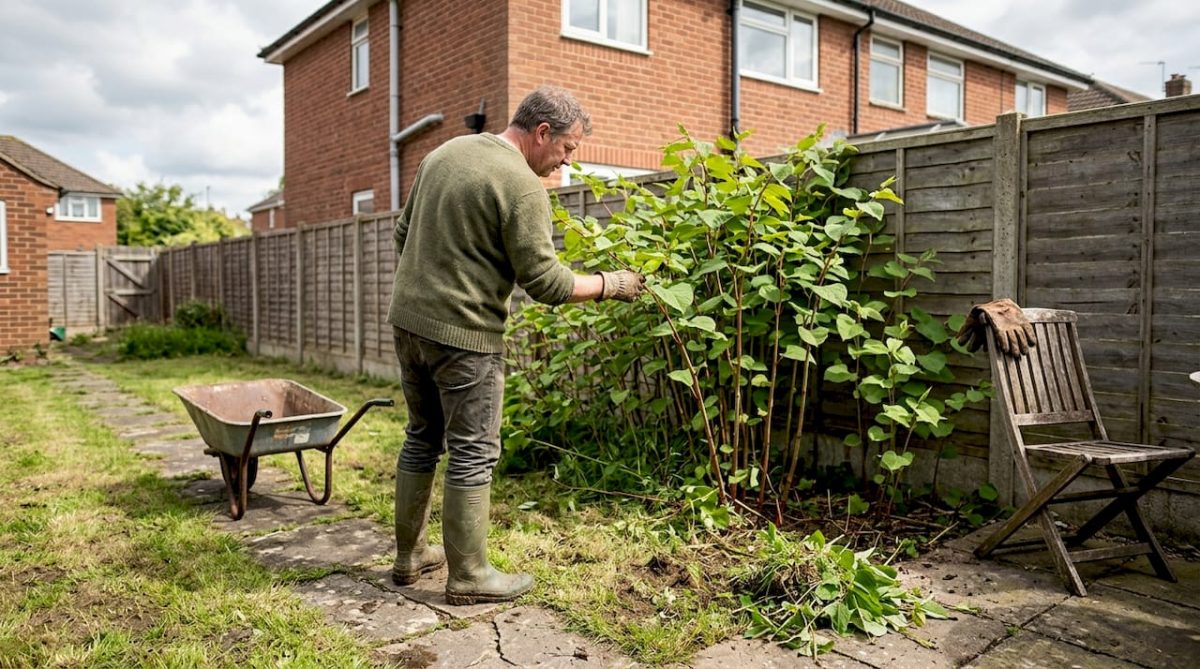
Japanese Knotweed and other invasive plants are causing real headaches for homeowners across England, Wales, and Ireland. Whether you’ve spotted those distinctive hollow stems pushing through your patio or noticed fast-spreading Himalayan Balsam along your boundary, the consequences go well beyond an untidy garden. Affects over 1.2 million UK properties and can reduce property value by 5 to 15%, making swift, well-planned action essential. The good news is that chemical-free eradication is not only possible but increasingly preferred by lenders, buyers, and environmentally conscious homeowners alike. This guide walks you through every stage of planning and executing a non-chemical invasive species eradication plan.
Table of Contents
- Understanding invasive species and their impact
- Planning for chemical-free eradication: what you need
- Step-by-step guide to effective chemical-free eradication
- Monitoring, verification and securing guarantees
- Common challenges, mistakes and expert troubleshooting tips
- How to take the next step: secure your home’s future
- Frequently asked questions
Key Takeaways
| Point | Details |
|---|---|
| Legal compliance | You must stop invasive species spreading and document eradication for full property value and security. |
| Professional support | A formal plan and professional monitoring make chemical-free eradication faster and lender-approved. |
| Plan documentation | Keep records and guarantees for future buyers and mortgage lenders to avoid legal obstacles. |
| Eco-friendly success | Thermo-electric and barrier methods deliver effective control without chemicals if expertly managed. |
Understanding invasive species and their impact
Not all invasive plants are equal, but they share one thing in common: left unchecked, they cause serious damage. Japanese Knotweed (Fallopia japonica) is the most notorious, with roots that can penetrate foundations, drainage systems, and flood defences. Giant Hogweed poses direct health risks through its toxic sap, while Himalayan Balsam spreads rapidly along riverbanks, outcompeting native vegetation and increasing erosion risk.
The risks to homeowners extend well beyond the garden fence:
- Property damage: Knotweed rhizomes can extend up to 7 metres horizontally and 3 metres deep, undermining structures.
- Legal obligations: It is an offence to allow Japanese Knotweed to spread under UK Wildlife legislation.
- Regulatory compliance: Disposal and management are regulated under the Wildlife Act in the UK and Reg 49 SI 477 in Ireland.
- Mortgage and sale complications: Many lenders refuse applications or require formal treatment plans before proceeding.
Chemical-free methods are increasingly in demand for good reason. Herbicide treatments raise concerns about soil contamination, harm to surrounding plants, and long treatment timelines of three to five years. Professional thermo-electric treatment options offer a faster, environmentally responsible alternative that satisfies both lender requirements and ecological concerns. The RHS guidance on invasive species is a useful starting point for understanding your obligations.
Did you know? A single fragment of Japanese Knotweed rhizome as small as 0.7 grams can regenerate into a new plant. This is why containment and professional handling are non-negotiable.
Planning for chemical-free eradication: what you need
Preparation is where most homeowners go wrong. Jumping straight into removal without a proper plan can worsen the infestation, create legal liability, and invalidate any future guarantee. A formal management plan is required for mortgage or sale, and chemical-free methods must be documented for lender compliance.
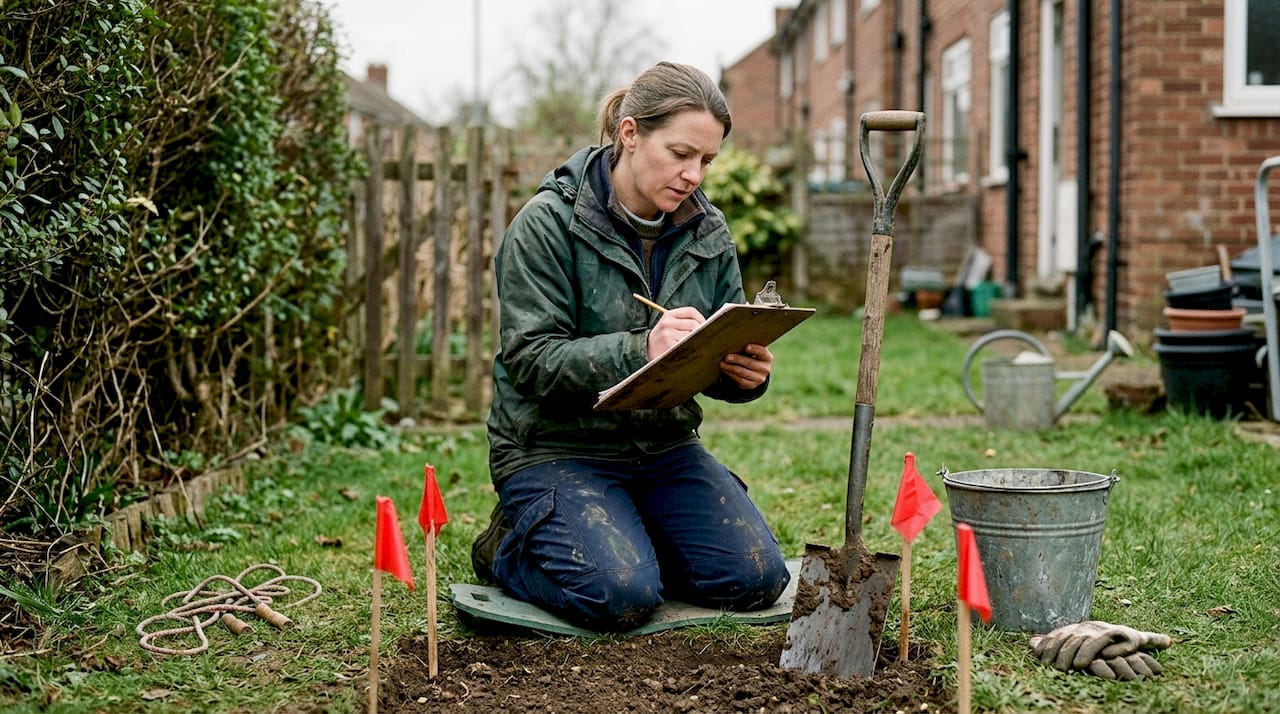
The foundation of any effective plan is a professional survey. This establishes the extent of the infestation, identifies species, and produces the documentation lenders and solicitors need. Understanding the property survey process before committing to any treatment is strongly advised. You can also read more about what a survey before eradication should cover.
A complete chemical-free management plan must include:
- A detailed site survey with species identification and mapping
- A written eradication strategy with timelines
- Chosen treatment method with justification
- Waste disposal and containment protocols
- Long-term monitoring schedule
- Formal guarantee documentation
Here is an overview of the typical tools and resources used in professional chemical-free eradication:
| Tool or resource | Purpose | Typical use case |
|---|---|---|
| Thermo-electric treatment unit | Delivers up to 5,000 volts to destroy root cells | Medium to large infestations |
| Root barrier membrane | Prevents lateral rhizome spread | Boundary and foundation protection |
| Excavation equipment | Physical removal of root mass | Severe or construction-adjacent cases |
| Monitoring logs and photo records | Tracks regrowth and treatment progress | All cases, ongoing |
| Waste containment bags | Compliant disposal of excavated material | Post-excavation |
For further practical advice on safe removal, the HOA advice on eradication is worth reviewing alongside your professional plan.
Pro Tip: Document every single treatment visit with dated photographs, written notes, and any correspondence with your contractor. This record is your strongest asset when dealing with lenders, solicitors, or future buyers.
Step-by-step guide to effective chemical-free eradication
The right approach depends on the scale of your infestation. Here is how to tackle it at each level.
For small infestations (under 1 square metre):
- Identify and confirm the species before touching anything.
- Wear gloves and use dedicated tools that will not be used elsewhere.
- Cut stems at the base and bag immediately in heavy-duty waste sacks.
- Do not compost or leave cuttings on site.
- Monitor the area every two to four weeks and repeat as needed.
- Keep a written log of every action taken.
For medium to large infestations:
- Commission a professional survey to map the full extent of the rhizome network.
- Choose your primary treatment method based on site conditions, budget, and timeline.
- Install root barriers if the infestation is near boundaries, foundations, or drainage.
- Begin treatment, whether thermo-electric, excavation, or a combination.
- Arrange compliant waste disposal for any excavated material.
- Schedule follow-up visits and monitoring surveys.
Here is a comparison of the three main professional chemical-free methods:
| Method | Speed | Best for | Lender-compliant | Waste generated |
|---|---|---|---|---|
| Thermo-electric treatment | Fast (1 to 2 years) | All sizes, eco-sensitive sites | Yes, with formal plan | Minimal |
| Excavation | Immediate (if thorough) | Construction sites, severe cases | Yes, with formal plan | High |
| Manual cutting and barrier | Slow (2 to 4 years) | Small, accessible areas | Yes, with formal plan | Low |
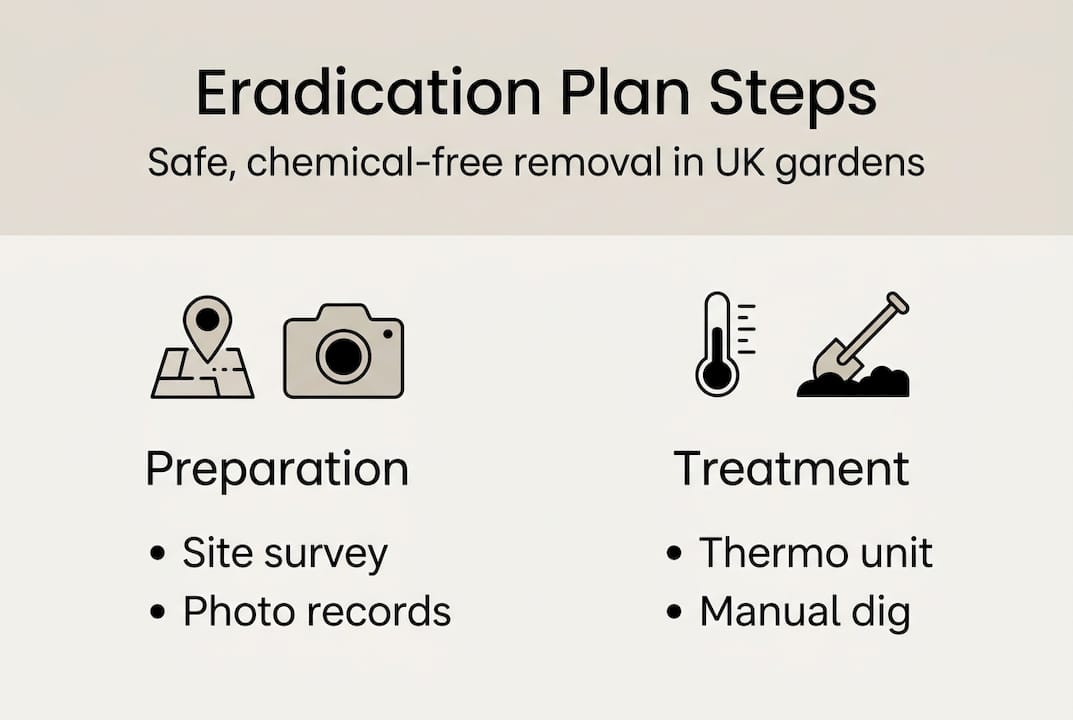
Thermo-electric treatment destroys plant root cells faster and is eco-safe, but manual and barrier methods remain important for smaller cases. You can explore non-chemical control tips and energy-based approaches in more detail on our site. For guidance on manual and barrier methods, the RHS provides a useful reference.
Non-chemical methods such as excavation generate waste requiring controlled disposal. All excavated knotweed material is classified as controlled waste in the UK and must be disposed of at a licensed facility. Never bag it with general household waste.
Important: Disturbing a large knotweed infestation without professional containment can spread viable fragments across your site and neighbouring land, creating new colonies and potentially increasing your legal liability.
Pro Tip: For any infestation affecting a mortgaged property or one you plan to sell, engage a company that is a member of the Property Care Association (PCA) or the Invasive Non-Native Specialists Association (INNSA). Their documentation carries the most weight with lenders.
Monitoring, verification and securing guarantees
Eradication does not end when the visible plant disappears. The rhizome network can remain dormant underground and regenerate if monitoring stops too early. Continued verification is what separates a successful plan from a costly repeat problem.
Effective monitoring involves:
- Photographic records taken at the same points each season
- Written treatment logs noting dates, methods, and observations
- Follow-up professional surveys at six and twelve month intervals
- Boundary checks to confirm no spread to neighbouring land
Formally documented treatment plans typically include five to ten year guarantees against regrowth. This guarantee is what lenders and buyers need to see. Without it, even a visually clear site may not satisfy a mortgage application or property sale.
When your contractor issues a formal certificate of treatment or guarantee, keep both a digital and physical copy. Solicitors will request this during conveyancing. Review removal best practices to understand what a robust completion report should contain. The RHS official guidance also outlines what documentation is considered acceptable for property transactions.
Pro Tip: Keep a dedicated monitoring diary, separate from general property records. Note every observation, even when there is nothing to report. A consistent record of clear inspections is just as valuable as a record of treatment.
Common challenges, mistakes and expert troubleshooting tips
Even well-intentioned homeowners make mistakes that set their eradication plan back by months or years. Knowing what to avoid is just as important as knowing what to do.
The most common missteps include:
- DIY digging without containment: Spreading fragments across the garden creates multiple new infestations.
- Improper waste disposal: Bagging knotweed with general waste is illegal and can result in prosecution.
- Missing or incomplete records: Without documentation, your treatment has no legal or commercial value.
- Stopping treatment too early: One season of no visible growth does not mean eradication is complete.
- Ignoring neighbouring land: Knotweed does not respect boundaries, and spread from a neighbour’s property can undo your work.
Expert warning: Cutting or digging large infestations often increases spread risk and may worsen mortgage issues if not handled by a professional with proper containment protocols.
Knowing when to call a professional is critical. If your infestation covers more than a couple of square metres, sits near a boundary or structure, or is linked to a property transaction, professional involvement is not optional. It is the only route to a lender-compliant outcome. Explore thermal weed control options if you are considering a faster, non-invasive approach. For broader professional guidance, the RHS remains an authoritative resource.
How to take the next step: secure your home’s future
If you have identified an invasive species on your property, the most important thing you can do right now is act with a plan rather than react with a spade. A professionally managed, chemical-free eradication plan protects your property value, satisfies lender requirements, and gives you documented proof of compliance.
At Japanese Knotweed Agency, we specialise in chemical-free treatment and eradication across England, Wales, and Ireland. Our thermo-electric technology delivers up to 5,000 volts directly to the rhizome network, causing internal cell damage without a single drop of herbicide. We also carry out professional property surveys, install root barriers, and provide the formal documentation your lender or solicitor needs. Explore our full chemical-free treatment process, browse our invasive plant solutions for homeowners, or visit our common invasive species questions page to get answers fast.
Frequently asked questions
How long does chemical-free knotweed eradication take?
Non-chemical methods can eradicate Japanese Knotweed in one to two years when conducted professionally, compared to three to five years for chemical treatment. Thermo-electric treatment is currently the fastest non-chemical option available.
Do I need to inform my mortgage lender or buyers about invasive species?
Yes. A formal plan must be disclosed for property sales and mortgage applications, and failure to do so can result in legal action after completion. Most lenders will not proceed without a documented treatment plan and guarantee.
Are there any legal penalties for not controlling Japanese Knotweed?
Allowing knotweed to spread is an offence under Schedule 9 of the Wildlife and Countryside Act 1981 in the UK. In Ireland, Reg 49 SI 477 regulates disposal and management with similar legal weight.
Are non-chemical methods approved by lenders?
Yes. Chemical-free treatment plans are lender-compliant provided they are formally documented by a qualified professional and include a recognised guarantee period. Always confirm your contractor’s credentials before commissioning work.