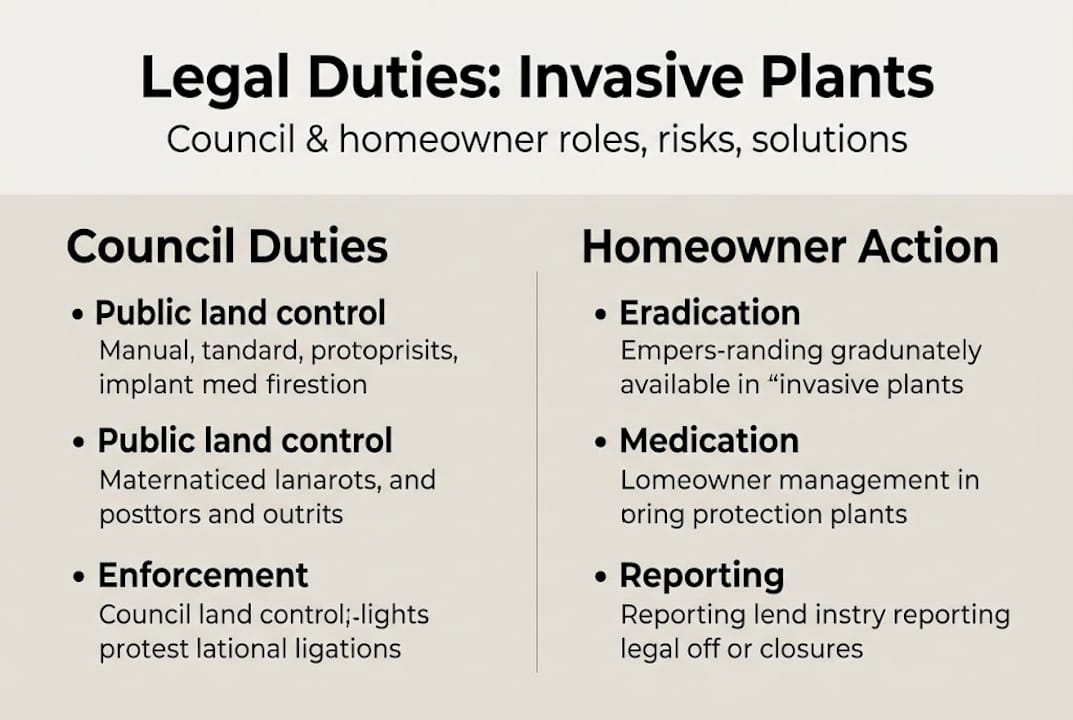

入侵植物调查:影响英国家产与房产交易

很多英格兰、威尔士和爱尔兰的房主在买房或再融资时,常常忽视了“入侵植物”这一隐藏威胁。这些非本地物种一旦进入您的房产,往往会对建筑结构、房产价值甚至贷款审批流程造成深远影响。了解入侵植物调查的专业意义与应对策略,是保护投资安全、避免法律和经济损失的关键第一步。

目录

关键要点

要点 详情
专业调查不可或缺 在购房或再融资前,务必进行完整的入侵植物调查,以保护房产价值。
识别与法律责任 卖方必须准确披露入侵植物的存在,隐瞒可能导致法律诉讼。
生态与经济风险 入侵植物可导致房产价值下降,影响贷款申请,及时处理能避免损失。
科学应对措施 应避免便宜但无效的治理方法,应咨询专业团队确保问题得到有效解决。

入侵植物调查的定义与常见误区

入侵植物调查是指对房产及周边区域进行系统性检查,以识别非本地物种是否存在及其潜在威胁的过程。这不仅是为了满足购房贷款方的要求,更是为了保护您的房产价值和生态环保。

许多房主将入侵植物调查与普通园艺检查混为一谈。实际上,这两者差异巨大。园艺检查关注的是植物的美观度和健康状况,而入侵植物调查则专注于识别那些可能对建筑结构和生态造成严重威胁的特定物种。

入侵植物的核心特征包括:

  • 来自非本地区域,通常由人类活动引入
  • 能够快速繁殖并大幅扩张分布范围
  • 与本地植物竞争资源,导致本地物种衰退
  • 对土壤结构、建筑基础或排水系统造成损害

根据非本地物种威胁本地生物多样性的研究,英国面临越来越多的入侵植物问题,尤其是在城市和郊区地区。

常见的误区与真相

许多人认为只有日本虎杖这种明显的入侵物种才值得关注。错误。英国还有数十种入侵植物同样危险,包括喜马拉雅樱桃、加拿大一枝黄花和豚草等。

另一个普遍误区是相信非本地植物都有害。实际上,并非所有非本地植物都构成威胁。问题出在那些能够不受控制地快速蔓延的物种上。

有些房主认为入侵植物只会影响花园外观。这严重低估了它们的危害。这些植物的根系可以穿透混凝土、砖块和管道,造成价值数千英镑的结构性损害。

误区清单:

  • “我的花园看起来不错,所以不需要进行调查”(危险的错误判断)
  • “入侵植物只在农村地区出现”(城市和郊区同样常见)
  • “一旦发现入侵植物,简单修剪就能解决”(根本无法有效控制)
  • “银行不会因为入侵植物拒绝贷款”(许多贷款机构明确要求清除)

英国房主防控入侵植物的七条建议可以帮助您更好地理解这些威胁的严重程度。

正确的入侵植物调查需要专业人士进行。他们不仅能识别植物,还能评估其蔓延程度、对您房产的威胁以及最合适的处理方法。

专业的入侵植物调查不是可选的—它是保护您房产投资的重要防线。

专业建议 在购买房产或再融资前,务必要求进行完整的入侵植物调查报告,特别是如果房产位于已知有此类问题的地区。

英国家庭常见入侵植物与辨识要点

英国的入侵植物问题比大多数房主意识到的要严重得多。您的花园里可能已经生长着几种有害物种,而您却没有注意到。识别这些植物是采取行动的第一步。

最常见的入侵植物包括日本虎杖、喜马拉雅樱桃、加拿大一枝黄花和杜鹃花等。每一种都具有特定的识别特征和不同的危害程度。

日本虎杖的识别特征:

  • 竹子般的红棕色茎秆,高度可达2米以上
  • 心形或三角形的绿色叶子
  • 夏季时出现小白色花朵
  • 冬季枯萎后留下坚硬的空心茎

日本虎杖的根系可以延伸6米以上,穿透几乎所有障碍物。这种植物的生长速度令人震惊,在春季每天可增长约5厘米。

其他高危入侵物种

**喜马拉雅樱桃(印度樱桃)**在英国广泛分布,特别是在南方地区。它有白色花朵和深红色浆果,看起来无害,但根系同样具有破坏性。

加拿大一枝黄花可以长到2米高,秋季时呈现鲜黄色花朵。一株植物能产生数万粒种子,极易传播。

在英国郊区的小洋房旁,金黄色的黄金菊悄然绽放,为宁静的住宅区增添了一抹亮丽的色彩。

紫色杜鹃花是英国野生空间中最具破坏性的植物之一。其紫色花朵看起来漂亮,但它会压制本地植物的生长,对整个生态系统造成威胁。

辨识入侵植物的关键步骤:

  1. 观察叶子的形状、大小和排列方式
  2. 注意植物的生长高度和茎秆颜色
  3. 检查花朵和果实的特征
  4. 查看根系是否异常粗大或蔓延范围广
  5. 利用植物数据库进行对比核实

许多房主会混淆某些本地植物和入侵物种。如果您不确定,建议拍照并咨询专业人士。7项入侵植物识别清单可以帮助您快速检查常见物种。

以下表格总结了英国最常见的高危入侵植物及其危害特点,帮助房主快速了解潜在风险:

植物名称 识别要点 对房产影响
日本虎杖 竹状茎秆,心形叶 根系穿透基础结构
喜马拉雅樱桃 白花深红浆果 根系破坏性极强
加拿大一枝黄花 高大黄花,秋季显色 种子广泛传播,快速蔓延
杜鹃花 紫色花朵群生 抑制本地植物生长

及早识别入侵植物能为您省去后期数千英镑的治理费用。

专业建议 在购房前或发现可疑植物时,拍摄清晰照片并向专业入侵植物调查团队咨询,确保准确识别和及时处理。

房产交易中法律责任与合规要求

在英国购买或出售房产时,入侵植物的法律责任问题不容忽视。许多房主对自己的法律义务一无所知,直到问题升级为昂贵的诉讼纠纷。

英国法律明确规定了房产所有者对入侵植物的责任。卖方有义务向买方披露任何已知的入侵植物问题。隐瞒这类信息可能导致房产交易被取消或面临法律诉讼。

您的法律义务包括:

  • 在房产信息表中准确披露入侵植物的存在
  • 如果发现问题,采取合理措施进行控制或清除
  • 防止植物蔓延到相邻房产
  • 为潜在买家提供治理费用估算

英国关于入侵物种的法律框架详细规定了业主必须遵守的具体要求。不同地区的规定可能有所不同,特别是英格兰、威尔士和爱尔兰之间。

交易流程中的关键环节

当您申请再融资或出售房产时,贷款机构会进行详细的财产调查。他们特别关注入侵植物问题,因为这会直接影响房产价值和贷款审批。

许多银行明确要求提供入侵植物清除的证明或专业调查报告。如果您无法提供这些文件,贷款申请可能被拒绝,房产交易也会陷入困境。

房产交易中的责任流程:

  1. 卖方进行初步调查或专业检测
  2. 在法律文件中完全披露任何发现
  3. 买方可要求进行独立的专业调查
  4. 协商治理费用或由卖方负责清除
  5. 获得清除完成证书后完成交易

买方的权利同样重要。您有权在购买前了解所有相关信息,有权要求卖方提供专业调查报告,也有权在发现隐瞒情况后采取法律行动。

在房产交易中,透明披露和及时行动是避免法律纠纷的最佳防线。

专业建议 在任何房产交易前,始终聘请专业团队进行完整的入侵植物调查,获得书面报告,并确保所有发现都在法律文件中清晰记录,保护您的权益。

以下表格概述房产交易中涉及入侵植物时的主要法律责任及买卖双方注意事项:

责任类型 卖方要求 买方权利
信息披露 需如实报告入侵植物 可要求书面专业报告
治理措施 必须采取合理控制 可协商治理费用分担
法律风险 隐瞒问题可能被诉讼 发现隐瞒可追责
交易完成 提供治理证书 必须确认治理已完成

对物业价值与贷款审批的实际影响

入侵植物不仅仅是一个环保问题,它直接影响您房产的经济价值。银行和贷款机构对此高度警惕,已将其列为影响贷款审批的关键风险因素。

关于外来入侵植物对房产价值影响的图解分析

许多房主在发现入侵植物后才意识到,这个问题已经对房产价值造成了严重打击。在某些情况下,房产价值可能下跌10%至30%,具体取决于植物蔓延的程度。

入侵植物对房产价值的具体影响:

  • 潜在买家会因为清除成本而降低出价
  • 贷款机构拒绝提供抵押贷款或要求更高利率
  • 房产保险可能被拒保或保费大幅上升
  • 房产在市场上的吸引力大幅下降

根据英国房价指数数据,带有环境或结构问题的房产与同地区其他房产之间存在明显的价格差异。入侵植物导致的结构风险会被银行评估团队重点关注。

贷款审批流程中的严格审查

当您申请抵押贷款或再融资时,贷款机构会进行详细的财产评估。他们现在已经将入侵植物检查列为标准程序的一部分。

许多银行会要求您提供专业的入侵植物调查报告作为贷款条件。如果您无法提供或报告显示严重问题,贷款申请可能被直接拒绝。

贷款机构关注的关键因素:

  1. 入侵植物的具体物种和蔓延范围
  2. 对建筑基础和排水系统的潜在威胁
  3. 是否已经进行了治理或控制措施
  4. 清除工作的预计费用和时间表
  5. 是否获得了专业治理团队的完成证书

一份全面的专业调查报告可以显著提高贷款批准的概率。报告中的清晰信息表明您已经认真对待这个问题,大幅降低了银行的风险评估。

房产保险公司同样关注这个问题。带有活跃入侵植物的房产可能被列为高风险,导致保险费用增加或覆盖受限。

及早处理入侵植物问题能保护您的房产价值,避免在关键时刻遭遇贷款拒绝或价格大幅下跌。

专业建议 在考虑贷款或出售房产前,主动进行专业入侵植物调查,获得清晰报告,并在必要时采取治理措施,这将大幅提高贷款批准率并维持房产价值。

如何科学应对调查结果与避免常见陷阱

收到入侵植物调查报告后,很多房主不知道下一步该做什么。他们可能会做出仓促的决定,反而加重了问题或浪费了宝贵的时间。正确应对调查结果需要策略和耐心。

首先,仔细阅读整份报告。专业调查报告应该详细说明发现的物种、蔓延范围、对房产的威胁程度以及建议的处理方案。不要忽略任何细节。

应对调查结果的关键步骤:

  • 完全理解报告中的技术信息和建议
  • 咨询第二位专家验证发现和建议
  • 立即获得多个治理方案的报价
  • 记录所有沟通和行动以备日后参考
  • 获得治理完成的正式证书

许多房主陷入的第一个陷阱是选择便宜但无效的治理方法。简单修剪、除草剂喷洒或挖掘根茎听起来便宜,但通常只是暂时缓解症状。这些方法往往导致植物更快速地重新生长。

英国环境变化网络提供的科学资源可以帮助您理解基于证据的入侵物种管理方法。专业团队使用化学无害的治疗技术,例如电能脉冲治疗,能够从根本上破坏植物的生命力。

避免常见的处理陷阱

第二个常见错误是拖延治理。房主经常认为"现在没有变得更糟,所以可以等等再说"。错误。入侵植物的蔓延是指数级的,每个季节都会变得更加困难和昂贵。

第三个陷阱是忽视邻近房产的影响。如果您的房产上的入侵植物蔓延到邻近土地,您可能面临法律诉讼。记录您采取的所有控制措施很重要。

需要避免的做法:

  1. 只做表面清理而不处理根系
  2. 使用强力化学物质污染土壤和地下水
  3. 将受感染的土壤或植物废料运到其他地方
  4. 隐瞒问题,希望它自己消失
  5. 聘请没有入侵植物专业经验的普通园艺服务

官方房产和土地注册系统中检查您的房产是否有任何相关的环境限制或先前的治理记录。这些信息对于了解房产历史和未来的治理责任至关重要。

与专业的入侵植物治理公司合作是避免陷阱的最有效方式。他们拥有必要的设备、知识和证书来确保工作得到正确完成。

正确的应对策略可以在数月内解决问题,而错误的方法可能会拖累您数年甚至数十年。

专业建议 获得调查报告后,立即咨询专业治理团队获得详细报价,避免便宜但无效的方法,并确保所有工作都由有资质的专业人士完成,获得书面完成证书。

立刻解决入侵植物威胁 保障您的英国家产安全

入侵植物,尤其是日本虎杖,正对英国房产造成严重威胁,它们不仅破坏建筑结构还能影响房产价值和贷款审批。文章详细阐述了入侵植物调查的重要性和相关误区,若您正面临房产交易中对入侵植物的担忧,专业的调查与科学治理是您的必选方案。Japanese Knotweed Agency凭借领先的无化学治疗技术,通过最高可达5000伏的直能量有效破坏植物根系,确保彻底根除,避免复发。

https://japaneseknotweedagency.co.uk

立即访问Japanese Knotweed Agency官方网站了解我们的入侵植物调查服务及科学治理方案。保护您的投资和权益,立即行动获得专业支持,避免因入侵植物导致贷款申请被拒或房产贬值。您值得拥有健康无忧的家园,现在就联系我们,迈出安全第一步!

常见问题

入侵植物调查是什么?

入侵植物调查是对房产及周边区域进行系统性检查,以识别非本地物种的存在及其可能的威胁。这一过程不仅为满足贷款要求,还为保护房产的价值和生态环境。

为什么需要进行入侵植物调查?

进行入侵植物调查可以帮助识别对房产和生态系统有潜在危害的植物,避免由于入侵植物引起的结构性损害和房产价值降低。

入侵植物有哪些对房产的影响?

入侵植物可能导致房产价值降低、贷款申请被拒,甚至影响房产的保险费用,从而造成经济损失。

买房时如何确保没有入侵植物问题?

在购房前,要求进行专业的入侵植物调查报告是关键,可以提前识别潜在的入侵植物威胁,并了解相关治理措施。

推荐

Electricity Weed Eradication: Safe Alternatives for UK Homes

Selling a property in England or Wales with Japanese Knotweed can feel overwhelming when mortgage lenders demand proof of effective treatment. The pressure to find a solution that avoids soil contamination and delays is real for many UK homeowners. Electricity-based weed eradication provides a chemical-free alternative that tackles even stubborn invasive species, offering formal treatment plans and lender-accepted documentation for smoother property transactions.

Table of Contents

Key Takeaways

Point Details
Chemical-Free Method Electricity-based weed eradication offers a safe and eco-friendly alternative to traditional herbicides, causing no chemical residues.
Effective for Invasive Species Trials show this method is particularly effective against persistent invaders, such as Japanese Knotweed, aiding in property value protection.
Timely Results Electrical treatments provide rapid results, often visible within hours or days, facilitating quick resolution for property sales.
Compliance and Documentation Ensure treatment is performed by certified operators and properly documented to meet lender requirements during property transactions.

Electricity-Based Weed Eradication Explained

Electricity-based weed eradication represents a chemical-free alternative that’s gaining momentum across the UK. This method uses high-voltage electrical current to damage plant cells, effectively killing weeds without herbicides or intensive labour.

The technology works by delivering electrical pulses through contact electrodes directly to the plant. Electric weed control causes rapid cell damage that suppresses growth or kills the weed entirely. The process is quick and causes minimal disruption to the surrounding soil.

How the Technology Works

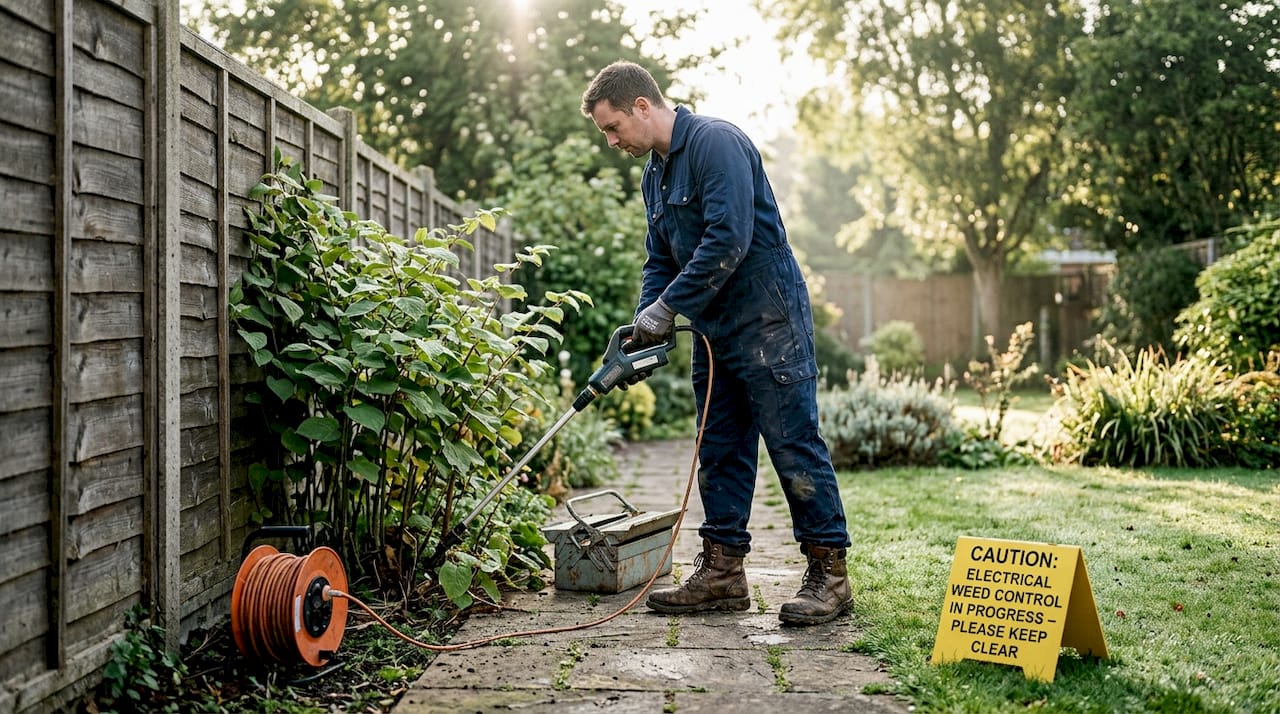
Electrical weed eradication typically uses high-voltage, short-duration pulses delivered via insulated lances or contact equipment. The voltage ranges from 750 volts up to 5000 volts, depending on the application and weed type.

When electrical current reaches the plant, it causes internal cell damage and depletes energy resources, particularly within the rhizome network of invasive species like Japanese Knotweed. This approach targets the plant’s root system effectively, preventing regrowth.

Key characteristics of the method:

  • Delivers electrical shock through direct plant contact
  • Causes immediate cell disruption and energy depletion
  • Works on perennial and annual weeds
  • Minimal soil disturbance compared to excavation
  • Requires no chemical residue management

Electrical weed control offers a genuine alternative for homeowners seeking chemical-free solutions, particularly when tackling invasive species during property transactions.

Why It Matters for UK Homeowners

Many UK homeowners face challenges when selling properties affected by invasive weeds. Mortgage lenders increasingly require formal treatment surveys and management plans before approving property purchases where invasive species are present.

Traditional chemical treatments raise concerns about soil contamination and environmental impact. Electricity-based methods provide a proven, eco-friendly option that addresses these concerns whilst delivering results.

UK trials, including work at Oxford Botanic Garden, continue to demonstrate the effectiveness of this approach against stubborn invasive species. The method has shown particular promise for Japanese Knotweed and other perennial invaders that resist conventional treatments.

Treatment and Root Barrier Solutions

Electricity-based eradication works best as part of a comprehensive strategy. Many properties benefit from combining electrical treatment with root barrier installation to prevent future spread.

A complete approach includes:

  1. Initial property survey to assess infestation extent
  2. Electrical treatment cycles targeting the root system
  3. Root barrier installation where needed
  4. Ongoing monitoring to confirm eradication
  5. Documentation for mortgage lender requirements

This combination ensures both immediate eradication and long-term protection for your property.

Pro tip: Schedule a formal survey before listing your property if you suspect invasive weeds; having a documented treatment plan ready significantly streamlines the mortgage approval process and protects your sale timeline.

Thermo-Electric Treatment Types and Mechanisms

Thermo-electric treatment combines heat and electrical current to eliminate weeds at the cellular level. When high-voltage electricity passes through a plant, the plant’s natural resistance creates internal heat that boils cells and destroys the plant’s structure from within.

This dual mechanism—electrical current plus thermal damage—makes thermo-electric treatment particularly effective against invasive species with deep root systems. Unlike surface treatments, the energy penetrates directly to where it matters most: the rhizome network of persistent weeds.

How Internal Cell Damage Works

Electric weeders generate heat internally that boils plant cells and damages structural integrity. The plant’s own cellular fluids become a conductor, allowing the electrical current to travel through the entire organism, including roots buried deep underground.

Treatment effectiveness varies based on several factors that determine how well the electrical current travels through the plant. Understanding these variables helps explain why some treatments succeed whilst others require multiple applications.

Factors affecting treatment success:

  • Plant size and maturity level
  • Water content within the plant tissue
  • Soil moisture and conductivity
  • Root depth and extent
  • Species-specific resistance patterns

Emerging and younger weeds respond more readily to thermo-electric treatment than mature, established specimens with extensive root networks.

Equipment Types and Application Methods

Different treatment scenarios require different equipment configurations. Pedestrian-operated devices work well for smaller infestations and residential properties, whilst tractor-mounted systems cover larger areas more efficiently.

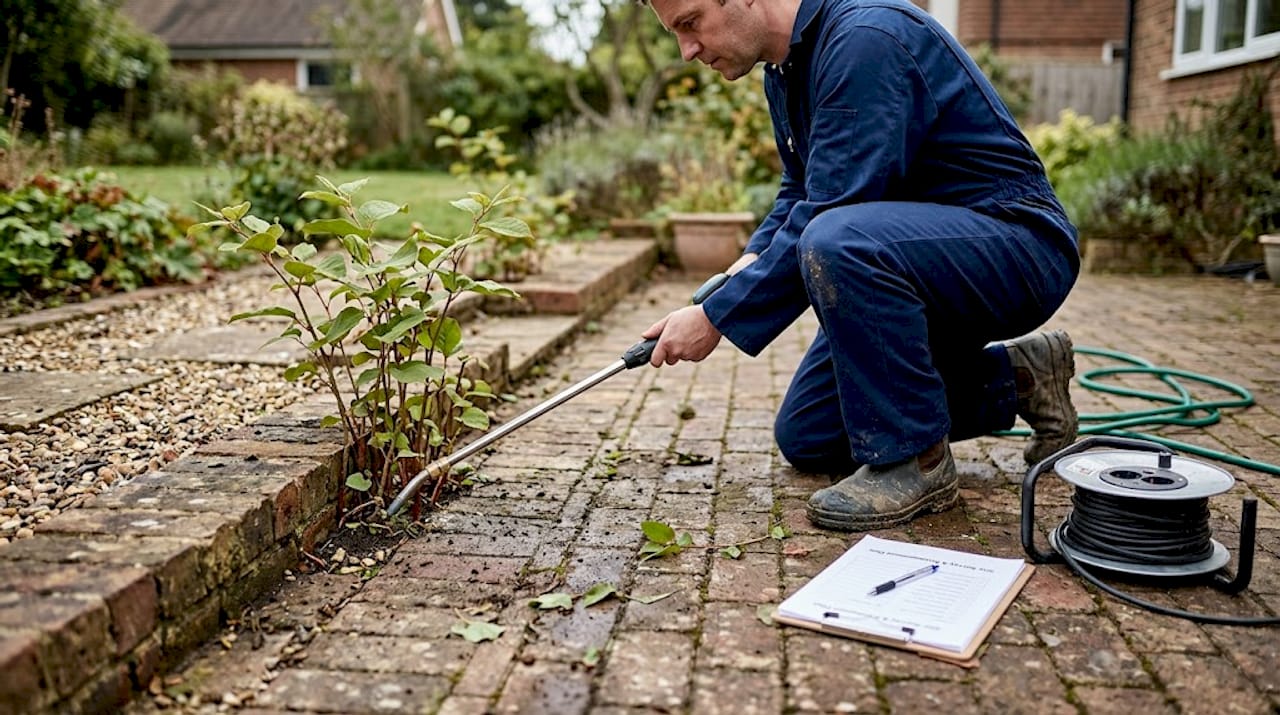
Close-up of electric weeder on gravel path

All equipment requires proper operator training for safe and effective use. High-voltage electricity demands respect and careful handling to protect both the operator and surrounding property.

Common equipment types:

  1. Hand-held lance applicators for targeted spot treatment
  2. Pedestrian push units for garden and small-scale use
  3. Tractor-mounted delivery systems for extensive areas
  4. Backpack-style units for difficult terrain access

Each system delivers electrical current via contact electrodes that complete a circuit through the plant. The shortest electrical path through the root system ensures systemic plant death, preventing regrowth from any remaining root fragment.

Why Thermo-Electric Outperforms Chemical Methods

Chemical herbicides require uptake through the plant’s vascular system and take weeks to show results. Thermo-electric treatment causes immediate cellular destruction, with visible plant collapse within hours or days.

For properties in England and Wales where Japanese Knotweed or other invasive species threaten property value, this speed matters significantly. Mortgage lenders want documented proof of eradication before completing transactions, and thermo-electric treatment provides that proof quickly.

Pro tip: Request a survey from specialists experienced with thermo-electric equipment; they can assess your specific infestation and recommend whether treatment requires one application or multiple cycles spaced over time.

Effectiveness Compared to Chemical Methods

Electricity-based weed eradication matches or exceeds the effectiveness of traditional chemical herbicides. Studies published in Weed Science journal demonstrate that electric control achieves comparable results without the environmental and health drawbacks that accompany chemical treatments.

The key difference lies not in what works, but in how it works. Chemical herbicides require weeks to show results and depend on weather conditions. Electricity-based methods deliver immediate cellular destruction whilst avoiding the complications that come with chemical applications.

Matching Herbicide Effectiveness

Electric weed control proves similarly effective to conventional herbicides and mechanical methods, with no damage to crops. Research confirms that electrical treatment successfully eliminates persistent weeds whilst maintaining soil and plant health in surrounding areas.

This equivalence matters for UK homeowners facing property transactions. Mortgage lenders care about results, not methodology. When electrical treatment delivers the same weed elimination as chemicals, lenders accept documented electrical treatment as satisfactory proof of eradication.

Here’s a concise comparison of electricity-based weed eradication and chemical herbicide methods:

Aspect Electricity-Based Treatment Chemical Herbicides
Speed of Results Visible within hours or days Takes several weeks
Environmental Impact No chemical residues, minimal soil disturbance Risk of soil and water contamination
Effect on Non-Target Plants Low, highly targeted action Higher, potential for drift
Risk of Herbicide Resistance None, weeds do not develop immunity Yes, resistance develops over time
Health Risk to Operators Very low, no chemical exposure Moderate, chemical exposure risk
Acceptance by Lenders Widely accepted for property sales Widely accepted if documented

Key advantages over chemical methods:

  • No chemical residues left in soil or water
  • No rain-fast waiting periods required
  • No drift restrictions affecting neighbouring properties
  • No herbicide-resistant weed populations develop
  • Minimal environmental impact on non-target plants

Electrical treatment eliminates the herbicide resistance problem entirely, since repeated applications don’t allow weeds to develop immunity like they do with chemical treatments.

Environmental and Health Benefits

Chemical herbicides pose genuine risks that electrical methods avoid completely. Worker exposure to chemicals decreases significantly with electrical treatment, and soil contamination becomes irrelevant when no chemicals enter the ground.

Infographic comparing electric and chemical weed removal

Water systems remain unaffected by electrical treatment. Herbicide runoff—a persistent problem in wet seasons—simply does not occur. For properties near water sources, this advantage proves particularly valuable.

Health and environmental considerations:

  1. No chemical exposure for operators or residents
  2. No water system contamination or pollutant runoff
  3. No health risks from chemical residues on treated land
  4. No need to manage chemical disposal requirements
  5. No long-term soil degradation from repeated applications

These factors make electrical treatment especially appealing during property sales in England and Wales, where environmental concerns increasingly influence mortgage lending decisions.

Managing the Trade-offs

Electrical treatment does carry one significant consideration: fire hazard in dry conditions. Dried plant residues can present fire risk, requiring careful management and planning around weather patterns and fire risk seasons.

This limitation proves manageable through proper timing and site preparation. Spring and autumn applications, combined with adequate moisture management, minimise risk. Professional treatment specialists understand these seasonal considerations and schedule work accordingly.

For UK properties, this single consideration pales against the comprehensive advantages electrical treatment offers over chemical methods.

Pro tip: Ask your treatment specialist about timing recommendations for your specific region; scheduling electrical treatment during naturally moister periods reduces fire risk whilst maintaining full effectiveness.

Electrical weed eradication in the UK operates within a clear regulatory framework designed to protect users, the public, and the environment. Understanding these legal requirements ensures your treatment complies with UK law and protects your property interests during sales or refinancing.

Unlike chemical treatments, electrical methods fall under strict electrical safety regulations rather than pesticide legislation. This distinction matters for compliance, training, and documentation requirements.

Operator Certification and Training Requirements

Certified operator training ensures safe operation and legal compliance when using high-voltage electrical equipment. The UK mandates formal certification for anyone operating electrical weed control systems, particularly in public areas or near sensitive zones.

Training covers equipment operation, electrical hazard recognition, risk assessment procedures, and emergency response protocols. This certification protects both the operator and anyone on or near the treated property.

Mandatory training components include:

  • High-voltage equipment safety principles
  • Electrical hazard recognition and risk mitigation
  • Fire risk assessment and prevention
  • Public safety protocols and documentation
  • Environmental impact awareness

Professional operators hold current certification demonstrating competence with electrical equipment, a key point mortgage lenders verify when reviewing treatment documentation.

Equipment Safety Standards and Certification

Electrical weed control equipment must meet CE certification standards to operate legally in the UK. Equipment like the Kersten and Zasso systems carry this certification, confirming they meet stringent safety requirements.

CE certification verifies that equipment protects users and third parties from electrical shocks, fire hazards, and other risks. When selecting a treatment provider, confirm their equipment carries current CE certification.

Safety standards cover:

  1. Electrical insulation and shock protection
  2. Fire hazard mitigation in dry conditions
  3. Equipment reliability and maintenance requirements
  4. User interface safety and emergency shut-off mechanisms
  5. Environmental safety during operation

UK regulations require property owners and treatment providers to ensure electrical weed control applications do not endanger public safety or wildlife. This means conducting proper risk assessments before treatment and maintaining detailed treatment records.

Your legal obligations include ensuring the treatment method aligns with environmental policies and does not breach local regulations. For properties undergoing sale, legal requirements for invasive species treatment include documenting the treatment method and contractor qualifications for mortgage lender submission.

Key compliance duties:

  • Conduct risk assessments before treatment begins
  • Use only certified, trained operators
  • Maintain comprehensive treatment records
  • Ensure public access restrictions during application
  • Document environmental impact monitoring
  • Provide proof of compliance to lenders if selling

These records become essential when lenders request evidence of proper invasive species management during property transactions.

For homeowners, these are the key stages and responsibilities for compliant invasive weed management:

Stage Main Action Homeowner Responsibility
Initial Survey Assess extent of infestation Arrange certified surveyor visit
Treatment Electrical treatment cycles or chemical application Contract qualified provider, ensure records
Root Barrier Install where necessary Approve installation if advised
Monitoring Regular site inspections Allow access for follow-ups
Lender Documentation Provide complete treatment records Submit paperwork for mortgage approval

Pro tip: Request written certification of operator training and equipment CE certification before any treatment begins; this documentation directly supports mortgage lender requirements and protects your legal position.

Common Pitfalls and Choosing the Right Plan

Selecting the wrong weed eradication approach can derail property sales, delay mortgage approval, and waste thousands of pounds on ineffective treatments. UK homeowners facing Japanese Knotweed or other invasive species often make critical mistakes that complicate their transaction timelines.

Understanding common pitfalls helps you avoid costly delays and choose a treatment plan that satisfies mortgage lender requirements from day one.

Mistakes That Delay Property Sales

The most common error is treating invasive weeds without professional documentation. Mortgage lenders don’t simply accept “the weeds are gone”—they require formal surveys, detailed treatment plans, and evidence from certified specialists.

Many homeowners attempt DIY electrical treatment or hire unqualified contractors, then discover their lender won’t accept the work. This discovery late in the conveyancing process can collapse sales or trigger renegotiation of the purchase price.

Frequent mistakes include:

  • Starting treatment without a formal pre-treatment survey
  • Using non-certified operators or uncertified equipment
  • Failing to document treatment cycles and monitoring
  • Choosing speed over thoroughness in treatment planning
  • Not understanding lender-specific requirements for your region

Mortgage lenders increasingly request evidence of professional surveys and treatment plans before advancing funds; skipping these steps almost guarantees transaction delays.

Electrical Treatment Misconceptions

Many homeowners mistakenly believe one electrical treatment session eliminates all invasive weeds permanently. Japanese Knotweed and similar species often require multiple treatment cycles spread over months to fully deplete the extensive rhizome network.

A comprehensive treatment plan accounts for seasonal factors, weather patterns, and the specific species’ growth cycle. Professional treatment providers understand these variables and build realistic timelines into their proposals.

Common misconceptions:

  1. Single treatments guarantee permanent eradication
  2. All electrical treatment equipment performs identically
  3. Treatment cost indicates treatment quality
  4. Visible weed death proves root system elimination
  5. Treatment is necessary only on the visible infestation area

Choosing a Qualified Treatment Provider

Not all electrical weed control services carry the same credentials. Certified operators with proper training distinguish professional providers from unqualified alternatives. Request proof of CE-certified equipment, operator training documentation, and previous client references.

For property transactions, your treatment provider must understand mortgage lender requirements and provide documentation in formats lenders request. This specialised knowledge matters as much as technical treatment expertise.

Evaluate providers based on:

  • Operator certifications and training records
  • Equipment CE certification status
  • Experience with property transaction requirements
  • Formal survey and documentation procedures
  • Regional expertise and local knowledge
  • Written guarantees or warranties on treatment outcomes

Japanese Knotweed Agency offers comprehensive surveys across England and Wales, combining professional assessment with treatment planning tailored to lender requirements from the outset.

Building Your Treatment Timeline

Successful invasive species eradication requires realistic scheduling. Begin your survey at least three to four months before your intended property sale date. This timeline allows sufficient treatment cycles, monitoring periods, and documentation gathering.

Your treatment plan should account for seasonal factors affecting plant dormancy, moisture levels, and treatment effectiveness. Spring or autumn applications often prove more effective than summer treatments on drought-stressed plants.

Pro tip: Schedule your professional survey before listing your property; armed with a formal treatment plan and timeline, you can confidently market the property and accelerate the sales process once an offer arrives.

Discover Safe, Chemical-Free Electricity Weed Eradication for Your UK Home

The challenge of eradicating invasive weeds like Japanese Knotweed without harmful chemicals is real and pressing for many UK homeowners. The article highlights critical concerns such as achieving thorough root system destruction, avoiding soil contamination, and meeting mortgage lender requirements through certified and documented treatment plans. If you seek a proven, eco-friendly solution delivering high-voltage electrical pulses that cause internal cell damage and permanently deplete weed energy resources, you are not alone.

Japanese Knotweed Agency specialises in exactly this chemical-free method. We provide comprehensive property surveys across England, Wales and Ireland to assess infestations accurately. Our advanced electrical treatment applies up to 5000 volts on site, combined with root barrier installations and excavation when required. Our certified professionals ensure all work meets strict UK safety and compliance standards for smooth property sales and peace of mind.

Take control of your property’s future today with a treatment plan tailored to eliminate invasive weeds safely, swiftly and reliably.

https://japaneseknotweedagency.co.uk

Secure your home from invasive plants now by arranging your formal survey and treatment consultation. Visit Japanese Knotweed Agency to start the process and discover how our chemical-free solutions can protect your sale timeline and property value. Learn more about our electrical weed eradication services and ensure compliance with mortgage lender expectations.

Frequently Asked Questions

What is electricity-based weed eradication?

Electricity-based weed eradication is a chemical-free method that uses high-voltage electrical current to damage plant cells, effectively killing weeds without herbicides.

How does electrical weed control work?

This method delivers high-voltage electrical pulses through contact electrodes directly to the plant, causing rapid cell damage and energy depletion, especially targeting the root systems of invasive species.

Is electricity-based weed eradication safe for the environment?

Yes, this method poses minimal environmental impact as it does not leave chemical residues in the soil or water, making it an eco-friendly alternative to traditional herbicides.

How effective is electrical treatment compared to chemical methods?

Electrical treatment matches or exceeds the effectiveness of chemical herbicides, providing visible results within hours or days, while avoiding the health and environmental drawbacks associated with chemicals.

入侵杂草成长周期对英国家产的深远影响

发现自家花园或新购房产上蔓延着粗壮根系和迅速生长的杂草,总让许多英格兰、威尔士和爱尔兰房主头疼不已。面对像日本葛藤这类入侵杂草,问题不仅限于影响美观,更可能直接威胁房产结构和价值。日本葛藤等入侵杂草的成长周期和扩散机制让根系穿透房屋基础,导致结构受损和高额维修费用。了解杂草成长规律和管理误区,能帮助您及早防控,有效守护房屋安全和投资利益。

目录

关键要点

重点 详情
理解入侵杂草的成长周期 入侵杂草经历萌芽、生长、繁殖与休眠等阶段,识别这些阶段有助于早期干预。
日本葛藤的威胁 日本葛藤可对房产造成严重结构损坏,影响房屋估值。一旦生根,清除成本可能高达数万英镑。
法律责任与财务风险 房主需遵守防止杂草扩散的法律义务,违反可能面临重大财务责任和法律诉讼。
避免常见误区 不应仅依赖除草剂或忽视法律合规,建议整合多种治理方法并定期监测。

入侵杂草成长周期及基本定义

入侵杂草的成长周期是指从种子萌芽到完整繁殖的完整生命过程。理解这个周期对保护您的英国房产至关重要。

入侵杂草(尤其是日本葛藤)遵循特定的生物学模式。根据英国防范外来物种入侵战略,成长周期包含萌芽、生长、繁殖和扩散各阶段。每个阶段都会影响杂草如何占领您的土地。

萌芽阶段从春季开始,通常在3月至5月之间。地下根系(称为根状茎)中储存的能量推动新芽破土而出。

生长阶段在夏季达到高峰。植株迅速增高,叶片扩展覆盖地面。这个时期杂草吸收阳光和养分,为下一步做准备。

繁殖和扩散阶段发生在夏末至秋季。入侵杂草通过两种主要方式繁殖:

  • 地下根系分裂(无性繁殖),每一小段根系都能长成新植株
  • 种子产生(有性繁殖),可被风、水或动物传播

衰退和休眠阶段在冬季到来。地上部分枯萎,但根系保持活跃状态,积累养分供来年使用。

入侵杂草的生长模式具有克隆整合能力,这意味着断裂的根片段可独立生长成完整植株。这使其成为最难以清除的入侵物种之一。

根状茎可在地下潜伏多年。即使地上部分被完全移除,它仍能再生,这就是为什么许多房主多次处理却仍失败的原因。

对于英格兰和威尔士房主,识别您房产上的成长周期至关重要。春季是最好的检测时间。

专业建议 在3月至5月间进行首次检查,寻找新芽和地表隆起的迹象,这样您可以在杂草完全建立之前采取行动。

日本葛藤等主要问题杂草种类

英国房产面临的入侵杂草种类众多,其中日本葛藤是最具破坏力的一种。识别这些物种对您的防治计划至关重要。

日本葛藤(学名:Fallopia japonica)是英国最臭名昭著的入侵植物。这种植物生长速度惊人,单株可在一年内长到3米高。它的根状茎可深入地下2米,横向扩展超过7米,导致地基沉降、墙体开裂甚至管道破损。

一到春天,荆棘的根系就会悄悄钻进地砖缝隙,把原本平整的地面拱得裂开,甚至让砖块翘起,给人一种不可小觑的生命力量。

日本葛藤的识别特征包括竹子般的茎秆、心形叶片和白色花穗。春季新芽呈红褐色,容易与其他植物混淆。

除了日本葛藤外,英国还面临其他严重的入侵杂草威胁:

  • 巨型喜马拉雅樱桃草(Impatiens glandulifera):快速蔓延,挤压本土植被
  • 英国菊(Heracleum mantegazzianum):汁液会引起皮肤灼伤和光敏反应
  • 水葫芦(Eichhornia crassipes):在水体中失控生长,阻塞水道
  • 豚草(Ambrosia artemisiifolia):花粉引发严重过敏症状

日本葛藤对房产价值的影响最为直接。它会破坏财产结构、降低房屋估值,甚至影响抵押贷款批准。许多英格兰和威尔士房主在购房时发现杂草问题才意识到成本的严重性。

一旦日本葛藤在您的房产上扎根,清除成本可能达到5000英镑至50000英镑不等,具体取决于感染范围和根系深度。

这些入侵杂草的共同特点是生殖能力强、根系发达、难以根除。它们不仅威胁您的房产价值,还对英国生态系统造成长期伤害。

下表对比了英国最常见的入侵杂草对房产的威胁及关键识别特征:

杂草种类 主要威胁 识别特征 影响房产方式
日本葛藤 地基受损、房价贬值 竹状茎、心形叶、白色花 根系深入扩散破坏结构
巨型樱桃草 挤压本土植物、湿地退化 紫色花、茎中空 快速蔓延影响生态系统
英国菊 皮肤灼伤、光敏反应 巨大白色伞形花序 汁液伤害人体与动物
水葫芦 水道阻塞、减缓流动 紫色花、漂浮叶片 覆盖河面影响水环境
豚草 过敏源、快速扩散 羽状叶、绿色花穗 花粉致敏影响健康

专业建议 在购买房产前进行专业杂草调查,特别是查看地下根系网络的范围,可以帮助您避免日后高昂的清除费用。

扩散机制与对房产的实际威胁

入侵杂草不会停留在原地。它们通过多种方式迅速蔓延,对您的房产造成持续威胁。理解这些扩散机制是防御的第一步。

根茎断裂繁殖是日本葛藤最危险的扩散方式。地下根系可以分裂成许多小片段,每一块都能独立生长成完整植株。一个受感染的房产可能在数年内扩散到邻近地块。

入侵杂草的扩散机制包括自然传播和人为活动两大类别。种子可被风、水和动物携带数公里。建筑垃圾、园林工具和运输车辆则推动人为传播。

对您房产的具体威胁包括:

  • 地基损坏:根茎穿透混凝土基础,导致沉降和开裂
  • 管道破裂:根系缠绕水管和下水道,造成昂贵的维修
  • 墙体穿透:密集根系可穿过砖墙,造成结构性破坏
  • 财产贬值:已知的杂草感染可能导致房价下跌30%至50%

早期发现至关重要。许多房主直到支付账单时才意识到问题有多严重。英国房主防控建议强调春季和夏季是监测和干预的最佳时期。

根茎能在地下潜伏数年,储存大量能量为重新生长做准备。当您认为问题已解决时,它可能正在地下悄悄恢复。

地下根茎网络可覆盖整个房产,有时甚至延伸到相邻地块。单靠表面处理无法解决问题,必须完全根除根系才能成功。

如果您的邻居有杂草问题,您的房产也面临风险。英国法律规定房主有责任防止杂草扩散到邻近地产。

专业建议 定期检查房产的地基、管道和外墙,寻找不寻常的植物生长或结构变化,这样可以在问题恶化前及时发现扩散迹象。

杂草带来的危害及防治方法一览图

英格兰及威尔士法律责任解读

许多房主不知道他们对入侵杂草问题的法律责任有多重。在英格兰和威尔士,房产所有人面临具体的法律义务和潜在的财务责任。

防止蔓延责任是最重要的法律义务。您必须采取合理措施防止您房产上的入侵杂草扩散到邻近地块。如果杂草从您的土地传播到他人房产,对方可向您提起诉讼要求赔偿。

英格兰和威尔士的关键法律框架包括:

  • 野生生物和乡村法案(1981年):将某些入侵植物列为禁止物种
  • 环境保护法(1990年):地方当局可强制您清除危险杂草
  • 民法侵权:邻居可因您的疏忽而起诉您
  • 抵押贷款融资限制:许多贷款机构拒绝为有已知杂草问题的房产融资

地方当局执法变得越来越严格。如果您的房产上发现日本葛藤等禁止物种,地方议会可向您发出合规通知。您有法律义务在指定时间内采取行动。不遵守可能导致罚款高达2500英镑或更多。

对邻近房主的民事责任同样重要。如果有人因您的疏忽而遭受杂草入侵,他们可能会起诉要求:

  • 清除成本的全额赔偿
  • 房产价值下降的赔偿
  • 心理压力和不便的赔偿
  • 法律费用

抵押贷款和保险影响不能被忽视。大多数抵押贷款贷款机构在财产调查中发现杂草感染时会拒绝贷款。保险公司可能拒绝覆盖由杂草引起的损害,理由是这是可预防的状况。

在英格兰和威尔士,您对房产上的入侵杂草有法律责任,不仅要控制它,还要防止其蔓延。忽视这一责任可能导致民事诉讼、罚款和财产贬值。

购买房产前进行彻底的杂草调查至关重要。许多房主在购买后才发现问题,此时责任已转移到他们身上。

专业建议 如果您发现房产上有入侵杂草,立即咨询法律专业人士并记录问题,这样可以保护您的权益并展示您正在采取合理措施遵守法律义务。

以下表格总结了英国房主应对杂草法律责任的核心要点:

责任类别 主要法规 违反后果 对策建议
蔓延防控 野生生物和乡村法案1981 被诉民事赔偿、罚款 合理措施阻止扩散
环保规定遵守 环境保护法1990 地方发通知、强制清除 遵令及时处理受控物种
财产金融风险 抵押贷款与保险政策 贷款拒批、保险拒赔 购买前调查、如实申报
邻里民事责任 民事侵权及赔偿原则 赔偿清除及降值损失 保留治理记录、主动沟通

管理与治理过程中的高发误区

许多房主在处理入侵杂草时犯下同样的错误,导致问题恶化和成本增加。了解这些常见误区可以帮助您避免昂贵的失败。

误区一:仅使用除草剂是最普遍的错误。许多人认为喷洒化学物质就能解决问题。但日本葛藤的根茎可深入地下2米,表面喷洒无法到达。这种方法通常浪费金钱且效果有限。

误区二:多次割草就能清除同样徒劳。地上部分被移除后,根系仍在继续积累能量。每次割草反而刺激新芽更快生长,使问题恶化。

误区三:忽视法律合规导致严重后果。许多房主不知道处理入侵杂草有具体的法律要求。采用不当方法可能违反环保法规,甚至让您对邻近地块的传播负责。

整合规划与多方法治理是成功的关键。有效的策略需要结合以下方法:

  • 物理清除:专业挖掘和根系完全移除
  • 生物控制:使用天然天敌和生态平衡
  • 长期监测:定期检查以防止复发
  • 法律合规:遵循地方当局指南

误区四:过度依赖单一供应商也很常见。许多房主选择最便宜的报价,却没有验证专业资质。低成本通常意味着低质量的处理和高复发率。

误区五:延迟治疗直到问题恶化浪费时间和金钱。早期干预成本更低,成功率更高。春季是最佳干预时期,等待会让杂草更深地扎根。

单一清除手段几乎总是失败的。成功需要整合规划、正确的方法、法律遵守和专业监督。许多房主因为尝试DIY而花费了三倍的成本才最终解决问题。

许多房主还忽视了在治疗后继续监测的重要性。根茎可在地下潜伏多年,需要定期检查以确保不会复发。

专业建议 在着手任何治疗前,咨询有证书的专业人士并获取完整的治疗计划,这样可以避免多次失败和不必要的开支。

彻底解决入侵杂草困扰 保护英国家产价值

入侵杂草如日本葛藤根系深植地下 生命力顽强且易通过根茎断裂扩散 快速破坏您的房产结构和价值 文章中提到的成长周期和法律责任都表明 仅靠传统除草方法难以根除这一隐形杀手。Japanese Knotweed Agency专注于无化学药剂的创新治理技术 利用高达5000伏的直达能量深层破坏杂草细胞 不仅有效切断根系持续供能 还能保障您的环境安全。 我们提供专业的房产入侵杂草调查 以及根系隔离安装和专业挖掘服务 帮助您在春季萌芽期之前就精准检测并阻断杂草蔓延。

https://japaneseknotweedagency.co.uk

不要让入侵杂草影响您的财产安全和未来抵押贷款资格 现在就访问Japanese Knotweed Agency官网 了解详细的无害化处理方案 并预约专业检测服务。 采取行动保护您的家园 从源头消灭威胁 让杂草无处隐藏。

常见问题

入侵杂草的成长周期包括哪些主要阶段?

入侵杂草的成长周期主要包括萌芽、生长、繁殖和扩散四个阶段。每个阶段对杂草如何占领土地都有重要影响。

为什么春季是识别入侵杂草的最佳时间?

春季是入侵杂草萌芽的季节,此时进行检查可及早发现新芽和地表隆起的迹象,以便在杂草完全建立之前采取相应的防治措施。

日本葛藤对房产价值的影响有多大?

日本葛藤会破坏房产结构,导致房价贬值,已知的杂草感染可能导致房产价值下降30%至50%。

管理入侵杂草有哪些常见误区需要避免?

常见的误区包括仅依赖除草剂、认为割草能清除杂草、忽视法律合规以及延迟处理问题等,这些都可能导致成本增加和效果不佳。

推荐

Root Barrier Benefits: Protecting UK Homes Naturally

Selling or refinancing property in England and Wales can become stressful when Japanese Knotweed is involved. This invasive plant’s underground rhizome network threatens foundations, utilities, and even neighbour relations. With legal duties enforced by the Wildlife and Countryside Act 1981, homeowners must act to prevent the spread and property damage. Discover how chemical-free solutions and root barriers create lasting protection, safeguarding your land while meeting compliance and preserving value.

Table of Contents

Key Takeaways

Point Details
Root Barriers Prevent Damage Properly installed root barriers protect structures from invasive roots, thus maintaining property integrity.
Material Selection is Crucial Modern plastic polymer barriers are preferred for their durability and resilience against root penetration compared to traditional concrete.
Professional Assessment is Essential Conducting a professional soil survey before installation ensures the barrier is optimally placed for effectiveness and prevents costly failures.
Legal Compliance is Key Homeowners in England and Wales must manage invasive species to avoid legal liabilities and potential penalties from local authorities.

What Are Root Barriers and How They Work

A root barrier is an underground wall designed to block plant roots from spreading where they shouldn’t. Commonly installed around buildings, utilities, and protected landscapes, these barriers prevent structural damage and unwanted root intrusion. They work by creating a physical obstacle that roots cannot penetrate.

Historically, root barriers were made from concrete, but modern installations typically use plastic materials that offer superior durability and resistance to root penetration. The plastic formulation resists decay and maintains its integrity for decades, making it the preferred choice for long-term protection.

How Root Barriers Function

Root barriers operate on a simple principle: create an impenetrable wall that roots cannot grow through or under. When properly installed, barriers run parallel to structures and extend down to soil depths where roots naturally stop growing. This prevents roots from bypassing the barrier by growing around it.

Understanding plant root behaviour is essential. Most urban tree root systems develop as a shallow, spreading plate with vertical roots near the trunk. Once roots encounter a physical barrier they cannot penetrate, they naturally redirect their growth pattern.

Barrier placement matters significantly:

  • Install at an angle (typically 30-45 degrees) to prevent roots from growing underneath
  • Extend below the depth where damaging roots normally develop (usually 60-90 centimetres)
  • Position as close to the structure as practical whilst maintaining accessibility
  • Ensure no gaps where roots could find passage

Why Barriers Matter for Your Property

With invasive species like Japanese Knotweed, root barriers become critical protection. Japanese Knotweed develops an extensive underground rhizome network that can spread rapidly and cause serious damage. A properly installed barrier containing this growth protects your foundations, utilities, and neighbouring properties.

Root barriers provide long-term, passive protection without ongoing chemical treatments, making them ideal for homeowners seeking sustainable solutions.

Barriers work particularly well when combined with other management strategies. Many property owners integrate barriers with specialised treatment to prevent regrowth. The barrier stops horizontal spread whilst treatment addresses existing growth.

For properties undergoing surveys or facing mortgage requirements due to invasive species, barriers demonstrate active management and compliance. Lenders appreciate the tangible, lasting protection a properly installed barrier provides.

Installation Considerations

Effective root barrier installation requires:

  1. Professional assessment of soil conditions and root depth requirements
  2. Proper excavation without damaging existing utilities
  3. Correct angle installation to prevent root bypassing
  4. Secure sealing at all edges and joints
  5. Backfilling with appropriate material

Barrier depth depends on your specific situation. Shallow installations fail when roots grow beneath them. Deep installations provide permanent protection but cost more initially.

The role of root barriers in Japanese Knotweed control extends beyond simple containment—they form part of a comprehensive management strategy that protects property value and prevents legal liability.

Pro tip: Request a professional soil survey before installation to determine the optimal barrier depth for your location. This prevents expensive remedial work if roots eventually bypass a shallow barrier.

Types of Root Barriers for Invasive Weeds

Root barriers come in several varieties, each designed for specific situations and invasive plant challenges. The most common types differ in material composition, installation depth, and effectiveness against particular species like Japanese Knotweed. Selecting the right barrier type depends on your property layout, soil conditions, and budget.

Plastic polymer barriers represent the modern standard for invasive weed control. These barriers consist of high-density polyethylene or polypropylene sheets that resist root penetration and decay. Unlike older concrete installations, plastic barriers maintain flexibility whilst remaining impenetrable to even aggressive root systems like those found in Japanese Knotweed.

Close-up plastic root barrier stopping roots

Barrier Types and Their Applications

Different barrier materials serve different purposes:

  • Rigid plastic sheets – Installed vertically or at angles; ideal for containing established invasive growth
  • Flexible polymer membranes – Adapt to soil settlement; work well in unstable ground
  • Composite barriers – Combine multiple materials for enhanced durability and root resistance
  • Geotextile-reinforced barriers – Added strength for high-pressure root systems

For invasive species management, plastic polymer root barriers are favoured due to their durability and consistent effectiveness in stopping root penetration beneath structures or into sensitive environments.

Infographic showing root barrier types and uses

To help you understand which root barrier material fits your needs, here’s a concise comparison:

Barrier Material Durability Installation Complexity Recommended Use
Rigid Plastic Sheets Lasts over 30 years Moderate; best for stable sites Established invasive growth
Flexible Polymer Membranes High; adapts to movement More involved; suited to shifting soils Unstable ground conditions
Composite Barriers Highest; multi-layer strength Professional only; complex Aggressive species containment
Geotextile-Reinforced Very high; resists pressure Advanced; often for critical areas High-pressure root systems

Integrated Management Approaches

Barriers rarely work in isolation. Many property owners combine physical barriers with treatment strategies for comprehensive control. This integrated approach addresses both current growth and future spread, providing peace of mind during property transactions and mortgage assessments.

Combining root barriers with active treatment creates a multi-layered defence that addresses existing infestations whilst preventing future expansion.

The why install root barriers for Japanese Knotweed discussion often centres on this synergy—barriers contain whilst treatments eliminate. Professional installations typically assess your specific infestation and recommend the optimal combination.

Choosing the Right Barrier Type

Your selection depends on several factors:

  1. Depth of invasive root system – Deeper roots require taller barriers
  2. Soil type and stability – Clay, sandy, or mixed soils behave differently
  3. Proximity to structures – Distance affects angle and placement strategy
  4. Species type – Japanese Knotweed requires more aggressive barriers than some other invasive plants
  5. Long-term management goals – Permanent containment versus eventual eradication

The Great Britain strategy for invasive non-native species prevention emphasises that root barriers are physical control measures preventing invasive plant roots from spreading into protected areas, working best when integrated with other sustainable management approaches.

Barrier installation quality matters as much as barrier type. A premium barrier installed incorrectly will fail. Professional assessment ensures proper depth, angle, and positioning for maximum effectiveness against your specific invasive weed challenge.

Pro tip: Request a site survey before installation to identify the invasive root depth and determine whether a single barrier or staged installation approach will be most cost-effective for your property.

Owning property in England and Wales means understanding your legal responsibilities regarding invasive plants. Legislation places clear obligations on homeowners to prevent spread of invasive species to neighbouring properties. Failing to meet these duties can result in penalties, enforcement action, and liability claims.

Under the Wildlife and Countryside Act 1981, homeowners face specific restrictions. You cannot plant, grow, keep, breed, transport, or sell certain invasive alien plants, including their viable parts and rhizomes. This applies whether you intentionally introduced them or they arrived naturally on your land.

Homeowners must understand what the law actually requires:

  • Prevent spread – Stop invasive plants from spreading to adjoining properties
  • Manage existing growth – Control plants already present on your land
  • Report if required – Comply with local authority requests for information
  • Comply with orders – Follow any enforcement notices issued by authorities
  • Obtain permits – Secure necessary licences if treating invasive species

The legal obligation not to plant invasive species applies strictly; homeowners cannot grow or keep certain invasive alien plants, including viable parts and reproductive material like rhizomes.

Liability and Your Neighbours

Your responsibility extends beyond your boundary. If invasive plants spread from your property to adjoining land and cause damage, you could face civil liability claims. Neighbours can legally pursue compensation for treatment costs and property damage caused by your invasive infestation.

Your legal duty covers prevention of spread—failure to act creates financial and legal exposure that could prove costly during property transactions.

Mortgage lenders take this seriously. When Japanese Knotweed or other invasive species are present, lenders require evidence of active management. This is why knotweed legislation and homeowner impact matters during property sales—lenders will demand surveys and treatment plans before releasing mortgage funds.

Enforcement and Penalties

Local authorities can take action if you fail to manage invasive plants. They may issue enforcement orders requiring specific control measures within set timeframes. Non-compliance escalates to criminal proceedings with potential fines.

The law commission report on wildlife emphasises that homeowners must comply with enforcement orders to manage invasive plants responsibly, with non-compliance resulting in penalties.

When selling property with invasive species, disclosure becomes critical. Withholding information about Japanese Knotweed or other invasive plants exposes you to misrepresentation claims. Professional surveys document the extent and allow transparent dealings with buyers and lenders.

Your legal position improves dramatically with documented management. Professional surveys, treatment plans, and barrier installations demonstrate due diligence and compliance. This protects you legally whilst reassuring future owners and lenders.

Pro tip: Obtain a professional invasive species survey immediately if you suspect Japanese Knotweed or other invasive plants on your property—early documentation protects you legally and avoids costly disputes during future property sales.

Advantages of Chemical-Free Solutions for Knotweed

Chemical herbicides pose real risks to your family, pets, and local ecosystems. Chemical-free treatment eliminates these concerns whilst delivering effective Japanese Knotweed eradication. This approach aligns with growing environmental awareness and meets the expectations of modern homeowners seeking sustainable solutions.

Traditional herbicide treatments kill the visible plant but often fail to eliminate extensive rhizome networks. Chemical-free methods address the complete root system, preventing regrowth. They work by targeting plant physiology directly rather than relying on chemical toxicity.

Environmental and Health Benefits

Chemical-free solutions protect what matters most:

  • No chemical residue – Your soil remains uncontaminated and suitable for future planting
  • Safe for family and pets – No toxic compounds leaching into groundwater or accumulating in soil
  • Supports biodiversity – Native plants and beneficial insects thrive without herbicide exposure
  • Reduced ecosystem harm – Neighbouring properties and waterways stay protected from chemical drift
  • Better long-term soil health – Avoids the cumulative damage from repeated herbicide applications

Integrated approaches using mechanical and manual methods reduce environmental and health risks associated with herbicides whilst maintaining effective control when applied with understanding of invasive plant biology.

Effectiveness and Long-Term Results

Chemical-free treatment delivers superior long-term outcomes. Because these methods target root energy depletion rather than toxicity, they prevent the chemical-resistant populations that develop with repeated herbicide use. Your treatment remains effective year after year without diminishing returns.

Chemical-free solutions avoid the cycle of herbicide resistance that makes repeated chemical applications increasingly ineffective over time.

Many property owners discover that chemical-free invasive plant solutions outperform chemical alternatives in preventing regrowth. The method works with plant biology rather than against it, creating permanent results.

Cost Advantages Over Time

Whilst initial chemical-free treatment may cost more, total lifetime costs favour non-chemical approaches. Chemical treatments typically require repeated applications as rhizomes survive and regenerate. This means annual expenses for years.

Chemical-free solutions require fewer repeat treatments. Once the rhizome network depletes, the problem resolves permanently. You avoid the accumulating costs of successive chemical applications.

Mortgage and Property Sale Benefits

Lenders increasingly scrutinise chemical treatments on properties. They worry about soil contamination and long-term liability. Chemical-free documentation strengthens your position during property transactions. Buyers appreciate knowing their new home received sustainable treatment with no lingering chemical concerns.

Surveys and treatment records using chemical-free knotweed treatment processes demonstrate environmental responsibility and thorough management. This confidence translates to smoother sales and better property valuations.

Supporting Biodiversity

Chemical-free weed control methods use mechanical, manual, and cultural approaches to manage weeds sustainably whilst supporting soil health and biodiversity. This approach works especially well for environmentally sensitive sites where protecting native ecosystems matters.

Pro tip: Choose chemical-free treatment when selling or refinancing—document the process thoroughly to demonstrate environmental stewardship and reduce buyer concerns about soil contamination.

Costs, Risks, and Common Mistakes to Avoid

Root barrier installation involves real costs and genuine risks. Poor planning, cheap materials, or incorrect installation create expensive problems that compound over time. Understanding these pitfalls protects your investment and prevents costly failures down the line.

Barrier costs vary significantly depending on materials, site conditions, and complexity. A professional survey determines your exact costs before work begins. Budget flexibility matters because unexpected soil conditions or deeper root systems may increase expenses.

Common Installation Mistakes

These errors occur frequently and create lasting damage:

  • Insufficient depth – Roots grow under shallow barriers, defeating the purpose entirely
  • Incomplete coverage – Gaps or breaks allow roots to bypass the barrier at weak points
  • Wrong angle installation – Vertical barriers fail as roots grow underneath
  • Poor material selection – Cheap plastics degrade, crack, or deteriorate prematurely
  • Inadequate site assessment – Failing to identify soil type, water flow, or root depth patterns

Proper installation requires understanding root biology and potential installation risks. Mistakes including incorrect depth, incomplete coverage, and poor material choice lead to root breaches and structural damage that cost far more to remedy.

Financial Risks and Long-Term Costs

Cheap installations create expensive problems. A barrier installed at 60 centimetres depth fails when Japanese Knotweed roots penetrate to 90 centimetres. You then face costly excavation and reinstallation to correct the original mistake.

Underestimating root depth is the costliest mistake—fixing a failed barrier costs 3-4 times more than installing it correctly initially.

Water flow disruption presents another cost concern. Poorly positioned barriers can redirect groundwater, causing flooding, subsidence, or neighbouring property damage. This creates liability claims exceeding the original barrier cost.

Here is a summary of key risks and mitigation strategies to ensure effective root barrier installation:

Risk Area Common Mistake Mitigation Strategy
Depth Assessment Installing too shallow Conduct professional soil survey
Coverage Leaving gaps or breaks Overlap joints; inspect coverage thoroughly
Material Selection Using poor-quality plastics Invest in premium, decay-resistant materials
Water Management Ignoring groundwater flow Map water movement before installation

Risk Management Through Professional Assessment

Professional surveys identify site-specific risks before installation. Soil stability analysis, groundwater mapping, and root depth assessment prevent costly surprises. This upfront investment saves thousands in remedial work.

Managing urban root systems requires balancing root growth with infrastructure protection, with mistakes including inadequate barriers and failure to anticipate root growth patterns causing damage and increased maintenance costs.

Regulatory compliance adds costs but prevents penalties. Permits, environmental assessments, and compliance documentation ensure your installation meets local authority requirements. Skipping these invites enforcement action and fines.

Japanese Knotweed-Specific Risks

Japanese Knotweed presents unique challenges. Barriers must extend deeper than standard installations—typically 1.2 metres minimum. The rhizome network’s aggression means standard-depth barriers fail regularly.

Combining barriers with active treatment increases costs but prevents failure. Barriers alone cannot eradicate established infestations. Treatment depletes the rhizome energy reserves whilst barriers prevent spread, creating comprehensive protection.

Property transaction risks multiply if barriers fail. Buyers discovering root breakthrough after purchase pursue legal action and compensation. Professional documentation of proper installation protects you from future liability.

Pro tip: Invest in professional site assessment before installation—soil surveys cost £300-600 but prevent £5,000+ remedial expenses when barriers fail due to incorrect depth or placement.

Protect Your Property with Expert Root Barrier Solutions

If you are facing challenges with invasive plants like Japanese Knotweed and want reliable, chemical-free protection, understanding root barriers is essential. The root barriers discussed in the article help prevent costly structural damage by creating a durable underground shield against aggressive root systems. However, success depends on correct installation depth, material choice and integration with effective treatment.

Japanese Knotweed Agency specialises in pioneering chemical-free eradication combined with professional root barrier installs and excavation works designed specifically for UK properties. We deliver targeted energy treatments that deplete invasive rhizome networks while installing high-quality barriers to stop root spread safely and permanently.

Explore our property survey services to assess your land’s invasive weed risks and receive a tailored management plan.

https://japaneseknotweedagency.co.uk

Take the first step towards protecting your home naturally and sustainably. Contact us today at Japanese Knotweed Agency for a comprehensive survey, expert root barrier installation and effective chemical-free treatment. Act now to safeguard your property value and enjoy peace of mind with our proven, eco-friendly solutions.

Frequently Asked Questions

What is a root barrier and how does it work?

A root barrier is an underground wall designed to block plant roots from spreading where they shouldn’t, protecting structures from damage. It works by creating a physical obstacle that roots cannot penetrate.

Why are root barriers important for protecting homes?

Root barriers prevent invasive species like Japanese Knotweed from causing structural damage and utility disruption. They provide an effective, long-term solution for maintaining property integrity without ongoing chemical treatments.

How deep should a root barrier be installed?

Root barriers should generally extend 60 to 90 centimetres deep to effectively contain roots, but deeper installations may be necessary for aggressive species like Japanese Knotweed, often requiring depths of up to 1.2 metres for optimal protection.

What materials are used for root barriers?

Modern root barriers are typically made from durable plastic materials like high-density polyethylene or polypropylene, which resist decay and root penetration. These plastic polymer barriers offer flexibility and longevity compared to older concrete options.