杂草调查费用£100-£1500详解:物业购房必看指南

您知道日式虞美人草可以日均生长20厘米,对物业结构造成严重破坏吗?许多家庭业主误以为调查费用就是全部开销,实际上治理费用、保险及法律风险成本远超预期。本文将系统解析英格兰、威尔士和爱尔兰地区杂草调查的费用构成、无化学处理方案及贷款机构要求,助您合理预算、规避风险。

目录

关键要点

要点 详情
调查费用范围 £100至£1500,取决于物业面积、地理位置及植被复杂度
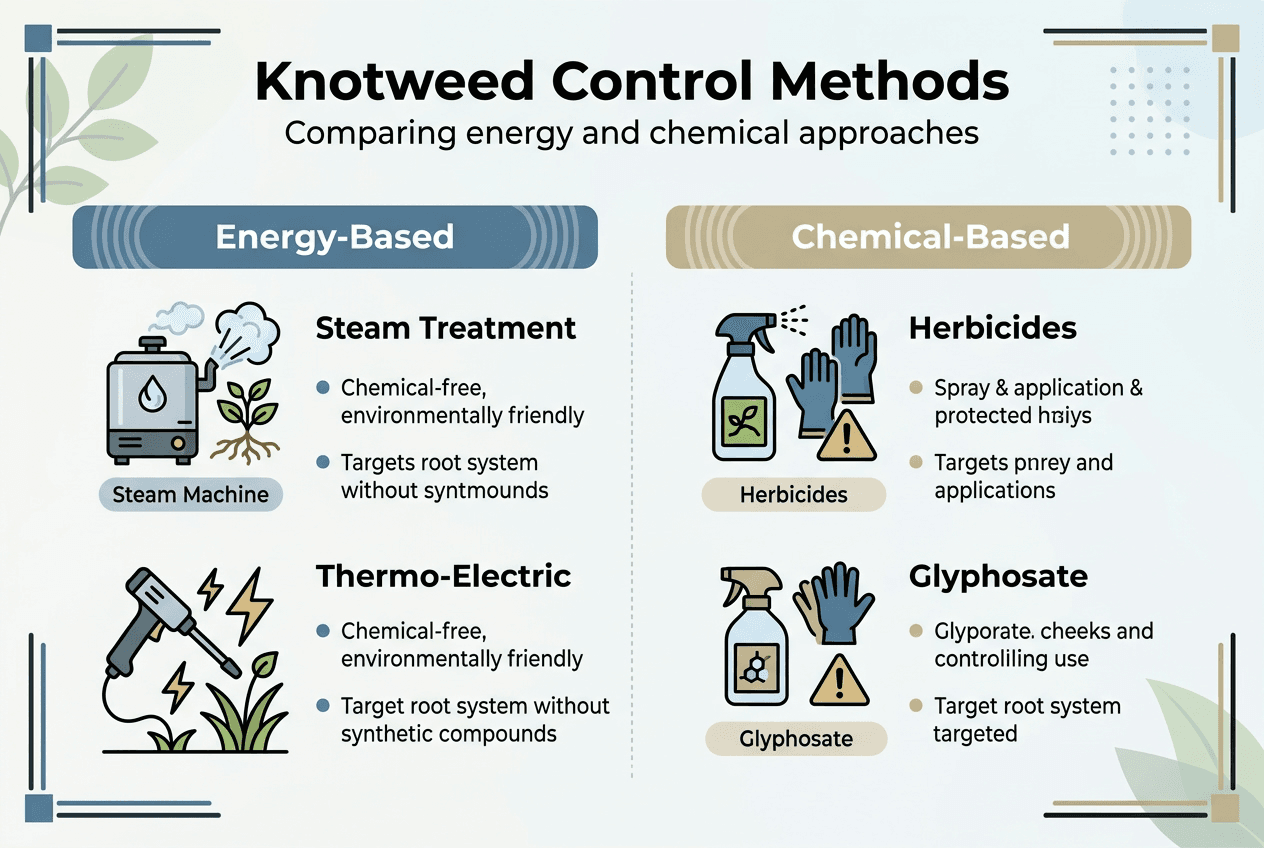
无化学处理优势 5000伏高压电技术破坏植物细胞,环保安全无污染,适合长期生态治理
贷款审批要求 需符合RICS标准的调查报告和管理计划,保障交易合规
费用透明化 调查费用仅涵盖检测与报告,处理、保险及监督属额外收费项目
及早行动必要性 延迟调查导致高额修复费、贷款拒绝及邻里法律纠纷风险

杂草调查费用的构成与影响因素

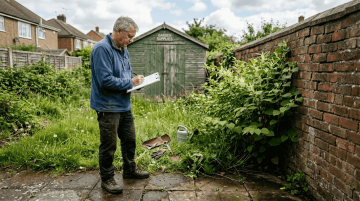
理解调查费用的具体组成,是合理预算规划的第一步。英格兰、威尔士和爱尔兰住宅日式虞美人草调查价格从£100起,复杂案例最高可达£1500。这一价格差异主要由以下因素决定。

物业的地理位置和可及性直接影响调查成本。伦敦及周边地区调查费用通常高于偏远乡村,因为调查师的交通时间和人工成本更高。物业面积越大,需要勘察的范围越广,检测时间更长,费用相应增加。

植被密度和生长阶段同样关键。如果日式虞美人草已蔓延至多个区域或侵入邻近物业边界,调查师需要更详细的边界测定和风险评估,这会推高报价。调查费用集中于现场检测、边界测定及报告编制,不包含后续治理费用。

部分调查公司提供免费调查服务,但通常附带条件,例如要求客户签订后续治理合同。这种模式看似降低前期成本,实际上可能限制您选择更具性价比的处理方案。因此,在接受免费调查前,务必确认是否存在捆绑义务。

主要影响因素:

  • 物业地理位置和交通可及性
  • 物业面积和勘察范围大小
  • 植被密度、生长阶段及边界复杂度
  • 是否需要邻近物业联合调查
  • 调查公司资质认证级别

典型调查费用区间对比:

物业类型 面积范围 调查费用
小型住宅 100平方米以下 £100至£300
中型住宅 100至500平方米 £300至£700
大型住宅 500平方米以上 £700至£1500
商业物业 视具体情况 £1000起

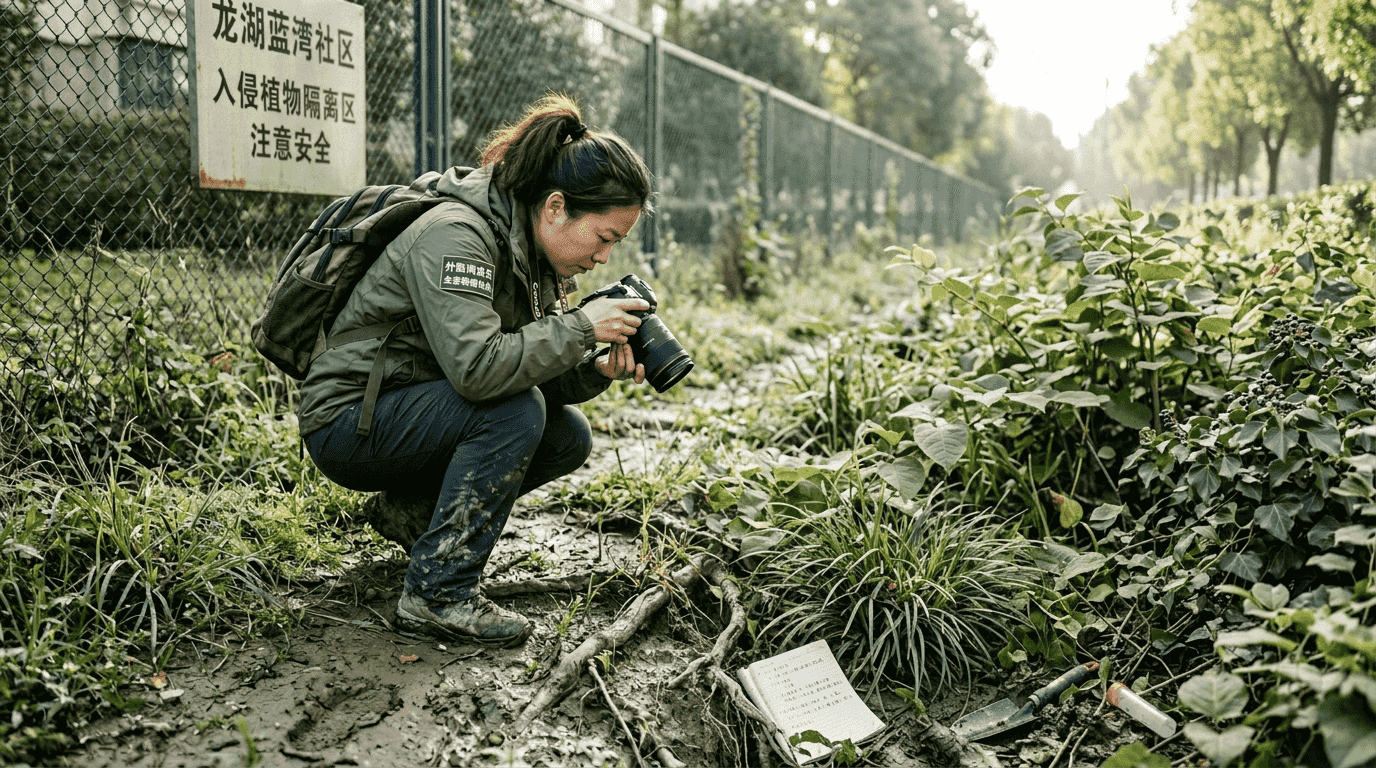
杂草调查成本影响因素一览图

专业提示: 获取报价时,务必要求调查公司明确列出调查费用与后续治理费用的分项清单。避免因模糊报价导致预算超标,同时确认调查师是否持有PCA或RICS认证资质。

了解费用构成后,您可以参考入侵杂草调查指南获取更详细的调查流程说明。如需进一步了解管理步骤,请查阅入侵杂草管理步骤。更多官方认证信息可参考RICS认可的调查费用指南。

无化学药剂的处理方案及技术原理

传统化学药剂处理虽然常见,但存在环境污染、土壤残留及长期生态风险。Japanese Knotweed Agency率先采用无化学高压电技术,为英格兰、威尔士和爱尔兰地区家庭业主提供更安全、环保的治理方案。

利用5000伏高压电破坏植物细胞,直接作用于日式虞美人草的根茎系统,造成内部细胞损伤并耗尽能量储备。每次治疗都针对广泛的根茎网络,逐步削弱植物的再生能力,最终实现彻底根除。

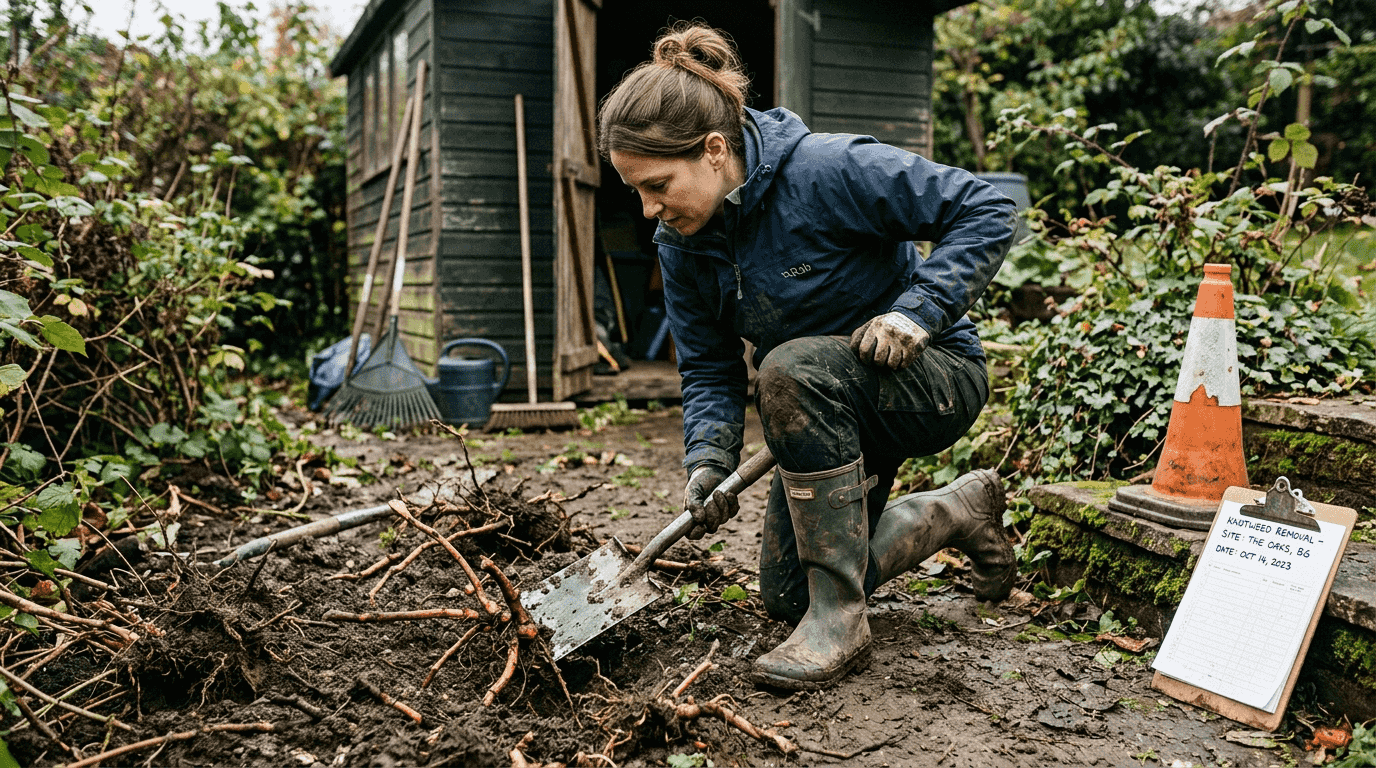
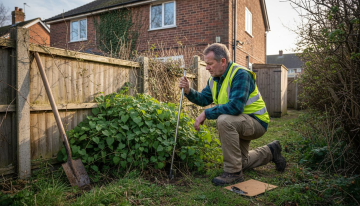
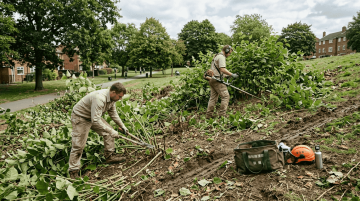
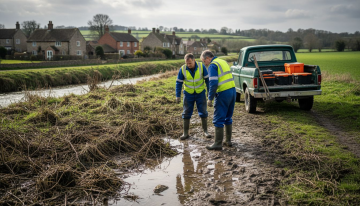
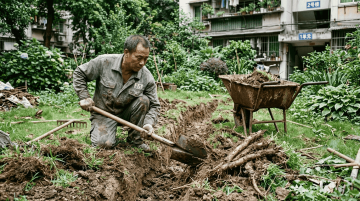
工作人员正在利用高压电技术进行除草作业。

高压电技术的核心优势在于精准定向。电能传递不会在土壤中残留有害物质,对周边植被、水源及生态系统影响极低。这一方法尤其适合靠近水源、儿童活动区域或有机农场的物业,避免了化学药剂可能带来的健康隐患。

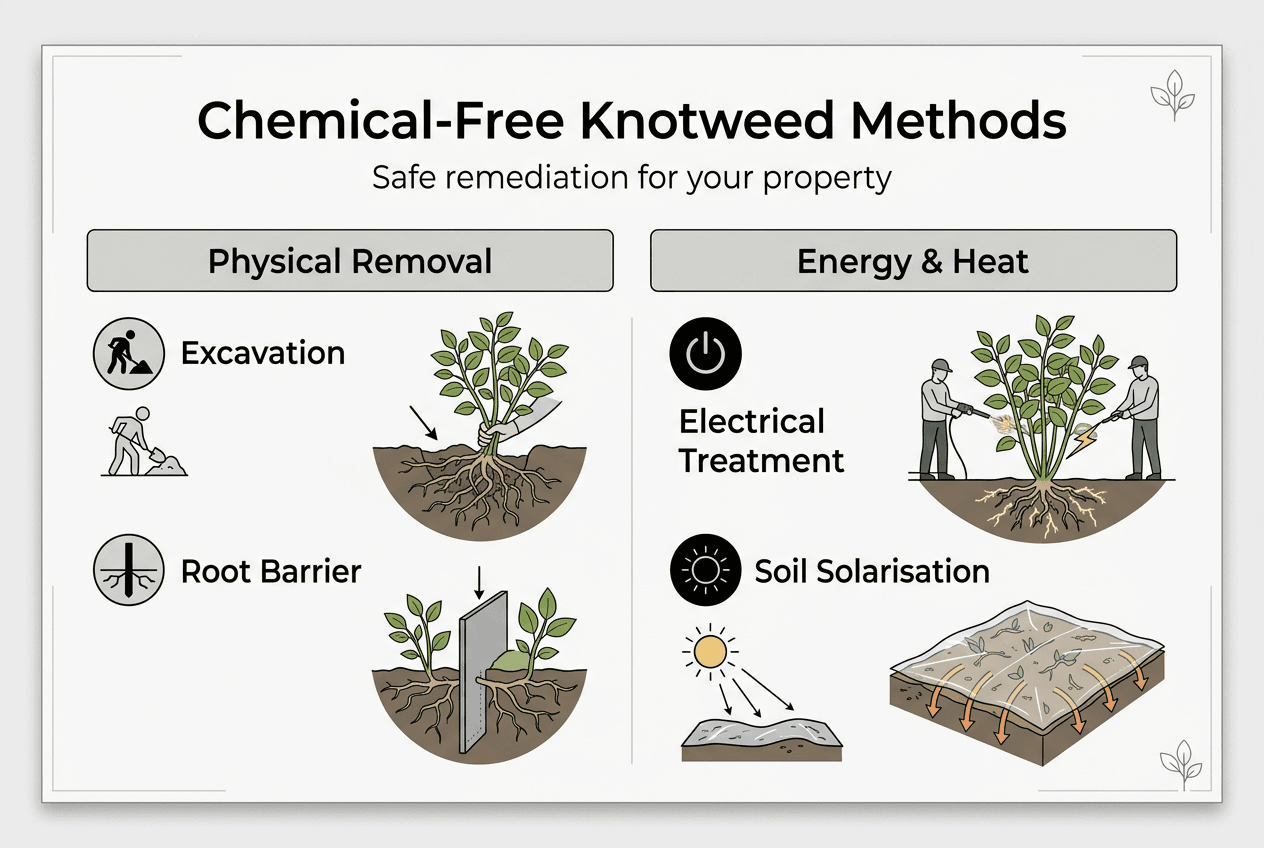
除高压电技术外,Japanese Knotweed Agency还提供根障设置和挖掘方案作为辅助治理措施。根障通过物理阻隔防止根茎横向蔓延,适合需要立即控制扩散范围的紧急情况。挖掘方案则适用于根茎分布较浅、需要快速清除的小面积区域。

无化学处理的核心优势:

  • 无土壤化学残留,保护生态环境
  • 精准定向作用,不损伤周边植物
  • 适合敏感区域,儿童和宠物安全
  • 符合绿色建筑和可持续发展标准
  • 治疗效果可量化监测,透明度高

专业提示: 选择无化学处理方案时,确认供应商是否提供治疗后监测和保险保障。Japanese Knotweed Agency的管理计划包含定期现场评估和10年保险保证,确保长期治理效果。

如需深入了解技术细节,请访问无化学除草技术。完整治理流程可参考无化学彻底治理流程

贷款机构对调查报告的要求与法规背景

购买或重新抵押物业时,贷款机构对日式虞美人草的存在极为敏感。贷款审批需符合RICS标准的调查报告和管理计划,保证合法合规,避免未来法律和财务风险。

RICS合规调查报告必须包含以下核心内容:植被的精确位置和扩散范围、与物业建筑结构的距离、当前生长阶段及潜在风险评估、推荐的治理方案和预估费用。报告必须由持有PCA或RICS认证资质的调查师出具,才能被贷款机构接受。

管理计划是调查报告的延伸,详细说明治理时间表、采用的技术方法、监督频率及完成后的保险保障。贷款机构通常要求管理计划由专业公司执行,并提供至少10年的保险保证,以覆盖植物复发的风险。

法律责任方面,物业业主有义务防止日式虞美人草扩散至邻近物业。如果因疏忽导致邻里纠纷或物业贬值,业主可能面临法律诉讼和高额赔偿。因此,及早完成调查并实施治理计划,不仅是贷款审批的必要条件,更是保护自身合法权益的关键措施。

RICS合规调查报告必备内容:

  • 植被精确位置和扩散范围测绘
  • 与建筑结构的距离测量
  • 当前生长阶段和风险等级评估
  • 推荐治理方案和预估费用
  • 调查师资质认证证明

贷款机构审批流程:

  1. 提交RICS合规调查报告
  2. 贷款机构评估风险等级
  3. 要求提供管理计划和保险保障
  4. 审批通过或要求完成治理后放贷

更多业主调查指南可参考业主调查指南

常见误区澄清:调查费用与后续处理的关系

许多家庭业主误以为支付调查费用后,后续治理和监督服务均已包含,实际情况并非如此。理解调查费用与处理费用的明确区别,是避免预算超支的关键。

调查费用通常只涵盖现场检测、边界测定和书面报告编制。报告确认植被存在、评估风险等级并推荐治理方案,但不包含实际的治理操作、监督服务或保险保障。这些项目均需额外签订合同并单独付费。

部分公司提供免费调查服务,但附带条件是客户必须与其签订后续治理合同。这种模式表面降低前期成本,实际上可能限制您比较不同供应商的治理报价,最终导致总成本更高。因此,接受免费调查前,务必确认是否存在捆绑义务。

保险保障是另一个容易被忽视的成本项目。专业治理公司通常提供10年保险保证,覆盖植物复发的风险。这一保障对贷款审批至关重要,但属于额外收费服务,费用根据物业规模和治理方案复杂度而定。

目测无法取代专业调查。日式虞美人草的根茎系统可深达3米,即使地表无明显迹象,地下根茎可能已广泛扩散。贷款机构不接受基于目测的风险评估,必须由认证调查师出具正式报告。

常见误区总结:

  • 误区:调查费用包含治理和监督服务
  • 现实:调查仅涵盖检测和报告,治理需另行付费
  • 误区:免费调查是最划算的选择
  • 现实:免费调查通常附带治理合同捆绑义务
  • 误区:目测可替代专业调查
  • 现实:贷款机构要求认证调查师出具正式报告

实际案例与费用效益比较

通过具体案例对比,可以更直观理解不同调查策略和处理方案的成本效益差异,助力您做出明智决策。

案例1:小型住宅,及早调查与处理
一位威尔士家庭业主在购房前委托调查,发现花园角落有小面积日式虞美人草。调查费用£150,报告建议采用高压电治疗。治理合同费用£1200,包含3次治疗和5年保险保证。总成本£1350,贷款顺利批准,物业交易未受影响。

案例2:中型住宅,延迟调查导致高额修复
一位英格兰业主忽视卖方披露的杂草信息,未进行专业调查直接购房。两年后植物扩散至地基,造成结构裂缝。修复费用£8000,加上紧急治理费用£3500,总成本£11500,远超及早调查和处理的开销。

案例3:大型住宅,无化学方案长期效益
一位爱尔兰业主选择传统化学药剂治理,初期费用较低,但需连续3年多次喷洒,总成本£4500。邻居担忧化学残留,引发纠纷。后转用Japanese Knotweed Agency高压电方案,一次性费用£3200,无环境争议,获10年保险保证。

费用效益对比表:

策略 调查费用 治理费用 总成本 风险
及早调查+无化学处理 £150 £1200 £1350
延迟调查+紧急修复 £200 £11300 £11500
化学药剂多年治理 £100 £4400 £4500
无化学一次性处理 £150 £3050 £3200

策略选择建议:

  • 低预算家庭:选择起步价调查供应商,优先控制植被扩散,再分阶段治理
  • 环保优先家庭:选择无化学电能处理,避免土壤污染和邻里纠纷
  • 急需贷款批准:选择RICS认证调查师和保险保障完善的治理方案
  • 长期投资考虑:选择一次性无化学处理,避免化学药剂的多年重复成本

更多处理流程细节可参考入侵杂草处理流程

结论与行动指南

日式虞美人草调查费用从£100至£1500不等,但这仅是物业保护的第一步。理解费用构成、选择合规方案、及早采取行动,才能有效避免高额修复费和法律风险。

结合物业特点合理预算调查与处理费用。小型住宅可选择起步价调查,中大型物业需预留更高预算用于详细边界测定。治理费用应单独核算,并确认是否包含监督服务和保险保障。

优先选用PCA和RICS认证的专业机构。认证资质保证调查报告符合贷款机构要求,避免因报告不合规导致审批延误或拒绝。查验调查师的认证证书和过往案例,确保其经验和专业度。

无化学处理方案是环保安全首选。高压电技术无土壤残留,对周边生态影响低,符合绿色建筑标准。尤其适合靠近水源、儿童活动区域或有机农场的物业。

及早完成调查避免重大经济与法律风险。延迟调查可能导致植物扩散至地基,造成结构损坏和高额修复费。贷款机构可能拒绝批准,影响物业交易进程。

行动步骤清单:

  1. 联系RICS认证调查师预约现场检测
  2. 获取详细调查报告和风险评估
  3. 比较不同供应商的治理方案报价
  4. 优先考虑无化学处理和保险保障
  5. 将调查报告提交贷款机构审批
  6. 签订治理合同并执行管理计划

专业提示: 在签订购房合同前完成调查,避免交易后发现问题导致被动局面。如果卖方已提供调查报告,务必核实报告的时效性和认证资质,必要时委托独立调查师复核。

选择Japanese Knotweed Agency,保障您的物业安全

Japanese Knotweed Agency专注无化学药剂处理,利用5000伏高压电技术彻底根除日式虞美人草及其他入侵植物。我们覆盖英格兰、威尔士和爱尔兰全境,提供符合RICS标准的调查报告、定制管理计划及10年保险保证,助力您顺利通过贷款审批。

https://japaneseknotweedagency.co.uk

我们的环保方案无土壤残留,保护您的家庭和生态环境。无论是购房前调查、紧急治理还是长期监督,Japanese Knotweed Agency都能为您提供专业支持。访问我们的入侵杂草调查指南了解详细流程,或查阅无化学药剂处理流程获取技术说明。如有疑问,请浏览常见问题解答或直接联系我们的专家团队。

常见问题解答

日式虞美人草调查费用通常是多少?

调查费用从£100至£1500不等,取决于物业面积、地理位置和植被复杂度。小型住宅通常在£100至£300区间,大型或复杂物业可能达到£1500。选择RICS认证调查师可确保报告符合贷款机构要求。

无化学处理如何保障环保安全?

Japanese Knotweed Agency采用5000伏高压电技术,直接破坏植物细胞和根茎能量储备,无化学残留。这一方法对土壤、水源和周边植被无污染,适合儿童活动区域和有机农场。治疗效果可量化监测,透明度高。

为什么需要RICS合规调查报告?

贷款机构要求RICS合规报告作为审批依据,确保风险评估准确且治理方案可行。非认证报告可能导致贷款拒绝或交易延误。合规报告还能保护业主免受未来法律纠纷,特别是涉及邻里扩散责任时。

调查费用是否包含后续治理?

调查费用仅涵盖现场检测、边界测定和书面报告,不包含治理操作、监督服务或保险保障。治理需单独签订合同并付费。部分公司提供免费调查但要求捆绑治理合同,接受前需明确条款。

如何避免因延迟调查导致高额维修费?

在购房合同签订前完成调查,及早发现问题可协商由卖方承担治理费用。延迟调查可能导致植物扩散至地基,修复费用可高达数万英镑。贷款机构也可能因风险过高拒绝批准,影响交易进程。

推荐

Report Invasive Weeds: 80% Success Chemical-Free Treatment

Invasive weeds like Japanese Knotweed can slash your property value and block mortgage approvals. Many homeowners discover these aggressive plants too late, facing legal penalties and costly delays during property transactions. This guide walks you through mandatory reporting steps and safe, chemical-free treatment options that protect your investment while meeting legal obligations across England, Wales, and Ireland.

Table of Contents

Key Takeaways

Point Details
Legal reporting is mandatory Failure to report invasive weeds can result in fines up to £5,000 and mortgage delays.
Proper preparation is essential Accurate identification, PPE, and professional surveys are required before reporting.
Chemical-free treatment works Electric current methods achieve over 80% eradication in 18-24 months without environmental harm.
Avoid common mistakes Stopping treatment early causes 60% of failures; complete the full protocol.
Professional surveys support transactions Surveys cost £300-£600 and provide mortgage-valid documentation.

Homeowners must notify local councils and environmental authorities immediately after confirming invasive weed presence on their property. This obligation applies across England, Wales, and Ireland under environmental protection laws. Delayed or absent reporting triggers substantial penalties that compound financial losses from reduced property valuations.

Neighbor notification forms another critical legal requirement. If invasive weeds approach or cross property boundaries, you must inform adjacent landowners promptly. This prevents community spread and demonstrates good faith compliance. According to the Guide to Reporting Japanese Knotweed, non-compliance can result in fines up to £5,000 and mortgage processing delays of 20%.

The laws on Japanese Knotweed require specific documentation and follow-up procedures. Homeowners must maintain records of discovery dates, treatment plans, and ongoing monitoring results. These documents become essential during property sales or remortgaging applications.

Key legal obligations include:

  • Immediate notification to local environmental health departments
  • Written neighbor alerts if spread risk exists
  • Documentation of infestation location and extent
  • Regular progress reports during treatment phases
  • Retention of all correspondence and survey reports for property transactions

Failure to meet these requirements can also expose homeowners to legal claims for Knotweed trespass from neighbors experiencing property damage. Courts consistently rule against property owners who neglect their duty to control invasive species spread. Financial penalties extend beyond initial fines to include compensation for neighboring property devaluation and remediation costs.

Preparing to Report: What You Need Before Starting

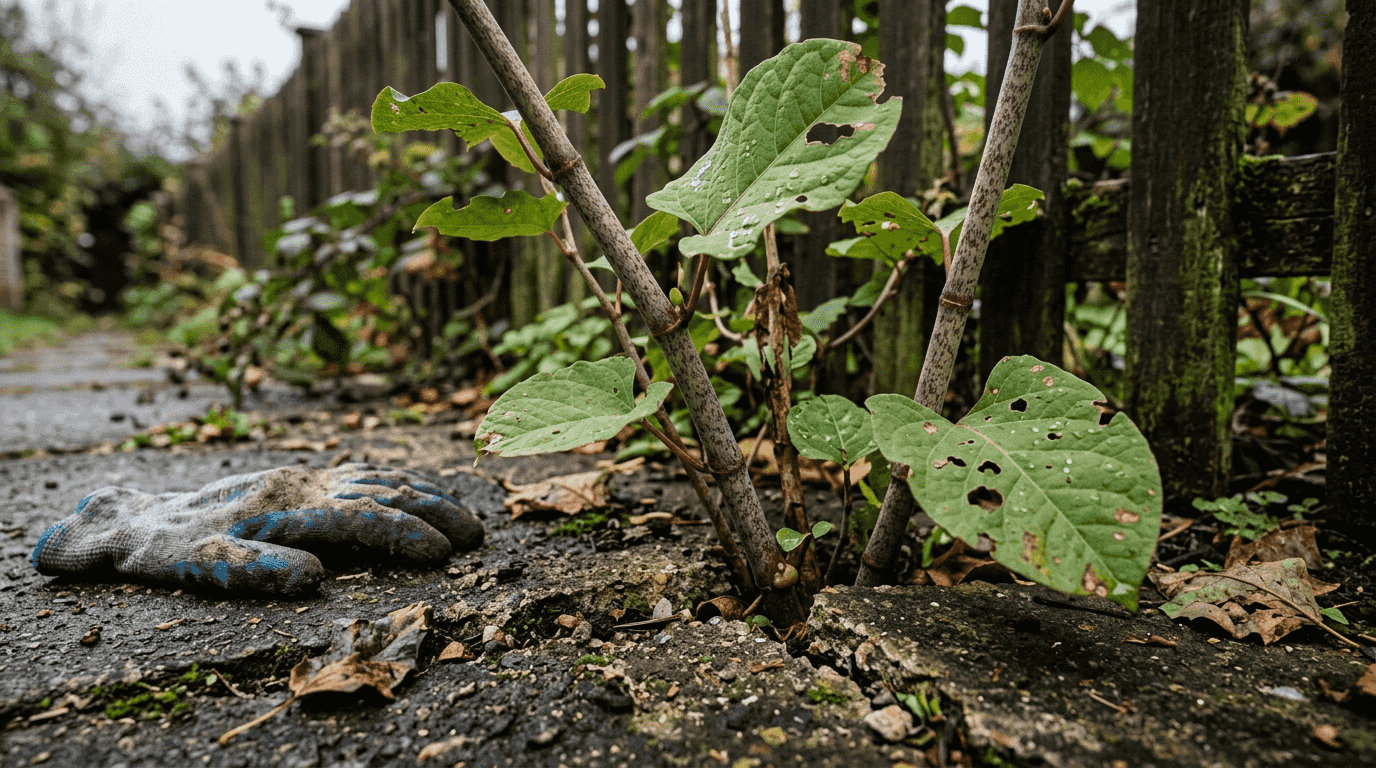
Accurate species identification prevents wasted effort on incorrect plants. Japanese Knotweed displays distinctive heart-shaped leaves, bamboo-like stems, and creamy white flower clusters during summer months. Similar looking plants like Russian Vine or Bindweed require different treatment approaches. Misidentification leads to inappropriate reporting and unnecessary alarm among buyers or lenders.

Personal safety must come first when inspecting potential infestations. According to safety guidance, standard PPE includes gloves, eye protection, and long sleeves to avoid dermal exposure. The plant’s sap can irritate skin, and broken stems release compounds that may trigger allergic reactions in sensitive individuals.

Professional surveys provide the foundation for effective reporting and treatment planning. Qualified surveyors map infestation extent using GPS technology and ground penetrating radar to detect underground rhizome networks. These comprehensive assessments identify spread patterns that casual observation misses. The invasive weed survey guide explains how early professional evaluation saves money by targeting treatment efforts precisely.

Evidence collection strengthens your legal position and supports future property transactions:

  • Take clear photographs from multiple angles showing leaf details and growth patterns
  • Record exact GPS coordinates of all visible growth areas
  • Note proximity to buildings, boundaries, and water features
  • Document seasonal changes through repeat photography
  • Measure approximate area coverage and stem density

Timing affects survey quality and reporting accuracy. Spring through early autumn offers optimal conditions for identification when foliage is fully developed. Winter surveys miss dormant plants entirely, leading to incomplete assessments.

Pro Tip: Schedule surveys during active growth periods between May and September when Japanese Knotweed displays full foliage and flowering characteristics. This timing ensures accurate identification and comprehensive mapping of the infestation extent.

Step-by-Step Guide to Reporting Invasive Weeds

Following a systematic approach ensures compliance while building strong documentation for property transactions. Each step builds upon the previous one to create a complete record that satisfies legal requirements and supports treatment planning.

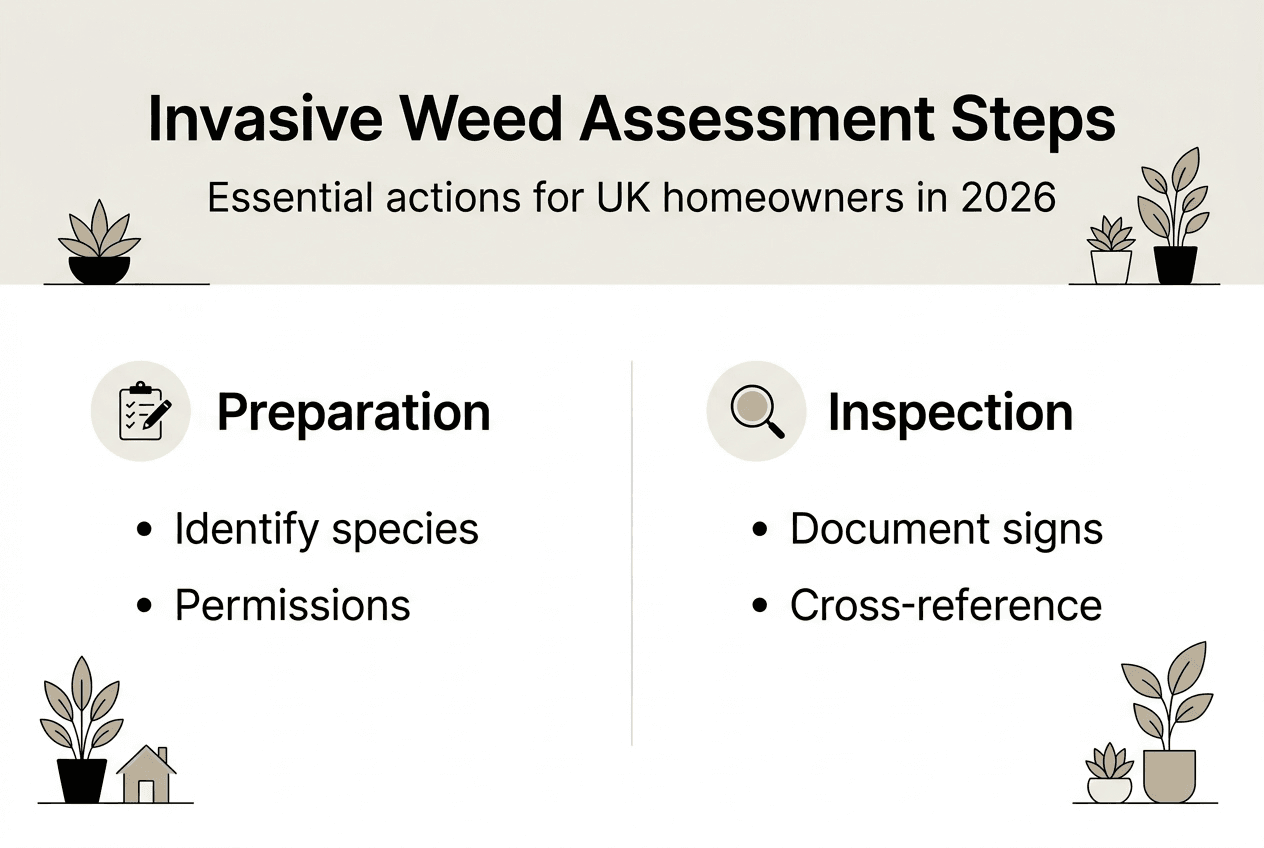
  1. Identify the invasive species accurately. Compare plant characteristics against verified identification guides or consult a qualified botanist. Confirm you have Japanese Knotweed, Giant Hogweed, Himalayan Balsam, or another regulated invasive species before proceeding. Misidentification wastes resources and creates unnecessary concern among lenders.

  2. Wear appropriate PPE and document the infestation thoroughly. Put on gloves, eye protection, and long sleeves before approaching the plants. Take photographs showing leaf structure, stem appearance, flower clusters, and overall growth patterns. Record GPS coordinates and measure the approximate area affected. Note any signs of spread toward boundaries or structures.

  3. Contact your local council environmental health department. Most councils provide online reporting forms or dedicated phone lines for invasive species notifications. Supply the photographs, location data, and species identification information. Request written confirmation of your report and any case reference numbers assigned. Understanding why report Knotweed helps frame your communication effectively.

  4. Inform neighbors if the infestation approaches shared boundaries. Provide written notice describing the discovery, location, and your planned response. Include contact information and offer to share survey results. This proactive communication prevents disputes and demonstrates responsible property stewardship. Keep copies of all neighbor correspondence.

  5. Commission a professional property survey from a qualified specialist. According to invasive weed mapping guidance, commissioning a professional survey supports legal reporting and mortgage processes. The formal report provides lenders with the documentation they require and establishes baseline conditions for treatment monitoring.

  6. Maintain comprehensive records and schedule follow-up checks. Store all photographs, survey reports, correspondence, and treatment plans in a dedicated file. Set calendar reminders for quarterly monitoring during treatment phases. Document any changes in plant distribution or growth vigor. These invasive weed management steps create an audit trail that protects your interests during property transactions.

Chemical-Free Treatment Options and Their Application

Electric current treatment represents a breakthrough in safe invasive weed control. Specialized equipment delivers up to 5000 volts directly into plant stems, causing immediate cellular damage throughout the rhizome network. This method avoids chemical residues that contaminate soil and groundwater, making it ideal for properties near streams, ponds, or wells.

Technician using electric weed treatment equipment

Treatment protocols require multiple sessions spaced over 18 to 24 months for complete eradication. Each application depletes energy reserves stored in underground rhizomes, progressively weakening the plant’s regenerative capacity. According to chemical-free eradication research, electric current treatments achieve over 80% eradication within 18-24 months without environmental contamination.

The chemical free knotweed treatment process follows a structured schedule. Initial treatments target visible stems during peak growing season. Follow-up sessions occur at six to eight week intervals to address regrowth from surviving rhizome fragments. Technicians adjust voltage and application duration based on plant response and seasonal factors.

Treatment Method Duration Success Rate Environmental Impact Suitability Near Water
Electric Current 18-24 months 80%+ None Excellent
Chemical Herbicides 12-36 months 85-90% Moderate to High Poor
Excavation Immediate 95%+ High (disposal) Good
Root Barriers Ongoing containment Prevents spread Low Excellent

Root barriers complement electric treatment by preventing lateral rhizome spread during the eradication phase. Professional installers bury high-density polyethylene membranes to depths of 1.5 to 2 meters around treatment zones. These physical barriers stop underground runners from colonizing adjacent areas or crossing into neighboring properties.

Comparing chemical vs eco invasive weed treatments reveals trade-offs between speed and safety. Chemical herbicides like glyphosate work faster but persist in soil for months. They pose risks to beneficial plants, soil organisms, and aquatic life if applied near water features. Regulatory restrictions increasingly limit herbicide use in residential areas.

Pro Tip: Combine electric current treatment with root barrier installation for maximum effectiveness. The barriers contain the infestation while treatment eliminates existing plants, creating a comprehensive management approach that satisfies lenders and protects property values.

The RHS documents treatment timelines showing that patience and consistency determine success. Homeowners who complete full treatment protocols achieve lasting eradication, while those who stop prematurely face recurring infestations that require starting over.

Common Mistakes to Avoid and How to Troubleshoot

Neglecting legal reporting obligations creates cascading problems that extend far beyond initial fines. Mortgage lenders routinely check local authority records for invasive weed reports during property transactions. Unreported infestations discovered during buyer surveys can collapse sales or trigger price reductions exceeding treatment costs. Always report promptly to establish your responsible approach and protect your legal position.

Stopping treatment before completion guarantees failure. According to treatment failure analysis, stopping treatment too early contributes to over 60% of treatment failures. Rhizome fragments remain viable for years underground, regenerating plants rapidly once treatment pressure ceases. Commit to the full 18 to 24 month protocol regardless of visible progress.

Inadequate or absent property surveys before treatment wastes resources and misses infestation extent. DIY assessments frequently underestimate rhizome spread by 40% or more, leading to incomplete treatment zones. Professional surveyors use specialized detection equipment that reveals underground networks invisible to casual inspection. Learning about survey errors in invasive weed detection helps homeowners choose qualified professionals.

Improper root barrier installation allows rhizomes to bypass containment:

  • Barriers must extend at least 1.5 meters deep to block vertical rhizome growth
  • Seams require heat welding, not mechanical fasteners that create breach points
  • Installation needs certified professionals familiar with soil conditions and water tables
  • Regular inspections detect breaches before significant spread occurs

Documentation lapses undermine legal compliance and treatment verification. Photograph treatment sessions, retain all service reports, and maintain correspondence logs. These records prove treatment consistency to mortgage lenders and provide evidence if disputes arise with neighbors or buyers.

When problems emerge during treatment, contact your service provider immediately rather than waiting for scheduled sessions. Early intervention addresses equipment issues, adjusts protocols for unexpected regrowth, and prevents minor setbacks from becoming major failures.

Expected Results and Outcomes After Reporting and Treatment

Full eradication timelines require patience and consistent application over 18 to 24 months. Visible plants typically die back within weeks of initial electric current treatment, but underground rhizomes persist much longer. Quarterly monitoring throughout the treatment period tracks regrowth patterns and guides session scheduling. Homeowners who maintain regular treatment schedules see progressive reduction in plant vigor and distribution.

Success rates exceeding 80% make chemical-free protocols highly reliable when properly executed. The RHS confirms treatment duration that treatment timelines typically last 18-24 months with eradication success above 80%. These outcomes match or exceed chemical herbicide performance without environmental risks or regulatory complications.

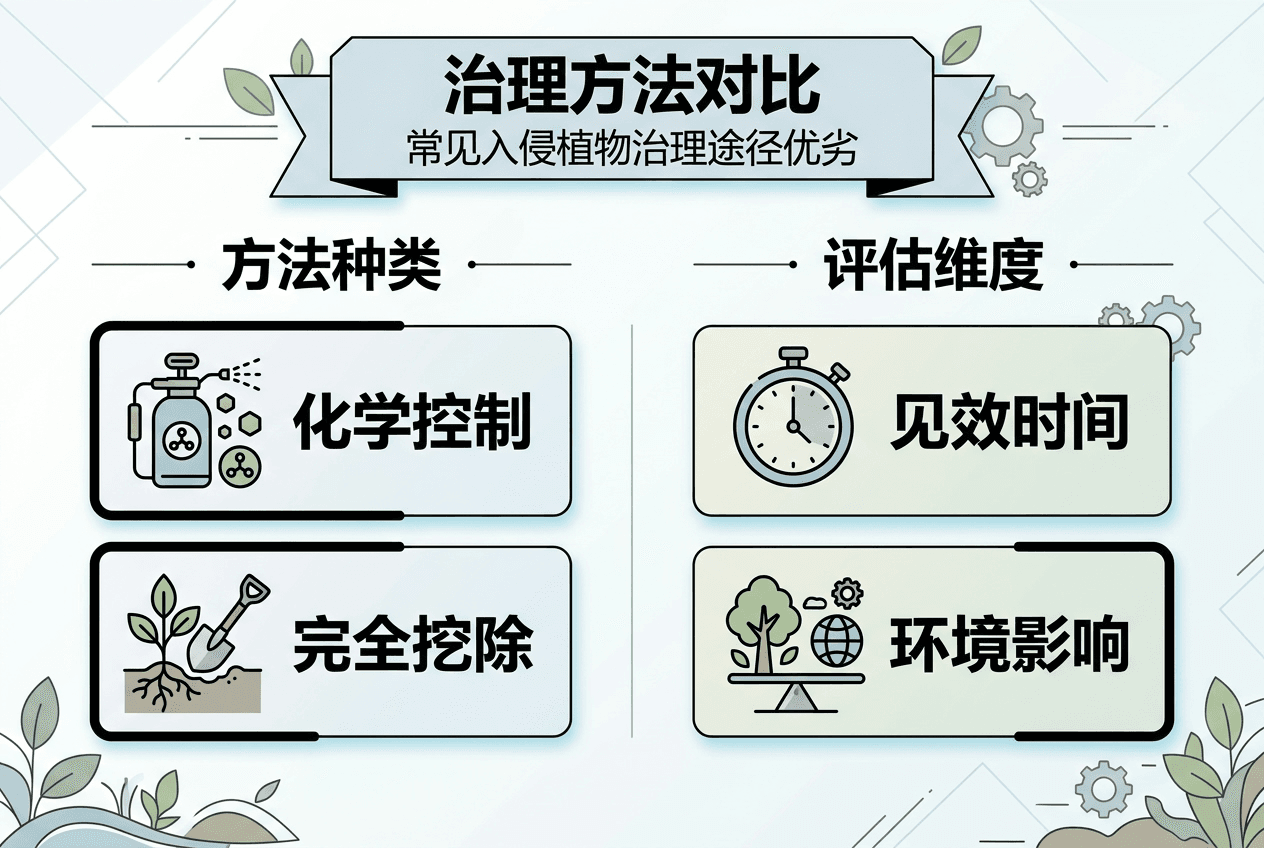
Infographic comparing weed treatment methods and success

Professional surveys provide essential documentation for property transactions. According to industry cost analysis, professional invasive weed surveys cost between £300 to £600 in the UK. This investment yields mortgage-valid reports that reduce transaction delays by 20% compared to properties lacking proper documentation.

Outcome Metric Timeline Success Rate Property Impact
Visible plant elimination 3-6 months 90%+ Immediate aesthetic improvement
Rhizome network depletion 12-18 months 80%+ Progressive weakness
Complete eradication 18-24 months 80%+ Full property value restoration
Mortgage approval support Immediate with survey 95%+ Reduces delays by 20%
Environmental safety confirmation Throughout treatment 100% No soil or water contamination

Proper treatment documentation dramatically improves lender and buyer acceptance. Banks require evidence of active management plans before approving mortgages on affected properties. Complete treatment records, professional surveys, and ongoing monitoring reports satisfy these requirements. The weed survey guide for property purchase explains exactly what documentation lenders expect.

Environmental safety benefits extend beyond individual properties to community-wide advantages. Chemical-free treatment near schools, playgrounds, and residential gardens eliminates exposure concerns for children and pets. Absence of herbicide runoff protects local waterways and wildlife habitats, improving community support for treatment programs.

Protect Your Home with Expert Chemical-Free Solutions

Taking control of invasive weed problems protects your property investment and streamlines future transactions. Expert chemical free invasive plant solutions combine proven electric current technology with professional monitoring to ensure lasting results. These specialized services eliminate guesswork while meeting all legal reporting requirements.

https://japaneseknotweedagency.co.uk

Professional surveys deliver the legal documentation that mortgage lenders and conveyancing solicitors require. Detailed mapping and formal reports from qualified specialists satisfy due diligence requirements, preventing transaction delays and protecting sale prices. Access comprehensive step-by-step invasive weed management guidance and invasive weed survey services designed specifically for homeowners facing these challenging situations.

Frequently Asked Questions

How long does chemical-free invasive weed treatment take?

Chemical-free treatments using electric current technology typically require 18 to 24 months with multiple sessions for complete eradication. The RHS treatment guidelines confirm that treatment duration is typically 18-24 months for full eradication. Success depends on maintaining consistent session schedules and monitoring regrowth throughout the treatment period.

What personal protective equipment (PPE) is needed when handling invasive weeds?

Always wear gloves, eye protection, and long sleeves when inspecting or handling invasive weeds to prevent skin irritation and allergic reactions. According to HSE safety standards, required PPE includes gloves, eye protection, and long sleeves. This basic protection prevents direct contact with plant sap and broken stem fragments that can cause dermal exposure issues.

How much does a professional invasive weed survey cost?

Professional invasive weed surveys typically cost between £300 and £600 depending on property size, infestation complexity, and access challenges. The Homebuyers Guide documents that professional surveys cost between £300 and £600 in the UK. These surveys include detailed mapping, species identification, treatment recommendations, and formal reports that satisfy mortgage lender requirements.

Can I treat invasive weeds myself without reporting?

You must legally report invasive weed presence to local authorities regardless of whether you plan DIY treatment or hire professionals. Failure to report can result in fines up to £5,000 and creates legal liability if the infestation spreads to neighboring properties. Reporting establishes your compliance and protects against future claims, making it essential before starting any treatment program.

防止结缕草再生操作全流程指南:安全无化学方法

购买或再抵押物业时,许多英国和威尔士的房主都会面临日本结缕草带来的困扰。无论是担心贷款评估还是维护花园环境,解决这种入侵植物都变得尤为关键。传统化学药剂往往让人望而却步,越来越多人转向无化学消除方案,不仅重视环保,更符合贷款方和买家的严格要求。本文将一步步介绍如何科学规划、彻底解决日本结缕草问题,让您的物业恢复安全与价值。

目录

快速摘要

关键点 说明
1. 了解结缕草分布 在处理前进行彻底的现场勘察,确保掌握结缕草的具体分布和规模。
2. 采用无化学电能处理 使用高压电对根茎进行处理,避免使用化学药剂,保护生态环境。
3. 安装根障隔离装置 设立物理屏障以阻止结缕草的根茎再生,防止后续入侵。
4. 定期检查治疗进度 完成治疗后,建立检查时间表,关注新芽或颜色变化,确保彻底根除。
5. 保存记录和进度照片 详细记录治疗过程和效果,拍摄进度照片,有助于未来的融资和资产评估。

第一步:准备清理现场并评估结缕草分布

在开始任何处理工作前,您需要充分理解您的物业上的结缕草具体分布在哪里,规模有多大。这个阶段直接影响整个治理计划的成功率。

进行初步现场勘察是第一个关键行动。走遍您的整个物业,包括花园、篱笆线、停车区和房屋周围的隐蔽区域。结缕草通常会在春夏季节长出红褐色的芽,这是最容易识别的时期。但要知道,这种入侵植物会通过地下根茎网络扩展,有时候地面以上看不到任何迹象,地下却已经有庞大的根系统。

在勘察时需要检查的关键区域包括:

  • 物业边界及与邻近土地的接触点
  • 围墙、栅栏和车道下方的土壤
  • 池塘、溪流或排水沟附近
  • 之前进行过建筑或景观工作的区域
  • 硬化地面(混凝土、铺路石)下方的裂缝

记录您的发现非常重要。使用手机拍摄照片,标注日期,记下每个受影响区域的大致面积。这些记录将帮助您了解受感染范围的严重程度,并为后续的无化学消除方案规划提供依据。

**清理现场意味着什么?**这包括移除现场上任何可能妨碍治疗的物品。清除杂草周围的花盆、木料堆积、花园家具或其他杂物。如果结缕草靠近您的房屋、车库或棚屋,您需要确保这些区域有足够的通道供专业人员进行设备操作和治疗程序。

对于英格兰和威尔士的房主来说,了解您物业上的完整植物分布情况对于贷款机构和买家的评估至关重要,也是制定有效治理策略的基础。

在这个阶段,您也应该检查邻近物业上是否存在结缕草。如果有,这会影响您的长期管理计划,因为根茎可能会继续从相邻土地向您的物业扩展。

专业建议 准备一个简单的记录表,包括发现日期、位置、估计面积和照片位置。这份文件在处理保险索赔或与买家讨论物业条件时都会派上用场。

第二步:实施无化学电能处理根系

现在您已经确定了结缕草的位置和规模,是时候实施治疗了。无化学电能处理是一种创新的方法,它直接针对隐藏在地下的根茎网络,而无需使用任何化学物质或除草剂。

理解电能处理的工作原理非常重要。这种技术利用高达5000伏的直接电能,进入土壤中的根茎系统,造成细胞内部损伤并耗尽根茎网络中的能量资源。与传统的化学方法不同,它完全不会对周围的生态系统造成伤害,这对想要保护花园和邻近自然环境的房主来说是个好消息。

处理过程通常涉及以下步骤:

  1. 在受影响区域周围安装电极或探针
  2. 将高压电装置连接到现场电源或便携式发电机
  3. 激活系统,使电流流经土壤和根茎系统
  4. 根据植物的规模和根系分布,治疗可能需要进行多次
  5. 监测结缕草的反应,通常在数周内会看到明显衰退

您应该期待在安全的电能除草方案中看到什么呢?首次治疗后,结缕草可能不会立即死亡。地下的根茎网络需要时间来处理细胞损伤。您可能会在前两到四周内看到叶片变色或枯萎的迹象。

多次处理是标准的做法。一棵成熟的结缕草植株,其根系可能深至三米以下并横向扩展很远,通常需要3到5次处理才能完全根除。这不是缺陷,而是彻底根除这种顽固植物的必要条件。

下表对比了不同根除结缕草方法的主要特点:

方法类型 环境影响 见效速度 适用场景
无化学电能处理 基本无负面影响 2-4周可见变化 注重环保的物业
传统化学药剂 有化学残留风险 1-2周初见效果 区域大、快速处理需
机械挖掘 土壤扰动较大 立即消除地上部分 根系深入、扩展广

对于购买或再抵押物业的房主来说,无化学电能处理提供了一种经过验证的解决方案,可以彻底根除结缕草,同时保持物业的环保凭证,这对未来的买家和贷款机构都有吸引力。

在整个处理过程中,确保现场保持清晰,没有人员或宠物在治疗区域附近活动。高压设备需要专业的安全操作,这就是为什么许多房主会选择与专业团队合作。

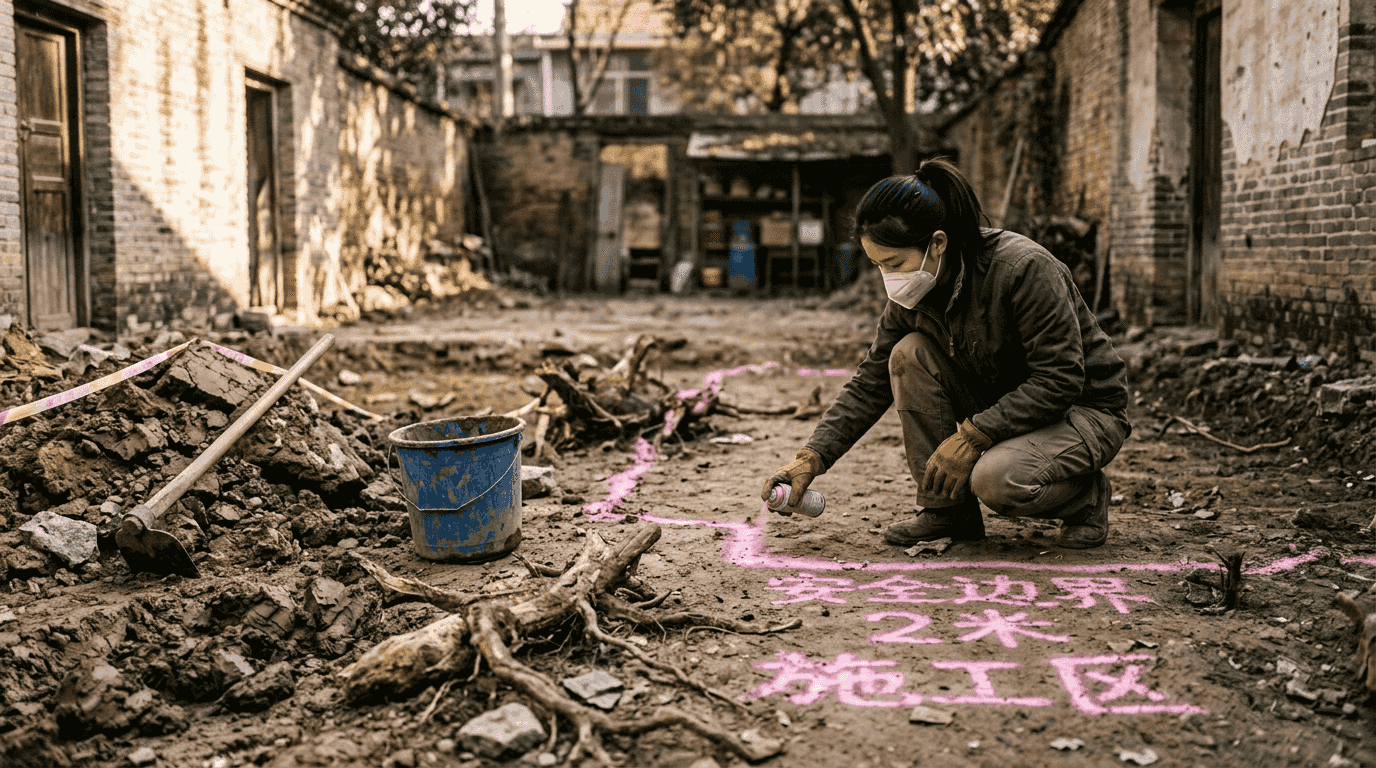
工作人员采用电动工具,安全地清除结缕草,确保作业高效又可靠。

专业建议 保存每次治疗的详细记录,包括日期、所用的电压设置和处理的具体区域,这样可以追踪进度并为保险或法律目的提供证明。

第三步:加装根障隔离与必要挖掘

在电能处理杀死根茎系统后,下一步是防止任何残留的碎片再生,并阻止邻近区域的根茎向您的物业扩展。根障隔离和有针对性的挖掘工作是长期防护的关键。

**根障隔离是什么?**它是一种物理屏障,通常由高密度聚乙烯或其他耐久材料制成,安装在土壤中以阻止根茎穿过。对于结缕草,根障应该至少深入地下1.5米,因为这种植物的根系可以深入非常深的地方。安装时,您需要沿着物业边界、花园边缘或任何可能受到未来入侵风险的区域进行。

安装根障的过程通常包括:

  1. 沿着目标区域挖掘深沟
  2. 清除沟中的任何残留植物材料
  3. 铺设根障材料,确保没有重叠或间隙
  4. 用土壤回填并夯实
  5. 监测边界,定期检查是否有根系穿透

必要的挖掘工作针对那些根障可能不够或已有明显根系扩展的区域。如果您发现结缕草的根系已经扩展到邻近物业或进入了结构基础附近的土壤,可能需要进行挖掘以清除受污染的土壤。这涉及移除顶部60到90厘米的土壤,其中大部分活跃的根茎网络存在。

根据除草根系清除指南的方法,挖掘出的土壤需要妥善处理。在英格兰和威尔士,含有结缕草的土壤被归类为受控废物,不能随意倾倒在普通垃圾填埋场。您需要将其运送到已获批准接收此类材料的专业处理设施。

对于进行物业改造或扩建的房主来说,根障隔离提供了长期保护,防止昔日被污染的邻近区域对您的物业构成未来威胁。

挖掘工作可能很昂贵,但当根系已经深入或广泛传播时,这是彻底根除的唯一方法。不要低估这一步的重要性。不完整的清除会导致再生,需要多年的后续处理。

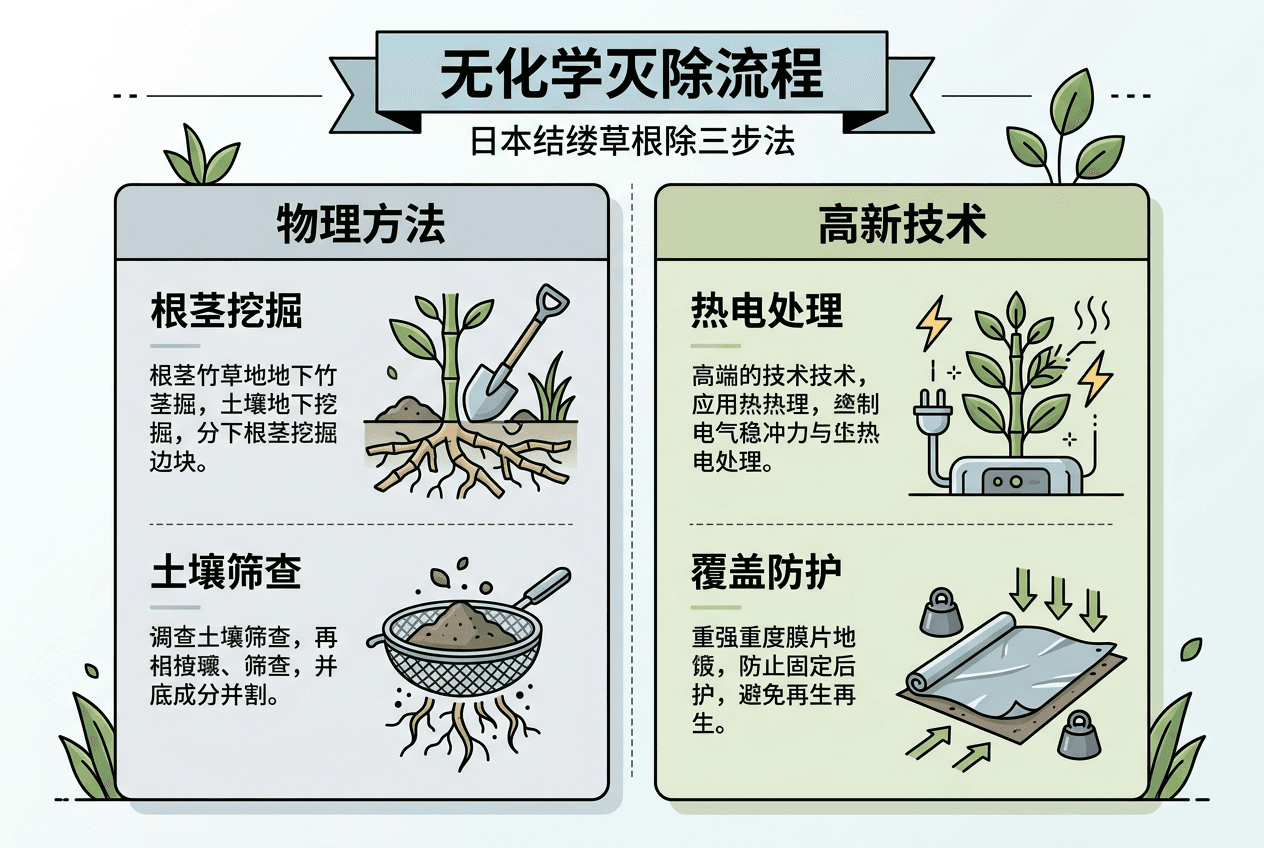
结缕草无化学防治流程图

以下表格帮助您快速了解根障与挖掘两种防护措施的作用及局限性:

防护措施 持续效果 主要优点 主要局限
根障隔离 长期阻断再入侵 减少外部根系蔓延 不适用于已有大量根系
现场挖掘 立即清除根茎 有效移除受污染土 成本高、扰动大

专业建议 在挖掘前联系当地议会,了解受控废物处理的具体要求和获批设施地点,这将为您节省时间并确保完全合规。

第四步:检查反馈并定期复查效果

治疗结缕草不是一次性的事件,而是一个需要持续监测的过程。在完成初期治疗后的数月内,定期检查和评估效果至关重要,以确保植物真正被根除,而不仅仅是暂时被抑制。

建立检查时间表是监测成功的第一步。在完成最后一次电能处理后,您应该每两周检查一次受影响区域,持续至少三个月。寻找任何新芽或叶片生长的迹象。结缕草死亡时会呈现棕色或黑色,叶片会干枯并最终脱落。任何绿色或新生长都表明植物仍在尝试恢复。

关键的检查指标包括:

  • 新芽或叶片的出现
  • 土壤中根茎碎片的残留
  • 植物颜色的变化(健康绿色变为棕色或黑色)
  • 相邻区域是否有扩展迹象
  • 根障安装区域是否有任何根系穿透

拍摄进度照片对于记录治疗效果非常有用。使用手机定期拍摄同一角度的照片,标注日期。这样可以明确看到植物从生机勃勃到完全枯萎的演变过程。这些照片对于贷款机构、买家或保险公司来说也很重要,因为它们提供了明确的处理证据。

根据完整的结缕草去除流程,如果您在复查时发现新的生长,可能需要进行额外的处理。这不是失败,而是正常的过程。某些情况下,深层或分散的根系需要多个治疗周期才能完全消除。

对于准备出售或再抵押物业的房主来说,详细的检查记录和进度照片是物业已被妥善处理的最有力证据,可以显著提高买家和贷款机构的信心。

在前六个月后,如果没有新的生长迹象,您可以将检查频率减少到每月一次。在第一年年底,如果结缕草仍然没有再生,您可以认为治疗已成功。但即使在此之后,仍然值得每年进行一次检查,以防止任何新的入侵。

专业建议 创建一个简单的电子表格记录每次检查的日期、观察结果和任何新生长的位置,这将帮助您识别治疗模式并为专业人士提供有价值的信息。

彻底告别结缕草困扰,选择安全无化学的专业解决方案

结缕草的地下根茎网络极难根除 文章中详细介绍了通过无化学电能处理和根障隔离,实现彻底清理和长期防护的关键步骤 如果您正为结缕草的持续扩散而烦恼 希望避免传统化学药剂带来的环境污染和健康隐患 这正是日本结缕草机构专注解决的痛点

https://japaneseknotweedagency.co.uk

我们使用高达5000伏的直接电能 有效破坏结缕草根系细胞 同时配备专业根障安装与挖掘服务 全方位保护您的物业免受再生威胁 选择Japanese Knotweed Agency 即刻享受无化学、环保安全的结缕草治理方案 通过安全的电能除草方案深入根系处理 并结合无化学消除方案确保绿色高效治理 现在就访问我们的官网了解更多详细流程和报价 恢复您的绿地宁静 从专业开始

常见问题

如何评估我物业上的结缕草分布情况?

在开始处理之前,您需要进行全面的现场勘察,记录结缕草的生长位置和规模。检查物业的每个角落,包括围墙、车道和水边,拍摄照片和标记受影响区域的面积。

无化学电能处理如何工作?

无化学电能处理利用高达5000伏的电流针对根茎网络,造成细胞损伤并耗尽其能量。安装电极并连接电源后,激活系统使电流流过土壤,根据根系的复杂程度,通常需要3到5次处理才能完全根除。

安装根障隔离的步骤是什么?

根障隔离需要在土壤中挖槽并放入特殊材料,以防止结缕草根系扩展。确保根障材料至少深入1.5米,并定期检查以防止任何根系穿透。

处理后我该如何监测结缕草的恢复情况?

完成处理后,建立一个定期检查时间表,每两周检查一次受影响区域,持续三个月。观察任何新芽或生长迹象,并拍摄进度照片,以便记录。

如果发现新生长,我该如何处理?

如果在定期检查中发现新的生长,可能需要进行额外的无化学电能治疗。这是正常的过程,应及时安排额外的处理,以确保彻底根除。

处理结束后,我的物业需要多久进行一次检查?

在完成初步处理后的前三个月,每两周检查一次。如果在前三个月没有新生长,则可以减少到每月检查。第一年结束时,如果没有再生长,可以认为治疗成功,但建议每年仍然进行一次检查。

推荐

Role of Rhizomes in Plant Invasion – Risks for UK Homes

Selling your home in the United Kingdom can turn stressful when Japanese Knotweed lurks beneath the surface. This invasive plant’s underground rhizome network can threaten foundations and derail property sales, requiring urgent attention from homeowners. Chemical-free eradication options such as thermo-electric treatment promise faster results while preserving soil health and biodiversity, offering a safer alternative to traditional herbicides. Understanding how these methods support survey requirements and mortgage approval is essential to protecting your property and peace of mind.

Table of Contents

Key Takeaways

Point Details
Understanding of Rhizomes Rhizomes enable invasive plants such as Japanese Knotweed to spread aggressively, making eradication difficult.
Property Risks These underground networks can damage property foundations, utilities, and neighbouring land, leading to significant repair costs.
Importance of Professional Treatment Specialist interventions are required for effective management, as traditional methods often fail to eliminate the entire rhizome network.
Legal and Financial Implications Property owners must comply with legal obligations regarding Knotweed, impacting mortgage approvals and potential liabilities.

Understanding Rhizomes and Plant Invasion

Rhizomes are underground stems that allow invasive plants to spread rapidly and establish themselves in new areas. Unlike traditional roots, rhizomes store nutrients and can produce new shoots at multiple points along their length, making them extraordinarily efficient at colonising territory.

For UK homeowners, understanding how rhizomes function is critical. Japanese Knotweed and similar invasive species use their rhizome networks to bypass surface barriers, penetrate foundations, and resurface in unexpected locations across your property. This underground architecture explains why these plants are so difficult to eradicate using conventional methods.

How Rhizomes Enable Plant Invasion

Rhizomes work as a distributed resource system. Instead of relying on a single root system, invasive plants can draw energy and nutrients from multiple points simultaneously, making them remarkably resilient to damage.

When you cut down Japanese Knotweed above ground, the rhizome network beneath remains intact and active. Each fragment of a severed rhizome can regenerate into a new plant, allowing the invasion to continue unchecked. Rhizosphere microbes mediate plant nitrogen uptake and support the competitive advantages these invasive species exploit during establishment and spread.

Key characteristics of invasive plant rhizomes include:

  • Storing energy reserves across an extensive underground network
  • Producing new growth points along their entire length
  • Adapting their growth patterns based on soil conditions and competition
  • Persisting for years even when the above-ground plant is destroyed
  • Spreading horizontally through soil, often reaching depths of 1.5 metres or more

Rhizomes and UK Property Risk

The rhizome-based survival strategy poses direct threats to UK homes. These underground networks can:

  • Push through concrete paths, driveways, and patios with remarkable force
  • Penetrate brick and mortar in property foundations
  • Damage underground utilities including water pipes and drainage systems
  • Spread across property boundaries to neighbouring land
  • Establish multiple satellite infestations from a single parent plant

Rhizome fragmentation is the primary reason Japanese Knotweed spreads so aggressively; even tiny rhizome pieces can develop into mature plants capable of reinfestation.

Rhizome production and competitiveness vary depending on environmental conditions, meaning established infestations become progressively more entrenched over time as the network expands and deepens into your soil.

Mortgage lenders recognise this threat. When Japanese Knotweed is present on a property, lenders typically require both a professional survey and a treatment plan before approving any mortgage. The rhizome network’s persistence and ability to regrow from fragments means standard removal methods rarely succeed without specialist intervention.

Why Traditional Methods Fail

Digging out rhizomes requires removing every fragment from your soil—an extraordinarily challenging task given how extensively they spread. Even professional excavation can miss sections, leading to regrowth months or years later.

Chemical treatments struggle because they must reach the entire rhizome network, which extends across significant depths and distances. Topical applications cannot adequately penetrate dense, established root systems.

This is where specialist treatment becomes essential. Japanese Knotweed Agency utilises direct energy delivery systems that reach throughout the rhizome network, causing internal cell damage and depleting the energy reserves these plants depend upon for survival and regrowth.

Pro tip: If you suspect Japanese Knotweed on your property, arrange a professional survey immediately—early detection and treatment prevent the rhizome network from expanding further and becoming exponentially more difficult to manage.

Japanese Knotweed Rhizomes: Spread and Structure

Japanese Knotweed rhizomes are the true threat lurking beneath your property. These underground stems are far more expansive and resilient than most homeowners realise, extending deep into soil and spreading aggressively in all directions.

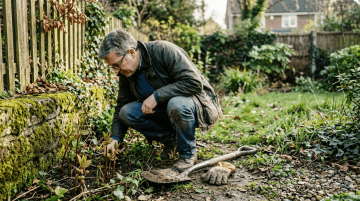
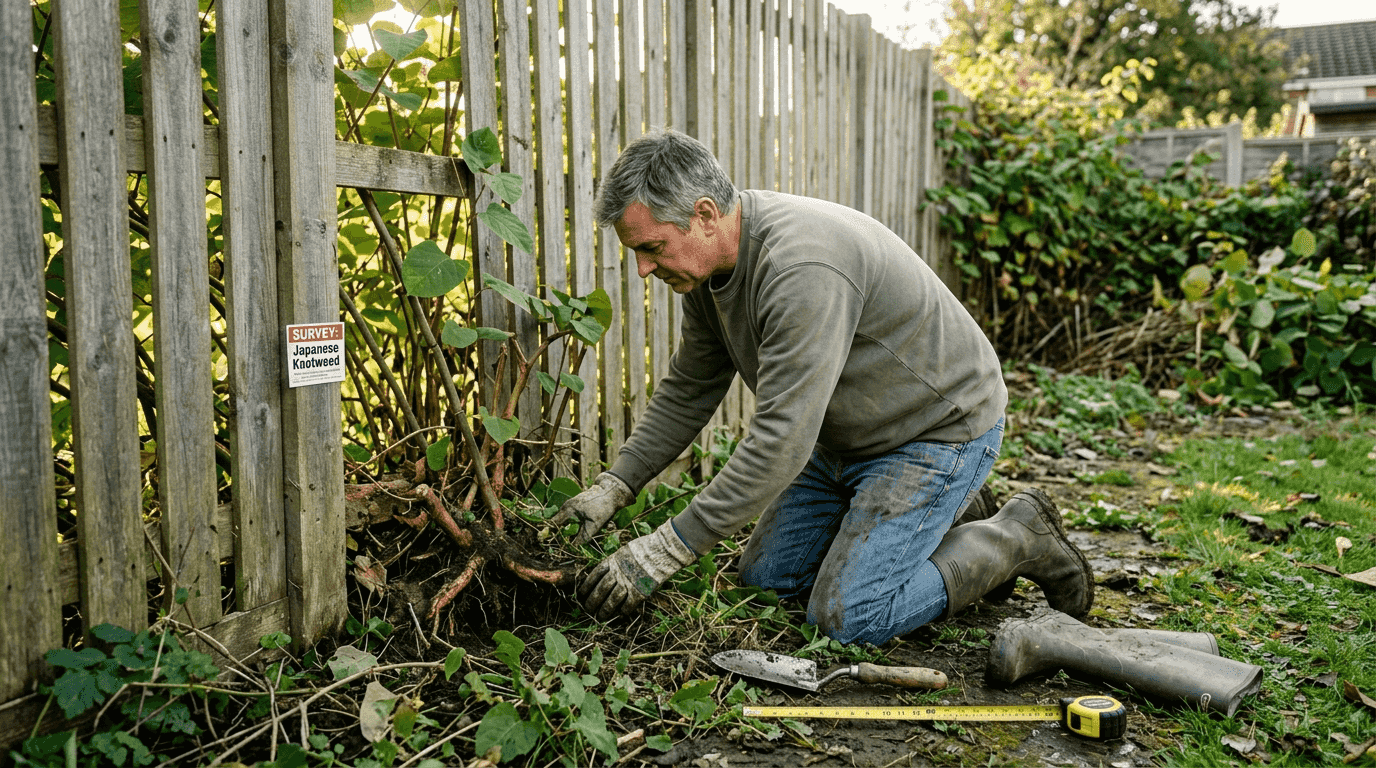
Gardener exposes Knotweed rhizome network

Unlike conventional plant roots, Japanese Knotweed rhizomes function as a distributed energy network. They store massive reserves of carbohydrates and nutrients, allowing the plant to survive winter dormancy and regenerate from even tiny fragments left behind after attempted removal.

The Architecture of Japanese Knotweed Rhizomes

Japanese Knotweed rhizomes grow horizontally through soil, often reaching depths of 1.5 to 3 metres. A single parent plant can establish a rhizome network covering hundreds of square metres, with individual rhizomes extending 7 metres or more from the main stem.

The structure resembles an underground web of nodes and connections:

  • Node points where new shoots emerge and develop into surface plants
  • Connective tissue that links different sections of the network together
  • Energy storage cells concentrated along the rhizome length
  • Growth buds capable of initiating plant regeneration at any point
  • Dense root hairs that absorb moisture and nutrients from surrounding soil

When you damage one section of the rhizome network, the plant simply redirects nutrients through alternative pathways. This redundancy is why cutting or even digging rarely succeeds without specialist intervention.

How Knotweed Rhizomes Spread Across UK Properties

Rhizomes spread through two primary mechanisms. First, they expand naturally year on year, pushing through soil, cracks in foundations, and beneath tarmac. Second, how Japanese Knotweed spreads through fragmentation means even construction work, garden maintenance, or soil movement can transport tiny rhizome pieces to new locations on your property.

Fragmentation poses particular risks during property development or landscaping projects. A single rhizome fragment measuring just 20 millimetres can regenerate into a fully mature plant within a single growing season.

Japanese Knotweed rhizomes can penetrate concrete up to 15 centimetres thick, making them capable of damaging foundations, patios, driveways, and underground services simultaneously.

The spread rate accelerates as the rhizome network ages. Younger infestations expand relatively slowly, whilst established networks spanning several years become exponentially more aggressive and difficult to contain.

Why Depth Matters for Treatment

The depth of Japanese Knotweed rhizomes determines treatment complexity and success rates. Shallow infestations reaching 1 metre are easier to address than deep networks extending 2 to 3 metres below ground level.

Standard chemical treatments struggle with depth penetration. Systemic herbicides applied to foliage cannot reliably reach rhizomes at significant depths, leaving sections of the network untouched and capable of regenerating.

This is where specialist energy-based treatment becomes essential. Direct energy systems can be applied at depth, reaching throughout the entire rhizome network and causing internal cellular damage that conventional methods cannot achieve.

Pro tip: Obtain a property survey before purchasing if Japanese Knotweed is suspected—identifying rhizome depth early allows mortgage lenders to assess treatment feasibility and set realistic timescales for eradication.

How Rhizomes Enable Property Damage

Rhizomes cause property damage through persistent physical force and strategic expansion. Unlike surface weeds that merely block light or compete for nutrients, Japanese Knotweed rhizomes actively destabilise structures by pushing through concrete, brick, and mortar with relentless pressure.

The damage accumulates gradually but relentlessly. You might notice small cracks in patios or foundation movement that seem minor at first. Within months or years, these small failures cascade into serious structural problems requiring expensive repairs.

Physical Damage Mechanisms

Rhizomes cause property damage through three primary mechanisms. First, they apply sustained pressure against hard surfaces, exploiting tiny weaknesses and gradually widening them into substantial fractures.

Second, rhizomes penetrate foundations and drainage systems, creating pathways for water infiltration and subsidence. Water entering cracks accelerates deterioration, freezes in winter, and weakens structural integrity further.

Third, the continuous growth redirects pressure laterally and vertically, affecting multiple areas simultaneously. A single rhizome network can damage patios, walls, drains, and foundations across your entire property.

Common damage patterns include:

  • Cracks radiating outward from patios and driveways
  • Sunken or buckled sections of hardstanding
  • Internal subsidence causing uneven floors or wall cracks
  • Fractured drainage pipes and sewage backups
  • Foundation movement and structural misalignment
  • Water damage in basements and cellars

Why Rhizomes Cause More Damage Than Shallow-Rooted Plants

Deep-rooted systems provide leverage and force that shallow root networks cannot. Japanese Knotweed rhizomes extending 2 to 3 metres underground create hydraulic pressure that pushes upward with tremendous force throughout multiple seasons.

The plant doesn’t stop when it encounters an obstacle. Instead, it detours around barriers or concentrates pressure on weak points, eventually breaching even reinforced concrete. The damage accelerates after initial breaches occur because water and air penetration further weakens the affected structure.

Japanese Knotweed rhizomes have breached brick walls 23 centimetres thick and fractured reinforced concrete 15 centimetres thick, demonstrating forces far exceeding what surface damage could cause.

Established infestations spanning multiple decades cause exponentially worse damage because the rhizome network has had years to exploit weaknesses and expand into new structural areas.

Mortgage and Insurance Implications

Property damage from Japanese Knotweed creates immediate problems for homeowners attempting to sell or refinance. Mortgage lenders require proof that the infestation is contained and treatment is underway before advancing funds.

Infographic shows Knotweed risk mechanisms

Insurance companies often exclude knotweed-related damage from coverage, treating it as a pre-existing condition rather than an insurable event. This leaves homeowners personally liable for repair costs, which can reach £5,000 to £20,000 depending on damage severity.

Pro tip: Document any visible property damage with photographs and measurements before arranging your professional Japanese Knotweed Agency survey—this evidence supports mortgage lender assessments and treatment feasibility discussions.

Chemical-Free Eradication Methods Explained

Chemical herbicides have dominated Japanese Knotweed treatment for decades, yet they remain ineffective against deep rhizome networks and create environmental risks. Modern alternatives now offer faster results without compromising ecosystem health or leaving chemical residues in your soil.

Chemical-free methods work by attacking the plant’s fundamental biological processes rather than relying on toxins. This approach proves particularly effective against established infestations where traditional chemicals have already failed.

Thermo-Electric Treatment Systems

Thermo-electric treatment represents a breakthrough in knotweed eradication. Thermo-electric eradication uses high voltage electricity to destroy the plant’s cellular structure, effectively killing rhizomes without harming surrounding soil or native species.

The process works by delivering direct energy into the rhizome network. This causes internal cell damage and depletes the energy reserves that enable regrowth. Japanese Knotweed Agency utilises systems capable of delivering up to 5000 volts directly onsite, reaching throughout extensive rhizome networks.

Key advantages of thermo-electric systems include:

  • No chemical residues left in soil
  • Treatment effective at significant depths
  • Rapid energy deployment to multiple areas simultaneously
  • No damage to surrounding native plants or microorganisms
  • Ability to treat infestations chemical methods have failed to address
  • Results visible within weeks rather than months

Natural Regeneration Methods

Chemical-free approaches also support natural ecosystem recovery. The North Wales Wildlife Trust trialled methodology avoiding pesticides, allowing quicker natural regeneration and native species replanting within days.

This approach removes the invasive plant whilst preserving soil health and enabling rapid biodiversity recovery. Areas treated using chemical-free methods support native species replanting significantly faster than chemically-treated areas, which require extended soil recovery periods.

Natural regeneration methods offer:

  • Faster biodiversity recovery post-treatment
  • Ability to replant native species immediately
  • No chemical persistence in soil ecosystems
  • Support for long-term environmental health
  • Lower liability for environmental damage

Why Chemical-Free Methods Outperform Traditional Herbicides

Chemical herbicides fail at depth because they cannot reliably penetrate extensive rhizome networks. Topical applications reach only surface-level tissues whilst deep rhizomes remain untouched and capable of regeneration.

Chemical-free systems overcome this limitation by addressing the entire network simultaneously. Energy-based treatment reaches depths conventional methods cannot access, destroying cellular structures throughout the rhizome system.

Chemical-free eradication promises completion within one year—significantly faster than traditional chemical treatments requiring multiple seasons of repeated applications and monitoring.

Mortgage lenders increasingly favour chemical-free methods because they eliminate soil contamination risks and enable faster property remediation. This accelerates the lending approval process and reduces timeline uncertainty.

Root Barrier Installation and Excavation

Chemical-free strategies also include physical containment through root barrier installation and selective excavation. Root barriers prevent rhizome spread to adjacent areas whilst excavation removes infestations where structural access permits.

These complementary methods work alongside energy-based treatment to ensure comprehensive eradication and prevent reinfestation from overlooked fragments.

Here is a comparison of Japanese Knotweed treatment approaches and their effects:

Treatment Approach Depth Reached Effectively Environmental Impact Time to See Results
Chemical Herbicides Surface to shallow soils Potential soil pollution Months to years
Thermo-Electric Systems Deep rhizome penetration No soil contamination Weeks
Physical Excavation Variable, often shallow Soil disruption possible Immediate regrowth
Natural Regeneration Surface only Supports native species Days to weeks

Pro tip: Request a detailed treatment plan specifying chemical-free methods before committing to eradication—chemical-free approaches cost similarly to traditional methods but deliver faster results and stronger mortgage lender approval odds.

Japanese Knotweed presents specific legal challenges for UK homeowners that extend beyond simple garden management. The law imposes genuine obligations on property owners, whilst lenders impose practical requirements that can block property transactions entirely.

Understanding these obligations protects you from costly fines, legal action from neighbours, and mortgage complications during property sales. Most homeowners discover these requirements too late, after purchasing a property or facing lending delays.

Japanese Knotweed is not a criminal matter by default. However, allowing it to spread onto neighbouring property creates legal liability under environmental and nuisance law. Your Japanese Knotweed legal obligations include preventing spread and taking reasonable steps towards eradication.

Neighbours can pursue civil action if Japanese Knotweed spreads from your property onto theirs. Courts have awarded damages exceeding £20,000 for property damage and treatment costs caused by knotweed invasion from adjoining land.

Key legal obligations include:

  • Preventing spread to neighbouring properties
  • Taking reasonable steps towards eradication
  • Disclosing its presence during property sales
  • Notifying mortgage lenders and insurers
  • Following treatment recommendations from specialists
  • Maintaining records of survey and treatment work

Mortgage Lender Requirements

Mortgage lenders treat Japanese Knotweed as a material risk. Most lenders will not advance funds on properties with known infestations unless a professional survey and treatment plan are in place.

Lenders typically require:

  1. A professional survey identifying infestation extent and rhizome depth
  2. A detailed treatment plan from qualified specialists
  3. Evidence of treatment commencement or completion
  4. Post-treatment monitoring to confirm eradication success
  5. Insurance or guarantees covering potential reinfestation

These requirements exist because lenders recognise Japanese Knotweed as a serious property defect affecting both structural integrity and resale value.

Property Survey Requirements

Professional invasive plant surveys protect your property interests by establishing whether knotweed is present and determining treatment feasibility. Surveys identify rhizome networks’ extent, depth, and proximity to structures.

A comprehensive survey includes:

  • Ground-penetrating radar or specialist imaging
  • Rhizome depth assessment
  • Identification of affected structures
  • Treatment recommendations
  • Cost and timeline estimates
  • Post-treatment monitoring protocols

Lenders typically require surveys conducted by independent, qualified specialists—surveys performed by treatment providers must meet rigorous independence standards or lenders may reject them as biased.

Survey costs range from £300 to £1,500 depending on property size and infestation complexity. This investment provides clarity that protects both your purchase decision and mortgage approval prospects.

Disclosure and Insurance Implications

Disclosure is legally mandatory. When selling a property with known Japanese Knotweed, you must inform potential buyers during conveyancing. Failure to disclose creates liability for misrepresentation and grounds for post-sale legal action.

Insurance companies typically exclude knotweed-related damage from standard policies. Some insurers offer specific knotweed coverage if treatment is underway or completed, but exclusions remain common.

The following table summarises key legal and financial risks related to Japanese Knotweed on UK properties:

Risk Area Consequence Potential Cost
Legal Liability Neighbour claims, court-awarded damages £20,000+
Property Resale Mortgage refusal or delays Sale collapse
Insurance Coverage Exclusions for knotweed damage Full repair cost paid
Treatment/Survey Mandatory for mortgage approval £300–£20,000+

Pro tip: Arrange a professional survey immediately if you suspect Japanese Knotweed—early detection simplifies treatment, accelerates mortgage approval, and prevents neighbour disputes that could cost significantly more than professional eradication.

Take Control of Rhizome Risks with Expert Chemical-Free Solutions

The underground rhizome networks discussed in this article reveal why Japanese Knotweed and similar invasive plants are a serious threat to your UK property. Their ability to regenerate from tiny fragments and penetrate deep into foundations makes conventional removal methods ineffective and risky. If you want to protect your home from structural damage and ensure compliance with legal and mortgage requirements, understanding and tackling these rhizomes is essential.

https://japaneseknotweedagency.co.uk

At Japanese Knotweed Agency, we specialise in chemical-free eradication that directly targets the rhizome network. Using advanced direct energy treatment delivering up to 5000 volts onsite, we cause internal cell destruction and deplete the plant’s energy stores to halt regrowth effectively. Our services also include professional property surveys and root barrier installations to prevent future spread—giving you peace of mind and confidence when managing invasive plants. Don’t let hidden rhizomes put your home and mortgage at risk. Act today by visiting our chemical-free treatment page and booking a survey to secure your property’s long-term health.

Frequently Asked Questions

What are rhizomes, and how do they contribute to plant invasion?

Rhizomes are underground stems that store nutrients and produce new shoots, allowing invasive plants like Japanese Knotweed to spread rapidly and establish themselves in new areas.

How does Japanese Knotweed spread through its rhizomes?

Japanese Knotweed rhizomes spread by extending horizontally through soil and can regenerate from even small fragments, creating new plants capable of further infestation.

Why do traditional removal methods fail against rhizome networks?

Traditional methods often fail because they cannot remove every fragment of the extensive rhizome network, and even minor pieces left untreated can regenerate into new plants.

What are the risks of Japanese Knotweed rhizomes to UK homes?

Japanese Knotweed rhizomes pose risks to homes by penetrating foundations, damaging underground utilities, and causing structural damage by exerting pressure against hard surfaces.

除草技术科普:英国无化学方案为何关键

面对日益严重的日本葛问题,许多英国业主在购房或再融资时感受到前所未有的压力。选择科学且环保的无化学除草方案不仅直接关系到房产的长期价值,还影响银行融资和法律合规。英国法律已明确业主对入侵植物的管理与披露责任,合理处理能显著降低财务和生态风险。本文将为您解析各类无化学除草技术的实际成效,并提供专业调查与处理计划的关键策略。

目录

关键要点

要点 详细信息
无化学除草技术的优势 无化学技术避免化学残留,保护土壤生态和地下水资源。
应对日本葛的策略 热电疗法与根部屏障结合使用,能够有效清除根系并防止再侵染。
法律责任与合规要求 业主需遵守法律规定,明确披露入侵植物情况,避免法律及财务风险。
专业处理的重要性 采取专业的无化学方法可以提升房产估值,增强融资申请成功率。

无化学除草类型与成效对比

英国业主面临的除草选择越来越多,但并非所有方法都能有效根除日本虎杖等入侵物种。无化学除草技术代表了一种全新的处理思路,特别是对于关心环保和房产价值的您来说。

主要无化学除草方法

目前可行的无化学除草技术包括以下几种:

  • 热电疗法:直接向植物根系输送高达5000伏的电能,造成细胞内部损伤并耗尽根茎网络的能量储备
  • 挖掘清除:物理移除受污染土壤和整个根系统,需要专业设备和精准操作
  • 根部屏障安装:防止地下根茎扩散到相邻区域,为长期管理提供保障
  • 生态管理方案:结合多种技术实现可持续的植物控制

无化学方案的核心优势在于避免了化学残留,保护了您房产周边的土壤生态和地下水资源。

成效对比与真实效果

热电疗法相比传统除草剂提供了显著的改进。单次治疗即可对根系造成广泛损伤,多次疗程能够完全摧毁抵抗力强的根茎网络。传统化学方法往往需要反复施用,且可能在土壤中留下残留物。

热能除草与化学除草方法效果对比分析

无化学消除方案展示了这些技术如何在实际应用中取得持久效果。挖掘清除虽然成本较高,但对于小面积污染提供了一次性解决方案。根部屏障则是防止再次侵染的关键防线。

不同方法的选择取决于污染规模、预算限制和您的长期目标。小型污染区域可采用热电疗法加屏障安装。大型根系网络则需要结合多种方法实现彻底根除。

下表总结了主要无化学除草方法对入侵植物的适用性及长期影响,有助于业主科学决策:

方法 适用污染规模 环境影响 持久效果
热电疗法 小型至中型区域 无化学残留,生态安全 多次疗程实现彻底根除
挖掘清除 小区块污染 土壤扰动较大但没有污染 一次性消除,成本较高
根部屏障 适合预防扩散 无污染,阻止再侵染 长期防护,需维护
生态管理 全区域治理 综合生态提升 持久管理,适合多样需求

为什么选择无化学方案

对于英国业主来说,无化学除草有几个决定性优势:

  1. 保护房产土壤质量,维持未来农业或园林价值
  2. 避免化学污染风险,符合Environmental regulations要求
  3. 提升融资和再融资时的房产评估
  4. 长期成本效益优于反复使用除草剂

银行和房产评估师现在越来越关注入侵物种的处理记录。选择无化学方案能为您的房产留下清晰的管理档案。

专业建议 在选择除草方案前,获得专业现场调查能帮您准确了解污染范围和最适合的处理方法,避免无效投资。

热电破坏与屏障法在日本葛控制中的应用

日本葛在英国造成的威胁远超多数业主的认知。这种强悍的入侵物种能够摧毁房产价值、破坏生态系统,甚至导致融资困难。幸运的是,两种无化学技术的结合——热电破坏和屏障法——正在改变日本葛的控制方式。

热电破坏技术如何运作

热电破坏利用电流直接攻击植物的根系统。高达5000伏的电能被精准输送到地下的根茎网络,造成内部细胞损伤并耗尽根系的能量储备。单次治疗就能对深层根系造成广泛破坏,这是化学除草剂无法达到的深度。

该技术的关键优势包括:

  • 一次性治疗覆盖大面积根系网络
  • 完全避免化学残留和土壤污染
  • 多疗程治疗能实现彻底根除
  • 对周边植被和生态风险最小

屏障法的防护作用

屏障安装作为长期防护措施,物理阻断根系向相邻区域扩散。这种方法特别重要,因为日本葛的根茎能够在土壤中蔓延数米,威胁邻近房产。

主流物理除草方法对比图解

电流治疗技术与物理屏障的结合为业主提供了双重保护:首先摧毁现存根系,其次防止新的入侵。屏障通常采用耐久材料,深入地下至少1米,确保长期有效性。

两种技术的协同作用

单独使用任何一种方法都有局限性。热电破坏解决现有问题,屏障法预防未来威胁。结合使用能够实现:

  1. 彻底清除现存的根茎网络
  2. 建立永久性防线阻止复生
  3. 保护相邻房产免受横向侵害
  4. 降低长期管理成本

国际研究表明,技术集成配合科学管理,才能实现真正的长期生态平衡和日本葛彻底根除。

为什么这对英国业主至关重要

银行和房产评估师现在明确要求看到日本葛的专业处理方案。采用热电破坏加屏障法的组合,能为您的融资申请提供强有力的支持文件。这两种技术都符合英国生物安全法规,为长期房产价值提供保障。

专业建议 在安装屏障前进行热电治疗,确保新屏障不会困住任何活跃根系,这样才能最大化长期防护效果。

英国业主的合规义务与财务风险

许多英国业主低估了日本葛问题的法律严重性。这不仅仅是美观问题——它涉及明确的法律责任、融资障碍,甚至潜在的经济赔偿。了解您的合规义务对于保护房产和财务状况至关重要。

英国法律对业主的明确要求

英国通过《野生动物与乡村法案》等法规明确了业主的管理责任。这意味着您不仅要处理自己房产上的入侵植物,还要防止它们蔓延到相邻地块。

您的主要法律义务包括:

  • 披露义务:在出售或融资房产时必须披露日本葛的存在
  • 防控义务:采取合理措施防止植物扩散到邻近房产
  • 文件记录:保存所有处理和监测的专业文件
  • 定期检查:对已处理区域进行持续监测和维护

违反合规规定的后果

英国入侵植物法规违反可能导致严重的法律和财务后果。隐瞒日本葛问题可能被视为欺诈,导致房产交易被取消或诉讼。

具体风险包括:

  1. 产权纠纷和交易取消
  2. 来自邻居的损害赔偿诉讼
  3. 融资申请被拒或贷款条件恶化
  4. 房产估值大幅下跌(通常下降15-30%)
  5. 法律费用和专业处理成本激增

房产市场的现实态度

银行和房产评估师现在将入侵植物视为重大生态风险。许多金融机构要求在融资或再融资前看到专业的处理计划和完成证明。这不是可选的——这是交易能否进行的前提条件。

房产中介也越来越谨慎。一份明确的无化学除草方案记录实际上能提升融资申请的成功率,证明您是认真负责的业主。

主动采取科学除草方案不仅符合法律要求,还能保护您的房产价值并简化未来的融资流程。

为什么无化学方案对合规至关重要

无化学处理方法(如热电破坏)产生清晰的专业记录,这正是银行和律师想看到的。它证明您:

  • 采取了专业、经过验证的处理方法
  • 重视环保和生态安全
  • 完全透明,没有隐瞒任何处理过程
  • 长期保护房产和社区利益

专业建议 获取专业现场调查报告并保存所有处理文件,这些记录是您向银行、律师和潜在买家证明合规的最强有力证据。

常见失误、房产买卖与贷款影响解析

英国业主在处理日本葛问题时经常犯代价高昂的错误。这些失误不仅延长了问题解决的时间,还会在房产交易和贷款申请中造成灾难性后果。了解这些陷阱能帮您避免不必要的麻烦。

业主常见的四大失误

许多业主采取错误的初始应对方式,导致问题恶化:

  • 忽视或隐瞒问题:希望问题自行消失,或在房产交易中隐瞒事实
  • 使用不适当的除草剂:购买超市除草剂尝试自行处理,效果微乎其微
  • 延迟专业介入:等待问题加重后才寻求帮助,增加处理成本
  • 选择化学方案:采用传统除草剂,留下土壤污染和长期环境风险

这些错误会直接影响房产价值和融资条件。

房产买卖中的影响

日本葛的危害对房产交易造成直接冲击。买家进行专业调查时,如果发现您曾隐瞒或处理不当,交易立即陷入危险。

具体影响包括:

  1. 交易价格下降15至30%
  2. 买家要求您承担全部处理费用
  3. 融资机构拒绝提供贷款
  4. 交易完全破裂,需重新寻找买家
  5. 法律诉讼和声誉损害

贷款和融资的严峻现实

银行现在对日本葛问题极为谨慎。多数主流贷款机构要求看到:

  • 专业调查报告证实问题存在或不存在
  • 如存在问题,需要详细的处理计划
  • 已完成的处理需要第三方验证
  • 长期监测承诺以防复发

缺少这些文件,融资申请会被拒绝或条件大幅恶化(利率上升0.5至2%)。对于数十万英镑的贷款,这意味着数千英镑的额外成本。

以下表格展示了房产交易环节中处理日本葛的决策影响,便于业主快速掌握合规与价值关系:

操作方式 房产估值变化 融资通过率 法律风险
专业无化学处理 估值稳定或提升 提高申请成功率 降低产生诉讼概率
化学除草剂处理 估值下降15-30% 通常受限 潜在环保法规违规
隐瞒或延迟处理 估值重大下跌 贷款被拒绝 高发欺诈诉讼风险

主动进行专业调查并采取无化学处理方案,实际上是保护融资成功率和房产价值的最明智投资。

为什么无化学方案改变局面

无化学处理(特别是热电破坏)产生清晰的专业记录,银行和律师信任这种方法。它证明:

  • 您积极主动处理问题
  • 采用了环保和可持续的方案
  • 完全透明,无隐瞒任何信息
  • 房产获得了专业保护和监测

这种透明度和专业态度能显著提升融资申请的批准机率。

专业建议 即使房产看起来没有日本葛问题,在融资或出售前进行专业调查也能消除买家和贷款机构的顾虑,加快交易进程。

英国无化学除草技术的最佳选择

文章中提到的无化学除草方案如热电疗法和根部屏障,正是解决日本虎杖等入侵植物难题的关键。许多英国业主面临根系顽固、化学残留和房产合规风险,急需一种既环保又有效的解决方案。Japanese Knotweed Agency凭借专业的现场高压电流治疗和根障安装技术,能够彻底破坏地下根茎网络,同时保障土壤生态和符合英国相关法规。

https://japaneseknotweedagency.co.uk

现在就行动,避免因入侵植物造成的房产估值降低和融资障碍。访问Japanese Knotweed Agency官网,预约专业的现场调查和无化学处理方案。了解更多关于无化学除草方案详情,保护您的房产远离隐患。立即点击,守护您的房产价值和未来!

常见问题

无化学除草方案有哪些主要方法?

无化学除草方案包括热电疗法、挖掘清除、根部屏障安装和生态管理方案等。每种方法都有其独特的适用性和效果。

热电疗法与传统化学除草剂有什么区别?

热电疗法使用电流直接破坏植物根系,避免了化学残留,而传统化学除草剂需要反复使用且可能会留下污染。

为什么选择无化学除草方案对房产有利?

选择无化学除草方案有助于保护土壤质量,避免化学污染,并可能提升房产的融资和再融资评估。

如何评估选择合适的无化学除草方法?

选择合适的方法应考虑污染规模、预算限制和长远目标,专业的现场调查能帮助确定最佳方案。

推荐

UK Weed Survey – Protecting Property Value & Mortgages

Securing your home in England or Wales often means untangling unexpected challenges, and few are as disruptive as finding Japanese Knotweed during a property survey. With this invasive plant classed as destructive under United Kingdom law, its presence can halt sales, complicate mortgage approval, and trigger costly treatment demands. You will discover how new evidence-based survey standards and chemical-free eradication methods help you protect your investment and keep your home environmentally safe.

Table of Contents

Key Takeaways

Point Details
Importance of Japanese Knotweed Detection Surveyors and lenders must detect Japanese Knotweed during property surveys to protect financial interests and ensure accurate property valuations.
Challenges in Identification Japanese Knotweed can be difficult to detect, particularly in its dormant state, highlighting the need for specialist surveyor training and comprehensive assessments.
Lender Requirements for Mortgages Mortgage lenders now mandate proof of a Japanese Knotweed survey, management plans, and treatment documentation to approve loans on affected properties.
Legal Responsibilities Property owners must manage Japanese Knotweed to prevent its spread, adhering to legal obligations to avoid liabilities and enforcement actions from authorities.

Japanese Knotweed in UK Property Surveys

Japanese Knotweed detection during property surveys has become a critical responsibility for surveyors, valuers, and mortgage lenders across England and Wales. The presence of this invasive plant can significantly affect property valuations, mortgage approval, and your ability to sell or remortgage your home.

The 2022 RICS Professional Standard introduced an evidence-based risk assessment approach to Japanese Knotweed detection. Rather than relying on outdated fixed-distance rules, surveyors now use a decision tree to determine appropriate management actions based on infestation risk. This updated guidance ensures more accurate and fair property assessments.

What Makes Japanese Knotweed Detection Challenging

Identifying Japanese Knotweed during surveys is more difficult than many homeowners realise. The plant can hide beneath soil for years, and seasonal variations affect visibility.

Key detection challenges include:

  • Seasonal dormancy making the plant invisible during winter months
  • Fragmented rhizome networks spreading far beyond visible stems
  • Similarity to other plants during early growth stages
  • Previous poor removal attempts leaving dormant root systems intact
  • Limitations of visual inspection alone without specialist expertise

Professional surveyors require specialist training to identify Japanese Knotweed accurately, particularly when the plant is dormant or disguised by garden vegetation.

Why Surveys Matter for Mortgage Lenders

Mortgage lenders now demand comprehensive Japanese Knotweed surveys before approving loans on affected properties. Banks recognise that Japanese Knotweed’s impact on property values creates significant financial risk for them.

Lenders typically require:

  1. A specialist invasive weed survey confirming presence or absence
  2. A detailed management plan if knotweed is found
  3. Evidence of professional treatment from a qualified provider
  4. Long-term guarantees underwritten by insurance
  5. Regular monitoring reports throughout the treatment period

Without these documents, mortgage approval becomes impossible, leaving you unable to sell or refinance your property.

The Role of Management Categories in Surveys

Property surveys now classify Japanese Knotweed risk into distinct management categories. This framework helps determine the severity of infestation and the urgency of treatment.

Category ratings influence valuation reductions and mortgage decisions directly. A property with active, spreading knotweed requires immediate intervention. A property where treatment is underway with insurance-backed guarantees presents lower risk to lenders.

Surveyors assess factors including rhizome location, proximity to property structures, previous treatment attempts, and current growth stage when assigning categories.

Pro tip: Request a specialist Japanese Knotweed survey before your standard house survey; this allows time to develop a treatment plan and satisfy mortgage lender requirements before you commit to purchasing.

RICS Survey Categories and Methodology

The RICS Professional Standard provides a structured approach to Japanese Knotweed assessment that standardises how surveyors identify, categorise, and report on infestations. This methodology ensures consistency across England and Wales and gives mortgage lenders reliable information for lending decisions.

The survey process follows a phased approach. First, surveyors conduct an initial site inspection to identify whether Japanese Knotweed is present. This involves visual examination of the property and surrounding areas, though the plant’s dormancy during winter months can complicate detection.

Surveyor inspecting garden for invasive plants

How RICS Categories Work

RICS survey methodology requires surveyors to categorise infestation based on risk levels rather than using a one-size-fits-all approach. This risk-based framework allows for more nuanced assessment of individual properties.

The categories reflect different levels of threat:

Here is a comparison of Japanese Knotweed survey categories and their impact:

Survey Category Typical Property Impact Lender Response Urgency of Treatment
Category A No knotweed detected Approves lending No action needed
Category B Limited presence Requires plan and guarantees Management recommended
Category C Active infestation May reduce valuation; strict conditions Immediate intervention
Category D Severe structural risk Rejects or heavily restricts lending Emergency remediation
  • Category A: Minimal risk or no knotweed present
  • Category B: Knotweed present but manageable with appropriate treatment
  • Category C: Active infestation requiring immediate intervention
  • Category D: Severe infestation with structural risk

Risk categories directly influence property valuations and mortgage lending decisions, making accurate categorisation essential for your financial interests.

Evidence Collection and Documentation

Surveyors must gather supporting documentation including site photographs, management plans, and treatment records. This evidence forms the foundation of their assessment and informs the final valuation report.

When Japanese Knotweed is found, the surveyor will document:

  1. Location and extent of infestation
  2. Proximity to buildings and property boundaries
  3. Current growth stage and season
  4. Previous treatment attempts or failures
  5. Recommended management actions

From Assessment to Reporting

The surveyor’s final report must present findings clearly and recommend next steps. This report becomes critical when applying for mortgages or selling your property.

Your surveyor should explain what the category means, what action is required, and what insurance-backed guarantees might be necessary. This transparency helps you understand the true condition of the property and plan your response accordingly.

Pro tip: Ask your surveyor specifically about their Japanese Knotweed assessment methodology before they begin; this ensures they follow current RICS standards and understand the distinction between seasonal dormancy and successful eradication.

Owning property with Japanese Knotweed comes with serious legal responsibilities. The law restricts your ability to manage the plant carelessly, and lenders view it as a material risk to their investment in your property.

Under environmental legislation, you have a legal duty not to allow Japanese Knotweed to spread from your property to neighbouring land. This obligation exists regardless of whether you caused the infestation or inherited it when you purchased the home.

Japanese Knotweed is classified as destructive under the Wildlife and Countryside Act 1981. You must take reasonable steps to prevent it from spreading to other properties.

Your legal duties include:

  • Taking action to contain and eliminate the infestation
  • Preventing rhizome fragments from escaping your property during treatment
  • Notifying neighbours if the plant spreads onto their land
  • Maintaining treatment records and management plans
  • Working with qualified professionals to manage eradication

Failing to control Japanese Knotweed can result in enforcement action from local authorities and potential liability claims from affected neighbours.

How Mortgage Lenders Assess Risk

Mortgage lenders treat Japanese Knotweed as a serious threat to property security. Most lenders require a risk assessment and management plan before approving mortgages on affected properties.

Lenders typically demand:

  1. Evidence of professional Japanese Knotweed surveys
  2. A detailed management or eradication plan from a qualified provider
  3. Insurance-backed guarantees covering the treatment period
  4. Regular monitoring reports throughout treatment
  5. Proof that the infestation is contained or eliminated

Why Documentation Matters for Your Mortgage

Conveyancers and lenders use hazard alert services to identify properties with known Japanese Knotweed issues. If your property is flagged, your mortgage application will stall until you provide satisfactory evidence of management.

Without proper documentation showing professional treatment and insurance-backed guarantees, lenders will refuse to approve your application. This creates a catch-22 situation where you cannot sell without proof of treatment, yet cannot fund treatment without a mortgage.

Pro tip: If you discover Japanese Knotweed when purchasing, negotiate the treatment costs into the purchase price and ensure the seller provides a management plan with insurance-backed guarantees before completion.

Chemical-Free Eradication Methods Explained

Chemical herbicides have long been the standard approach to Japanese Knotweed control, but they carry environmental risks and can harm soil ecosystems. Chemical-free alternatives are emerging as viable options for homeowners seeking sustainable solutions that protect both their property and the surrounding environment.

Traditional herbicide treatments rely on systemic chemicals that penetrate the plant’s vascular system. These approaches work but leave chemical residues in soil and can affect non-target plants and organisms. Fortunately, newer methods offer effective alternatives.

Thermo-Electric Treatment Technology

Thermo-electric treatment represents a pioneering chemical-free approach. This method delivers direct energy (up to 5000 volts) to the rhizome network, causing internal cell damage and depleting energy reserves within the plant’s root system.

The benefits of thermo-electric treatment include:

  • No chemical residues left in soil
  • Targeted destruction of rhizomes without harming surrounding vegetation
  • Multiple treatment sessions ensuring complete eradication
  • Safe for use near buildings and property boundaries
  • Environmentally friendly approach protecting soil biodiversity

Thermo-electric treatment addresses the plant’s energy stores directly, making it nearly impossible for regrowth to occur after successful treatment cycles.

Biological Control and Research Developments

Scientists are investigating biological control methods as long-term chemical-free solutions. The Japanese Knotweed Alliance has researched introducing a native Japanese sap-sucking insect (Aphalara itadori) that specifically targets knotweed without affecting native UK plants.

This approach remains experimental but offers promising potential:

  1. Targeted predation on Japanese Knotweed only
  2. Sustainable long-term control without repeated intervention
  3. No chemical input required
  4. Self-sustaining biological ecosystem management

Integrated Management Approaches

Integrated control methods combine physical removal with growth suppression techniques. Swansea University research has developed multi-stage treatment models tailored to the plant’s growth cycles, minimising reliance on chemicals.

These integrated approaches typically combine:

The below table summarises main chemical-free eradication methods and their distinguishing characteristics:

Method How It Works Environmental Benefit
Thermo-electric treatment Delivers electrical energy to roots No soil chemical residues
Biological control Releases natural predators Targets knotweed only
Integrated management Combines physical and energy treatments Reduces chemical reliance
  • Physical rhizome excavation and removal
  • Root barrier installation to prevent spread
  • Thermo-electric treatment for remaining plant tissue
  • Regular monitoring to suppress any regrowth

Pro tip: Request treatment providers to explain their chemical-free methodology and ask for evidence of successful eradication on similar properties before committing to any treatment plan.

Common Survey Mistakes and Buyer Risks

Many homebuyers discover Japanese Knotweed problems after completing their purchase, when it becomes too late to renegotiate. These discoveries often stem from survey mistakes, incomplete investigations, or misunderstandings about what standard surveys actually cover regarding invasive plants.

The financial and legal consequences of missing Japanese Knotweed can be severe. You may face unexpected treatment costs, mortgage complications, or property devaluation that wasn’t apparent during your initial property inspection.

The Problem with Visual Inspections Alone

A common mistake occurs when surveyors declare properties free of Japanese Knotweed based solely on visual inspection. Even small rhizome fragments can cause complete regrowth, making absence declarations unreliable without extensive investigation and specialist knowledge.

Visual-only surveys miss:

  • Dormant rhizomes buried deep in soil
  • Fragmented root networks extending beyond visible stems
  • Plants disguised by garden vegetation or landscaping
  • Early-stage growth that resembles harmless plants
  • Underground spread beneath driveways or patios

A property appearing knotweed-free in winter may have extensive living rhizomes just centimetres beneath the surface.

The TA6 Form and Seller Liability Shifting

In property conveyancing, the TA6 form asks whether Japanese Knotweed is present. Sellers facing uncertainty often answer “Not known” rather than “Yes” or “No”, which shifts all risk to you as the buyer.

This creates a critical vulnerability:

  1. Seller answers “Not known” to avoid liability
  2. You proceed assuming the property is unaffected
  3. After purchase, you discover active knotweed
  4. You have no recourse against the seller
  5. Treatment costs fall entirely on you

Underestimating Severity and Impact

Surveyors sometimes misclassify Japanese Knotweed severity due to limited access or insufficient survey scope. What appears as a minor infestation may actually be deeply established, requiring costly eradication.

Misclassification leads to:

  • Unexpected treatment expenses after purchase
  • Reduced property value when you eventually sell
  • Mortgage complications if issues emerge later
  • Valuation disputes with lenders
  • Extended conveyancing delays

Pro tip: Commission a specialist Japanese Knotweed survey before making an offer; this costs far less than discovering problems after purchase and gives you negotiating power to adjust the price or require seller treatment.

Secure Your Property Value with Expert Japanese Knotweed Solutions

The presence of Japanese Knotweed can threaten your mortgage approval and property value due to complex risks like active infestations and incomplete surveys. With evolving RICS survey categories demanding precise evidence and long-term management plans, it is vital to act swiftly and confidently. Avoid costly surprises and legal complications by choosing a specialist that understands these challenges inside out.

https://japaneseknotweedagency.co.uk

At Japanese Knotweed Agency, we lead the way in chemical-free, thermo-electric treatment methods that target the rhizome network directly—delivering up to 5000 volts of energy for effective eradication without soil contamination. We also provide comprehensive invasive weed property surveys across England, Wales and Ireland to help you understand your property’s risk category early. Protect your investment with our proven treatments, root barrier installations, and excavation works—all backed by professional guarantees.

Don’t wait until your mortgage application stalls or property value drops. Book your specialist survey and treatment plan today at Japanese Knotweed Agency and secure your home’s future with confidence.

Frequently Asked Questions

What is Japanese Knotweed and why is it problematic for property owners?

Japanese Knotweed is an invasive plant known for its rapid growth and extensive root system. Its presence can significantly decrease property value, complicate mortgage approvals, and create legal liabilities for property owners if left untreated.

How do mortgage lenders assess properties for Japanese Knotweed?

Mortgage lenders typically require a comprehensive Japanese Knotweed survey to confirm the presence or absence of the plant. If knotweed is found, lenders often ask for a detailed management plan and evidence of professional treatment, including insurance-backed guarantees.

What are the risks of not conducting a proper weed survey before purchasing a property?

Failing to conduct a thorough weed survey can result in unexpected treatment costs, reduced property value, and complications with mortgage approvals. If Japanese Knotweed is present and not disclosed, the new owner may face significant financial and legal challenges after the purchase.

How can I identify Japanese Knotweed during seasonal variations?

Identifying Japanese Knotweed can be challenging, particularly in the winter when the plant is dormant. Key indicators include its distinctive stem structure and specific leaf shapes. A professional surveyor with specialist training is usually needed to accurately identify the plant, especially when it is disguised by other vegetation.

6大非化学除草技巧助力英国房产保值

看到花园或房屋周围杂草肆意生长,总让人觉得无从下手。你可能发现,不管怎么努力清理,这些入侵植物依然很快卷土重来,甚至可能影响房产的外观和价值。用化学方法虽然方便,但你更希望有环保又安全的解决途径。

值得庆幸的是,英国已经有多种非化学方法可以有效对付这些顽固杂草。本文将带你了解从物理拔除到先进的电能技术、覆盖抑制再到生态修复,每一种方法都经过实地验证,兼顾高效与可持续。你将获得清晰的执行步骤和实用建议,让杂草问题不再困扰你的生活。

接下来,你将发掘适合自己情况的专业应对策略,轻松打造整洁美丽又健康的花园环境。

目录

快速总结

关键建议 说明
1. 选用物理拔除法 手工或机械拔除杂草可以有效去除根系,防止其再生。
2. 高压电能技术有效 利用高压电流攻击杂草细胞,根系受到不可逆转损伤,避免化学物质残留。
3. 使用覆盖抑制法 在土壤表面铺设覆盖物,形成屏障,抑制杂草生长,节省浇水。
4. 安装根障隔离 物理屏障有效限制入侵植物根系扩散,保护基础设施和邻近花园。
5. 定期检查与维护 通过定期监测及时处理杂草,保持花园整洁和房产价值,提高市场吸引力。

1. 物理拔除法快速去除杂草根源

物理拔除法是英国房主对抗顽固杂草的最直接方法。与依赖化学物质不同,这种方法通过手工拔除和机械工具彻底消除杂草及其根系。对于想要保护房产价值的业主来说,这是一个既环保又高效的解决方案。

杂草的生命力取决于其根系网络。仅仅割掉地面上的部分远远不够,杂草会迅速再生。手工除草和机械设备通过从土壤中完全移除整个根系来解决这个问题,防止任何可能的重新生长。

为什么这对你的房产保值很重要?未经治理的杂草会严重影响房产的视觉吸引力和评估价值。潜在买家会立即注意到失控的花园,并在议价时利用这一点。

物理拔除法的工作原理包括以下几个关键步骤:

  • 手工拔除:最适合小区域和年轻杂草,使用简单工具如锄头或除草钩
  • 机械移除:对于较大的受影响区域,使用动力设备提高效率和精准度
  • 根系提取:确保整个根系从土壤中移出,不留下任何碎片
  • 土壤清理:移除所有杂草残留物,防止任何重新植入

现代技术已经使这个过程变得更加精准。先进的传感器技术和自动化系统可以精确定位杂草位置,同时最小化对周围健康植被的损害。这意味着你可以在保护花园景观的同时彻底清除杂草。

物理拔除法提供了快速、永久的结果,无需等待化学物质起效,也不会在土壤中留下残留物。

对于日本虎杖等特别顽固的入侵物种,物理拔除往往需要配合其他非化学方法。这就是为什么许多英国房主选择咨询专业团队来处理复杂的杂草问题。

实际应用中,时机至关重要。在土壤潮湿时进行拔除工作会更容易,因为根系更容易从地面移出。春季和秋季是最佳时期,当天气条件有利于彻底清除时。

专业建议 在拔除杂草后的两周内,定期检查该区域并立即拔除任何重新出现的嫩芽,以防止根系重新建立。

2. 高压电能技术精准消灭入侵植物

高压电能技术代表了英国房主对抗入侵植物的一个革命性方法。与传统除草方式不同,这种技术利用高压电流直接攻击植物细胞,从内部摧毁其生存机制。对于想要彻底清除日本虎杖等顽固物种的业主来说,这是一个高效且完全无化学的解决方案。

这项技术的工作原理相对简单但非常有效。高压电流在植物细胞中造成内部细胞损伤,耗尽植物根系网络中的能量储备。这意味着杂草不仅会在地面上枯死,其整个根系系统也会被摧毁,防止任何重新生长。

为什么这对你的房产价值至关重要?电能除草技术提供了精准而有效的化学物质替代品,确保你的花园在没有残留污染的情况下保持清洁。潜在买家会对无化学治理的房产更有信心。

这项技术的主要优势包括:

  • 精准定位:高压装置可以精确针对特定植物,不伤害周围健康植被
  • 永久根杀:每次处理都会对根系造成不可逆转的损伤
  • 无化学残留:不在土壤中留下任何有害物质或污染
  • 快速效果:植物在治疗后几周内就会完全枯死
  • 环保友好:对生物多样性和周边生态系统的影响最小

从房产保值的角度看,这种方法表现出了令人印象深刻的结果。清晰、健康的花园立即提升房产的视觉吸引力,在市场评估中获得更高价值。

实际操作需要专业知识和安全设备。高压电能需要正确的参数调整和操作人员培训。这就是为什么许多房主选择咨询专业团队来实施这种治疗方法。

高压电能技术在短短几周内就能实现彻底根杀效果,同时完全避免了化学物质对土壤和水源的污染。

该技术特别适合处理面积较大的入侵植物区域或特别顽固的物种。与手工拔除或机械移除方法不同,它不需要进行广泛的土壤挖掘工作,因此更适合已建立的花园和景观。

专业建议 在进行高压电能处理前,确保咨询具有相关经验的专业团队,他们能够正确评估你的杂草问题并制定最合适的处理计划。

3. 覆盖抑制法阻断杂草生长环境

覆盖抑制法是英国房主可以立即实施的最简单且最经济的除草方案。通过在土壤表面铺设有机或无机覆盖物,你创造了一个物理屏障,阻止杂草生长和种子发芽。这种方法不仅消除了现有杂草,还能预防新杂草出现,同时保护你的房产价值。

这个方法的工作原理很直观。覆盖物通过阻挡光线保持土壤湿度来抑制杂草生长。没有足够的光线,杂草种子无法萌发。同时,覆盖物保留的水分减少了竞争性植物的生长机会。

英国皇家园艺学会的指南详细说明了覆盖物如何有效抑制杂草,同时改善土壤健康。这对长期房产价值保护至关重要。一个覆盖良好、没有杂草的花园看起来整洁专业,立即增加房产的视觉吸引力和市场价值。

覆盖抑制法的主要优势包括:

  • 立即见效:铺设覆盖物后,你会立刻看到花园的改善
  • 长期预防:持续阻止新杂草种子的生长
  • 土壤改善:有机覆盖物逐渐分解,增加土壤养分和结构
  • 节水:覆盖物保留土壤水分,减少浇水需求
  • 美观性:创造整洁、专业的花园外观
  • 成本效益:与化学除草剂相比,成本低廉

英国有多种合适的覆盖材料可供选择。木片、树皮碎片和堆肥是常见的有机选择。石头、卵石和景观织物则提供更持久的无机替代品。选择取决于你的花园风格和个人偏好。

实际应用很简单。清除现有杂草后,铺设适当厚度的覆盖物。适当的覆盖厚度和维护确保长期有效性。通常建议铺设5到10厘米厚的覆盖层以获得最佳效果。

覆盖抑制法结合了预防和美观,给予房主一个简单但有效的解决方案,同时改善花园整体外观。

这种方法特别适合已建立的花园、花坛和树木周围。与挖掘或化学处理不同,覆盖不会扰乱土壤或伤害周围植被。对于想要维护生态平衡的房主来说,这是一个完美的选择。

专业建议 定期检查覆盖层,确保其保持适当厚度。有机覆盖物会随时间分解,所以每年添加新层有助于维持其抑制效果。

4. 有效安装根障隔离侵害扩散

根障隔离是英国房主防止入侵植物根系扩散的最有效的长期解决方案。通过在地下安装物理屏障,你创建了一个坚实的防线,阻止根系向房屋、基础设施或邻近花园蔓延。这种方法对保护房产价值至关重要,特别是对于已有日本虎杖等入侵物种的区域。

根障的工作原理是创建一个地下防护层。这个屏障阻止根系穿过,将入侵植物限制在特定区域内。它不会杀死植物,但防止了最具破坏性的问题,即根系侵入和结构损伤。

为什么这对房产保值如此重要?未受控制的根系可能造成结构性损害,严重影响房产评估和保险。潜在买家会对有根障防护的房产更有信心,知道风险已被专业管理。

根障安装的关键要素包括:

  • 专业评估:正确的现场评估确定最佳屏障位置和深度
  • 适当的挖掘专业安装使用微型挖掘机和专业工具确保准确性
  • 正确的连接:所有接缝必须适当密封,防止根系穿过裂缝
  • 深度安装:根障必须安装在足够的深度,以拦截所有根系
  • 物理材料:使用高强度、耐久的屏障材料

安装过程需要多个步骤和专业设备。首先进行详细的现场评估,以确定入侵植物的位置和根系深度。然后专业团队使用微型挖掘机挖掘壕沟,安装屏障,并确保所有连接牢固。

根障特别适合保护房屋基础、水管线和地下电缆。对于已经有入侵植物且难以完全移除的情况,根障提供了一个持久的遏制解决方案

根障安装提供了长期保护和安心,防止根系扩散造成的结构和财务损害。

与其他非化学方法结合使用时,根障效果最佳。例如,在根障内部进行高压电能处理可以消灭被困的植物,同时屏障防止任何剩余根系逃逸。

专业建议 在安装根障前,确保咨询经验丰富的专业公司进行完整的现场评估,这将确定最有效的防护策略和材料选择。

5. 生态修复种植抑制杂草回生

生态修复种植是英国房主创造长期杂草防护的最可持续的方法。通过种植本地物种和恢复自然生态系统,你建立了一个健康的花园环境,自然抑制杂草的回生。这种方法不仅消除了杂草,还提升了房产的生态价值和美观度。

这个方法的工作原理基于生态竞争。当本地植物充满土壤空间并占据资源时,入侵物种和竞争性杂草就没有机会重新生长。健康的植被覆盖创造了一个自我维持的生态系统,需要的人工干预更少。

为什么这对房产保值至关重要?生态恢复通过恢复生物多样性和生态过程来支持本地物种和栖息地健康。一个充满本地花卉和野生动物的花园吸引买家,提高房产的整体吸引力和价值。

生态修复种植的关键优势包括:

  • 自我维持:建立的生态系统需要更少的长期维护
  • 生物多样性增加:本地植物支持蜜蜂、蝴蝶和其他有益昆虫
  • 杂草自然抑制:竞争性植被防止杂草重新定居
  • 美观性提升:本地花卉创造美丽的四季景观
  • 生态责任:支持英国本地生态系统和环保价值观
  • 长期成本低:与不断除草相比,初期投资后维护成本更低

实际应用涉及选择和种植适合你地区的本地物种。英国北部的花园可能需要不同的物种组合,而南部则有其他选择。咨询当地的生态专家可以帮助确定最佳选择。

定期监测和适应性管理是维持生态修复成功的关键。初始种植后,观察哪些植物茁壮成长,并根据需要调整。

生态修复种植创造了自我调节的生态系统,自然抑制杂草,同时支持野生动物和生物多样性。

这种方法特别适合与其他非化学方法结合使用。首先清除现有杂草,然后安装覆盖物以防止新杂草,最后种植本地物种以实现长期抑制。

专业建议 在进行生态修复前,进行现场评估以了解你的土壤类型、光照条件和现有的本地物种,这将指导你选择最适合的本地植物组合。

6. 定期检查与维护防止杂草复发

定期检查与维护是确保所有非化学除草方法长期有效的最后一道防线。即使你已经成功清除了杂草,定期监测和及时干预可以防止它们重新出现。这种持续的关注对保护房产价值和避免昂贵的后期修复至关重要。

为什么这么重要?杂草种子可以在土壤中休眠数年,只要条件适合就会发芽。定期检查允许你在问题变得严重之前就发现并处理新的生长。

维护的工作原理很简单。通过定期视察你的花园并记录任何新杂草的出现,你可以快速采取行动。这防止了入侵物种重新建立根系或扩散到新区域。

定期检查、监测和适应性控制措施是防止杂草复发的关键。专业的综合杂草管理方案结合了物理、生物和其他方法,以保持长期控制。

有效的维护程序包括:

  • 每月目视检查:在花园中漫步,寻找任何新的杂草迹象
  • 早期干预:当杂草刚出现时立即处理,防止种子成熟
  • 记录问题区域:标记容易出现杂草的位置,以便集中注意力
  • 覆盖物更新:定期补充覆盖层,保持其有效性
  • 根障检查:验证任何已安装的根障仍然完整
  • 季节性深度检查:春季和秋季进行更详细的评估

对于房产买卖,定期维护记录变得特别有价值。当你能证明花园已经专业管理并持续维护时,潜在买家和评估师会更有信心。这可以直接转化为更高的房产价值。

定期维护和早期干预防止小问题变成大麻烦,保持房产长期美观和价值。

不同季节需要不同的关注。春季检查寻找新的生长,夏季监测覆盖物状况,秋季处理任何成熟的种子来源,冬季评估根系系统。

专业建议 制作一个简单的花园维护日志,记录你的检查日期、发现的问题和采取的行动,这将帮助你识别模式并优化你的维护计划。

除草方法 操作步骤 主要优势
物理拔除法 手工拔除杂草根系或使用机械设备清理根系和土壤 环保无化学污染,效果持久
高压电能技术 使用高压电流破坏植物细胞和根系能量储备 快速有效,避免化学残留和土壤污染
覆盖抑制法 铺设覆盖物阻止光线和保持土壤湿度以限制杂草 成本较低,美化花园,提高土壤质量
根障隔离 在地下安装物理屏障限制根系扩散 防止根系侵害至周边区域,长期保护基建
生态修复种植 种植本地植物形成竞争,取代杂草 提高生物多样性,花园维护成本低
定期检查与维护 定期观察、移除新生杂草并补充覆盖物 防止杂草复发,保持花园美观与整洁

专业非化学除草解决方案助力您的英国房产保值

面对《6大非化学除草技巧助力英国房产保值》文章中提到的杂草根系顽固、入侵植物扩散以及生态环境保护的难题,许多英国房主都在寻找既环保又高效的除草方法。您是否也担心传统化学除草剂的环境污染问题,同时希望通过精准根杀和根障隔离保护房产价值?

Japanese Knotweed Agency专注于化学自由的除草技术,利用高达5000伏的直接能量处理彻底破坏入侵植物的根系,真正实现从根源消灭。我们提供专业的根障安装与挖掘作业确保入侵植物无法继续侵害您的房产结构。通过专业的房产入侵植物调查服务,帮助您提前识别潜在威胁,保护房屋的长远价值。

https://japaneseknotweedagency.co.uk

现在就访问Japanese Knotweed Agency官网了解更多非化学环保除草解决方案。联系我们,开启您的绿色除草之路,确保您的花园与房产焕然一新,价值稳步提升。别等待杂草蔓延带来的损失,立即行动,让专业团队为您守护英国家园!

常见问题解答

物理拔除法如何有效清除杂草根系?

物理拔除法通过手工或机械工具完全移除杂草的根系,从而有效防止其再生。建议在土壤潮湿时进行拔除,因为这样根系更容易被拔出。

高压电能技术对抗入侵植物的优点是什么?

高压电能技术能够精准攻击植物细胞,直接摧毁其根系网络,确保植物不会再次生长。每次处理都能实现不可逆转的效果,通常在几周内见效。

覆盖抑制法适合使用哪些材料?

覆盖抑制法可以使用木片、树皮碎片或无机材料如石头和景观织物。确保覆盖层厚度在5到10厘米之间,以达到最佳的抑制效果。

哪些方法可以与根障隔离结合使用,以提高效果?

根障隔离可以与高压电能技术结合,先杀死根系内的植物,再用根障防止新的根系扩散。这样可以形成一个持久的防护解决方案,确保防止任何进一步的侵害。

如何进行定期检查来防止杂草复发?

定期检查可以在你的花园中发现任何新生的杂草,建议每月进行一次目视检查。及时处理新出现的杂草可以防止它们成熟并扩散在整个区域。

生态修复种植对房产的长期价值有什么帮助?

通过种植本地植被,生态修复可以创建自我维持的生态系统,自然抑制杂草的生长并提升环境美观。这种方法在提升房产视觉吸引力的同时,也能够支持地区的生物多样性。

推荐

Root Systems in Removal – Impact on Property Value

Selling or buying a home in England or Wales can become unexpectedly stressful when Japanese Knotweed appears on the survey. The real challenge lies beneath the surface, where the plant’s extensive rhizomes quietly threaten both property transactions and long-term value. This guide reveals why root systems and their management are crucial, and it explains how chemical-free eradication methods can protect your investment without compromising the surrounding environment.

Table of Contents

Key Takeaways

Point Details
Understanding Root Systems Root systems, especially from invasive plants like Japanese Knotweed, extend far beyond visible areas, and incomplete removal poses significant property risks.
Importance of Complete Plant Removal True plant removal involves eliminating the entire root structure to prevent regrowth, requiring systematic treatment and monitoring.
Legal Obligations Landowners must disclose Japanese Knotweed presence and manage it according to UK law to avoid liability and potential legal action.
Choosing Chemical-Free Solutions Chemical-free eradication methods are preferred by mortgage lenders and offer more sustainable outcomes for property health and value.

Root Systems and Plant Removal Defined

Understanding what root systems are and how plant removal works is fundamental to protecting your property’s value. When a property contains invasive plants like Japanese Knotweed, the extensive underground network of roots becomes the core issue that affects structural integrity and financial worth.

What Are Root Systems?

Root systems are the underground network of roots that anchor plants and absorb water and nutrients from soil. Unlike what many homeowners assume, these systems are far more extensive than the visible plant above ground.

Japanese Knotweed roots, called rhizomes, spread horizontally through soil and can extend up to 7 metres away from the visible plant. They’re remarkably resilient and regenerate from even tiny fragments left behind during incomplete removal.

The research on tree root protection areas demonstrates that roots occupy designated zones calculated using British Standard 5837:2012. These protective circles around plants help explain why root systems demand careful, strategic management.

Key characteristics of invasive plant root systems:

  • Extend far deeper and wider than the visible plant suggests
  • Regenerate from small fragments if not completely removed
  • Penetrate through concrete, tarmac, and building foundations
  • Disrupt soil structure and cause subsidence or heave
  • Require systematic treatment, not just cutting back vegetation

Rhizomes are the hidden threat. A single fragment can establish an entirely new colony, making thorough root management critical for property protection.

What Does Plant Removal Actually Mean?

Plant removal encompasses far more than cutting down visible vegetation. True removal means eliminating the entire root system to prevent regrowth and future damage.

When dealing with Japanese Knotweed, simply removing the stems leaves the dangerous rhizome network intact underground. This is why the condition of properties with unmanaged Japanese Knotweed continues deteriorating even after surface clearance.

Effective plant removal involves three stages:

  1. Assessment of the full extent of root systems
  2. Treatment of rhizomes to prevent regeneration
  3. Monitoring to confirm complete eradication

For invasive species, chemical-free invasive plant solutions use advanced techniques like thermo-electric treatment, which delivers targeted energy directly to rhizomes. This approach damages internal cells without harming surrounding soil or affecting property foundations.

The difference between cutting and removal is substantial for property value. Incomplete removal suggests future problems, which concerns mortgage lenders and future buyers significantly.

Why Root Systems Matter for Your Property Value

Tree roots and subsidence risk show that root activity directly impacts building stability. Roots can remove moisture from soil or cause expansion, triggering foundation movement that structural surveys flag as serious defects.

Surveyor points at cracked house by roots

When Japanese Knotweed is present, lenders typically won’t approve mortgages without evidence of complete root eradication and a treatment plan. This directly suppresses your property’s marketability and value.

Properties with known invasive plant issues see valuations drop by 5-10% or higher, depending on infestation severity and location. Buyers also face insurance complications and future treatment costs.

Pro tip: Get a professional survey completed before listing your property; it identifies root issues early and demonstrates due diligence to potential buyers and their lenders.

Japanese Knotweed Rhizomes: Threats and Complexity

Japanese Knotweed’s real danger lies underground. The rhizome network is what makes this plant so persistent and difficult to eradicate, and understanding this complexity is essential when assessing property risk and treatment costs.

What Makes Rhizomes So Problematic?

Rhizomes are horizontal underground stems that act as the plant’s primary storage and regeneration system. Unlike roots that simply absorb water, rhizomes actively spread and generate new shoots across large areas of soil.

Extensive rhizome networks can extend several metres in diameter and depth beneath your property. A single fragment left behind during removal can restart the entire infestation, which is why incomplete treatments fail repeatedly.

Key threats from Japanese Knotweed rhizomes:

  • Regenerate from fragments smaller than a fingernail
  • Extend 3-7 metres horizontally from visible plants
  • Penetrate concrete, tarmac, and building cavities
  • Survive freezing, cutting, herbicides, and burning
  • Create structural damage through persistence rather than force

A piece of rhizome the size of a grain of rice can establish an entirely new colony within weeks, which is why “killing the plant above ground” never solves the problem.

The Complexity of Treatment and Eradication

Treating Japanese Knotweed rhizomes requires more than standard horticultural practices. The plant’s biological resilience means conventional cutting or even chemical spraying often fails because these methods don’t reach the deep, extensive underground network.

Why rhizomes resist typical removal attempts:

  1. Physical removal leaves buried fragments behind that regrow
  2. Herbicides penetrate only shallow soil layers where rhizomes exist deeply
  3. The plant’s energy reserves in rhizomes allow rapid recovery after damage
  4. Fragmentation during digging spreads infestation to new areas
  5. Weather, soil conditions, and seasonal growth complicate treatment timing

This is where chemical-free treatment solutions become valuable. Thermo-electric treatment delivers energy directly into the rhizome network, damaging internal cell structures without leaving dangerous fragments scattered through soil.

Perception Versus Actual Structural Risk

Whilst Japanese Knotweed rhizomes are genuinely problematic to eradicate, research reveals an important distinction: the actual structural damage risk from knotweed is often less severe than public perception suggests.

The plant rarely causes significant damage to robust, well-built structures. It poses greater threat to weak foundations, poorly maintained properties, or buildings already experiencing settlement issues.

However, the perception problem is real and costly. Mortgage lenders typically require surveys and treatment plans before lending on properties with known knotweed infestations. This requirement reflects regulatory caution rather than proven structural danger in most cases.

The true impact on property value comes from three factors:

  • Difficulty in obtaining mortgage finance
  • Insurance complications and exclusions
  • Time required for treatment and monitoring
  • Buyer anxiety regardless of actual risk level

Pro tip: Document your rhizome extent through professional survey and treatment planning early—this reduces buyer concerns and mortgage lender hesitation more effectively than attempting self-treatment, which typically fails and worsens the property’s marketability.

Chemical-Free Eradication Methods Explained

Chemical herbicides like glyphosate have dominated knotweed treatment for decades, but they’re increasingly restricted and face environmental concerns. Chemical-free methods now offer effective alternatives that protect soil health, wildlife, and property value simultaneously.

Why Move Away from Chemical Treatments?

Traditional herbicide approaches carry significant drawbacks that affect both properties and the environment. Glyphosate and similar chemicals require repeated applications over years, contaminate groundwater, and harm beneficial soil microorganisms essential for plant recovery.

Chemical-free methods address these concerns directly:

  • No soil contamination or residual toxins
  • Faster eradication timelines (months versus years)
  • Safe for neighbouring plants and wildlife
  • No regulatory restrictions or licensing requirements
  • Better long-term property value outcomes

Mortgage lenders increasingly prefer chemical-free solutions because they demonstrate responsible property management and sustainability commitment.

Infographic showing root removal impact factors

Thermo-Electric Treatment Technology

Thermo-electric eradication is a breakthrough technology that destroys Japanese Knotweed using high-voltage electricity instead of chemicals. The method delivers up to 5,000 volts directly into the rhizome network, causing internal cellular damage without any chemical residue.

How it works:

  1. Electrodes are positioned around infected areas
  2. Electrical current penetrates deep into rhizomes
  3. Plant cells experience internal structural failure
  4. Energy reserves within rhizomes become depleted
  5. Multiple treatments over months ensure complete eradication

Thermo-electric treatment damages plant cells from inside out, preventing regeneration from fragments whilst leaving soil structure completely intact and safe for future planting.

This approach requires professional deployment because improper electrode placement reduces effectiveness. Treatments are typically spaced weeks apart to ensure thorough rhizome destruction throughout all growth stages.

Physical Soil Manipulation Methods

Physical soil manipulation techniques like Roots Reset offer another chemical-free pathway. This method mechanically removes and disrupts rhizome networks through controlled soil handling, promoting rapid natural recovery without pesticides.

Key advantages of physical methods:

  • Eradication within 12 months (versus 5+ years with chemicals)
  • Native plants can be replanted within days
  • Zero chemical contamination
  • Immediate biodiversity recovery
  • Lower long-term environmental impact

However, physical methods work best for smaller infestations or standalone properties. Larger underground networks require multiple approaches combined with ongoing monitoring.

The following table compares common Japanese Knotweed eradication methods and highlights their respective pros and cons:

Method Typical Duration Environmental Impact Suitability for Property Sales
Chemical herbicides 3-5 years Groundwater contamination risk Increasingly discouraged by lenders
Thermo-electric treatment 3-12 months No soil contamination Favoured due to eco-friendliness
Physical soil manipulation Up to 12 months No chemical residue Suitable for small to medium infestations
Combined approaches 6-24 months Minimises drawbacks Most effective for property transactions

Combining Methods for Maximum Effectiveness

The most successful eradication strategies combine multiple chemical-free techniques. Best practices for weed eradication recommend integrating thermo-electric treatment with soil barriers and regular monitoring to eliminate all regeneration pathways.

A comprehensive approach typically involves:

  • Initial assessment and rhizome mapping
  • Thermo-electric or physical treatment phases
  • Root barrier installation to prevent spread
  • Monthly monitoring for 12-24 months
  • Site restoration with native plants

Pro tip: Request a detailed eradication plan before treatment begins—it should specify treatment timelines, monitoring schedules, and post-eradication planting recovery, which you’ll need for mortgage applications and property sales.

Japanese Knotweed isn’t just a gardening problem—it’s a legal responsibility. UK law imposes strict duties on property owners to prevent spread, disclose presence, and maintain treatment documentation. Understanding these requirements protects you legally and financially when buying, selling, or managing a property.

UK law holds landowners accountable for Japanese Knotweed on their property. Landowner responsibilities under the Wildlife and Countryside Act 1981 and Environmental Protection Act 1990 require you to prevent spread to neighbouring properties and manage disposal responsibly.

You cannot simply ignore knotweed or allow it to spread. Recent court cases have held property owners liable for damages caused to adjacent land and structures. The Anti-social Behaviour, Crime and Policing Act 2014 adds further enforcement powers, allowing local authorities to issue compliance notices.

Key legal duties:

  • Prevent spread to neighbouring properties
  • Disclose presence when selling property
  • Maintain treatment plans and monitoring records
  • Dispose of contaminated soil responsibly
  • Cooperate with professional surveyors and lenders

Ignoring Japanese Knotweed isn’t just negligent—it’s illegal. Courts have awarded damages to neighbours, and local authorities can enforce compliance through formal notices.

Property Survey Requirements

When selling a property, disclosing Japanese Knotweed is mandatory. Conveyancers require evidence that knotweed has been identified, assessed, and managed properly. This typically means commissioning a professional invasive species survey before listing.

A thorough survey should identify:

  1. Exact location and extent of infestation
  2. Proximity to boundaries and neighbouring properties
  3. Risk assessment for structural damage
  4. Current treatment status or eradication history
  5. Recommendations for ongoing management

Surveys typically cost £300-£800 depending on property size and infestation severity. However, this investment protects you legally and prevents sale delays caused by buyer concerns or lender hesitation.

Mortgage Lender Requirements

Mortgage lenders take Japanese Knotweed seriously. Most major lenders require documented evidence of treatment plans or containment before approving loans on affected properties.

Lenders typically demand:

  • Professional survey confirming presence or absence
  • Detailed eradication or management plan
  • Evidence of treatment commencement or completion
  • Monitoring schedule for ongoing assessment
  • Confirmation that treatment is chemical-free (increasingly preferred)

Without lender approval, your buyer cannot secure financing, which effectively blocks the sale. This is why addressing knotweed before listing is strategically essential.

Documentation and Conveyancing

Keep meticulous records of all knotweed-related work. Your conveyancer will request copies of surveys, treatment plans, invoices, and monitoring reports throughout the property transaction process.

Essential documentation includes:

  • Initial survey reports with photographic evidence
  • Treatment proposals and contracts
  • Monthly or quarterly monitoring records
  • Eradication completion certificates (if applicable)
  • Post-treatment planting restoration plans

Good documentation demonstrates due diligence and reduces buyer hesitation significantly.

Here is a summary of key legal documents required when selling a property affected by Japanese Knotweed:

Document Type Purpose Required By
Professional knotweed survey Confirms presence and assesses extent Mortgage lenders, buyers
Treatment plan and contract Outlines eradication process and schedule Conveyancers, lenders
Monitoring and progress records Demonstrates ongoing management efforts Conveyancers, insurers
Completion/eradication certificate Proves success of treatment Buyers, lenders
Disposal certification Proves legal waste handling Environmental authorities

Pro tip: Obtain your professional survey and start treatment at least 6-12 months before listing—this demonstrates commitment to eradication and reduces buyer concerns and lender objections substantially.

Property Risk, Barriers, and Common Errors

Many property owners make costly mistakes managing Japanese Knotweed, from DIY removal attempts to poor documentation. Understanding common errors and how to avoid them protects both your property value and legal standing during transactions.

Understanding Actual Property Risk Versus Perceived Risk

The market has historically overestimated Japanese Knotweed’s structural threat. Previous lending policies based on the seven-metre rule led to automatic mortgage refusals regardless of actual building condition or infestation severity.

Recent guidance encourages valuers to assess real structural impact rather than applying blanket restrictions. This shift reduces unnecessary barriers for property transactions and helps buyers and sellers avoid inflated treatment costs based on proximity alone.

However, perception still matters. Even small infestations trigger buyer anxiety and lender scrutiny, which is why professional documentation becomes essential.

Actual risk factors include:

  • Building age and foundation condition
  • Proximity to rhizome networks
  • Presence of cracks or settlement issues
  • Soil type and drainage characteristics
  • History of previous knotweed treatment

Modern risk assessment focuses on structural reality, not arbitrary distance rules. This protects property value whilst acknowledging genuine concerns about persistent infestations.

Critical Errors That Worsen the Problem

Well-intentioned DIY attempts often backfire spectacularly. Common mistakes include cutting, trimming, or digging which fragments rhizomes and spreads infestation to new areas of your property or neighbouring land.

Incorrect soil disposal creates additional problems. Disposing of contaminated soil as general waste violates the Environmental Protection Act 1990 and can result in enforcement action or fines from local authorities.

Major errors to avoid:

  1. Cutting back visible growth (spreads underground fragments)
  2. Digging without professional guidance (creates new infestations)
  3. Burning contaminated vegetation on-site (illegal disposal)
  4. Failing to notify insurers or mortgage lenders (voids coverage)
  5. Attempting chemical treatment without professional expertise

Each error compounds the problem and delays sale completion, reducing property value further.

Root Barriers: Prevention and Containment

Root barrier installation prevents spread to neighbouring properties and limits underground expansion. Professional barriers use specialist materials to create physical obstacles that stop rhizome penetration.

Barriers work best alongside active treatment rather than as standalone solutions. They demonstrate responsible management to neighbours and lenders, which improves your legal position significantly.

Barrier benefits:

  • Prevent spread to adjacent properties
  • Contain infestation to specific areas
  • Reduce neighbour disputes and liability claims
  • Support mortgage lender approval
  • Lower long-term management costs

Notification and Documentation

Failure to notify insurers and mortgage lenders creates serious financial consequences. If damage occurs and knotweed was undisclosed, claims may be rejected entirely, leaving you liable for repairs.

Require professional documentation:

  • Survey reports with photographs and maps
  • Treatment plans with timelines
  • Monthly monitoring records
  • Legal compliance certificates
  • Barrier installation proof

Pro tip: Contact your insurer and mortgage lender immediately upon discovering knotweed—proactive notification demonstrates good faith and protects your coverage, whilst delaying disclosure risks claim rejection and transaction failure.

Protect Your Property Value with Expert Root System Removal

The article reveals how invasive root systems like Japanese Knotweed rhizomes can silently damage your property and dramatically reduce its market value. The hidden underground network demands thorough treatment rather than simple cutting or surface clearance because even tiny fragments cause regrowth. Understanding this challenge is the first step to avoid costly delays in property sales and mortgage approval issues caused by incomplete removal.

Japanese Knotweed Agency specialises in chemical-free treatment that targets those resilient rhizome networks directly using advanced thermo-electric technology delivering up to 5000 volts to destroy roots safely and effectively. We also provide expert root barrier installations and excavation works to contain and eradicate infestations fully. Alongside, our comprehensive invasive plant surveys across England, Wales and Ireland help you meet legal and lender requirements with confidence.

https://japaneseknotweedagency.co.uk

Take control of your property’s future today. Discover how our pioneering solutions can protect your investment from hidden root damage. Visit Japanese Knotweed Agency to request your survey or to learn more about our chemical-free treatment options. Get the professional help you need to restore and safeguard your property value without compromise.

Frequently Asked Questions

What are root systems, and why are they important for plant removal?

Root systems are the underground networks that anchor plants and absorb nutrients. They are crucial in plant removal, especially for invasive species like Japanese Knotweed, as incomplete removal can lead to regrowth and structural damage to properties.

How does the presence of Japanese Knotweed affect property value?

The presence of Japanese Knotweed can lead to a 5-10% drop in property value. Mortgage lenders typically require proof of complete root eradication, making it essential to manage the infestation properly to maintain property marketability and value.

What is the difference between cutting plants back and complete plant removal?

Cutting back plants only removes visible growth but leaves the root system intact. Complete plant removal involves eliminating the entire root structure to prevent regrowth, which is essential for properties affected by invasive species like Japanese Knotweed.

What are chemical-free methods for eradicating Japanese Knotweed?

Chemical-free methods include thermo-electric treatment, which uses high-voltage electricity to damage the plant’s rhizomes, and physical soil manipulation techniques that disrupt the rhizome network without using harmful chemicals, thus protecting the environment and nearby plants.