
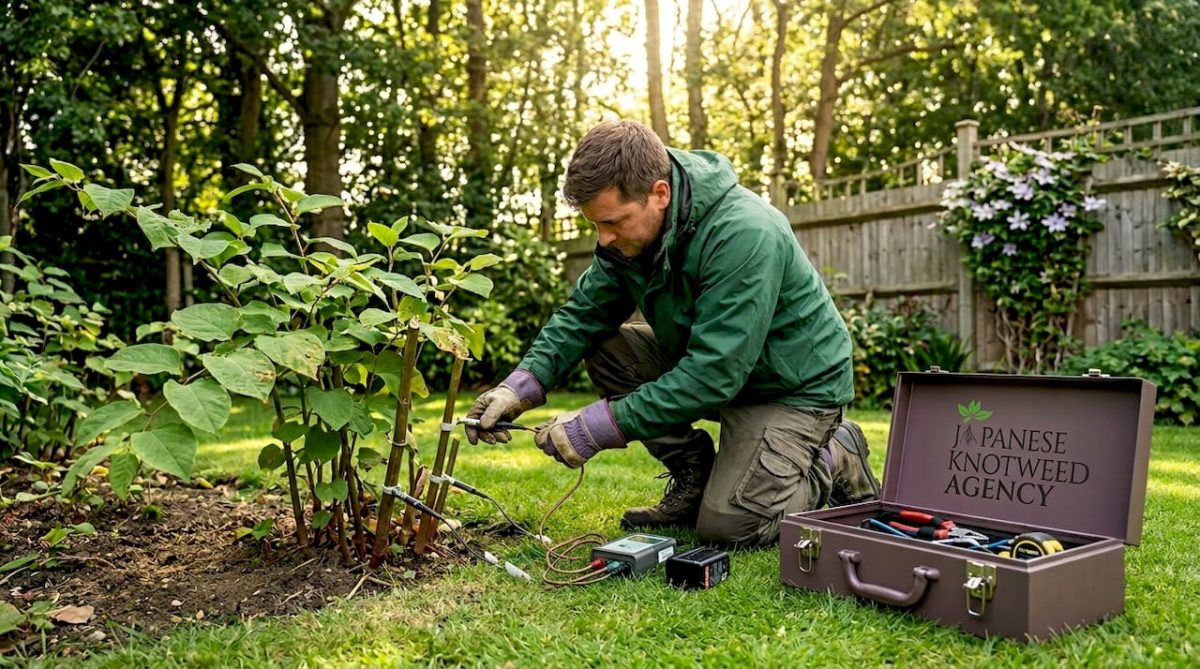
彻底解析地下根系破坏:日本葛根风险与无化学治理全指南


TL;DR:

  • 日本葛根根系侵略性低,与欧美市场认识偏差显著不同。
  • 无化学治理方法如阳热处理和机械挖除有效且生态友好。
  • 日本重视植物多元价值,风险评估基于科学和本土生态实际。

许多购房者和房地产投资者在面对"地下根系"这一话题时,往往将葛根与房产贬值、结构破坏直接画上等号。然而,这种认知在日本市场中存在根本性的偏差。葛根(Pueraria lobata)在日本拥有数百年的药用与食品利用历史,其实际对房产的直接威胁远低于欧美市场所描绘的危险形象。本文将系统梳理地下根系危害的科学机制、日本本土的真实风险状况,以及当前最具实践价值的无化学治理方法,帮助购房者、投资者和地方机构做出更理性的决策。

目录

关键要点

要点 详情
葛根根系破坏风险低 在日本并无公开记录显示葛根根系会直接危及房产结构和价值。
无化学治理合法有效 阳热处理法、覆盖高温和手工挖掘是当前环境友好且合规的主流技术。
葛根拥有药用资源化价值 与欧美不同,日本重视其资源价值,治理需兼顾生态、经济与法律。
家庭与机构应科学衡量 购房或管理前建议先评估具体植物类型及威胁后再制定治理策略。

地下根系破坏:现状及房产价值影响分析

地下根系对建筑结构的威胁,通常来自两个核心机制:一是根系物理性穿透地基、排水管道或防水层;二是根系腐烂后形成空洞,导致地基沉降。在欧洲,日本虎杖(Reynoutria japonica)的根茎网络可深达地表以下3米,横向扩展范围超过7米,这种极强的侵略性确实对建筑地基构成了可量化的风险。

然而,日本本土的情况截然不同。根系危害治理流程的专业评估显示,葛根在日本农村和城郊地区广泛存在,但其根系生长模式与欧美引进的入侵性品种存在显著差异。日本本土葛根受到天然天敌、土壤生物群落以及长期形成的生态制衡机制的约束,根系扩张速度和侵略性远低于在欧美"无天敌环境"中的表现。

日本房产市场的实际数据表明:

  • 无葛根直接破坏房产的公开案例记录在日本几乎为零
  • 日本房产评估机构在标准估值流程中,并未将葛根列为需要强制申报的危险因素
  • 与英国《2003年反社会行为法》不同,日本目前没有要求强制消除葛根的全国性立法
  • 在城市核心区域,葛根的实际存在比例极低,主要集中于山区、农村和废弃地块

“在日本,葛根更多被视为一种可利用的自然资源,而非需要紧急处置的危险植物。这种认知差异,直接影响了房产交易中的风险评估标准。”

对于购房者而言,这意味着在日本购置含有葛根的地块时,不应直接套用欧美市场的风险框架。实际上,在日本农村地区,葛根的存在甚至可能被视为土地自然状态良好的标志,而非贬值因素。当然,这并不意味着完全忽视地下根系的长期管理需求,特别是在计划进行建设开发的地块上,专业评估仍然是必要的前置步骤。

日本常见地下入侵植物及对比分析

在澄清了葛根的实际风险等级之后,有必要将视野扩展至日本其他常见的地下根系入侵植物,以便购房者和投资者建立更完整的风险识别框架。常见入侵植物危害的系统性分析表明,不同植物的根系危害等级存在显著差异。

ヤブガラシ(Cayratia japonica,俗称"野葡萄")是日本城市和郊区最常见的地下根系入侵植物之一。与葛根不同,ヤブガラシ根系侵蚀案例在日本有明确记录,其块根系统能够在短时间内大面积占据地下空间,对排水设施和浅层地基造成实质性影响。

树根侵入排水管道的现场实拍图

主要入侵植物根系危害对比表:

植物名称 根系深度 横向扩展 建筑危害等级 治理难度 日本法律状态
葛根(Pueraria lobata 可达2米 中等 低至中 中等 无强制消除要求
ヤブガラシ(野葡萄) 0.5至1米 较广 中等 较高 无特别规定
セイタカアワダチソウ(加拿大一枝黄花) 0.3至0.8米 广泛 中等 部分地区受限
オオキンケイギク(大金鸡菊) 0.5米 中等 低至中 指定外来种
ミズヒマワリ(水葵) 水下根系 极广 对排水影响大 特定外来种

从上表可以清晰看出,葛根在建筑危害等级方面实际处于较低水平,而ヤブガラシ和水生入侵植物对基础设施的影响更为直接和显著。

购房者在实地考察时应重点关注以下信号:

  • 地表出现大面积藤蔓覆盖,特别是靠近建筑基础部分
  • 排水沟、检查井盖周边出现植物根系穿透迹象
  • 庭院或停车场地面出现不规则隆起或裂缝
  • 地下室或爬行空间内发现植物根系侵入

专业识别不同植物种类,是制定针对性治理方案的第一步,也是避免过度治理或治理不足的关键所在。

无化学治理地下根系的本土实践方法

明确了入侵植物的种类和危害等级之后,治理方案的选择便成为核心议题。在日本,受到农林水产省(MAFF)政策引导和生态保护意识的双重影响,无化学治理方法正在获得越来越广泛的应用。

日本农林水产省技术手册明确推广以下几类主要的无化学根系治理技术:

1. 阳热处理法(太陽熱処理)

利用夏季高温,在地表铺设透明或黑色聚乙烯薄膜,通过温室效应将地表以下15至30厘米的土壤温度提升至50至70摄氏度,持续4至6周,从而有效杀灭根系组织和种子。这一方法对浅层根系(深度1米以内)的消除率可达85%以上,且对土壤生物群落的长期影响远低于化学除草剂。

2. 机械挖除法

使用小型挖掘机或人工工具,系统性地挖除根系网络。对于葛根这类深根植物,机械挖除需要配合分阶段作业,确保根茎碎片不残留于土壤中,否则残留根段可能在数周内重新萌发。

3. 遮光覆盖法(遮光シート)

使用不透光覆盖材料持续覆盖目标区域,通过切断光合作用来耗尽根系储存的能量。这一方法需要持续12至24个月,适用于不急于开发的地块,成本相对较低但周期较长。

4. 周期性人工清除

结合季节性巡查,在植物萌发初期(春季)进行人工清除,每年至少执行3至4次,通过持续消耗根系能量储备来逐步削弱植物的再生能力。

各方法效果与适用场景对比:

治理方法 适用根系深度 预期周期 消除率 适用场景
阳热处理 0至30厘米 4至8周 85%以上 农业用地、空旷地块
机械挖除 全深度 即时至数天 90%以上 建设前期地块
遮光覆盖 浅至中层 12至24个月 70至80% 低优先级地块
周期人工清除 浅层为主 2至5年 60至75% 维护性管理

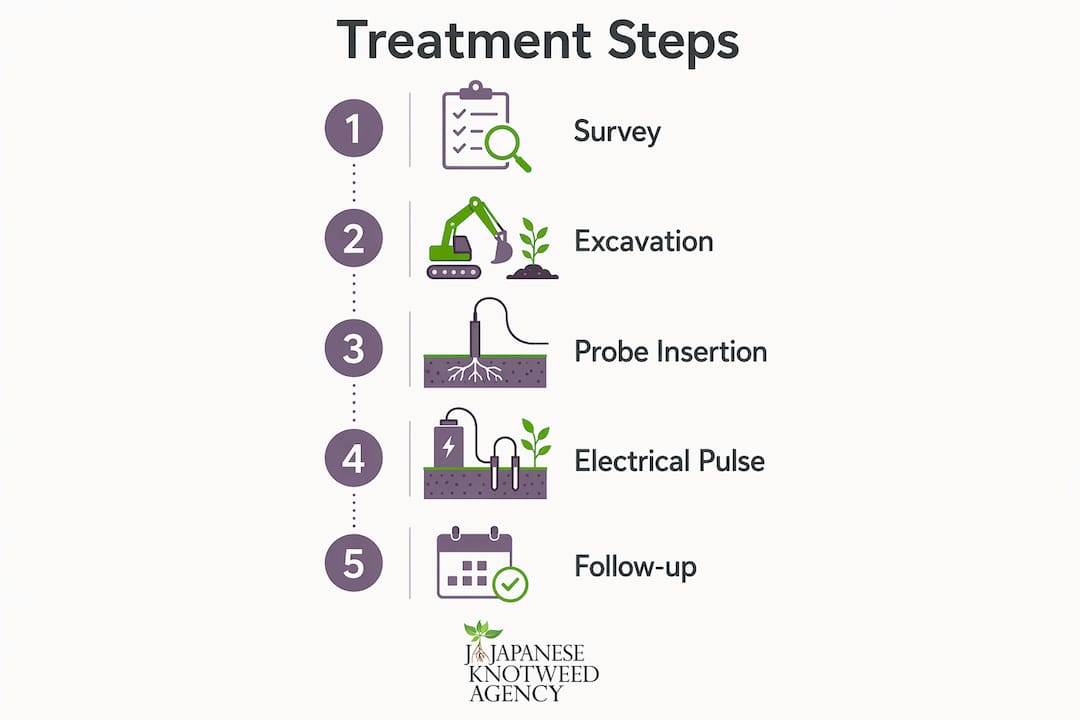
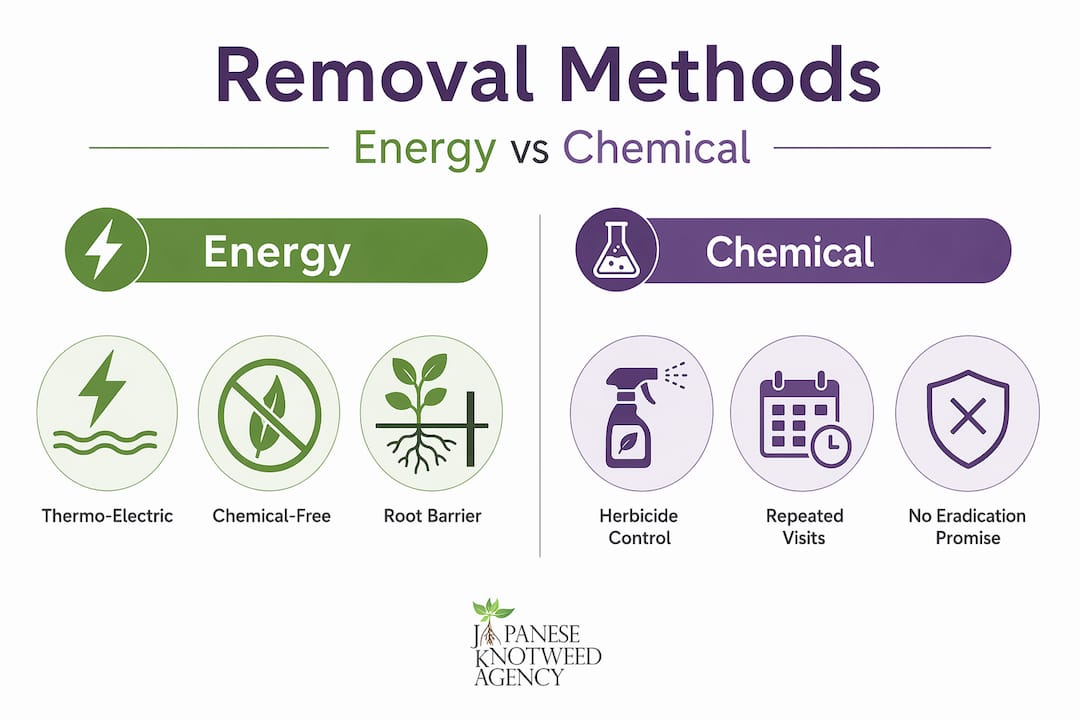
治理措施及应用场景一览图

专业提示:在进行阳热处理前,务必确认覆盖区域内无需保护的原生植物根系,并在处理完成后补种本土植被,以防止二次入侵植物填补空白生态位。这一步骤在日本农业实践中常被忽略,却是维持长期治理效果的关键环节。

无化学处理详细流程的完整指南表明,无论选择哪种方法,治理前的专业评估都是不可省略的步骤。错误的方法选择不仅浪费资源,还可能刺激根系产生应激性扩张,加剧问题的严重程度。实用无化学方法的系统清单可以帮助业主在咨询专业机构之前,完成初步的自我评估。

权衡药用价值与入侵风险:多元观点下的权利与责任

在完成治理方案的技术性分析之后,有必要从更宏观的视角来审视葛根管理中的多元价值权衡。这一议题在日本具有特殊的文化和政策意义,也是日本与欧美在入侵植物管理策略上产生根本分歧的核心所在。

葛根的多元价值在日本得到广泛认可:其根部富含葛根素(puerarin)和大豆苷元(daidzein),在传统汉方医学中用于治疗感冒、肌肉疼痛和心血管疾病;葛粉作为食品增稠剂在日本料理中有着悠久的应用历史;葛根的茎纤维还可用于编织传统织物,具有重要的民俗文化价值。

“日本对葛根的管理哲学,体现了一种更为成熟的生态观:不是简单地将外来植物定性为’敌人’并予以消灭,而是在科学评估实际危害的基础上,探索资源化利用与生态管理的平衡点。”

与此形成对比的是,在英国和美国,日本虎杖被列为需要强制申报和处理的危险物种,抵押贷款机构甚至可能拒绝为受影响地块提供贷款。这种政策差异并非单纯的文化偏好,而是基于各地区生态条件、植物实际危害数据以及法律责任框架的综合判断。

业主和地方机构在制定治理方案时,需要权衡以下多重因素:

  • 植物的实际危害等级(基于专业评估,而非主观印象)
  • 治理方法对周边生态系统的潜在影响
  • 当地法律法规对特定植物种类的具体要求
  • 植物的潜在资源化利用价值(药用、食用、工业用途)
  • 治理成本与房产价值保护之间的经济性权衡

专业提示:在日本,对于葛根的治理决策,建议先委托具有本土经验的专业机构进行现场评估,明确根系实际分布范围和危害等级,再决定是否需要主动干预,以及采用何种干预强度。盲目照搬欧美标准,可能导致不必要的高成本治理,甚至破坏具有保护价值的本土生态系统。房主应对建议提供了更详细的决策框架,供业主参考。

深度观点:日本经验对全球入侵植物管理的启示

在多年从事入侵植物无化学治理的实践中,我们观察到一个普遍存在的认知误区:许多地区的政策制定者和房产从业者,将"入侵植物"等同于"必须消灭的危险物种",而忽略了生态系统的复杂性和植物本身的多维价值。

日本对葛根的管理实践,提供了一个值得全球借鉴的范例。这种管理哲学的核心不在于"是否消灭",而在于"如何在科学评估基础上做出最优决策"。当葛根在日本农村生态系统中发挥着水土保持和生物多样性维护的功能时,强制消除不仅成本高昂,还可能引发更严重的生态问题。

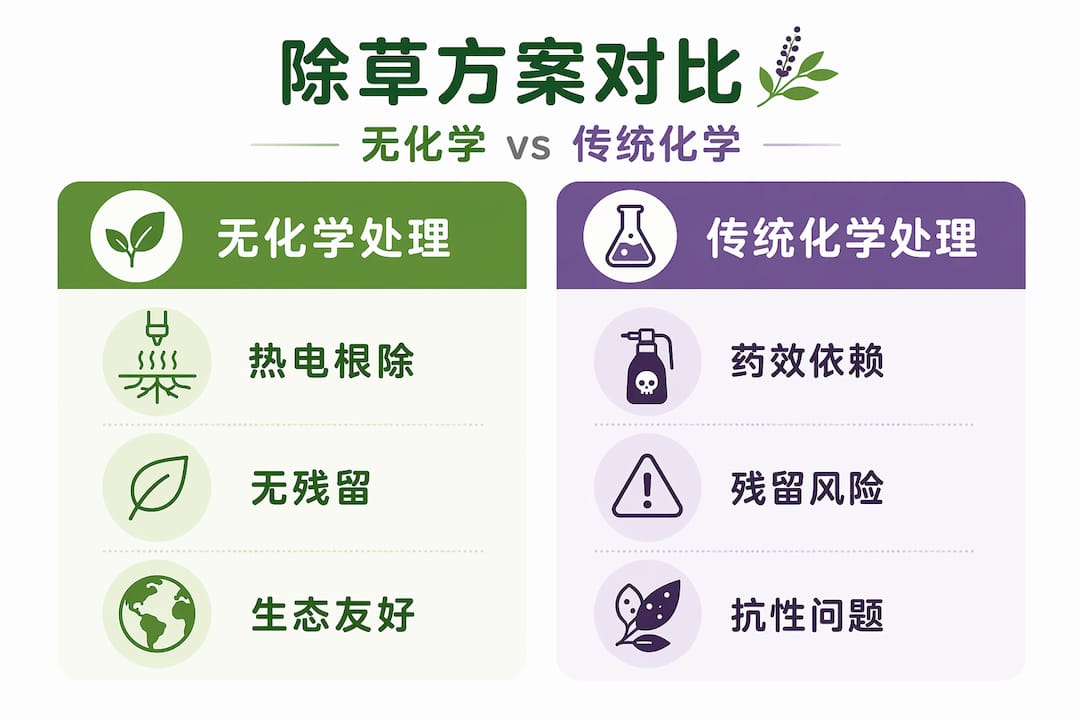
我们的立场是:无化学治理方法的价值,不仅在于避免化学除草剂对土壤和水体的污染,更在于它强迫从业者进行更精细化的评估和更有针对性的干预。相比之下,化学除草剂的"一刀切"方式,往往掩盖了对生态系统真实状态的深入理解。

全球入侵植物管理领域需要从日本经验中汲取的核心教训是:生态管理的有效性,取决于对本地条件的精准理解,而非对通用标准的机械执行。入侵植物识别与防范的专业知识体系,正是建立在这种精准理解的基础之上。一味依赖化学手段的治理方式,在面对具有强大根系储能能力的植物时,往往只能实现地上部分的暂时性控制,而无法真正解决地下根系网络的长期问题。无化学的热电处理、机械挖除和物理阻隔,才是从根本上解决问题的可持续路径。

获取专业无化学根系治理方案的下一步

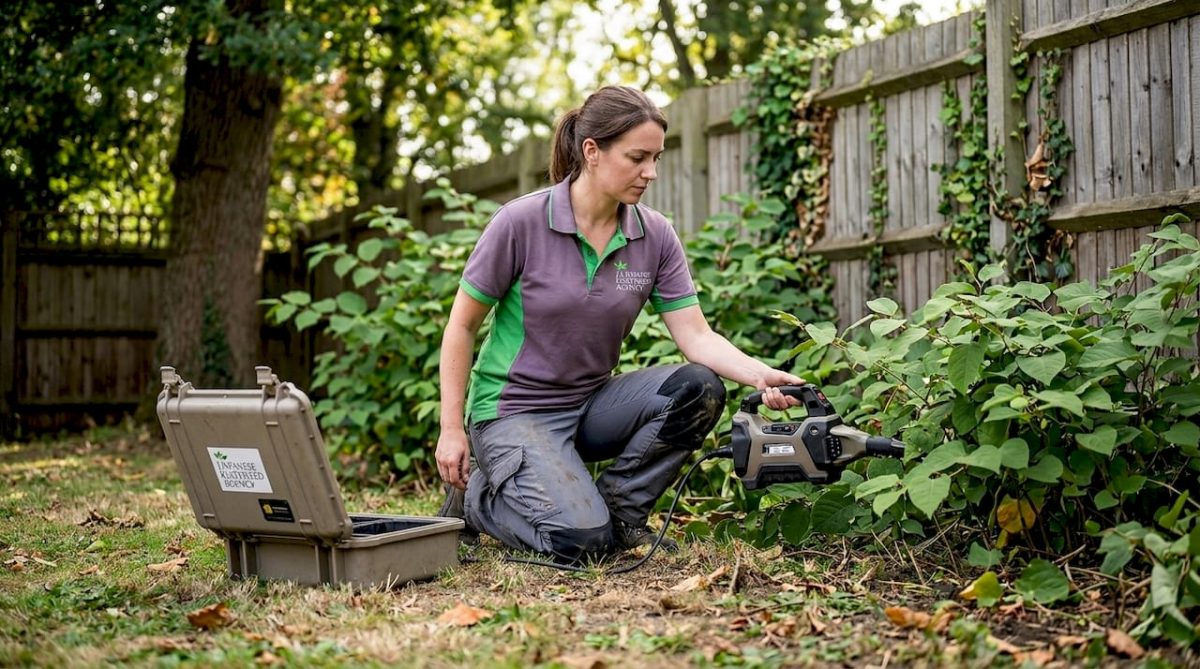
如果您正在评估一处地块的入侵植物风险,或已经发现地下根系入侵的迹象,Japanese Knotweed Agency 提供覆盖 England、Wales 和 Ireland 的专业现场评估服务。我们采用高达5000伏特的热电处理技术,直接作用于根茎网络,实现细胞级损伤和能量耗尽,无需任何化学药剂,对周边生态系统零污染。

https://japaneseknotweedagency.co.uk

我们的专业无化学治理方案成功率高达95%,并提供根系屏障安装和挖掘作业等配套服务。无论您是购房者、房地产投资者,还是寻求合规无化学解决方案的地方机构,我们都能提供从评估到治理的完整专业支持。访问我们的常见问题解答页面,获取更多关于治理流程、费用和时间安排的详细信息,或直接联系我们的专业团队进行初步咨询。

常见问题解答

葛根的地下根系会破坏日本房产吗?

目前无葛根根系直接破坏房产的公开案例记录在日本,葛根在本土生态环境中受到天然制衡,其根系侵略性显著低于在欧美无天敌环境中的表现,购房者无需直接套用欧美风险标准。

日本主流的无化学治理地下根系方法有哪些?

根据MAFF推广的技术规范,常用方法包括阳热处理(夏季高温覆盖,消除率85%以上)、机械及人工挖除,以及长期遮光覆盖,具体选择应基于根系深度和地块开发计划综合判断。

如何判断房产是否存在地下根系入侵的风险?

可通过观察地表藤蔓覆盖情况、排水设施周边的根系穿透迹象以及地面不规则隆起来初步判断,但准确的风险等级评估需要委托专业机构进行现场勘查和根系分布测绘。

日本为何对葛根和其他入侵植物的治理态度有所不同?

葛根的药用和食用价值在日本传统文化中根深蒂固,政策制定者因此更倾向于资源化利用和无化学管理,而非大规模消除,这与欧美以"危害控制"为主导的管理逻辑形成了根本性的政策分歧。

推荐

Read more

根系清除注意事项全解析:环保高效无化学处理实用指南


TL;DR:

  • 无化学根系清除注重保护土壤和周边环境安全。
  • 物理、热电和防根障隔离是主要实用方法。
  • 科学监测和阶段管理确保根系彻底治理与防反弹。

物业购置、绿化改造或再融资过程中,入侵植物的根系问题往往是最容易被低估的隐患。一旦根系未能彻底清除,不仅影响土地价值,还可能导致贷款审批受阻,甚至引发邻地纠纷和生态破坏。传统化学药剂处理虽然见效快,但土壤残留、地下水污染和邻界扩散等风险正促使越来越多的地方政府和业主转向无化学处理方案。本文将系统梳理根系清除的核心标准、主流方法、场景对比与实操细节,帮助您在保护物业价值的同时,做出科学负责任的决策。

目录

关键要点

要点 详情
环保优先 根系清除要避免化学污染,优先选择物理方法保障土壤安全。
分场景选择 针对家庭、公共、敏感区应灵活匹配清除方案,杜绝一刀切。
标准流程 操作前应充分了解检测、许可、技术比对,科学防控根系复发。
分批实施 大面积治理需分阶段配合监控,最大化治理效果与安全性。

根系清除的核心安全与环境标准

在选择任何根系清除方案之前,首先需要明确评判标准。只有建立清晰的底线,才能科学筛选适合您物业或项目的方案,避免因操作失误带来长期隐患。

土壤与周界邻地保护是首要考量。化学药剂一旦渗入土壤,不仅会影响周边植被,还可能污染地下水源,对整个生态系统造成持续损害。根据农业控草政策的相关指引,生石灰或盐水烧根仅限非敏感区使用,必须严格避免土壤盐化问题。对于紧邻居民区或水源地的物业,这一限制尤为关键。

物业交易和政府许可方面的合规要求同样不可忽视。部分金融机构在审批按揭贷款时,会明确要求提供入侵植物清除证明及专业检测报告。根据根系挖除标准,业主需确保清除结果符合当地法规要求,否则可能面临交易受阻的风险。政府绿化项目更需提前获得相关许可,确保操作流程全程合规。

长期抑制根系反弹是生态方案的核心目标。入侵植物的根茎网络极为发达,单次处理往往无法根治,必须制定持续监测和阶段性管理计划。厚塑料布或防草布压实,阻光腐烂根系等物理隔绝方式,在长期抑制根系扩散方面表现稳定,且不会引入化学残留风险。

针对儿童游乐场、学校操场等高敏感区域,任何形式的化学药剂均应严格禁止。这些区域只允许采用无化学处理方案,包括物理覆膜、人工挖除和热电处理等经过验证的技术手段。

  • 优先选择对土壤和邻地无残留影响的处理方式
  • 确保处理结果符合物业交易和政府项目的合规要求
  • 制定长期监测计划,防止根系反弹
  • 高敏感区域严格执行无化学处理原则
  • 保留完整的处理记录,便于后续审计和贷款申请

专业提示: 对于新购或翻修物业,建议在签约前委托专业机构进行根系检测,提前了解潜在风险,可大幅降低后期治理成本,也有助于在交易谈判中掌握主动权。

主流无化学清除方法及操作流程

明确了评判标准之后,需要深入了解当前物业和家庭项目中广泛适用的无化学根系清除方法。每种方法都有其特定的适用场景和操作要点,选择正确的方案能够显著提升治理效果。

  1. 物理覆膜法(遮光腐烂法):将厚塑料布或防草布压实,完全覆盖根系区域,通过阻断光照使根系逐渐腐烂分解。操作时需确保覆盖物边缘压实固定,防止风力掀起导致局部暴露。此方法适合面积较大、地形平坦的区域,周期通常为一至两个生长季节。

  2. 人工挖除法:采用专业工具逐层挖掘,将根茎网络完整移除。操作时需特别注意避免伤及邻近树木的根系,以及地下管线设施。此方法适合根系分布较浅、面积较小的区域,效果直接但人力投入较大。挖出的根茎残体必须妥善处理,防止二次扩散。

  3. 热电处理技术:这是 Japanese Knotweed Agency 的核心专利技术,通过向根茎网络直接输送高达5000伏特的电能,造成细胞内部损伤,系统性消耗根茎储存的能量资源。每次处理均能有效削弱根系的再生能力,经过多次处理后实现彻底根除。此方法无化学残留,对周边生态系统无影响,特别适合敏感区域和物业交易前的紧急处理需求。

  4. 防根障隔离法:在根系扩散路径上安装专业防根屏障,物理阻断根茎向外蔓延。此方法常与其他清除手段联合使用,作为长期防护措施,特别适合物业边界管理和保护邻地不受侵扰。

  5. 生物抑制法:通过种植具有竞争优势的本土植物,逐步压制入侵植物的生长空间。此方法周期较长,适合大面积生态恢复项目,不适用于需要快速清除的物业交易场景。

“无化学根系清除技术的进步,不仅为环境敏感区域提供了安全可靠的选择,更为物业业主和地方政府提供了兼顾效果与责任的专业解决方案。在家庭根系无化学清除领域,科学方法的应用正在改变传统治理思路。”

在实际操作中,无论选择哪种方法,都需要遵循安全操作规范:挖掘时佩戴防护手套和护目镜,覆膜时确保固定牢固,热电处理时由持证专业人员操作。杂草无化学治理的核心原则始终是在彻底清除的同时,最大限度保护周边生态环境的完整性。

各方案对比——效果、周期与适用性一览

拥有方法清单之后,系统比对各方案的优劣,有助于根据实际场景和预算做出最优决策。中国农业区指南强调农业控草,但入侵植物的无化学处理在国内仍需借鉴国际成熟实践,结合本地实际情况灵活应用。

方法 操作复杂度 作业周期 人力强度 根系再生概率 环境影响
物理覆膜法 12至24个月 中等 极低
人工挖除法 1至3个月 低至中
热电处理法 高(需专业人员) 3至6个月(多次处理) 极低
防根障隔离法 长期防护 低(配合其他方法) 极低
生物抑制法 2至5年 中至高 正向

多种根系清除方案的实际应用来看,没有任何单一方法能够适用所有场景。以下是按场景的选择建议:

  • 物业交易前紧急处理:优先选择热电处理或人工挖除,周期短、效果可量化,便于提供合规证明
  • 大面积绿化项目:覆膜法结合防根障隔离,成本可控且对生态干扰最小
  • 敏感区域(学校、医院):热电处理或人工挖除,绝对禁止任何化学药剂
  • 长期物业维护:防根障隔离配合定期监测,防止根系跨界扩散
  • 生态恢复项目:生物抑制法结合覆膜,逐步恢复本土植被多样性

入侵植物工作流程的标准化管理,能够确保每个阶段的操作都有据可查,为后续的物业交易和政府审计提供完整的记录链。

特殊场景(敏感区/大面积)及实用注意细节

经过综合比较之后,进一步聚焦实际施工中的难点和风险防控,特别是高敏感区域和大面积项目的特殊注意事项。

在儿童活动区、学校操场、医院绿地等高敏感区域,物理隔绝和无化学处理是唯一可接受的选择。任何形式的化学药剂,包括除草剂、生石灰或盐水,都可能对儿童健康和医疗环境造成不可逆的影响。防止根系再生措施在这类区域的应用,必须结合定期监测和快速响应机制,确保根系反弹能够被及时发现和处理。

工作人员正在儿童游乐场附近安装防根隔离带。

大面积施工项目需要采用分批操作策略。一次性大规模挖掘不仅人力成本高昂,还可能造成土壤结构破坏和大范围生态扰动。建议将施工区域划分为若干管理单元,按照优先级逐批处理,同时在已处理区域安装监控标记,追踪根系扩散动态。厚塑料布或防草布压实的覆盖处理,能够在分批施工期间有效抑制未处理区域的根系活跃度,避免土壤盐化问题并为后续生态恢复创造条件。

特殊场景 主要限制 推荐方法 注意事项
学校及儿童活动区 禁止所有化学药剂 热电处理、人工挖除 施工期间需封闭区域
医院及养老院 禁止化学药剂,低噪音要求 覆膜法、热电处理 避免施工干扰日常运营
水源保护区 严格防止土壤和水体污染 人工挖除、防根障 挖出根茎需密封处理
大型住宅小区 邻界协调复杂 分批覆膜、热电处理 提前通知所有相关业主
政府公共绿地 需合规文件和许可 热电处理、人工挖除 全程记录存档备查
  • 施工前务必完成地下管线探测,避免挖掘损伤水电气管道
  • 挖出的入侵植物根茎残体需装入密封袋,按规定渠道处置,严禁随意堆放
  • 大面积项目建议每季度进行一次根系扩散评估,及时调整处理策略
  • 与邻界业主保持沟通,共同制定跨界根系管理协议

专业提示: 施工前与相邻地块业主进行正式协商,并将协议内容书面记录,不仅能够避免后续环境纠纷,还能在必要时获得邻地配合处理的授权,大幅提升整体治理效果。

行业深度观察:无化学根系清除的误区与实战经验

在深入了解方法与场景之后,结合多年行业实践经验,有必要指出一些普遍存在的认知误区,这些误区往往是导致治理失败或成本超支的根本原因。

"挖得越深越彻底"是最常见的误解之一。 许多业主认为,只要将根系挖掘到足够深度,就能一劳永逸地解决问题。然而,入侵植物的根茎网络具有极强的再生能力,即使残留极小的根茎碎片,也能在适宜条件下重新萌发。过度挖掘不仅破坏土壤结构,还会增加根茎碎片扩散的风险,反而可能加剧问题。

阶段性管理优于一次到位的单次处理。 实战经验表明,将治理过程分解为多个阶段,配合动态监测机制,比单次大规模处理更能实现持久效果。每次处理后的监测数据,能够精确指导下一阶段的操作重点,避免资源浪费。实战经验流程的标准化应用,正是基于这一核心理念构建的。

生活区细节往往是治理盲区。 围墙基础、排水沟边缘、铺装缝隙等位置,是入侵植物根系最容易被遗漏的藏身之处。这些区域的根茎即使数量极少,也足以在一个生长季节内重新建立扩张网络。定期检查这些细节位置,是维持治理成果的关键步骤。

“无化学根系清除不仅仅是环保选择,更是维护财产价值和社区形象的重要方式。选择正确的处理技术和管理策略,直接决定了物业的长期价值和居住环境的生态质量。”

从行业角度来看,那些在根系治理方面取得持久成效的项目,无一例外地将科学监测、专业操作和阶段管理三者有机结合。单纯依赖某一种方法,或者期望通过一次处理彻底解决问题,往往会在数月后面临根系反弹的困境。建立系统化的治理档案,记录每次处理的时间、范围和效果数据,是专业机构与业余操作之间最本质的区别。

一步到位根系治理:高效无化学方案推荐

如果您正在处理物业交易前的根系清除需求,或者面对大面积入侵植物治理项目,专业的技术支持能够显著提升效率和合规性。

https://japaneseknotweedagency.co.uk

Japanese Knotweed Agency 作为无化学入侵植物处理领域的先行者,凭借95%成功率无化学解决方案,为英格兰、威尔士和爱尔兰的业主、物业开发商及地方政府提供经过验证的专业服务。我们的热电处理技术直接作用于根茎网络,无化学残留,完全符合敏感区域的严格要求。无论是物业调查、防根障隔离技巧,还是大型挖除工程,我们的专业团队均能提供完整的合规文件支持,帮助您顺利完成物业交易或政府项目审批。

常见问题解答

哪些根系清除方法适合儿童活动区或学校?

推荐采用热电处理、物理覆膜或人工挖除等无化学方法,严格避免生石灰、盐水等任何化学药剂,物理覆膜可安全消除根系且无化学残留风险,是敏感区域的优先选择。

物业买卖时,根系未清除彻底会被拒绝贷款吗?

部分银行和金融机构会明确要求提供入侵植物清除证明及专业检测报告,根系治理不达标可能直接导致贷款审批受阻或物业估值下调,建议在交易前委托专业机构完成检测和处理。

无化学方法治理后,多久可复种绿植?

一般需等待两至三个月,待根系彻底分解、土壤结构和微生物环境恢复稳定后,方可重新种植绿植,具体时间取决于原有根系密度和处理方法的彻底程度。

大面积根系清除为什么要分阶段实施?

分阶段实施便于动态监测根系反弹情况,能够根据每阶段的实际效果及时调整策略,同时降低单次大规模施工带来的环境扰动和费用风险,大面积施工分批操作是行业公认的最优实践方法。

推荐

Read more

Understanding invasive root systems: Risks, identification and control


TL;DR:

  • Japanese Knotweed has aggressive, indestructible underground rhizomes capable of pushing through concrete.
  • Proper identification relies on seasonal signs and expert surveys due to similar lookalikes.
  • Effective removal often requires professional treatment such as herbicide, excavation, or electro-thermal methods.

Most homeowners imagine plant roots as a gentle network quietly anchored beneath their garden. Japanese Knotweed’s rhizome system is the exact opposite. It is aggressive, practically indestructible when left untreated, and capable of pushing through tarmac, concrete foundations, and drainage systems. According to the Royal Horticultural Society, invasive root systems are the extensive underground rhizome networks of non-native plants that enable rapid spread, regeneration from tiny fragments, and serious structural damage to properties across England, Wales, and Ireland. If you have spotted an unfamiliar plant in your garden or received a survey flag, this guide will give you clarity on what you are dealing with.

Table of Contents

Key Takeaways

Point Details
Dormancy risk Invasive root systems can remain dormant underground for decades and suddenly reactivate.
Lookalike mistakes Homeowners often confuse Japanese Knotweed with harmless plants, delaying necessary action.
Treatment choices Proper eradication requires understanding of options: chemical, excavation, or non-chemical solutions.
Survey importance Accurate professional surveys are essential for legal compliance, property value, and effective control.

What are invasive root systems and why do they matter?

The term “invasive root system” is not simply a gardening label. In a domestic property context, it describes an underground network that actively works against you. Japanese Knotweed (Fallopia japonica) is the most widely recognised offender in the UK, but other species including Giant Hogweed and Himalayan Balsam also cause significant problems on residential land.

What makes a root system invasive?

A standard garden shrub or tree has roots that spread predictably and remain manageable. An invasive root system behaves very differently. Japanese Knotweed grows through a network of rhizomes, which are horizontal underground stems capable of sending up new growth at multiple points simultaneously. The plant can extend its rhizome network up to three metres deep and seven metres laterally from the visible plant. This reach is what makes it so threatening to hard surfaces, boundary walls, and building foundations.

Rhizomes are also extraordinarily resilient. Fragments as small as 1cm are capable of regenerating an entirely new plant when disturbed and left in soil. This means that any digging, strimming, or removal work carried out without professional guidance can unintentionally spread the problem across your garden and potentially into neighbouring land.

The dormancy trap

One of the most underestimated aspects of invasive root systems is their capacity for dormancy. Rhizomes can sit entirely inactive beneath the soil surface for years, waiting for conditions to favour regrowth. Homeowners who believe they successfully cleared a Knotweed infestation years ago are sometimes confronted with renewed growth seasons later, often following ground disturbance during construction or landscaping work. This creates a false sense of security that frequently leads to inadequate management and greater long-term expense.

Economic and social consequences for homeowners

The financial implications of invasive root systems in the UK are considerable. Mortgage lenders routinely decline applications or require specialist management plans before agreeing to lend on properties with confirmed Knotweed. Property values can be significantly affected, and boundary disputes between neighbours over encroaching rhizomes are increasingly common. Review the common Knotweed misconceptions that lead homeowners to underestimate or mishandle the problem from the outset.

Risk factor Potential consequence
Unmanaged spread Structural damage to walls, drains, and foundations
Rhizome fragments in soil Regrowth after landscaping or construction
Undisclosed on property sale Legal liability and mortgage complications
DIY removal attempts Spread to neighbouring land, legal dispute

Pro Tip: Never strim, rotavate, or chip away at suspected Knotweed growth without professional guidance. Each disturbed fragment becomes a potential new plant.

Identifying invasive root systems: Key signs and lookalikes

Once you understand the risks, accurate identification is your most important next step. Japanese Knotweed is frequently misidentified, and the consequences of a missed diagnosis or a false positive can both prove costly.

Seasonal characteristics to look for

Japanese Knotweed displays distinctly different appearances throughout the year, which can complicate identification if you are only looking at one season’s growth. The RHS notes these key features across its growth cycle:

  • Spring: Asparagus-like shoots emerge from the crown buds at soil level, red or purple tinged and growing rapidly
  • Summer: Heart-shaped or oval leaves with a flat, truncated base (not pointed), bamboo-like hollow stems with purple speckles, reaching two to four metres in height
  • Late summer to early autumn: Creamy white or pale green flower clusters appear along the stems
  • Winter: Stems die back to leave brittle, brown canes that persist above ground

One particularly reliable diagnostic feature is the rhizome itself. When snapped open, a fresh rhizome reveals a vivid orange or yellow interior. Crown buds, which look like dark red or purple knobbly clusters at ground level in early spring, are another strong indicator.

Japanese Knotweed versus common lookalikes

Many plants share visual characteristics with Japanese Knotweed, and misidentification is far more common than most homeowners realise. The following comparison should help you narrow down what you are dealing with:

Feature Japanese Knotweed Bindweed Russian Vine Himalayan Balsam
Stem structure Hollow, bamboo-like, speckled Twining, slender Twining, woody Hollow, reddish, not bamboo-like
Leaf shape Heart-shaped, flat base Arrowhead-shaped Heart-shaped, pointed Oval, serrated edges
Root type Deep orange rhizome White fibrous roots Woody rhizome Shallow, fibrous
Height 2 to 4 metres Climbing Climbing 1 to 2 metres

Step-by-step property check for homeowners

  1. Walk the boundary of your garden in early spring and look for clusters of dark red shoots pushing through the soil
  2. Check alongside fences, walls, drainage runs, and paved areas where rhizomes often emerge first
  3. In summer, look for the distinctive bamboo-like stems and flat-based leaves
  4. If you find canes from previous seasons, snap one open and check for the orange interior
  5. Photograph everything and consult a professional before disturbing any soil

You can consult our detailed Knotweed identification guide for additional photographic reference, and if you have any doubt about whether your property is affected, a Knotweed property survey will give you a definitive, documented answer.

Pro Tip: Photograph suspected plants in multiple seasons if possible. A single summer photograph is rarely enough for a confident professional assessment.

How are invasive root systems treated?

Accurate identification leads directly to the question every homeowner wants answered: how do you actually get rid of it? The answer depends on your site conditions, budget, timeline, and whether you are planning a property sale.

The three main treatment pathways

Infographic of root system treatment methods

There is no single solution that fits every situation. Professional practitioners assess each site individually and recommend the most appropriate method based on the extent of infestation, proximity to buildings, and environmental sensitivity.

1. Herbicide treatment

Glyphosate-based herbicide, typically delivered by stem injection, is the most widely used method across the UK. The approach targets the plant during its most active translocation period in late summer and autumn, when it naturally moves energy downward into the rhizome network. This means the herbicide travels with that energy, reaching deeper into the root system than foliar spraying alone. The process generally takes three to five years and costs between £2,000 and £5,000 for a typical residential site. It is effective but carries implications for surrounding biodiversity and is inappropriate near watercourses without specific licensing.

2. Excavation

Root excavation involves the physical removal of contaminated soil to a depth of up to three metres. All excavated material must be disposed of at a licensed landfill site, as Knotweed-contaminated soil is classified as controlled waste under UK legislation. Excavation is significantly more disruptive and expensive, with costs ranging from £5,000 to £15,000 or more for residential properties, but it delivers faster results. Review the excavation vs treatment guide to understand which approach suits your circumstances.

Contractor excavating roots near house foundation

3. Chemical-free electro-thermal treatment

This is the approach at the forefront of Japanese Knotweed Agency’s work. Rather than relying on herbicide, direct electrical energy of up to 5,000 volts is delivered into the rhizome network on site. This causes internal cell damage and depletes the energy resources stored within the extensive rhizome system with each treatment delivery. It is effective, ecologically responsible, and avoids the use of chemical agents, making it particularly suitable for sensitive environments, gardens near water, and homeowners who prefer a sustainable approach. Root barriers can also be installed alongside this method to prevent lateral rhizome migration.

Method Typical duration Approximate cost Environmental impact
Herbicide (glyphosate injection) 3 to 5 years £2,000 to £5,000 Moderate
Excavation Immediate to 3 months £5,000 to £15,000+ High (soil disturbance)
Electro-thermal treatment 1 to 3 years Variable by site Low

Key considerations when selecting a treatment provider include:

  • Confirmation that the contractor is accredited by the Property Care Association (PCA)
  • A 10-year insurance-backed guarantee provided upon completion
  • A site-specific management plan documented in writing
  • Clear confirmation of waste disposal procedures if excavation is involved

Review our removal best practices for a full checklist before appointing any contractor.

Pro Tip: Always request a written management plan and proof of PCA accreditation before signing any treatment contract. Without these, your guarantee may carry no legal weight with a mortgage lender.

Effective treatment cannot be separated from proper risk assessment and understanding your legal position. Many homeowners only discover they have a legal obligation after an issue arises during a property sale. Acting earlier is always the better approach.

RICS survey grading explained

Professional surveys for invasive weeds in the UK follow the Royal Institution of Chartered Surveyors (RICS) 2022 framework. RICS categories run from A to D, with each grade indicating a different level of risk and recommended response:

  • Category A: Knotweed is present and causing damage to structures or utilities; immediate professional management required
  • Category B: Knotweed is present within seven metres of a habitable structure; professional management strongly recommended
  • Category C: Knotweed is on site but further than seven metres from structures; monitoring and management plan recommended
  • Category D: Knotweed is not on site but present on an adjoining property; boundary monitoring advised, typically no immediate action required

It is important to note that there is no fixed legal requirement to act based on a seven-metre boundary alone. Risk assessments are evidence-based and take site-specific factors into account. The category assigned informs your management decisions rather than dictating a mandatory course of action in all cases.

Legal duties every homeowner should understand

“It is not illegal to have Japanese Knotweed on your property. However, under Schedule 9 of the Wildlife and Countryside Act 1981, it is an offence to plant it or allow it to spread into the wild. Failing to control its spread to neighbouring land can result in legal action from neighbours or local authorities.”

Beyond the criminal provisions, homeowners face practical legal obligations around waste. Any soil or plant material contaminated with Knotweed is classified as controlled waste and must only be disposed of at a licensed site. Fly-tipping Knotweed material is a serious offence that carries significant penalties.

When selling your property, the TA6 Property Information Form requires you to disclose whether Japanese Knotweed is or has been present, or whether the property is within three metres of a neighbouring infestation. Failure to disclose this information accurately can result in misrepresentation claims and the collapse of a sale. Mortgage lenders routinely require an active management plan before agreeing to lend on affected properties.

Survey methods used by qualified practitioners include visual inspection, photographic documentation, and ground-penetrating radar (GPR) scanning to map rhizome extent below ground. For the most accurate picture, find out more about Knotweed survey accuracy and what modern survey technology can reveal about subsurface spread.

The uncomfortable truths about invasive root systems most guides miss

The technical facts about Japanese Knotweed are well documented. What receives far less attention are the practical realities that trip up homeowners who believe they have resolved the problem.

The single most overlooked risk is dormancy. Rhizomes can remain dormant for up to 20 years before conditions trigger renewed growth. This means a garden that appeared clear for a decade can suddenly show active regrowth following building works, new drainage installation, or even a particularly wet growing season. Assuming a problem is permanently resolved without ongoing annual monitoring is one of the most common and costly mistakes we see.

Misidentification also remains a persistent problem. Bindweed, Russian Vine, and Himalayan Balsam share enough visual characteristics with Knotweed to cause genuine confusion, even among experienced gardeners. Treating the wrong plant with the wrong method wastes time and money while the real infestation continues unchecked below ground.

DIY and partial treatment attempts frequently cause more harm than good. Strimming, rotavating, or cutting back Knotweed without fully addressing the rhizome simply distributes viable fragments throughout the soil. We regularly survey properties where previous DIY efforts have spread an infestation well beyond its original footprint.

Our recommendation is always to explore non-chemical Knotweed solutions as part of an annual, professionally supervised management programme. Vigilance after treatment is not optional. It is the difference between genuine eradication and a recurring problem.

Get expert help with invasive root systems

Understanding invasive root systems is genuinely complex, and the consequences of getting it wrong are significant for your property, your finances, and your legal standing.

https://japaneseknotweedagency.co.uk

Japanese Knotweed Agency provides professional surveys across England, Wales, and Ireland, backed by expertise in chemical-free electro-thermal treatment, root barrier installation, and full excavation works. If you are at any stage of this process, from initial suspicion through to active management, our team can provide documented, expert guidance. Explore our full Japanese Knotweed FAQs, review our chemical-free Knotweed solutions for environmentally responsible options, or learn exactly what to expect from our invasive weeds survey process before booking an assessment.

Frequently asked questions

Can invasive root systems really regrow after decades of dormancy?

Yes, rhizomes can regrow after lying dormant underground for up to 20 years, which is why ongoing annual monitoring remains essential even after successful treatment.

Is it illegal to have Japanese Knotweed on my property?

It is not illegal to have Knotweed on your property, but you must not allow it to spread into the wild or onto neighbouring land, as this constitutes a criminal offence under the Wildlife and Countryside Act 1981.

How can I distinguish Japanese Knotweed from other similar plants?

Look for asparagus-like spring shoots, heart-shaped leaves with flat truncated bases, bamboo-like stems with purple speckles, and a vivid orange interior when a rhizome is snapped open. A professional survey is the only way to be certain.

What should I disclose when selling my house if Knotweed is present?

You must declare Japanese Knotweed on the TA6 property form, and failure to disclose this information accurately can affect your mortgage offer and expose you to legal liability for misrepresentation.

Is professional treatment always necessary?

Professional treatment is strongly recommended because only PCA-accredited contractors can provide the 10-year insurance-backed guarantees that mortgage lenders and conveyancers require when a property is sold or re-mortgaged.

Read more

根茎清除详解:无化学方法助力日本葛藤永久治理


TL;DR:

  • 日本葛藤根茎具有极强的再生能力,难以靠简单方法彻底清除。
  • 无化学方法如热电处理和覆盖抑制已被验证为高效持久的治理手段。
  • 系统性操作、规范处置根段和持续监测是根除的关键保障。

日本葛藤(Japanese Knotweed)的根茎系统是当今最难对付的入侵植物问题之一,无论是普通房主还是地方政府管理者,都曾为其顽强的再生能力感到束手无策。许多人误以为只有化学除草剂才能彻底解决问题,但科学实践与大量现场数据已经证明,通过科学组合的无化学处理方法,同样可以实现高效且持久的根茎清除。本文将系统梳理日本葛藤根茎的生物学特性、各类无化学治理方案的实际效果,以及适合房主和机构的操作流程与决策建议。

目录

关键要点

要点 详情
根茎顽固性高 日本葛藤根茎极易再生,让治理难度大大提升。
无化学方法有效 科学无化学方法可在2-4年实现90%以上清除率。
碎片管理是关键 治理过程中必须防止碎片遗留,避免二次扩散。
策略需因地制宜 房主与机构要结合自身实际资源选择最合适方法。

日本葛藤根茎的生物学特性与危害

要真正解决日本葛藤的问题,首先需要理解它为何如此难以清除。日本葛藤的地下根茎网络(rhizome network)可以向四周延伸超过7米,向地下扎根深达3米,形成一个庞大而密集的储能系统。这套根茎系统的核心特征在于,即使是极小的根段残留,也可以在土壤中休眠数年后重新萌发,造成治理工作前功尽弃。

根系萌发力极强,这是日本葛藤管理难度居高不下的根本原因。哪怕在挖掘或处理过程中遗留了一小段根茎,这段根茎就有可能在数周内重新长出新芽,并逐渐恢复整个植株的生长活力。这一特性使得简单的人工割除或地面清理完全无法从根本上解决问题,反而可能因为操作不当导致根段碎片四散,加速扩散。

除了极强的再生能力,日本葛藤还会对周边环境和建筑物造成多重危害,具体包括:

  • 地基与建筑破坏:根茎可渗透混凝土缝隙,破坏地基、排水管道和铺装路面,造成高额修缮费用
  • 生态失衡:日本葛藤生长速度极快,会遮蔽本地植物的阳光,导致本地植被大面积消亡,破坏生物多样性
  • 法律与产权风险:在英格兰、威尔士及爱尔兰,房主有法律义务控制日本葛藤的蔓延,若任其扩散至邻地,可能面临法律诉讼和房产贬值
  • 土地价值下降:存在日本葛藤的房产在申请抵押贷款时往往遭遇障碍,部分银行甚至拒绝贷款申请

了解入侵植物的多重危害,是制定科学治理策略的第一步。一个常见的误区是,认为定期割除地上部分就能逐渐"饿死"根茎。事实上,日本葛藤根茎储存了大量碳水化合物,足以支撑植株在多次割除后依然存活,单纯的地面割除只会消耗处理者的精力,而无法真正削弱根茎的活力。正确识别入侵植物与危害,并尽早采取系统性治理措施,才是保护房产和生态环境的正确路径。

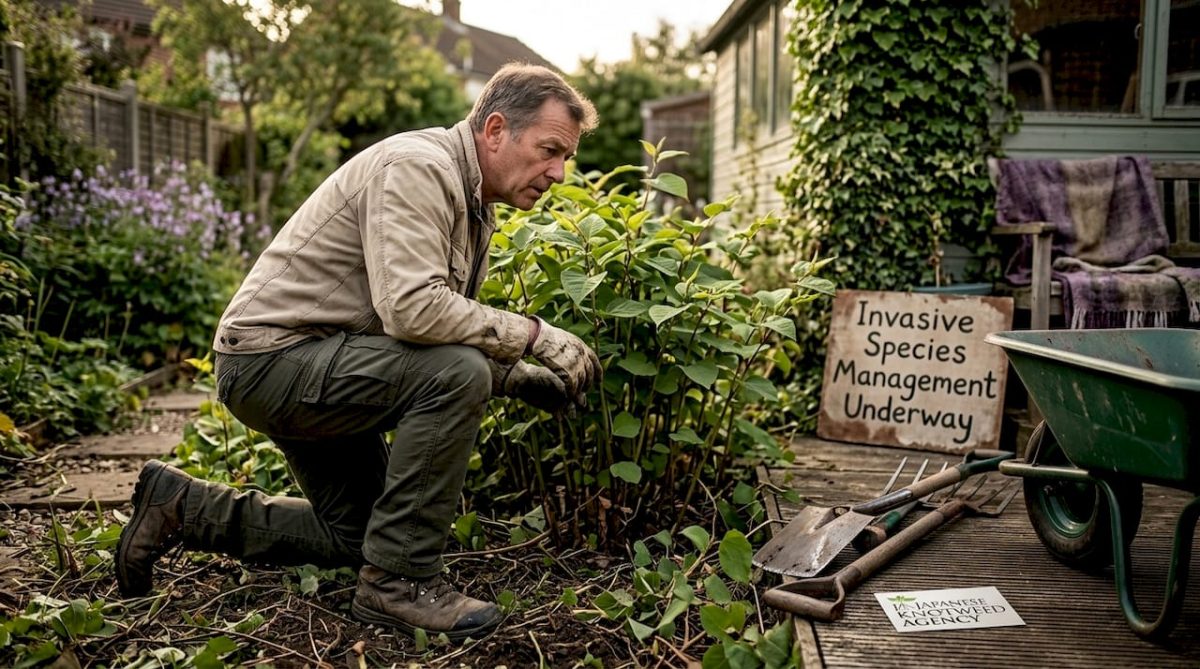
在日常家庭生活中观察日本葛藤的根茎变化

主要无化学根茎清除方法对比

理解了根茎的顽固特性之后,我们可以进入各类无化学治理方法的系统比较。目前,在不使用任何化学除草剂的前提下,主要有以下几种经过实践验证的方法:

  1. 生物控制(山羊放牧):利用山羊等食草动物持续啃食地上部分,逐步消耗根茎储能,连续3至4年放牧能根除80%以上植株,适合大面积农村或郊区地块
  2. 人工挖掘:通过机械或人工方式彻底挖出根茎,实践数据显示挖掘成功率约90%,但对操作精度要求极高,任何遗漏根段都可能导致复发
  3. 热电处理(Thermo-electric treatment):直接向根茎网络输送高达5000伏特的电能,造成细胞内部损伤并耗尽根茎储能,电处理成功率可达95%,是目前无化学方法中效率最高的技术手段
  4. 覆盖抑制法:使用不透光的厚重覆盖物(如防草布或多层纸板)长期遮蔽地面,阻断光合作用,实践数据显示覆盖法成功率约80%,但需要持续维护数年

以下表格对各方法的核心特征进行系统比较:

方法 原理 成功率 周期 适用场景 主要风险
山羊放牧 持续消耗地上储能 约80% 3至4年 大面积农村地块 需长期管理动物
人工挖掘 物理清除根茎 约90% 1至2年 中小型地块 碎片残留风险高
热电处理 电能破坏细胞 约95% 多次处理 各类地块 需专业设备
覆盖抑制 阻断光合作用 约80% 3至5年 平坦开阔地 需持续维护

专业提示: 在实际操作中,单一方法的效果往往不如组合方案。例如,将热电处理与根系屏障(root barrier)安装相结合,可以同时削弱现有根茎并阻止新根茎向外扩张,显著提升整体成功率。

无论选择哪种方法,避免操作误区都至关重要。最常见的错误是在挖掘或处理过程中,将碎根随意堆放或丢弃,导致根段随土壤搬运或雨水流动扩散到新区域。参考无化学处理方法指南,可以帮助处理者建立规范的操作流程,从源头上防止二次扩散风险。

日本葛藤无化学根茎清除:实践流程与注意事项

方法选定之后,规范的实施流程是决定治理成败的关键。以下是经过验证的无化学根茎清除标准操作流程:

  1. 现场评估与边界标记:在开始任何清除工作之前,先对侵染范围进行全面勘察,标记根茎延伸边界,避免遗漏隐藏区域
  2. 选择最佳处理季节:春末至夏季是日本葛藤生长最旺盛的阶段,此时根茎储能向地上部分输送,处理效果最佳;秋季处理可在植株将储能回收至根茎前进行,也具有较好效果
  3. 执行主要清除操作:根据选定方法(热电处理、挖掘或覆盖)按计划实施,确保每次处理覆盖全部标记区域
  4. 严格收集和处置根段:所有挖出的根茎和根段必须装入密封袋,按当地法规送往指定填埋场或高温焚烧,绝对不可堆肥或随意丢弃
  5. 安装根系屏障:在清除区域边界安装专业根系屏障,防止周边未处理区域的根茎重新侵入
  6. 定期复查与追加处理:每季度至少进行一次现场复查,发现新芽立即处理,避免根茎恢复储能

“坚持无化学治理2至3年,并严格把控碎片处理流程,是实现根除的核心要素。”
来源:无化学治理实践案例

专业提示: 每次处理后务必做好详细记录,包括处理日期、覆盖面积、发现新芽的位置及数量。这些记录不仅有助于追踪治理进展,在涉及法律纠纷或房产交易时,也可作为尽职调查的重要证明文件。

参考防治入侵方法清单,可以系统梳理每个阶段的操作要点,确保不遗漏任何关键步骤。同时,了解防止根系扩散策略对于保护邻近地块和生态敏感区域尤为重要,特别是在城市或近郊环境中,根茎扩散的后果往往更难以控制。

房主与地方机构的策略选择与风险管控

掌握了具体操作流程之后,房主和地方政府管理者还需要从更宏观的决策角度,权衡各自的策略选择和风险管控重点。两类主体在资源条件、技术能力和法规责任上存在显著差异,因此治理策略也应有所不同。

决策维度 房主 地方政府/机构
资金规模 有限,需控制成本 相对充裕,可规模化投入
技术能力 通常需要外部专业支持 可建立内部专业团队
法规责任 控制蔓延至邻地的义务 公共土地管理及示范责任
治理周期 灵活,可分阶段推进 需纳入年度预算和长期规划
社区协作 可与邻居联合治理 可主导社区联防联控计划

对于房主而言,建议优先考虑以下策略组合:首先委托专业机构进行现场勘察,明确侵染范围和严重程度;其次根据地块面积和预算,选择热电处理或人工挖掘作为主要手段;同时安装根系屏障作为长期防护措施,防止邻地根茎侵入。英国房主必知防控建议提供了针对性的实用指导,帮助房主在有限预算内实现最优治理效果。

对于地方政府和机构管理者,核心挑战在于大面积公共土地的长期维护和跨部门协调。建议将无化学治理方案纳入年度环境管理计划,设定阶段性清除目标,并建立跨部门的监测和响应机制。社区联防联控模式已在多个英国地区取得显著成效,通过协调相邻地块的同步治理,可以有效避免单一地块清除后被周边未处理区域的根茎重新侵入的问题。

需要特别关注的主要风险包括:

  • 法规责任风险:在英格兰和威尔士,《野生生物及乡村法》(Wildlife and Countryside Act)明确规定,将日本葛藤扩散至野外属于违法行为,处理不当可能引发法律追责
  • 环境监管风险:处置挖出的根茎材料时,必须严格遵守当地废弃物处理法规,避免违规处置引发的环保处罚
  • 二次扩散风险:碎片散落造成再生是治理共识中公认的最大风险点,每一次操作都必须将碎片管控作为重中之重

我们对根茎清除效果的真实洞见

在多年的一线实践中,我们观察到一个反复出现的规律:选择"速效"方案的客户,往往在短期内看到地上部分消失后便停止治理,结果在一两个季度后面临更大规模的复发。这种"速效迷思"是根茎治理失败的最主要原因,而非方法本身的局限。

真正有效的根茎清除,依赖的是持久、严密、有科学记录支撑的系统性操作。热电处理技术之所以能达到95%的成功率,不仅因为电能可以直接破坏细胞,更因为每次处理都在持续耗尽根茎储能,使其逐步丧失再生能力。这个过程需要多个治理周期的坚持,而不是一次性的"根治"操作。

政策支持和社区协作同样不可忽视。我们在实际项目中发现,当相邻地块的业主或机构协调一致、同步推进治理时,整体成功率和治理速度都会显著提升。了解家庭无化学治理实例,可以帮助房主和决策者建立更切实际的预期,并从成功案例中汲取可复制的经验。

获取专业支持,迈向彻底根茎清除

如果您正在面对日本葛藤根茎的困扰,无论是个人房产还是大面积公共土地,专业的支持可以帮助您避免常见误区,显著提升治理效率。Japanese Knotweed Agency 作为无化学处理领域的先行者,拥有95%无化学成功案例的实践记录,提供从现场勘察、热电处理到根系屏障安装的全流程服务。

https://japaneseknotweedagency.co.uk

我们的英国房主入侵物种治理指南为不同规模和类型的地块提供了定制化的治理方案框架,帮助您在科学规划的基础上做出最优决策。如有任何疑问,我们的常见问题答疑涵盖了从技术细节到法规责任的全方位解答,是您迈向彻底根茎清除的可靠起点。

常见问题解答

日本葛藤根茎最难清除的原因是什么?

日本葛藤根系萌发力极强,即使极小的根段残留也能重新萌芽,导致治理反复和扩散,是其清除难度居高不下的根本原因。

无化学根茎治理见效需要多长时间?

一般需要2至4年的持续操作才能实现显著效果,连续3至4年放牧可根除80%以上植株,具体周期取决于侵染面积与方法组合。

为什么碎片散落是日本葛藤清除的大忌?

任何遗留根段都有可能在土壤中萌芽,避免碎片散落是业内公认的治理共识,碎片扩散是导致治理失败和二次蔓延的最主要原因。

地方政府如何选择适合的无化学治理方案?

需综合评估地理面积、可用资金及长期维护能力,建议将热电处理与根系屏障安装相结合,纳入年度环境管理计划,实现科学组合治理。

是否需要专业机构介入?

大面积或地质复杂的地块强烈建议由专业团队支持,以确保碎片管控和处理精度达到标准,小面积地块可在专业指导下尝试自行治理。

推荐

Read more

Chemical-free weed removal protocols for UK homes 2026


TL;DR:

  • Chemical-free removal methods can effectively eradicate Japanese Knotweed within 1-2 years.
  • Proper surveys, documented treatment plans, and licensed waste disposal are crucial for legal compliance.
  • Professional, documented, guarantees-backed approaches are essential for mortgage approval and property sale.

A single rhizome fragment weighing just 0.7g can regenerate into a full Japanese Knotweed plant, which makes the idea that you can simply dig it out and be done with it dangerously misleading. For homeowners and buyers across England, Wales, and Ireland, this invasive species represents one of the most serious threats to property value, mortgage eligibility, and legal standing. The good news is that chemical-free removal is not only possible but is increasingly the smarter, more future-proof choice. This guide walks you through the protocols you need, from initial survey to long-term monitoring, without relying on herbicides.

Table of Contents

Key Takeaways

Point Details
Survey before action Always start with a professional survey to avoid legal and financial pitfalls before removing invasive weeds.
Chemical-free works Modern non-chemical methods can reliably eradicate Japanese Knotweed as quickly as, or faster than, traditional herbicides.
Professional help pays Using guaranteed professional protocols protects property value and is required by most lenders for mortgages.
Monitor for success Regular monitoring and proper documentation ensure long-term success and prevent costly regrowth issues.

Understanding invasive weeds and why chemical-free removal matters

Japanese Knotweed (Fallopia japonica) is not an ordinary garden nuisance. It can push through tarmac, undermine foundations, and spread from a fragment smaller than your thumbnail. Once established, its rhizome network extends up to three metres deep and seven metres in every direction. For property owners, that means structural damage, mortgage refusals, and significant legal exposure.

Understanding identifying invasive weeds correctly is your first line of defence, because misidentification leads to wasted effort and potential legal liability. Beyond Japanese Knotweed, species such as Giant Hogweed and Himalayan Balsam carry their own risks and obligations under UK law.

Chemical removal, particularly glyphosate-based treatments, has long been the default response. That is changing fast. Glyphosate alternatives are gaining preference after the UK moved to restrict its use in December 2025, reflecting growing concern about environmental harm, soil health, and biodiversity. Mortgage lenders and insurers are increasingly scrutinising which removal methods were used and whether they carry meaningful guarantees.

The legal rules for Japanese Knotweed in England and Wales sit primarily under the Wildlife and Countryside Act 1981 and the Environmental Protection Act 1990. In practical terms, this means:

  • You must not allow Japanese Knotweed to spread to neighbouring land or the wild
  • All excavated material must be treated as controlled waste
  • Disposal must only be carried out by a licensed waste carrier
  • Failure to comply can result in prosecution, civil claims, or enforcement notices

Professional protocols matter not just for eradication, but for your ability to sell, remortgage, or insure your property. Without documented, lender-accepted treatment, buyers will walk away.

Chemical-free approaches address all of these concerns simultaneously. They eliminate residual chemical contamination, satisfy increasingly strict lender requirements, and deliver outcomes backed by guarantees that hold up at the point of sale.

With the risks clarified, it is vital to know where to begin. Your first action should always be a proper survey and legal check, because acting without both is where most costly mistakes originate.

A professional survey does several things that a visual inspection cannot. It maps the extent of the rhizome network below ground, identifies any spread towards watercourses or boundaries, and establishes a documented baseline for treatment planning. When booking a surveyor, look for accreditation with the Property Care Association (PCA) or the Invasive Non-Native Specialists Association (INNSA). These credentials matter significantly when it comes to lender and insurer acceptance.

The property weed survey process we follow at Japanese Knotweed Agency covers England, Wales, and Ireland, providing a thorough assessment that feeds directly into a compliant management plan. Here is the sequence to follow:

  1. Book a professional survey with an accredited specialist before any physical work begins
  2. Review your legal obligations under the Wildlife and Countryside Act and Environmental Protection Act
  3. Check your mortgage or lender requirements, as most major lenders require a management plan and long-term guarantee
  4. Notify your insurer if the infestation is discovered during a purchase or remortgage process
  5. Document everything from survey date and findings to treatment records and waste disposal certificates

Controlled waste disposal is required by law, and the Environment Agency maintains oversight of how contaminated material is handled and transported. This is not a step you can bypass or defer.

Your Japanese Knotweed legal obligations extend to documentation at every stage. Buyers and solicitors now routinely request this paperwork as part of conveyancing, and gaps in the record can delay or collapse a sale. Exploring weed management strategies that include monitoring schedules and written guarantees will serve you far better in the long run.

Pro Tip: Keep a dedicated folder, physical or digital, for every piece of documentation related to your infestation. Survey reports, treatment logs, waste transfer notes, and guarantee certificates should all be immediately accessible for solicitors or lenders.

Step-by-step protocols for non-chemical weed removal

With your survey complete and legal obligations understood, you are ready to move into active treatment. Non-chemical removal is not a single method. It is a set of approaches, each suited to different infestation sizes, site conditions, and timelines.

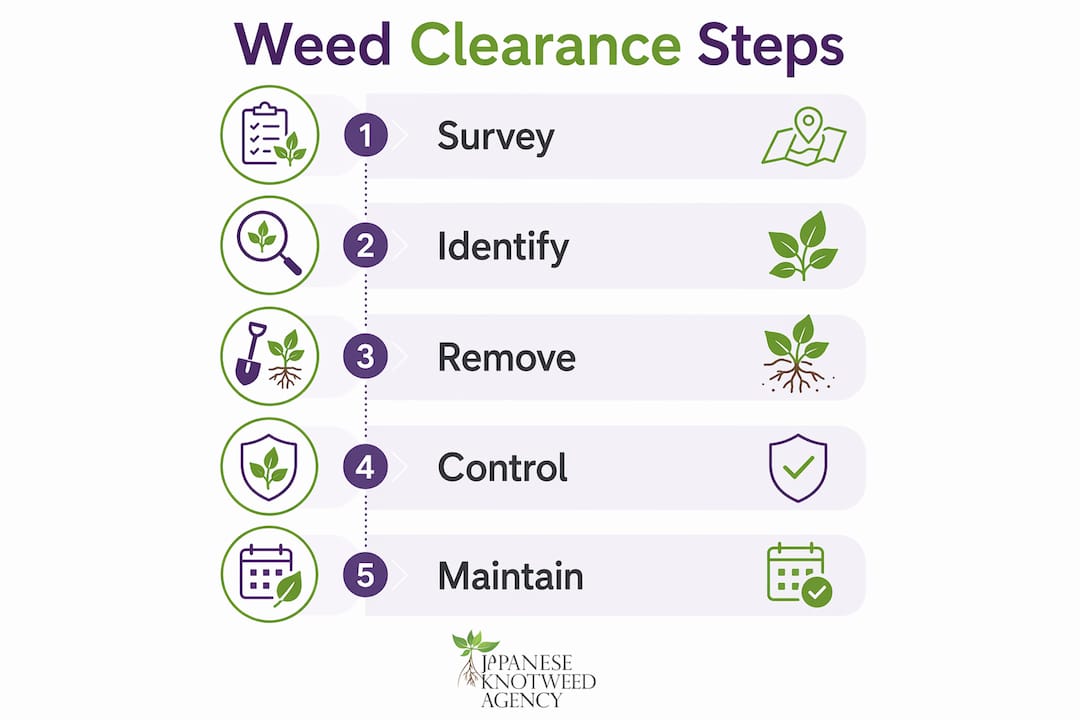
Infographic summarizing weed removal steps

Method Success rate Typical timeframe Lender accepted
Thermo-electric treatment Up to 95% 1 to 2 years Yes, with guarantee
Excavation and removal High, site-dependent Weeks to months Yes, with documentation
Root barrier installation Preventative/containment Immediate Yes, alongside treatment
Roots Reset (biological) 95%+ 1 treatment plus monitoring Yes, with guarantee

Thermo-electric treatments deliver up to 95% success within one to two years, and the Roots Reset approach achieves over 95% eradication after a single application, with replanting possible within five days. A North Wales Wildlife Trust trial confirmed 95%+ eradication within one year using the Roots Reset method, compared to three to five years for herbicide-based programmes.

Here is how the step-by-step protocol works in practice:

  1. Cut and record all above-ground growth. Never compost or move cut material off-site without licensed disposal arrangements in place
  2. Assess excavation needs with your surveyor. Deep excavation is necessary when foundations or services are at risk
  3. Install root barriers where the infestation borders boundaries, watercourses, or neighbouring property
  4. Apply the primary treatment, whether thermo-electric, Roots Reset, or excavation, based on your survey findings and site conditions
  5. Arrange licensed waste removal immediately. All excavated material must go to a licensed facility, with a waste transfer note retained
  6. Begin a 12 to 24 month monitoring programme with documented site visits

Our safe chemical-free treatment protocols at Japanese Knotweed Agency use direct energy delivery of up to 5,000 volts, targeting the rhizome network and depleting its energy reserves with each treatment cycle. For detailed manual removal steps, our guidance covers every stage of safe site management. For specific site situations, organic pest control alternatives may also be relevant to consider alongside your primary plan.

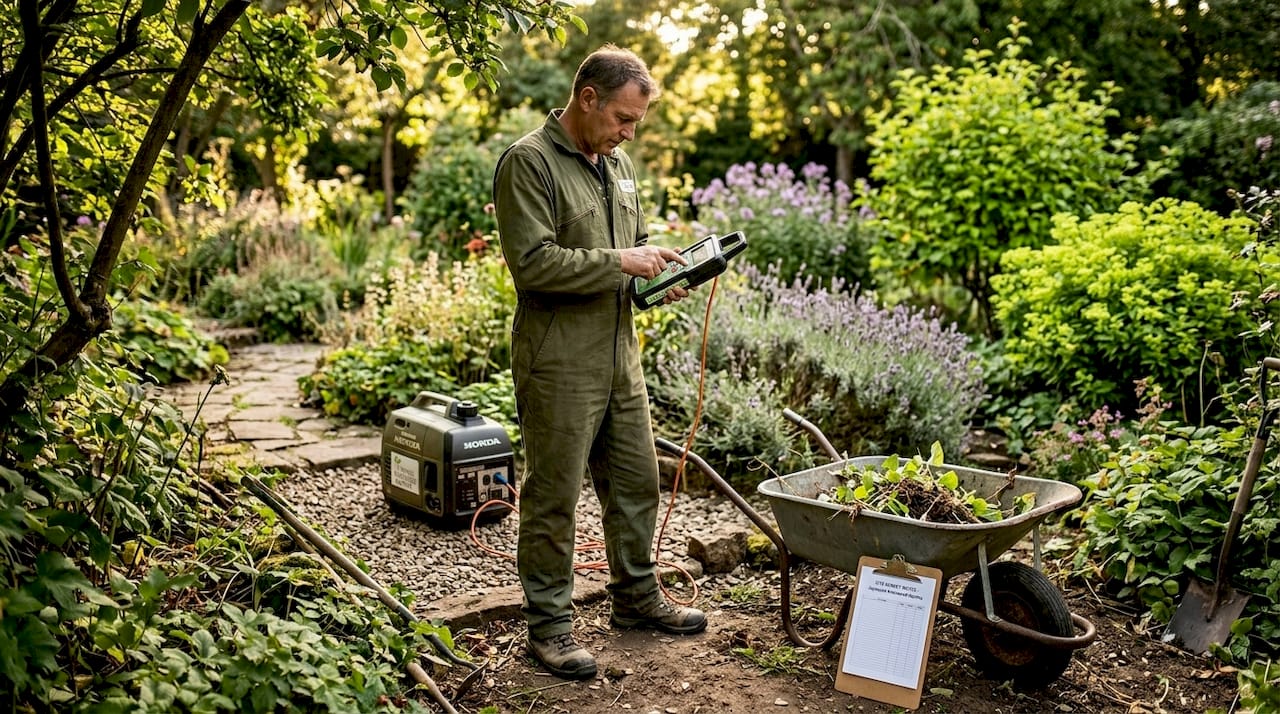
Engineer using device for weed removal outside home

Pro Tip: Never rotovate or mechanically churn soil in an affected area without expert supervision. This spreads rhizome fragments and can rapidly worsen the infestation.

Managing risks: what often goes wrong and how to avoid it

Being aware of common pitfalls is just as important as following the correct protocol. Many property owners begin with good intentions and end up in a more serious legal or financial position than when they started.

Unskilled excavation can worsen infestations by spreading fragments into watercourses, neighbouring land, or deeper soil layers. Once this happens, the scale of legal liability increases significantly. The most common mistakes include:

  • Starting work without a professional survey or management plan
  • Disposing of excavated material in domestic bins or garden compost
  • Treating only the visible stems while ignoring the rhizome network below
  • Failing to monitor the site following initial treatment
  • Working near watercourses without Environment Agency guidance
Removal approach Success rate Lender guarantee Typical cost range DIY risk level
DIY (small patches) Low to moderate No Low upfront, high long-term High
Professional non-chemical Up to 95%+ Yes Moderate to higher Low
Professional excavation High Yes Higher Very low

DIY is only suitable for patches under 1m² and will not produce the guarantees or lender approval required for mortgage-critical situations. Our best practice removal tips and guidance on reasons for non-chemical approaches make clear why professional involvement is not optional for anything beyond the smallest, most contained cases.

Ongoing monitoring for 12 to 24 months is non-negotiable. Regrowth from missed fragments is common, and without documented site visits you lose both the evidential record and the basis for any guarantee claim.

What most homeowners and buyers miss about weed removal protocols

Most people focus almost entirely on the physical act of removal. What they underestimate, often significantly, is the importance of documentation and guarantees. A property with a well-documented, professionally managed knotweed history is far more mortgageable and saleable than one where removal was carried out informally, regardless of how thoroughly the work was done.

We see this regularly: a homeowner treats an infestation competently but without professional records, then faces a collapsed sale because the buyer’s lender will not accept unverified claims. The treatment cost becomes irrelevant when there is no guarantee to present.

Ignoring evolving regulations is equally costly. Relying on glyphosate-based treatments applied before the December 2025 restrictions does not protect you from regulatory scrutiny today. Lenders and insurers are assessing current compliance, not historical intent.

Chemical-free methods are not simply the environmentally responsible choice. They are increasingly the commercially rational one. High success non-chemical solutions now deliver outcomes that rival or exceed chemical programmes, with the added advantage of regulatory durability and lender acceptance built in from the outset. The shift towards these methods is not a trend. It is the direction of the entire sector.

Take the next step: expert help for guaranteed weed removal

If you have identified Japanese Knotweed or another invasive species on your property, the most important step you can take right now is to arrange a professional survey before committing to any physical removal work.

https://japaneseknotweedagency.co.uk

At Japanese Knotweed Agency, we provide guaranteed non-chemical solutions using thermo-electric treatment, root barrier installation, and excavation across England, Wales, and Ireland. Our protocols are lender-accepted, fully documented, and backed by guarantees that protect your property transaction. Browse our common weed removal questions for immediate guidance, or download our survey checklist for your home to prepare for your first consultation. Protecting your property starts with the right assessment.

Frequently asked questions

Can I remove Japanese Knotweed myself without chemicals?

DIY is only suitable for patches under 1m² and carries significant legal and regrowth risks. Professional support is strongly advised for any infestation requiring lender guarantees or near-boundary management.

How long does chemical-free Knotweed removal take?

Thermo-electric methods typically require one to two years of treatment cycles, while the Roots Reset North Wales trial demonstrated 95%+ eradication within one year using a single treatment followed by structured monitoring.

Is chemical-free removal accepted by mortgage lenders?

Yes, when carried out and guaranteed by recognised professionals. 5 to 10 year guarantees from PCA or INNSA accredited firms are essential for homebuyers seeking mortgage approval.

Allowing spread to neighbouring land or the wild is a prosecutable offence under the Wildlife and Countryside Act 1981, making proper protocols and disposal documentation legally essential.

Read more

Sustainable weed control: a guide for homeowners


TL;DR:

  • Sustainable weed control uses integrated, non-chemical methods to target invasive plant roots effectively.
  • Legal requirements demand professional management and proper disposal to prevent spread and penalties.
  • Long-term eradication typically takes one to seven years, emphasizing monitored, expert-led strategies.

Most homeowners facing invasive weeds assume that strong herbicides are the only reliable answer. In practice, chemical treatments often fail to address the extensive root systems of species like Japanese Knotweed, creating resistance and compounding both environmental harm and legal risk. Sustainable weed control offers a more effective, legally sound alternative, one that uses integrated, non-chemical strategies to address the problem at its source. Whether you own a property in England, Wales, or Ireland, understanding what genuine sustainable weed management involves could save you significant cost, legal trouble, and long-term damage to your land.

Table of Contents

Key Takeaways

Point Details
Integrated non-chemical approach Sustainable weed control blends methods like excavation, barriers, and electrical treatments for lasting results.
Legal and environmental compliance Professional, chemical-free control protects you from fines and ensures responsible disposal and disclosure.
Professional input is essential Commission expert surveys for tailored plans and monitoring, especially for complex species such as Japanese Knotweed.
DIY risks legal trouble Attempting large-scale removal without professional guidance can make things worse and lead to prosecution.

What sustainable weed control really means

The term ‘sustainable weed control’ is often misunderstood. It does not simply mean avoiding chemicals; it refers to a structured, long-term approach that addresses both the visible plant and its underlying biology. For invasive species like Japanese Knotweed, which can push through tarmac and establish root systems extending several metres below ground, surface-level treatments are rarely sufficient.

Integrated Weed Management (IWM) is the recognised framework for sustainable weed control. It combines multiple non-chemical tactics, including mechanical, cultural, biological, and physical methods, to suppress weeds long-term without relying on herbicides. This layered approach is critical because no single technique eliminates a well-established infestation completely.

The core components of IWM for invasive species include:

  • Prevention: Stopping the introduction and early spread of invasive species through site management and regular inspections.
  • Cultural control: Managing soil conditions and surrounding vegetation to reduce weed establishment.
  • Mechanical control: Physical removal of above-ground growth to deplete energy reserves within the plant.
  • Biological control: Using natural predators or pathogens where appropriate and legally permitted.
  • Physical control: Installing barriers and using techniques that disrupt root systems directly.

The Royal Horticultural Society and leading UK horticulture bodies consistently recommend professional guidance for invasive species management. This is especially relevant for Japanese Knotweed, which carries specific legal obligations that homeowners may not be aware of. Exploring non-chemical methods for Knotweed early in the process helps homeowners understand the options available before the problem escalates.

Sustainable weed management is not a trend; it is the responsible standard for protecting your property, your neighbourhood, and the wider environment from the long-term consequences of invasive species.

Chemical-free control is the recommended foundation under organic chemical-free standards, particularly where biodiversity, water courses, or neighbouring land are at risk. The goal is not merely eradication but sustainable suppression that prevents re-establishment and avoids collateral ecological damage.

Key chemical-free methods for controlling invasive weeds

Understanding the range of professional, non-chemical methods is essential before commissioning any treatment. Each approach carries specific advantages, limitations, and cost implications that vary by site, infestation size, and proximity to structures or boundaries.

The table below summarises the main methods used by professional practitioners:

Method Typical timescale Disruption level Success rate
Excavation and removal Weeks to months High High if thorough
Root barrier installation 2 to 4 years Low to medium High for containment
Thermo-electric treatment 1 to 2 years Low Up to 95% rhizome destruction
Integrated approach 1 to 5 years Variable Highest overall

For Japanese Knotweed in England, Wales, and Ireland, key chemical-free methods include the following:

  1. Excavation and removal: This involves physically digging out the rhizome network. It is effective and relatively fast, but it is highly disruptive and generates significant volumes of controlled waste requiring licensed disposal.
  2. Root barrier installation: High-density polyethylene barriers are installed below ground to contain lateral spread. This method suits boundary disputes and pre-construction scenarios particularly well.
  3. Thermo-electric treatment: Delivering direct electrical energy up to 5,000 volts directly into the plant causes internal cell damage and progressively depletes energy reserves within the rhizome network. This is a low-disruption, highly targeted technique.
  4. Integrated management programmes: Combining two or more of the above methods produces the most reliable long-term outcomes, particularly for larger or older infestations.

Pro Tip: Always confirm that your chosen provider can tailor a multi-method plan to your property’s specific context. A provider offering only one technique is unlikely to achieve lasting results for established Japanese Knotweed.

Electrical and electro-physical weed control is an evolving field, and its application to Japanese Knotweed represents a significant advance in eco-friendly management. Following removal best practices ensures that whichever method is selected, the work is carried out to a standard that satisfies both technical and legal requirements. Your Knotweed UK guide can help you understand the full scope of what professional eradication involves before you engage a contractor.

Technician applying electrical weed control outdoors

Many homeowners discover the legal dimension of invasive weed control only after a problem has already escalated. This is a costly mistake. The legal framework governing Japanese Knotweed and similar invasive species in England, Wales, and Ireland is specific and enforceable.

Under the Wildlife and Countryside Act 1981, it is illegal to allow the spread of Japanese Knotweed to neighbouring land. The plant is classified as controlled waste under the Environmental Protection Act 1990, meaning that all excavated material must be disposed of through licensed contractors. Additionally, homeowners are legally required to disclose the presence of invasive species during property sales.

The consequences of non-compliance are significant:

  • Financial penalties of up to £5,000 for allowing illegal spread.
  • Failed mortgage applications: Many lenders refuse to approve mortgages on properties with untreated Knotweed.
  • Civil liability: Neighbouring property owners can pursue legal action if spread occurs.
  • Reduced property value: The impact on the property industry is well-documented and can be substantial.
Scenario Risk without professional management
Selling your property Legal disclosure obligation; sale may collapse
Waste disposal Controlled waste rules apply; DIY illegal
Spread to neighbours Civil and criminal liability
Mortgage approval Lenders may decline or withdraw offers

The RHS guidance on non-chemical control reinforces that sustainable approaches, when correctly implemented, protect both the legal position and the ecological integrity of a site. Understanding Knotweed laws before you begin any management work is not optional; it is essential. A qualified professional will also ensure that all Knotweed legal requirements are met throughout the treatment process.

Key statistic: Homeowners who attempt DIY removal without professional oversight face penalties of up to £5,000, in addition to costs associated with remediation if spread occurs.

Practical tips for effective, sustainable weed management

With a clear understanding of both the methods and legal landscape, the final step is taking well-organised, practical action. The sequence in which you approach this matters considerably.

  1. Commission a professional survey first. Before any physical work begins, a qualified survey establishes the extent of the infestation, identifies risk zones, and informs the correct treatment strategy. The property survey process is the critical first step and should never be skipped.
  2. Select an integrated, chemical-free management plan. Professional surveys and integrated methods via PCA-accredited firms provide the compliance and guarantees lenders and solicitors require.
  3. Confirm PCA accreditation. The Property Care Association sets professional standards for Knotweed management. Accredited firms can issue management plans accepted by mortgage lenders and conveyancers.
  4. Request written guarantees and monitoring schedules. A robust management plan includes defined milestones, monitoring visits, and aftercare commitments. Do not accept verbal assurances.
  5. Avoid DIY on any area exceeding 10m². Beyond this threshold, the legal complexity and ecological risk increase sharply, and professional involvement is strongly advised.

Pro Tip: Ask your provider for evidence of past case studies on similar infestations. A professional with demonstrable experience on comparable sites will be better placed to manage your specific situation effectively.

Sustainable weed management is not a one-off event. It is a monitored programme that requires consistency, expertise, and accountability at every stage.

Long-term IWM research confirms that integrated, monitored approaches consistently outperform single-method treatments in both effectiveness and durability. The investment in professional, structured management returns measurable benefits in property value, legal compliance, and ecological protection.

Infographic summarizing sustainable weed control methods

A new approach: why expert-led, integrated strategy outpaces old methods

There is a persistent belief among homeowners that invasive weeds can be resolved quickly, either with a dose of herbicide or a weekend of digging. For species like Japanese Knotweed, this belief is not just unhelpful; it is actively dangerous. Rhizomes can extend three metres below ground and seven metres laterally. A partial excavation or single chemical application leaves the majority of the root system intact and, in some cases, stimulates regrowth.

What professional, integrated management offers is something fundamentally different: a strategy calibrated to the biology of the plant, the legal requirements of the site, and the long-term interests of the homeowner. The full Knotweed UK guide illustrates precisely why a structured approach consistently produces superior outcomes compared with reactive, short-term interventions.

Homeowners who invest in proper surveys and tailored treatment plans protect more than their garden. They protect their property value, their legal standing, and the broader environmental health of their community. This is the standard the industry has moved to, and it is the standard every homeowner facing an invasive species should expect.

Take the next step towards sustainable weed control

If you are dealing with Japanese Knotweed or any other invasive species on your property, acting promptly and correctly is essential. Professional agencies like Japanese Knotweed Agency provide end-to-end, chemical-free management, from initial property surveys and infestation mapping through to tailored eradication plans and full compliance documentation.

https://japaneseknotweedagency.co.uk

Our chemical-free Knotweed solutions achieve up to 95% success and are designed to meet the legal and environmental obligations that matter to you as a homeowner. Whether you need a survey, a treatment plan, or a complete eradication plan guide, our specialists are ready to support you across England, Wales, and Ireland. Contact us today to arrange your professional assessment and take the first step towards lasting, eco-friendly results.

Frequently asked questions

What is the difference between sustainable weed control and standard weed killing?

Sustainable weed control uses a mix of non-chemical methods to target roots and prevent resistance, while standard weed killing often relies on herbicides that can fail or cause environmental harm. IWM combines multiple tactics for stronger, more consistent long-term control.

Can I remove Japanese Knotweed myself without chemicals?

DIY removal is strongly discouraged for most homeowners, as it carries serious legal and ecological risks. DIY risks spread and legal issues, and professional methods are usually required by law for large infestations or when selling a property.

What are the fastest non-chemical methods for Knotweed control?

Excavation is the quickest option, though it is highly disruptive. Thermo-electric treatment achieves up to 95% success within one to two years with significantly less disruption to your site.

Is it legally necessary to use professionals for invasive species?

For infestations over 10m² or near property boundaries, licensed professionals are typically required. Licensed disposal and disclosure are mandatory under UK law, and non-compliance can result in significant penalties.

How long does sustainable weed control take to fully eradicate Japanese Knotweed?

Complete eradication with non-chemical methods typically ranges from one to seven years. Physical removal plus monitoring is needed to progressively deplete rhizome reserves, with timescales depending on method, infestation size, and the consistency of aftercare.

Read more

How to clear a weed check for remortgage: 5 key steps


TL;DR:

  • Lender requirements for Japanese Knotweed vary, often needing a survey and insurance-backed guarantee.
  • Proactive weed checks during May to September can prevent costly delays and support remortgage success.
  • Clear documentation and specialist surveys are vital for lender approval and managing property value impact.

How to clear a weed check for remortgage: 5 key steps

Imagine your remortgage application stalling weeks before completion because a surveyor flagged Japanese Knotweed on your boundary. It happens more often than homeowners expect, and the consequences range from lender retention to outright refusal. Invasive weeds, particularly Japanese Knotweed, are among the most consequential property issues a lender can encounter, yet many homeowners approach the remortgage process without giving them a second thought. This guide walks you through every stage of clearing a weed check, from understanding what your lender actually demands to presenting a compliant outcome that protects your property value and keeps your remortgage on track.

Table of Contents

Key Takeaways

Point Details
Check lender policy first Lender requirements for weed checks and remediation vary, so confirm before starting your remortgage application.
Optimal timing for surveys Schedule your weed survey between May and September for the best chance of accurate detection.
Always use qualified surveyors Choose RICS-compliant professionals familiar with Japanese Knotweed to ensure accurate results and compliance.
Prepare documentation in advance Gather past survey reports and property details early to speed up the remortgage process and avoid delays.
Remediation may be required If invasive weeds are found, robust remediation and insurance-backed guarantees may be needed for lender approval.

Understand lender requirements for weed checks

Having set the stage for the importance of weed checks, let’s examine lender requirements so you can prepare effectively. The first and most important thing to understand is that mortgage lenders do not share a single, uniform policy on Japanese Knotweed or invasive weeds. Their attitudes range from cautious acceptance to outright refusal, and knowing which camp your chosen lender falls into before you commission any survey is essential.

Infographic outlining weed check steps for remortgage

As lender policies vary considerably, some major high street lenders such as Nationwide and Lloyds take strict positions, applying retentions or refusing to lend entirely where knotweed is identified without a fully documented remediation plan. Barclays, by contrast, is known to accept lending where an insurance-backed guarantee (IBG) is in place. Specialist lenders and bridging finance providers are often the most flexible option for complex cases where remediation is ongoing.

An IBG is a formal guarantee, typically lasting between 5 and 10 years, issued by an approved invasive weed specialist confirming that a treatment or management plan is active and insured. Many mainstream lenders will not proceed without one. Understanding knotweed mortgage checks before you apply can prevent significant delays.

Here is a comparison of typical lender approaches:

Lender type Stance on knotweed What they typically require
Strict high street lenders Refusal or significant retention Full remediation plan and completed IBG
Flexible high street lenders Acceptance with conditions Active IBG from qualified specialist
Specialist lenders Case-by-case assessment Remediation plan, surveyor report, IBG
Bridging finance providers Generally flexible Risk assessment and exit strategy

Key requirements you should establish before applying include:

  • Weed survey report: a formal document produced by a qualified surveyor confirming the presence or absence of invasive species
  • Insurance-backed guarantee: mandatory for many lenders where knotweed is confirmed
  • Remediation plan: a documented strategy for treatment, typically spanning several years
  • Lender-specific documentation thresholds: some lenders require RICS-compliant surveys; others accept specialist assessments

Speaking with a remortgage solicitor early in the process is also advisable, as solicitors can clarify what documentation will be required during conveyancing. Reviewing knotweed mortgage issues in advance ensures you are not blindsided by conditions once your application is in progress. Taking this step before commissioning a survey means you commission exactly the right type of report, from the right type of specialist, to satisfy your specific lender.

Preparing for a successful property weed survey

Once you understand lender requirements, preparing your property and paperwork for a weed check is the next step. Thorough preparation significantly reduces the risk of a delayed or inconclusive survey outcome, which can cost weeks of remortgage time and, in some cases, the offer itself.

Surveyor preparing for property weed check

Start by gathering any previous survey documentation held for the property. If a weed survey was carried out during your original purchase, that report will give the incoming surveyor a baseline and may accelerate the assessment process. Prior treatment records, contractor invoices, and any IBG documents already in existence should all be organised and made available before the visit.

Timing matters considerably. As proactive surveys before application can prevent costly delays, booking within the optimal growing season from May to September is strongly recommended. Japanese Knotweed is most visually identifiable during this period, when its distinctive hollow bamboo-like canes, shield-shaped leaves, and small white flowers are visible. Attempting a survey outside this window risks an inconclusive result, which many lenders will not accept.

The table below summarises the key preparation steps and their importance:

Preparation step Why it matters
Collate previous survey reports Provides baseline data and historical context
Organise treatment and IBG records Demonstrates proactive management to lender
Schedule survey in May to September Maximises detection accuracy and visual confirmation
Select RICS-compliant surveyor with weed expertise Ensures lender-acceptable documentation
Clear site access prior to survey Prevents delays on the day and missed assessment areas

When selecting a surveyor, prioritise specialists who are experienced with invasive plant identification alongside RICS compliance. A generalist building surveyor may not possess the specific botanical knowledge to accurately identify early-stage knotweed or distinguish it from similar-looking species such as Russian Vine or Bindweed. Understanding knotweed property value impact is also useful context, as surveyors will factor proximity to structures, spread, and treatment history into their valuation notes.

Before the survey day, walk your own boundaries and garden areas. Note any areas of dense vegetation, recent disturbance, or soil movement, as these can be indicators of rhizome activity beneath the surface. Japanese Knotweed rhizomes can extend up to 3 metres deep and 7 metres laterally, meaning visible surface growth is often just a fraction of the plant’s full extent.

Consulting a conveyancing timeline guide can also help you position the survey correctly within your overall remortgage timetable, ensuring the report is ready when lenders need it without unnecessary waiting periods.

Pro Tip: Book your weed survey at least 6 to 8 weeks before you intend to submit your remortgage application. This leaves sufficient time to address any findings, commission further specialist assessments if required, and obtain documentation without creating pressure on your completion date.

Step-by-step: conducting your weed check

You have prepared your documents and scheduled the right time; here is how the weed check is performed step by step.

  1. Initial site walkthrough: The surveyor carries out a structured perimeter and garden inspection, examining boundaries, outbuildings, paved areas, and any land adjacent to or bordering the property. They assess soil disturbance, raised paving, and cracked structures that may indicate rhizome pressure from below.
  2. Identification of invasive species signs: Surveyors look for tell-tale growth patterns, including the distinctive reddish-purple shoots in early spring, the dense bamboo-like cane clusters in summer, and dried hollow canes in autumn and winter. They also check for species such as Giant Hogweed, Himalayan Balsam, and Rhododendron ponticum, all of which are controlled under the Wildlife and Countryside Act 1981.
  3. Photographic and mapping evidence: Confirmed or suspected invasive species are photographed and plotted onto a site plan. This mapping process is critical for lender reporting, as it demonstrates the precise location of any infestation in relation to the property’s structures, boundary, and neighbouring land.
  4. RICS protocol documentation: The surveyor completes formal documentation in line with RICS guidance, categorising the infestation, if present, using the recognised 4-point Management Plan category system, ranging from Category 4 (low risk, remote from structures) through to Category 1 (immediate structural threat).
  5. Report preparation and issue: A formal written report is produced, typically within 5 to 10 working days, detailing findings, risk assessment, and recommended remediation actions where applicable.

As May to September remains the optimal detection window, scheduling outside this period may produce an inconclusive report. Surveyors working in winter often note “not assessed” against certain areas, which can be problematic for lender compliance.

Common mistakes to avoid:

  • Failing to clear vegetation or debris from boundary areas before the surveyor arrives
  • Booking the survey in late autumn or winter when growth is not visible
  • Using a surveyor without specialist invasive plant identification training
  • Not disclosing previous knotweed history to the surveyor before the assessment

Thorough preparation before a weed survey is not a formality. It is the single most effective action you can take to ensure a clean, conclusive, and lender-acceptable outcome.

Reviewing the weed survey process in detail before your appointment will help you understand what surveyors expect and how findings are recorded. You can also consult a weed survey checklist to ensure nothing is overlooked before the visit. Being aware of potential property red flags associated with invasive weeds also helps you contextualise the surveyor’s findings within the broader conveyancing picture.

Pro Tip: Ask the surveyor to note any boundary areas they could not fully assess due to access issues. Lenders prefer transparent reports that acknowledge limitations over reports that appear to miss areas without explanation.

Interpreting results and ensuring lender approval

After the survey, interpreting the results clearly and knowing your next steps is critical for remortgage success. Survey reports can be dense documents, and understanding exactly what the findings mean for your application requires both technical and practical knowledge.

If the survey returns a clear result confirming no invasive weeds are present, your surveyor will issue a clean report. This document should be submitted directly to your lender or mortgage broker alongside your remortgage application. Most lenders will accept this without further conditions relating to invasive species.

Where Japanese Knotweed or another invasive species is identified, the report will classify the infestation by category and recommend a course of action. The key outcomes and corresponding steps are:

  • Category 4 infestation (remote, low risk): Some lenders may still proceed with a management plan in place, even without a full IBG, though this is lender-dependent
  • Category 3 infestation (within 7 metres of a structure): Most lenders will require an active management plan and an IBG before proceeding
  • Category 2 or 1 infestation (close proximity to structures or causing damage): Lenders will typically require full remediation, ongoing treatment, and a long-term IBG of at least 5 years
  • Inconclusive report: If the survey was conducted outside the growing season, lenders may request a follow-up assessment

Remediation options available to homeowners include:

  • Thermo-electric treatment: A chemical-free method that delivers direct electrical energy into the rhizome network, depleting the plant’s internal energy reserves across multiple treatment sessions
  • Root barrier installation: Physical barriers inserted into the soil to contain and prevent lateral rhizome spread
  • Excavation: Full removal of contaminated soil and rhizome material, typically used where speed is essential or infestation is severe
  • Herbicide treatment: A conventional chemical approach, though increasingly being replaced by eco-friendly alternatives

As lender policies vary considerably between strict approaches and those accepting an IBG, specialist lenders may be the most appropriate route for properties where remediation is underway but not yet complete. Understanding how to manage knotweed impact on your property value helps you frame the remediation investment not just as a lender requirement, but as a genuine long-term protection of your asset.

Presenting the outcome to your lender should always be done with a clear, organised summary: the survey report, the remediation specialist’s credentials, the IBG certificate where applicable, and a treatment timeline. Lenders respond well to evidence of proactive management and documented progress.

Scenario Lender likely response Required documentation
No knotweed found Proceed without weed-related conditions Clean survey report
Knotweed found, Category 4 May proceed with management plan Survey report and management plan
Knotweed found, Category 2 or 3 Retention or conditions applied IBG, remediation plan, specialist report
Knotweed found, Category 1 Possible refusal pending full remediation All of the above plus treatment progress evidence

The overlooked value of proactive weed checks

Now that you know the technical steps, consider why timing and proactive strategies are so often overlooked and why this oversight is genuinely costly. Most homeowners treat the weed survey as a box to tick once a lender requests it. That reactive approach is where the real expense begins.

The cost of a delayed remortgage, whether through a failed survey, a re-survey outside the growing season, or a scramble to secure an IBG under time pressure, can run to thousands in lost rate advantages, extended conveyancing fees, and bridging costs. Acting before the lender asks is not cautious; it is strategically sound.

There is also the question of knotweed industry impact on property values more broadly. Properties with unmanaged knotweed are valued lower, sell more slowly, and carry higher perceived risk. A proactive survey carried out during the May to September window, well ahead of a remortgage application, gives you time to respond to any findings without the pressure of a live application. It also gives you the opportunity to select a treatment method that aligns with your environmental values, rather than defaulting to the fastest or cheapest option under lender-imposed urgency. Proactive weed checks are not just procedural; they are a measurable investment in remortgage readiness.

Get expert support for your remortgage weed check

With your remortgage process prepared, here is where you can get specialist help for compliant weed checks.

https://japaneseknotweedagency.co.uk

Japanese Knotweed Agency delivers professional property surveys for invasive weeds across England, Wales, and Ireland, combining specialist plant identification expertise with formal documentation that meets lender requirements. As pioneers of chemical-free thermo-electric treatment, we also support homeowners through remediation, root barrier installation, and excavation works where required. Whether you are at the early preparation stage or already responding to a survey finding, our team can provide the expert guidance your remortgage demands. Explore our Japanese knotweed FAQ for answers to common lender queries, or review our weed survey process guide to understand exactly what to expect from a professional assessment.

Frequently asked questions

Do all lenders require a Japanese Knotweed survey for remortgaging?

No, not all lenders require one, but many have strict policies and may demand a survey report or an insurance-backed guarantee if knotweed is identified or suspected. Lender policies vary significantly, so confirming requirements with your specific lender before applying is always advisable.

When is the best time to have a weed check before remortgaging?

The growing season from May to September is optimal, as Japanese Knotweed is most visually identifiable during active growth and surveyors can produce conclusive, lender-acceptable reports during this window.

What happens if Japanese Knotweed is found during the survey?

Remediation and an insurance-backed guarantee are typically required before a lender will approve the remortgage. Lenders may demand IBG and documented treatment plans, and the urgency of action depends on the infestation category assigned in the survey report.

Can I use a specialist lender if standard lenders refuse my remortgage?

Yes, specialist lenders and bridging finance providers are often more flexible and can support remortgages where Japanese Knotweed remediation is active but incomplete, provided robust documentation is in place.

Read more

Council obligations for invasive plants: legal duties & solutions


TL;DR:

  • Legal duties require landowners and councils to actively manage Japanese Knotweed to avoid penalties.
  • Proactive, sustainable eradication methods like thermo-electric treatment and root barriers are effective alternatives to chemicals.
  • Early action and documented management plans help maintain compliance and protect ecological and property interests.

Many homeowners and councils assume that invasive plants like Japanese Knotweed are simply a nuisance to manage at their own pace. That assumption carries serious legal risk. Across England, Wales, and Ireland, specific legislation places binding duties on both private landowners and local authorities, with penalties for non-compliance that can affect property transactions, public liability, and even criminal records. This guide clarifies exactly what the law requires, what councils must do in practice, which chemical-free eradication methods are most effective, and how to weigh sustainable options against conventional chemical approaches. Understanding your obligations now is far less costly than responding to enforcement action later.

Table of Contents

Key Takeaways

Point Details
Legal duties apply Homeowners and councils have binding legal obligations to control and prevent the spread of invasive plants like Japanese Knotweed.
Councils focus on public land Councils prioritise monitoring and eradicating invasives on their own property and notify private owners if action is needed.
Chemical-free solutions available Mechanical, organic, and integrated methods offer effective, eco-friendly control for most scenarios—especially in sensitive areas.
Compliance prevents penalties Proactive action avoids legal fines, enforcement, and reputational risks for both individuals and authorities.
Sustainability is the future Adopting chemical-free and integrated approaches now prepares for likely restrictions and builds public trust.

The legal framework surrounding invasive plants in Britain and Ireland is more prescriptive than most people realise. Japanese Knotweed, in particular, sits at the centre of several overlapping pieces of legislation that affect what you can and cannot do with it on your property.

Under the Wildlife and Countryside Act 1981, it is a criminal offence to plant Japanese Knotweed or cause it to grow in the wild in England and Wales. The phrase ‘cause to grow’ is significant: it extends liability beyond deliberate planting to negligent spread, meaning if Knotweed migrates from your land onto neighbouring property or a public space, you may be held responsible. The knotweed legal obligations that apply to you will depend on your location and the extent of any infestation.

The Environmental Protection Act 1990 classifies Japanese Knotweed as controlled waste. This means any soil or plant material contaminated with Knotweed must be disposed of by a licensed waste carrier, and fly-tipping such material is a prosecutable offence. ‘Controlled waste’ is a legal term meaning the material requires formal management throughout its disposal chain, from removal to final destination.

In Ireland, laws on invasive plants are equally firm. Regulation 49(2) of S.I. No. 477/2011 makes it an offence to plant, disperse, or allow the spread of invasive species, including Japanese Knotweed. ‘Dispersal’ here covers physical movement of plant fragments, contaminated soil, or water carrying rhizome material. A rhizome is the underground stem network through which Knotweed regenerates; even a fragment as small as 0.7 grams can establish a new colony.

As the RHS invasive plant guidance confirms, homeowners are legally obligated to prevent Japanese Knotweed from spreading across England, Wales, and Ireland.

Key legal definitions you need to know:

  • Cause to grow: Liability extends to negligent or accidental spread, not just deliberate planting
  • Controlled waste: Knotweed-contaminated material requiring licensed disposal
  • Dispersal: Movement of plant fragments, soil, or water containing rhizome material
  • Enforcement notice: A formal instruction from a council or authority requiring remediation within a set timeframe

Failing to act on a confirmed Japanese Knotweed infestation is not a passive position. It is an active legal risk that compounds over time as the plant continues to spread.

Penalties for non-compliance include fines of up to £5,000 in magistrates’ courts, potential civil liability for damage to neighbouring properties, and complications with mortgage lenders who view untreated infestations as a material risk.

What councils must do: enforcement and public land duties

Once legal obligations are understood at a personal level, it becomes equally important to know what your local council is required to do and how they are likely to respond if Knotweed is identified near your property.

Council staff reviewing legal documents together

Councils across England, Wales, and Ireland have a direct duty to manage invasive plants on public land. This includes highways, parks, riverbanks, and other council-owned or managed spaces. Where infestations are identified, councils are expected to undertake annual treatment programmes where site conditions allow. Offaly County Council in Ireland, for example, has managed Knotweed on public land since 2014, treating sites annually where practical and notifying private owners when spread onto adjacent land is identified.

Council responsibilities typically follow a structured process:

  • Site identification and monitoring: Regular surveys of public land to detect invasive plant colonies
  • Direct eradication treatment: Application of approved control methods on council-managed land
  • Private owner notification: Written notification if Knotweed on public land is spreading towards private property, or vice versa
  • Enforcement escalation: Formal notices issued if private landowners fail to act on confirmed spread
  • Public awareness: Guidance issued to local communities on identification and reporting

Below is an overview of typical council escalation steps following invasive plant discovery:

Stage Council action Typical timeframe
Discovery Site survey and identification Within 4 weeks
Notification Letter to affected private owners Within 8 weeks
Monitoring Follow-up site visits Every 3 to 6 months
Enforcement Formal notice issued if no action 3 to 12 months
Legal proceedings Court referral for persistent non-compliance Variable

If you receive a council notification about Knotweed, the way you respond matters enormously. Understanding how to manage knotweed in public spaces can inform your dialogue with the council and demonstrate good faith.

Pro Tip: If a council contacts you about Japanese Knotweed on your property, respond in writing within 14 days. Acknowledge receipt, request a site meeting, and ask for the council’s own treatment plan if the plant originated on their land. Documented, proactive engagement significantly reduces the likelihood of enforcement escalation.

You can also report knotweed issues to your local authority directly, which establishes a record and may prompt council action on adjacent public land.

Chemical-free eradication: viable options for councils and homeowners

With legal obligations and council procedures understood, the practical question becomes: what are the most effective eradication methods, particularly for those seeking to avoid chemical herbicides?

Sustainable eradication methods have advanced considerably in recent years, giving both councils and homeowners a credible set of alternatives to glyphosate-based treatments. The key chemical-free eradication options include:

  1. Mechanical excavation: Physical removal of the rhizome network to a depth of up to 3 metres. Effective for discrete infestations where ground conditions allow deep digging. All excavated material must be disposed of as controlled waste.
  2. Root barrier installation: Heavy-duty geomembrane barriers installed vertically in the ground to prevent rhizome spread. Particularly effective for protecting buildings and infrastructure from encroachment.
  3. Thermo-electric treatment: Direct delivery of electrical energy up to 5,000 volts into the plant material onsite, causing internal cell damage and depleting the energy reserves held within the rhizome network. Effective across multiple treatment cycles without chemical residues.
  4. Soil sifting: Screening of contaminated soil to physically separate and remove rhizome fragments before reuse or disposal.
  5. Organic compost smothering: The KNOT project in Ireland demonstrated success using bespoke organic compost applied to suppress Knotweed regrowth, offering a low-impact option for larger, lower-risk sites.

The chemical-free eradication workflow you choose should reflect the specific site conditions, proximity to watercourses, and the scale of infestation. Thermo-electric treatment is particularly well suited to sites where chemical application is restricted or where repeat access is feasible.

Pro Tip: Before committing to excavation, commission a full site survey to map the rhizome extent. Excavating without knowing the spread can mobilise rhizome fragments and worsen the infestation. Understanding why non-chemical methods are increasingly preferred also helps you make the case to planning authorities or mortgage lenders.

Chemical-free versus chemical control: risks, benefits and compliance

A balanced assessment of control methods requires an honest look at what glyphosate offers versus what it costs, ecologically and legally.

Factor Glyphosate treatment Chemical-free methods
Effectiveness Proven over multiple seasons Equally effective with correct method choice
Environmental impact Soil and water contamination risk Minimal residual impact
Watercourse use Restricted; specialist licence required Suitable in most riparian settings
Labour intensity Lower per season Higher initially
Regulatory trend Increasing restrictions Growing acceptance and preference
Compliance risk Rising as bans expand Low and improving

Glyphosate remains a legally available tool in 2026, but its use near watercourses already requires a specialist licence from the Environment Agency in England. Many councils have voluntarily restricted or eliminated its use on public land in response to public health concerns and growing evidence of ecological impact. The organic compost treatment case from Ireland illustrates that chemical-free approaches can match herbicide results in the right conditions, particularly where spread is moderate and site access is reliable.

Key considerations when choosing between approaches:

  • Proximity to water: Chemical application near rivers, streams, or drainage ditches requires additional licences and carries pollution risk
  • Ecological sensitivity: Sites with protected species or habitats require chemical-free solutions to satisfy planning and environmental conditions
  • Property transactions: Many mortgage lenders now require a management plan; chemical-free programmes with documented progress are increasingly accepted
  • Long-term cost: Chemical treatment often requires five or more annual cycles; mechanical or thermo-electric approaches may resolve infestations faster with fewer repeat visits

The chemical-free control benefits extend beyond immediate compliance. Sustainable methods protect biodiversity, preserve soil structure, and position both councils and homeowners favourably as regulatory pressure on herbicide use continues to increase. Reviewing removal best practices before any programme begins ensures you select the most appropriate method from the outset.

Infographic outlining duties for invasive plant control

Why proactive, sustainable council action matters more now than ever

There is a temptation, particularly in cash-constrained public bodies, to do the legal minimum: treat what you must, notify where required, and respond to enforcement triggers rather than prevent them. In our experience, this approach consistently costs more and achieves less than early, integrated action.

Waiting for a formal enforcement trigger means the infestation has already expanded, neighbouring landowners may have grounds for civil action, and the remediation bill has grown significantly. Beyond cost, there is reputational risk. Councils that manage invasive species proactively build community trust; those that respond only under legal pressure tend to face greater scrutiny in public planning and environmental consultations.

The shift towards chemical restrictions is not a distant possibility. It is already reshaping procurement decisions across local government. Councils and homeowners who invest now in long-term sustainability through thermo-electric treatment programmes, root barrier strategies, and documented management plans are building compliance resilience. Genuine environmental leadership means moving beyond box-ticking. It means adopting methods that will remain legally viable, ecologically sound, and publicly defensible for years to come.

Get expert help with council or homeowner invasive plant obligations

Whether you are a homeowner who has just discovered Japanese Knotweed on your property or a council officer managing a complex public land programme, acting quickly and with the right guidance is essential.

https://japaneseknotweedagency.co.uk

Japanese Knotweed Agency offers chemical-free solutions with a 95% success rate, including thermo-electric treatment, root barrier installation, and full excavation works. We survey properties across England, Wales, and Ireland and provide management plans that satisfy mortgage lenders and planning authorities alike. For councils managing invasive plants on council land, we provide scalable treatment programmes tailored to public land requirements. If you have questions before taking action, our frequently asked questions resource is a practical starting point.

Frequently asked questions

Are councils required to remove Japanese Knotweed from private land?

Councils are obligated to control Knotweed on public land but typically notify or enforce action for private landowners rather than remove it themselves, as confirmed by council Knotweed duties across Ireland and the UK.

What penalties can homeowners face for ignoring invasive plants?

Homeowners may face fines or formal enforcement if they allow Japanese Knotweed or other invasive species to spread beyond their property or dispose of them illegally, as UK and Irish law makes spreading an offence.

Which chemical-free options control invasive plants most effectively?

Mechanical excavation, root barriers, and thermo-electric treatment are the most effective chemical-free approaches, as detailed in sustainable eradication guidance, particularly for sensitive or watercourse-adjacent sites.

Is using glyphosate for Knotweed control likely to be banned soon?

Many councils already restrict glyphosate use due to health and environmental concerns, and organic compost research from Ireland shows chemical-free methods are increasingly viable and preferred for sensitive locations.

Read more

How invasive plants affect drainage: risks & solutions


TL;DR:

  • Invasive plants like Japanese knotweed destabilize soil and increase erosion, raising flood risks.
  • Proximity to watercourses and underground drains heightens the impact of invasive species on drainage.
  • Chemical-free removal, native planting, and site-specific surveys effectively restore drainage stability.

Not all greenery is good for your ground. Many homeowners assume that any plant cover stabilises soil and aids water absorption, but certain invasive species do the precise opposite. Japanese knotweed, Himalayan balsam, and similar invaders can quietly destabilise the very soil structure that keeps drainage functioning correctly, often without any visible warning until serious damage has occurred. This article sets out the real, evidence-based risks these plants pose to drainage systems and surrounding land, and explains how chemical-free solutions tailored for homeowners in England, Wales, and Ireland can protect your property before problems escalate.

Table of Contents

Key Takeaways

Point Details
Invasives weaken drainage Invasive plants like Japanese knotweed destabilise soil and riverbanks, heightening flood and erosion risk.
Site matters most The greatest drainage danger occurs where invasives grow near pipes, drains, or watercourses.
Native plants help Choosing the right native plants can actively improve stormwater soakage and protect your drains.
Go chemical-free safely Effective chemical-free methods, such as deep excavation and root barriers, need careful installation and planning.

How invasive plants destabilise drainage and riverbanks

Not every plant root is built the same way. Native species typically develop root systems that bind soil particles together, create stable channels for rainwater infiltration, and support surrounding ground structure over decades. Invasive species, particularly Japanese knotweed, behave very differently. Their root systems, known as rhizomes, are aggressive and wide-reaching, disrupting existing soil structure rather than reinforcing it.

This distinction matters enormously when your land is near a watercourse, a drainage channel, or sits on a slope. When invasive species colonise riverbanks or saturated ground, they do not simply replace native vegetation. They fundamentally alter the mechanics of the soil itself. Invasive non-native plants reduce riverbank stability, lowering shear strength and increasing erosion and sediment delivery downstream. Reduced shear strength means the bank simply cannot hold together as effectively under pressure from water or rainfall.

“Invasive species colonising riverbanks measurably reduce soil shear strength, accelerating erosion and increasing sediment loads downstream—posing significant risk to property and water management infrastructure.”

The consequences of that sediment movement are not limited to one property. Silt displaced from one eroding bank can settle downstream, raising the bed of a watercourse and reducing its ability to carry water quickly during heavy rainfall. This increases drainage maintenance and property flooding risk across a wider area. You should consider reporting Japanese knotweed promptly if you identify it near any watercourse or drainage feature on or near your land.

Native vs. invasive plant impacts on drainage and soil stability

Factor Native plants Invasive plants (e.g. knotweed)
Soil binding Strong, gradual root development Disrupted by aggressive rhizome spread
Water infiltration Improved, steady soakage Reduced, uneven surface runoff
Riverbank stability Maintained over time Reduced shear strength, erosion risk
Sediment delivery Low Significantly increased downstream
Biodiversity Supported Displaced, reducing ecological resilience

Key risks to be aware of include:

  • Dense knotweed stands can destabilise riverbanks during winter die-back, leaving bare soil vulnerable to erosion
  • Himalayan balsam dies back entirely each autumn, exposing colonised banks to torrential rainfall on unprotected soil
  • Increased sediment loads in local watercourses can raise flood risk for neighbouring properties, not just your own
  • Ground destabilised by invasive roots becomes less effective at absorbing sudden heavy rainfall events

Where homeowners face the highest drainage risks

Understanding the broader ecosystem risks is just the start. Next, let’s zoom into your property and see where the real vulnerabilities lie.

Not every knotweed infestation poses an equal drainage risk. Drainage impacts are most severe when an infestation is physically close to underground services, drains, or dense riverbank stands. Distance and soil type both influence how quickly damage can develop, which is why a professional site survey is essential before assuming the scale of risk.

Scenario comparison: knotweed location vs. drainage risk

Location of infestation Primary risk Urgency
Adjacent to underground drains or pipes Root infiltration, blockage, displacement High
Along garden perimeter near hardscaping Surface water redirection, cracking Moderate to high
On or adjacent to a watercourse Bank erosion, downstream sedimentation High
In open garden away from services Limited drainage impact currently Lower but monitor closely

Common warning signs homeowners should watch for:

  1. Drains that empty noticeably more slowly than usual, particularly after moderate rainfall
  2. Visible garden erosion at lawn edges or boundaries, especially close to existing plant growth
  3. Surface water pooling in areas that previously drained well
  4. Inspection chamber lids that are difficult to lift or show signs of distortion around the surround
  5. Cracks appearing in paving, patios, or hardstanding near established knotweed growth

A critical point that many homeowners overlook is that surface water management involves the full landscape, not just your plot boundary. Sediment and altered water flow patterns originating on neighbouring or upstream land can return to affect your drainage directly. You cannot manage your risk in isolation.

Considering root barrier installation at the earliest opportunity significantly reduces the chance of rhizome spread reaching vulnerable drainage infrastructure.

Pro Tip: Simply cutting back visible knotweed growth without addressing the rhizome network beneath will not reduce drainage risk. The underground system remains fully active and continues to expand even when above-ground growth appears to have been controlled. Any effective management plan must account for the full extent of underground spread.

How native plant choices improve drainage performance

While it is crucial to spot the risks, the right planting choices can give your drainage a natural boost.

Removing invasive species creates an opportunity. Rather than leaving ground bare, which itself increases erosion risk, replacing invasives with appropriately chosen native species actively improves drainage performance over time. Native plants have evolved alongside local soils, rainfall patterns, and ecosystems, which means their root structures genuinely support water movement through the ground.

Native plants stabilise soil and increase soakage, with well-established native planting schemes typically draining fully within 48 hours after a rain event. That 48-hour window is significant: it is the standard used in many sustainable drainage system (SuDS) assessments across the UK and Ireland.

Planting natives to aid soil drainage

Native plant drainage benefits vs. invasive plant impacts

Infographic comparing native and invasive drainage

Attribute Native species Invasive species
Soil soakage Improved, root channels aid infiltration Disrupted, rhizomes compact soil locally
Post-rain drainage speed Typically within 48 hours Slower, increased surface runoff
Erosion control Strong, sustained Seasonal gaps (e.g. balsam die-back)
Long-term maintenance Lower once established Ongoing intervention required

Native species to consider for gardens in England, Wales, and Ireland include:

  • Yellow flag iris (Iris pseudacorus): excellent for damp ground and watercourse margins
  • Common sedge (Carex nigra): robust in wet soils, strong root binding properties
  • Meadowsweet (Filipendula ulmaria): thrives in moist ground, supports pollinator biodiversity alongside drainage function
  • Purple loosestrife (Lythrum salicaria): effective on waterlogged or periodically flooded margins
  • Native grasses including Molinia caerulea (purple moor grass): deep roots improve infiltration on heavier soils

One challenge worth acknowledging: establishing native planting on ground previously dominated by Japanese knotweed requires patience. The soil may be disturbed and nutrient dynamics altered. Professional guidance on soil preparation and species selection after knotweed removal will accelerate successful re-establishment and maximise drainage benefit.

Chemical-free invasive plant management: what really works

Once you know what to plant, knowing how to safely remove and contain invasives, without chemicals, makes all the difference.

Chemical treatment has long been the default recommendation for Japanese knotweed, but it introduces its own complications near watercourses, drainage features, and properties with children, pets, or environmental sensitivity. Chemical-free methods are not only viable but, when executed with precision, deliver lasting results without ecological side effects.

Chemical-free control options for knotweed include deep excavation, root barrier installation, and direct energy or thermal treatment, each requiring professional precision to comply with legal obligations and deliver lasting outcomes.

The recommended steps for homeowners are:

  1. Arrange a professional property survey to map the full extent of the infestation and identify proximity to drainage infrastructure, watercourses, and underground services
  2. Plan the management approach based on survey findings: excavation for contained, accessible infestations; root barriers for boundary or infrastructure protection; energy treatment for ongoing depletion of the rhizome network
  3. Install root barriers along vulnerable boundaries before any excavation to prevent rhizome migration during works
  4. Undertake excavation for knotweed removal using specialist equipment to remove rhizome material to adequate depth, typically two to three metres in established infestations
  5. Dispose of excavated material lawfully: knotweed is classified as controlled waste in the UK, and improper disposal carries legal penalties. Ensure your contractor operates under appropriate waste carrier licences

Key considerations when comparing methods:

  • Excavation: high upfront cost, fastest result, requires knotweed excavation preparation and controlled waste disposal
  • Root barriers: cost-effective for containment, essential near infrastructure, requires correct specification and depth to be effective
  • Thermo-electric energy treatment: delivers up to 5,000 volts directly to the plant, causing internal cell damage and depleting rhizome energy reserves across multiple treatment cycles

Pro Tip: Never attempt to dispose of knotweed cuttings or rhizome material in household waste or compost. Even small fragments can regenerate and spread the infestation. Always engage a licensed waste carrier and confirm disposal is at a permitted facility.

Why most drainage risk guides underplay invasive plants (and what to really watch for)

Most mainstream drainage risk guides focus on the visible: blocked gullies, failing gutters, or cracked pipes. Invasive plant risk rarely features prominently, and when it does, the advice typically defaults to herbicide application without addressing the underlying structural and hydrological consequences.

In our experience, this is precisely where homeowners are left exposed. Chemical treatment of knotweed, even when effective, does not undo riverbank destabilisation, does not restore soil shear strength, and does not address displaced drainage patterns. The plant may die, but the erosion risk it created can persist for years unless active restoration follows.

True drainage safety from invasive plant risk requires three things working together: a site-specific survey that maps both plant extent and proximity to drainage features, a management plan that combines effective root barrier planning with excavation or energy treatment where needed, and a restoration strategy that reintroduces appropriate native planting. Generic checklists from insurers or local authorities simply cannot substitute for professional, site-specific assessment. If your property sits near a watercourse, or if you have already seen drainage changes you cannot readily explain, that is the moment to commission a proper survey, not after the next flood event.

How we help you reclaim safe, chemical-free drainage

If you are ready to move beyond DIY and ensure lasting drainage security, here is how our experts can help.

At Japanese Knotweed Agency, we bring together professional property surveying, root barrier installation, excavation works, and our pioneering thermo-electric energy treatment, all without chemical intervention. We carry out invasive weed surveys across England, Wales, and Ireland, giving you a precise picture of your risk before any work begins.

https://japaneseknotweedagency.co.uk

Our chemical-free knotweed solutions have achieved a 95% success rate across residential and commercial sites. Whether you need a thorough property survey service for invasive plants or a full management programme, our team is ready to deliver the drainage-safe, legally compliant outcome your property deserves. Get in touch today to arrange your survey.

Frequently asked questions

Can Japanese knotweed damage drains and pipes directly?

Root systems can infiltrate weak points in drains and inspection chambers, causing blockages and pipe displacement over time. Drainage risk is highest when an infestation is in close proximity to underground services or dense riverbank stands.

What are the signs of drainage problems linked to invasive plants?

Look for unexplained surface water pooling, garden erosion at boundaries, or slow and blocked drains, particularly where knotweed or similar plants are present nearby. Invasive plants reduce riverbank stability, increasing erosion and sediment delivery that can disrupt drainage across a wide area.

Which chemical-free method works best against invasive plants near drains?

Deep excavation combined with root barriers is generally most effective for containing and removing established infestations, while thermo-electric energy treatment provides a proven chemical-free alternative for ongoing rhizome depletion.

Does replacing invasive plants with native species improve drainage?

Yes. Native plants stabilise soil and improve soakage, actively reducing runoff and supporting stormwater management, all of which benefit local drainage performance over time.

Read more

Protecting water sources from invasive weeds: A homeowner’s guide


TL;DR:

  • Invasive weeds like Japanese Knotweed threaten water quality, erosion, and native wildlife in the UK.
  • Early detection and repeated manual removal are effective chemical-free strategies for control.
  • Professional support and community efforts are crucial for managing large or persistent infestations.

Invasive weeds are quietly advancing through riverbanks, pond margins, and drainage channels across England, Wales, and Ireland, threatening water quality, accelerating bank erosion, and displacing native wildlife. A single Japanese Knotweed stand can push through tarmac and concrete; near water, the consequences are far more serious. Homeowners often assume this is a countryside problem, but urban streams, garden ponds, and estate ditches are just as vulnerable. The reassuring reality is that you do not need herbicides or harmful chemicals to protect your water source. With the right knowledge and a structured approach, effective, eco-friendly eradication is within reach for any motivated homeowner.

Table of Contents

Key Takeaways

Point Details
Early detection matters Spotting and tackling weeds before they spread makes treatment simpler and cheaper.
Manual methods work best Hands-on removal and ongoing monitoring offer safe, effective weed control without chemicals.
Preparation ensures safety Using the right tools and PPE prevents harm to you and your water source.
Community involvement helps Reporting findings and working together increases success in protecting water.

Why invasive weeds threaten your water sources

The scale and speed at which invasive weeds colonise British water margins is striking. Japanese Knotweed can grow up to 10 centimetres per day in peak season, and Himalayan Balsam can produce up to 800 seeds per plant, dispersing readily along watercourses. These are not slow-moving threats. They are active, aggressive, and capable of fundamentally altering how your local waterway functions.

The practical harms are wide-ranging and serious:

  • Water quality: Dense weed growth depletes oxygen in still water and decomposes to form harmful organic matter, affecting fish and aquatic invertebrates.
  • Flooding risk: Thick root systems and dense stems obstruct water flow through channels and culverts, raising flood risk for adjacent properties. Protecting water infrastructure becomes far more difficult once an infestation is established.
  • Bank destabilisation: Invasive species replace deep-rooted native plants, leaving banks friable and prone to collapse.
  • Biodiversity loss: Native marginal plants, insects, and breeding birds are outcompeted and displaced, reducing local ecological value.
  • Legal and insurance implications: If invasive weeds spread from your property to neighbouring land or waterways, you may face legal liability. Mortgage lenders and insurers increasingly scrutinise weed risks for homeowners, and unchecked infestations can affect property valuations and sale prospects.

This is not purely a rural concern. Urban water features, estate ponds, and even garden streams are vulnerable. As confirmed by managing invasive plants near water, invasive weeds like Japanese Knotweed disrupt local hydrology, out-compete native species, and can accelerate bank erosion. The longer action is delayed, the harder and more expensive the remedy becomes.

Now that you understand what’s at stake, it is time to check for weed threats around your own property.

How to assess weed risk and spot early signs

A thorough visual inspection is your first line of defence. Carry it out in late spring and again in early autumn, when invasive species are most identifiable by their growth habits and foliage.

Follow this inspection sequence:

  1. Walk the full perimeter of any water feature, stream, or drainage ditch on your land.
  2. Check banks and outflow pipes for unusual growth, particularly thick bamboo-like stems or broad, shovel-shaped leaves.
  3. Examine still water edges for floating mats of vegetation that may indicate invasive aquatic species.
  4. Inspect ditches and culverts for blockages caused by dense-rooted growth.
  5. Photograph any suspect plants and record location, date, and approximate spread.

Knowing which plants to look for makes all the difference:

Plant Key features Season visible
Japanese Knotweed Bamboo-like stems, cream flowers, shovel-shaped leaves Spring to autumn
Himalayan Balsam Pink-purple flowers, hollow stems, rapid waterside spread Summer to early autumn
Giant Hogweed Enormous umbrella flower heads, can reach 5 metres, toxic sap Late spring to summer

As noted in a weed risk assessment, early intervention is critical to prevent dense infestations, which are more costly to manage. The advice is clear: do not wait until growth becomes overwhelming before acting.

For a structured approach to identifying threats at your property, the weed assessment for UK homes resource provides detailed guidance. If you suspect Giant Hogweed, exercise particular caution; its sap causes severe photochemical burns. Good drain maintenance basics are also worth reviewing alongside your weed inspections, as blocked drains often accompany invasive root spread.

Pro Tip: Keep a yearly log with photographs and GPS coordinates of any suspected invasive plants. Report confirmed sightings to your local authority or the GB Non-Native Species Secretariat to assist with regional monitoring.

Once you have confirmed a risk, gathering the right resources and preparing properly will affect your success.

What you need: Tools, materials, and preparation

Working near water demands particular care. The goal is to remove invasive growth with minimal disturbance to the bank structure and aquatic life. The correct tools and PPE minimise disturbance to banks and aquatic life during weed removal, so investing in proper equipment is not optional.

Woman removing invasive weeds by stream bank

Here is a comparison of basic versus advanced kit:

Category Basic kit Advanced kit
Digging Hand trowel, fork Long-handled mattock, root puller
Cutting Secateurs Heavy-duty loppers, reciprocating saw
Containment Bin bags Heavy-gauge tarpaulin, sealed disposal bags
Safety Gloves, Wellington boots Chemical-resistant gloves, goggles, waterproof overtrousers
Monitoring Notebook GPS device, dated photographic log

Essential safety items to assemble before starting:

  • Thick gloves: Invasive plants like Giant Hogweed require chemical-resistant protection.
  • Waterproof boots: Ankle support is critical on unstable banks.
  • Eye protection: Particularly important when cutting stems that can spring back unexpectedly.
  • Tarpaulin: Spread beneath work areas to catch all stem and rhizome fragments.

Pro Tip: Always place a tarpaulin between your work area and the water’s edge. Even small fragments of Japanese Knotweed rhizome can regenerate if they enter a watercourse, spreading the infestation further downstream.

Safety notice: Do not attempt heavy physical removal near unstable or undercut banks without professional advice. Bank collapse is a genuine risk and can result in serious injury. If you have any doubt about the structural integrity of the bank, contact a specialist before proceeding. Guidance on land drain installation advice can also help you assess whether drainage issues are contributing to bank instability.

For complex situations, the role of agencies in weed control outlines how professional support can be deployed safely and effectively.

With everything assembled, you are ready to tackle the weeds step by step.

Step-by-step: Remove weeds and protect your water source

Manual removal, repeated over several seasons, remains the safest and most effective chemical-free method for UK homeowners. Consistency is far more important than intensity. A single thorough clearance followed by neglect will always produce poor results.

Follow this process:

  1. Isolate the work area. Lay tarpaulins and clearly define the zone to prevent debris entering the water.
  2. Cut stems to ground level. Remove above-ground growth first; bag it immediately and seal the bags.
  3. Excavate the rhizome network. Dig carefully around root crowns to remove as much of the root system as possible. For Japanese Knotweed, rhizomes can extend 3 metres deep and 7 metres laterally.
  4. Check the soil thoroughly. Even a fragment the size of a fingernail can regenerate; sieve disturbed soil where practical.
  5. Dispose of material responsibly. All invasive plant material is classified as controlled waste in the UK. It must be taken to a licensed facility; never compost it on site.
  6. Monitor for regrowth. Revisit the site every four to six weeks through the growing season. Regrowth should be removed promptly.

Common pitfalls and how to avoid them:

Pitfall Recommended action
Leaving stem fragments near water Always use a tarpaulin; bag all material before moving
Treating removal as a one-off task Schedule at least three removal cycles per season
Ignoring rhizome depth Excavate to at least 1 metre; consider professional excavation for severe cases
Working during nesting season Postpone to avoid disturbing ground-nesting birds

Pro Tip: Schedule your main removal work between September and March, outside of the bird nesting season, to comply with wildlife protection legislation and reduce ecological disturbance.

For properties with extensive infestations, review the top methods for weed control to identify whether professional intervention is the more practical option. Surface water drainage safety is worth reviewing too, as weed removal can temporarily alter local drainage patterns.

After removing weeds, your final task is ongoing vigilance.

Aftercare and ongoing protection: Keep your water clean

Removing an infestation is a significant achievement, but the work does not stop there. Continual monitoring and replanting with native vegetation helps prevent the return of invasive species, restoring bank stability and ecological function simultaneously.

Build these practices into your routine:

  • Carry out seasonal inspections in spring and autumn, recording any new growth in your log.
  • Plant native marginal species such as yellow flag iris, water mint, and marsh marigold. These occupy the ecological niche that invasive weeds exploit and support pollinators and aquatic life.
  • Maintain clear drainage channels to prevent standing water that creates ideal conditions for species like Himalayan Balsam.
  • Engage your neighbours. Weed seeds and rhizome fragments travel via watercourses, so an unmanaged infestation upstream will undo your efforts downstream.
  • Contact your local Environment Agency office if you discover a large-scale infestation affecting a main watercourse; they have statutory powers and resources to assist.

Keep track of your progress using a simple takeaways log:

Action Frequency Outcome to monitor
Visual inspection Every season New growth, bank changes
Native replanting Autumn and spring Coverage, plant establishment
Drainage check After heavy rainfall Blockages, waterlogging
Community coordination Annually Upstream and downstream status

Infographic on steps to protect water sources from weeds

Staying informed about changes in legislation is equally important. The regulation updates on invasive weeds page outlines which species are increasingly coming under legal controls, ensuring your management programme remains compliant. For ongoing support with drainage maintenance for protection, specialist advice can help safeguard your property against flood risk linked to weed-obstructed channels.

Having implemented and maintained these steps, you can now consider the wider lessons.

A fresh perspective: What most guides miss about weed risk

Most guides treat invasive weed management as a technical problem: identify, remove, repeat. But the deeper issue is one of ongoing commitment and collective responsibility. We see homeowners who invest weeks in careful removal, only to find regrowth appearing from a neighbouring property the following season. Chemical-free action is not a weakness; it is a sustainable, long-term strategy that actually works when applied consistently and community-wide.

The most common mistake is treating weed management as a single event rather than an evolving programme. This mirrors how the eco solutions by agencies approach works: structured, regular, and adaptive. Recording and reporting sightings matters not just for your own property but for your entire neighbourhood and the wider watercourse network. A well-documented infestation history also strengthens your position legally and with insurers. Weed management is environmental leadership, and it starts with you.

Get expert help and advanced chemical-free solutions

When infestations extend beyond what manual removal can address, specialist intervention makes all the difference. Japanese Knotweed Agency has pioneered chemical-free treatment across England, Wales, and Ireland, deploying up to 5,000 volts of direct energy onsite to cause internal cell damage and deplete the rhizome network’s energy reserves without a single drop of herbicide.

https://japaneseknotweedagency.co.uk

From initial property surveys and weed risk assessments through to root barrier installation and full excavation works, we support homeowners at every stage of the process. For those facing persistent or large-scale infestations, the UK invasive species eradication guide is an essential resource, and our weed control FAQs provide direct answers to the questions homeowners ask most.

Frequently asked questions

What are the main invasive weeds found near UK water sources?

Japanese Knotweed, Himalayan Balsam, and Giant Hogweed are the most common threats to water sources across England, Wales, and Ireland, each posing distinct risks to waterway health and bank stability.

Is it possible to protect water sources without using chemicals?

Yes. Repeated manual removal, physical root barriers, and strategic replanting with native species can achieve durable, long-term control without the use of herbicides or other chemical treatments.

How often should water sources be checked for invasive weeds?

You should inspect banks and water margins at least seasonally; as early detection remains the most effective and cost-efficient approach to weed control, spring and autumn inspections are the minimum recommended frequency.

Who can help if the infestation is too difficult to manage?

Specialist agencies, local authorities, and ecology-focused businesses can assess the extent of the infestation and provide targeted, chemical-free eradication support tailored to your property and water source.

Read more